Golden Circle Attractions
From UNESCO heritage sites to volcanic craters and natural hot springs — discover every stop along Iceland's most famous route.
The Big Three
The three iconic attractions that define the Golden Circle.

Geysir Geothermal Area
Watch Strokkur geyser erupt every 5–10 minutes amid bubbling hot springs and steaming vents in the Haukadalur valley — a must-see Golden Circle stop.

Gullfoss Waterfall
Iceland's most iconic waterfall, Gullfoss plunges 32 metres in two dramatic tiers into a rugged canyon on the Hvítá river. A must-see stop on every Golden Circle tour.

Þingvellir National Park
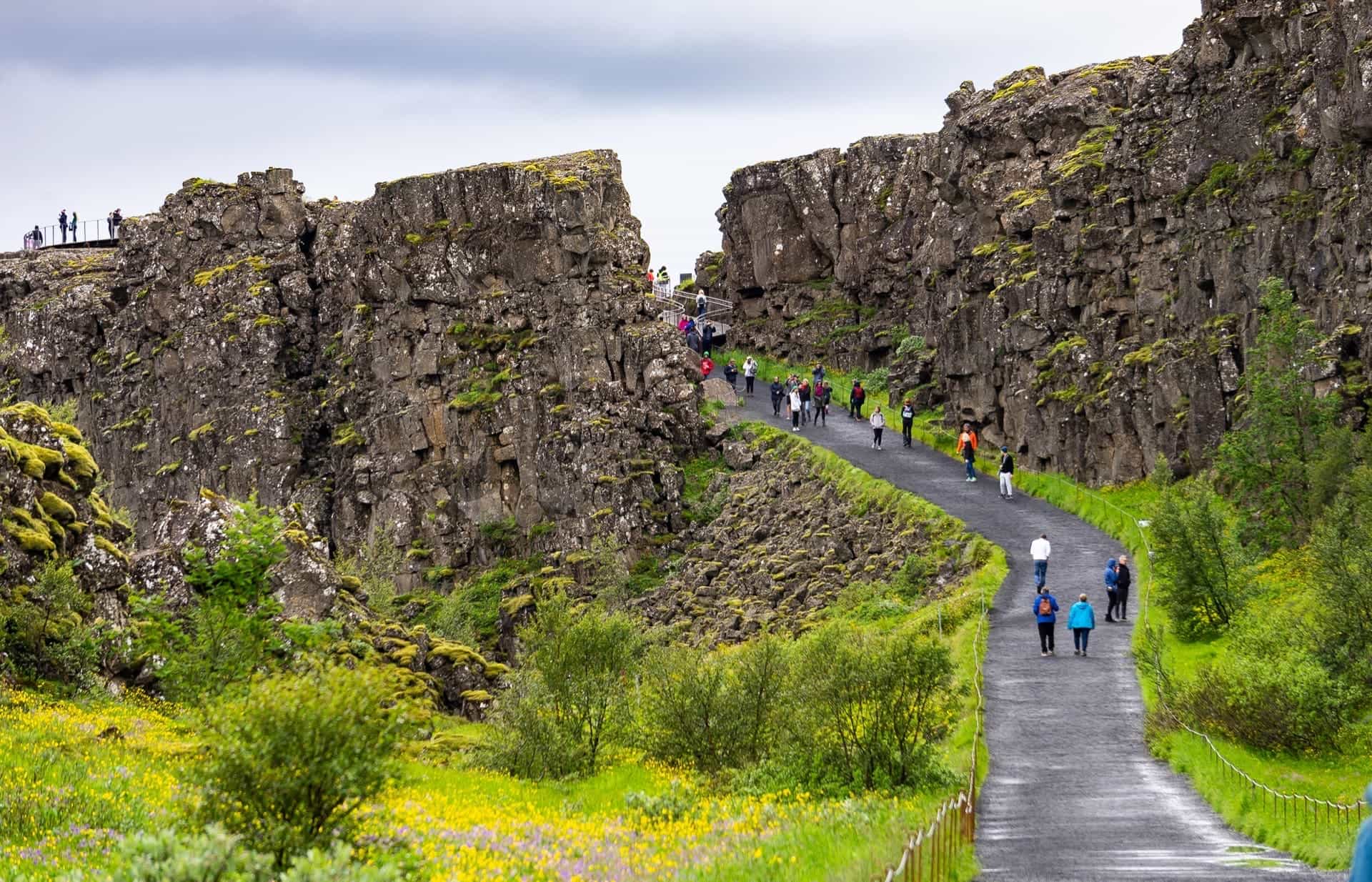
Walk between two tectonic plates at this UNESCO World Heritage site where Iceland's parliament was founded in 930 AD — history and geology in one stunning landscape.
More Attractions
Popular stops and hidden gems along the Golden Circle route.

Blue Lagoon
The Blue Lagoon is Iceland's world-famous geothermal spa, set in a dramatic lava field on the Reykjanes Peninsula. Its signature milky-blue waters are rich in silica, algae, and minerals — making it one of the most iconic bathing experiences on earth.

Brúarfoss Waterfall
A hidden gem known for its stunning turquoise-blue cascades along the Brúará River — one of Iceland's most photogenic waterfalls, just off the Golden Circle route.

Efstidalur
A seventh-generation family dairy farm on the Golden Circle, beloved for homemade ice cream you can enjoy while watching the cows through a barn window, plus a farm-to-table loft restaurant.

Eyrarbakki
Eyrarbakki is a beautifully preserved coastal village in South Iceland, once a rival to Reykjavík, now home to Iceland's oldest wooden house and a charming maritime heritage.

Faxi (Vatnsleysufoss) Waterfall, Iceland
Faxi Waterfall: Serene Beauty in Iceland's Golden Circle

Flúðir
A small geothermal village in South Iceland, Flúðir is home to the Secret Lagoon — Iceland's oldest swimming pool — and a cluster of geothermal greenhouses that grow fresh produce year-round.

Friðheimar Tomato Farm
A working geothermal greenhouse on the Golden Circle where you dine among the tomato plants — famous for its all-you-can-eat tomato soup, fresh bread, and the farm's Bloody Marys.

Garðabær
A prosperous coastal town in Greater Reykjavík, Garðabær blends Viking-age history, the President of Iceland's official residence, and easy access to lava fields and shoreline walks.

Hafnarfjörður
A charming harbour town just south of Reykjavik, Hafnarfjörður blends ancient lava landscapes, Viking heritage, and Iceland's richest elf folklore into one compact and very walkable destination.

Haukadalur Valley
Haukadalur Valley

Kerið Crater
A vivid 3,000-year-old volcanic crater with striking red rock walls and a brilliant blue lake — a quick, colourful Golden Circle detour.

Langjökull Glacier
Iceland's second-largest glacier, Langjökull offers unforgettable adventures — from snowmobiling across its vast white expanse to walking inside a real glacier through the world's largest man-made ice tunnel.

Laugaras Lagoon
A stunning two-tiered geothermal lagoon on the banks of the Hvítá River, perfectly placed along the Golden Circle with naturally heated spring pools, a waterfall, saunas, and an acclaimed on-site restaurant.

Laugarvatn
A peaceful lakeside village on the Golden Circle where geothermal springs warm the shore — and the famous Fontana spa lets you soak in natural steam baths beside the lake.

Laugarvatn Fontana
A lakeside geothermal spa on the Golden Circle where steam rooms sit over natural hot springs and traditional rye bread is baked underground using the earth's heat.

Reykholt
A small geothermal village on the Golden Circle, Reykholt is home to Friðheimar — Iceland's celebrated tomato greenhouse where you can dine among the plants and watch an Icelandic horse show.

Reykjadalur
Reykjadalur — "Steam Valley" — is a geothermal wonderland above Hveragerði where a short hike rewards you with a naturally warm river you can actually bathe in, framed by steaming hillsides and Iceland's raw volcanic landscape.
Reykjavik
Iceland's vibrant capital city is the perfect base for Golden Circle day tours — a compact, walkable city full of colour, culture, and geothermal energy.

Secret Lagoon
Secret Lagoon: Tranquil Geothermal Escape in Iceland

Silfra Fissure
Silfra is a crystal-clear freshwater fissure in Þingvellir National Park where you can snorkel or dive directly between the North American and Eurasian tectonic plates, in water of extraordinary purity and visibility.

Sky Lagoon
A stunning oceanfront geothermal spa near Reykjavik with an infinity-edge lagoon and the signature 7-step Skjól Ritual rooted in Icelandic bathing tradition.

Skálholt Cathedral
Skálholt was the religious and cultural capital of Iceland for over 700 years — a serene historic site in the South Iceland countryside that rewards every curious traveller on the Golden Circle.

Solheimar Eco-Village
Founded in 1930, Sólheimar is the world's oldest eco-village — a thriving community of around 100 residents where inclusive living, organic farming, and handmade crafts come together in the heart of South Iceland.

Stokkseyri
A characterful coastal village on Iceland's South Shore, beloved for crashing Atlantic breakers, Icelandic folklore museums, and some of the country's most celebrated lobster.

Öxarárfoss Waterfall
Öxarárfoss is a scenic waterfall on the Öxará River in Þingvellir National Park, tumbling over the ancient Almannagjá gorge in one of Iceland's most historically charged landscapes.