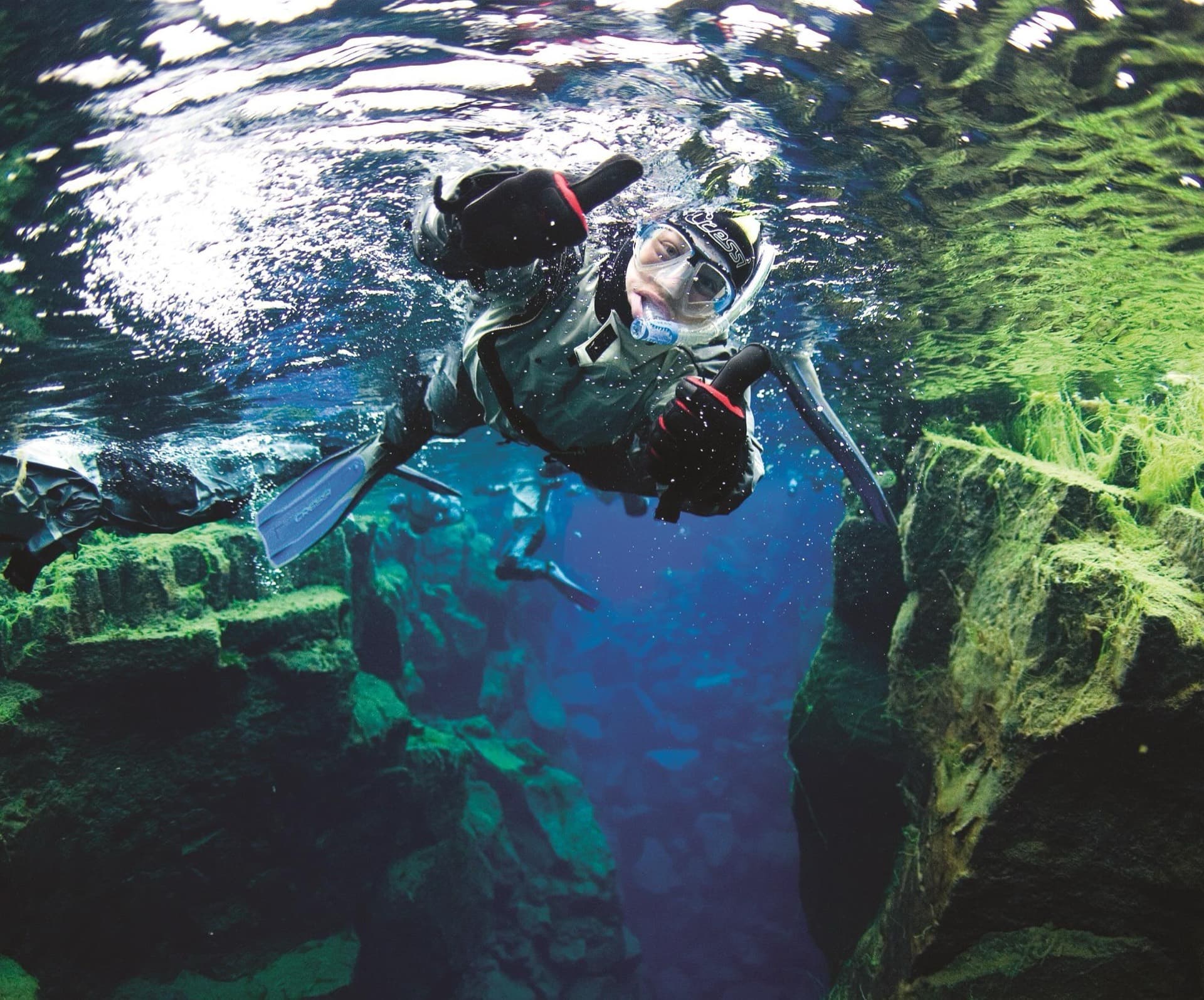
Silfra Fissure is a world-renowned underwater rift located in Þingvellir National Park, approximately 50 kilometers northeast of Reykjavík, where you can snorkel or dive between the North American and Eurasian tectonic plates. The fissure formed from earthquakes in 1789, creating a narrow crack in the volcanic landscape that filled with glacial meltwater from Langjökull glacier.
The water travels through underground lava rock for 30 to 100 years before reaching Silfra, emerging exceptionally pure and crystal-clear with visibility often exceeding 100 meters, making it one of the clearest bodies of water on Earth. The fissure continues widening approximately 2 centimeters annually as the continental plates drift apart, the same geological process that created the entire Almannagjá gorge visible throughout Þingvellir.
The water maintains a constant temperature between 2 and 4 degrees Celsius year-round, requiring you to wear specialized drysuits for thermal protection during snorkeling or diving activities. You'll experience four distinct sections during the standard route: the Silfra Big Crack, the deepest point reaching 63 meters; Silfra Hall, a wider cathedral-like chamber; Silfra Cathedral, the main diving area; and Silfra Lagoon, where the fissure opens into Þingvallavatn lake.
The underwater landscape features brilliant blue water, vivid green algae called troll hair that grows on rocks, and stunning light effects as sunlight penetrates the clear water. UNESCO recognized Þingvellir as a World Heritage Site in 2004, acknowledging both its geological significance and historical importance as Iceland's ancient parliament grounds.
You must join organized tours to access Silfra, as independent snorkeling or diving is prohibited. Tour operators require participants to meet specific physical requirements: you must be at least 12 years old and 45 kilograms for snorkeling, or hold certification for diving. You'll also need to sign medical waivers confirming fitness for cold-water activities and ability to swim.
You can reach Silfra via Route 36 through Þingvellir National Park, with the drive from Reykjavík taking approximately 45 to 50 minutes. The fissure sits near the P5 parking area at Þingvellir, the same access point for the Almannagjá gorge and walking trails. Most tour operators provide pickup service from Reykjavík accommodations, though self-drive options allow you to combine Silfra with other Golden Circle attractions like Geysir (approximately 50 kilometers northeast) and Gullfoss (about 60 kilometers northeast).
Snorkeling tours cost approximately ISK 19,900 to 24,900 per person, while diving experiences range from ISK 29,900 to 34,900 depending on certification level and group size. These prices include all necessary equipment: drysuits, hoods, gloves, fins, masks, and snorkels. You must bring warm clothing for before and after the activity, including wool or fleece layers, as you cannot wear cotton under drysuits.
8 Am - 7 PM
Silfra Fissure is a world-renowned underwater rift located in Þingvellir National Park, approximately 50 kilometers northeast of Reykjavík, where you can snorkel or dive between the North American and Eurasian tectonic plates. The fissure formed from earthquakes in 1789, creating a narrow crack in the volcanic landscape that filled with glacial meltwater from Langjökull glacier.
The water travels through underground lava rock for 30 to 100 years before reaching Silfra, emerging exceptionally pure and crystal-clear with visibility often exceeding 100 meters, making it one of the clearest bodies of water on Earth. The fissure continues widening approximately 2 centimeters annually as the continental plates drift apart, the same geological process that created the entire Almannagjá gorge visible throughout Þingvellir.
The water maintains a constant temperature between 2 and 4 degrees Celsius year-round, requiring you to wear specialized drysuits for thermal protection during snorkeling or diving activities. You'll experience four distinct sections during the standard route: the Silfra Big Crack, the deepest point reaching 63 meters; Silfra Hall, a wider cathedral-like chamber; Silfra Cathedral, the main diving area; and Silfra Lagoon, where the fissure opens into Þingvallavatn lake.
The underwater landscape features brilliant blue water, vivid green algae called troll hair that grows on rocks, and stunning light effects as sunlight penetrates the clear water. UNESCO recognized Þingvellir as a World Heritage Site in 2004, acknowledging both its geological significance and historical importance as Iceland's ancient parliament grounds.
You must join organized tours to access Silfra, as independent snorkeling or diving is prohibited. Tour operators require participants to meet specific physical requirements: you must be at least 12 years old and 45 kilograms for snorkeling, or hold certification for diving. You'll also need to sign medical waivers confirming fitness for cold-water activities and ability to swim.
You can reach Silfra via Route 36 through Þingvellir National Park, with the drive from Reykjavík taking approximately 45 to 50 minutes. The fissure sits near the P5 parking area at Þingvellir, the same access point for the Almannagjá gorge and walking trails. Most tour operators provide pickup service from Reykjavík accommodations, though self-drive options allow you to combine Silfra with other Golden Circle attractions like Geysir (approximately 50 kilometers northeast) and Gullfoss (about 60 kilometers northeast).
Snorkeling tours cost approximately ISK 19,900 to 24,900 per person, while diving experiences range from ISK 29,900 to 34,900 depending on certification level and group size. These prices include all necessary equipment: drysuits, hoods, gloves, fins, masks, and snorkels. You must bring warm clothing for before and after the activity, including wool or fleece layers, as you cannot wear cotton under drysuits.
Silfra Fissure is a rift in Þingvellir National Park, where the North American and Eurasian tectonic plates meet. It’s unique because you can dive or snorkel between these two continents, experiencing some of the clearest water in the world.
Snorkeling in Silfra is accessible to beginners, but diving requires a dry suit certification due to the cold water. Many tour operators provide equipment and training for those new to these activities.
Yes, safety is a priority. All tours are guided by professionals who ensure that you are well-equipped and informed about the conditions and procedures. Following the guide’s instructions is essential for a safe experience.
While Silfra doesn’t have abundant marine life, the underwater scenery is breathtaking, with vivid blue colors, intricate rock formations, and the unique experience of touching two continents at once.
Participants must be at least 12 years old for snorkeling and 18 for diving. Good physical health and swimming ability are required, and a medical statement may be needed for some individuals.
Why should you?