
Most visitors to the Blue Lagoon drive straight from Keflavik Airport, soak for a few hours, and continue to Reykjavik. That is the standard itinerary and it works. But the Blue Lagoon sits on the Reykjanes Peninsula, a UNESCO Global Geopark packed with volcanic craters, geothermal fields, active lava flows, and black sand coastline that most visitors never see.
If you have time before or after the lagoon, or if you are spending a night on the peninsula, here is what is worth stopping for.
Fagradalsfjall Volcano
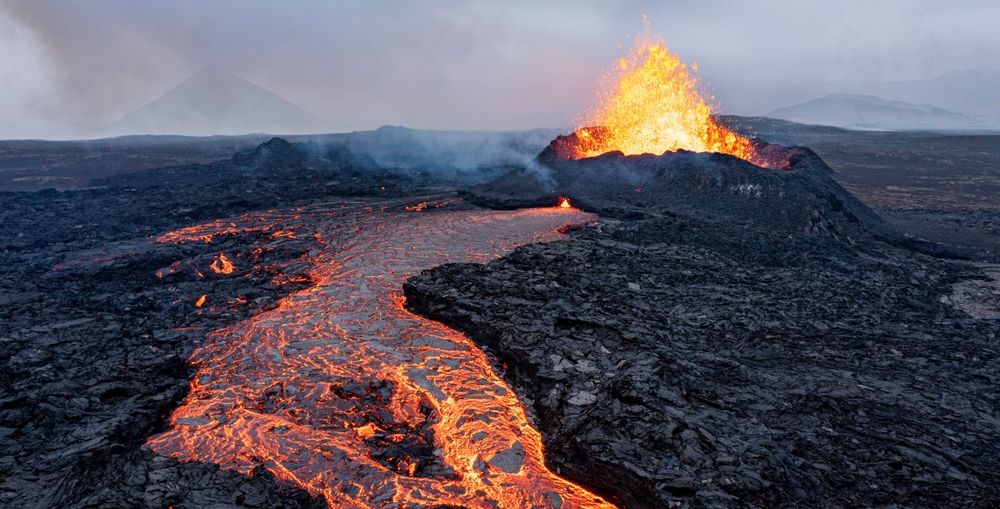
Distance from Blue Lagoon: 5.5 miles, approximately 15 minutes by car.
Fagradalsfjall erupted repeatedly between 2021 and 2023 and produced active lava flows that are still cooling and solidifying. The walk from the car park to the crater takes about 45 to 60 minutes each way on a trail through fresh lava fields. The volcanic landscape here looks nothing like the older, moss-covered lava elsewhere in Iceland. It is raw, black, and recent.
The area around the eruption site is accessible and safe when not active. Check the status at vedur.is before visiting as the volcano has erupted multiple times and activity can resume. When quiet, walking the lava fields with the cone visible in the background is one of the more extraordinary things you can do on the Reykjanes Peninsula.
Gunnuhver Hot Springs
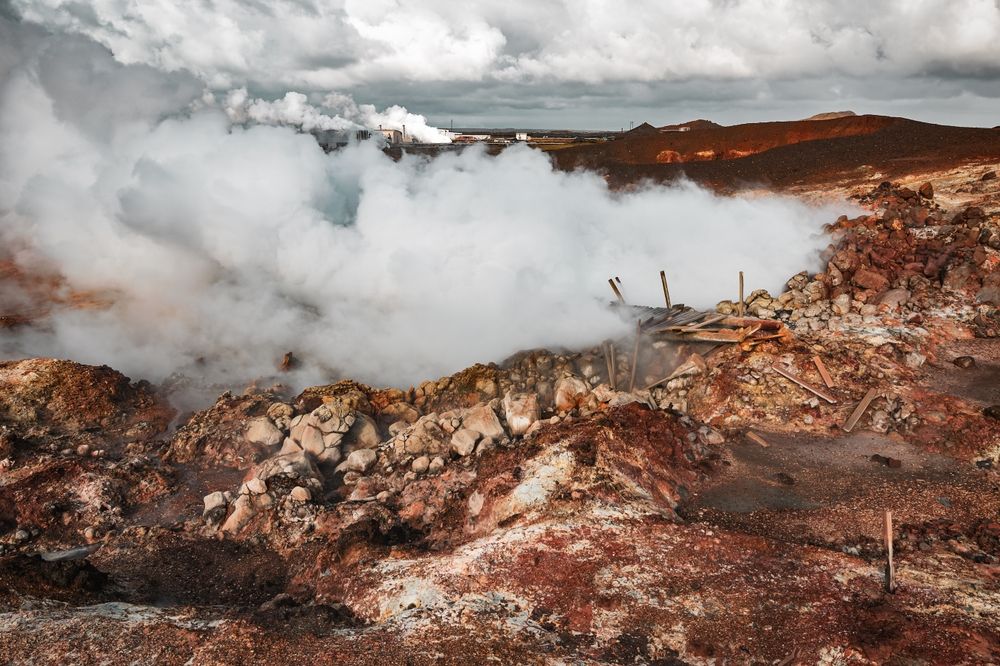
Distance from Blue Lagoon: 8 miles, approximately 20 minutes by car.
Gunnuhver is the largest hot spring area in Iceland and one of the most visually dramatic geothermal sites in the country. Boiling mud pools and steam vents produce enormous white steam clouds visible from a distance. The main viewing platform takes you to within meters of the largest vent.
Named after a ghost (a convicted witch who was apparently driven into the hot spring to stop her haunting), Gunnuhver is genuinely impressive and takes about 30 minutes to walk around properly. The ground around the vents is actively steaming and the boardwalk paths are necessary for safety.
Located next to Reykjanesviti, Iceland's oldest lighthouse, making a natural combined stop.
Bridge Between Continents
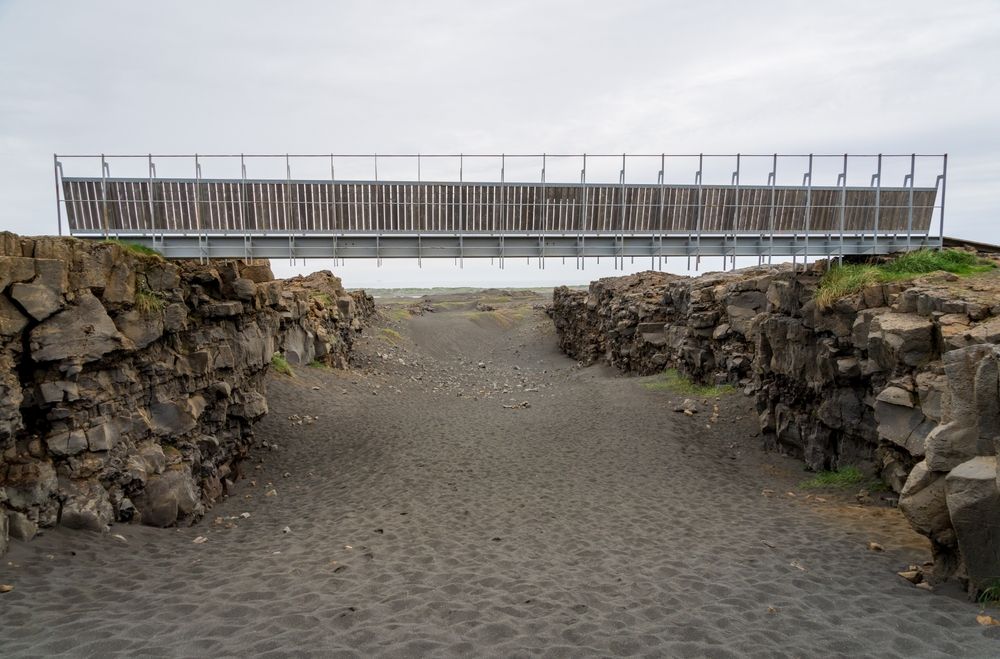
Distance from Blue Lagoon: 22 minutes by car.
A short footbridge spanning a visible fissure in the earth between the North American and Eurasian tectonic plates. The bridge allows you to walk literally between two continents in about 30 seconds. It is a small, symbolic structure rather than a dramatic landscape feature, but the geological reality beneath it is genuine, and the information panels explain it well.
Takes about 20 minutes. Free to visit. Worth stopping for anyone interested in the geology of the Reykjanes Peninsula.
Seltún Geothermal Area and Kleifarvatn Lake
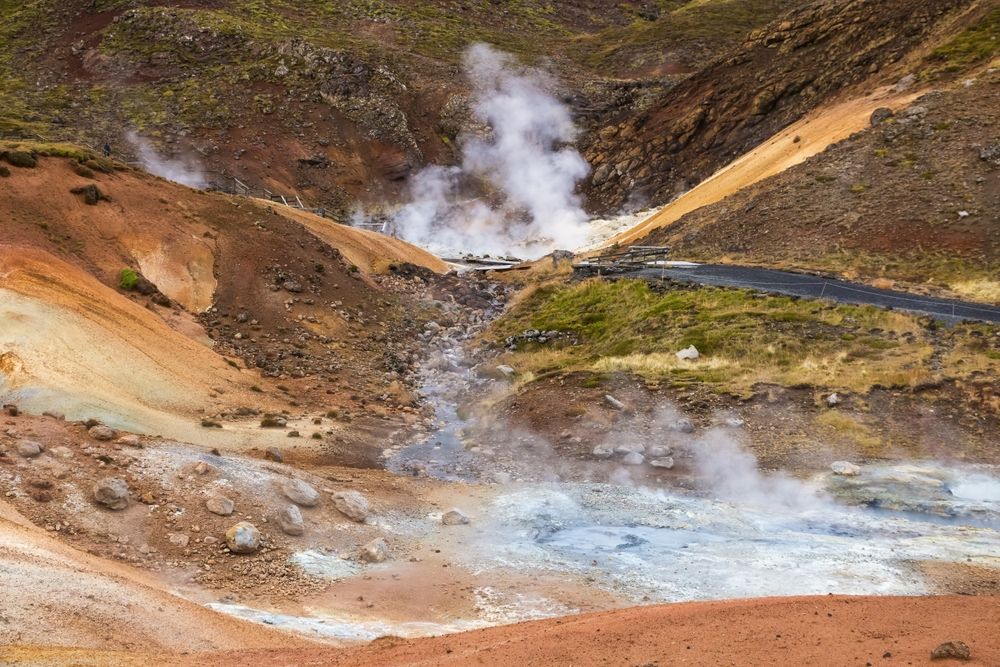
Distance from Blue Lagoon: 12 miles, approximately 25 minutes by car.
Seltún is a compact geothermal field with colored mud pools, sulphurous steam vents, and vivid orange and red mineral deposits in the ground. It is more accessible and visually varied than most geothermal areas, with boardwalk paths running close to the most active features. 30 minutes is enough to walk the full site.
Immediately adjacent is Kleifarvatn, the largest lake on the Reykjanes Peninsula. The lake has no visible inlet or outlet — water enters and leaves entirely underground through the volcanic rock. The surrounding landscape of dark lava and the deep, still lake surface is striking and photographs well.
Both sites can be combined in about an hour.
Reykjanesviti Lighthouse
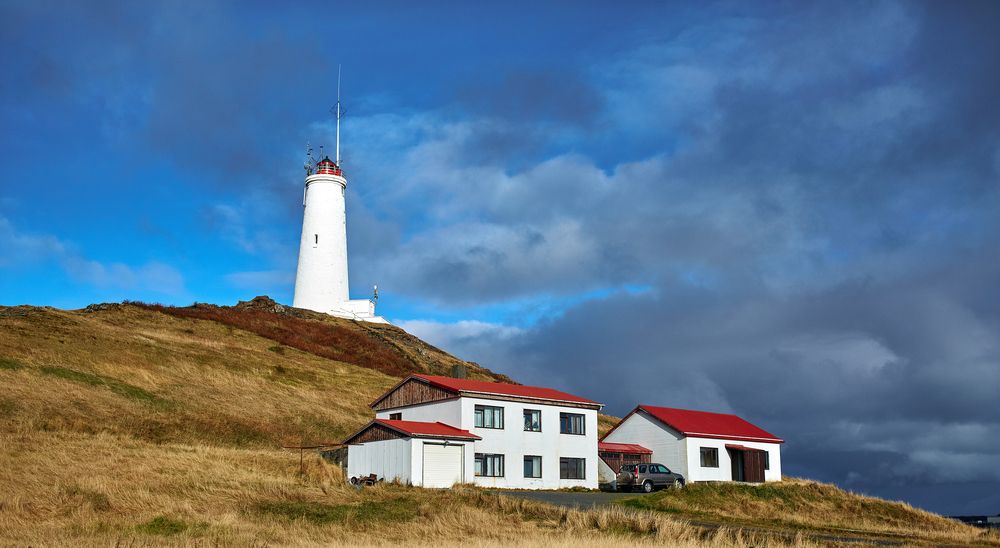
Distance from Blue Lagoon: 20 minutes by car.
Iceland's oldest lighthouse, originally built in 1878, sits at the tip of the Reykjanes Peninsula near Gunnuhver. The lighthouse itself is not open to the public but the headland around it is worth exploring. The coastal views, the Atlantic crashing against the lava coastline, and the combination with the nearby Gunnuhver geothermal area make it a good stopping point.
The headland is also a reliable bird-watching location with fulmars, guillemots, and kittiwakes nesting on the cliffs.
Icelandic Museum of Rock and Roll
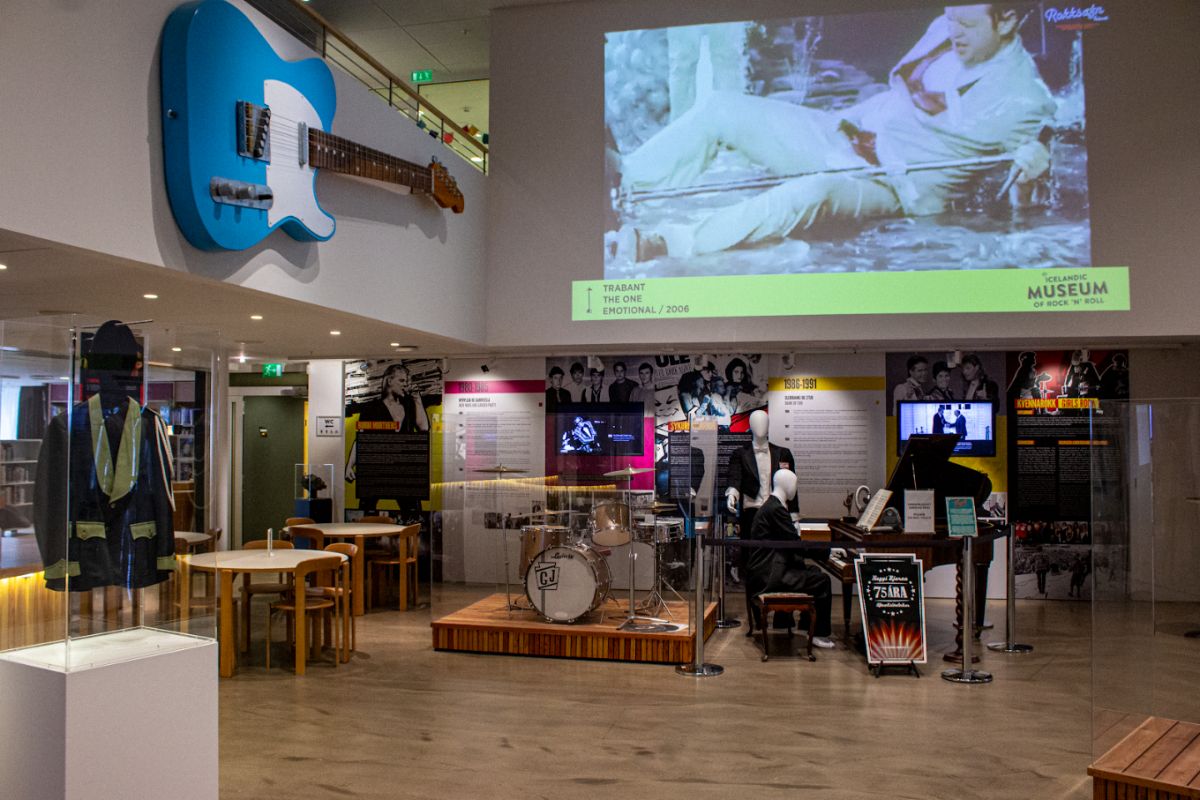
Distance from Blue Lagoon: 20 minutes by car, in Keflavik.
Iceland has produced an extraordinary number of internationally recognized musicians relative to its population: Björk, Sigur Rós, Of Monsters and Men, Kaleo, and many more. The Rock and Roll Museum in Keflavik covers the country's popular music history with interactive displays, a cinema screening short music films, and a karaoke recording booth.
Worth an hour for music enthusiasts or families. Guided by iPad in five languages. The museum is in Keflavik, making it a logical stop on the way to or from the airport.
Lava Cave Exploration: Leiðarendi
Distance from Blue Lagoon: 20 minutes by car.
Leiðarendi is a lava tube cave formed by volcanic eruptions roughly 2,000 years ago. The cave is accessible with a guided tour and takes about an hour to walk through. Inside, multi-colored lava walls, stalagmites, and unusual formations are visible with your headtorch. The cave temperature stays around 4 to 6°C year-round, which is cold but manageable with proper layers.
Guided tours depart from a car park near the cave entrance and equipment including helmets and headlamps is provided. Book in advance as group sizes are limited.
ATV Riding on Lava Fields
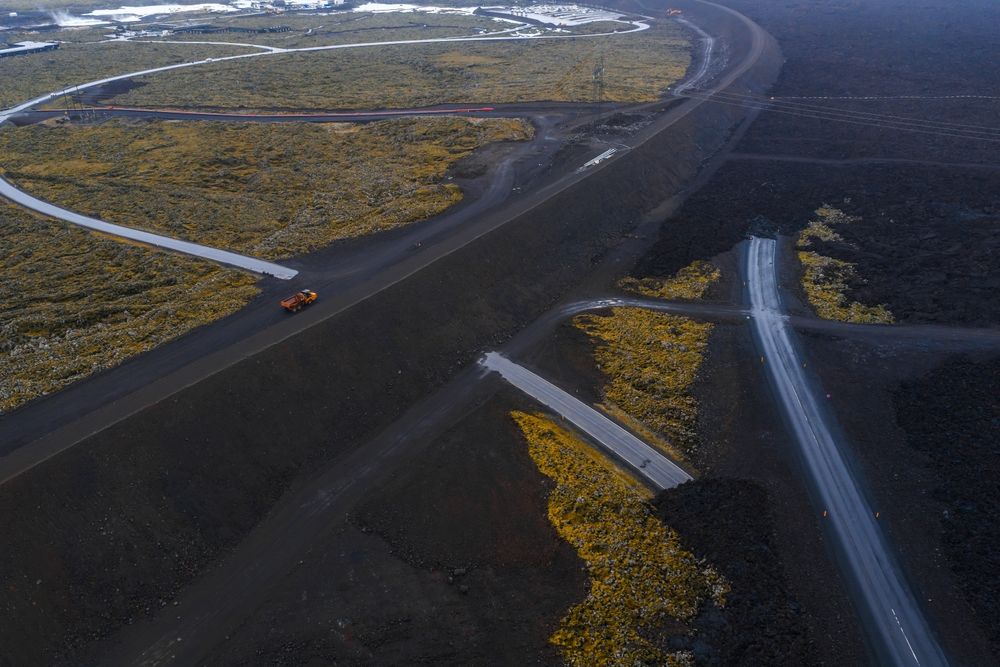
Several operators run ATV tours across the Reykjanes Peninsula lava fields, including routes near the Blue Lagoon area. The tours cover black sand beaches, red gravel roads, and volcanic terrain that looks more like a film set than a real landscape.
Tours typically run 1 to 2 hours and require a valid driving license. No prior ATV experience is needed. A good option for travelers who want something active before or after the lagoon.
Grindavik Fishing Village
Distance from Blue Lagoon: 5 minutes by car.
The town immediately adjacent to the Blue Lagoon, Grindavik has several good seafood restaurants that most visitors bypass entirely. The Salt Cod Fish House (Saltfiskhúsið) covers Iceland's historical salt cod trade and the town's fishing heritage. For a proper meal near the lagoon, Grindavik's seafood restaurants are a better option than the Blue Lagoon's own dining at a fraction of the price.
Note: Grindavik was significantly affected by volcanic activity and earthquakes in 2023 and 2024. Check current status before visiting.
How to Combine the Blue Lagoon With Nearby Attractions
Most of the sites above are within 30 minutes of the Blue Lagoon and can be combined into a half-day itinerary without rushing.
A practical combination for visitors with 4 to 5 hours in the area:
- Gunnuhver hot springs and Reykjanesviti lighthouse (1 hour)
- Blue Lagoon (2 to 3 hours minimum)
- Fagradalsfjall volcano walk, if active status allows (2 hours)
For visitors arriving or departing via Keflavik Airport:
- Bridge Between Continents (20 minutes)
- Seltún and Kleifarvatn (1 hour)
- Blue Lagoon (2 to 3 hours)
- Icelandic Museum of Rock and Roll near Keflavik (1 hour)
All of these are accessible by standard car on paved roads. No 4x4 required.
Compare Golden Circle Tours
Check each selected product for its current operator, guide, itinerary, meeting point, and terms.
View Our Tours

