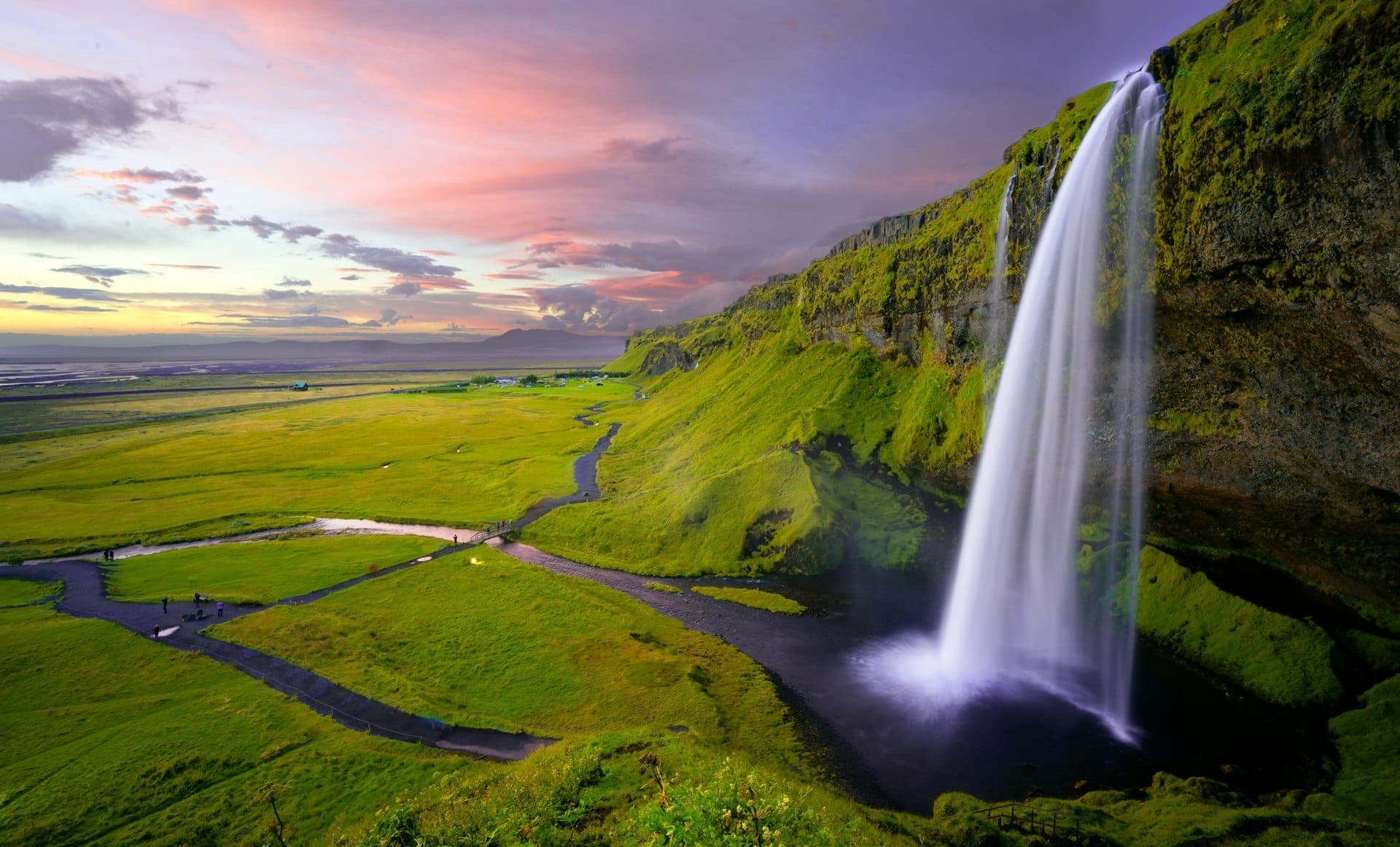
Often called "Iceland in Miniature," the Snaefellsnes Peninsula packs an incredible variety of landscapes into one accessible region. Just a two-hour drive from Reykjavik, this 90-kilometer stretch of land offers everything that makes Iceland special: glaciers, volcanoes, black sand beaches, dramatic cliffs, charming fishing villages, and wildlife.
The best part? You can experience most of these wonders on a single guided tour from Reykjavik, making it perfect for travelers who want to see Iceland's diverse beauty without spending days on the road.
1. Marvel at Kirkjufell Mountain and Kirkjufellsfoss Waterfall
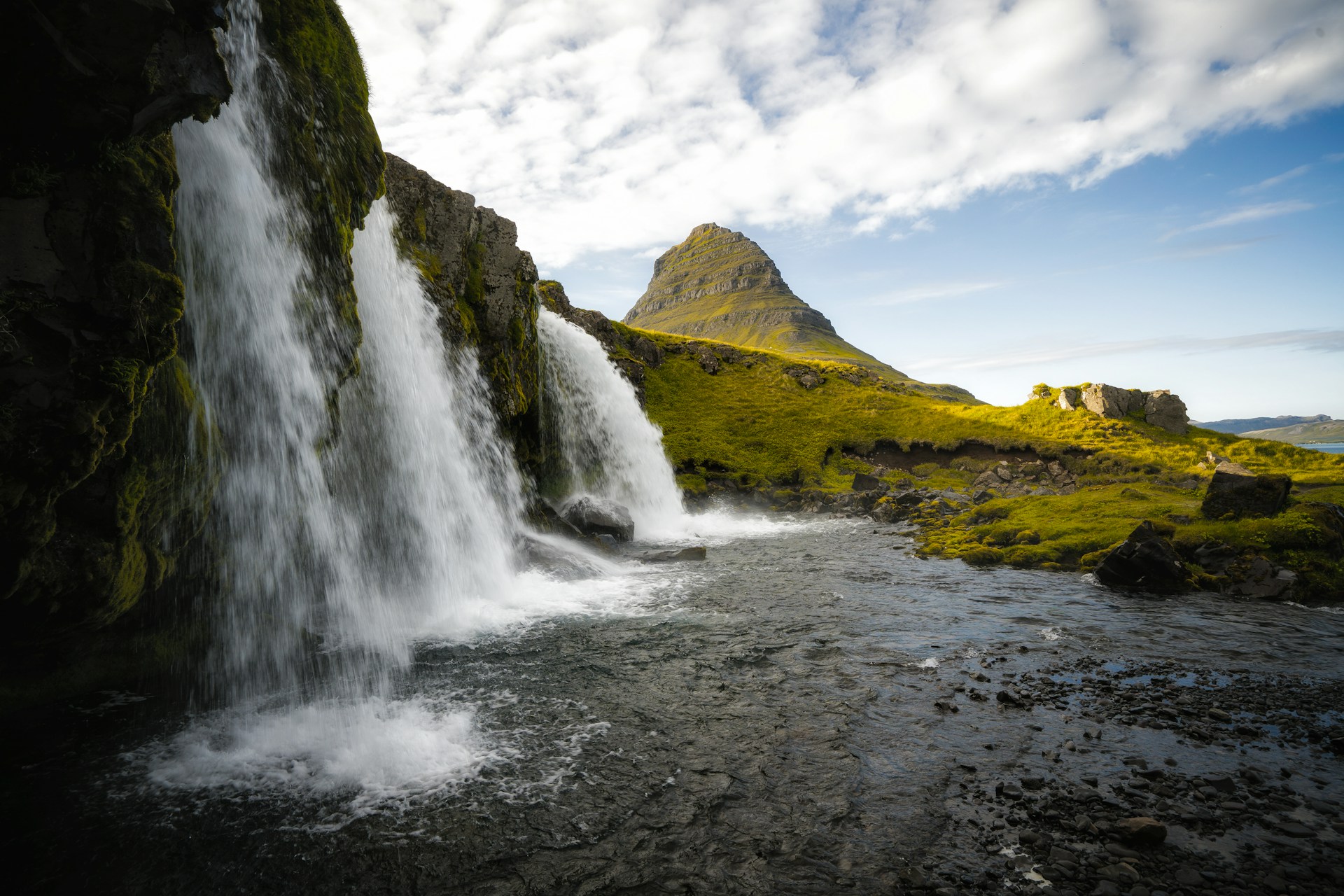
Kirkjufell is Iceland's most photographed mountain, and once you see it, you'll understand why. This 463-meter peak has a distinctive triangular shape that looks like an arrowhead rising from the coast. The mountain gained even more fame when it appeared in Game of Thrones as "Arrowhead Mountain."
The best viewing spot is near the small town of Grundarfjordur, where you can capture Kirkjufell with the cascading Kirkjufellsfoss waterfall in the foreground. This combination creates one of Iceland's most iconic photo opportunities. Visit early morning or late evening to avoid crowds, and if you're visiting in winter, you might even catch the Northern Lights dancing above the peak.
Most guided tours of the peninsula include a stop here, giving you plenty of time to walk around and take photos from different angles. The nearby town of Grundarfjordur is also worth exploring, with its charming harbor and local restaurants serving fresh fish.
2. Walk the Black Sands of Djúpalónssandur Beach

Djúpalónssandur is not your typical beach. This dramatic black pebble beach sits within Snaefellsjokull National Park and offers a glimpse into Iceland's maritime history. The smooth black stones have been shaped by centuries of ocean waves crashing against the volcanic coast.
On the beach, you'll find four large lifting stones that fishermen once used to test their strength. These stones range from 23 to 154 kilograms, and trying to lift them was how captains determined who was strong enough to work on their boats.
The smallest stone was called "Amlóði" (weakling), while the largest was "Fullsterkur" (full strength). Feel free to test your own strength, but be careful not to strain yourself.
The beach also holds the rusted remains of a British trawler that wrecked here in 1948. Walking through the twisted metal is a somber reminder of how dangerous these waters can be. The surrounding lava formations create an otherworldly landscape that makes you feel like you've stepped onto another planet.
This stop is included on virtually every Snaefellsnes tour, and you'll typically have 30 to 45 minutes to explore the beach and surrounding area.
3. Explore Snaefellsjokull National Park
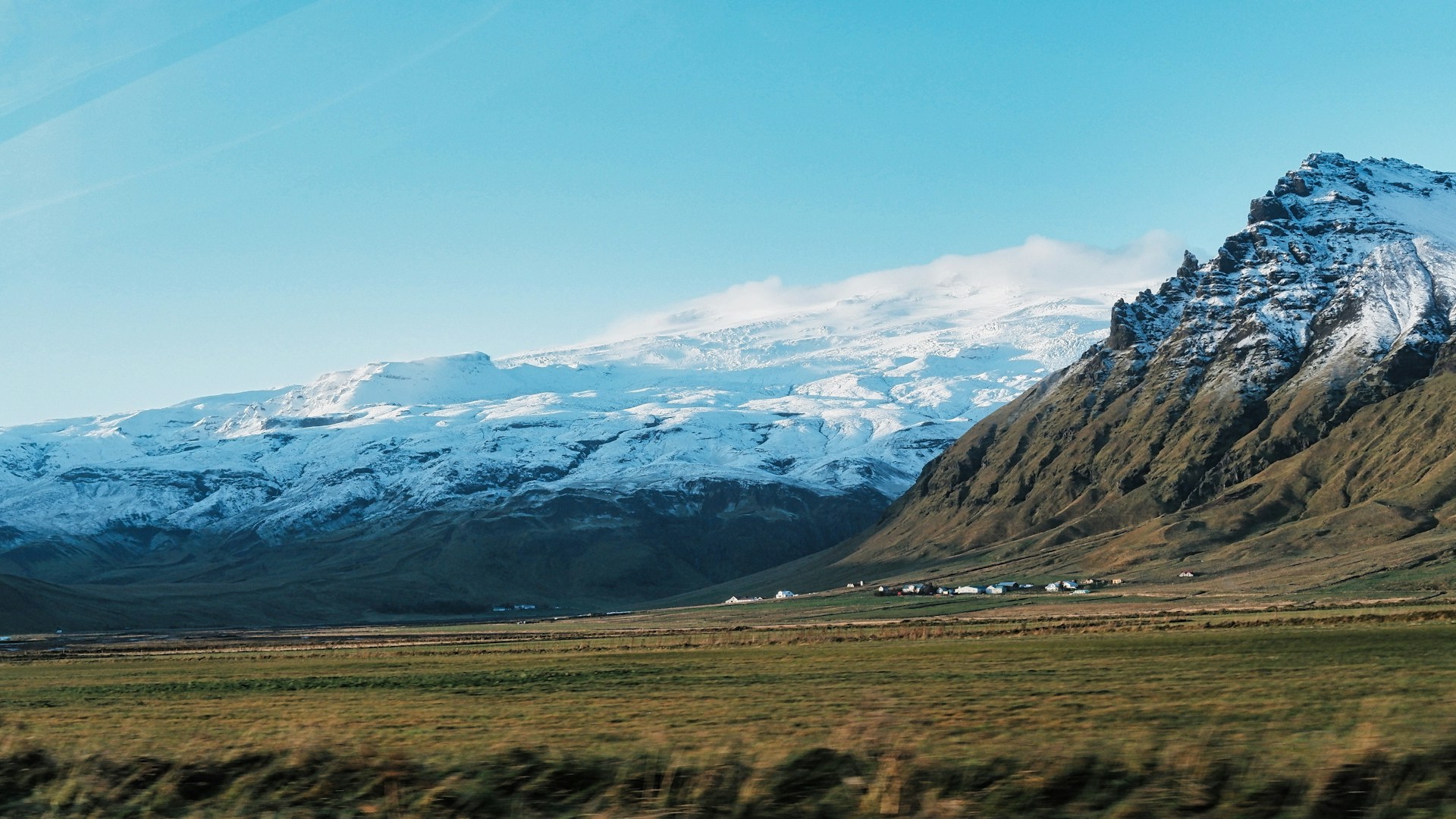
Snaefellsjokull National Park is Iceland's only national park that reaches from the mountains to the sea. At its heart sits the magnificent Snaefellsjokull Glacier, a 1,446-meter ice-capped volcano that Jules Verne made famous in his novel "Journey to the Center of the Earth."
The park covers 170 square kilometers and contains an incredible variety of geological features. You'll find lava fields, volcanic craters, moss-covered rocks, coastal cliffs, and diverse wildlife. The park is home to Arctic foxes, seals, and numerous bird species, including puffins during summer months.
Many tour operators offer specialized trips focused on the national park, allowing you to spend more time hiking and exploring its trails. Some tours even include a visit to Vatnshellir Cave, an 8,000-year-old lava tube where you can descend 35 meters underground to see incredible rock formations. The cave tour lasts about 45 minutes and requires booking in advance..
4. Discover the Londrangar Basalt Cliffs
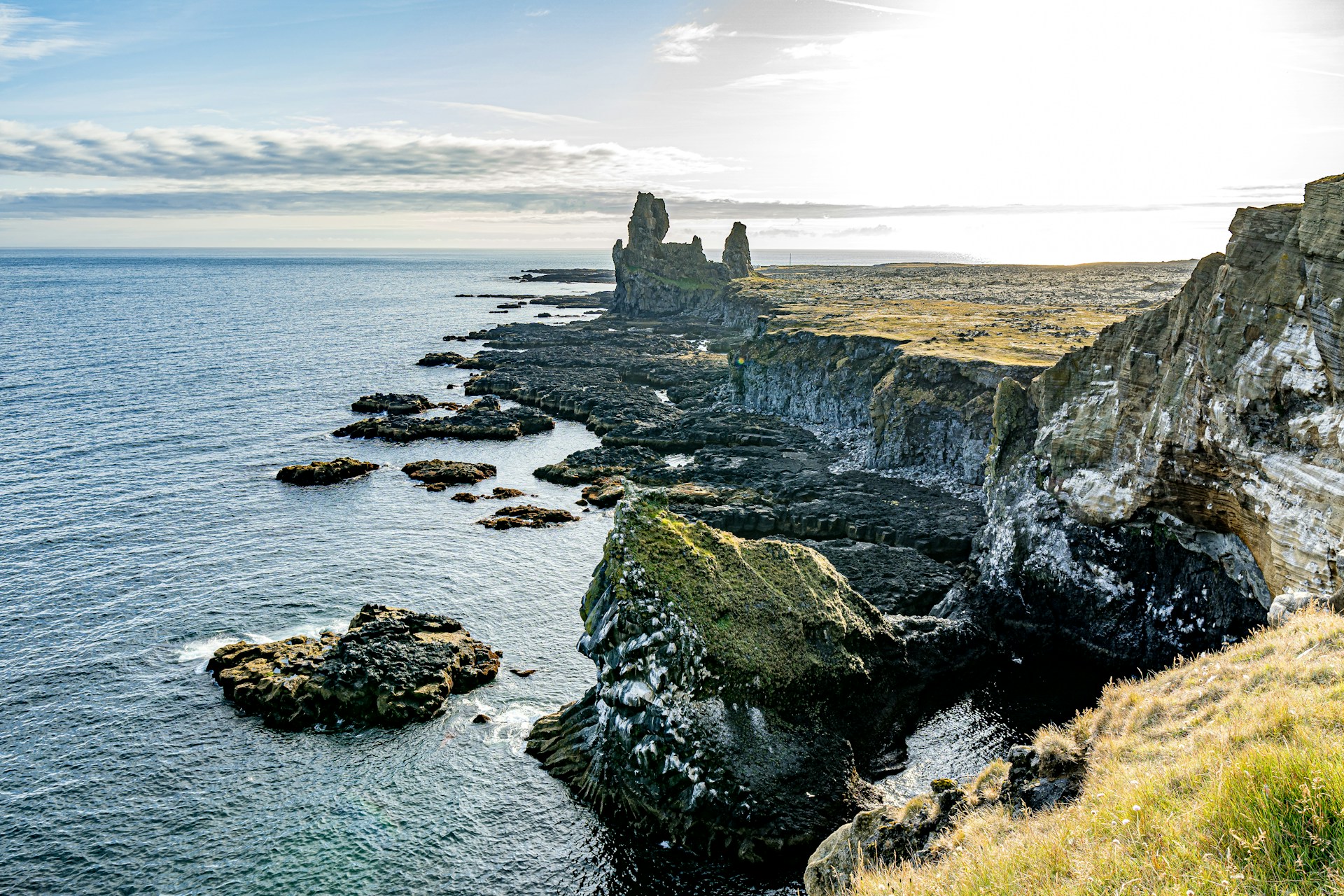
Londrangar is one of those places that makes you stop and stare. These tall basalt rock formations rise dramatically from the ocean like ancient stone guardians. The two main cliffs, measuring 75 and 61 meters high, are the remains of a volcanic crater that the ocean has slowly eroded over thousands of years.
The cliffs are rich in birdlife, making them a paradise for birdwatchers. During summer, you might spot puffins nesting in the rocky crevices, along with fulmars, kittiwakes, and other seabirds. The area around Londrangar offers several walking paths where you can enjoy stunning coastal views and breathe in the fresh ocean air.
The viewpoint is easily accessible from the main road and typically included as a stop on peninsula tours. It's one of those magical spots where you can truly appreciate the raw power of Icelandic nature.
5. Visit the Charming Villages of Arnarstapi and Hellnar
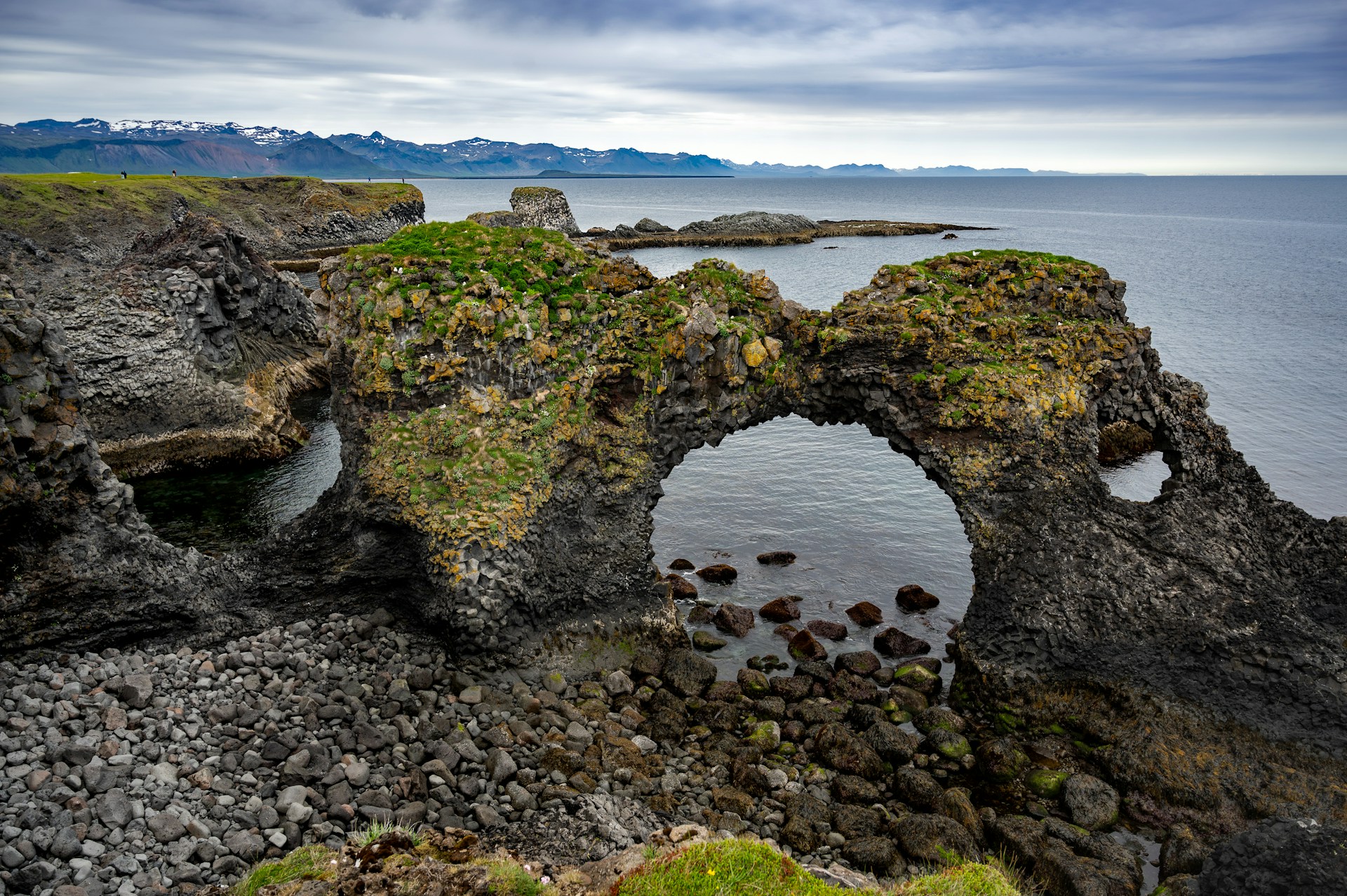
These two historic fishing villages sit just a few kilometers apart on the peninsula's southern coast and are connected by a beautiful coastal walking path. Both villages offer a glimpse into traditional Icelandic life while providing spectacular natural scenery.
Arnarstapi is famous for its dramatic basalt cliffs and natural rock arch called Gatklettur. The village also features a stone sculpture of Bárður Snæfellsás, a half-troll, half-human figure from Icelandic folklore who is said to protect the area. A small cafe here serves coffee and traditional Icelandic soup, perfect for warming up on a cold day.
Hellnar is slightly smaller but equally charming. The village has a lovely restaurant with ocean views and several walking trails along the cliffs. If you have time, walk the 2.5-kilometer coastal path between the two villages. The trail offers incredible views of the ocean, sea stacks, and the Snaefellsjokull Glacier in the distance.
Many day tours from Reykjavik include stops at both villages, though you might only have 20-30 minutes at each location. Consider booking a multi-day tour or staying overnight on the peninsula if you want more time to explore these peaceful settlements.
6. Photograph Búðakirkja, the Black Church of Búðir

Standing alone in a lava field with mountains as its backdrop, Búðakirkja is one of Iceland's most atmospheric churches. This small wooden church, painted entirely black, creates a striking contrast against the surrounding landscape, whether it's covered in summer wildflowers or winter snow.
The church was built in 1848, though there has been a church at this location since the 1700s. Some of the original materials from the earlier church were used in the current structure. The church's isolated location and dramatic appearance have made it incredibly popular with photographers and social media influencers.
While the church itself is simple inside, the real magic is its setting. The nearby Hotel Búðir offers luxury accommodation if you want to stay in this peaceful area. Most peninsula tours stop here for 15-20 minutes, giving you just enough time to walk around and capture some photos.
Remember to be respectful, as this is still an active church used for services and weddings.
7. Spot Seals at Ytri Tunga Beach

Unlike most Icelandic beaches, Ytri Tunga features golden sand rather than black volcanic rock. This beautiful beach is home to a colony of seals that love to lounge on the dark rocks, especially during summer months.
June and July are the best times to see the seals, as this is when they come ashore to rest and sun themselves. Bring binoculars for the best viewing, and remember to keep a respectful distance from the wildlife. The seals are wild animals and can be aggressive if approached too closely.
The beach also offers beautiful views of Snaefellsjokull Glacier on clear days. It's an easy stop right off Route 54 and is included on many guided tours. Even if you don't spot any seals, the golden sand and peaceful atmosphere make it worth a visit.
Wildlife tours and photography tours often spend extra time here to increase your chances of seal sightings.
8. Climb Saxhóll Crater
.jpeg)
For a different perspective of the peninsula, climb the stairs to the top of Saxhóll, a volcanic crater that offers panoramic views of the surrounding lava fields and ocean. A metal staircase makes the climb easy, and the 360-degree views from the top are well worth the effort.
The crater is about 100 meters in diameter and showcases the area's volcanic history. The red and orange volcanic rock creates a stark contrast with the green moss that covers much of the surrounding landscape. On clear days, you can see Snaefellsjokull Glacier from the summit.
The climb takes only about 10 minutes, making it perfect for tour stops. It's also accessible for most fitness levels, though the stairs can be slippery in wet conditions. Nearby, you'll find information boards explaining the geology and volcanic activity that shaped this area.
Some tours stop at Saxhóll, while others visit similar craters in the area. Either way, climbing a volcanic crater is an essential Snaefellsnes experience.
9. Wander Through the Gerðuberg Basalt Columns
.jpg)
As you enter the Snaefellsnes Peninsula from Reykjavik, the Gerðuberg cliffs make a spectacular first impression. These perfectly formed hexagonal basalt columns stretch for about half a kilometer and reach heights of up to 14 meters.
The columns formed when lava cooled slowly and contracted, creating these geometric patterns. It's the same geological process that created the famous Giant's Causeway in Northern Ireland, but Iceland's version is less crowded and more accessible.
You can walk right up to the columns and touch them, which helps you appreciate their massive scale. The symmetry is so perfect that they almost look man-made. The cliffs are easily visible from the road, but parking is available if you want to explore them up close.
This is typically one of the first stops on peninsula tours from Reykjavik and sets the tone for the geological wonders you'll see throughout the day.
10. Experience Stykkishólmur Town
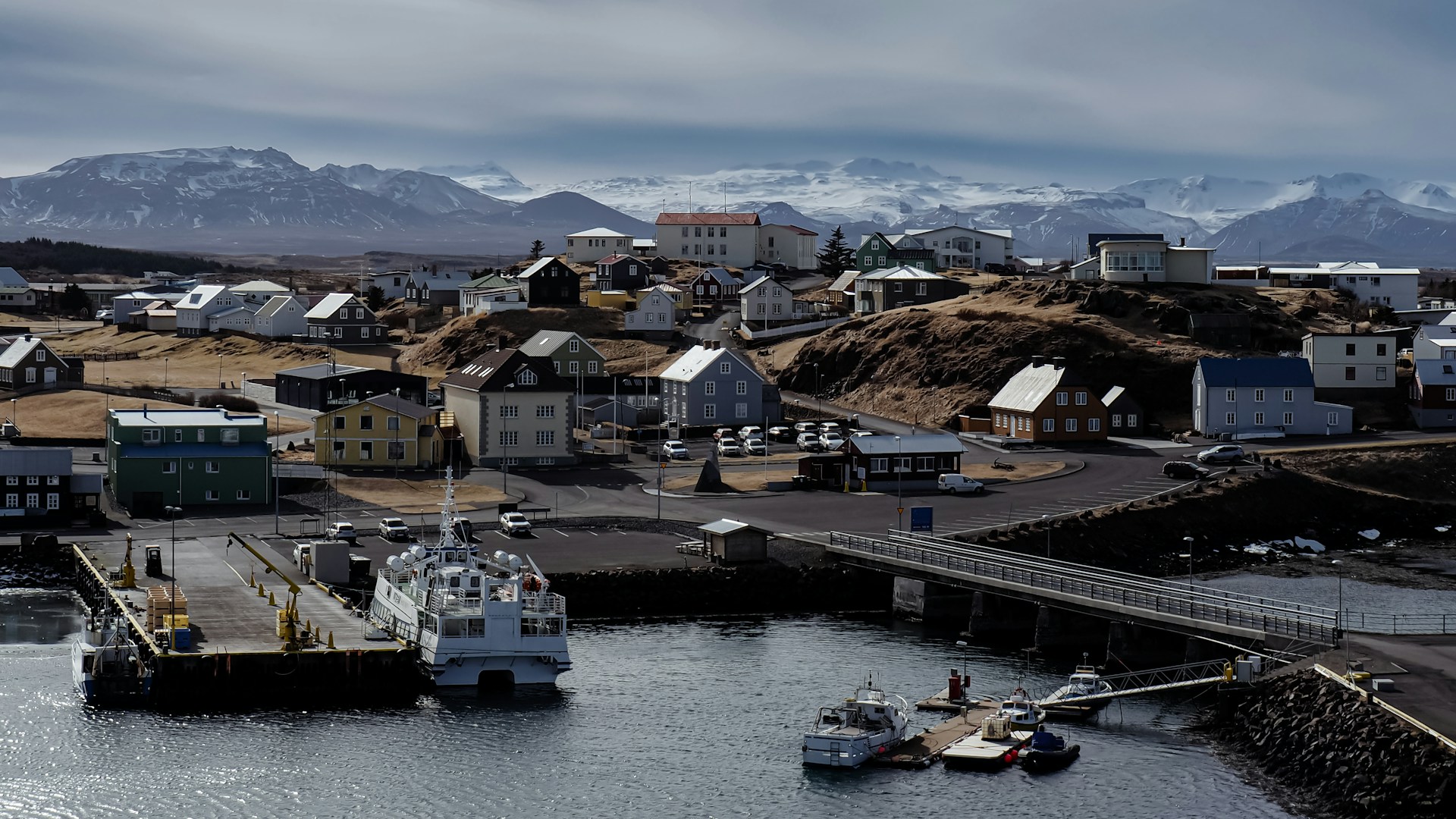
Stykkishólmur is the largest town on the Snaefellsnes Peninsula and serves as a perfect base for exploring the region. The town features colorful traditional Icelandic houses, a busy working harbor, and several interesting attractions.
Visit the Norwegian House, a beautifully preserved 19th-century timber building that now serves as a museum. The Library of Water is a unique art installation featuring glass columns filled with water from Iceland's glaciers. For volcano enthusiasts, the Volcano Museum showcases the passionate collection of a local volcanologist.
From Stykkishólmur's harbor, you can take the Baldur ferry across Breiðafjörður Bay to the Westfjords, stopping at the remote island of Flatey along the way. Summer visitors can also join whale watching tours or kayaking trips in the bay.
The town has several restaurants serving fresh seafood, hotels, and a geothermal swimming pool. If you're not staying overnight, most peninsula tours include a stop here for a meal break or bathroom stop.
Making the Most of Your Visit
While it's possible to visit Snaefellsnes as a day trip from Reykjavik, staying overnight allows for a more relaxed pace. You'll have time to explore smaller attractions, take longer hikes, and experience the peninsula without rushing.
Booking a tour ensures you see all the highlights without the stress of navigating or finding parking. Guides know the best times to visit popular spots to avoid crowds and can adjust the itinerary based on weather conditions. They also share local knowledge and stories that you'd miss when traveling independently.
For adventure seekers, consider specialized tours that include activities like lava caving in Vatnshellir, kayaking near Kirkjufell, or horse riding through the countryside. These experiences add another dimension to your visit.
Ready to Experience the Golden Circle?
Book your tour today and see these incredible sights with an expert local guide.
View Our Tours