
Kerið Crater is one of Iceland's most striking volcanic landmarks. Located in the Grímsnes area of South Iceland, this vivid red-and-green caldera lake sits along the famous Golden Circle route and draws visitors from all over the world. But most people spend only 20 to 30 minutes here and move on — and they miss a lot.
If you have a half day or a full day to explore the area, there is plenty to see and do nearby. This guide covers the best things to do near Kerið Crater, with two ready-to-use itineraries so you can make the most of your time.
What Makes Kerið Crater Worth a Visit
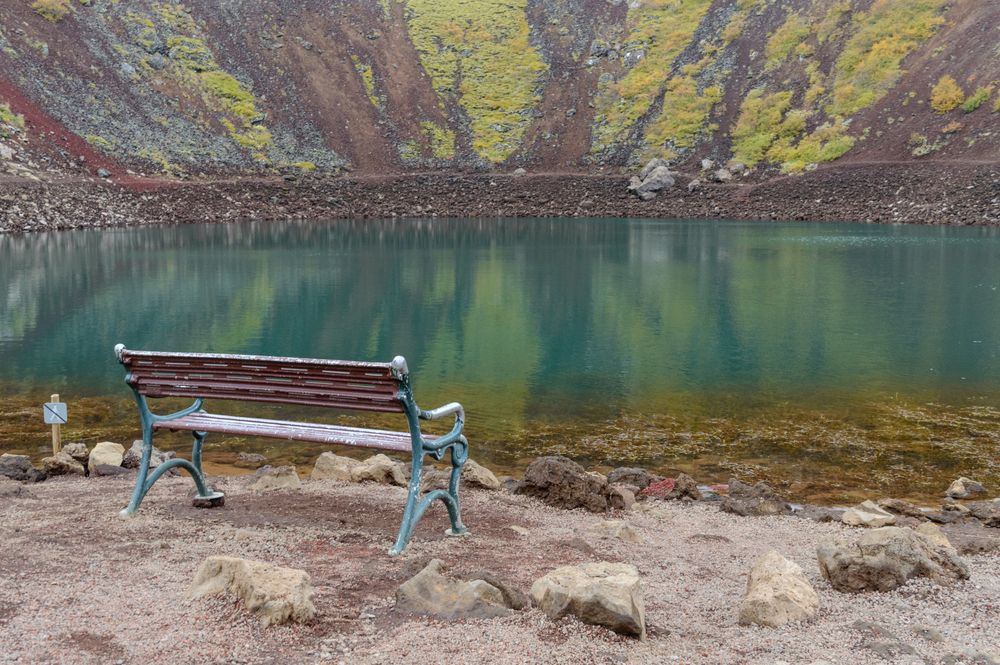
Kerið (also spelled Kerith) is a volcanic crater lake that formed roughly 6,500 years ago. Unlike many volcanic craters around the world, Kerið did not form from a violent explosion. Instead, the magma chamber beneath it collapsed inward after the volcano ran out of material, leaving behind a bowl-shaped depression that eventually filled with groundwater.
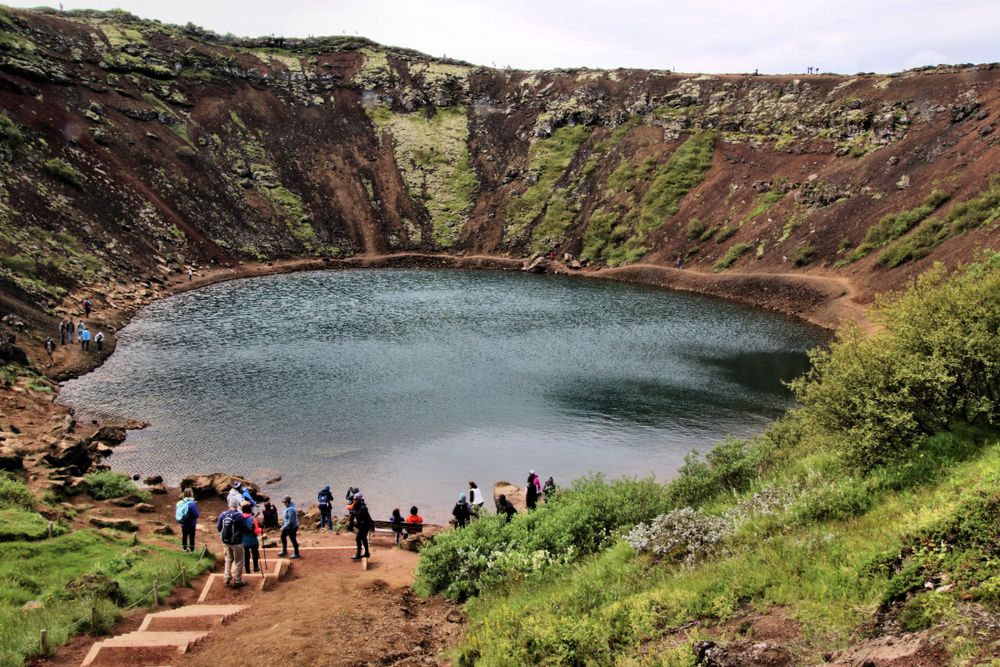
The crater is about 55 meters deep, 170 meters wide, and 270 meters long. The vivid contrast between the rust-red volcanic rock, black lava slopes, and the blue-green water at the bottom makes it one of the most photogenic spots in Iceland. You can walk around the full rim and also descend a path down to the lake's edge.
Half-Day Itinerary Near Kerið Crater
If you have around 4 to 5 hours, you can combine Kerið with two or three other top stops in the surrounding area. Here is a simple and relaxed half-day plan.
Stop 1 — Kerið Crater (30 to 45 minutes)
Start your morning or afternoon at the crater itself. Walk the rim trail for sweeping views of the lake and surrounding landscape. Then take the path down to the water's edge. Early mornings offer calm conditions and better light for photos. The full rim walk takes about 15 to 20 minutes at a leisurely pace.
Stop 2 — Skálholt Cathedral (20 minutes)
Just a short drive from Kerið, Skálholt is one of Iceland's most historically important sites. For centuries, it served as the religious and cultural center of the country.
The current cathedral dates from 1963 but stands on ground with over 900 years of history. It is peaceful, free to visit, and worth a brief stop if you are interested in Icelandic heritage.
Stop 3 — Flúðir Hot Spring Village (1 to 2 hours)
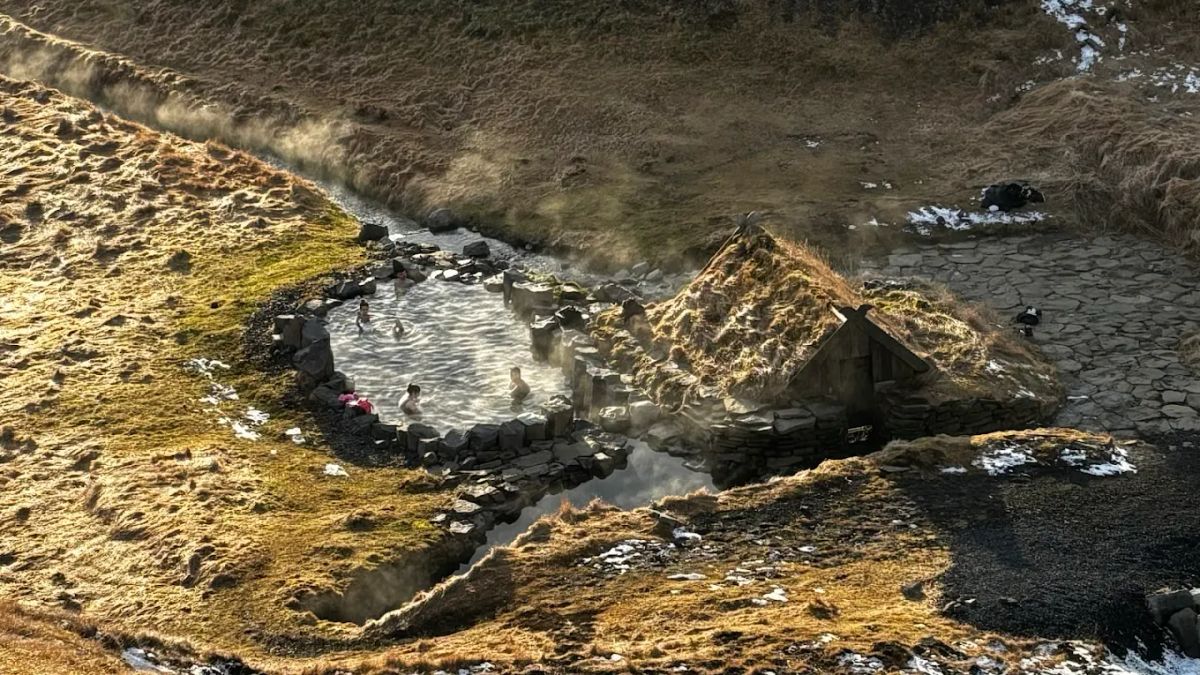
Flúðir is a small village known for its geothermal energy and warm springs. The Secret Lagoon (Gamla Laugin) is located here and is one of Iceland's oldest natural swimming pools, dating back to 1891. It is far less crowded than the Blue Lagoon and gives you a more natural, relaxed experience. Soaking in geothermal water after walking the crater is a great way to spend the rest of your half day.
Many visitors who want to cover Kerið and the Secret Lagoon in a single outing choose a guided Golden Circle tour that includes both stops. These tours take care of all the driving and logistics so you can focus on enjoying the experience.
Full Day Itinerary Near Kerið Crater
With a full day, you can combine Kerið with the best of the Golden Circle and add a few hidden gems that most tourists skip. Plan for 8 to 10 hours of exploration.
Morning — Þingvellir National Park (2 hours)
Start early at Þingvellir (Thingvellir), a UNESCO World Heritage Site about an hour from Reykjavik. This is where the North American and Eurasian tectonic plates meet, and you can actually walk between them through the Almannagjá gorge. The site also holds deep historical significance as the location of Iceland's ancient parliament, the Alþingi, founded in 930 AD. The landscape here is dramatic and unlike anything else in Iceland.
If you are feeling adventurous, Silfra is a fissure within the park where you can snorkel or dive in crystal-clear glacial water between the two tectonic plates. Visibility can reach over 100 meters. This is best booked in advance as a guided snorkeling or diving tour since you need a dry or wetsuit and proper equipment.
Late Morning — Geysir Geothermal Area (1 hour)
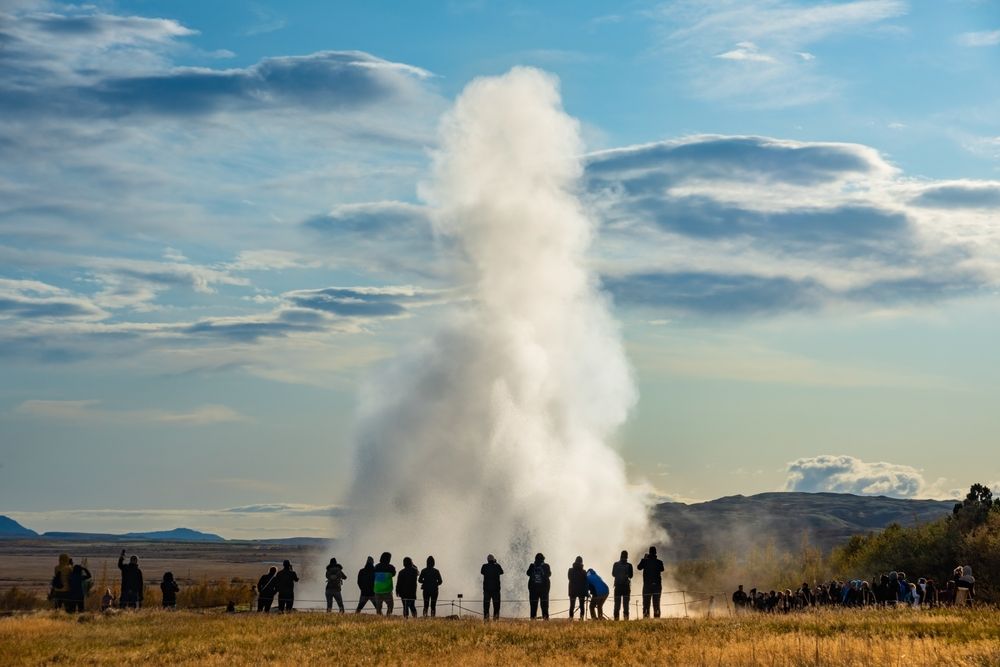
From Þingvellir, head to the Haukadalur geothermal valley, where you will find two famous geysers — Geysir and Strokkur. The original Geysir, which gave the world the word 'geyser,' rarely erupts anymore.
But Strokkur erupts reliably every 5 to 10 minutes, shooting a column of boiling water up to 30 meters into the air. It is a must-see stop and only takes about an hour to properly explore the area, including the surrounding mud pots and hot springs.
Lunch Stop — Gullfoss Waterfall (1 hour)
Just a short drive from Geysir sits Gullfoss, Iceland's most famous waterfall. The Hvítá river drops in two stages into a dramatic canyon, and on sunny days, you can often see rainbows in the mist. There is a visitor center at Gullfoss with a cafe where you can grab lunch before heading onward.
After Gullfoss, Kerið Crater fits naturally into the route on your way back toward Reykjavik. By early afternoon, most of the morning tour buses will have moved on, so you may find the crater a bit quieter. Take your time walking the rim and descending to the lake — this is the highlight of the stop.
Late Afternoon — Secret Lagoon in Flúðir (1.5 to 2 hours)
End your full day at the Secret Lagoon in Flúðir. After hours of walking and sightseeing, sliding into a naturally heated geothermal pool is a perfect way to finish. The lagoon stays open until 10 PM in summer and around 8 PM in winter, so timing is rarely an issue. It costs less than the Blue Lagoon and has a much more relaxed atmosphere.
The full Golden Circle route — covering Þingvellir, Geysir, Gullfoss, and Kerið — is one of Iceland's most popular travel experiences. Many people choose to do it with a guided Golden Circle day tour, especially if they do not want to worry about driving unfamiliar roads in Iceland's changing weather conditions.
Other Things to Do Near Kerið Crater You Should Not Skip
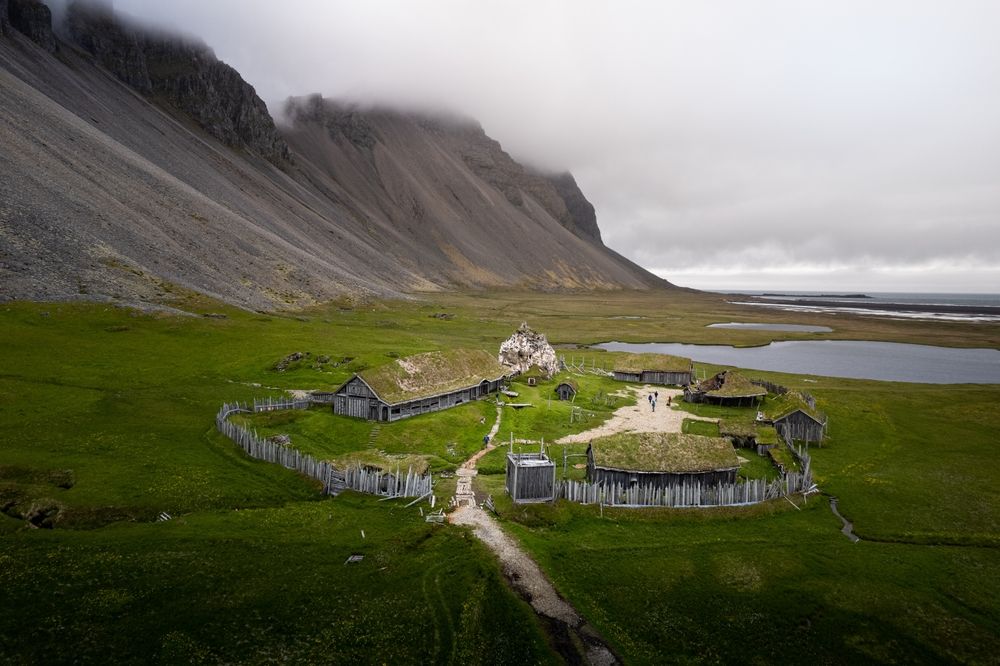
Visit Stöng Viking Longhouse Ruins & Grímsnes Lava Fields
You do not need a guide to walk through this terrain, but having a map helps you spot the smaller, lesser-known craters nearby. The landscape gives you a real sense of Iceland's volcanic past and feels very raw and open.
About 40 minutes east of Kerið in the Þjórsárdalur valley, you will find the ruins of Stöng, a Viking Age farm that was buried under ash when Mount Hekla erupted in 1104. It is one of the best-preserved Viking longhouse sites in Iceland. Nearby, a full-size reconstruction called Þjóðveldisbærinn gives you a vivid idea of what life looked like in Iceland over 900 years ago.
See Bruarfoss Waterfall
Bruarfoss is sometimes called Iceland's bluest waterfall, and for good reason. The intense turquoise colour of the water is striking, especially in sunlight. It is a bit of a hidden gem that many Golden Circle visitors miss because the parking area is not well signposted. The trail to the falls takes about 20 to 30 minutes each way. It is a lovely detour if you want to get off the tourist trail.
Horseback Riding in the Countryside
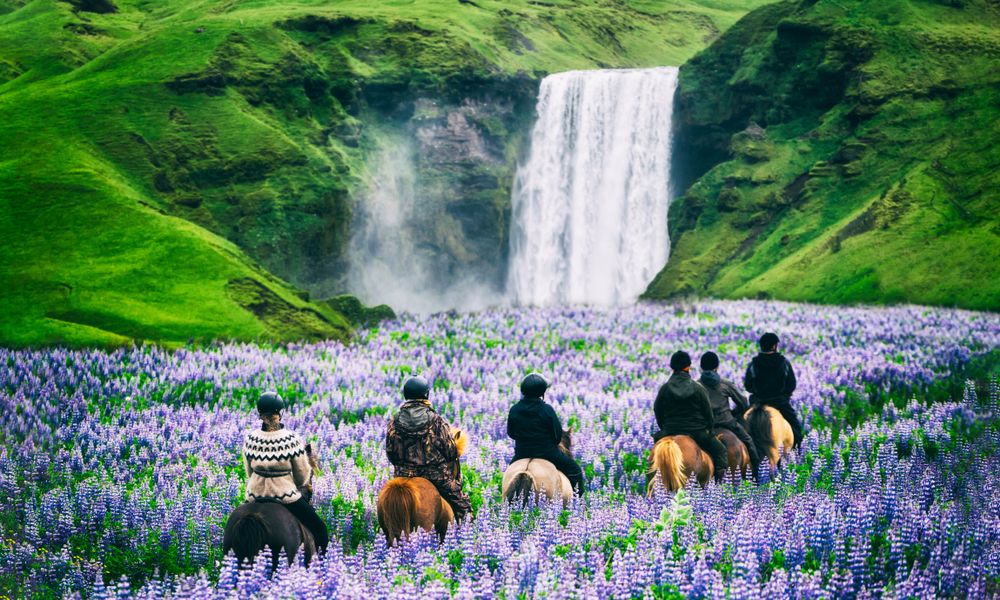
The South Iceland countryside around Kerið and Flúðir is ideal for horseback riding. Icelandic horses are a unique breed, small but sturdy, and they have a smooth fifth gait called the “tölt,” which makes riding them very comfortable.
Several farms in the area offer guided rides through lava fields and along river valleys. It is a fantastic way to experience the landscape at a slower pace, and rides are suitable for beginners.
How to Get to Kerið Crater from Reykjavik
Kerið Crater is about 75 kilometers from Reykjavik, roughly a 50-minute drive via Route 35. The road is paved and easy to drive year-round. If you are renting a car, it fits naturally into a Golden Circle self-drive route.
If you prefer not to drive, Kerið is included on several small group Golden Circle tours that depart daily from Reykjavik. These typically run 7 to 9 hours and cover all the major stops, including Þingvellir, Geysir, Gullfoss, and Kerið. Some tours also offer add-ons like the Secret Lagoon or Silfra snorkeling for a more complete day.
Compare Golden Circle Tours
Check each selected product for its current operator, guide, itinerary, meeting point, and terms.
View Our Tours

