
The Geysir geothermal area in the Haukadalur Valley is one of Iceland's most visited natural sites and one of its most underexplored. Most visitors watch Strokkur erupt two or three times, photograph it, and return to the car within 20 minutes.
The walking trail around the full geothermal field takes about an hour and covers features that most Golden Circle day-trippers never see: vivid hot spring pools of different clarity and color, the enormous dormant Geysir crater, elevated viewpoints across the entire valley, and the specific geological details that make the Haukadalur area one of the most active geothermal sites in the world.
Getting to the Geysir Geothermal Area
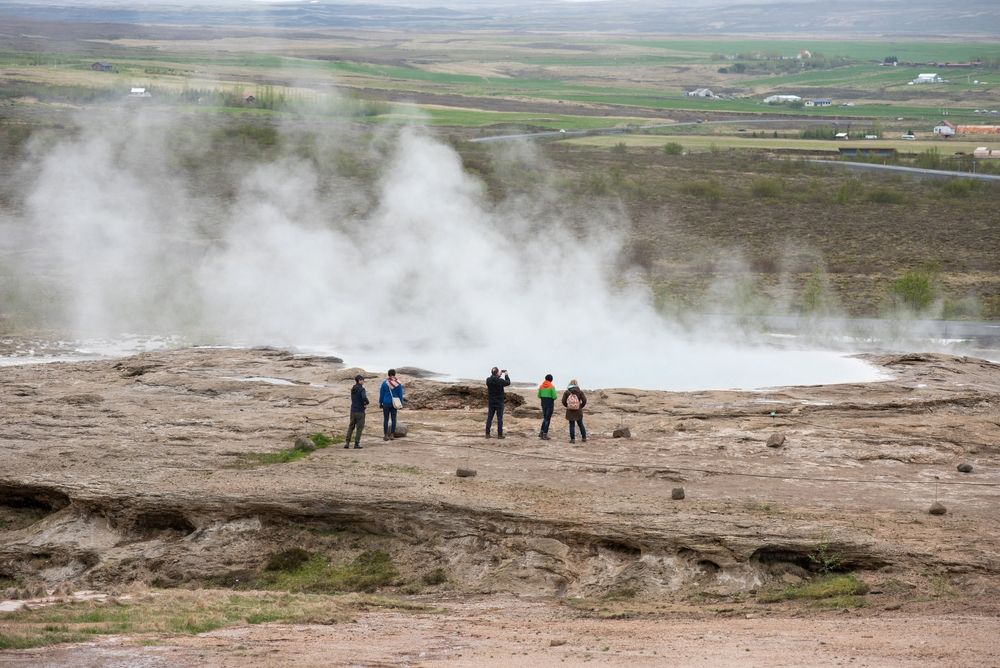
- Location: Haukadalur valley, southwestern Iceland. On Route 35 between Þingvellir (60 km west) and Gullfoss (10 km east).
- Distance from Reykjavik: Approximately 100 km, 1.5 hours by car. Take Route 1 east from Reykjavik, then turn north onto Route 35.
- Parking: A large free car park is located at the Geysir Center directly adjacent to the geothermal field. Strokkur is a 2-minute walk from the car park.
- Admission: Free. No entrance fee to walk the geothermal field.
- Getting there without a car: The Geysir area is a standard stop on all Golden Circle guided tours departing from Reykjavik. Self-driving is the most flexible option.
What Is the Geysir Area: Overview
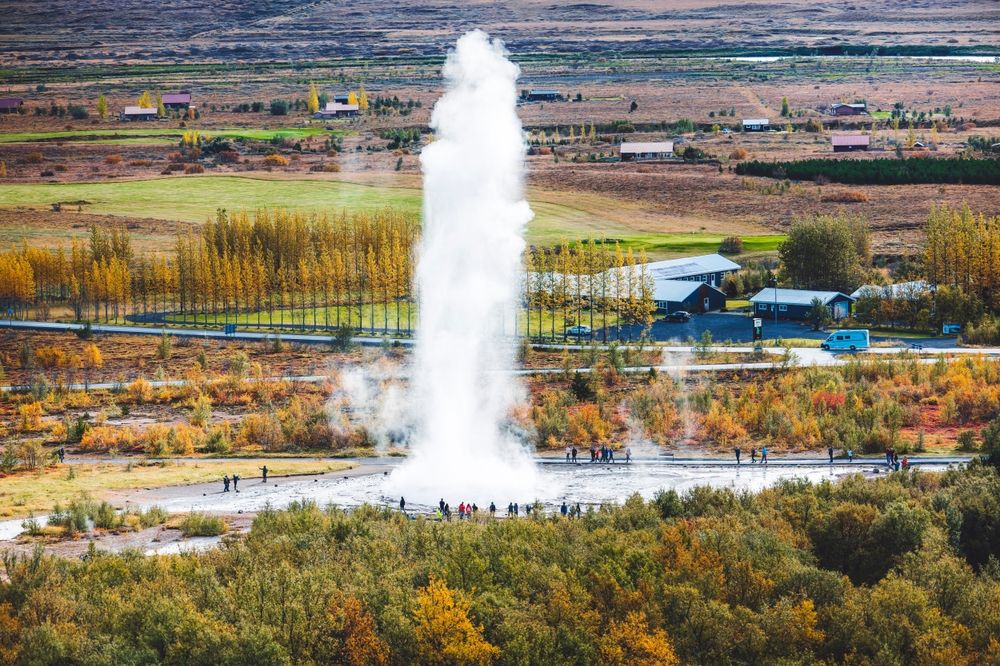
The Haukadalur geothermal field sits on a rhyolite dome that concentrates geothermal activity at the surface. The area has been active for approximately 10,000 years, making it one of the oldest known geyser fields in the world. Around 40 hot springs, fumaroles, mud pots, and geysers are distributed across the compact valley.
The original Great Geysir gave its name to all geysers worldwide. The word geyser comes from the Icelandic verb að geysa, meaning to gush. Geysir historically erupted to heights of up to 70 meters but is now largely dormant, erupting only occasionally. Strokkur, 100 meters from Geysir, erupts reliably every 5 to 10 minutes and is the main attraction.
The Geysir Walking Trail: Step by Step
The main walking trail through the Haukadalur geothermal field covers approximately 1.7 km and takes 45 to 90 minutes depending on how long you spend at each feature. The trail is marked and well-maintained. Boardwalks protect the most delicate ground sections and keep visitors on safe paths above geothermal-active ground.
Starting Point: Strokkur
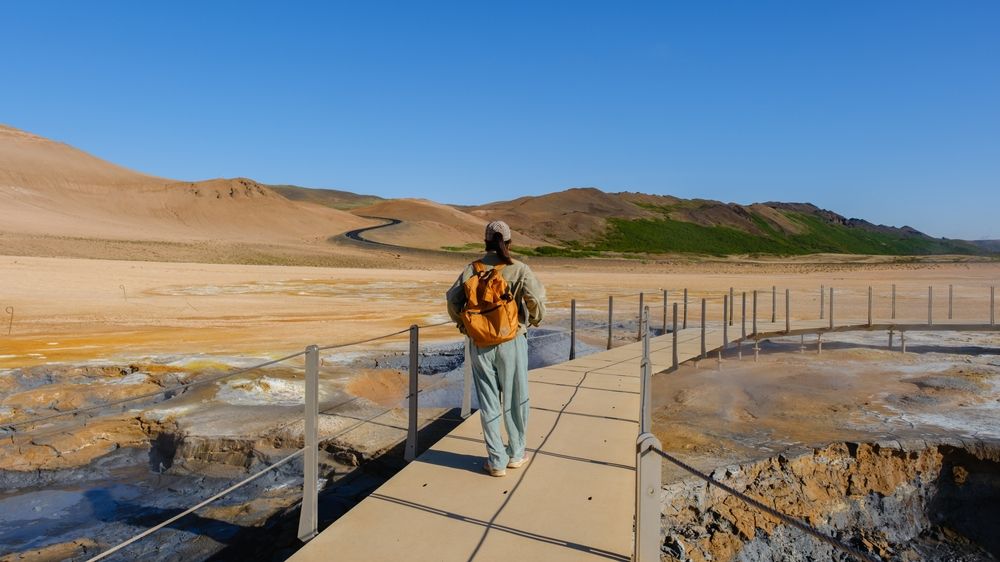
Begin at Strokkur, immediately visible from the Geysir Center car park. Strokkur erupts every 5 to 10 minutes to heights of 15 to 40 meters. The eruption height varies with each cycle. Watch 3 to 4 eruptions rather than just one to get a sense of the full range.
Position yourself upwind. Steam from the eruption drifts toward anyone downwind and in cold temperatures this is significant. The wind direction at Geysir changes during the day; observe which way the steam is blowing before choosing your position.
For photography: use burst mode. The eruption lasts only a few seconds. The blue dome that forms at the vent just before the eruption is one of the most distinctive shots and disappears in under a second. Positioning yourself low and at eye level with the vent gives a different and often more dramatic perspective than shooting from standing height.
Litli Geysir and the South Hot Springs
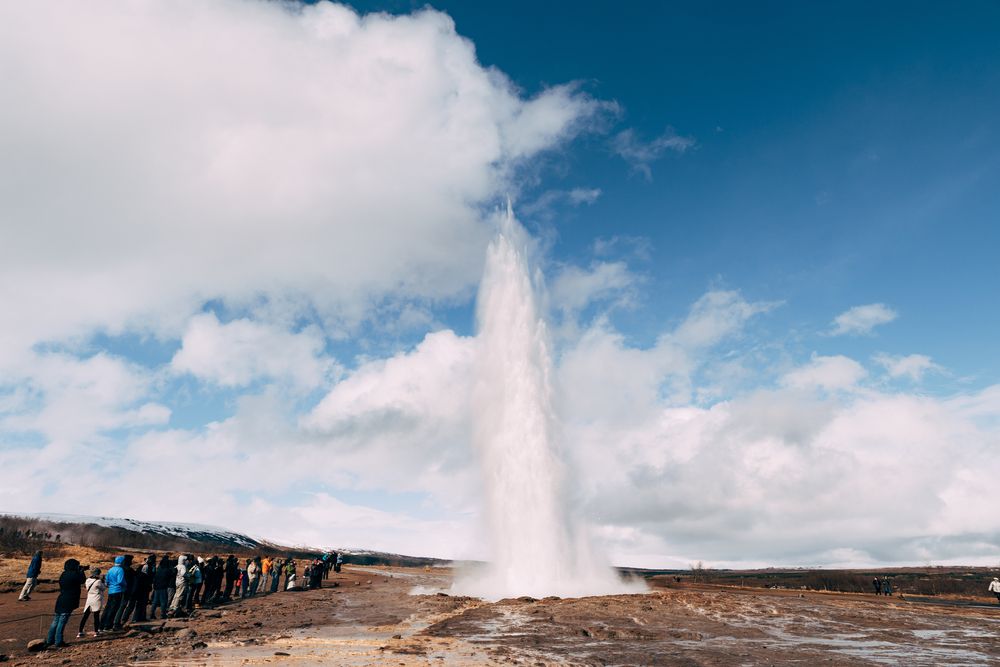
South of Strokkur, a series of smaller hot springs and fumaroles dot the ground on both sides of the path. Litli Geysir (Little Geyser) is a small, occasionally active vent near the main path. The surrounding springs vary from clear blue pools through milky turquoise to opaque grey and orange depending on mineral content and temperature. The colored deposits on the ground around the springs are sulphur compounds and iron oxides, the same chemistry that gives Icelandic geothermal areas their yellow, orange, and red colorations.
The ground between the paths is genuinely dangerous in this section. Thin crusts above boiling water and mud are not visible to the eye. Stay on the marked paths and boardwalks throughout.
Blesi: The Two-Pool Spring
Approximately 200 meters north of Strokkur, Blesi is one of the most visually interesting individual features in the entire geothermal field and one of the most overlooked by visitors who turn around before reaching it.
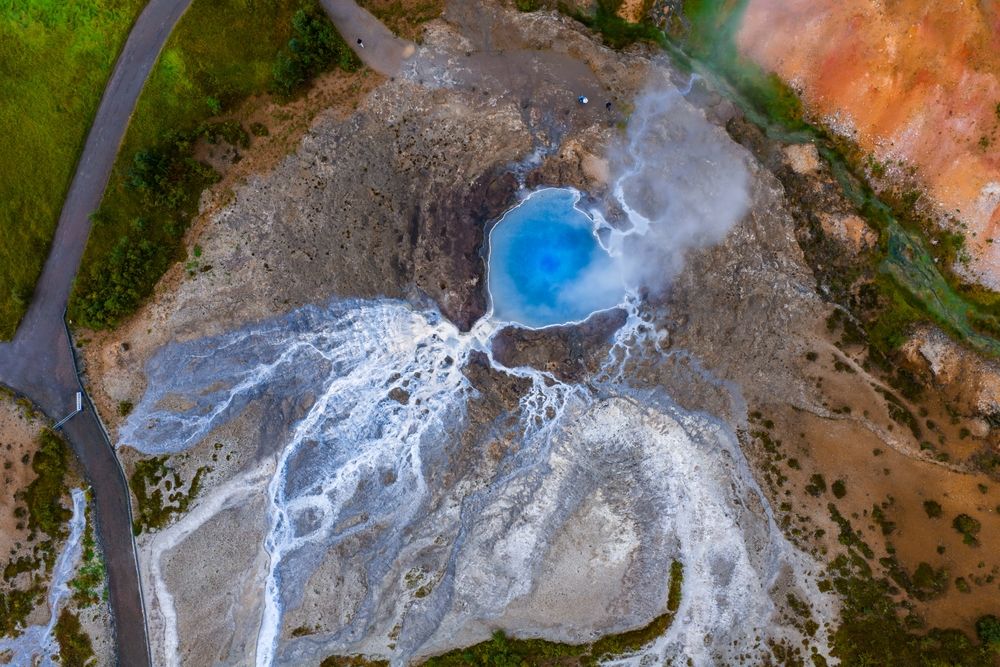
Blesi consists of two adjacent pools fed by the same geothermal source. One pool is completely clear, with visibility to the bottom through several meters of water. It appears to glow from within. The adjacent pool is opaque and vivid turquoise. The difference between the two pools with the same water source comes down to temperature: the clearer pool is cooler, allowing dissolved silica to remain in suspension and produce the translucent quality; the warmer pool keeps silica colloidal and opaque.
Standing between the two pools and photographing the contrast of clear and opaque water side by side is one of the best compositions available in the Geysir area.
The Great Geysir Crater
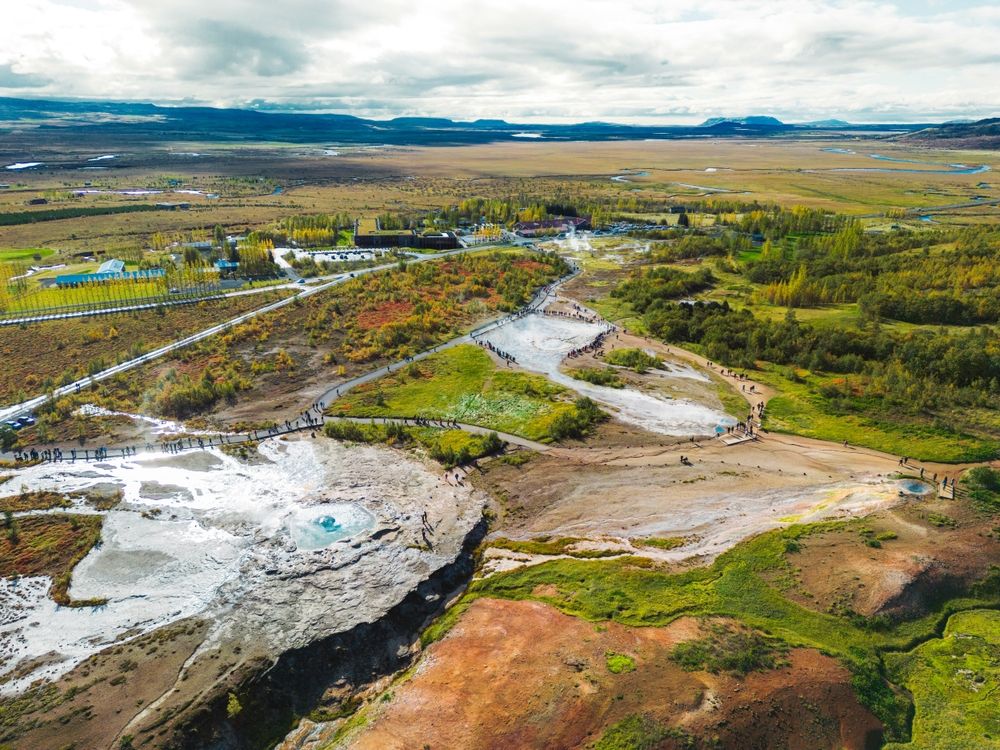
At the north end of the field, the Great Geysir crater is 18 meters in diameter and sits in a large silica terrace built up by centuries of eruptions. The spring inside the crater steams but rarely erupts. Historically, Geysir shot water to 70 meters and was one of the most powerful geysers in the world. Activity declined through the 20th century and the geyser is now mostly dormant.
The silica sinter terrace around the crater is one of the most visible examples in Iceland of how geyser activity builds landscape over time. The white and orange mineral deposits extend several meters around the vent. Information signs near the crater explain the history of Geysir's documented activity from the first scientific measurements in 1294 to the present.
An earthquake in 2000 briefly reactivated Geysir, triggering a series of eruptions. The dormant geyser has been triggered to erupt by the addition of soap on a few occasions, demonstrating the heat source and water supply remain active. It is the underground plumbing geometry that has changed.
Elevated View Hill
Behind and above the main geothermal field, a short path climbs the hillside to an elevated viewpoint overlooking the entire Haukadalur valley. From here, the spatial relationship between the different geothermal features, the Geysir Center, the farmland of the valley, and the highland landscape to the north including Langjökull glacier becomes clear.
This viewpoint is where the scale of the valley is most apparent. Most visitors at ground level in the geothermal field see individual features in isolation. From the hill, you see the full geothermal zone and its context in the broader landscape. In winter, the contrast of steaming vents against the snow-covered valley is photographically excellent from this position.
Return Path and the Konungshver Pool
The return path on the eastern side of the field passes Konungshver (King's Spring), another vivid blue pool, and several smaller vents before returning to the Strokkur area. This side of the field is typically less visited than the main western path and provides a quieter experience of the same features.
What to See Beyond the Main Walking Trail
Haukadalsskógur Forest
Adjacent to the geothermal field, the Haukadalsskógur forest is an example of Iceland's ongoing reforestation efforts. Iceland was largely forested at the time of settlement in the 9th century and lost most of its tree cover over the following centuries. The Haukadalur forest represents one of Iceland's more established reforestation projects and provides a short walk that contrasts with the bare volcanic landscape of the geothermal field.
A loop walk through the forest and back to the Geysir area takes approximately 1 to 1.5 hours.
Haukadalur Church Loop
A longer circular walk from the Geysir Center takes in the old Haukadalur church and surrounding farmland before returning. Approximately 3 to 4 km, easy difficulty, taking about 1.5 hours. The church is a small, traditional Icelandic turf-roof structure with a historic cemetery. The walk passes through farmland with views back toward the geothermal valley.
Compare Golden Circle Tours
Check each selected product for its current operator, guide, itinerary, meeting point, and terms.
View Our Tours

