
Is the Blue Lagoon Worth Visiting at Night?
Yes, for atmosphere rather than for anything you can photograph. The water is the same 37 to 39°C it is at midday, but the light is gone, the steam is more visible against dark air, and the lagoon is noticeably quieter after about eight in the evening.
Winter helps here, because darkness arrives by four in the afternoon. A three o'clock slot in December is a night visit in everything but name.
What you should not do is book a late slot expecting the northern lights. That is a bonus, not a plan.
Opening Hours and Latest Entry
The hours shift three times a year, so check before booking rather than assuming.
From 21 August to 31 January the lagoon stays open until 22:00, which is the window that makes a genuine night visit possible.
From 15 June to 20 August it runs 07:00 to 23:00, the longest day of the year, which is also when there is no darkness at all.
From 1 February to 31 May it closes at 20:00, which is the tightest window for an after-dark soak.
Last entry falls before closing, usually by an hour or more, and it is set per slot rather than as a single rule.
Entry is timed and pre-booking is required. Walk-ups are not accepted, and late slots in winter sell out well ahead.
What a Night Visit Feels Like
Three things change once the light goes.
Steam becomes the dominant feature. In daylight the milky blue water is what you notice, and after dark it is the steam rolling off the surface and catching the lights.
Sound drops. The lagoon is quieter in the evening, and voices carry less across water in cold air.
The lava field disappears. In daylight the black rock all around is half the setting. At night you are in a lit pool inside a void, which is a completely different experience and better for some people than others.
The lagoon's own lighting is deliberately low and coloured, and it changes the water from blue towards something closer to teal or purple depending on where you sit.
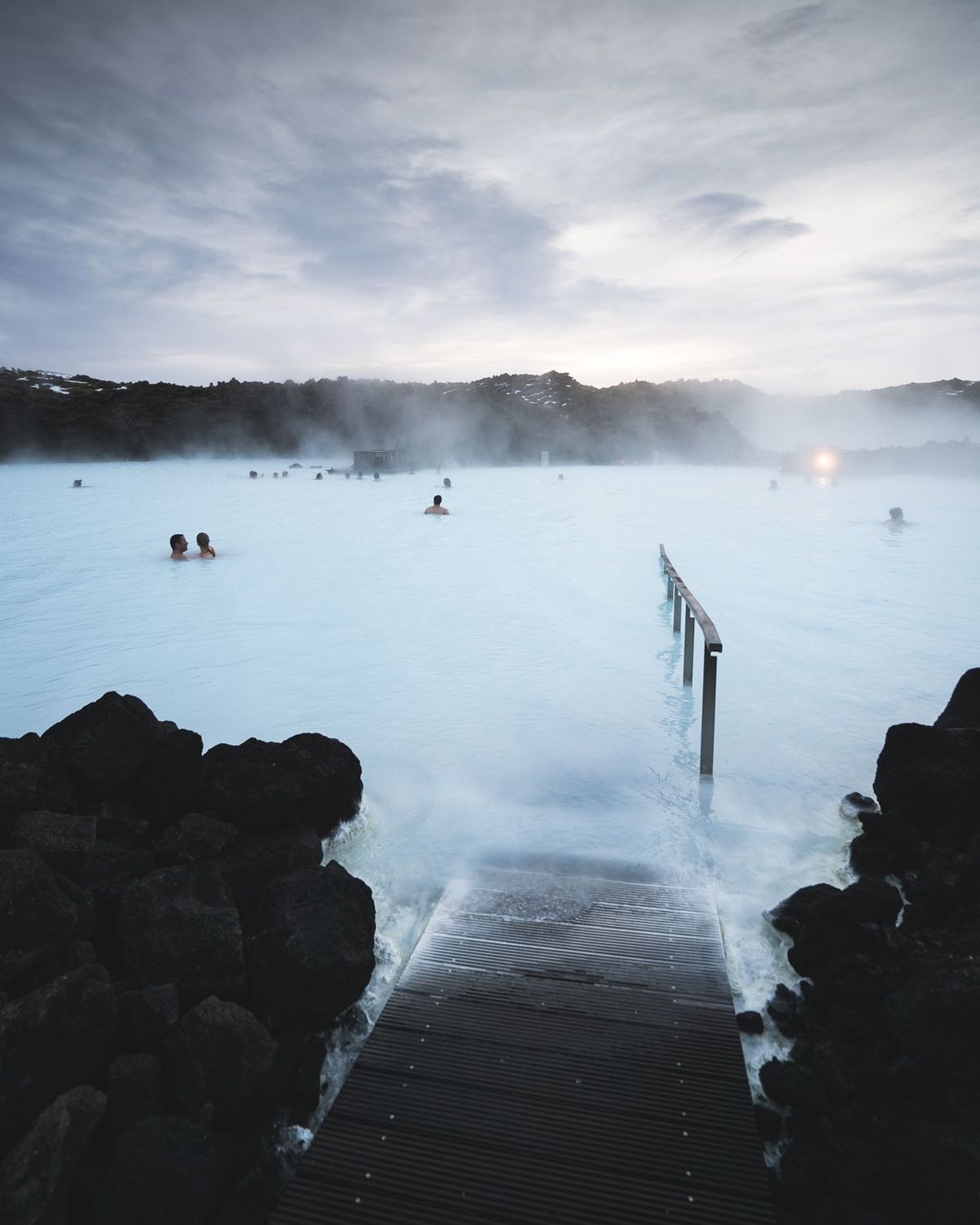
The walk from the changing rooms to the water is the coldest thirty seconds of the evening.
Northern Lights From the Lagoon
Possible, and less likely than the marketing suggests.
The aurora season runs from late September to early April, and the Reykjanes peninsula is dark enough away from the lagoon itself.
Two things work against you. The lagoon is lit, and that lighting sits directly in your field of view, so faint aurora that would be visible from a dark field is not visible from the water.
The second is cloud. Icelandic winter skies are overcast far more often than clear, and no amount of solar activity gets through cloud.
The Icelandic Met Office publishes an aurora forecast alongside cloud cover, and it is the only forecast worth checking.
A Kp index of 3 or above is the usual threshold for anything visible this far south on the peninsula, and even then a clear patch of sky matters more.
Solar activity is currently in the strong part of the cycle. NOAA's Space Weather Prediction Center tracks Solar Cycle 25, whose predicted maximum was a smoothed sunspot number of 115 in July 2025.
If aurora is the goal, book a dedicated tour that drives away from light instead. The lagoon is a poor viewing platform and an excellent bath.
Planning a Late Slot
Five practical points that make the evening work.
Book the slot before anything else in your day. Timed entry is fixed and everything else is flexible.
Aim for the second-to-last slot rather than the last one. You get the quiet without being asked to leave while you are still enjoying it.
Allow two to three hours on site. The soak is 90 minutes for most people, plus changing, plus the walk in from the car park.
Eat before or plan to eat there. The restaurants take bookings and fill on winter evenings.
Check the road and the eruption status on the day. The peninsula has been in an active period since 2021, and SafeTravel carries the official closure notices.
Getting There and Back After Dark
The logistics are the weak point of a night visit, and they are solvable.
The Blue Lagoon sits on the Reykjanes peninsula, about 50 kilometres from Reykjavík and 23 kilometres from Keflavík Airport. The drive from the capital takes 45 to 50 minutes.
Scheduled coaches run between Reykjavík and the lagoon, with the last return timed around closing. Check that the last departure actually suits your slot before you book the slot.
Driving yourself after dark on the Reykjanesbraut is straightforward in good weather and less so in winter wind. The road is exposed and unlit for long stretches.
The airport proximity makes the lagoon a natural last stop before a late flight, and this is the situation where a night visit genuinely makes sense.
Our page on the Blue Lagoon covers the site and the transfer options.
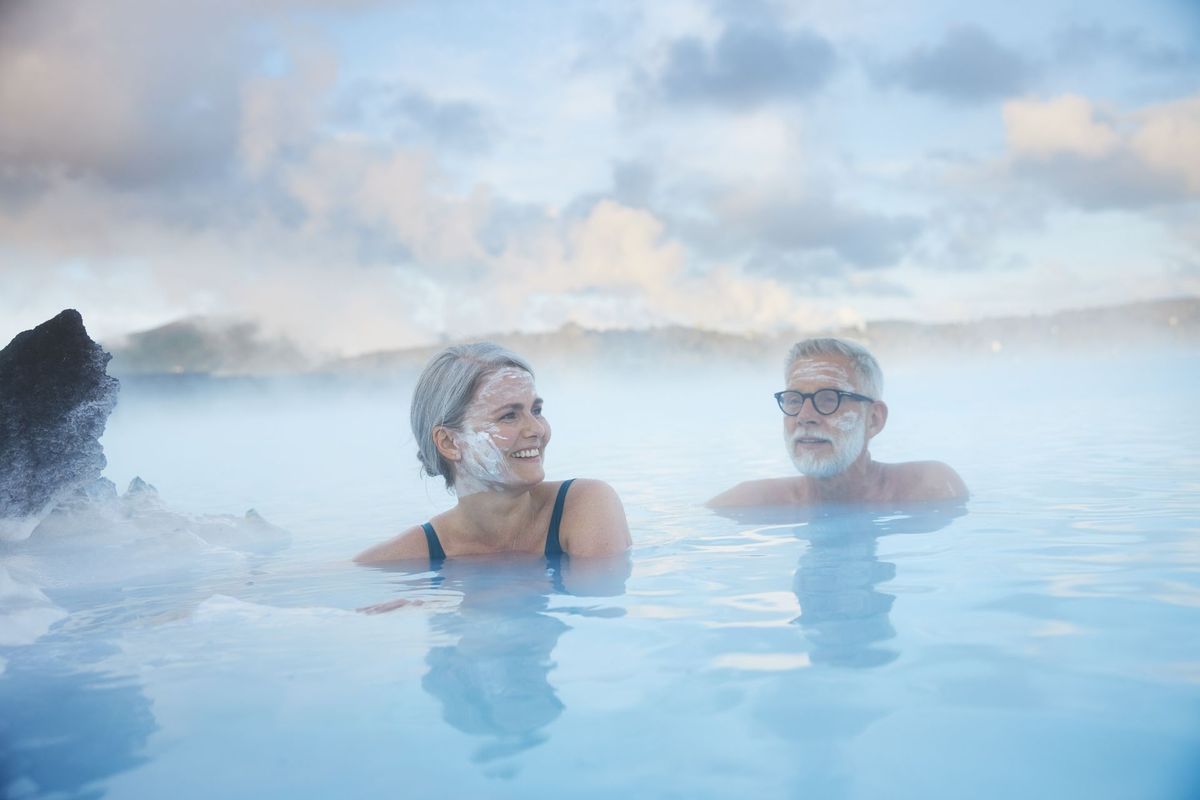
The silica mud mask is included with admission and is the one thing everybody does.
What Is Included and What Is Not
Worth knowing before you arrive, since the tiers differ.
The base admission includes entry, a silica mud mask and a towel. The higher tiers add a robe, slippers, additional masks and a drink.
One drink is included with most tickets and is taken at the swim-up bar, paid for by scanning your wristband.
Lockers are included and operated by the same wristband, so nothing needs carrying.
The sauna, steam room and the waterfall are all included with any ticket.
The Retreat is a separate, considerably more expensive product with its own lagoon and spa, and it is a different experience rather than an upgrade.
The Silica and Your Hair
The single most common regret, and it is entirely avoidable.
The water is silica-rich, and silica dries hair badly. Untreated, it will feel like straw for a day or two afterwards.
Use the conditioner provided in the showers before you go in, and use a lot of it. Tie long hair up and keep it out of the water.
Remove silver jewellery before entering, since geothermal water tarnishes it quickly.
Contact lens wearers should keep their eyes above water. Silica in a lens is unpleasant.
Everyone showers without a swimsuit before entering, as at every Icelandic pool. This is checked and it is standard.
Night vs Day
An honest comparison, because the right answer depends on the season.
In winter, night is better. The lagoon is quieter, the steam is dramatic and there is a small chance of aurora. Darkness starts early enough that a mid-afternoon slot delivers it.
In summer, day is better, or rather the distinction stops existing. There is no real darkness in June and July, and the midnight sun over the lava field is its own thing.
For photographs, late afternoon in the shoulder seasons beats both. You get low light on the water with enough of it to see the lava field.
For crowds, the earliest and latest slots of any day are the quietest, and midday between eleven and three is the worst.
The Sky Lagoon is the alternative on a Reykjavík evening, 20 minutes from the city rather than 50.
Both hold their temperature year-round, so the season changes the air rather than the water.
Our comparison of Sky Lagoon and the Blue Lagoon covers the choice between the two if you are short on time.
Is It Worth the Detour?
Depends entirely on where the rest of your trip is.
If you are flying out the next morning or arriving that day, the lagoon is 23 kilometres from the airport and a night slot fits perfectly.
If you are staying in Reykjavík and doing a Golden Circle day, the Blue Lagoon costs you a 100 kilometre round trip on top. Sky Lagoon is 20 minutes from the city and open late.
If the milky blue water against black lava is the specific image you came to Iceland for, then it is worth the drive at any hour, and after dark it is a quieter version of it.
If you are doing the Golden Circle on the same trip, our guide to what the loop covers sets out how much of a day the sightseeing already takes.
Pair It With a Golden Circle Day
A Golden Circle loop and a Blue Lagoon soak in the same day is a long day and a good one, provided the lagoon slot is booked for the evening rather than squeezed into the afternoon. Our Golden Circle and Blue Lagoon combination covers the three main sites and includes lagoon admission across about ten hours. Tell us your dates and we will find a departure that lines up with the slot you want.
Compare Golden Circle Tours
Check each selected product for its current operator, guide, itinerary, meeting point, and terms.
View Our Tours