
Every school child learns the joke: Iceland is green and Greenland is icy. Like most jokes it is only half true.
Iceland has plenty of ice, including Europe's largest ice cap by volume, and Greenland's coast turns green and flowery in summer. The real difference between them is scale, and the gulf is far bigger than most travellers expect.
Greenland is enormous, empty and mostly frozen, with fewer people than a mid-sized English town spread along a coast you cannot drive. Iceland is compact, connected and set up for visitors, and its volcanoes and hot springs sit within a day's drive of the capital.
Both are extraordinary. They just suit very different trips.
Iceland or Greenland: The Quick Answer
For a first trip to the Arctic, choose Iceland. It is easier and cheaper to reach, and you can drive between its sights. In a single week you can see glaciers, volcanoes, geysers and the northern lights.
Choose Greenland if you have already been to Iceland, have a bigger budget and want true remoteness. It offers Inuit culture, the ice sheet, icebergs the size of buildings and towns reachable only by plane or boat. Many travellers do Iceland first and Greenland later, often flying via Reykjavík.
Iceland vs Greenland at a Glance
The basic numbers show how different they are:
- *Size:* Iceland is about 103,000 square kilometres. Greenland is more than 2.1 million, around 20 times larger.
- *Population:* Iceland has just under 400,000 people. Statistics Greenland counted about 57,000 residents in mid-2026.
- *Ice cover:* around 11 per cent of Iceland is glacier, compared with roughly 80 per cent of Greenland.
- *Roads:* Iceland has a paved ring road around the whole island. Greenland has no roads between its towns.
- *Currency:* Iceland uses the Icelandic króna. Greenland uses the Danish krone.
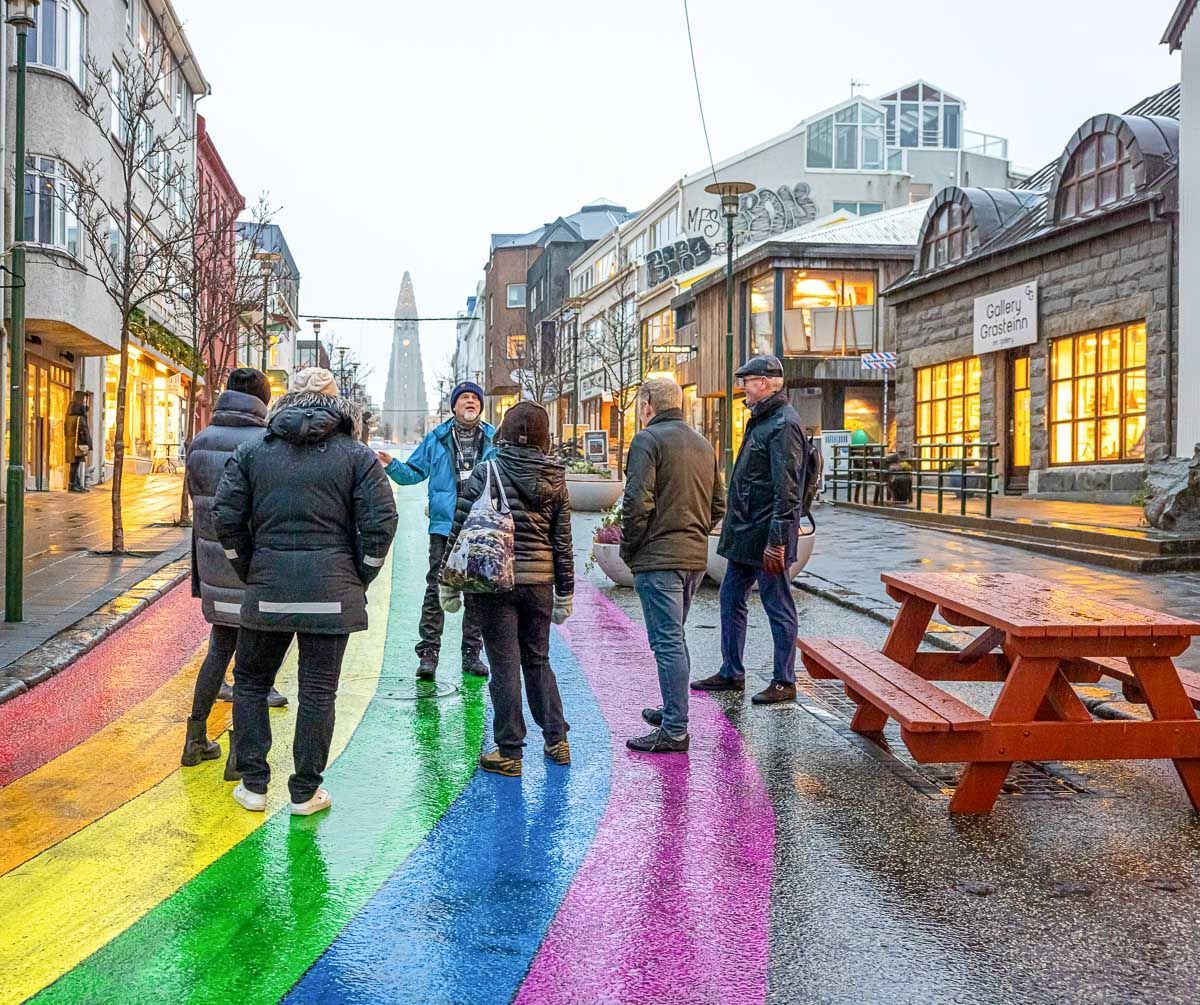
Reykjavík's rainbow-painted Skólavörðustígur, with Hallgrímskirkja at the end of the street.
Politically, Greenland is a self-governing part of the Kingdom of Denmark, while Iceland is an independent republic. Greenland is outside the Schengen Area, so check its entry rules separately if you are combining the two.
Getting There
Iceland is one of the easiest Arctic destinations to reach. Keflavík Airport has direct flights from across Europe and North America, many under three hours from northern Europe and around five or six from the US east coast.
Greenland has become easier to reach recently. Nuuk's new international airport opened on 28 November 2024, allowing larger jets to fly direct to the capital, and Ilulissat's new airport is due to open in late October 2026. Even so, most routes still connect through Copenhagen or Reykjavík, and flights are pricier than to Iceland.
Getting Around
This is where the two diverge most. In Iceland you can hire a car at the airport and drive the Golden Circle, the South Coast and the Ring Road on your own schedule.
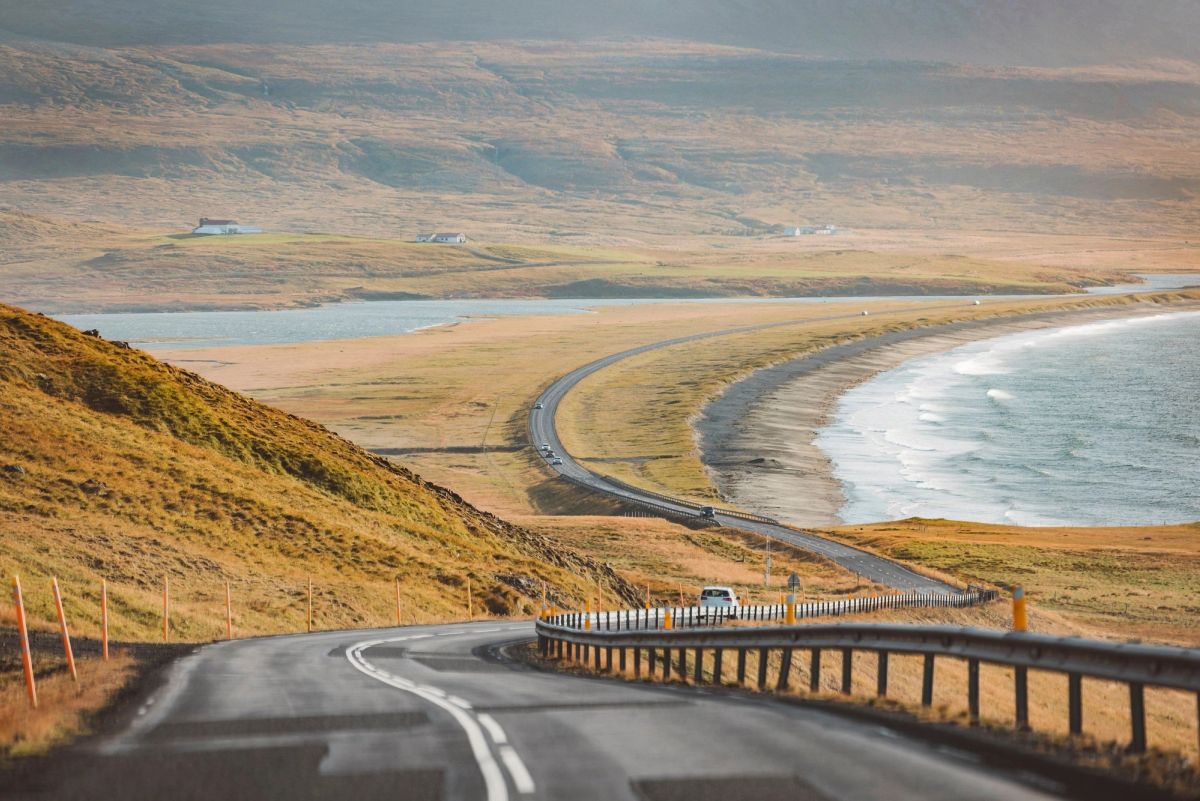
A coastal stretch of Iceland's ring road, the paved highway that links most of the country.
Greenland's towns are islands in all but name. Travel between them is by small plane, helicopter or ship, and schedules depend heavily on the weather. That makes independent travel slow and expensive, and many visitors join cruises or packaged tours instead.
Cost
Both countries are expensive by European standards. Iceland is pricey for food, alcohol and accommodation. Plenty of competition between airlines and tour companies still keeps it within reach of most budgets.
Greenland costs much more. Internal flights, limited accommodation and the need for boats or guides for most excursions add up quickly, and a week can easily cost two or three times what the same week would in Iceland.
Landscapes and Sights
Iceland's appeal is variety in a small space. In a single day on the Golden Circle you can stand in a rift valley between tectonic plates, watch Strokkur erupt every few minutes and see Gullfoss pour into its canyon.
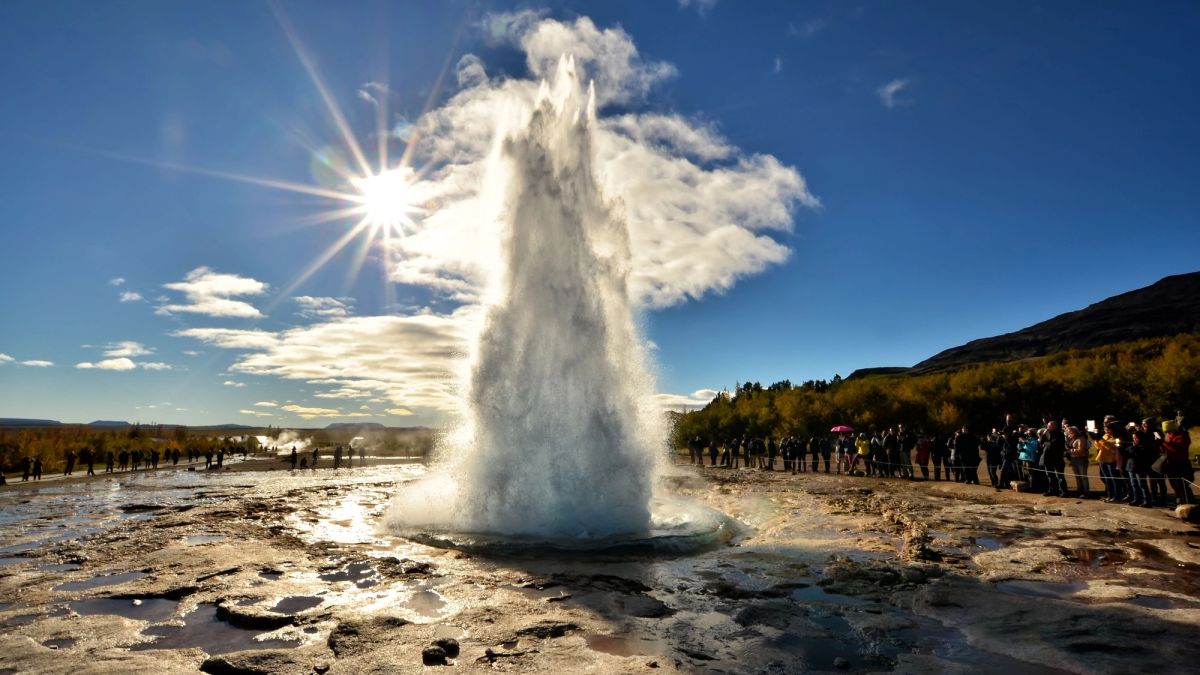
Strokkur erupting at the Geysir geothermal area, one of the classic stops on Iceland's Golden Circle.
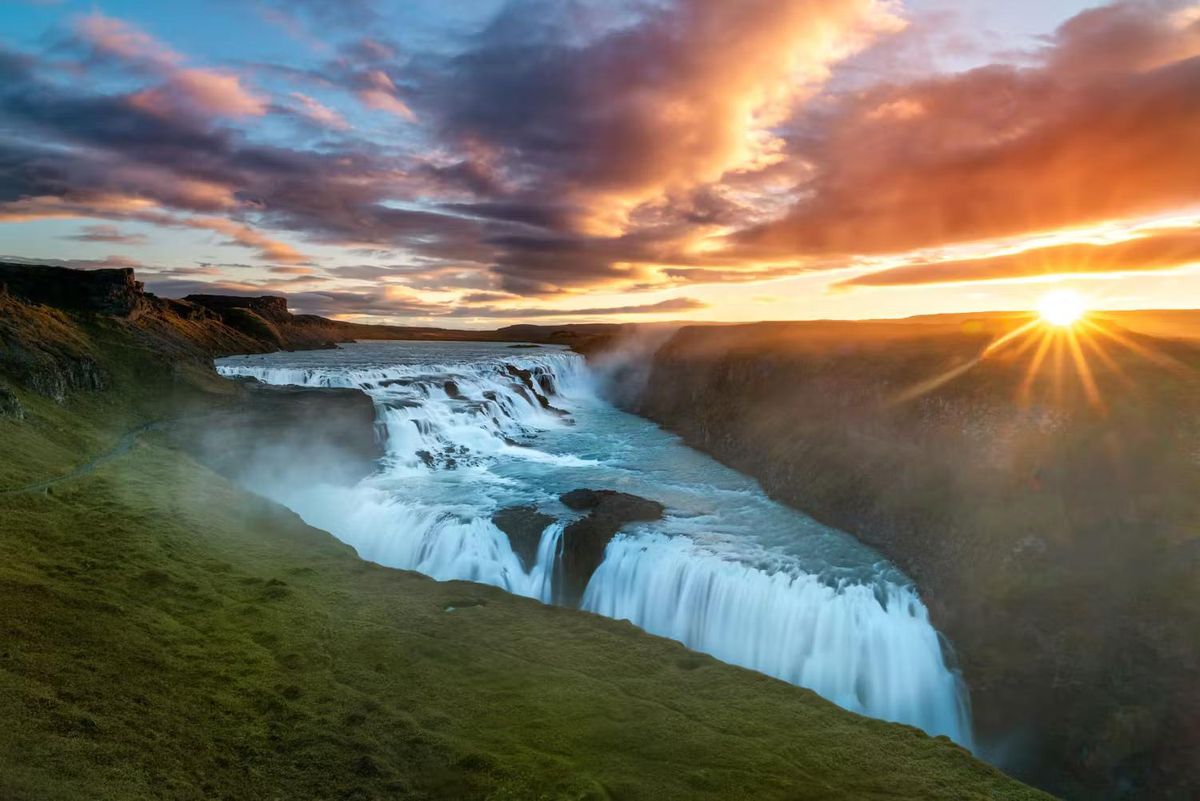
Gullfoss at sunset, with spray rising from the canyon as the sun drops behind the falls.
Add black sand beaches, lava fields, glacier tongues, ice caves and geothermal lagoons, and Iceland gives you an unusually wide range of landscapes for its size. Most of it is reachable on a paved road.
Greenland's appeal is scale and silence.
The ice sheet covers most of the island. At the Ilulissat Icefjord, a UNESCO World Heritage Site, icebergs the height of skyscrapers drift out to sea. The coast is lined with colourful wooden towns, fjords and mountains that see very few visitors.
Glaciers and Ice
Greenland wins on sheer volume of ice. Its ice sheet is the largest in the northern hemisphere, and its calving glaciers produce the biggest icebergs most travellers will ever see.
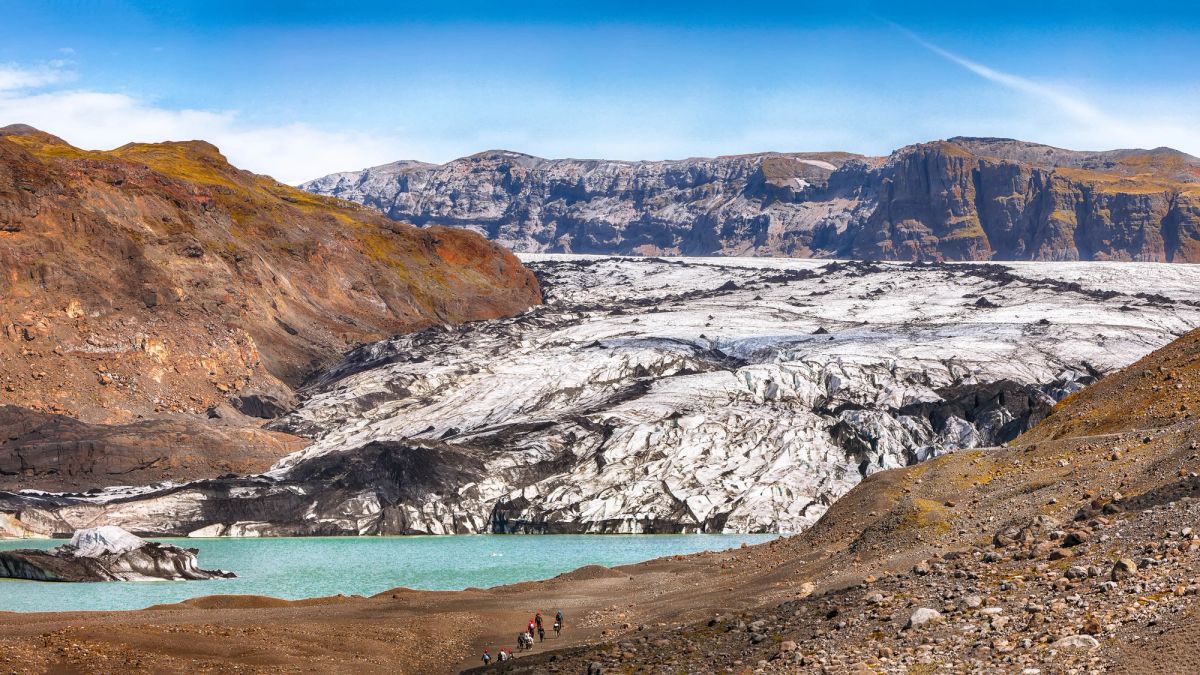
A glacier tongue ending in a turquoise lagoon, the kind of glacier you can hike on in Iceland with a guide.
Iceland wins on access. Glacier hikes, ice caves and snowmobile rides are all available within a few hours of Reykjavík, and Jökulsárlón brings icebergs right up to the roadside on the South Coast. Our guide to a beginner's glacier hike covers what to expect on the ice.
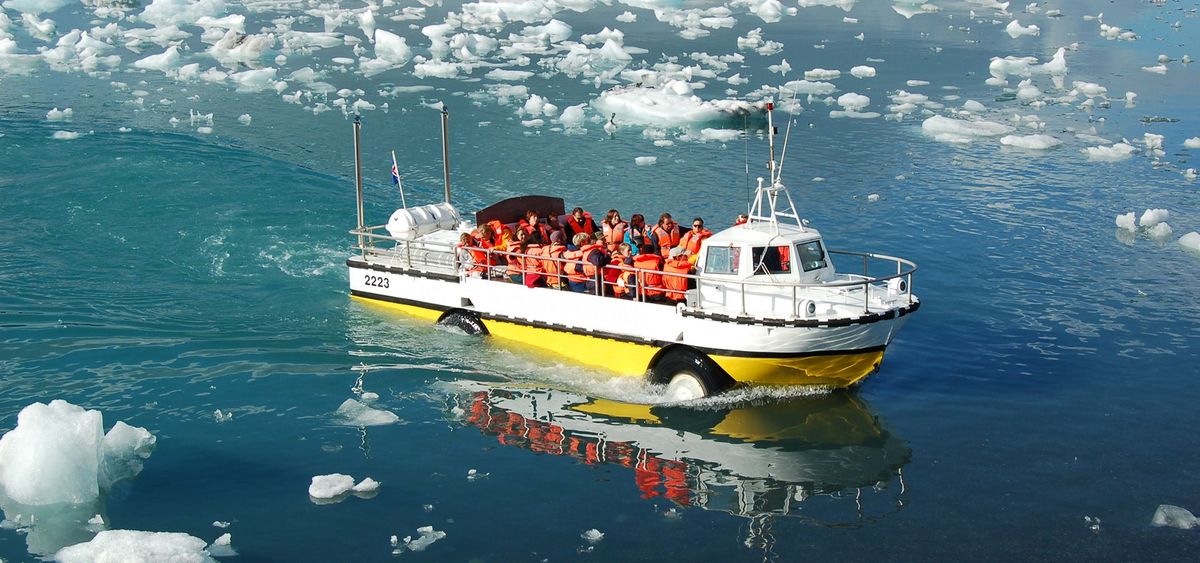
An amphibious boat tour weaving between icebergs on Jökulsárlón in summer.
For icebergs without the cost of a Greenland trip, the icebergs at Jökulsárlón are reachable in one long day from Reykjavík, with Diamond Beach just across the road.
Wildlife
Both countries are known for whales.
Iceland's whale watching is easy to arrange from Reykjavík, Húsavík and Akureyri, and humpbacks and minke whales are seen on most summer trips. Greenland has humpbacks and fin whales too. Narwhals and polar bears live in the far north and east, though visitors rarely see polar bears.
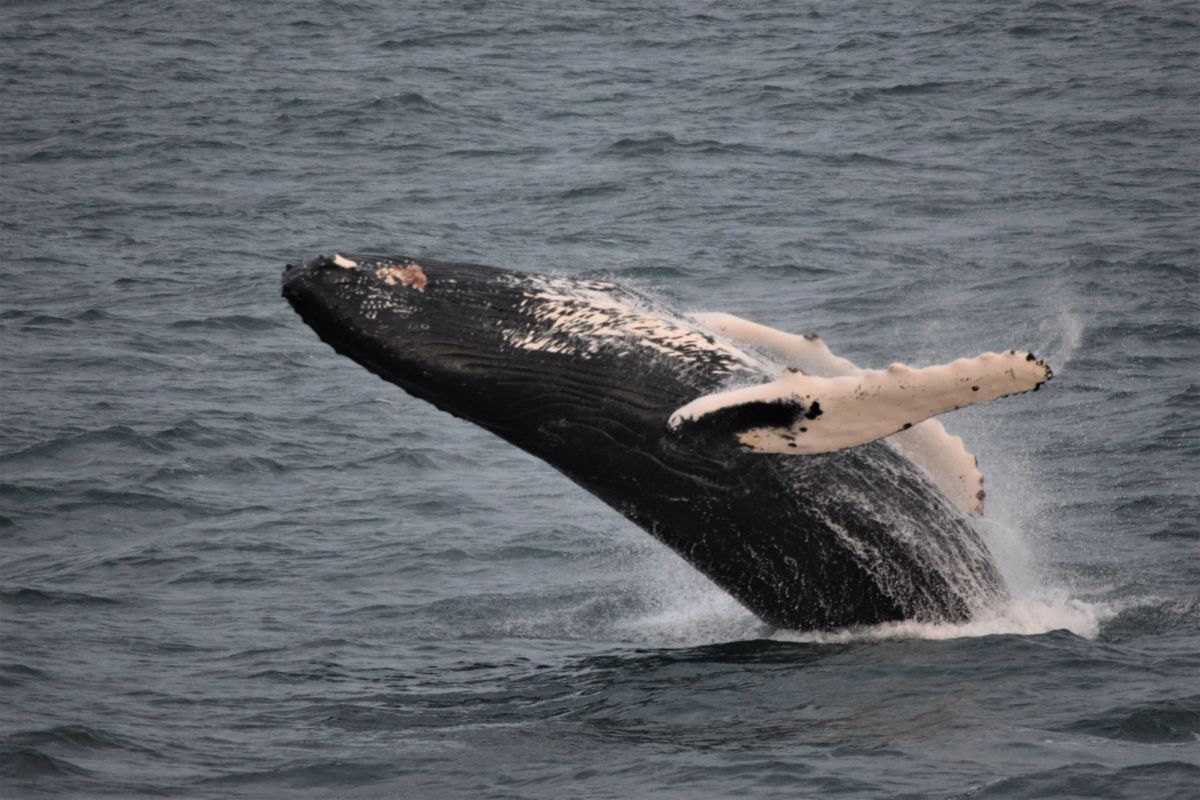
A humpback whale breaching, a sight possible on summer boat trips in both Iceland and Greenland.
Iceland adds puffins, Arctic foxes and its own sturdy breed of horse. From Reykjavík, whale watching in Faxaflói Bay takes about three hours, with warm overalls provided.
Northern Lights
Both countries sit under the auroral oval, so both offer excellent northern lights from roughly September to April. Greenland's very dark skies and sparse settlements make for spectacular displays, especially around Kangerlussuaq, which has a relatively dry climate.
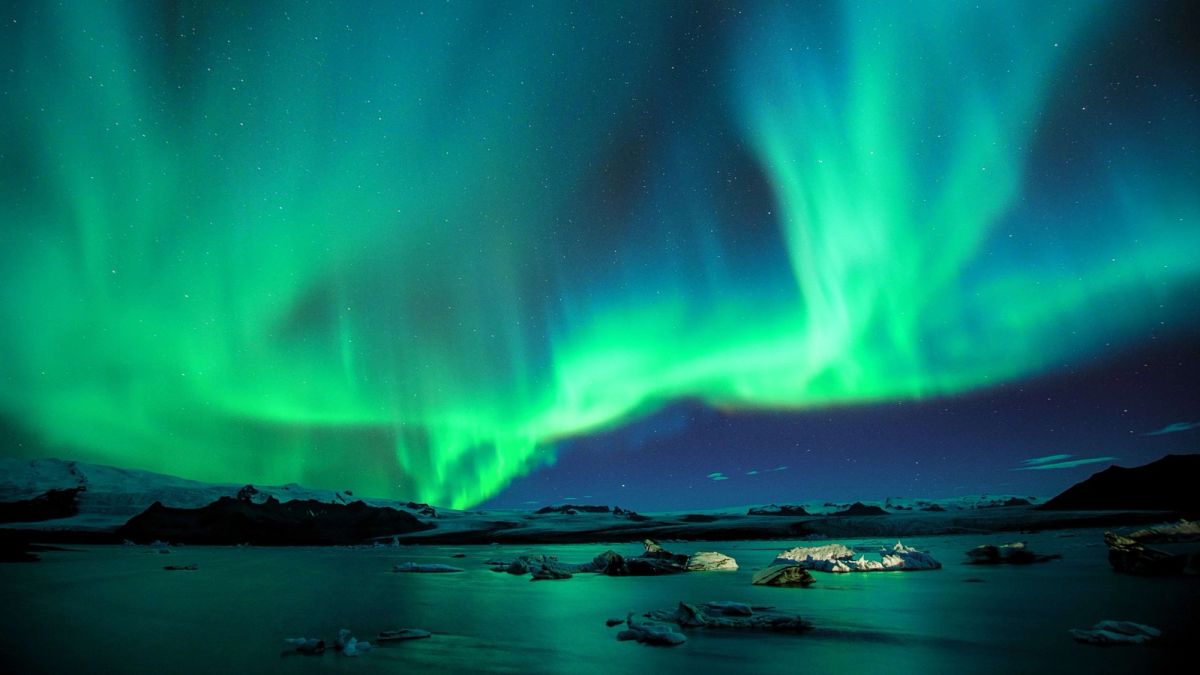
The northern lights over Jökulsárlón, reflected in the water among floating ice.
Iceland is easier. You can join an aurora tour from Reykjavík on any clear night without extra flights, and many hotels outside the city are built for aurora viewing. Our list of hotels for northern lights viewing picks out the best.
Culture
Greenland's culture is mostly Inuit, with Greenlandic the main language and traditions of hunting, sledding and kayaking still part of daily life in many towns. Visit Greenland, the national tourism board, is the best starting point for planning a trip there.
Iceland's culture is Nordic, rooted in the Viking-age settlement, the sagas and the world's oldest surviving parliament at Þingvellir. Reykjavík has a lively food, music and design scene for a city of its size.
Best Time to Visit Iceland vs Greenland
Iceland works all year. Summer brings midnight sun, open highland roads and puffins, while winter brings ice caves, snow-covered waterfalls and the northern lights, and the main sights stay open throughout.
Greenland's season is narrower. Most visitors go from June to August, when boats can reach the icebergs and coastal towns and hiking trails are clear of snow. Late winter, from about February to April, is the season for dog sledding and the northern lights, but cold and limited transport make it a more specialised trip.
Can You Do a Day Trip to Greenland From Reykjavík?
Short trips from Reykjavík to east Greenland have long been possible, usually by flying to Kulusuk, a small village about two hours away by air. In the past these have run as day tours in summer, with around four hours on the ground.
Schedules change from year to year, so check with the airlines before you plan around one. A day trip gives you a taste of Greenland, but for most travellers a longer visit later is more rewarding than a rushed few hours.
Can You Visit Both on One Trip?
Yes, and Reykjavík makes a natural hub. Many flights to Greenland connect through Iceland, so you can spend a week in Iceland and add four or five days in Greenland without much extra flying.
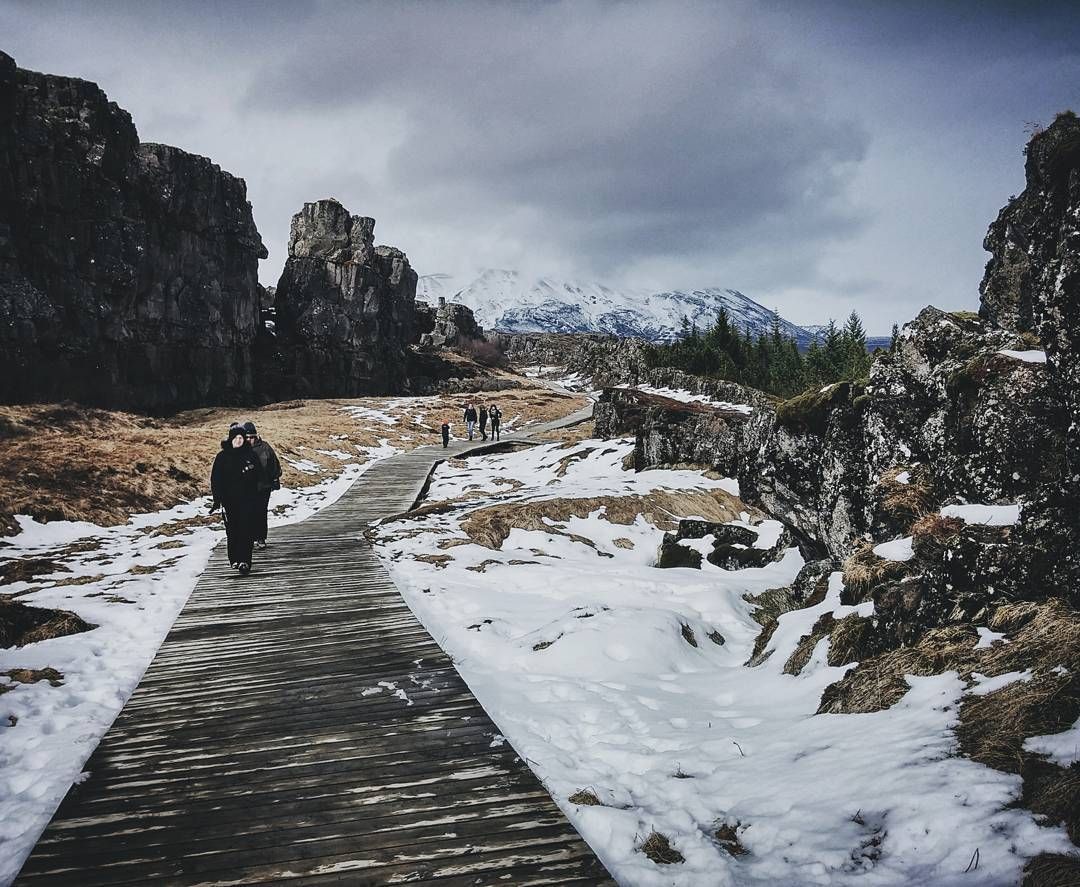
The boardwalk through the rift valley at Þingvellir, where the Golden Circle begins.
If you only have a week, do not split it. Spend it in Iceland, where the sights are close together, and save Greenland for a trip of its own. Our week-long Iceland itinerary shows how much fits into seven days.
Which Is Better for You?
Iceland suits you if:
- it is your first Arctic trip,
- you want to see a lot in a week,
- you like the freedom of a road trip,
- you are travelling on a moderate budget.
Greenland suits you if:
- you have already seen Iceland,
- you want remoteness and very few other visitors,
- you are interested in Inuit culture and the ice sheet,
- you have a larger budget and flexible dates.
If You Choose Iceland, Start Here
If Iceland is your pick, start where most first-time visitors do: on the Golden Circle. In one day from Reykjavík you walk through the rift valley at Þingvellir, watch Strokkur erupt at Geysir and stand at the edge of Gullfoss, with a guide filling in the geology and history along the way.
Our Golden Circle Classic runs from about 9:00 to 17:00 with an English-speaking guide, adds Kerið crater and a stop to meet Icelandic horses, and offers hotel pick-up. It is the easiest first taste of Iceland, and the best way to decide where to go next.
Compare Golden Circle Tours
Check each selected product for its current operator, guide, itinerary, meeting point, and terms.
View Our Tours

