
Is the Blue Lagoon Open Right Now?
Usually yes, and it has closed temporarily on a number of occasions since 2021. The lagoon operates normally most of the time, including through most of 2024 and 2025, and it suspends operations when authorities require it.
The only reliable answer is the one you check on the day. Volcanic status on the Reykjanes peninsula changes over hours, and any article stating a current status is out of date by the time you read it.
Three sources decide it: the Blue Lagoon's own website, the Icelandic Met Office and SafeTravel. All three are covered below.
Why the Blue Lagoon Is Affected
Geography, and it is closer than most visitors realise.
The lagoon sits on the Reykjanes peninsula beside the Svartsengi geothermal plant, about 3 kilometres from the town of Grindavík, on a volcanic system that reactivated in March 2021 after roughly 800 years of quiet.
Eruptions since then have come from the Fagradalsfjall system first and the Sundhnúkur crater row later. The Sundhnúkur fissures open on a line that runs close to both the town and the plant.
That proximity is why closures happen. Lava has approached defensive barriers built around the plant and the lagoon on more than one occasion.
The Icelandic Met Office publishes alerts and hazard assessments for the peninsula, and it is the primary technical source.
What Has Actually Happened
A short factual record, because the coverage has been more dramatic than the reality for visitors.
Eruptions have run at Fagradalsfjall from 2021 and along the Sundhnúkur crater row from December 2023 onwards, making a dozen eruptions on the peninsula since March 2021.
Grindavík was evacuated in November 2023 after intense seismic activity and ground deformation, and the town has been largely closed to visitors since.
The Blue Lagoon has closed temporarily on several occasions, sometimes for days and sometimes longer, and reopened each time once authorities cleared the area.
The most recent eruption began on 16 July 2025 from a fissure roughly 700 to 1,000 metres long, and it ended after 21 days on 5 August 2025.
Magma accumulation beneath Sundhnúkur has continued since, which means further eruptions are considered likely rather than unlikely.
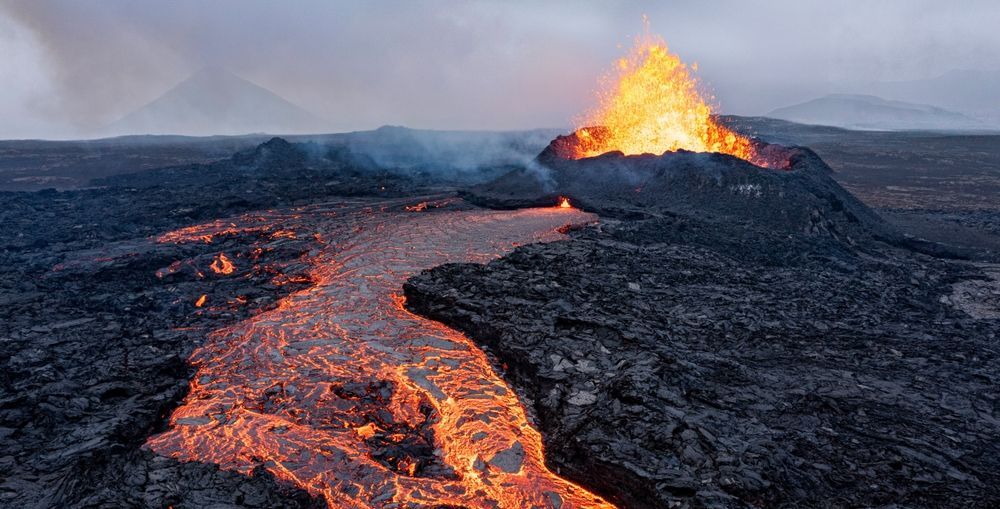
Reykjanes reactivated in 2021 after roughly 800 years, and the activity is expected to continue.
Why It Closes
Four reasons, and only one of them is lava.
Evacuation zones are the most common cause. When a fissure opens, civil protection defines an exclusion area, and the lagoon may fall inside it regardless of where the lava is going.
Access roads matter as much. Route 43 to Grindavík and the approach roads to the lagoon can be closed as a precaution even when the site itself is unaffected.
Gas is the third factor. Eruptions release sulphur dioxide, and concentrations depend entirely on wind direction. A site can be perfectly safe one day and above guideline levels the next.
Precaution is the fourth and it is the honest one. Operators and authorities close early rather than late, which is the correct order.
How to Check the Status
Three sources, checked in this order, on the morning of your visit.
The Blue Lagoon's own website carries the operational status and is updated when anything changes. It is the only source that tells you whether the lagoon itself is open.
SafeTravel carries the official travel alerts, road closures and exclusion zones for the whole country, published by the Icelandic Association for Search and Rescue.
The Met Office aurora and hazard pages carry the technical picture, including gas dispersion forecasts, which is what you want if your concern is air quality rather than access.
Almannavarnir, the Department of Civil Protection and Emergency Management, publishes the formal alert level and any evacuation orders.
Check again before you drive out. A 50 kilometre trip to a closed site is a wasted afternoon.
What Happens to Your Booking
Handled better than most visitors expect, and worth understanding in advance.
The Blue Lagoon has rebooked or refunded affected reservations during closures rather than treating them as no-shows. Contact them directly rather than through a third-party booking site if you can.
If you booked through a tour operator or a package, the operator handles it and usually substitutes an alternative.
Travel insurance rarely covers a single missed attraction, so do not rely on it for this.
The practical protection is flexibility. Book the lagoon early in your trip rather than on your last day, so there is room to move it.
Our page on the Blue Lagoon covers the site and the booking process.
Is It Safe to Visit?
Yes, when it is open, and that is the important qualifier.
The lagoon does not decide independently to stay open. It operates under the same civil protection guidance as everything else on the peninsula, and it closes when told to.
Defensive barriers have been built around the Svartsengi plant and the lagoon specifically to divert lava, and they have held on the occasions they were tested.
Staff are trained in evacuation, and the site has run evacuations in practice rather than only on paper.
Sulphur dioxide is the health consideration most relevant to visitors, particularly for anyone with asthma. Gas forecasts are published daily during active periods.
If an eruption is ongoing, the honest answer is that authorities will have made the decision for you before you get there.
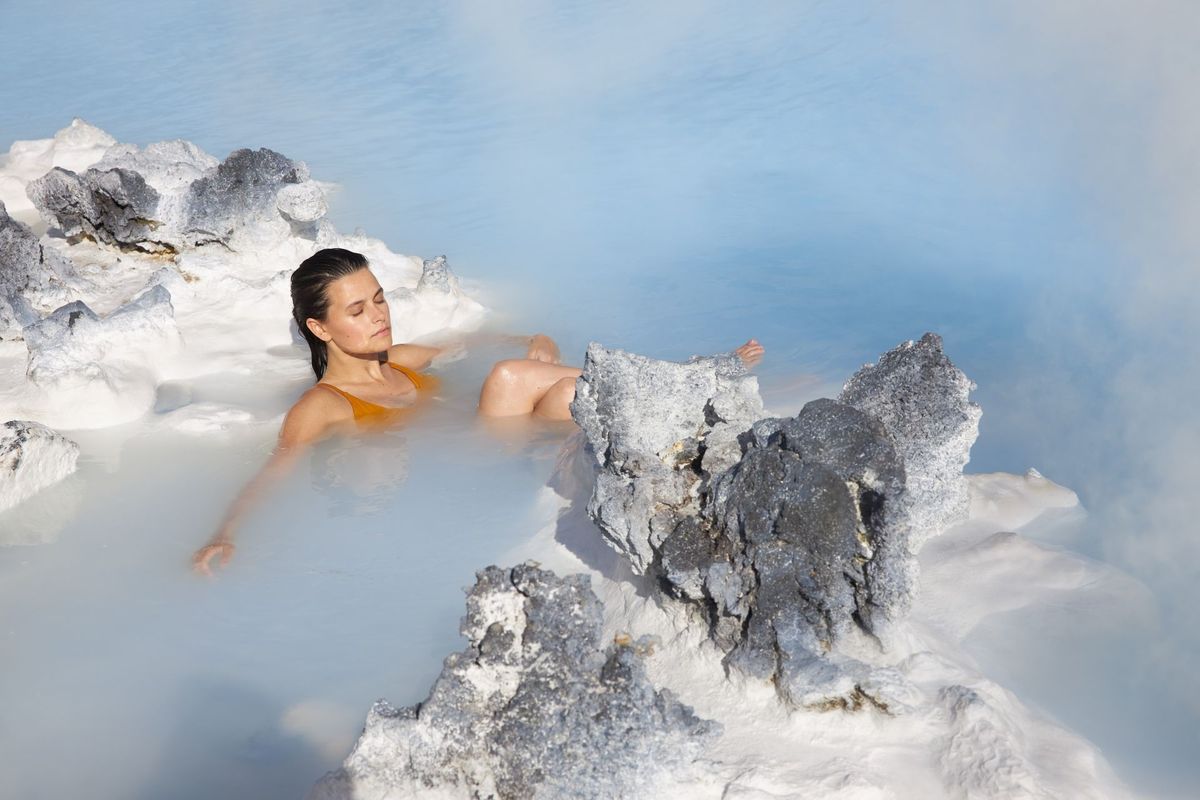
The lava field around the lagoon is old. The active fissures are a few kilometres away.
Have a Backup Plan
The single most useful thing you can do, and it costs nothing.
Sky Lagoon in Kópavogur is 20 minutes from central Reykjavík, well away from the volcanic zone, and it is the obvious substitute. Our comparison of Sky Lagoon and the Blue Lagoon covers the differences.
It is also open late, which suits an evening that was meant to be spent elsewhere.
The Secret Lagoon at Flúðir sits on the Golden Circle, nowhere near Reykjanes, and it is a fraction of the price.
Laugarvatn Fontana, also on the Golden Circle, has steam rooms built over a hot spring and steps down into the lake for a cold plunge.
Our comparison of Fontana and the Secret Lagoon covers which of the two suits a given day.
Reykjavík's municipal pools cost very little, are open long hours and are what Icelanders actually use. Sundhöll and Laugardalslaug are both central.
Any of these turns a cancelled lagoon day into a different good day rather than a lost one.
Should the Eruptions Change Your Trip?
No, and the perspective is worth stating plainly.
Iceland is a volcanic island and always has been. The Reykjanes activity is confined to a small area of the peninsula, and Reykjavík, the Golden Circle, the south coast and the north are entirely unaffected.
Flights have continued through the entire eruption period. The 2010 Eyjafjallajökull ash cloud was a different kind of eruption, and Reykjanes has not produced anything comparable.
What the eruptions do affect is one attraction and one town. That is a real inconvenience if the Blue Lagoon is the thing you came for, and it is not a reason to change a trip.
Build the flexibility in, check the three sources, and have somewhere else to soak.
Plan a Day That Does Not Depend on One Site
The Golden Circle sits an hour inland from Reykjavík, well clear of the Reykjanes system, which makes it the reliable half of an Icelandic itinerary. Our small-group Golden Circle tour with Kerið and Friðheimar runs year-round with groups under twenty, and we can advise on adding a lagoon that is not affected by the eruptions. Tell us your dates and we will work out the timings.
Compare Golden Circle Tours
Check each selected product for its current operator, guide, itinerary, meeting point, and terms.
View Our Tours
