
What Is Friðheimar, and Why Stop There?
Friðheimar is a family-run tomato farm at Reykholt in Bláskógabyggð, on the Golden Circle route about 20 minutes from Geysir. You eat lunch inside a working greenhouse, surrounded by vines, under lamps that keep the plants producing through an Icelandic winter.
The signature dish is a bottomless tomato soup with unlimited fresh bread. That combination of a hot meal, a genuinely unusual setting and a stop that takes an hour makes it the most booked non-natural site on the whole loop.
It is also the answer to the biggest practical problem on the Golden Circle, which is that there is almost nowhere good to eat between Þingvellir and Selfoss.
Where Friðheimar Sits on the Route
The farm is at Reykholt, roughly 100 kilometres from Reykjavík, on Route 35 between Laugarvatn and Geysir.
That position makes it the natural lunch point. Coming clockwise, you reach it after Þingvellir and before Geysir. Coming anticlockwise from Gullfoss, it is 20 minutes down the road on the way home.
The turn-off is signposted, and the car park is large, though it fills between noon and 2pm in summer. There is no charge to park and no charge to walk into the greenhouse if you have a booking.
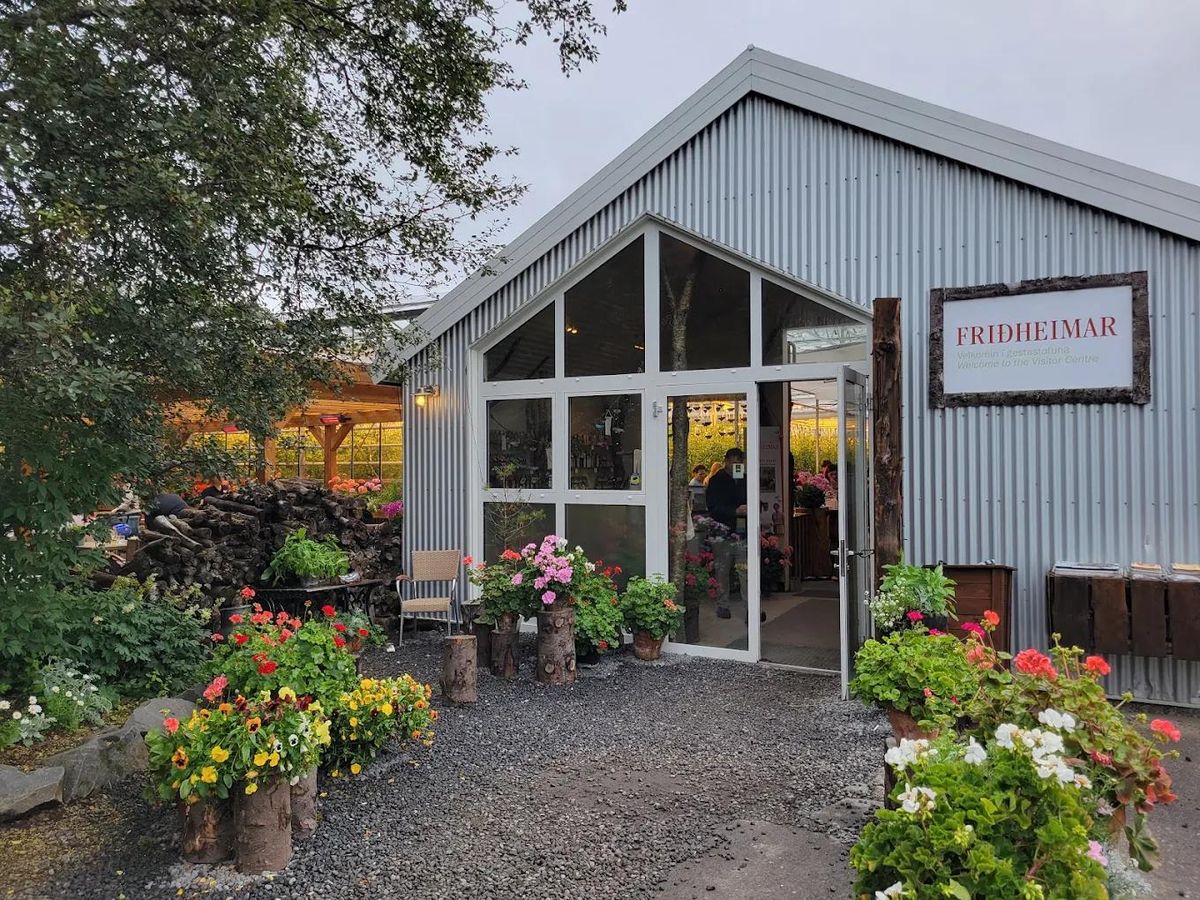
The greenhouse entrance at Reykholt, 20 minutes from Geysir and directly on Route 35.
Opening Hours and Booking
Hours matter here more than at any other Golden Circle stop, because the kitchen closes earlier than the site.
According to Friðheimar's own opening times, the kitchen serves every day from 11:30 to 16:00, the Little Tomato Shop and bar run from 9:00 to 17:00, and the separate Vínstofa Friðheima wine bar and restaurant opens 12:00 to 22:00 with its kitchen closing at 21:00.
Book a table in advance. The greenhouse restaurant is small; tour groups reserve blocks of it, and walk-ins are regularly turned away between 12pm and 2pm in high season.
Aim for a slot before 12:00 or after 14:00 if you can choose. Those windows are quieter, the service is faster, and you will not be sharing the room with three coach groups.
What You Eat
The menu is short and entirely built around what is growing beside you.
The tomato soup is the reason most people come. It arrives as a help-yourself pot with a basket of fresh sourdough and butter, and both the soup and the bread are unlimited, which makes it unusually good value in a country where lunch is rarely cheap.
Around it sits a small menu of tomato-led dishes: ravioli, a tortilla, tomato-and-cheese bread, and green tomato and apple pie for dessert. There is also a Bloody Mary bar, a tomato beer, and tomato schnapps for anyone committed to the theme.
Portions are generous, and the soup alone is a full lunch for most people. If you are with children, the soup and bread combination is the easiest sell on the entire route.
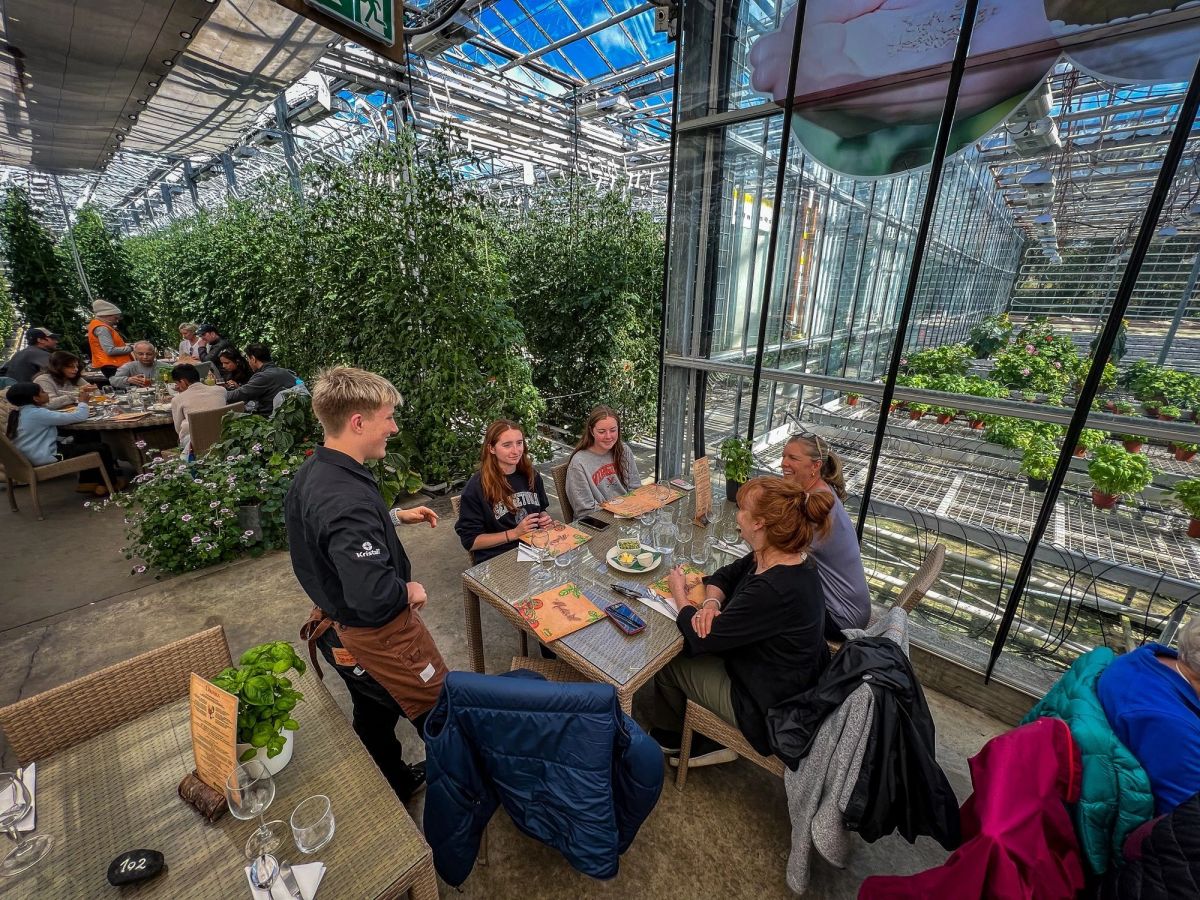
The dining room sits inside the growing house, with the vines close enough to touch from the table.
How the Tomatoes Grow at 64 Degrees North
The farming is the genuinely interesting part, and the staff will explain it if you ask.
Iceland sits too far north for outdoor tomatoes, so the greenhouses run on geothermal heat and artificial light that mimics Mediterranean conditions. Hot water from the ground warms the houses and clean groundwater irrigates the plants.
Pollination is done by bumblebees rather than by hand, and pest control is biological rather than chemical, using predator insects introduced into the houses. That is why you will see bees working the flowers while you eat.
Knútur and Helena, who run the farm, have specialised in tomatoes since they moved to Friðheimar. According to the farm's horticulture pages, they were the first Icelandic growers to cultivate plum tomatoes and Flavorino cocktail tomatoes year-round, and they now grow Piccolo cherry tomatoes of about 12 grams each under a licence from a French seed house.
The awards back it up. The Agricultural University of Iceland gave them an incentive award in 2009, the Horticultural Marketing Association named them Growers of the Year in 2010, and Icelandic Farm Holidays followed with its own award in 2011.
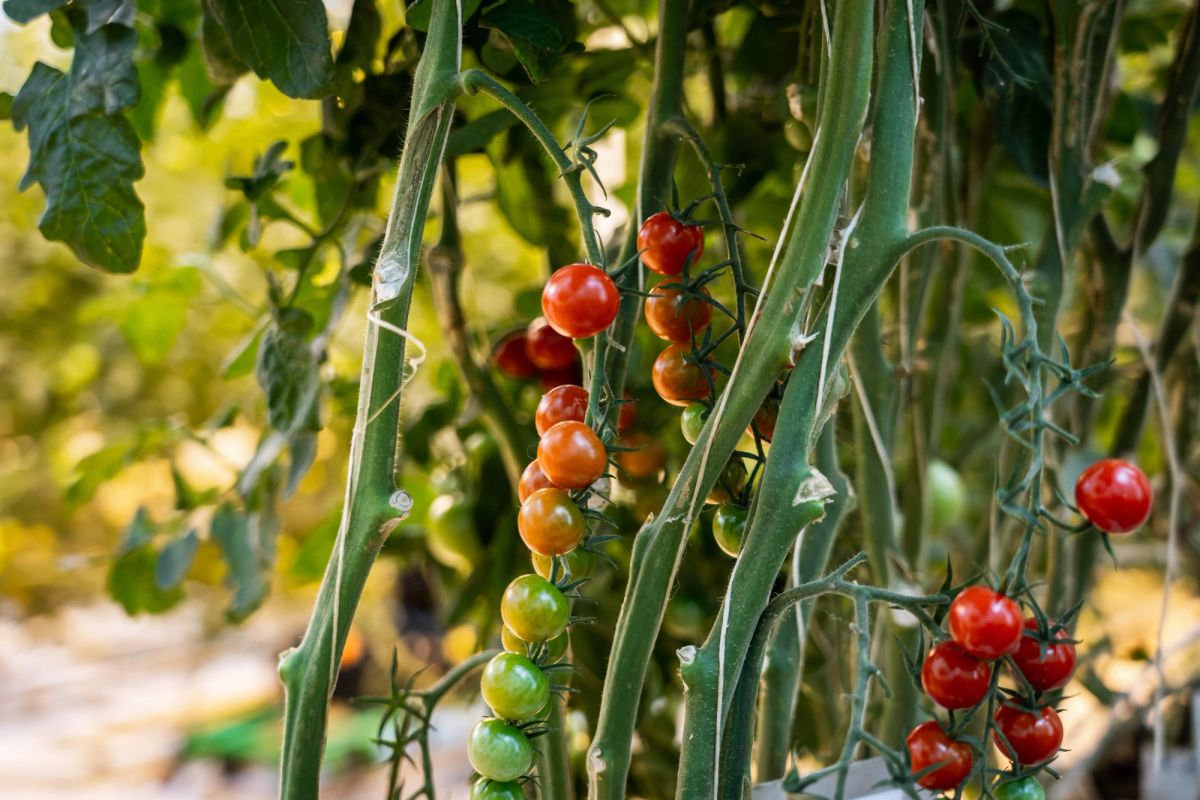
Tomatoes ripen year-round under lamps, with bumblebees doing the pollination inside the houses.
The Horse Show
Friðheimar also breeds Icelandic horses, and the farm runs a show that explains the breed and demonstrates its gaits.
The Icelandic horse has five gaits rather than the usual three, and the two extra ones are the point of the show. The tölt is a four-beat running walk smooth enough that a rider can carry a full glass, and the flying pace is a fast two-beat gait used for racing.
Shows run to a schedule rather than continuously, and they are usually booked as a separate ticket or as part of a tour package. Check times when you reserve a table, since the show and your lunch slot do not automatically line up.
Outside show times you can usually see the horses in the paddock beside the car park. That is free, takes ten minutes, and is often enough for children.
How to Fit It Into a Golden Circle Day
The stop takes an hour if you have a booking and 90 minutes if you add the horse show.
- 08:00 leave Reykjavík
- 09:15 to 10:15 Þingvellir
- 11:15 to 12:00 Geysir
- 12:15 to 13:00 Gullfoss
- 13:30 to 14:30 lunch at Friðheimar
- 15:00 Kerið crater, 30 minutes
- 16:30 back in Reykjavík
Running the loop that way puts you at Friðheimar after the midday rush and still inside kitchen hours. The alternative, eating at 11:45 on the way out, works if you left the city at 8am and want an early lunch.
What does not work is arriving at 16:15 having lingered at Gullfoss. The kitchen closes at 16:00, and the shop alone is not worth the detour.
What It Costs
Prices are in Icelandic krónur, and this is one of the better-value meals on the route.
- Tomato soup with unlimited bread: the standard order and the cheapest full lunch on the loop
- Tomato-based mains such as ravioli or tortilla: a step up in price
- Green tomato and apple pie: the dessert people order without meaning to
- Horse show: ticketed separately or included on some tour packages
- Parking: free
Compare that with the cafes at Gullfoss and Geysir, where soup and coffee run 2,500 to 4,000 ISK a head. Friðheimar sits in the same range and gives you a considerably better hour.
A guided day that bundles the stop-in costs 12,999 ISK over 8 hours, which removes the booking problem entirely and usually gets you a table at a quieter hour than a walk-in would.
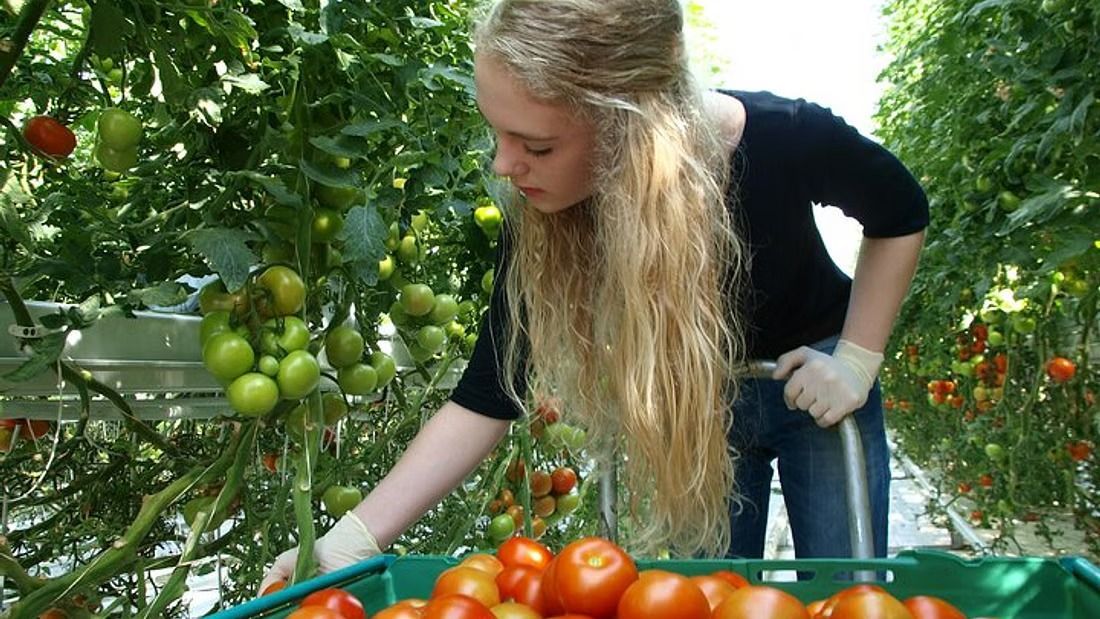
The greenhouses are a working farm first, with harvesting going on around the restaurant tables.
Is Friðheimar Worth It?
For most people on a Golden Circle day, yes, and for three specific reasons.
It solves lunch. The alternatives on the route are two busy site cafes and a petrol station, and none of them is memorable.
It is genuinely different. Eating in a greenhouse in Iceland in February, with green vines on both sides and snow outside the glass, is a better story than another car park.
It suits mixed groups. Children like the soup and the horses, adults like the setting, and vegetarians are unusually well served for rural Iceland.
The case against is that it is busy, it needs booking, and the menu is narrow. If you dislike tomatoes, there is very little for you here, which sounds obvious and still catches people out.
Alternatives Nearby
Three other food stops sit on the same stretch of road if Friðheimar is full.
Efstidalur is a working dairy farm between Laugarvatn and Geysir with a restaurant, an ice cream bar and a window that looks into the cowshed. The ice cream is made from the milk of the cows you can see.
Laugarvatn has a couple of restaurants and a lakeside bath complex where rye bread is baked in the geothermal ground beside the water. The bread tasting is short and worth the stop.
Reykholt itself has a small shop, and Selfoss on the way home has proper supermarkets and a wider choice of restaurants than anywhere else on the loop. If you want a soak with your lunch, Laugarvatn Fontana does both.
What Else Is Near Friðheimar?
The farm sits within 20 minutes of most of the route, which makes it a useful base for a slower day.
The Geysir geothermal area is 20 minutes north, where Strokkur erupts every five to ten minutes.
Gullfoss is 30 minutes north, and it is the loudest stop of the day.
The Environment Agency of Iceland records its upper fall at 11 metres and the lower at 20, with an average flow of 109 cubic metres per second.
Brúarfoss is 15 minutes away, reached on a 45-minute walk from a small car park, and it is the bluest water on the Golden Circle.
Faxi waterfall is 10 minutes south on the same road, a wide low drop with a salmon ladder and almost nobody at it. There is more on Brúarfoss and the walk in if you want to plan that detour properly.
Kerið crater is 30 minutes down Route 35 towards Selfoss, with entry at 700 ISK and a rim walk of about 20 minutes.
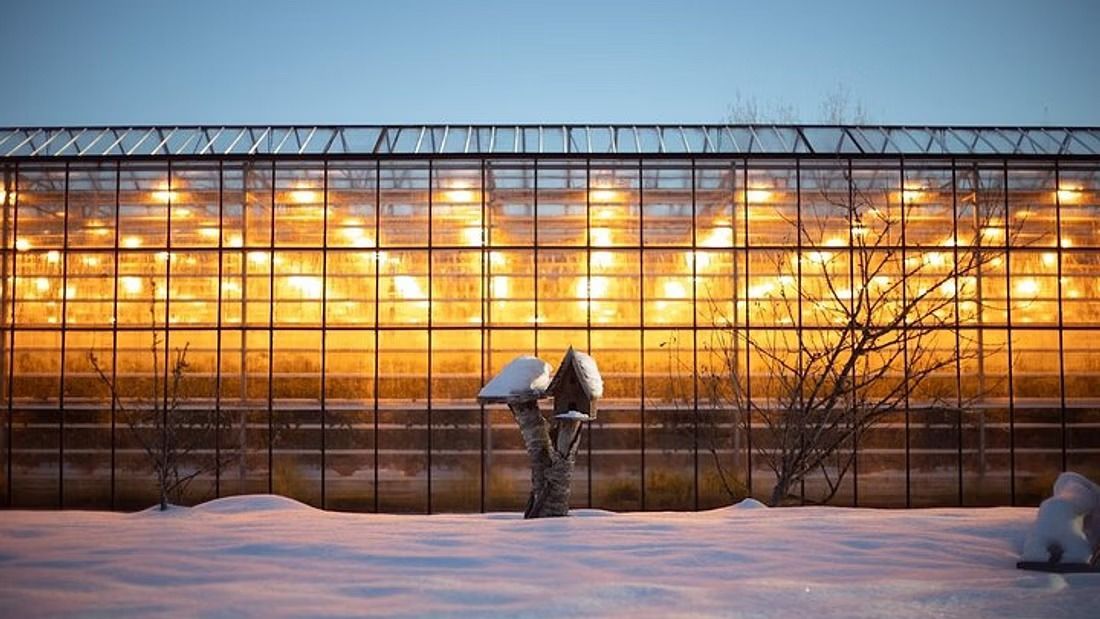
The grow lights are visible from the road after dark, which is how most people first notice the farm.
Visiting in Each Season
The greenhouse does not care what the weather is doing, which is the quiet strength of this stop.
Winter is when it works best. Outside there is snow, four hours of daylight and wind; inside there are green vines, warm air and lamps burning above the rows. That contrast is the single best thing about a February Golden Circle day.
Summer brings the crowds. June to August is when the car park fills and unbooked tables disappear, and the greenhouse can get genuinely hot at midday under both sunlight and lamps.
Spring and autumn are the sweet spot. Tables are easier, the horses are usually out in the paddock, and the route to and from the farm is clear of ice.
The lamps run through the dark months to keep the plants fruiting, which is why the houses glow orange from the road on a December afternoon. It is one of the more surreal sights on the loop.
Practical Tips
Book online rather than by phone, and book at least a few days ahead in June, July and August.
Take a jumper off before you sit down. The greenhouse runs warm and humid by design, which is a pleasant shock in January and a sweaty one in July.
Go easy on the first bowl. The soup is bottomless, and most people underestimate how filling the bread is.
Buy the tomato products in the shop rather than at the airport. Jams, chutneys, sauces and the schnapps are all made on site and cost less here.
Allow for the smell of the house. Ripe tomato vines under lights have a strong scent that some people love and a few find overwhelming.
Make It the Lunch Stop on Your Loop
A Golden Circle day is better with somewhere warm to sit in the middle of it, and this is the one stop on the route where the food is the attraction rather than a necessity.
Our Golden Circle tour with the Friðheimar greenhouse covers the three main sites and includes the farm stop over about 8 hours, with the table already reserved. If you are driving yourself, book a slot before you leave Reykjavík and plan the loop around it.
Compare Golden Circle Tours
Check each selected product for its current operator, guide, itinerary, meeting point, and terms.
View Our Tours
