
Both options get you to the same three stops. Both return you to Reykjavik the same evening. The difference is everything in between: how long you stay, how much you learn, how much you pay, and how much mental energy the day requires from you. Neither option is wrong. The right one depends on factors that are specific to your trip.
What Self-Driving the Golden Circle Actually Means
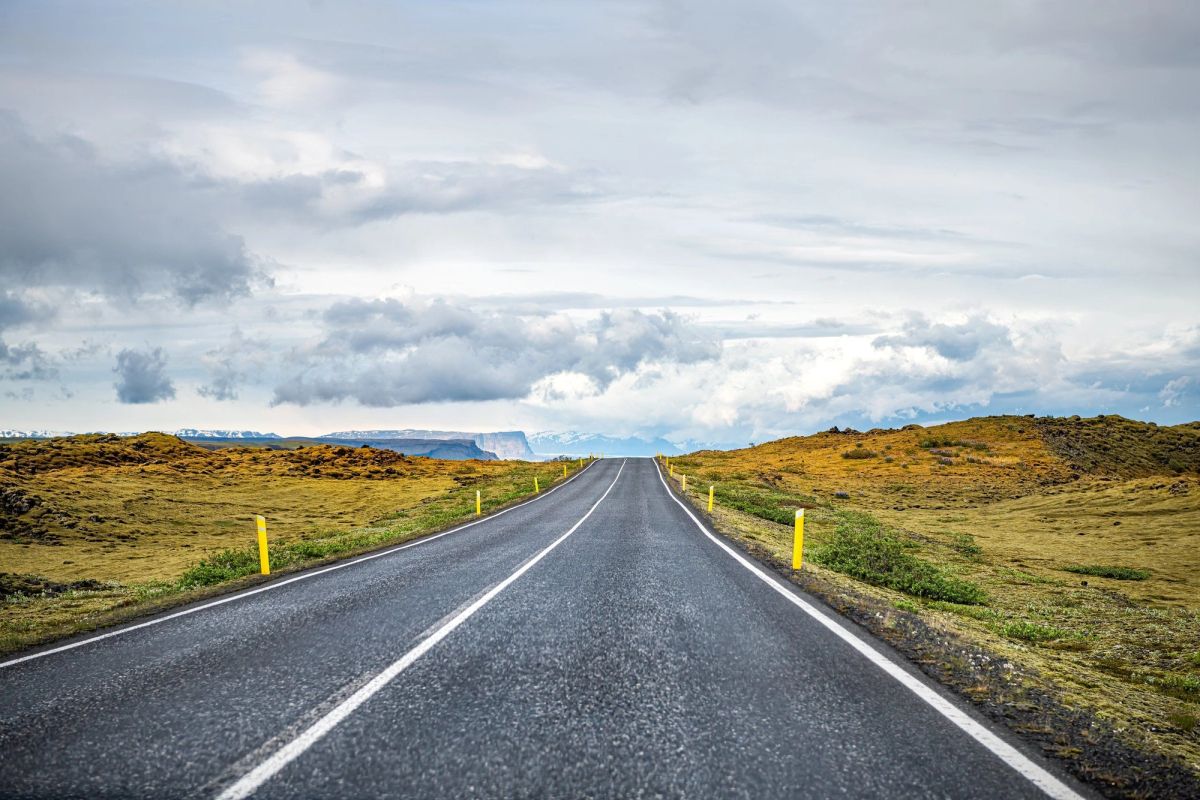
The Golden Circle runs entirely on paved, signposted roads, which makes it an easy self-drive.
Self-driving means renting a car, following Route 36 northeast from Reykjavik to Þingvellir, continuing east to Geysir, then Gullfoss, and returning south via Route 35. The route is paved, clearly signposted, and navigable with Google Maps without difficulty.
You set your own schedule. You can spend two hours in the Þingvellir gorge or 20 minutes. You can add Kerid crater or the Secret Lagoon without asking anyone. You can arrive at Gullfoss at 7 AM when the car park is empty or at 2 PM when the light hits the canyon at golden-hour angles. Nothing is fixed.
The cost for two people works out significantly cheaper than two guided tour tickets. For solo travelers, a rental car and a guided tour are often similar in price.
What a Guided Golden Circle Tour Actually Means
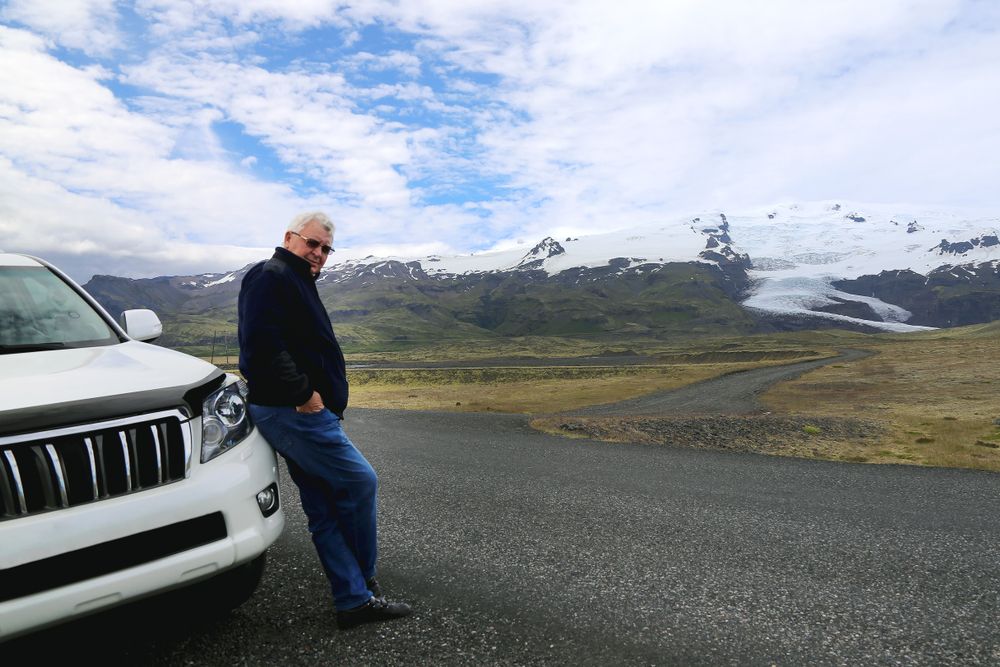
A rental car gives you the freedom to set your own timings at each stop.
A guided tour means a bus or minibus picks you up in Reykjavik, drives you to each stop on a fixed schedule, and returns you by evening.
A guide provides context at each location: the geological history of the tectonic rift at Þingvellir, why Strokkur erupts while the original Geysir no longer does, the story of Sigridur Tómasdóttir who fought to prevent Gullfoss from being converted into a hydroelectric dam.
Standard large coach tours give you approximately 30 to 45 minutes at each main stop. Small group tours, typically minibuses of 10 to 15 people, allow more flexibility and often longer time at each location.
You do not drive, navigate, or make any logistical decisions. You step off the bus, see the attraction, step back on.
Cost Comparison: Self-Drive vs Guided Tour
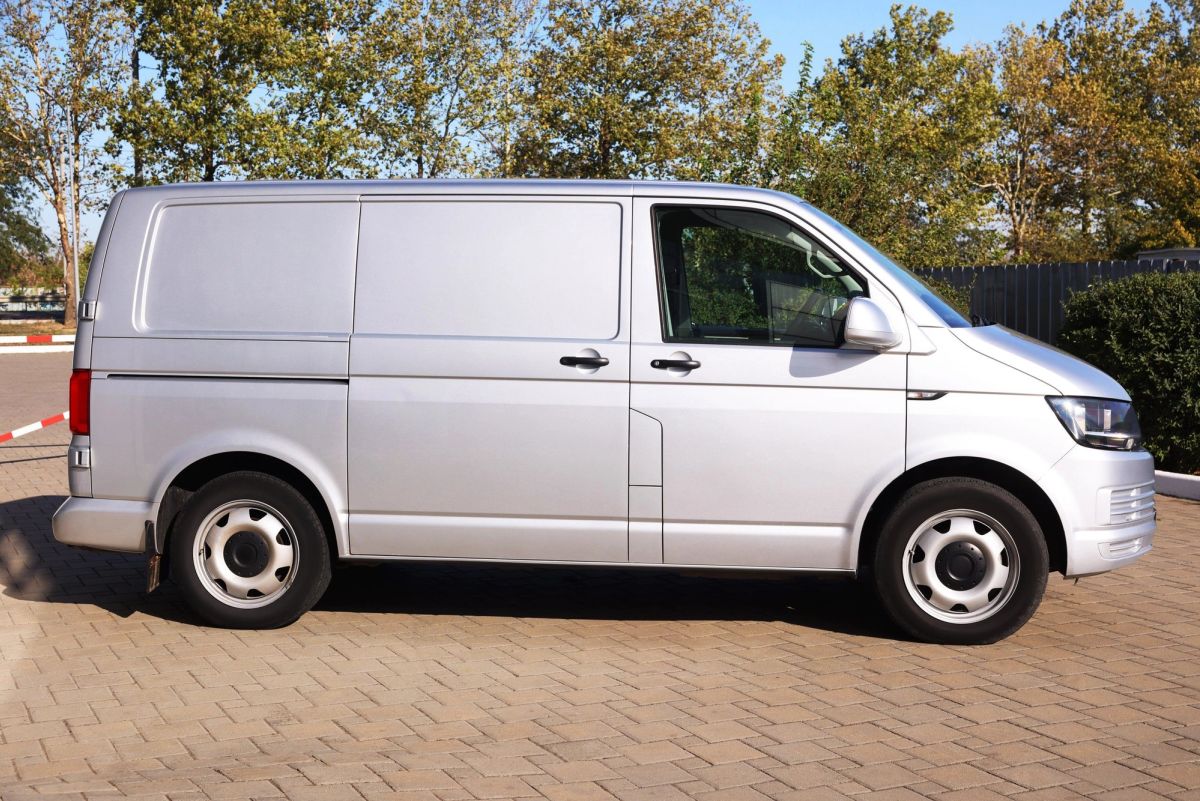
Small-group minibus tours cost more per seat than a coach but buy longer at each stop.
Self-drive costs for two people:
- Rental car (standard 2WD, one day): ISK 12,000 to 20,000
- Fuel for the full loop: ISK 4,000 to 7,000
- Þingvellir parking: ISK 750
- Kerid crater admission (optional): ISK 400 per person
- Total per person for two travelers: approximately ISK 8,000 to 14,000
Guided tour costs:
- Large coach tour: ISK 10,000 to 14,000 per person
- Small group minibus tour: ISK 15,000 to 22,000 per person
- Private tour: $1,490–$1,990 per vehicle (1–19 guests), roughly $230–$750 per person depending on group size
For solo travelers, a guided tour is often comparable or cheaper than renting a car alone. For couples or groups of three or more, self-driving is almost always the more economical choice.
Flexibility vs Simplicity
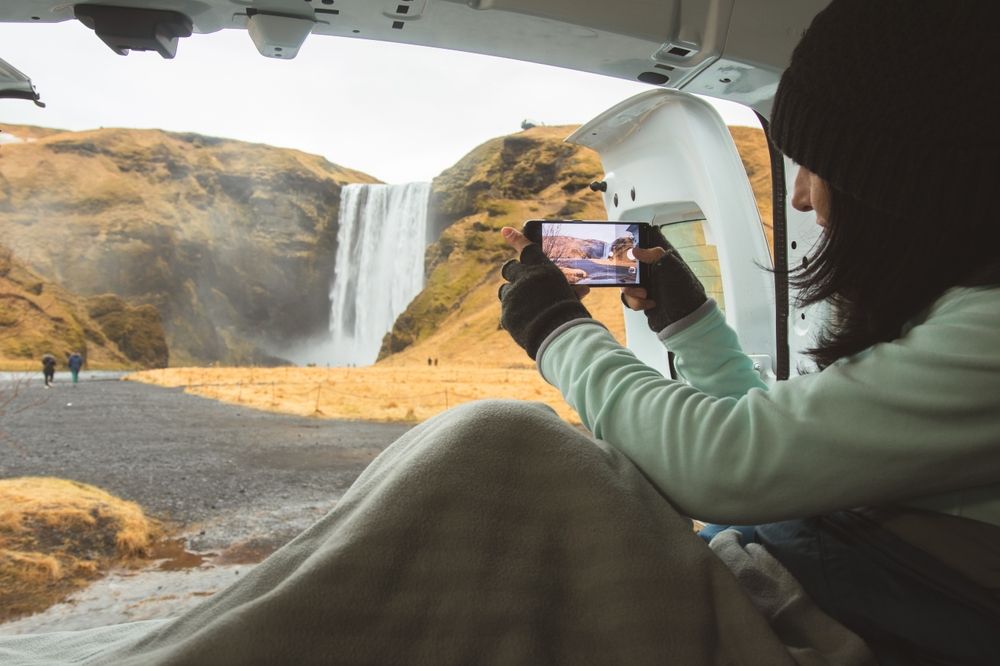
Self-driving lets you stop for the views that are not on any itinerary.
This is the core trade-off and where most people make their decision. Self-driving gives you complete control.
If Þingvellir holds you longer than expected, you stay. If you want to detour to a roadside viewpoint that caught your eye, you pull over. If you decide on the day to skip Kerid and add the Secret Lagoon instead, you do it. No one else's schedule governs your day.
A guided tour removes all decisions. You do not think about parking, navigation, road conditions, or timing. You watch the landscape from the window and arrive at each stop already knowing where to walk because the guide has told you.
For travelers who find driving in an unfamiliar country stressful, this is not a small thing. Iceland's weather can change rapidly, and having someone else manage the logistics on a difficult day is a genuine relief.
How Much Time You Get at Each Stop
This is where the guided tour limitation becomes most apparent. On a standard large coach tour, most stops allow 30 to 45 minutes. That is enough to see Strokkur erupt once or twice and take photos at Gullfoss. It is not enough to walk the full Þingvellir gorge to the Law Rock and back, or to climb the staircase at Gullfoss and walk the canyon rim.
Small group tours typically allow 45 to 75 minutes per stop, which is meaningfully better. Premium and private tours allow as long as you want.
Self-driving, you can spend 2 hours at Þingvellir and 90 minutes at Gullfoss without rushing. For travelers who want to actually experience these places rather than photograph them from a distance, self-driving gives you something guided coach tours cannot.
What You Learn on a Guided Tour That You Miss Self-Driving
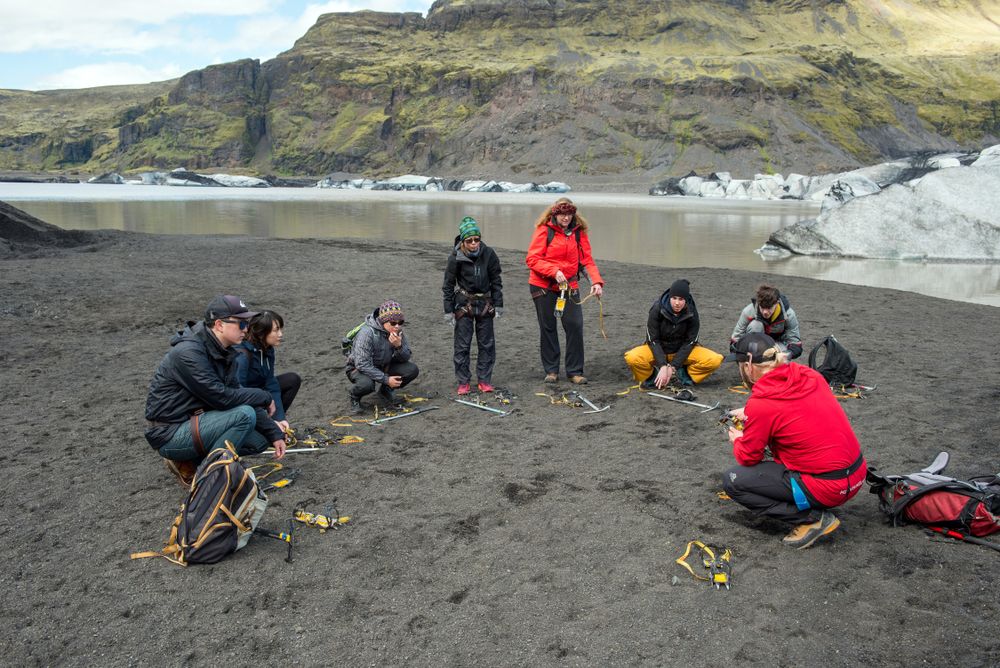
A guide fills in the geology and history that the signage at each stop leaves out.
This is the strongest argument for taking a guide. The geological and historical depth of the Golden Circle is significant and not fully conveyed by the signage at each stop. A good guide explains why the tectonic plates at Þingvellir are visible here when they are not visible anywhere else on the surface.
They explain the chemistry of why different hot springs at Geysir are different colors. They explain what makes the Gullfoss canyon the shape it is and what happened in the early 20th century when investors tried to dam it.
Between stops, a good guide narrates what you are driving through. Why Iceland has no trees. What those white farmhouses with grass roofs are for. Which peaks on the horizon are volcanoes?
This context transforms the drive into something educational rather than just scenic. If this kind of depth matters to you, particularly on a first visit to Iceland, a small group tour with a well-qualified guide adds genuine value that no amount of pre-trip reading fully replicates.
Driving Confidence and Winter Conditions
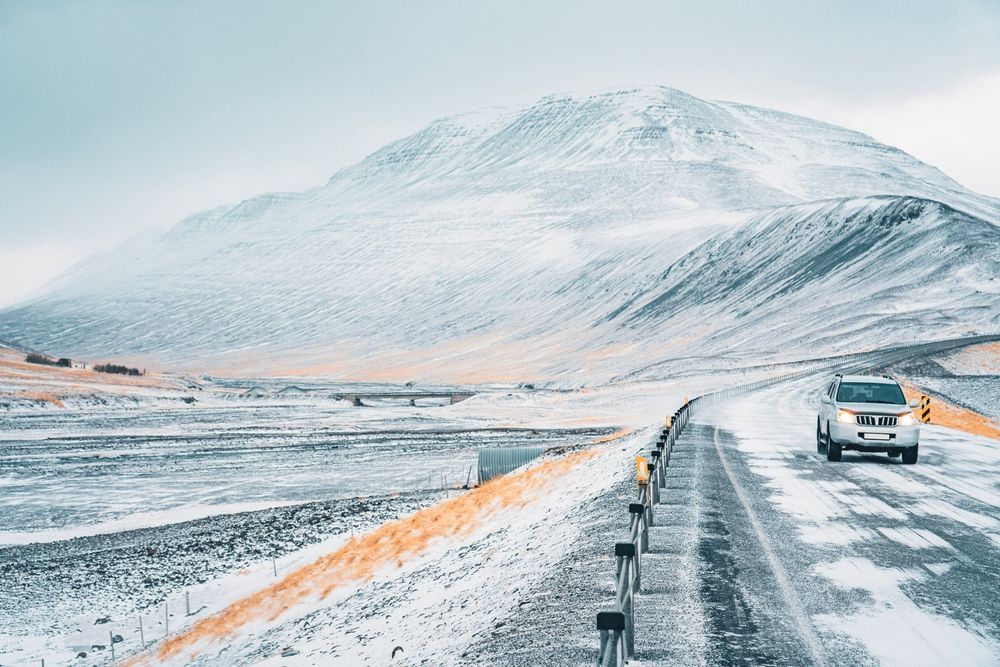
Winter turns the same route into a harder drive, with ice and short daylight to plan around.
The Golden Circle is Iceland's most forgiving self-drive route. Roads are paved, well-maintained, and straightforward. In summer, a first-time Iceland driver with a standard rental car handles the route without difficulty.
Winter changes the calculation. Icy roads, reduced daylight, and rapidly changing conditions require more confidence and preparation. Many visitors who would comfortably self-drive in July are better served by a guided tour in January.
A professional driver navigates icy roads daily, carries emergency equipment, and adjusts the itinerary when conditions deteriorate. If you are uncertain about winter driving in Iceland, a guided tour removes the most stressful element from the day entirely.
Traveling Solo vs With a Group
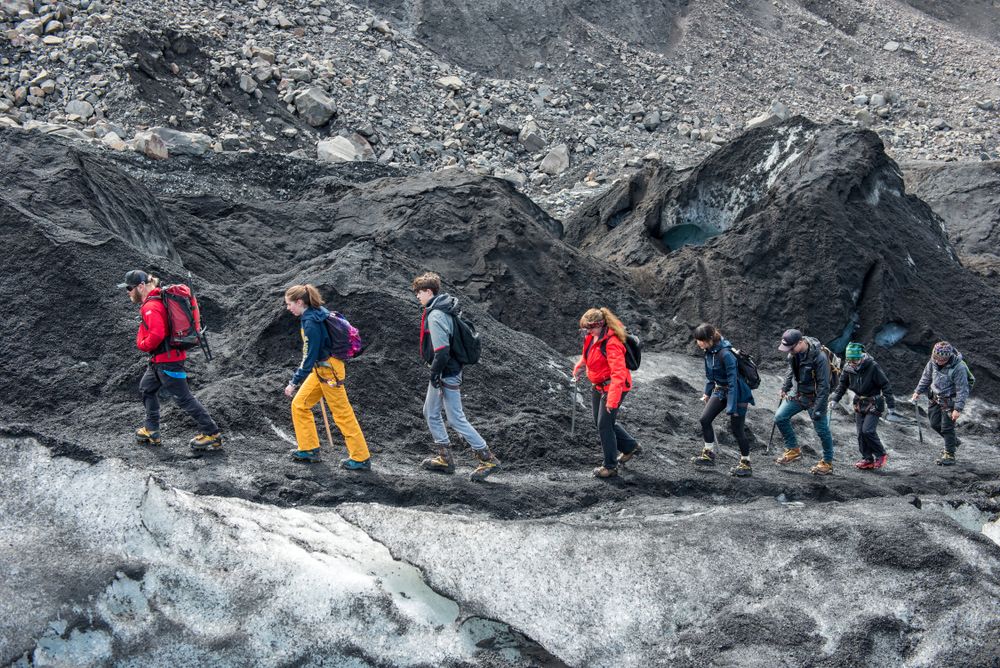
Small-group tours give solo travellers company as well as local knowledge.
Solo travelers face a specific calculation. Renting a car for one person and driving to the same three stops that a guided tour visits for a similar price means you get flexibility but no company, no local knowledge, and no one to share the experience with.
Many solo travelers find that a small group tour adds a social dimension to the day that self-driving does not. You meet other travelers, share the Strokkur eruption moment with people who are equally surprised by it, and have a guide to answer questions as they arise.
For couples and groups of three or more, self-driving wins on both cost and experience. The car becomes its own private tour vehicle and the economics tip firmly toward independence.
Which Option Is Right for Your Situation
Self-driving is the better choice if you are traveling with one or more other people, you are comfortable driving on unfamiliar roads, you are visiting in summer or early autumn, you want to control your own schedule and timing at each stop, or you plan to add detours like Kerid and the Secret Lagoon.
A guided tour is the better choice if you are traveling solo and cost is a consideration, you are visiting in winter and prefer not to drive on icy roads, or you want a guide who can explain the geology and history of each stop in depth.
It also suits you if you are new to Iceland and want the logistics handled for you, or you are short on time and want a complete day organized without any planning effort.
A small group tour is the best version of the guided experience. The difference between 45 people on a coach with 30 minutes per stop and 10 people in a minibus with a geology PhD guide and 75 minutes per stop is significant. If you take a guided tour, spend the extra money for small group rather than the cheapest coach option.
Compare Golden Circle Tours
Check each selected product for its current operator, guide, itinerary, meeting point, and terms.
View Our Tours

