
Pick the Golden Circle if this is your first trip, if you have one free day, or if you want the biggest sights with the least driving. Pick Snæfellsnes if you have been to Iceland before, if you dislike crowds, or if you want coastline, cliffs and a glacier-capped volcano rather than a waterfall and a geyser.
The practical difference is time. The Golden Circle is a 230- to 300-kilometre loop with three headline stops close together, done comfortably in 6 to 8 hours. Snæfellsnes is a 400- to 500-kilometre round trip to a peninsula two hours away, and it runs 10 to 12 hours.
Both are good days. They are aimed at different travellers, and the mistake is choosing on scenery alone rather than on how much of the day you want to spend in a vehicle.
The Two Days Side by Side
Here is the comparison that actually decides it.
- Total distance: Golden Circle 230 to 300 km, Snæfellsnes 400 to 500 km
- Day length: Golden Circle 6 to 8 hours, Snæfellsnes 10 to 12 hours
- Driving time: Golden Circle about 3.5 hours, Snæfellsnes about 6 hours
- Distance to the first sight: Golden Circle 50 km, Snæfellsnes about 150 km
- Number of stops: Golden Circle 3 headlines plus 2 or 3 extras, Snæfellsnes 6 to 8 smaller ones
- Crowds: Golden Circle heavy from 10am to 3pm, Snæfellsnes light outside Kirkjufell
- Guided coach price: Golden Circle from about 13,000 ISK, Snæfellsnes typically higher
- Winter reliability: Golden Circle high, Snæfellsnes lower because of exposed coastal roads
The last line matters more than people expect between November and March, and it is the reason most winter visitors end up doing the Golden Circle whatever they had planned.
What the Golden Circle Gives You
Three sites, each showing a different geological process, all within 60 kilometres of each other.
Þingvellir National Park
Þingvellir is a rift valley where the North American and Eurasian plates pull apart, and you walk down the Almannagjá gorge with a wall of plate edge beside you.
It is also where Icelanders founded their parliament. The Alþingi met on this ground from around 930 until 1798 according to Þingvellir National Park's own history, which is why the site was added to the UNESCO World Heritage List in 2004 under cultural criteria.
Allow 60 to 90 minutes. The gorge takes 20 minutes to walk down, and Öxarárfoss is a further 15.
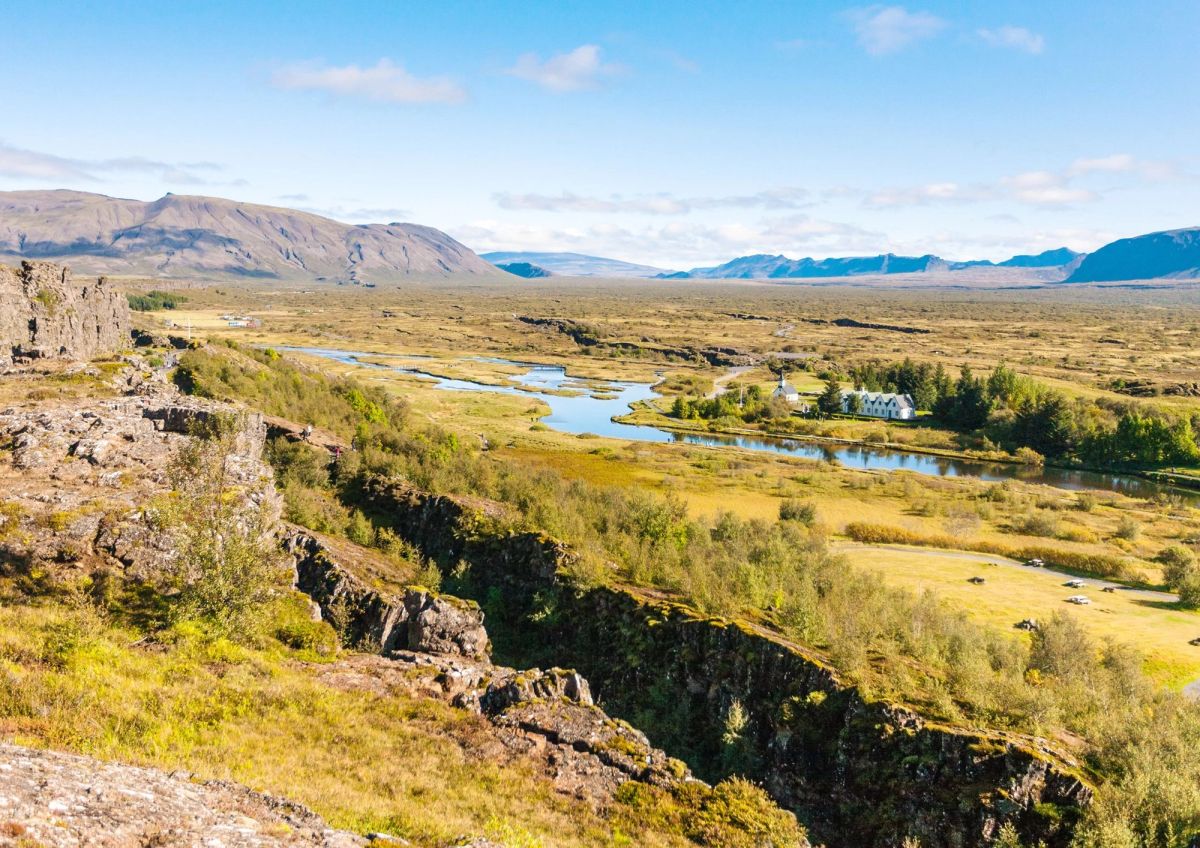
Þingvellir sits 50 kilometres from Reykjavík, which is the whole reason the Golden Circle day is short.
The Geysir geothermal area
Strokkur erupts every five to ten minutes and throws water 15 to 20 metres up, which makes it the most reliable natural spectacle in the country.
Around it sits a field of hot springs, mud pots and silica terraces with pools between 80 and 100°C. Forty-five minutes covers several eruptions and the upper loop.
Gullfoss
Gullfoss is the scale moment. The Environment Agency of Iceland records the upper fall at 11 metres and the lower at 20, with an average flow of 109 cubic metres per second and a summer flow of 130.
Two viewpoints, 45 minutes, and the lower path closed by ice for much of the winter.
The extras
This is where the Golden Circle quietly wins on variety. Kerið crater, the Friðheimar tomato farm, Faxi waterfall, the Secret Lagoon at Flúðir and Laugarvatn Fontana all sit directly on the road.
Adding two of those turns a three-stop day into a five-stop one without adding much driving. Snæfellsnes has no equivalent, because its stops are the day rather than additions to it.
What Snæfellsnes Gives You
The peninsula is nicknamed Iceland in miniature, and the label is earned rather than marketing. In one 90-kilometre stretch you get a glacier, sea cliffs, black beaches, lava fields, waterfalls and fishing villages.
Snæfellsjökull and the national park
The glacier-capped volcano at the tip of the peninsula rises to about 1,446 metres and is visible from Reykjavík on a clear day, 100 kilometres away.
The national park around it covers about 183 square kilometres according to the Environment Agency's park pages, and it is the first Icelandic park to run from a mountain summit down to the ocean.
Jules Verne used the volcano as the entrance to the Centre of the Earth in Journey to the Centre of the Earth, which is the fact every guide will tell you and which is genuinely true.
Kirkjufell and Kirkjufellsfoss
Kirkjufell is a 463-metre arrowhead of a mountain above Grundarfjörður, and the small waterfall beside the car park is the reason it is the most photographed mountain in Iceland.
It is also the one place on Snæfellsnes with a crowd. The car park fills in summer and at any hour when a cruise ship is in Grundarfjörður.
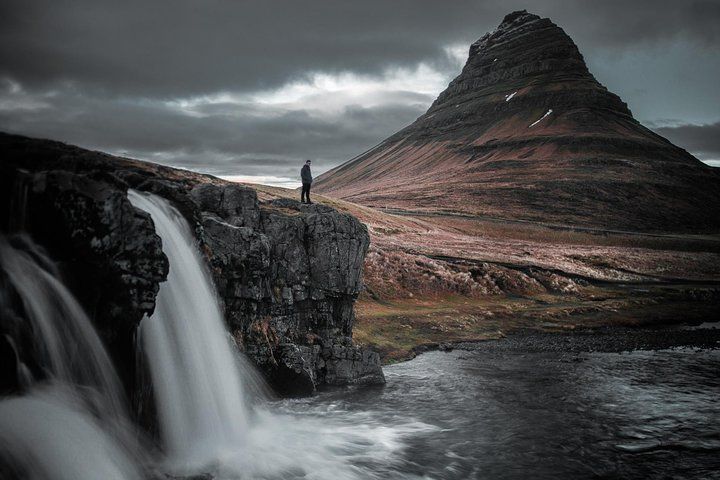
Kirkjufellsfoss is the one genuinely busy stop on Snæfellsnes and the reason most people go.
Arnarstapi and Hellnar
Arnarstapi is a former fishing village with basalt columns, a stone arch called Gatklettur and a huge statue of Bárður Snæfellsás, a half-troll from the sagas.
A 2.5-kilometre coastal path links it to Hellnar along the cliff edge. That walk is the single best hour on the peninsula, and it is flat enough for most people.
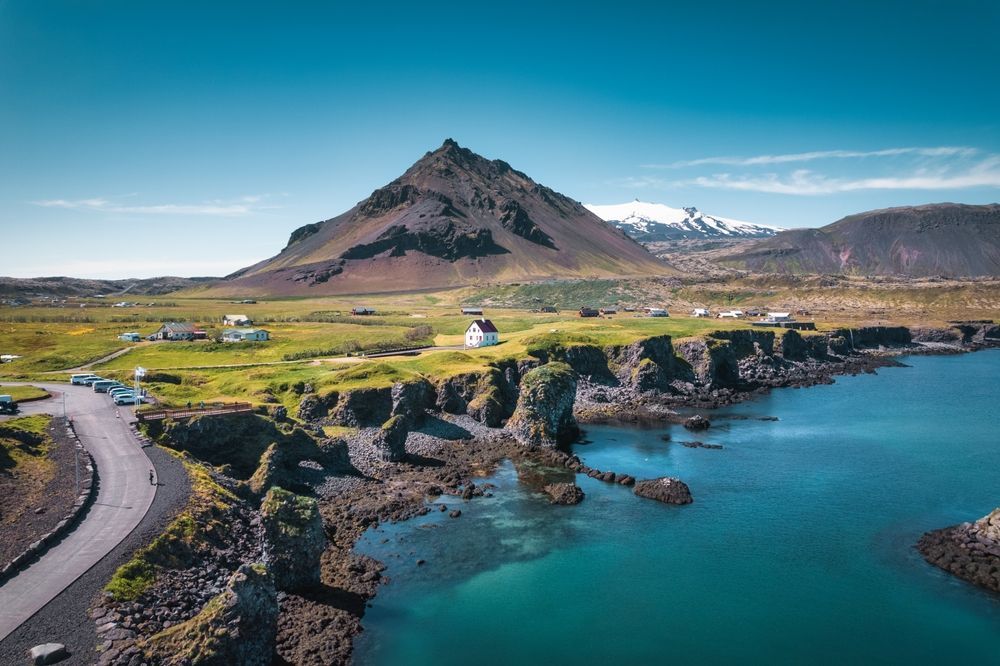
The cliffs at Arnarstapi, where a flat coastal path runs 2.5 kilometres to the hamlet of Hellnar.
Djúpalónssandur and Lóndrangar
Djúpalónssandur is a black pebble beach reached down a lava gully, with four lifting stones once used to test fishermen for a place on a boat and the rusted remains of a British trawler wrecked in 1948.
Lóndrangar is a pair of basalt sea stacks standing 75 and 61 metres out of the cliffs, the eroded cores of an old crater. There is a viewpoint five minutes from the car park.
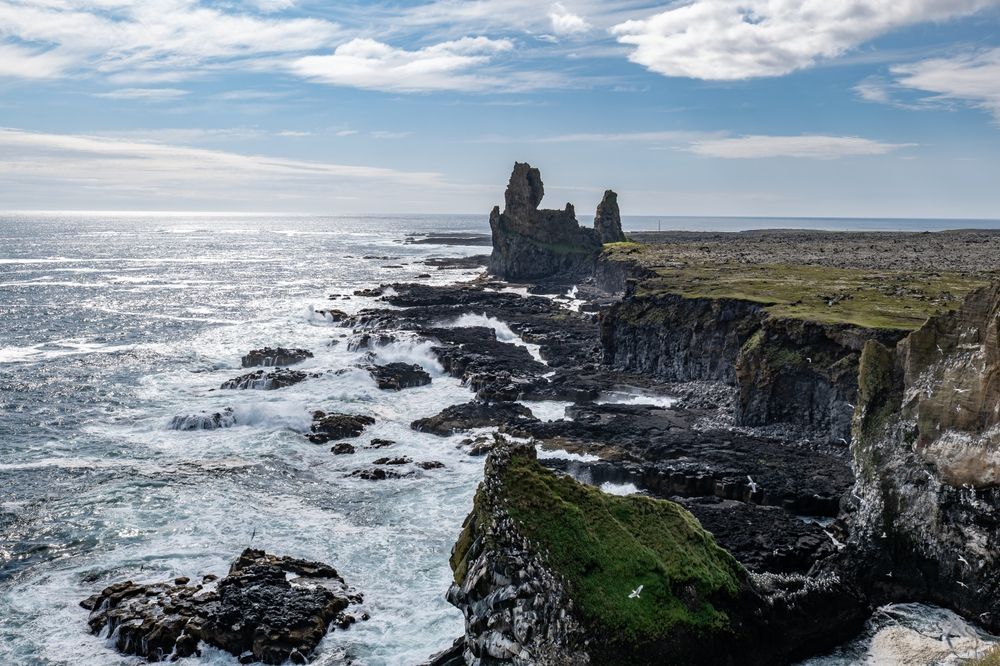
The Lóndrangar stacks are the plugs of an old crater, left standing as the softer rock eroded away.
Búðir and the villages
Búðakirkja is a small black timber church alone on a lava field, and it is the second most photographed thing on the peninsula.
Stykkishólmur has the harbour, the ferry to the Westfjords and the best restaurants on Snæfellsnes. Grundarfjörður and Ólafsvík are working fishing towns rather than tourist ones, which is part of the appeal.
A Golden Circle Day, Hour by Hour
This is the shape of the shorter day, self-driving and starting early.
- 08:00 leave Reykjavík
- 08:50 arrive at Þingvellir National Park, 60 to 90 minutes
- 10:45 Geysir, 45 minutes
- 11:45 Gullfoss, 45 minutes
- 12:45 lunch at Friðheimar or the Gullfoss cafe
- 14:00 Kerið crater, 30 minutes
- 15:30 back in Reykjavík
That leaves an afternoon free, which is the underrated part of choosing the Golden Circle. You can add a swim, a museum or an early dinner and still feel like you had a full day out.
Guided versions run 8 to 9 hours with a later start and a fixed 40 minutes per stop, finishing between 5pm and 6pm.
A Snæfellsnes Day, Hour by Hour
The longer day has to start earlier, and it does not leave an afternoon free.
- 07:30 leave Reykjavík
- 09:00 Borgarnes, coffee and fuel stop
- 10:15 Ytri Tunga Seal Beach, 20 minutes
- 11:00 Búðakirkja black church, 20 minutes
- 11:45 Arnarstapi, the coastal path towards Hellnar, 60 to 90 minutes
- 13:30 Lóndrangar viewpoint and Djúpalónssandur beach, 60 minutes
- 15:00: late lunch in Ólafsvík or Hellissandur
- 16:00 Kirkjufell and Kirkjufellsfoss, 45 minutes
- 17:00: start the drive back
- 19:30 to 20:00 back in Reykjavík
Nothing in that list is optional if you want the peninsula's range, which is why the day cannot be shortened much. Cutting stops leaves you with a lot of driving and not much to show for it.
Driving: The Real Difference
Snæfellsnes starts two hours before the sightseeing does.
Reykjavík to the base of the peninsula at Borgarnes is 75 kilometres on Route 1, then another 75 to Arnarstapi. You reach the first proper sight at about the two-hour mark, and you drive the same distance back at the end.
The Golden Circle reaches Þingvellir in 50 minutes. That difference of roughly two and a half hours across the day is what you are trading for quieter roads.
Roads on Snæfellsnes are mostly paved, with some gravel sections on the northern side and around the tip. Route 54 around the peninsula is exposed to wind from the north Atlantic, and it closes more often in winter than any road on the Golden Circle.
Crowds
The Golden Circle takes the bulk of Iceland's day-trip traffic. Between 10am and 3pm in summer the car parks at all three sites are full, and the Strokkur rope line is several feet deep.
Snæfellsnes sees a fraction of that. Kirkjufell is busy, Arnarstapi has a steady trickle, and Djúpalónssandur or Lóndrangar can be almost empty at the same hour.
The counter-argument is that the Golden Circle's crowds are avoidable. Start at 8am or arrive after 4pm, and the same three sites feel deserted, which most visitors never try.
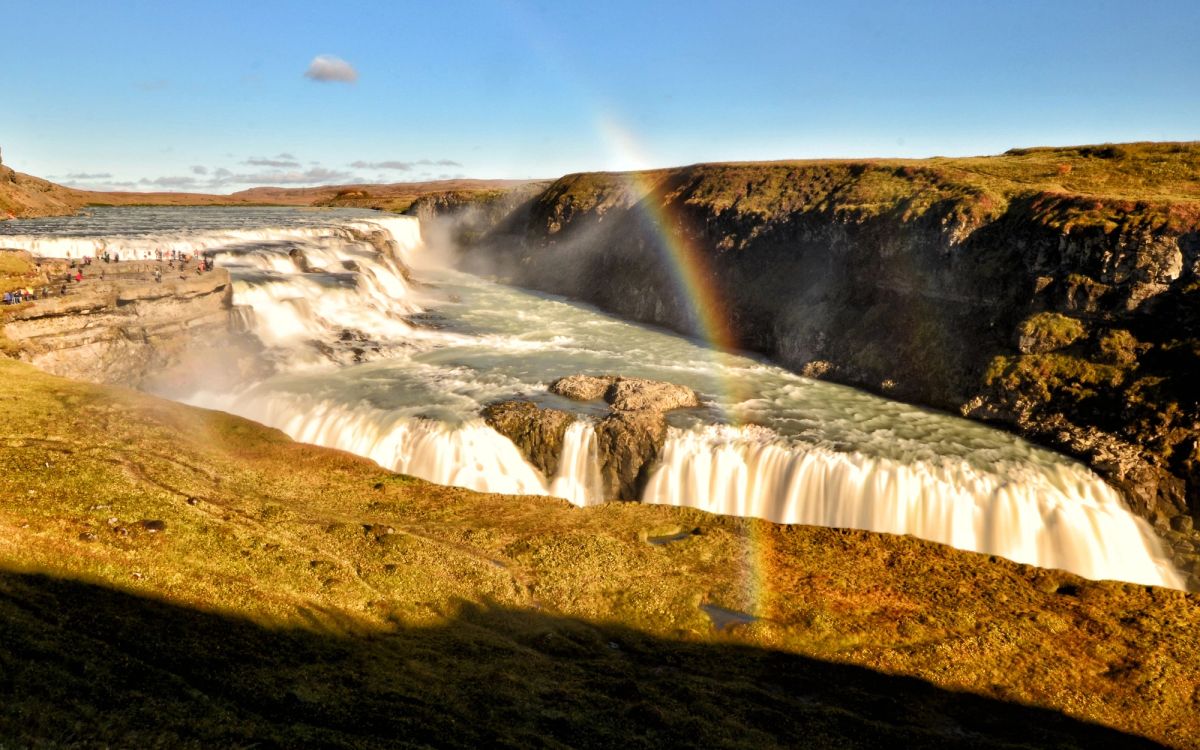
Gullfoss at 8am is a different place from Gullfoss at noon, which is the cheapest fix for Golden Circle crowds.
What Each Costs
Prices in Icelandic krónur, for one adult.
- Golden Circle classic coach day, 9 hours: 13,152 ISK
- Golden Circle small-group day with Kerið and Friðheimar, 8.5 hours: 19,630 ISK
- Snæfellsnes guided day tour: usually 20,000 to 30,000 ISK, reflecting the longer day
- Self-drive fuel, Golden Circle: 5,000 to 7,000 ISK per car
- Self-drive fuel, Snæfellsnes: 9,000 to 13,000 ISK per car
- Þingvellir parking: 1,000 ISK per car, and Snæfellsnes has no parking fees at the main stops.
Snæfellsnes is the more expensive day, both guided and self-driven, mostly because of the distance. It also has fewer places to spend money once you are there, which offsets some of it.
Weather and Season
Both days run all year, and they degrade differently.
The Golden Circle sits inland at 100 to 300 metres, with the nearest Met Office station recording January average daily highs of 1.8°C and July highs of 16.5°C in its monthly climate data. Snow closes the route rarely, and the sites themselves stay open.
Snæfellsnes is coastal and exposed. Wind is stronger, the road around the tip is the first thing to shut in a storm, and a 12-hour day in December is impossible when usable light runs from 11am to 3:30pm.
The winter verdict
From November to March the Golden Circle is the safer booking. Snæfellsnes in winter is spectacular when it works and a long drive in the dark when it does not.
From May to September both are comfortable, and Snæfellsnes benefits more from long light because there is more ground to cover.
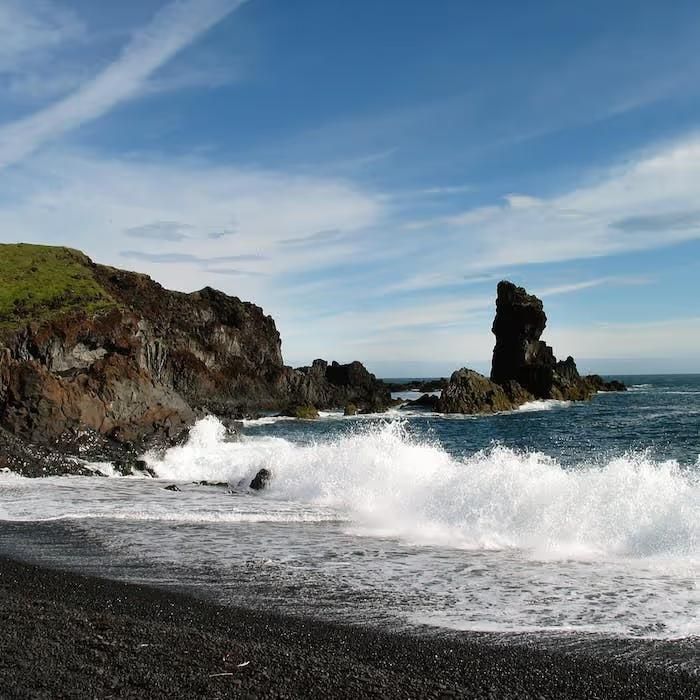
The peninsula's north-facing coast takes weather straight off the Atlantic, which is what closes Route 54.
Wildlife and Birds
This is one category where Snæfellsnes wins outright.
Ytri Tunga is a beach where a seal colony hauls out, most reliably from May to July, and you watch from the sand a few dozen metres away. There is no equivalent anywhere on the Golden Circle.
The cliffs at Arnarstapi, Hellnar and Lóndrangar hold kittiwakes, fulmars and guillemots through the summer, and puffins nest on parts of the coast from May to early August. Whale watching runs from Ólafsvík and Grundarfjörður, with orca sightings in late winter and spring.
The Golden Circle's wildlife is quieter and mostly aquatic. Lake Þingvallavatn holds three of Iceland's five freshwater fish species, including the four distinct varieties of Arctic charr that evolved in the lake, and the birch woods around it are full of redwings in summer.
Horses are the exception. Icelandic horses graze along the fences on Route 35, and the Friðheimar farm runs a show that explains the breed's five gaits.
What You Miss on Each
Choosing one means giving up something specific, so it helps to name it.
Skip the Golden Circle and you miss the tectonic plates at Þingvellir, an erupting geyser, and the single biggest waterfall most visitors will stand next to. You also miss the historical layer, which is the only place in Iceland where the geology and the national story sit in the same field.
Skip Snæfellsnes and you miss the coast. There are no sea cliffs, no black pebble beaches, no fishing harbours and no seals on the Golden Circle, and there is no glacier you can see without a separate excursion.
The compromise nobody mentions is that the Golden Circle has a glacier on its horizon. Langjökull sits north of Gullfoss and is visible from the road on a clear day, with snowmobile and ice tunnel tours running from just above the falls.
Which Suits Which Traveller
The honest answer changes completely depending on who is asking.
First-time visitors
The Golden Circle, almost always. It is the shortest day; the sights are the ones you have seen in photographs, and it leaves an evening free.
If you have three days in Iceland, doing the Golden Circle and the South Coast beats doing Snæfellsnes and nothing else. Our comparison of the Golden Circle and the South Coast covers that second choice.
Photographers
Snæfellsnes, if you have the day. Kirkjufell, Lóndrangar, Búðakirkja and the Arnarstapi cliffs give you more distinct compositions than the Golden Circle's three sites.
The exception is winter, when the low sun and short travel times of the Golden Circle produce more usable light per hour of driving.
Families with young children
The Golden Circle. Short walks, real toilets, cafes at every stop, a geyser that performs on schedule, and no leg of the drive longer than an hour.
Snæfellsnes has two-hour drives at each end and long gaps between facilities, which is a hard sell with a five-year-old.
Repeat visitors
Snæfellsnes. There is no version of the Golden Circle that feels new the second time, and the peninsula gives a returning visitor something genuinely different.
Travellers without a car
Both run as guided day tours from Reykjavík, and neither is reachable by public bus. The Golden Circle has far more departures, so it is easier to fit around a fixed schedule.
Can You Do Both?
Yes, on separate days, and that is the right answer if you have four days or more.
Doing them back to back is fine, though put the Golden Circle first. It is the shorter day, and it introduces the geology that makes Snæfellsnes legible.
Trying to combine them into one day does not work. The peninsula is 150 kilometres northwest of Reykjavík, and the Golden Circle is 50 kilometres east, and the two have no shared roads.
If your trip is exactly two days, the strongest pairing is the Golden Circle plus the South Coast, which gives you rift, geyser, waterfall, black sand and glacier without repeating a landscape.
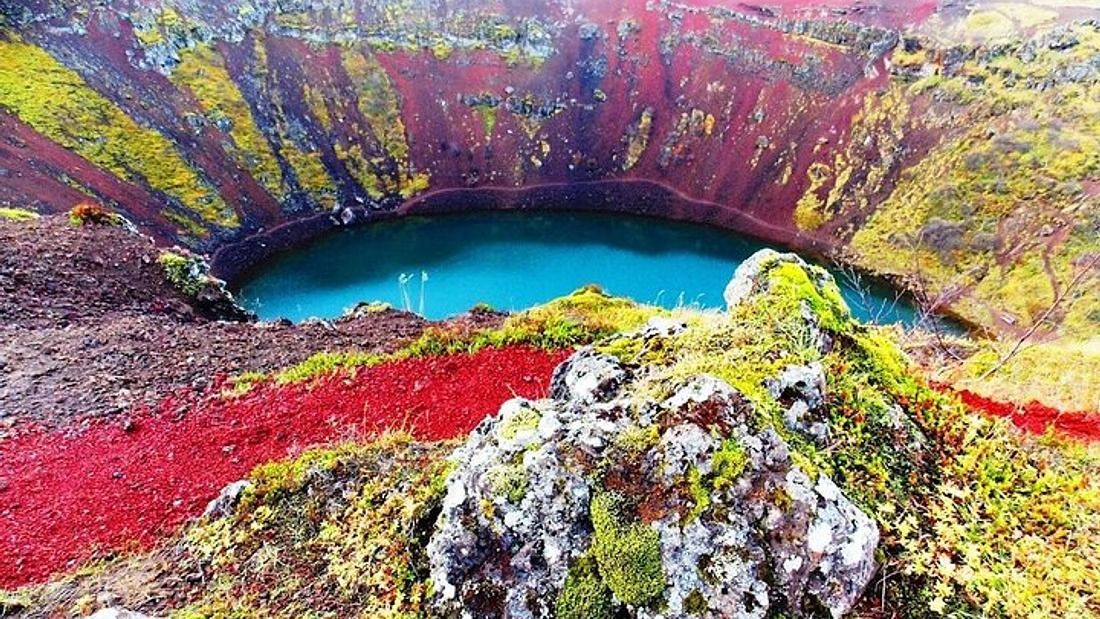
Kerið is the kind of extra the Golden Circle can absorb without lengthening the day.
Booking and Practicalities
A few differences that only show up once you start planning.
Departures: the Golden Circle runs several times daily year-round from Reykjavík, while Snæfellsnes tours typically run once a day and less often in winter. If your dates are tight, that alone may decide it.
Cancellations: Snæfellsnes tours cancel more often because Route 54 around the peninsula closes in high wind. Golden Circle departures almost always run in some form, with the order of stops changed if needed.
Facilities: the Golden Circle has toilets and a cafe at all three main sites, plus restaurants at Friðheimar, Efstidalur and Laugarvatn. Snæfellsnes has facilities at the villages and long gaps between them, so plan fuel and toilets around Borgarnes, Arnarstapi and Ólafsvík.
Accommodation: staying overnight changes both days for the better. A night at Laugarvatn puts you inside the Golden Circle for an 8am start at Gullfoss, and a night in Stykkishólmur turns Snæfellsnes from a 12-hour push into two relaxed half-days.
The Verdict
For most people, most of the time, the Golden Circle is the better single day. It packs three genuinely different landscapes into a short drive, it works in every season, and the crowds can be dodged with an early start.
Snæfellsnes is the better day for the traveller who has already done that, who wants a coastline rather than a waterfall, and who is happy to spend six hours in a vehicle to get it.
If you are choosing scenery alone, Snæfellsnes edges it. If you are choosing on how the day actually feels, the Golden Circle wins, and that is why it stays the more booked of the two.
Start With the Classic Loop
If this is your first Iceland trip and you have one day to spend, the loop is the one to book, and the extras are what make it yours. Our Golden Circle Classic Tour covers Þingvellir, Geysir and Gullfoss in 9 hours from Reykjavík for 13,152 ISK, with a guide who fills in the geology between stops. If you would rather move faster and add Kerið and Friðheimar, the small-group version does the same route with under 19 people.
Compare Golden Circle Tours
Check each selected product for its current operator, guide, itinerary, meeting point, and terms.
View Our Tours
