
Golden Circle weather is cool, wet and changeable all year, with average daily highs of about 16°C in July and 2°C in January at the Hjarðarland station near Geysir. Rain or snow falls on a large share of days in every month, and wind matters more than the number on the thermometer.
The route sits 50 to 120 kilometres inland from Reykjavík, at 100 to 300 metres above sea level. That makes it a degree or two colder than the city in winter, slightly warmer on a sunny summer afternoon, and more likely to hold snow into April.
The practical version: dress for wind and water in every season, and check the forecast the morning you travel rather than the week before. Iceland's weather does not commit far in advance.
Golden Circle Weather by the Numbers
The nearest long-running weather station to the main stops is Hjarðarland in Biskupstungur, about 15 kilometres from Geysir. Averaging the Icelandic Met Office's monthly station data across the 1991 to 2020 period gives the clearest picture of what to expect.
- January: average 1.1°C below zero, daily high 1.8°C, daily low 4.3°C below zero, 131 mm of precipitation
- February: average 1.2°C below zero, high 1.9°C, low 4.2°C below zero, 131 mm
- March: average 0.5°C below zero, high 2.9°C, low 3.5°C below zero, 128 mm
- April: average 2.6°C, high 6.5°C, low 0.7°C below zero, 84 mm
- May: average 6.5°C, high 10.9°C, low 2.2°C, 82 mm
- June: average 10.1°C, high 14.7°C, low 5.8°C, 78 mm
- July: average 11.9°C, high 16.5°C, low 7.8°C, 89 mm
- August: average 10.9°C, high 15.3°C, low 7.0°C, 104 mm
- September: average 7.4°C, high 11.6°C, low 4.5°C, 147 mm
- October: average 3.2°C, high 6.8°C, low 0.6°C, 120 mm
- November: average 0.4°C, high 3.2°C, low 2.6°C below zero, 113 mm
- December: average 1.2°C below zero, high 1.9°C, low 4.4°C below zero, 129 mm
Two things stand out. September is the wettest month on the route rather than a winter month, and the summer highs are cooler than most visitors picture, so a July afternoon at Gullfoss can feel like a British November once the spray reaches you.
The record lows tell you what the tail end looks like. That same station has recorded 22°C below zero in February and 19.8°C below zero in December, so a cold snap in midwinter is a real possibility rather than a curiosity.
Why the Weather Changes So Fast Here
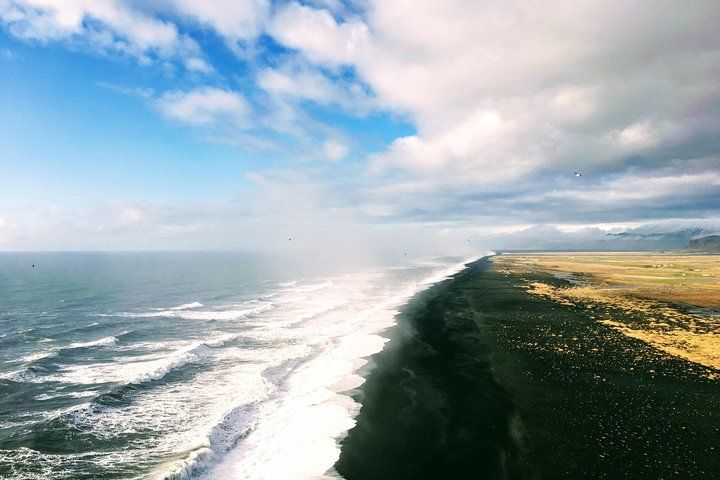
Iceland sits where warm and cold air masses meet. The North Atlantic Drift, an extension of the Gulf Stream, carries mild water up the south and west coasts, which is why a country touching the Arctic Circle has January averages close to freezing rather than 20 below.
That warm water meeting cold Arctic air is also what generates the procession of low-pressure systems that cross the country. Each one brings a front, and a front can swing the wind 180 degrees and drop the temperature five degrees in under an hour.
The Golden Circle adds terrain to the mix. Air rising over Lyngdalsheiði and the hills north of Laugarvatn cools and drops its moisture, so the middle of the loop can be in cloud while Selfoss sits in sunshine 30 kilometres south.
Summer on the Golden Circle: June to August
Summer is the mildest and driest stretch, with daily highs of 14.7°C in June, 16.5°C in July and 15.3°C in August. Rain still arrives regularly, and the difference is that it passes quickly and rarely stops you doing anything.
Daylight is the real story. From late May to early August the sun barely sets, which means you can start the loop at 7am or at 6pm and still see every site in good light. Late evening is the single best time to visit Gullfoss in July, because the coaches have gone and the low sun puts a rainbow in the spray.
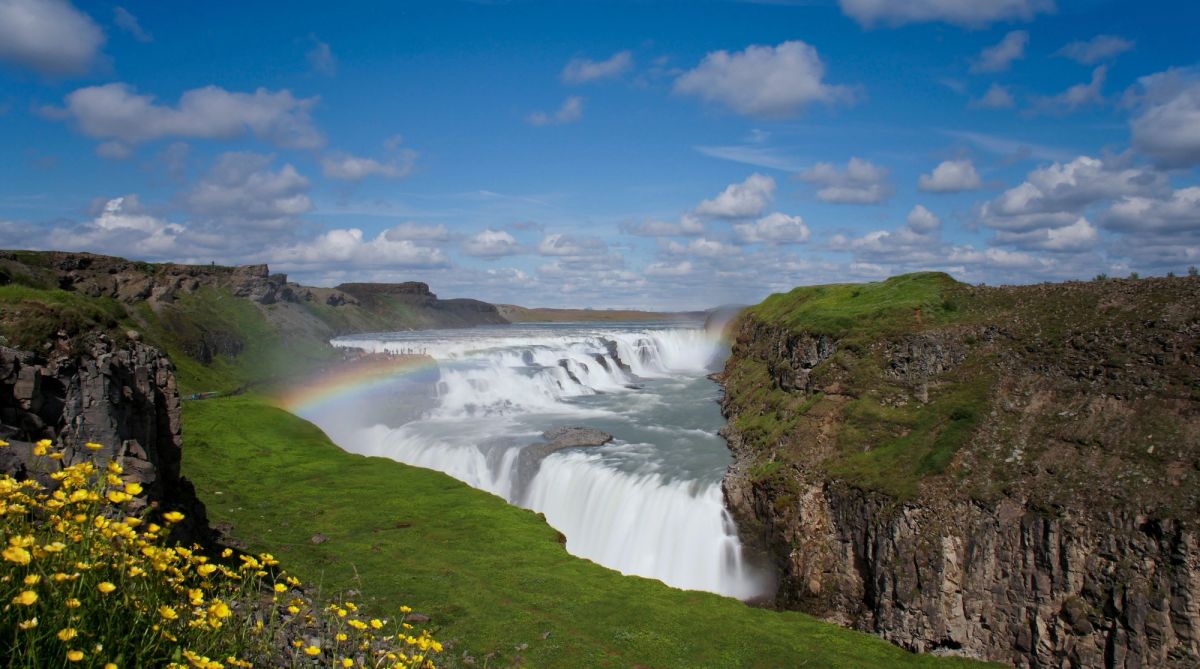
Gullfoss in July, when the low evening sun regularly puts a rainbow across the canyon.
What summer feels like at the stops
Wind is at its lowest in July, averaging 3.4 metres per second at Hjarðarland against 5.2 in February. That is the difference between a pleasant walk through Almannagjá and a fight with your hood.
Gullfoss runs hardest in summer. The Environment Agency of Iceland records average flow of 109 cubic metres per second and summer flow of 130, fed by melting ice on Langjökull, which means more spray and a wetter lower path than in winter.
What to wear in summer
A waterproof shell, a fleece or light down mid-layer, and trousers you do not mind getting wet. Trainers are fine on the paved sections and poor on the gravel at Geysir after rain.
Bring a hat even in July. On an exposed viewpoint at 10°C with a 10 metre per second wind, bare ears stop being fun within ten minutes.
Autumn on the Golden Circle: September to October
Autumn is the wettest part of the year on this route, with 147 mm in September and 120 mm in October. It is also, for many people, the best time to come.
Temperatures stay workable, with highs of 11.6°C in September and 6.8°C in October. The birch and heath at Þingvellir turn red and gold from mid-September, the crowds thin noticeably after the first week of the month, and aurora season opens as the nights get properly dark.
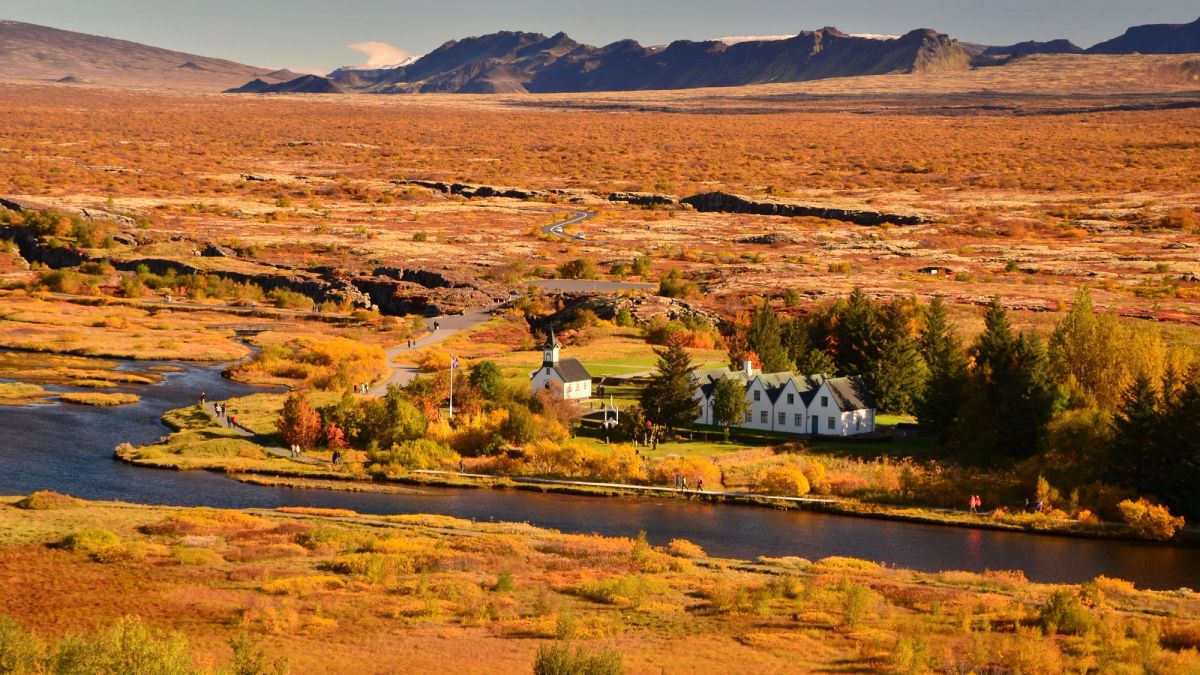
Þingvellir in late September, when the birch scrub turns and the coach traffic drops off.
The autumn trade-off
The rain is persistent and often sideways. Days shorten fast, from about 13 hours of daylight in early September to under 9 by the end of October, so plan three stops rather than five.
Roads stay clear into October in most years. The first proper snow on the Lyngdalsheiði stretch between Þingvellir and Laugarvatn usually lands somewhere between mid-October and mid-November.
Winter on the Golden Circle: November to March
Winter runs cold rather than extreme, with average daily highs between 1.8°C and 3.2°C and lows around 4°C below zero. What makes it demanding is the combination of wind, ice and only four to five hours of usable daylight around the solstice.
Snow lies on the route from roughly late November to March, though it comes and goes. A thaw followed by a freeze is common, and that is what produces the glassy ice on the Gullfoss paths that catches people out.
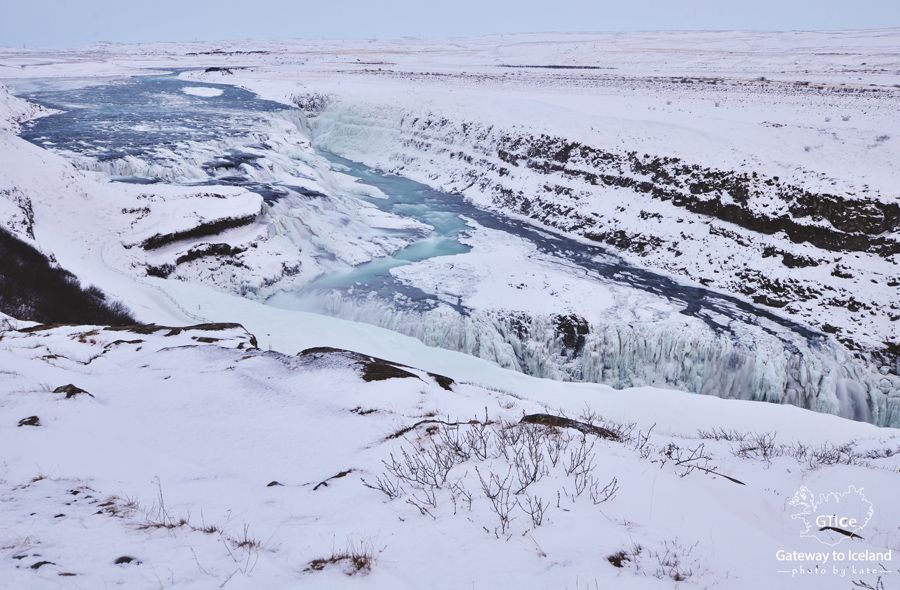
Gullfoss in February, with ice built up along the canyon walls and the lower path closed.
Snow and ice on the roads
Routes 36, 365, 37 and 35 are all paved and all served by the Icelandic Road Administration through winter, though service does not mean bare tarmac. Check road.is for road conditions on the morning you drive, and treat a closed or impassable marking as final rather than a suggestion.
Rental cars in Iceland run winter tyres from 1 November to 14 April by law. Studded tyres are permitted in that window, and they are worth requesting if you are driving yourself in January or February.
Daylight in midwinter
Around 21 December the sun rises near 11:20am and sets near 3:30pm in this part of Iceland. Add twilight and you have a workable window from about 10:30am to 4:30pm, which is enough for the three main stops with no dawdling.
The compensation is light quality. In December the sun never climbs far, so you get low golden light for hours rather than the harsh overhead light of a summer noon.
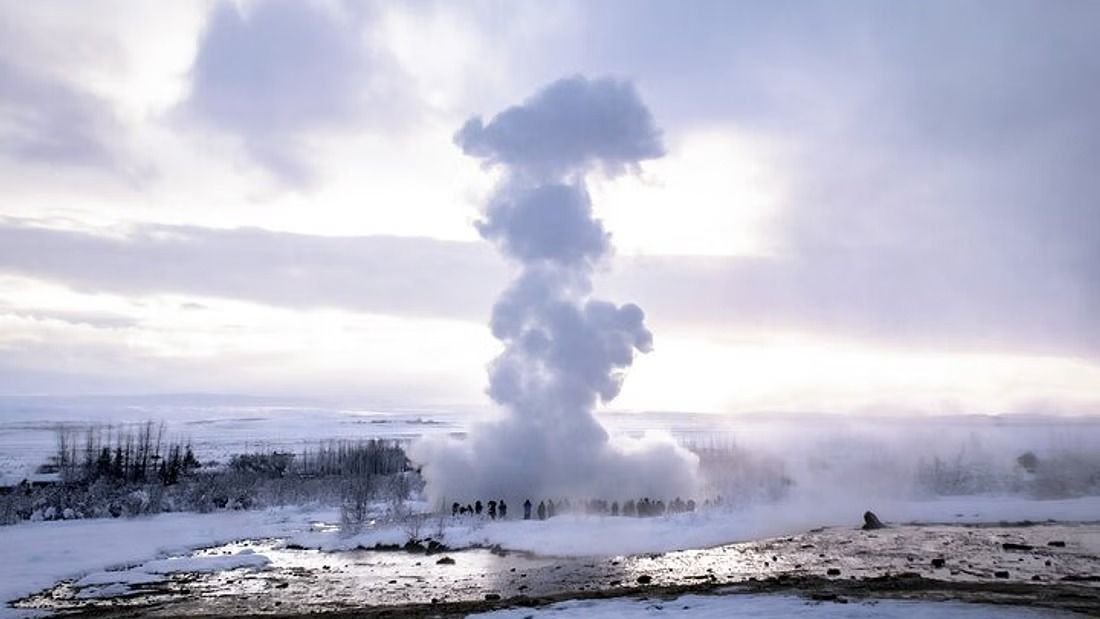
Geysir in winter, where the steam is thicker in cold air and the boardwalks ice up fast.
What closes in winter
The lower path at Gullfoss, which drops onto the rock shelf beside the falls, closes whenever it ices over, and that is most of the season. The upper platform stays open and gets gritted.
At Þingvellir the main Almannagjá path and boardwalks stay open, with grit boxes at the steeper sections. Some side trails and the Öxarárfoss approach can be closed after a freeze. Parking still costs 1,000 ISK for a car under the park's published rates, whatever the weather.
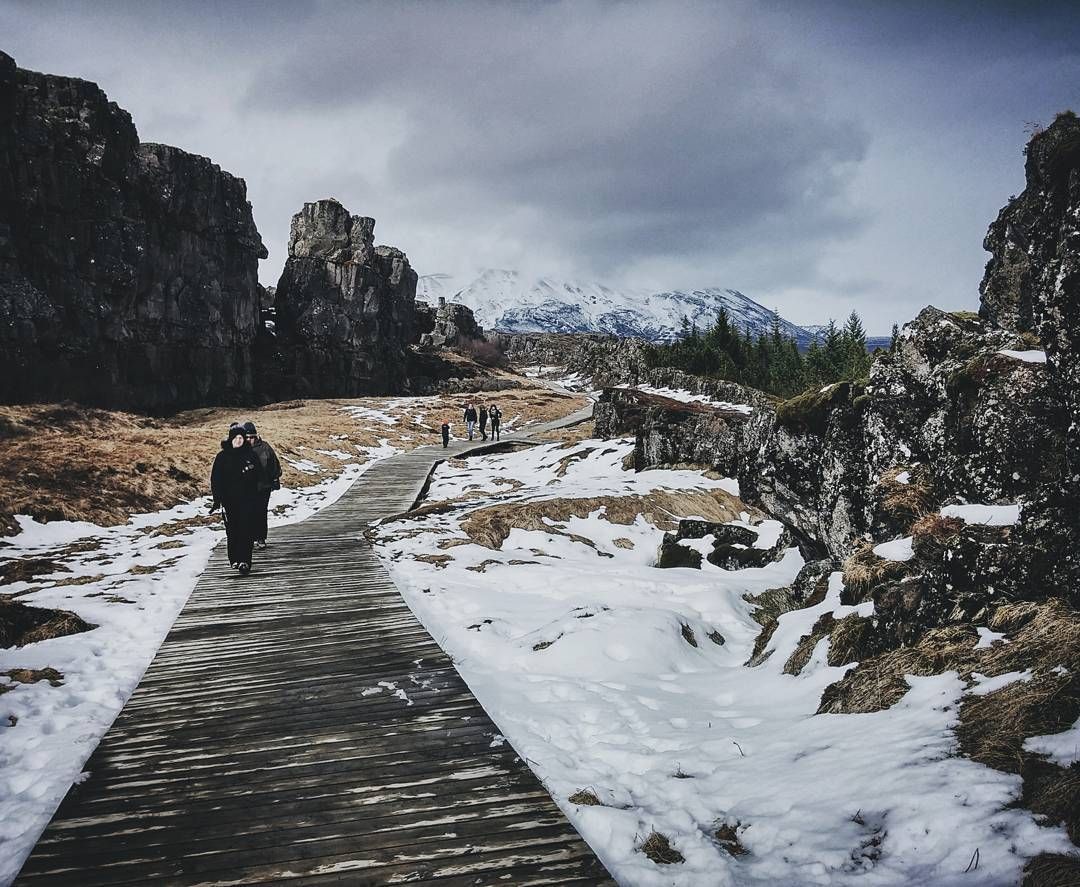
The Þingvellir boardwalks stay open in winter, though a thaw and refreeze turns them slick.
Winter clothing that actually works
Layer properly: a thermal base, a warm mid-layer, and a genuinely waterproof and windproof shell. A wool hat, waterproof gloves and a buff for your face are all doing real work in a 10 metre per second wind at Gullfoss.
Footwear decides how much you enjoy the day. Waterproof boots with a deep tread are the minimum, and slip-on ice cleats for about 3,000 ISK are the best small purchase you can make for an Icelandic winter.
Cotton is the one material to leave in the suitcase. It holds water, stops insulating the moment it is damp, and the spray at Gullfoss will find it. Our layering guide for the Golden Circle goes through the specifics if you are packing from scratch.
Spring on the Golden Circle: April to May
Spring arrives late and unevenly. April averages 2.6°C with highs of 6.5°C, and May jumps to 6.5°C with highs of 10.9°C, which is the sharpest month-to-month change of the year.
Snow can still fall in April, and the ground at Þingvellir stays soggy as it thaws. By mid-May the birch is greening, the migratory birds are back on Þingvallavatn, and the roads are reliably clear.
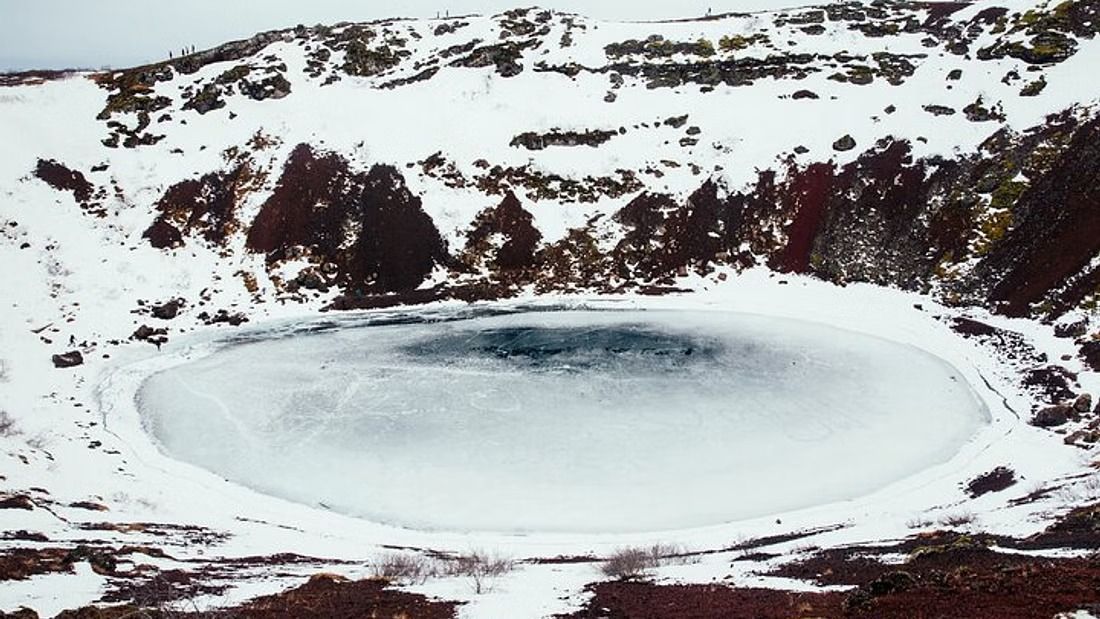
Kerið in early spring, when the crater lake can still be frozen while the road below is clear.
Why spring is underrated
April and May are the driest months on the route, with 84 mm and 82 mm. Daylight is generous, running past 16 hours by early May, and the tour buses have not yet reached summer volume.
Meltwater also puts real power into the rivers. Gullfoss in late May carries a heavy load from Langjökull, and Faxi and Brúarfoss both run high.
How the Weather Differs at Each Stop
The three main sites sit within 60 kilometres of each other and still manage to feel like different climates on the same day.
Þingvellir
Þingvellir sits in a rift valley at about 100 metres, next to Iceland's largest natural lake. The valley funnels wind along its axis, so a northerly makes the walk down Almannagjá noticeably colder than the car park suggested.
It also holds snow. Þingvellir National Park keeps a covering on the valley floor after Reykjavík has thawed, which is worth knowing if you have booked a snorkelling slot at Silfra and plan to walk afterwards.
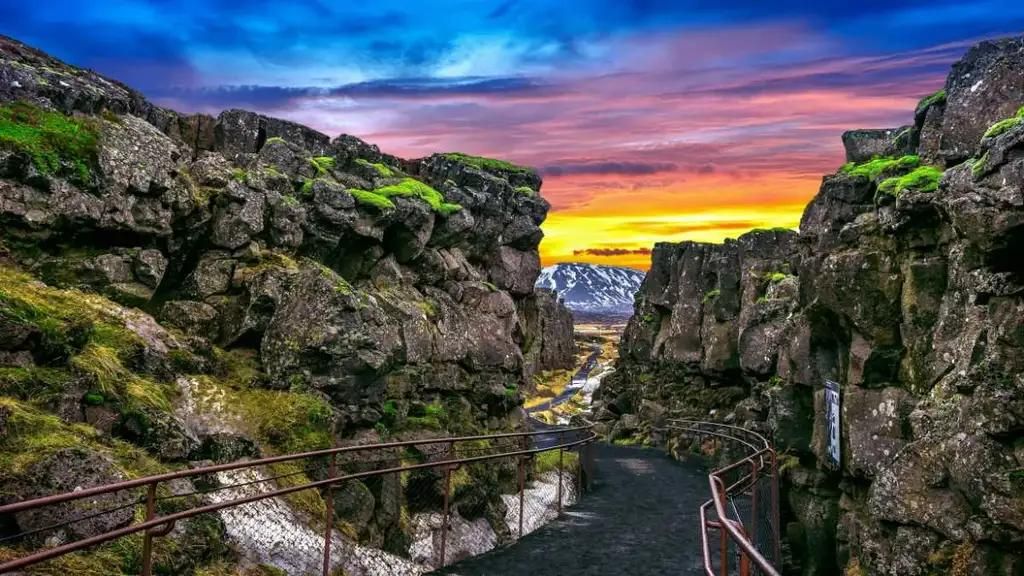
Almannagjá catches wind along its length, which makes it colder than the exposed car park above.
Geysir
Geysir is the warmest place to stand on a cold day, because the ground itself is heated and the steam drifts across the paths. That same steam freezes onto the boardwalks overnight in winter.
Wind direction matters at the Geysir geothermal area more than anywhere else on the loop. Stand upwind of Strokkur or you will be wearing the eruption, and in winter that water cools fast on your jacket.
Gullfoss
Gullfoss is the coldest and wettest of the three in every season. It sits above a canyon that channels wind, and the spray reaches the upper platform on any day with a southerly.
In summer that spray is refreshing. In February it soaks your gloves in two minutes and then freezes, which is the main reason people cut their Gullfoss stop short in winter.
Wind: the Number That Actually Matters
Mean wind at Hjarðarland runs from 3.4 metres per second in July to 5.2 in February, and those averages hide the days that matter. Gusts of 20 to 25 metres per second happen several times each winter and occasionally in summer.
At 15 metres per second, opening a car door into the wind can bend it back and tear the hinge, which is the single most common rental car damage claim in Iceland. Park nose into the wind and hold the door with both hands.
At 20 metres per second and above, walking on an exposed viewpoint stops being sensible, and the Met Office will usually have a warning out. That is the point at which a guided tour will change its route and a self-driver should change theirs.
How to Check the Forecast Before You Go
Check three things the morning you travel, in this order.
- The Icelandic Met Office area forecasts for Suðurland, which cover the Golden Circle, with wind speed and precipitation by the hour.
- Road conditions on road.is, which shows ice, snow and closures in near real time on the exact route numbers.
- The alerts page for colour-coded weather warnings, where an orange warning is a strong reason to postpone a self-drive day.
If those three agree that the day is fine, it is fine. If road.is shows amber or red on Route 36 or 35, the sensible move is to swap your day around rather than push through.
Check the night before as well, but only to get a rough shape for the day. Icelandic forecasts beyond about 36 hours are honest guesses, and the operational decisions that tour companies make are almost always taken at 6am on the day.
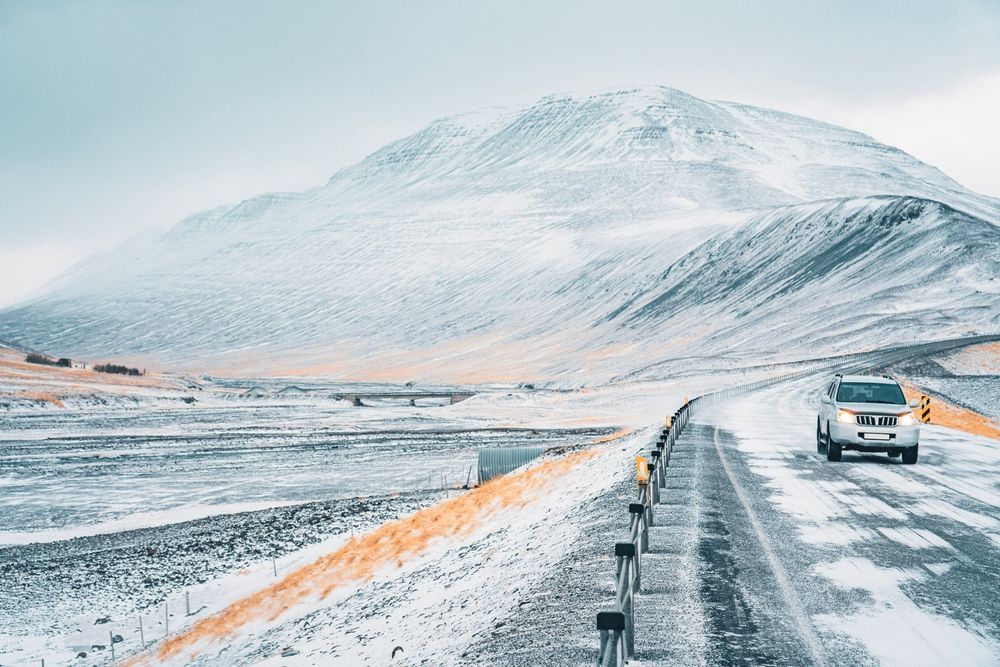
Winter driving on the route is manageable with the right tyres and a check of road.is before you set off.
When the Weather Should Change Your Plan
Rain alone should not change anything. The sites are outdoors, the paths are surfaced, and a wet Gullfoss is still a spectacular Gullfoss.
High wind should. Above about 18 metres per second, viewpoints become unpleasant and driving a high-sided vehicle becomes work rather than transport. That is the day to book a seat on a coach or move the loop to tomorrow.
Ice storms and heavy snow should too. Two or three times each winter the road over Lyngdalsheiði closes for part of a day, and there is no useful detour that saves the schedule. Our guide to the loop in winter covers what still works when that happens.
Fog is the quiet one. A low cloud base at 200 metres will hide the rift valley entirely while Geysir and Gullfoss stay clear, so a foggy morning is an argument for driving the loop backwards rather than cancelling.
Plan the Day Around the Forecast
Weather is the one variable on this route you cannot book around, and it is the reason many visitors hand the driving to someone else between November and March.
Our Golden Circle Classic Tour runs year-round with guides who check road.is and the Met Office before every departure and adjust the order of stops when conditions call for it. Have a look at the winter timings if you are travelling in the dark months and would rather watch the weather through a window.
Compare Golden Circle Tours
Check each selected product for its current operator, guide, itinerary, meeting point, and terms.
View Our Tours
