
Most cruise ships stay in Reykjavík for 8 to 12 hours, arriving around 7am or 8am and departing between 5pm and 7pm. That is a single daytime stop rather than an overnight, and it is the shape of the great majority of Iceland itineraries.
A minority of sailings schedule a late departure at 10pm or 11pm, and a smaller number stay overnight, which gives you two usable days ashore.
The number that matters is not the departure time. It is the all-aboard time, which is typically 30 to 60 minutes earlier, and that is the deadline every plan has to work backwards from.
Where Ships Dock
Reykjavík has three berthing options, and the one you get changes your day.
Skarfabakki is the main cruise terminal and handles most large ships. It sits about 3 to 4 kilometres northeast of the centre in the Sundahöfn area, with a terminal building, taxis and coach parking, and nothing walkable at the pier itself.
Sundabakki, next door, takes the overflow when several ships call at once. Same distance, same arrangements.
The old harbour, right in the centre, takes smaller expedition vessels. If you berth there, you can step off and be in a café in five minutes, which is a genuinely different port day.
Faxaflóahafnir, the port authority, is opening a new passenger terminal in spring 2026, which will change the arrival experience at Skarfabakki for the better.
What All-Aboard Actually Means
This catches people out every season, and the misunderstanding is always the same.
All-aboard is the time you must be back on the ship, not the time the ship leaves. It is set 30 to 60 minutes before departure so the crew can complete headcounts and clear the gangway.
If your day sheet says departure 18:00, all-aboard is likely 17:30 or 17:00. Plan against that figure and treat departure time as irrelevant.
Ship time can also differ from local time. Vessels sometimes hold the previous port's clock, and Iceland stays on GMT year-round with no daylight saving shift. Check the day sheet rather than your phone.
Ships do sail without passengers. Cruise lines wait for their own excursions and generally do not wait for independent travellers, which is the single most important thing to understand about booking privately.
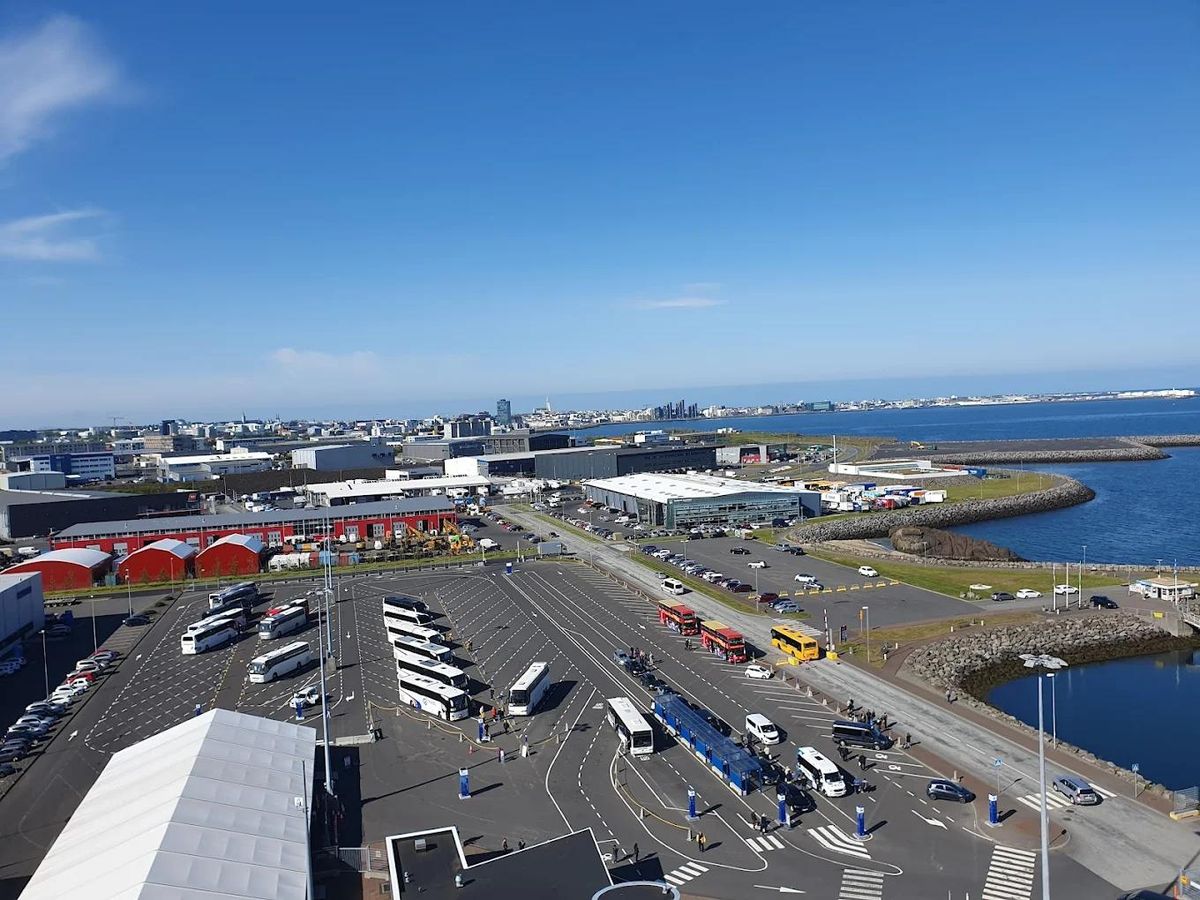
Excursion coaches wait at the pier. Independent tours meet in the same area, usually at a marked stand.
What Fits in the Window
Here is what each length of call realistically allows, counting the walk off the ship and the buffer back.
- Under 6 hours ashore: Reykjavík city, the old harbour, Hallgrímskirkja and a museum
- 6 to 7 hours: the city plus Sky Lagoon, or a short Reykjanes loop
- 7 to 9 hours: an express Golden Circle covering the three main sites
- 9 to 11 hours: a full Golden Circle with a lunch stop or an extra site
- 11 hours or more: Golden Circle plus a lagoon, or a South Coast run
- Overnight: everything above, plus an aurora hunt in season
The Golden Circle is the most booked excursion from Reykjavík, and it needs 6 to 8 hours of touring, so it fits comfortably inside a standard call with time to spare.
The Golden Circle From Port
The loop works well from a ship because it starts and ends in the same place and does not depend on flight-style timings.
The three main stops sit within 60 kilometres of each other: Þingvellir at 50 kilometres from the city, Geysir a further 60, and Gullfoss 10 beyond that. Total driving is about three and a half hours.
Our small-group Golden Circle tour from the cruise port collects at Skarfabakki, covers the three sites and returns to the pier, sized so the group moves faster between stops than a 50-seat coach.
Each site has a natural stop length: 40 to 45 minutes at Þingvellir, 45 at Geysir and 45 at Gullfoss. Anything shorter and you are looking at car parks rather than landscape.
The key question to ask any operator is whether they track your ship and guarantee your return. Ours do, and the details are set out on our guaranteed return page.
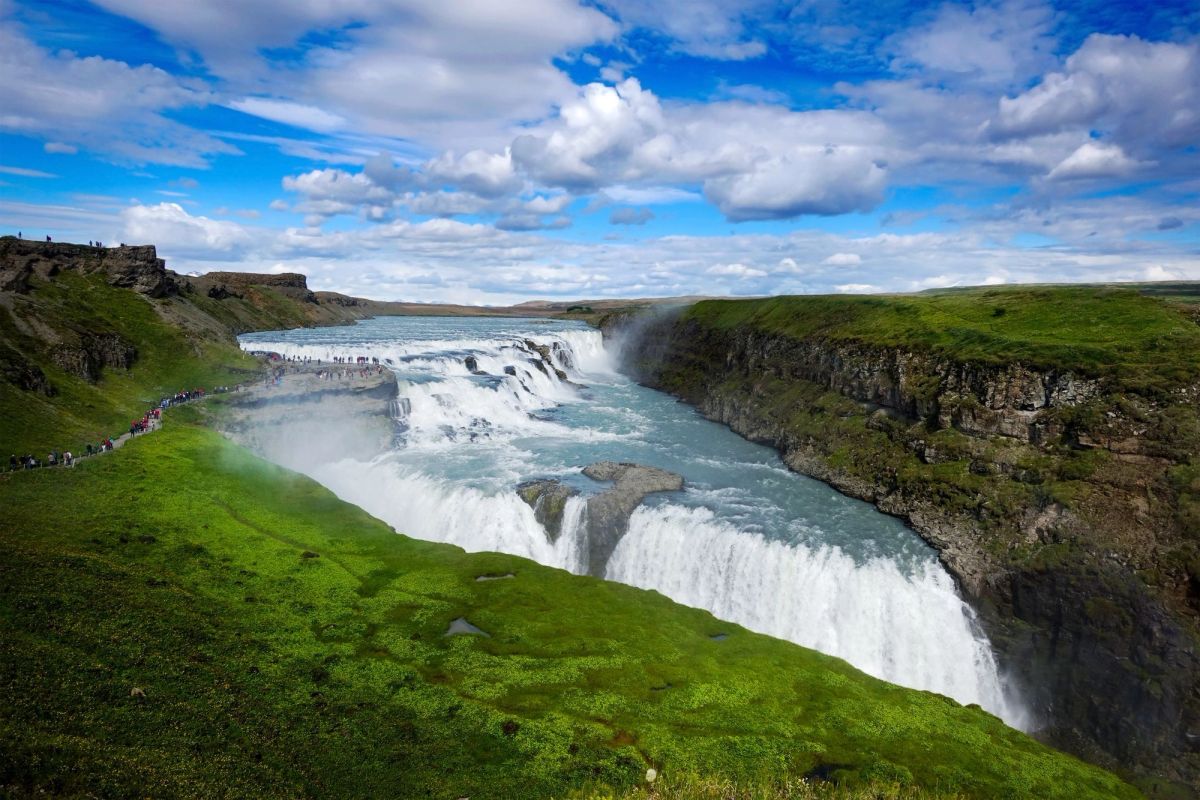
Gullfoss is the furthest point of the loop at 115 kilometres, which is comfortable inside a 9-hour call.
Ship Excursions or Independent?
Both work and they carry different risks.
A ship excursion is the safe option. If it runs late, the ship waits, because the line booked it. You pay a premium for that guarantee and you travel in a larger group.
An independent tour is usually cheaper, smaller and more flexible. The trade-off is that the ship has no obligation to wait, so the operator's return policy becomes the thing you are actually buying.
A good independent operator monitors your vessel's schedule, builds in buffer, and states a written return guarantee. Ask for it before you book rather than after.
Doing it entirely yourself, by taxi or rental car, is the cheapest and the riskiest. Nobody is tracking your ship and nobody is accountable for the traffic on Route 1.
For most passengers on a standard 9 or 10 hour call, a well-run independent small-group tour is the best balance. Our shore excursion overview sets out how the pickups and timings work.
Getting From Skarfabakki Into Town
If you would rather explore Reykjavík than take an excursion, you have four options.
Shuttle buses run from the terminal to the city centre on most call days, operated either by the line or by local companies, and they are the simplest option.
Taxis wait at the terminal. The fare into the centre is short, and Icelandic taxis are expensive, so expect a higher price than the distance suggests.
The city bus network reaches the area, though it is slower and involves a walk to the stop.
Walking is possible and takes 40 to 50 minutes along the shoreline path, which is pleasant in July and unpleasant in a January headwind.
How Weather Changes the Day
Iceland's weather affects a port call in ways that surprise first-time visitors.
Ships occasionally cannot dock at all. High wind in Faxaflói Bay leads to skipped calls, and that decision belongs to the captain and the pilot rather than to anyone ashore.
Ashore, the wind matters for comfort rather than access. At the Golden Circle's nearest long-running station, Met Office climate data puts mean wind at 3.4 metres per second in July and 5.2 in February, and it is the February version that makes a viewpoint feel severe.
Excursions run in almost all conditions. The sites are outdoor, free and open around the clock, so only a genuine storm warning stops a Golden Circle departure.
Operators watch the official alerts on SafeTravel and will reshuffle the order of stops rather than cancel outright when a front is moving through.
Winter compresses everything. Usable daylight runs from about 10:30am to 4:30pm in December, so a 7am arrival gives you three hours of darkness before the scenery appears.
Summer removes the constraint entirely. In June the sun barely sets, so a late departure at 10pm still leaves you touring in full light.
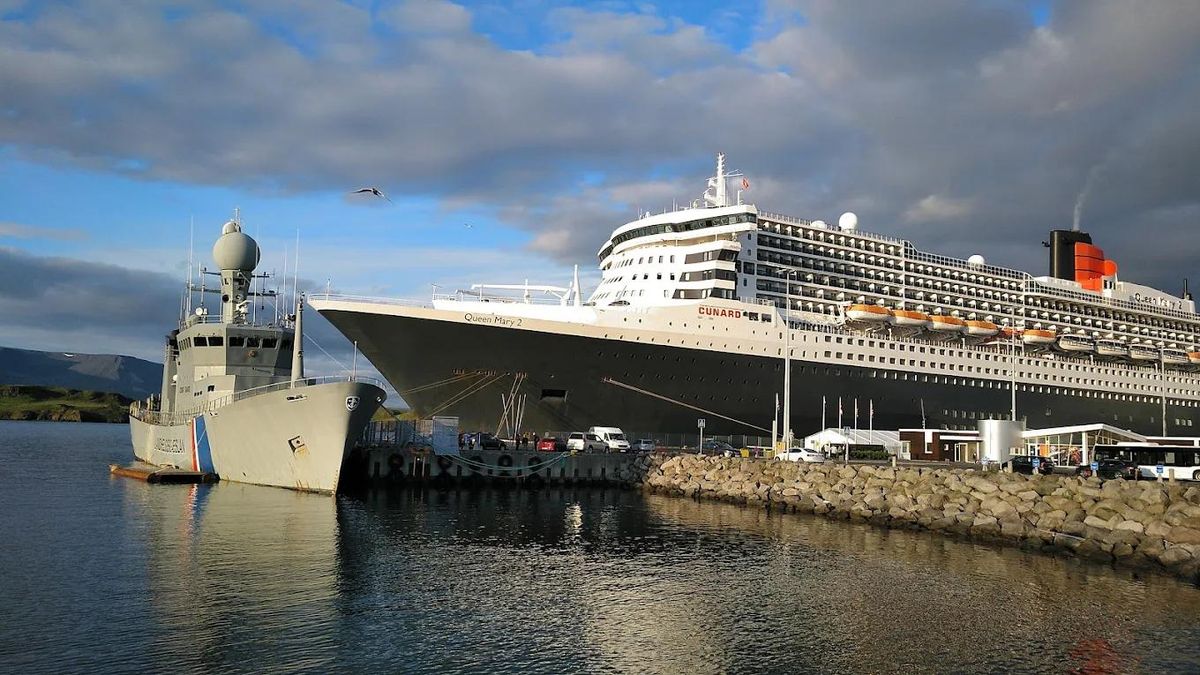
Wind rather than cold is what occasionally cancels a Reykjavík call altogether.
Reading Your Day Sheet
Four numbers on the daily programme decide your plan.
Arrival time, which is when the ship is scheduled alongside rather than when you can walk off. Add 30 to 45 minutes for clearance and gangway.
All-aboard time, which is your real deadline.
Departure time, useful only for calculating all-aboard if it is not stated.
Ship time versus local time, in case the two differ.
Take a photograph of the sheet before you leave the cabin. Every operator will ask for the all-aboard time, and most passengers cannot remember it.
Building the Right Buffer
The arithmetic that keeps you on the ship.
Work backwards from all-aboard, not from departure. Subtract 30 minutes for the return to the pier from the city and 45 to 60 from anywhere on the Golden Circle.
Subtract another 30 minutes of contingency. Icelandic weather, roadworks on Route 1 and the occasional coach queue at Gullfoss all eat time.
That means a 6pm all-aboard should have you leaving Gullfoss by about 3:45pm. Any operator promising later than that is cutting it fine.
If you are travelling independently, add more. You have no one advocating for you if the traffic goes wrong.
Overnight Calls
A small share of itineraries stay overnight, and they are worth seeking out when booking a cruise.
The obvious gain is a second day, which turns a Golden Circle port call into a Golden Circle plus a South Coast or a lagoon.
The less obvious one is the evening. Between September and April an overnight in Reykjavík makes an aurora hunt possible, which no daytime call can offer.
Restaurants and bars in the centre stay open late, and the walk between Hallgrímskirkja, the harbour and Laugavegur is short enough to do after dinner.
Practical Points for a Reykjavík Call
Bring layers for a full day outdoors, whatever the month. The Golden Circle sites are exposed and the wind decides how cold they feel.
Carry a card rather than cash. Iceland is close to cashless and even the toilets at the main sites take cards.
Eat before you go or plan a stop. There is one substantial cafe on the loop, at Geysir, plus restaurants at Friðheimar and Efstidalur.
Keep your ship card and passport arrangements as the line instructs, and note the pier name as well as the ship name, since several vessels can be alongside at once.
Check the cruise passenger FAQ if you are unsure whether an excursion fits your specific call length.
Fit the Loop Into Your Call
An 8 to 12 hour stop in Reykjavík is comfortably enough for the Golden Circle, provided the operator works backwards from your all-aboard time rather than from a fixed schedule. Our Golden Circle from port excursion collects at Skarfabakki, tracks your ship, and builds in the buffer that makes the day relaxed rather than tense. Send us your vessel and date when you enquire and we will confirm whether the timing works before you book.
Compare Golden Circle Tours
Check each selected product for its current operator, guide, itinerary, meeting point, and terms.
View Our Tours
