
It is half past eleven on a Saturday night in Reykjavík, the bars on Laugavegur are emptying and you open the Uber app out of habit. Nothing happens. No cars on the map, no surge pricing, no driver called Gunnar three minutes away.
You are in one of the few countries in Europe where the app simply does not work.
That is not a problem once you know the alternatives. Iceland has an Uber-style taxi app, a reliable city bus network and long-distance buses that cover much of the Ring Road. What it lacks is any cheap, on-demand way to reach the countryside, and that shapes how you should plan the rest of your trip.
Is There Uber in Iceland?
No, Uber does not operate in Iceland, and neither do Lyft or Bolt's ride service. The closest equivalent is Hopp Taxi, an Icelandic app that books licensed taxi drivers and shows the fare before you confirm. It covers the capital area, Keflavík Airport and Akureyri.
Everywhere else you rely on metered taxis, buses, domestic flights or your own hire car. Bolt is present in Reykjavík, but only for electric scooters.
Why Uber Doesn't Operate in Iceland
The short answer is the law. In Iceland, anyone who drives paying passengers needs a taxi driver's licence, and the car has to be registered for that use. Uber's usual model, in which private drivers use their own cars after a quick sign-up, does not fit those rules.
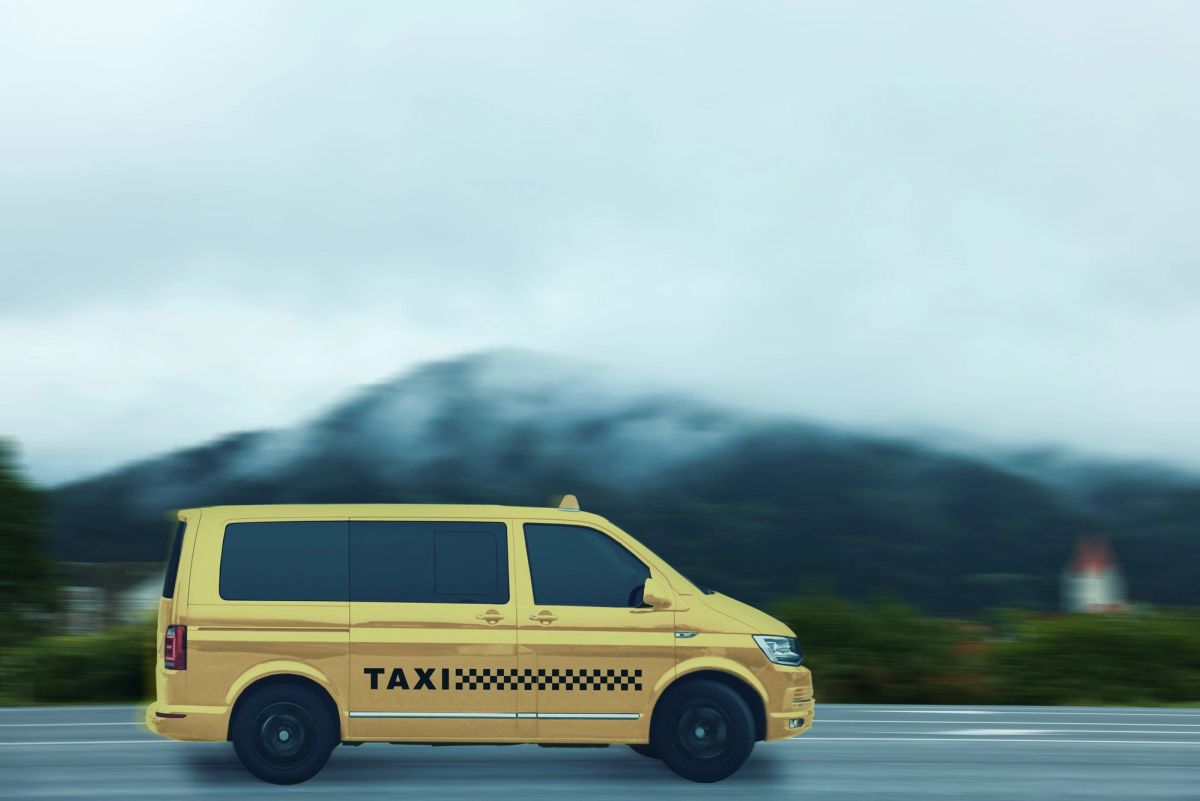
A taxi van on the move, the kind of licensed vehicle that Iceland's rules require for paid rides.
The market is also small. Iceland has around 390,000 people, and outside the capital area demand for rides is thin. A global ride-hailing company would face high costs for very little business, which is why the local app has filled the gap instead.
Hopp: The Closest Thing to Uber in Iceland
Hopp started as a scooter company in Reykjavík and now runs a taxi app that feels very close to Uber.
You enter your destination and see the price upfront. Once you book, you follow the car on the map and pay by card through the app. If the ride does not happen, the charge is refunded.
The difference is behind the scenes. Every Hopp taxi driver holds an Icelandic taxi licence, so you are booking a regulated cab through a modern app. Coverage includes the whole capital area plus Reykjanesbær, Keflavík Airport and Akureyri.
Hopp's scooters and bikes are the other half of the business. For short hops around central Reykjavík they are often quicker than a bus, though wind and icy pavements make them a poor choice for much of the winter.
Taxis in Iceland: What to Expect
Traditional taxis are easy to find in Reykjavík. Hreyfill is the largest company and BSR the other long-standing name, and both take bookings by phone, app or at ranks in the city centre. All taxis run on a meter, accept cards and charge more at night and on weekends.
They are also expensive by most visitors' standards. A short ride across central Reykjavík can cost several thousand krónur, and a metered trip from Keflavík Airport to the city usually runs above ISK 20,000. Iceland has no tipping culture, so the meter price is what you pay.
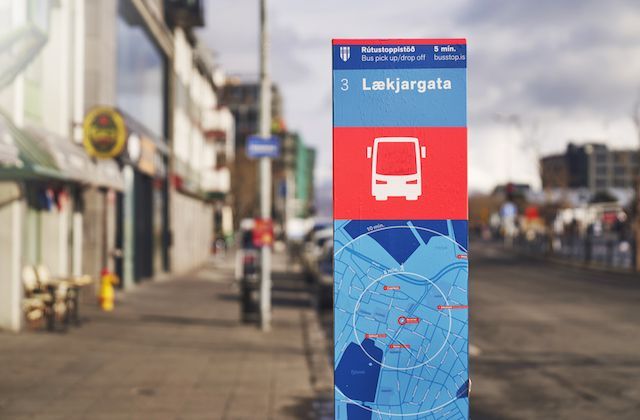
A city bus stop sign at Lækjargata in central Reykjavík, with the route map printed below.
Outside the capital, taxis are few. Akureyri has its own taxi company, and most smaller towns have one or two local drivers at best. Do not plan to rely on taxis anywhere you cannot also walk back from.
Public Transport in Iceland
Public transport in Iceland works well in the capital and adequately along the main roads. It does not reach most of the waterfalls, glaciers and hot springs visitors want to see. Those sit away from towns, and the buses follow the towns.
Strætó City Buses in Reykjavík
Strætó runs the yellow buses across the capital area, and they are clean, punctual and easy to use. A single adult fare costs ISK 690 in 2026 and lasts 75 minutes, so it covers a transfer. Children aged 11 and under ride free, and young people and pensioners pay half.
You can pay with the Klapp app, a Klapp card or by tapping a contactless bank card or phone on the reader. Strætó's fare list gives the current prices for single tickets and longer passes.
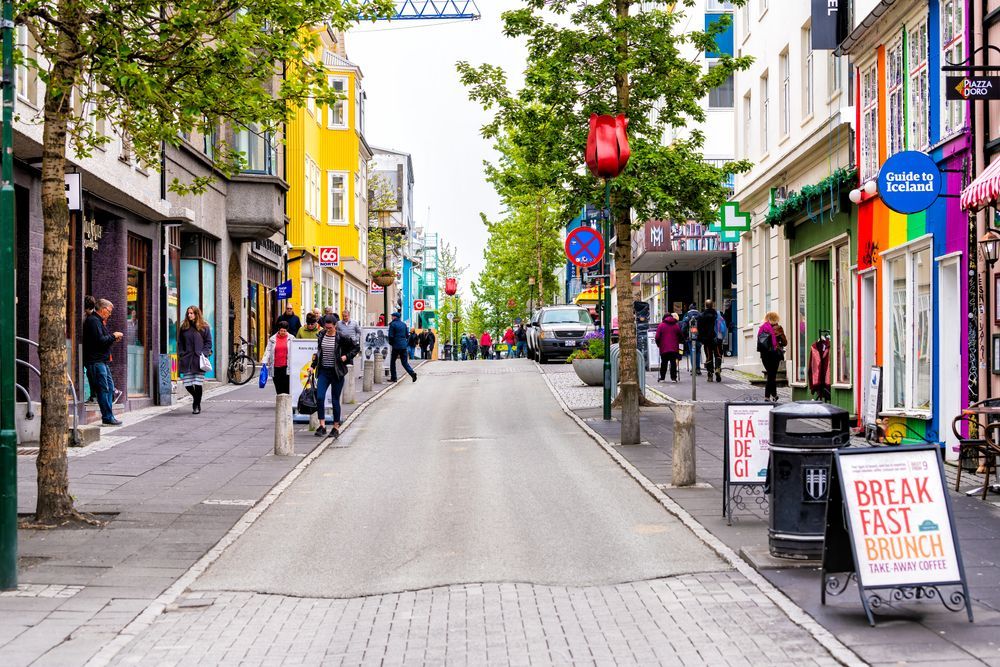
Laugavegur, Reykjavík's main shopping street, which is easier to explore on foot than by bus.
Buses run less often in the evening and on Sundays, and late-night service is limited. Check the timetable in the app before you rely on the last bus home.
Long-Distance Buses
Strætó also runs countryside routes, numbered in the 50s and above. From Reykjavík these reach Borgarnes, Selfoss, Höfn in the south-east and Akureyri in the north. Connecting routes continue to Egilsstaðir and Stykkishólmur.
The catch is frequency. Some long routes run once a day, and the Höfn route only a few days a week, so a missed bus can cost you a day. Timetables change in summer and winter, and the route planner on Strætó's site is the only place to trust for current times.
Domestic Flights
Flying is the fastest way to cross the country. Icelandair flies from Reykjavík's city airport to Akureyri, Egilsstaðir and Ísafjörður, with most flights under an hour. The Westman Islands are about 20 minutes away by air.
These flights leave from Reykjavík Airport in the city, not from Keflavík, which is the international airport. Allow for the transfer between the two if you are connecting from an overseas flight, and check Isavia's domestic departures board on the day.
Ferries
Two ferries matter to most visitors. Herjólfur crosses from Landeyjahöfn on the South Coast to the Westman Islands in about 30 to 35 minutes. Baldur links Stykkishólmur on the Snæfellsnes Peninsula with the Westfjords across Breiðafjörður.
Arriving at Keflavík Airport
Keflavík Airport is about 50 kilometres from Reykjavík, which rules out walking and makes a taxi expensive. Most visitors take the Flybus or another airport coach, which is timed to meet international arrivals.
Our guide to getting from Keflavík to Reykjavík compares the coach, the public bus, taxis and hire cars on cost and time.
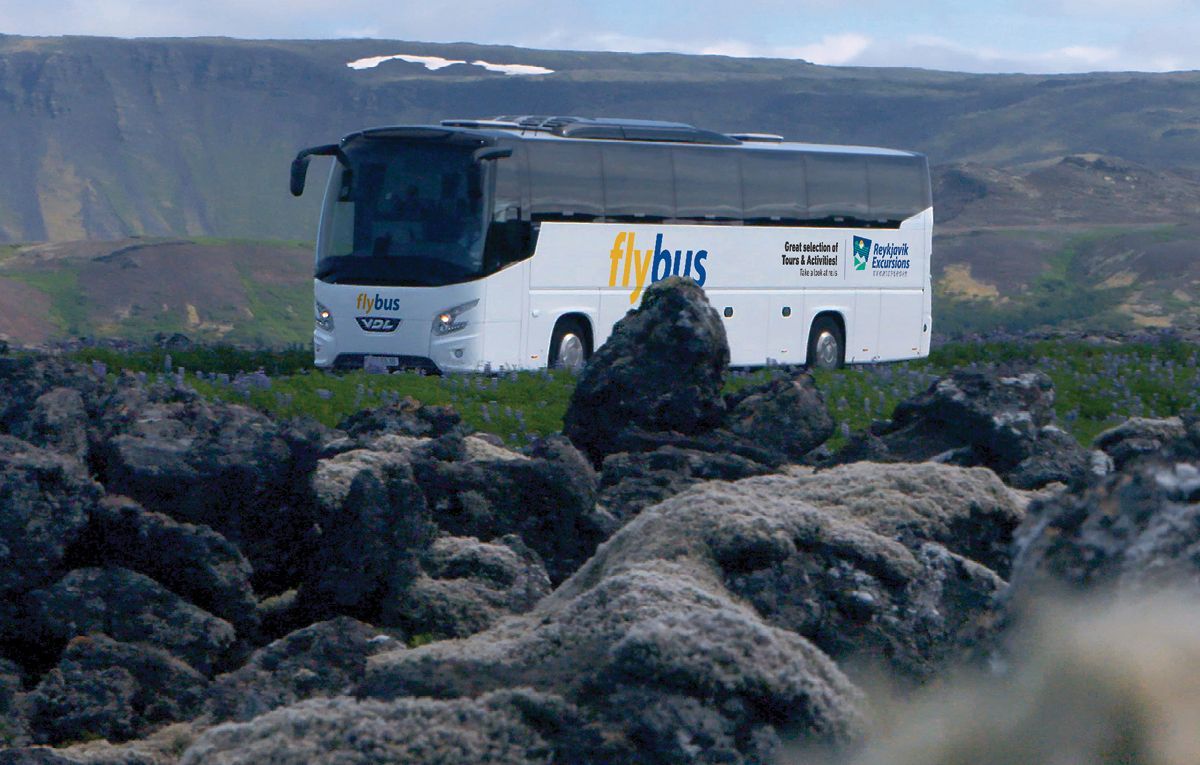
A Flybus coach crossing the lava fields of the Reykjanes Peninsula between the airport and the city.
If you would rather book the coach ahead, you can reserve Flybus airport transfers with hotel drop-off in Reykjavík.
Can You See the Golden Circle Without a Car?
Not by public bus. No scheduled public route covers Þingvellir, Geysir and Gullfoss, so without a car the realistic option is a day tour that picks you up in Reykjavík. That is what most visitors without a car do, and for one or two people it can work out cheaper than hiring a car for a single day once you add fuel and parking.
Our guide to planning the Golden Circle from Reykjavík explains the timings and the choice between a coach, small group or private tour. The same logic applies to the South Coast, Snæfellsnes and the Reykjanes Peninsula.
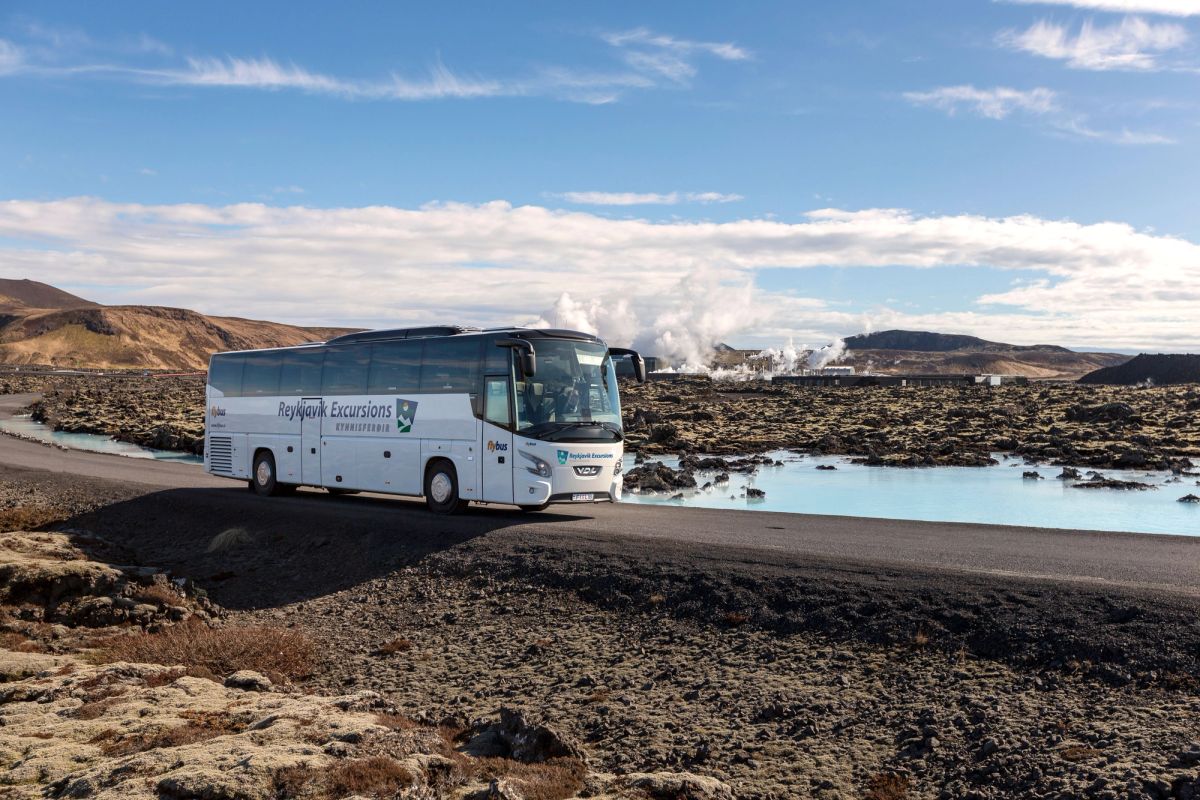
A tour coach on the road through the lava fields of the Reykjanes Peninsula.
For travellers who want a smaller group without driving, small-group day tours keep numbers low and cover the main day trips from the capital.
Hiring a Car Instead
For anything beyond Reykjavík and the main day trips, a hire car is the most practical choice. Iceland's sights are spread out, buses are infrequent and taxis are scarce outside towns, so a car gives you control over the timing.
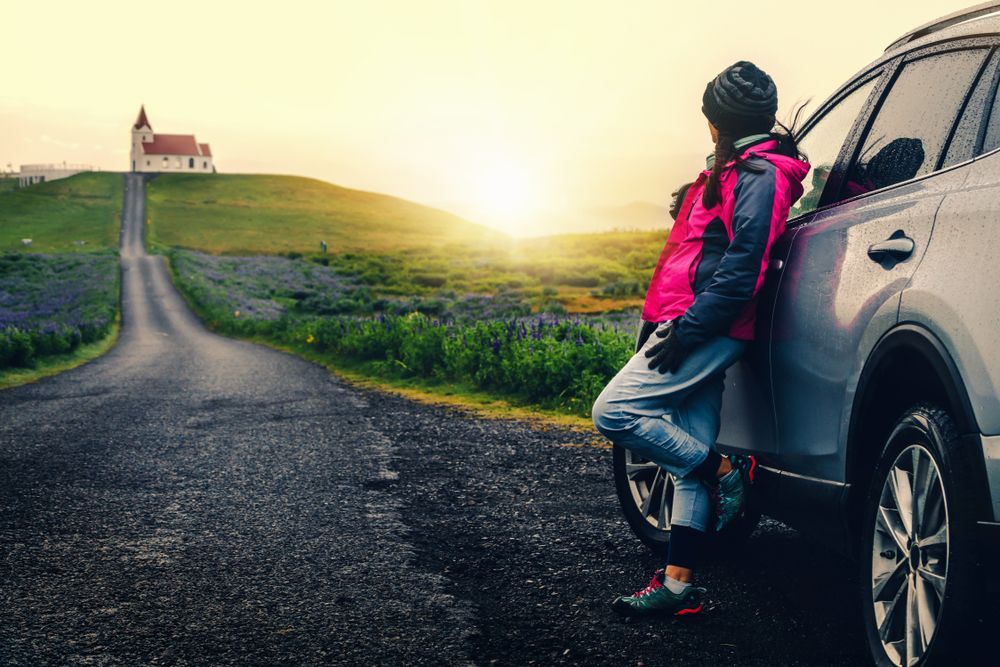
A traveller resting against a hire car on a quiet road, with a small church at the end of it.
It is not cheap. Fuel, insurance and parking add up, and winter driving needs care. Our guide to hiring a car in Iceland covers costs, insurance and when a 4x4 is worth paying for.
Walking and Cycling in Reykjavík
Central Reykjavík is small enough to walk. From the harbour to Hallgrímskirkja takes about 15 minutes, and most of the restaurants, museums and shops sit within that area.
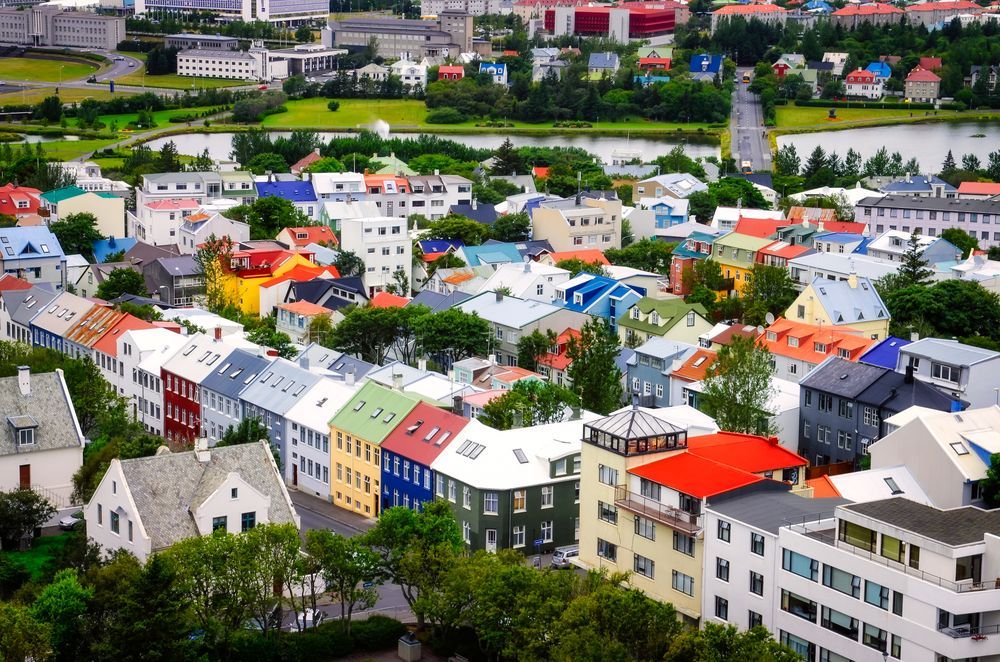
Reykjavík's colourful rooftops from above, showing how compact the city centre is.
Cycle paths run along the coast and through the city's green spaces, and you can rent bikes or e-bikes for the day. In summer this is one of the nicest ways to see the city. In winter, wind and ice make walking the safer bet.
Getting Around Iceland in Winter
Winter changes the maths. Buses keep running in the capital, but long-distance routes can be cancelled when storms close the roads. Domestic flights to the north and east are also delayed or grounded by wind more often than in summer.
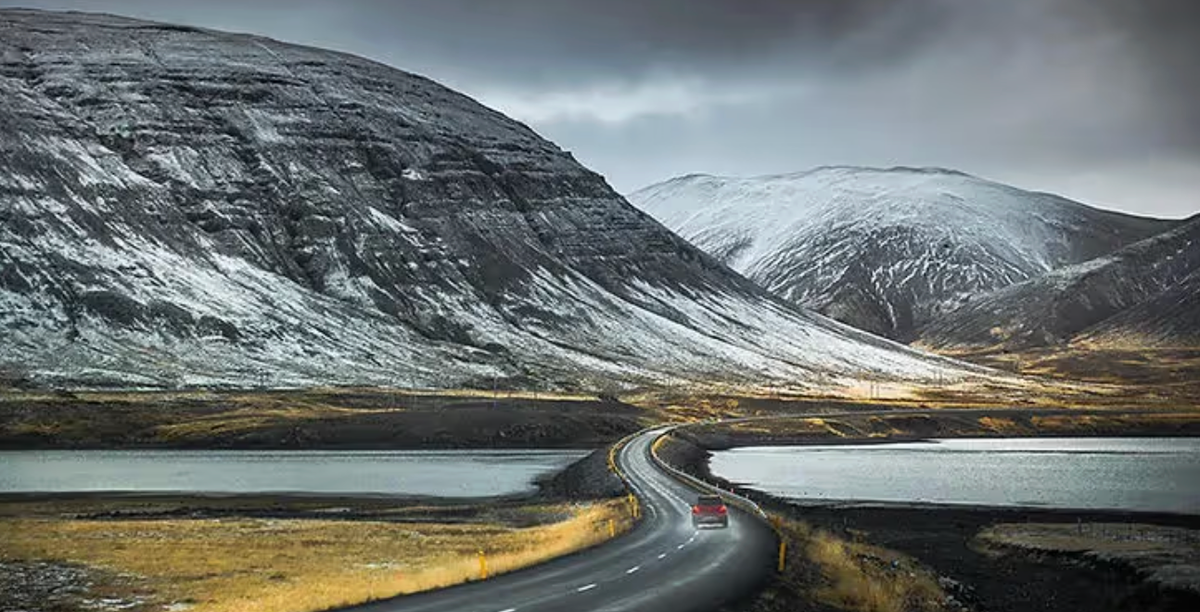
A car on a winding road between lakes and snow-dusted slopes, typical of driving outside Reykjavík in the colder months.
Driving yourself in winter is possible, but it asks more of you. Roads can stay icy for days at a time, daylight is short and conditions change within an hour. If you are not used to snow, a guided day tour in a vehicle built for it is often the more relaxed choice.
Before any winter journey, check SafeTravel's travel alerts for storm warnings and closures.
Ride-Sharing and Hitchhiking
There is no formal ride-sharing service in Iceland. Some travellers find lifts through community groups and hostel notice boards in summer, usually sharing fuel costs with the driver.
Hitchhiking is legal and fairly common along Route 1 in summer, but traffic outside the capital area can be very light. It suits flexible travellers with time to spare, and it is a poor plan for anyone with a flight to catch or a tour booked.
Which Option Suits Your Trip?
The right choice depends on where you are going and how long you have:
- *Staying in Reykjavík:* walk, take Strætó or book a Hopp taxi for late nights.
- *Arriving at Keflavík:* take the airport coach unless you are collecting a hire car.
- *Day trips such as the Golden Circle:* join a tour, or hire a car if you want to set your own pace.
- *Crossing the country quickly:* fly to Akureyri or Egilsstaðir.
- *Touring the Ring Road:* hire a car, because the buses are too infrequent for sightseeing.
Seeing the Golden Circle Without Driving
If you are based in Reykjavík without a car, a guided day out is the simplest way to reach the countryside. Our classic Golden Circle day tour runs from about 9:00 to 17:00 with an English-speaking guide, with hotel pick-up available. It covers Þingvellir, Geysir, Gullfoss and Kerið crater, so you can leave the taxi app closed and let someone else do the driving.
Compare Golden Circle Tours
Check each selected product for its current operator, guide, itinerary, meeting point, and terms.
View Our Tours

