
Seeing the Northern Lights is not complicated. It requires three things: darkness, clear skies, and solar activity. Two of those you can plan for. One you cannot. The skill of aurora hunting is knowing how to maximize the first two so you are ready when the third arrives.
2026 is a particularly good year to try. Solar Cycle 25 is maintaining a high-activity secondary peak, meaning aurora frequency and intensity are elevated compared to years either side of the solar maximum. More storms, more often, more visible at lower latitudes than usual.
The Three Things You Need to See the Northern Lights
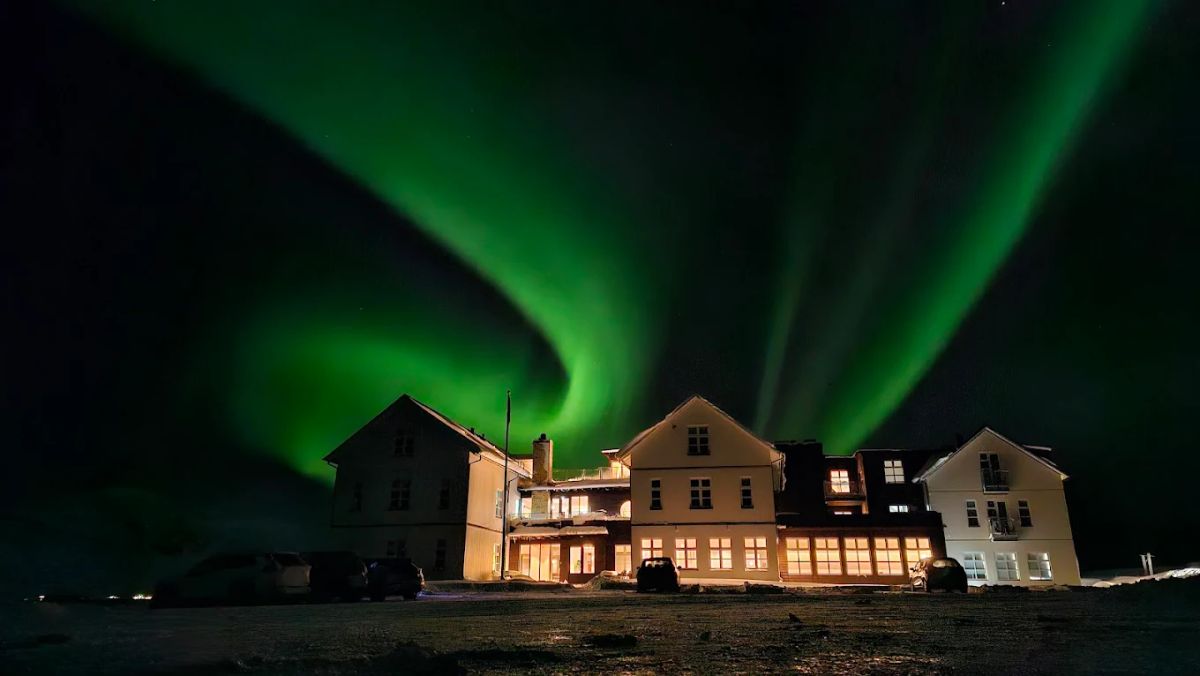
Darkness. The sky must be dark enough for the aurora to be visible. This rules out the Arctic summer entirely. Iceland, Norway, and northern Canada in June and July have no real darkness. Aurora may be active but is invisible. The viewing season runs from late August through early April, when nights are long enough.
Clear skies. This is the biggest limiting factor for most aurora chasers. Clouds block everything. A KP8 storm occurring above solid overcloud is invisible from the ground. Every aurora hunting strategy involves finding or moving to clear skies. Always check both the aurora forecast and the cloud cover forecast together.
Aurora activity. Measured by the KP index on a scale of 0 to 9. For Iceland, Norway, and northern Canada, KP 3 or above produces a visible display. KP 5 and above is a storm-level event visible across a wide area, including from southern Scotland and northern England. KP 7 and above is severe and visible as far south as central Europe. In 2026, multiple KP 7 to 9 events are likely given the current solar cycle.
How to Check the Aurora Forecast
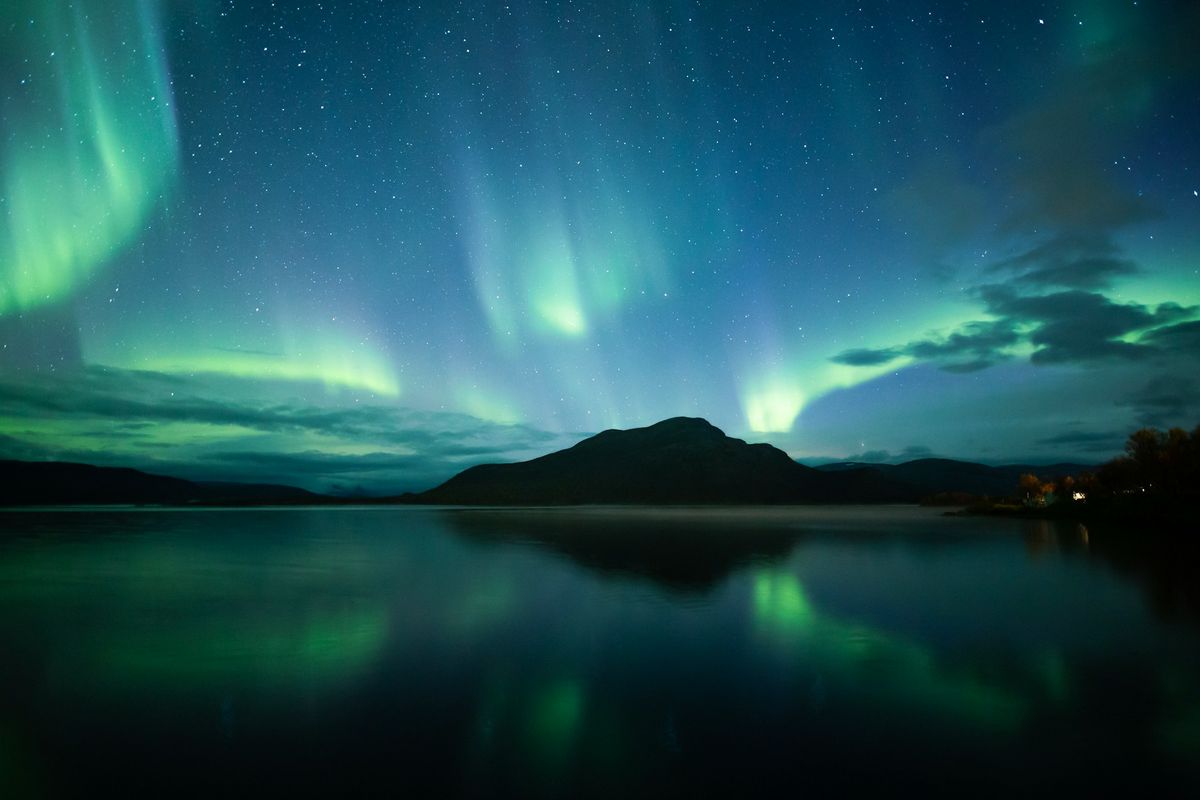
Icelandic Met Office Aurora Forecast
The single most useful tool for aurora hunting in Iceland. The website at en.vedur.is/weather/forecasts/aurora shows two things simultaneously: the aurora activity forecast (KP prediction) and the cloud cover map for Iceland. You need both in the same view because an active aurora under cloud cover is invisible.
Look for the combination of clear skies and KP 3 or above. The forecast updates regularly and is reliable for 24 to 72 hours ahead.
Aurora Apps Worth Installing
Aurora Forecast (iOS and Android): Displays the real-time KP index, cloud cover overlay, and allows push notification alerts. Set a threshold alert at KP 3 or higher and the app wakes you when conditions are favorable. This is how you avoid staying up all night watching the sky.
SpaceWeatherLive: For serious chasers who want raw solar wind data, the Bz component of the interplanetary magnetic field, and incoming coronal mass ejection alerts. A southward Bz reading is the most reliable indicator that aurora activity is imminent. Not necessary for casual viewers but useful for anyone who wants more than the KP number.
What the KP Index Means in Practice
- KP 0 to 2: Faint or invisible from most populated locations. Not worth going out.
- KP 3: Clearly visible to the naked eye in dark conditions. Photogenic. The minimum worthwhile threshold.
- KP 4: Strong display. Visible with some cloud interference. Active movement and multiple colors possible.
- KP 5: Geomagnetic storm. Visible across a wide area including from cities with some light pollution.
- KP 7 to 9: Major to extreme storm. Visible as far south as Spain and the northern United States. Colors beyond green including vivid red and purple. During Solar Cycle 25's peak, several of these have occurred.
Where to Go Aurora Hunting
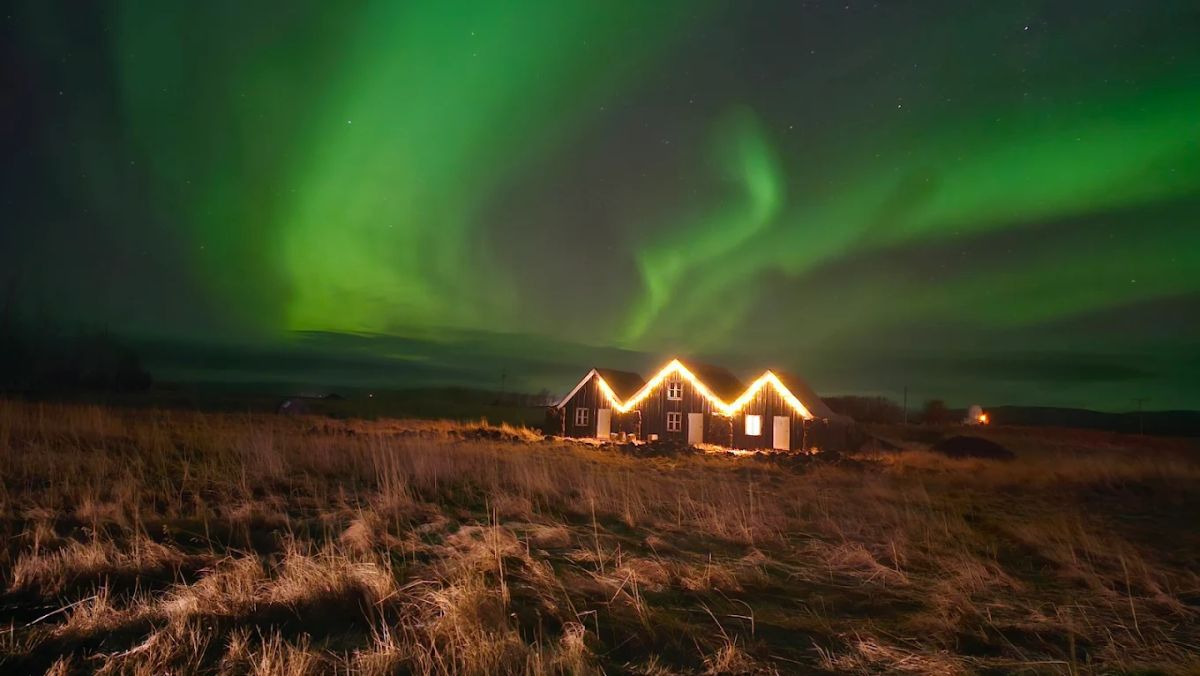
Iceland
Iceland sits directly beneath the auroral oval, the ring around the North Magnetic Pole where aurora activity is most concentrated. The country has dark winters, open landscapes with minimal light pollution outside Reykjavik, and excellent infrastructure for aurora tourism.
The most accessible dark-sky spots from Reykjavik:
- Route 36 east toward Þingvellir — leaves the city's light dome within 20 minutes. Any pullout on this road gives genuine dark conditions.
- Þingvellir National Park — lake reflections, complete darkness, 45 minutes from the city.
- Grótta Lighthouse on the Seltjarnarnes peninsula — 25-minute walk from downtown Reykjavik. Gives open sky over the ocean with the city glow behind you. The best option if you do not have a car.
- Near Geysir or Gullfoss — if staying on the Golden Circle, these areas have almost no light pollution.
- Near Jokulsarlon glacier lagoon — one of Iceland's darkest locations. Aurora reflecting in the lagoon between icebergs is one of the most extraordinary aurora settings in the world.
Norway
Tromso sits at 69° north, above the Arctic Circle, and has built its winter economy largely around Northern Lights tourism. The city has tour operators who specifically chase clear skies by driving to different locations around the fjords as weather changes. Norway's fjords also create spectacular foreground reflections for aurora photography.
Finland and Sweden: Lapland
The Lapland region of both countries offers aurora viewing combined with reindeer farms, husky sledding, and ice fishing. The boreal forest landscape gives a different character to aurora viewing than the open volcanic landscapes of Iceland. Saariselkä, Rovaniemi, and Abisko are the main aurora tourism hubs.
Canada and Alaska
Fairbanks, Alaska and Whitehorse or Yellowknife in Canada sit under the North American auroral zone and have excellent aurora conditions from October through March. The combination of cold, clear nights and boreal forest landscape gives a different visual character from Scandinavian aurora experiences.
The Best Strategy for Seeing the Northern Lights
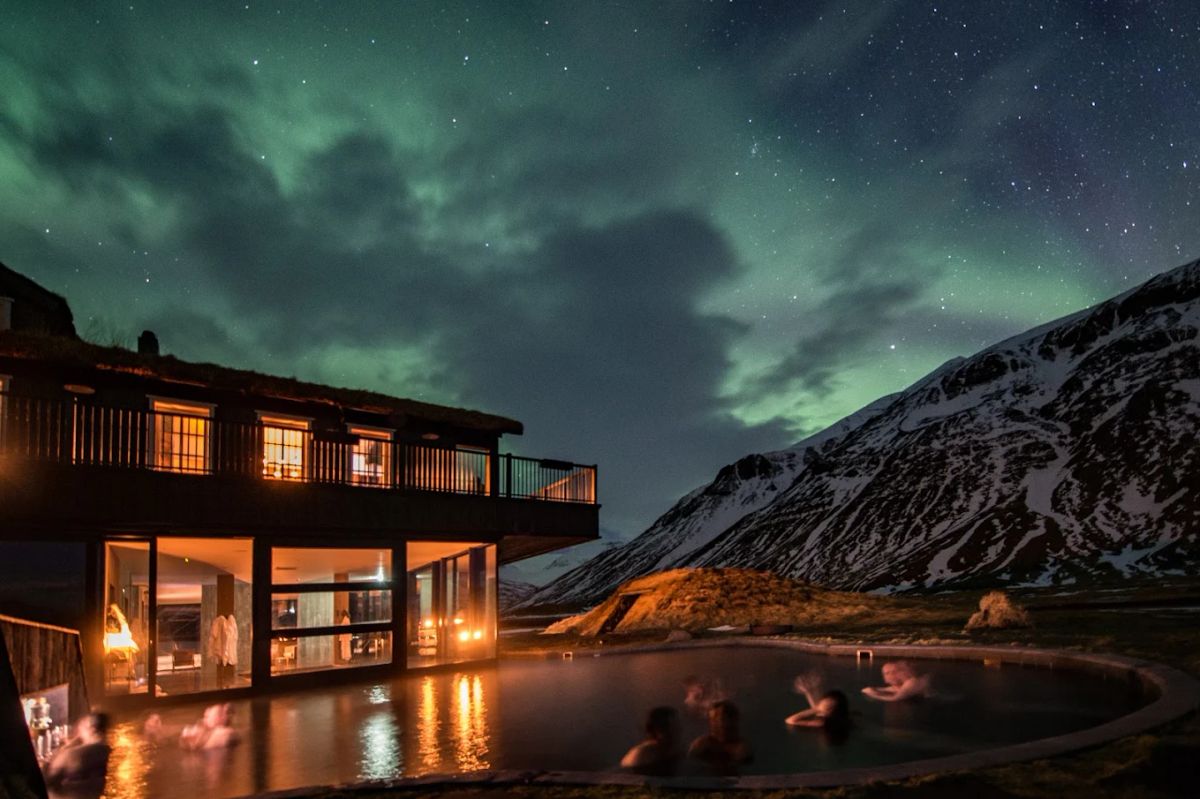
Stay for at least five nights. Iceland's weather is famously volatile. A week-long trip gives you enough buffer to wait out cloudy periods and catch a clear window. Two or three nights gives you very little margin. The most common reason visitors miss the lights is not low solar activity. It is clouds on every clear-sky opportunity they had.
Check forecasts every evening from 5 PM onward. Aurora activity can build or fade within hours. Cloud cover maps for Iceland update regularly. Making a go or no-go decision at 8 PM rather than 10 PM gives you more time to reach a good viewing spot.
Have a dark-sky location planned in advance. When the forecast looks good, you want to drive directly to your chosen spot. Spending 30 minutes deciding where to go on the night wastes time. Know your locations before the clear night arrives.
Be ready to move. Cloud cover in Iceland shifts constantly. If your first location clouds over, check the Met Office map and drive toward the nearest clear area. Aurora chasers in Iceland regularly drive 40 to 80 km during a single night to stay under clear skies.
Set a notification alert and go to sleep. You do not need to stay up all night. Set your aurora app to alert you at KP 3 or above and trust it. When the notification wakes you, check the cloud cover map. If the skies are clear, get up. If they are cloudy, check in an hour.
The peak window is 10 PM to 2 AM. Aurora is possible at any hour of darkness but statistically most active in this window. Prioritize clear-sky conditions during these hours over earlier or later in the night.
How to Photograph the Northern Lights
With a DSLR or Mirrorless Camera
- ISO: Start at 1600. Adjust up to 3200 for faint aurora, down to 800 for very bright displays.
- Aperture: As wide as your lens allows. f/1.8 or f/2.8 is ideal. f/4 works. Narrower than f/5.6 will struggle.
- Shutter speed: 5 to 15 seconds for a moving aurora. Longer exposures blur active aurora into a flat haze. Shorter exposures freeze movement but require higher ISO.
- Focus: Switch to manual. Use live view to zoom in on a bright star and focus until sharp. Autofocus fails in darkness.
- Shoot RAW. Non-negotiable for editing flexibility.
- Use a tripod. Any movement during a 10-second exposure ruins the image.
With a Smartphone
iPhone 14 and later, Google Pixel 6 and later, and recent Samsung Galaxy models all have night modes that capture aurora reasonably well. Use astrophotography or pro night mode. Keep the phone absolutely still using a tripod or propping it against a solid surface. Do not use digital zoom.
Tips That Make the Difference
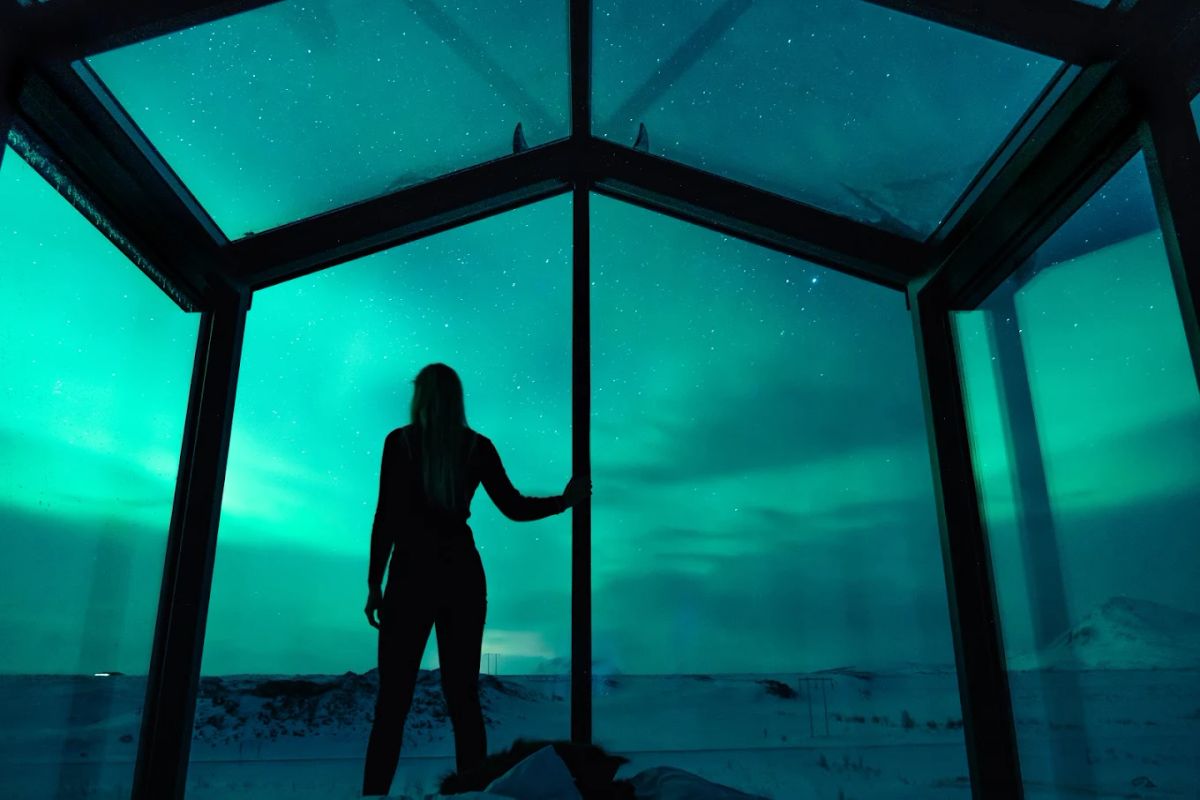
- Include a foreground. A lake reflection, a mountain silhouette, a person looking up. Aurora-only sky shots are technically impressive and emotionally empty.
- Cold drains batteries fast. Keep a spare battery warm in an inside pocket and swap before the first dies.
- Fog on your lens. Moving from a warm car to cold air fogs lenses immediately. Give the camera several minutes to adjust before shooting.
What the Northern Lights Actually Look Like in Person
Cameras capture more color saturation than the human eye in real time. A faint aurora that photographs as vivid green may appear pale green-white or almost white to the naked eye. This is not a camera trick. It is a genuine difference in how photoreceptors and long-exposure sensors collect light.
A strong aurora, KP 4 and above on a clear dark night, is unambiguously vivid to the naked eye. The movement is immediate, the color is clear, and the experience is unlike any photograph.
A weak aurora, KP 2 or lower, is often only confirmed by taking a photo and seeing green on the screen that you could not quite see directly.
Compare Golden Circle Tours
Check each selected product for its current operator, guide, itinerary, meeting point, and terms.
View Our Tours

