
The photos make it look effortless: a campervan parked on fresh snow, the northern lights pouring across the sky and two people in sleeping bags watching from the open back door. Some nights really are like that. Others involve gusts strong enough to rock the van, a heater that needs coaxing and a frozen tap at the campsite.
A winter campervan trip in Iceland is entirely possible, and for the right people it is one of the best ways to see the country. It just asks for more planning, more flexibility and a healthier respect for the weather than a summer trip.
Can You Campervan in Iceland in Winter?
Yes. Campervans can be hired all year, the main roads stay open and a number of campsites remain open through the winter. You need a van with a reliable heater, winter tyres and ideally four-wheel drive, and you must be willing to change plans when storms come through.
It suits travellers who are comfortable driving in snow and wind and who value flexibility over comfort. It suits less well if you want guaranteed warmth, hot showers every night and a fixed itinerary.
The Pros of a Winter Campervan Trip
The best thing about winter is the northern lights. From September to April, you are already outside the towns at night, so you can step out of the van whenever the sky clears without booking a tour.
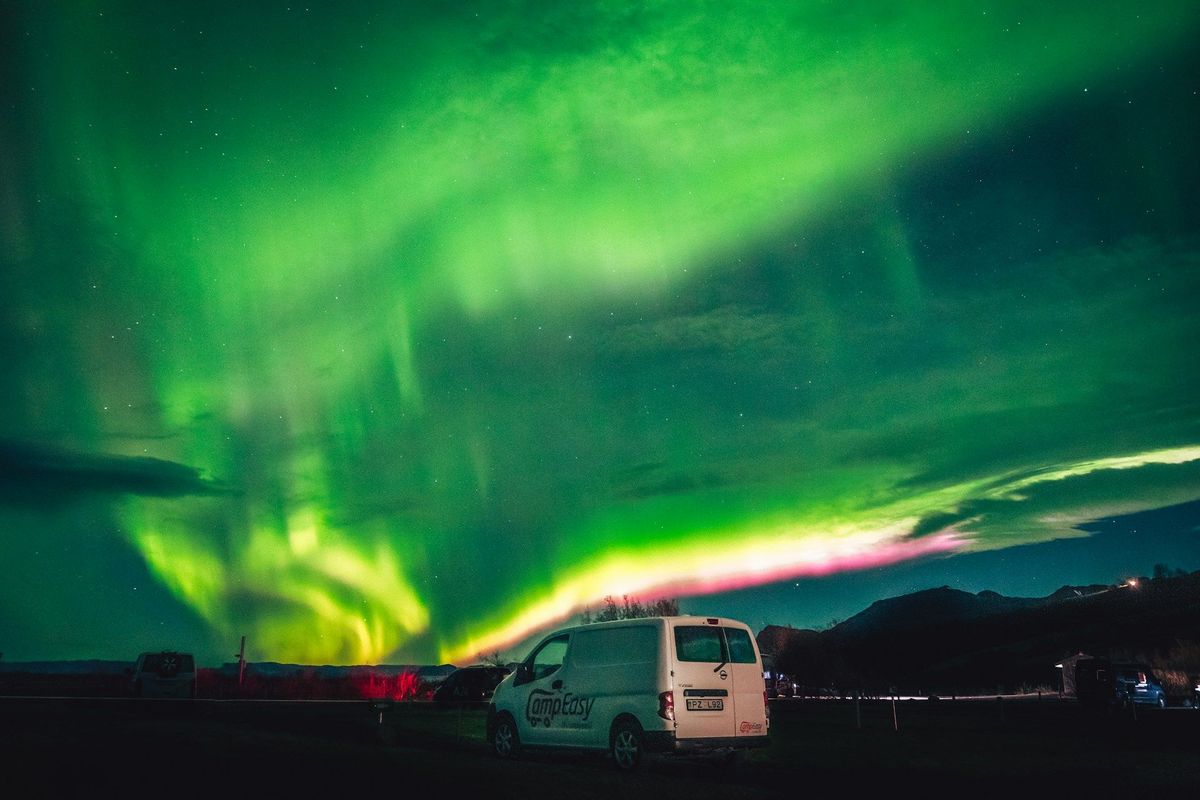
A campervan parked off the road under an intense green aurora on a clear winter night.
Winter is also cheaper and quieter. Campervan hire costs less than in summer, the main sights are far less crowded and you often have campsites almost to yourself. Snow-covered waterfalls, ice caves and frozen lakes are a different country from the green Iceland of July.
The Challenges of a Winter Campervan Trip
The challenges are real, and it is worth being honest about them before you book.
- *Wind:* high-sided vans are vulnerable to strong gusts, which are common in winter and can close roads.
- *Short days:* in December you have four to five hours of daylight, and our tips on night driving in Iceland help if you get caught out.
- *Cold nights:* temperatures inside an unheated van drop quickly, so the heater matters.
- *Fewer open campsites:* most close for the season, so you need to plan where you will sleep.
- *Road conditions:* ice, snow and closures can change your route at short notice.
None of these make a trip impossible. They make it a trip that needs slack in the schedule and a willingness to adapt.
Campsites Open in Winter
Most of Iceland's campsites close from October or November until May. A smaller number stay open all year, mostly in the south-west around Reykjavík, the Golden Circle and the South Coast. A few more are scattered across the north and east.
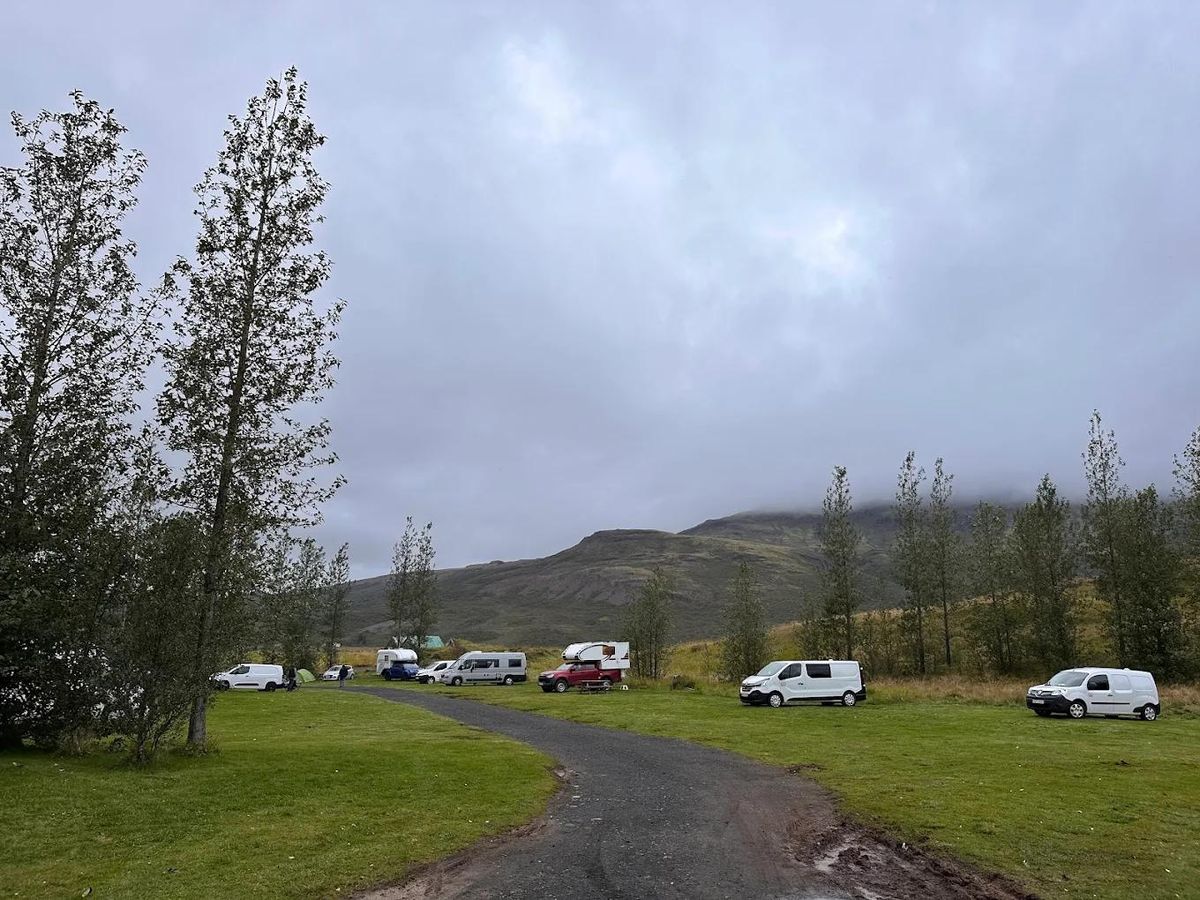
Campervans parked at a tree-lined campsite. In winter, far fewer sites are open and facilities are simpler.
The Reykjavík ECO Campsite in Laugardalur is open every day of the year, which makes it a useful base at the start and end of a trip.
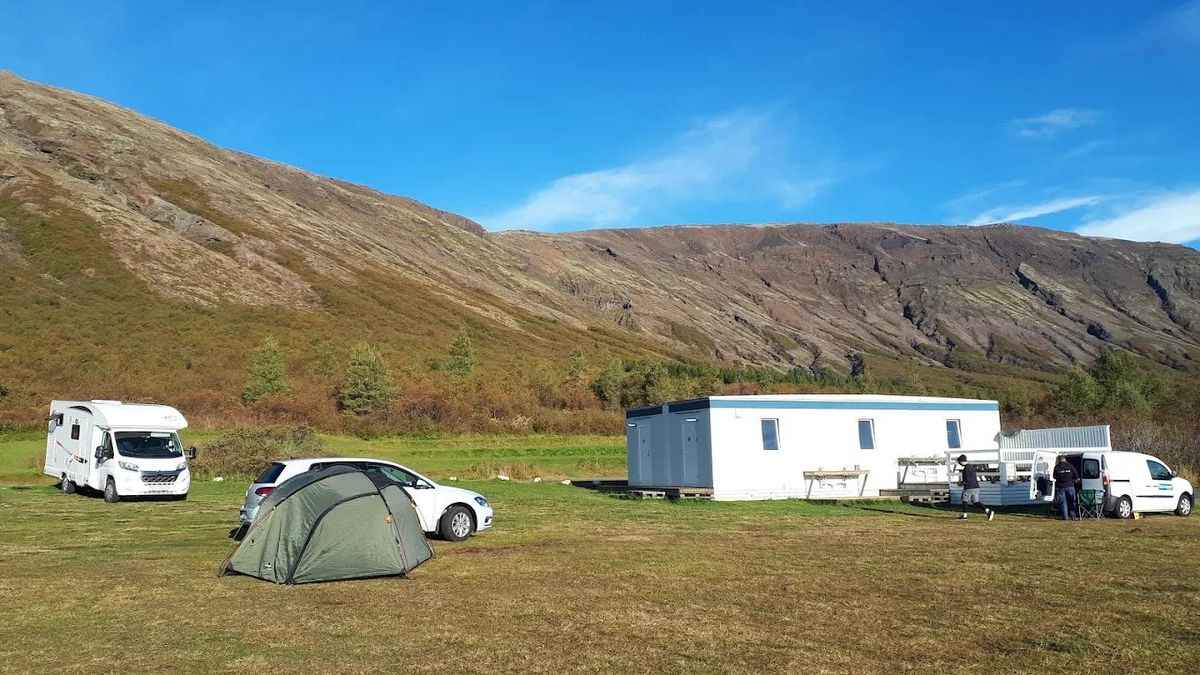
A campsite facilities building, which in winter may offer heated toilets but limited showers or kitchens.
For the rest of the country, check the campsite listings on ferdalag.is and contact sites directly before relying on them. Winter campsites often have reduced facilities, with showers closed or coin-operated and taps that can freeze.
Iceland's public swimming pools are a great backup for hot showers and a warm soak, and most towns have one.
Our guide to campsites around the Golden Circle covers the main options near Þingvellir, Geysir and Gullfoss, though check winter opening before you go.
Where You Can and Cannot Park Overnight
You cannot sleep in a campervan wherever you like in Iceland. Under the Nature Conservation Act, overnight stays in campervans, motorhomes and similar vehicles are only allowed at campsites or with the landowner's permission.
That rule applies in winter too, even when roadside lay-bys and car parks are empty. Fines can be issued, and some rental contracts pass them on with an extra fee. Plan each night around an open campsite.
Choosing the Right Campervan for Winter
The van you choose makes the biggest difference to how comfortable a winter trip feels.
- *Four-wheel drive:* worth it in winter for grip on icy and snowy roads, especially outside the capital area.
- *Diesel night heater:* a heater that runs independently of the engine keeps the van warm overnight without idling.
- *Winter tyres:* standard on winter rentals, with studded tyres permitted from 1 November to mid-April.
- *Insulation and bedding:* ask about insulated walls and winter-rated duvets or sleeping bags.
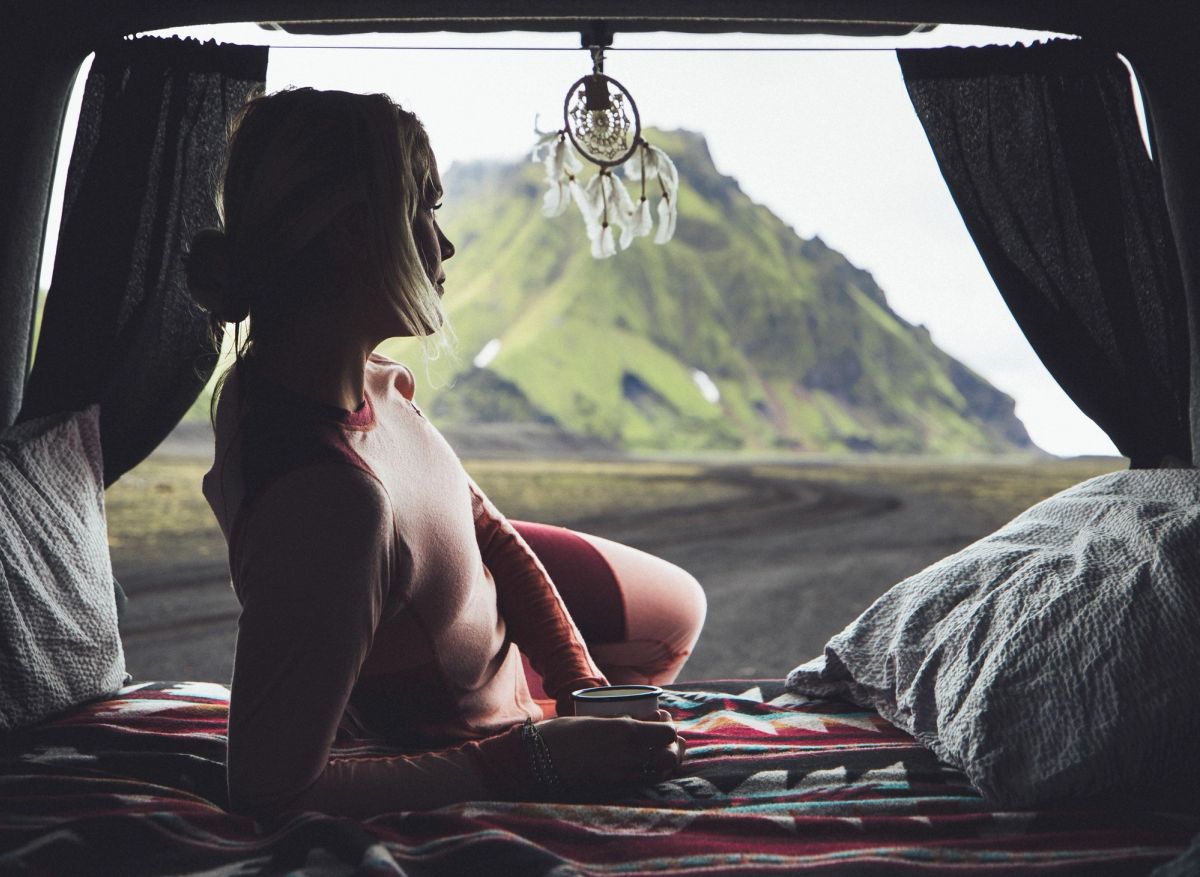
The inside of a campervan, where a good heater and bedding decide how comfortable winter nights feel.
Our self-drive campervan trips use 4x4 campervans, and the rental company will explain how the heater works when you collect the van. Ask for a demonstration before you leave the depot.
Wind: The Biggest Risk
Strong wind is the single biggest danger for campervans in Iceland. A sudden gust can push a high-sided van across the road or rip a door off its hinges if you open it carelessly. Damage from wind is often excluded from basic insurance.
Check the Met Office wind forecast every morning and evening, and do not drive when yellow or orange wind warnings are in place for your route. When parked, face the van into the wind and hold doors firmly with two hands as you open them.
Driving a Campervan on Winter Roads
The main roads around Reykjavík and on the Golden Circle are cleared and gritted regularly. Further afield, the Ring Road can close in storms, and mountain passes in the north and east are often affected.
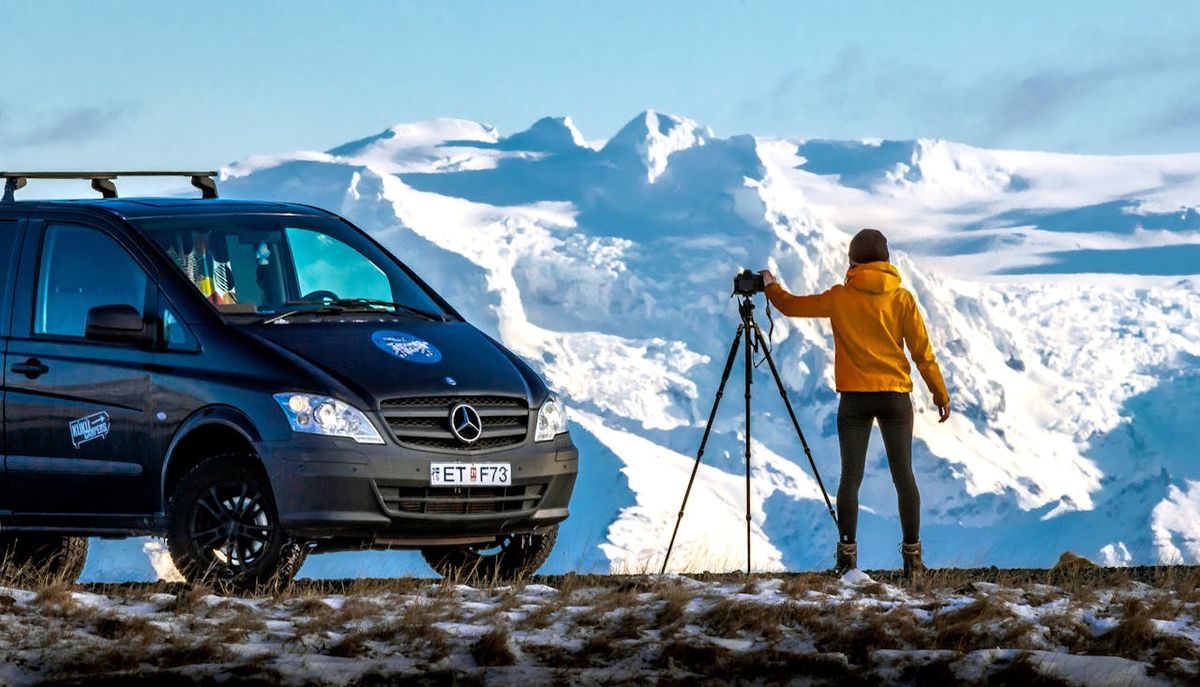
A van parked at a snowy viewpoint while its driver photographs a glacier, a typical winter road trip stop.
Check Iceland's live road conditions before each drive and aim to be parked before dark.
How to Stay Warm at Night
A few habits keep winter nights comfortable:
- *Run the heater* for a while before bed and keep it on a low setting overnight if the van allows.
- *Sleep in thermal layers* and a hat, and keep tomorrow's clothes inside your sleeping bag so they are warm in the morning.
- *Crack a window slightly* to reduce condensation, which can freeze on the inside of the windows.
- *Keep water inside the van* rather than in exposed tanks, so it does not freeze.
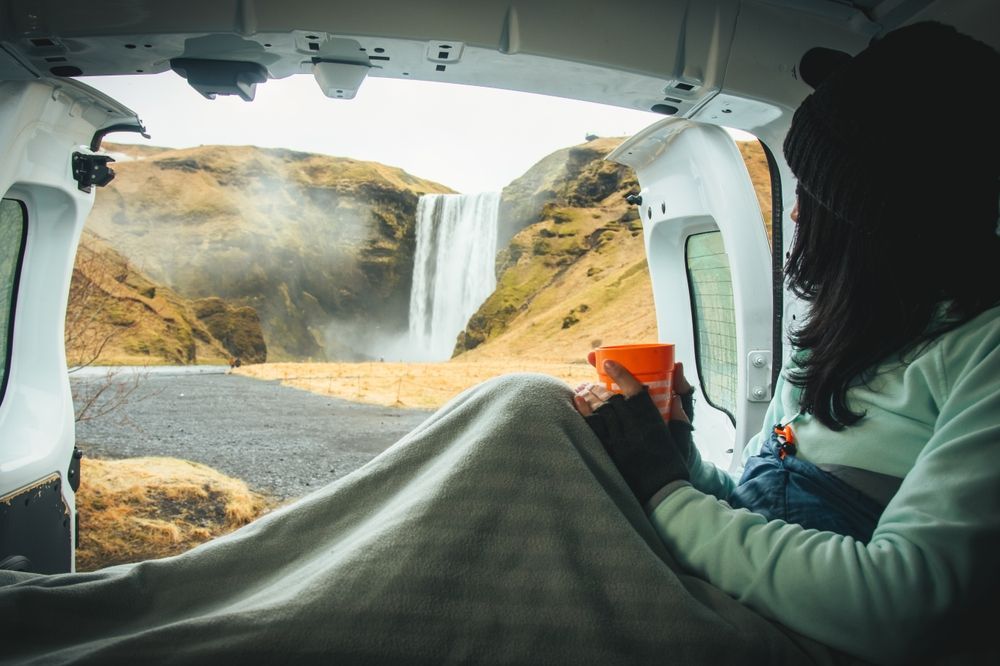
Coffee in the back of a campervan with a waterfall view, the payoff for a cold night.
Pack proper cold-weather clothing, not just a summer kit. Our advice on winter clothing for Iceland applies just as well to campervan trips.
Cooking and Food on a Winter Trip
Cooking is part of the appeal of a campervan, but it is harder in winter. Gas cookers struggle in the cold and wind, so cook inside a campsite kitchen when one is open, or in the van with the door open a crack for ventilation.
Stock up at large supermarkets in Reykjavík, Selfoss or Hveragerði before heading into the countryside, where shops are smaller and opening hours shorter in winter. Hot food such as soups, pasta and porridge goes a long way on a cold day, and a good flask is worth packing.
What to Pack for a Winter Campervan Trip
Beyond warm clothes, a few extras make life in the van easier:
- *A head torch,* because winter nights are long and campsite paths are often unlit.
- *Ice cleats* for icy car parks and paths.
- *A thermos flask* for hot drinks during the day.
- *A power bank* for phones, which drain quickly in the cold.
- *A swimsuit and quick-dry towel* for the pools and hot springs.
A Sample Winter Campervan Route
For a first winter trip, keep the route compact and close to open campsites:
- *Day 1:* collect the van in Reykjavík, stock up on food and sleep at the Reykjavík campsite.
- *Day 2:* the Golden Circle, with Þingvellir, Geysir and Gullfoss.
- *Day 3:* a geothermal lagoon and Kerið crater, then on towards the South Coast.
- *Day 4:* Seljalandsfoss, Skógafoss and the black sand beach near Vík.
- *Day 5:* back west with time for a pool and a final night near Reykjavík.
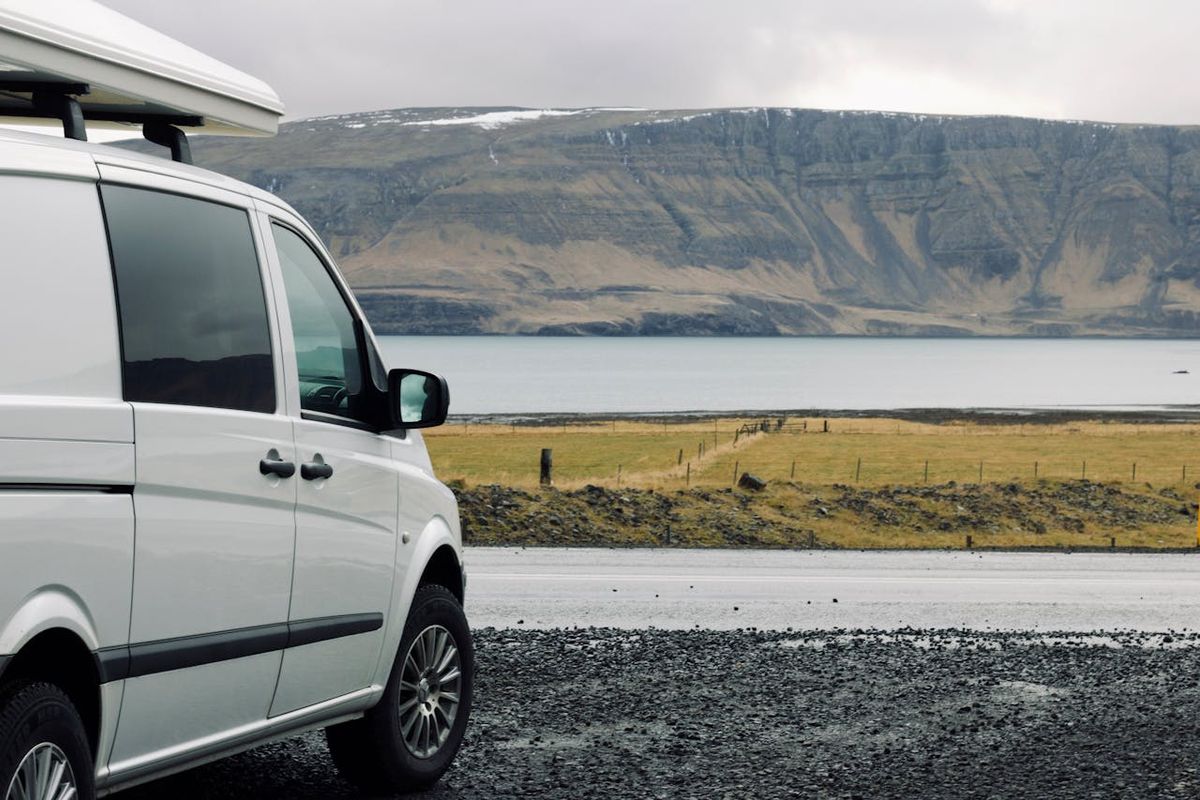
A campervan parked beside a fjord on a calm day, the kind of stop that makes the extra planning worthwhile.
Our guide to the Golden Circle by campervan covers the first two days of this route in detail, with fuel and parking tips.
Is a Winter Campervan Trip Right for You?
Choose a campervan in winter if you are comfortable driving in snow, enjoy the outdoors and want to chase the northern lights on your own terms. Choose a hire car and hotels if you want warmth, hot showers every night and less exposure to the weather.
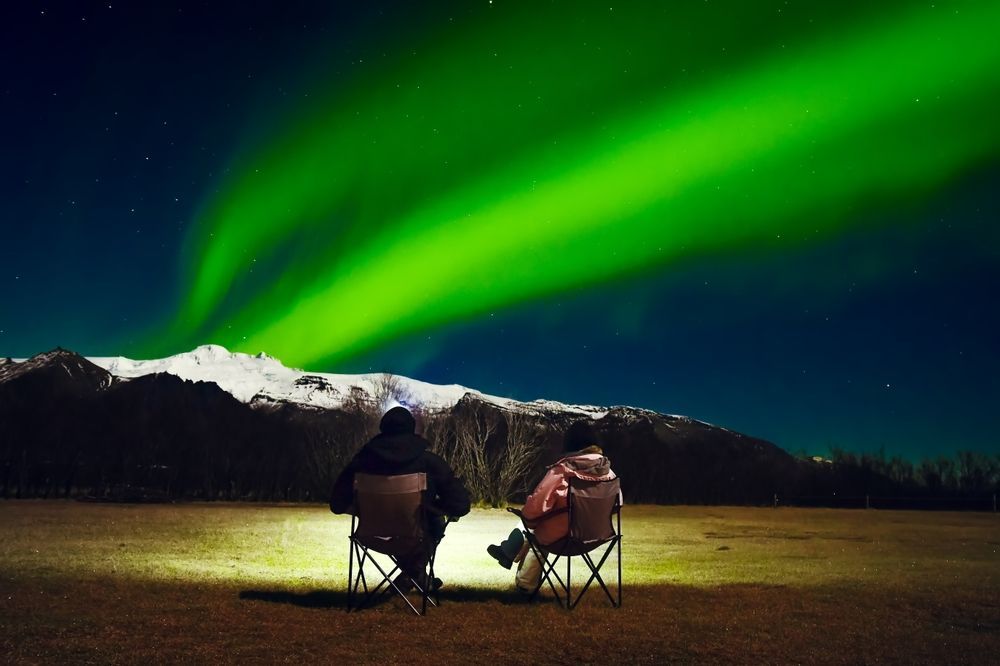
Two travellers in camping chairs watching the northern lights above a snowy ridge.
For many people, the answer is somewhere in between. A shorter campervan trip in the south-west, with a night or two in a guesthouse if a storm comes through, gives you the best of both.
Planning a Self-Drive Campervan Trip
If you want a campervan trip with the route already worked out, our 9-day campervan self-drive includes a 4x4 campervan, a route guide and GPS coordinates for every stop. In winter, we recommend shortening the daily distances and keeping a spare day for weather.
Compare Golden Circle Tours
Check each selected product for its current operator, guide, itinerary, meeting point, and terms.
View Our Tours

