
Campervan or Car: The Short Answer
A campervan if you are travelling in summer, staying more than four nights and want to move every day. It combines transport and accommodation, and against a car plus hotels it cuts daily costs by roughly 30 to 50 per cent.
A hire car if you are visiting in winter, based in one place, travelling with more than two people, or want to be warm and horizontal at the end of a long day.
The decision usually comes down to season and trip length rather than budget, because the cost gap is smaller than either side claims.
The Case for a Campervan
Five genuine advantages.
One booking covers the car and the bed, which removes the accommodation planning that otherwise dominates an Icelandic itinerary.
Flexibility is real. You can change plans on the morning based on the weather, which in Iceland is not a hypothetical.
Campsites are cheap. Most charge between 1,500 and 3,500 ISK per person per night, against hotel rates several times that.
You can be at Gullfoss at seven in the morning without a two-hour drive from Reykjavík.
The Camping Card, at €179 for the 2026 season, covers up to 28 nights for two adults and up to four children under 16 at participating sites, which changes the arithmetic for a long trip.
The Case for a Car
Five equally genuine advantages.
Daily rental rates are lower, and small cars are considerably cheaper to run.
Fuel economy matters at around 300 ISK a litre. A campervan is heavier and less aerodynamic, and the difference across the ring road is meaningful.
Comfort matters more than people expect after five days. A shower, a real bed and somewhere to dry wet clothes are not trivial in an Icelandic autumn.
Winter driving is safer in a lower, heavier car. Campervans are high-sided and Icelandic wind is the main hazard.
Group size decides it too. Above two people, campervan comfort deteriorates sharply.
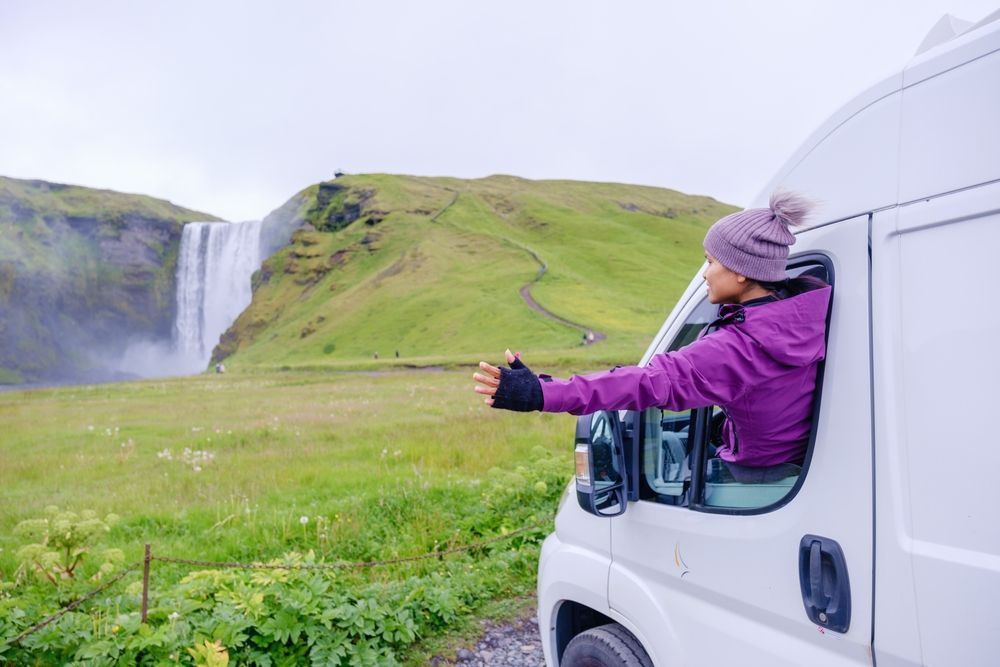
Waking up at a site rather than driving to it is the whole argument for a van.
The Wild Camping Rule
The single most important thing to know, and it is widely misunderstood.
Sleeping in a campervan outside a registered campsite has been illegal in Iceland since 2015. It is not a grey area and it is enforced.
Fines run from 15,000 to 75,000 ISK. Landowner permission is the only exception, and it needs to be actual permission rather than an assumption.
The rule exists because Icelandic ground recovers extremely slowly. Vegetation crushed by a vehicle can take decades to return.
Car park signs are explicit, and rangers check. The romantic idea of parking beside a waterfall and sleeping there does not apply here.
Plan your nights around campsites. There are enough of them, and the app-based site directories make finding one straightforward.
The Real Cost Comparison
Honest numbers, since both industries market aggressively.
A campervan rental costs more per day than a small car, sometimes considerably more in high season.
Against that, you save the accommodation. Campsites at 1,500 to 3,500 ISK per person compare with guesthouse rooms at several times that.
Fuel favours the car. A campervan uses noticeably more across a ring road trip.
For a couple, a campervan trip typically works out around 30 to 50 per cent cheaper per day than a car plus hotels.
For a solo traveller, the gap narrows because the van costs the same and the room would have been single occupancy.
For four people, a car plus guesthouses often wins, because a van large enough for four costs a great deal.
Our guide to whether Iceland is expensive sets out the broader budget picture.
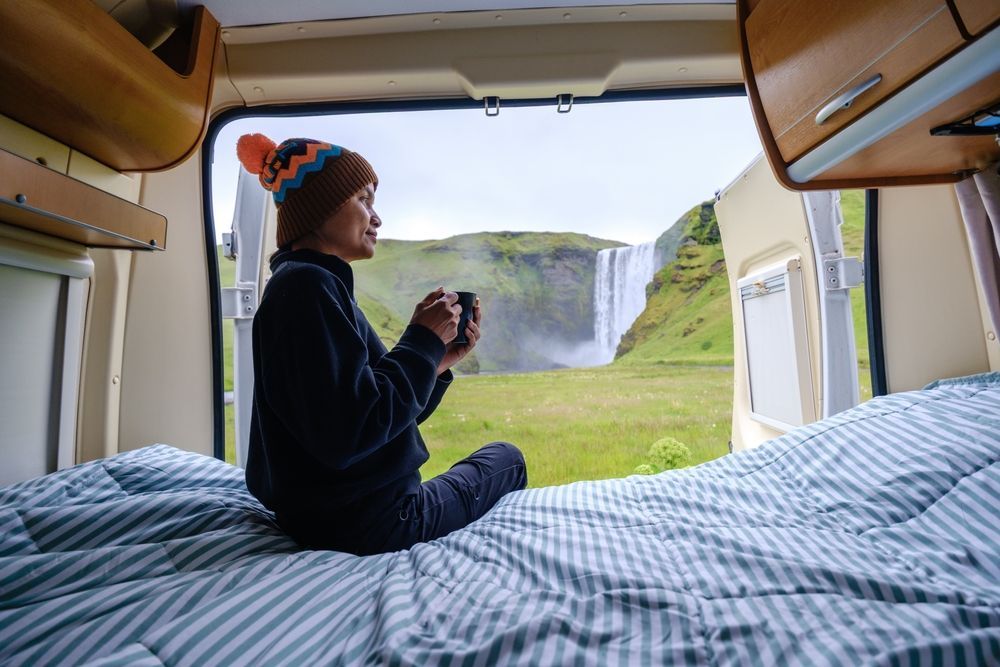
Summer is campervan season. Outside it, most campsites close and the nights get genuinely cold.
Season Matters More Than Anything
The factor that should decide it for most visitors.
June to August is campervan season. Long daylight, open campsites, mild nights and every road available.
May and September work, with fewer campsites open and colder nights. A van with proper heating is essential rather than optional.
October to April is not campervan weather. Most campsites close, nights are genuinely cold, daylight is short and high-sided vehicles handle Icelandic wind badly.
Winter visitors should take a car and book accommodation. This is not a preference, it is what conditions dictate.
Our guide to the best time to visit Iceland sets out what each month offers.
Practical Points for Either Choice
Six things that apply whichever you rent.
Check the road status daily at umferdin.is. Icelandic driving is a daily decision.
Hold car doors with both hands in wind. Door damage is often excluded from rental insurance and it is the most common expensive incident here.
Neither vehicle may go on an F-road unless it is a 4x4. Our guide to Iceland's F-roads covers the rules and the insurance consequences.
Fuel is around 300 ISK a litre and pumps need a card with a PIN.
Gravel protection and sand and ash protection are worth taking on either vehicle, and water damage is never covered.
File a travel plan with SafeTravel if you are going anywhere remote.
Neither: The Third Option
Worth stating, because plenty of visitors overbuy on vehicles.
If you are based in Reykjavík for three or four nights and doing day trips, you may not need a vehicle at all.
Day tours to the Golden Circle, the south coast and Snæfellsnes all collect in the city and cost less than a hire car plus fuel for one or two people.
The city is walkable and the buses cover the rest at 690 ISK a journey according to Strætó.
A hire car for one specific day, rather than the whole trip, is often the cheapest version of all.
Our guide to how many days you need in Iceland covers which itineraries actually need a vehicle.
The Verdict
Four situations, four answers.
Summer ring road trip for a couple, five nights or more: campervan.
Winter trip of any length: car, with booked accommodation.
Family of four: car plus guesthouses, unless you specifically want the van experience.
Short trip based in Reykjavík: neither, and take day tours instead.
Skip the Driving for the Golden Circle Day
Whichever vehicle you rent, the Golden Circle is the day where a guided departure most often works out cheaper for one or two people once fuel and parking are counted. Our small-group Golden Circle tour with Kerið and Friðheimar includes the driving, the fuel and the crater entry. Tell us your dates and we will find you a departure.
Compare Golden Circle Tours
Check each selected product for its current operator, guide, itinerary, meeting point, and terms.
View Our Tours