
You smell Deildartunguhver before you see it. Then you round a bend in a quiet farming valley and the whole hillside is smoking.
Walk up to the railing and the noise takes over. Water bursts out of the rock at close to boiling point, hissing and spitting from a dozen vents at once. It runs off in a steaming stream that never stops.
This is the most powerful hot spring in Europe, measured by how much water it produces. It sits in West Iceland, about 97 kilometres from Reykjavík. Right next to it, the Krauma baths let you soak in the same water once it has cooled.
What Is Deildartunguhver?
Deildartunguhver is a hot spring in the Reykholtsdalur valley in West Iceland. It has the highest flow rate of any hot spring in Europe, about 180 litres of water every second. The water comes out at roughly 97 to 100°C, depending on which source you read.
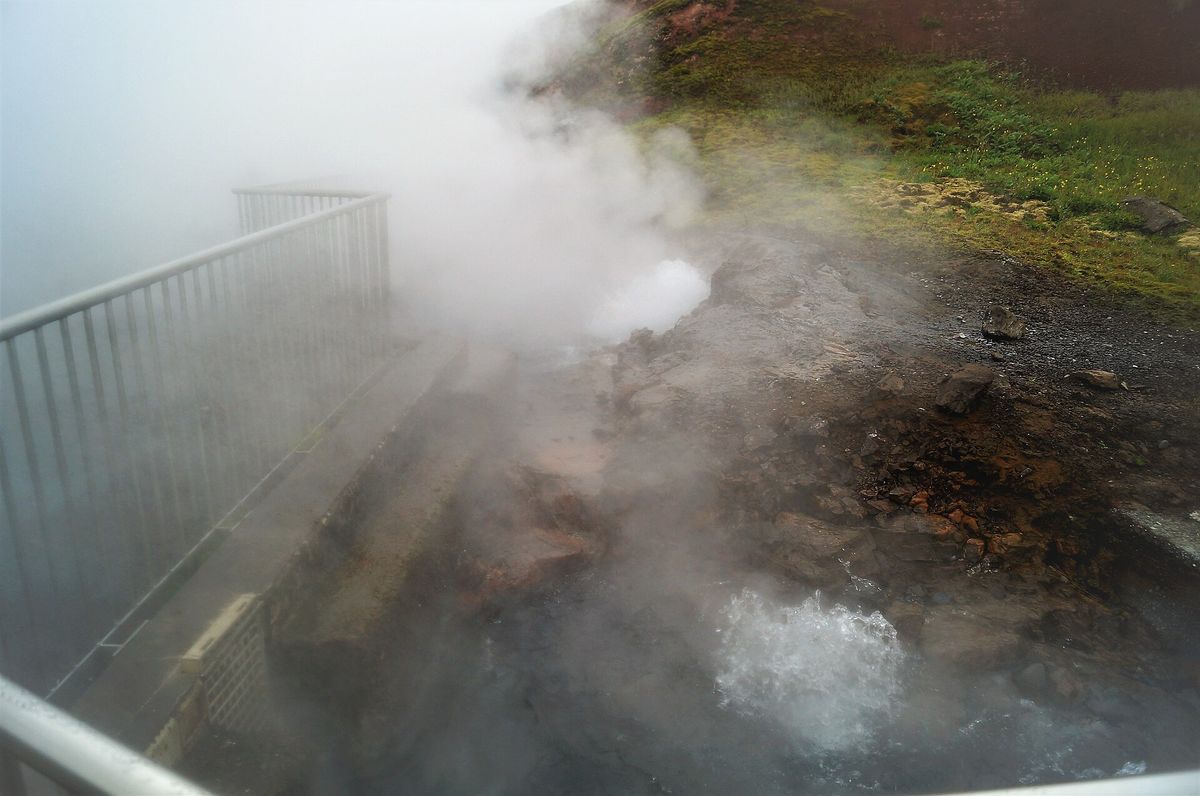
Water boiling out of the rock at Deildartunguhver, right below the viewing railing.
It is not one spring but a cluster of vents along a low rocky bank. Some bubble gently, while others throw up spurts of boiling water and constant clouds of steam. Unlike Strokkur on the Golden Circle, it does not erupt, but it never pauses either.
Where Does All That Hot Water Go?
The spring is not just a sight. A large part of its flow is captured and piped across West Iceland to heat homes.
According to the Wikipedia entry on Deildartunguhver, pipelines carry the water about 34 kilometres to Borgarnes and around 64 kilometres to Akranes. That makes the Akranes line one of the longest hot water pipes in the country, and the water is still hot when it arrives. You can see the pipe infrastructure beside the spring as you walk around.
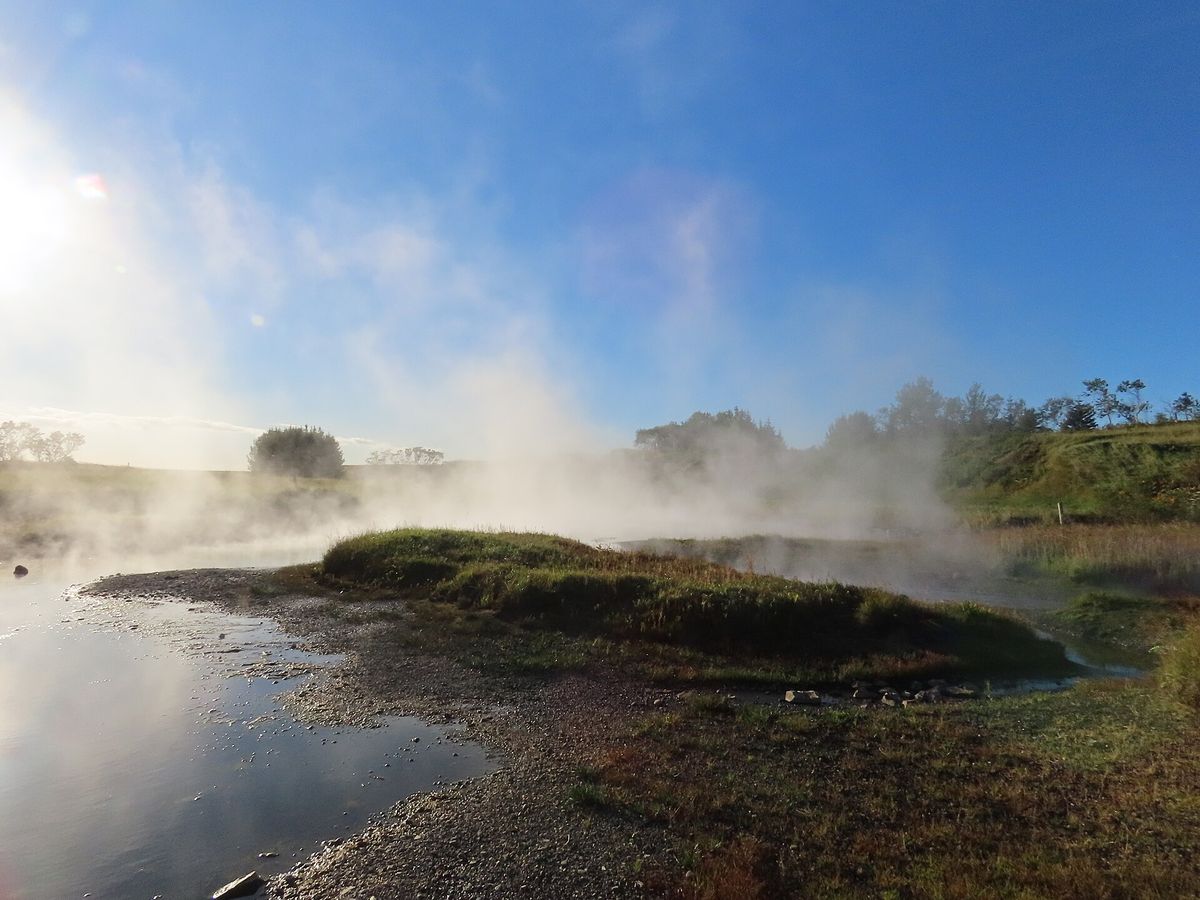
The steaming stream that runs off below Deildartunguhver, framed by grassy banks and trees.
This is Iceland's geothermal story in miniature. The same heat that makes the land steam keeps houses warm through the winter, at a fraction of the cost of oil.
The Rare Fern of Deildartunguhver
Look closely at the warm ground around the vents and you may spot a small green fern. It is a variety of hard fern that is said to grow nowhere else in the world. The heat of the spring lets it survive this far north.
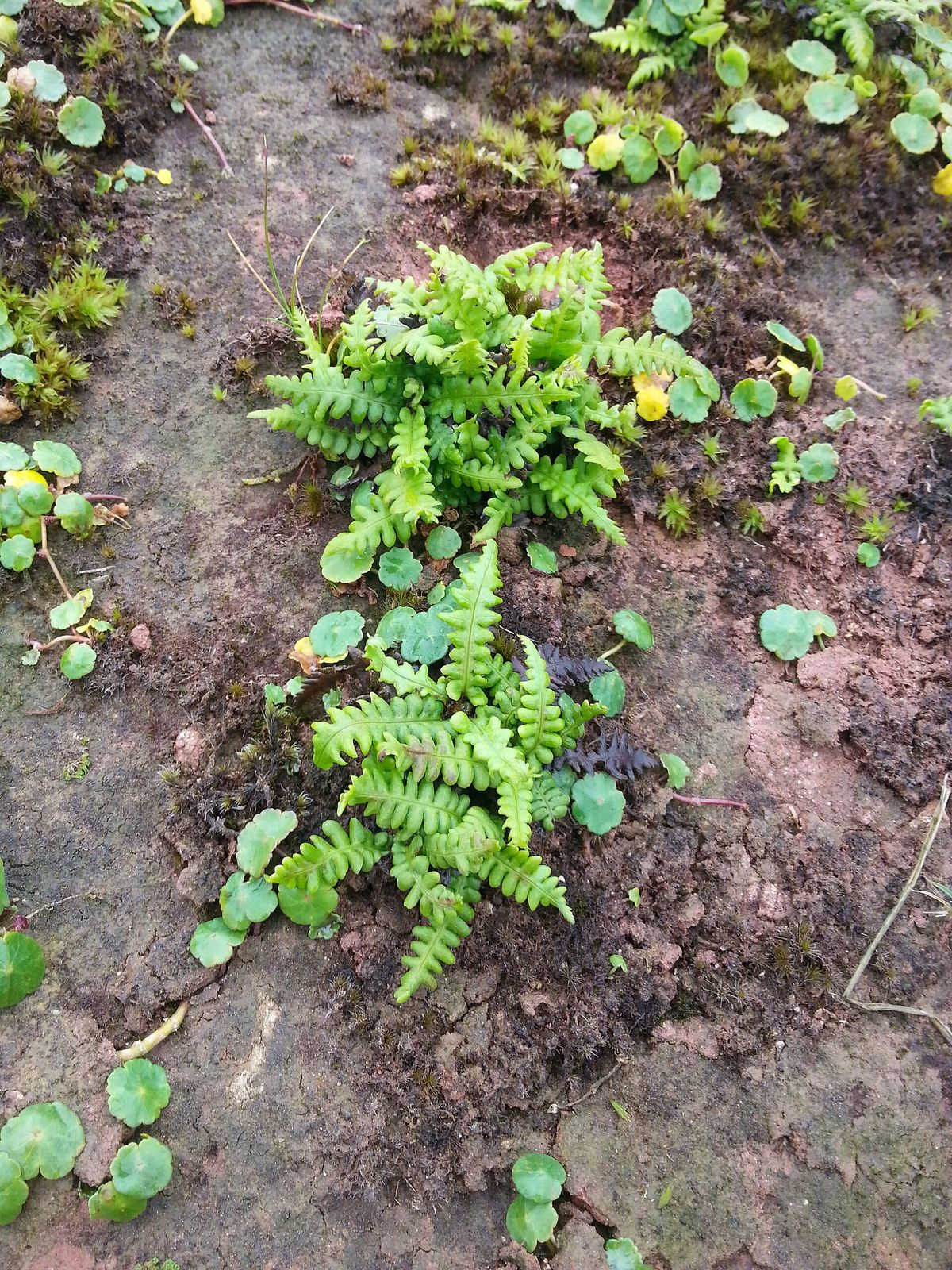
The rare hard fern growing on the warm ground beside the hot spring.
The fern grows within the fenced area, so you can see it only from the paths. Please keep to the walkways and do not step over the barriers.
Visiting Deildartunguhver
There is no entrance fee to see the spring. A car park sits beside it, with a short path leading to the railings and viewing points. Allow 15 to 30 minutes to walk around and take photos.
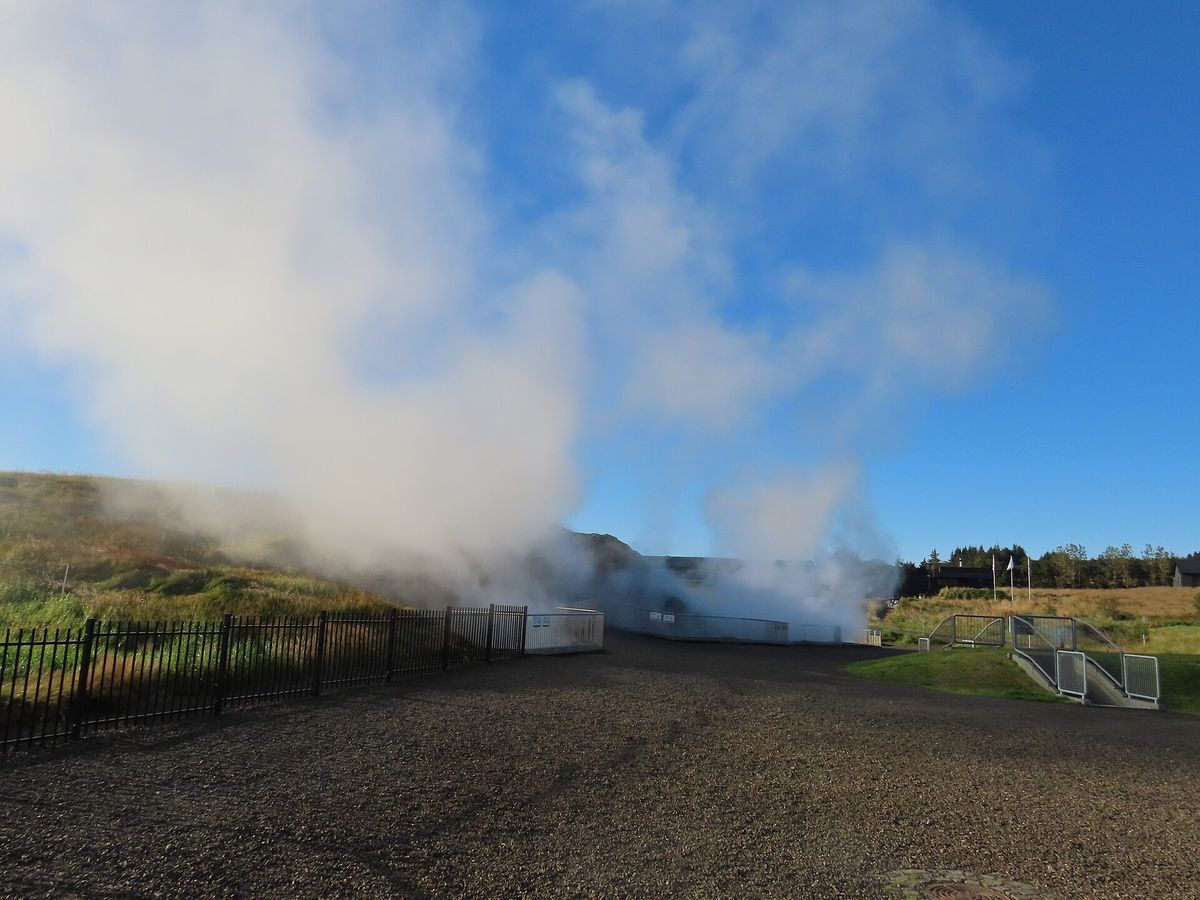
The hot spring steaming beside the gravel car park on a bright day.
Safety at the Spring
The water is boiling, and the spray can scald. Stay behind the railings, keep a close hand on children and never touch the water or the stream that runs from it.
On windy days the steam blows across the paths and can be very hot. Step back and wait for the wind to shift rather than walking through it.
Krauma: Bathing in Deildartunguhver's Water
Right beside the spring, Krauma is a geothermal bath and spa that uses its water. The hot water comes straight from Deildartunguhver. It is mixed with cold water from Ok, a small glacier nearby, to reach comfortable bathing temperatures.
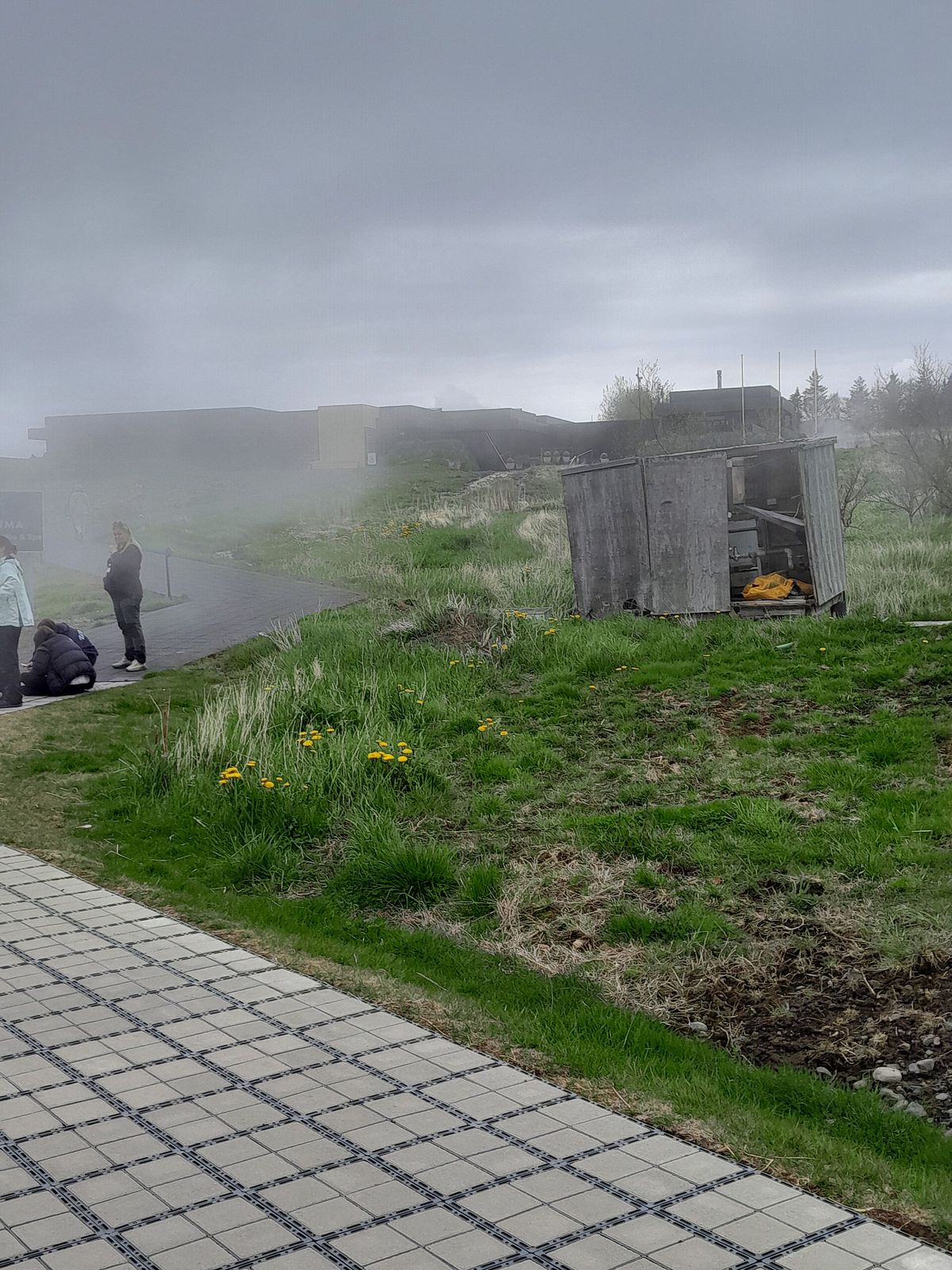
A paved path past the steaming ground at Deildartunguhver, close to the Krauma baths.
According to Krauma's own website, there are six baths in total. Five are warm, at between 37 and 41°C, and one is a cold plunge pool at 5 to 10°C.
The water flows through constantly, so no chemicals are added to keep the pools clean. There are also two saunas, an infrared room, a steam bath and a relaxation room with a fireplace.
Krauma Restaurant
Krauma has a restaurant serving Icelandic dishes, with views over the hot spring. Its terrace is a good spot for lunch in summer, even if you are not bathing.
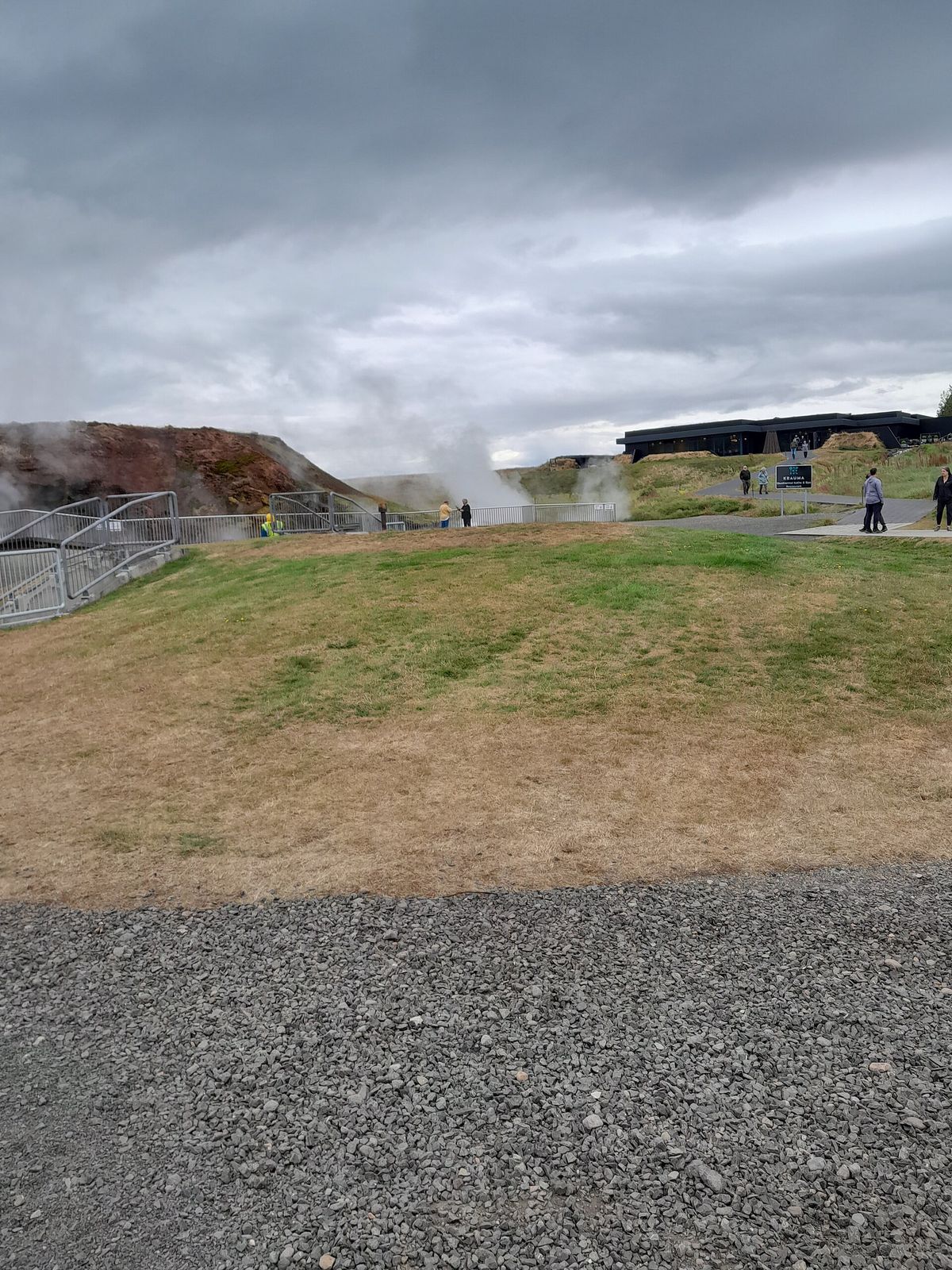
Steam drifting over the hot spring area, with the buildings beside Deildartunguhver beyond.
Do You Need to Book Krauma?
Booking ahead is a good idea in summer and at weekends, when local visitors and tour groups arrive. Check opening hours and prices on the official site before you go, as both change with the seasons.
Krauma vs the Golden Circle's Geothermal Baths
Krauma is smaller and quieter than the big-name lagoons, with a series of separate tubs rather than one large pool. It feels closer to a natural hot spring experience, helped by the steam from Deildartunguhver drifting past.
On the Golden Circle itself, the nearest equivalent is the Secret Lagoon at Flúðir. It is a natural pool with its own small geyser, and Laugarvatn's lakeside spa is close by too.
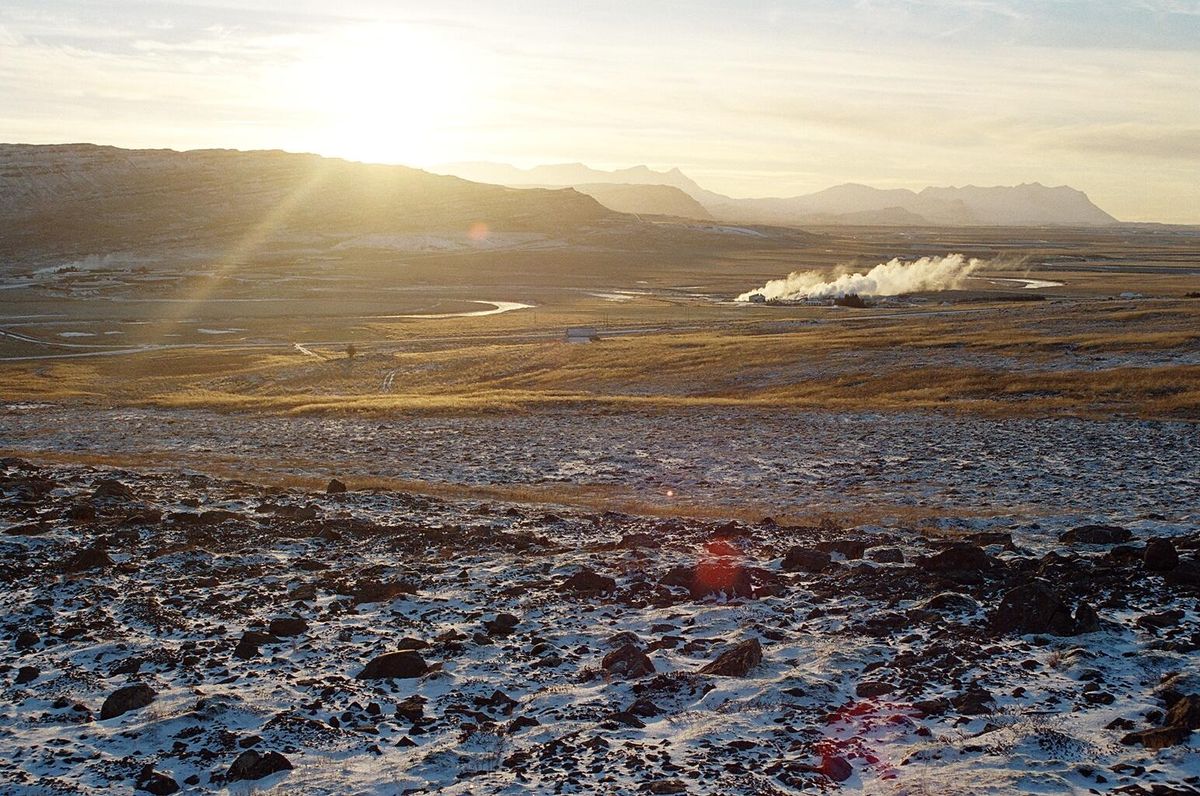
The Reykholtsdalur valley at sunrise, with steam from its hot springs rising in the distance.
Laugarvatn Fontana's steam baths sit over natural vents and add a lake to cool off in. Both are easy to add to a Golden Circle day, whereas Krauma needs a separate trip into West Iceland.
How to Get to Deildartunguhver
From Reykjavík, drive north on Route 1 through the Hvalfjörður tunnel towards Borgarnes. Turn inland before the town and follow the signs into Reykholtsdalur. The drive takes about an hour and a quarter on paved roads, and Krauma sits on Road 50.
In summer, you can also drive from Þingvellir to the area over the Kaldidalur road (Route 550). It is a rough gravel mountain road that opens only in summer, so check the umferdin.is live road conditions and your rental terms first.
Reykholt and the Silver Circle
Deildartunguhver is one stop on the Silver Circle, a loop of sights in West Iceland. A few minutes up the valley is Reykholt, home of the medieval writer Snorri Sturluson.
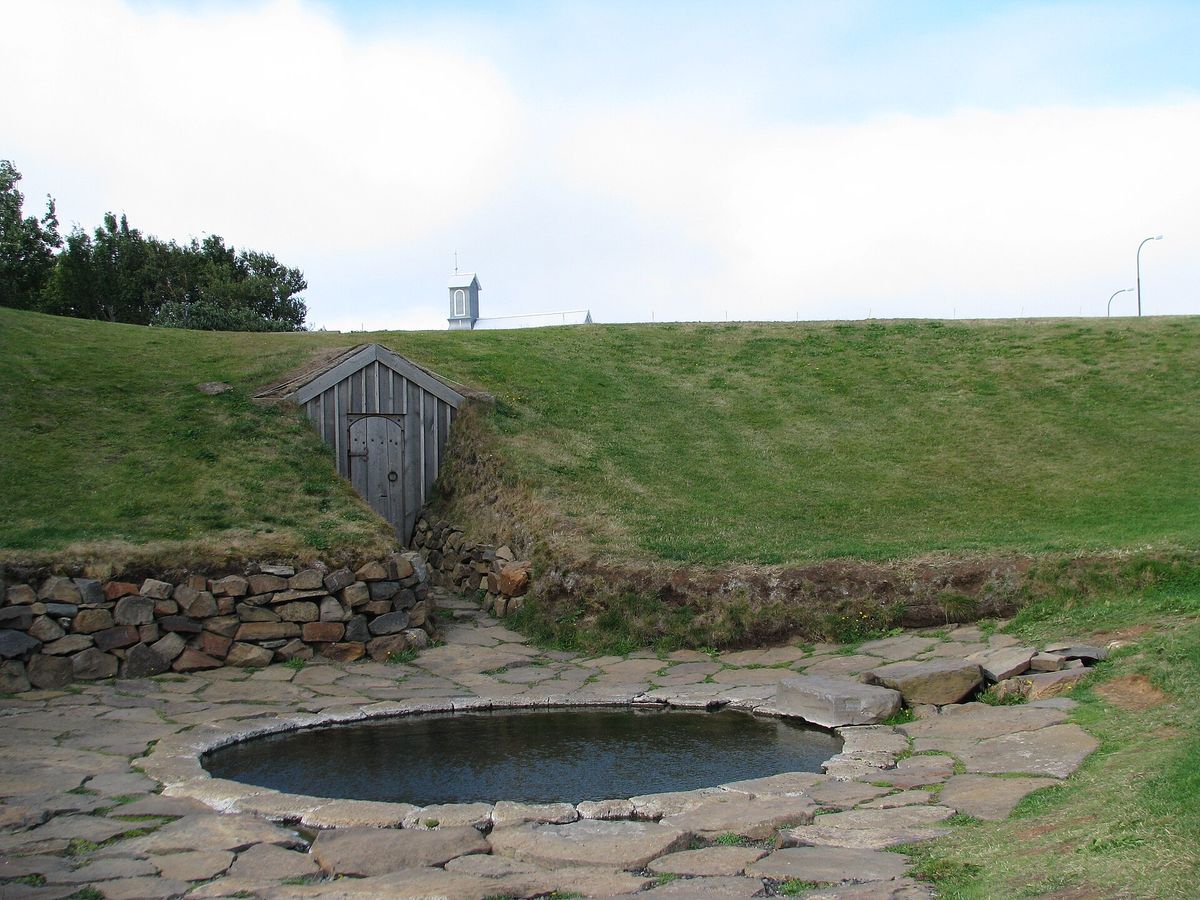
Snorralaug at Reykholt, the stone bathing pool linked with Snorri Sturluson.
At Snorri Sturluson's old home, you can see Snorralaug. This round stone bathing pool is still fed by warm water from a nearby spring. A museum and culture centre beside the church tells the story of his life and the sagas.
Do not confuse it with the other Reykholt, a village on the Golden Circle in South Iceland near the Geysir area.
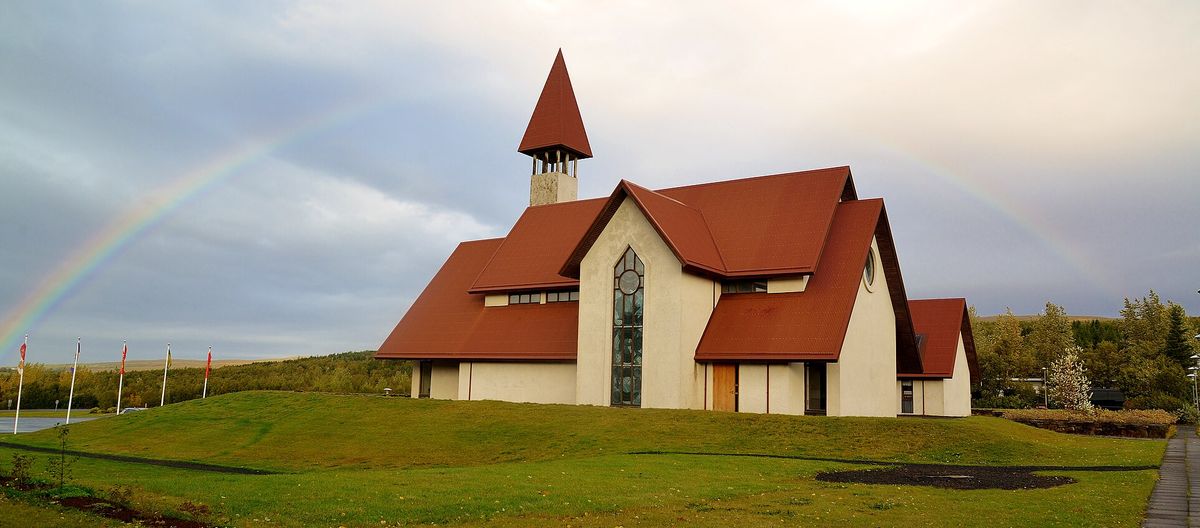
The church and Snorrastofa culture centre at Reykholt, under a rainbow.
Further east along the valley, the Hraunfossar waterfalls pour out of a lava field into the Hvítá river, with Barnafoss just upstream. They are about half an hour's drive from the spring. Beyond Borgarnes, you can continue west to Snæfellsnes and its volcano-topped peninsula.
Is Deildartunguhver Worth Visiting?
Yes, especially if you are heading north on the Ring Road or towards Snæfellsnes, because it is only a short detour. The spring itself takes half an hour. Add Krauma and Reykholt and you have a full, relaxed afternoon.
As a day trip from Reykjavík on its own, it is better combined with the rest of the Silver Circle. If you only have one day and want hot water, the Golden Circle gives you Geysir and a geothermal soak in one trip.
Hot Springs on a Golden Circle Day
If you would rather see geothermal Iceland without driving to the west, our geothermal pool day tours pair Þingvellir, Geysir and Gullfoss with a soak at the Secret Lagoon or another natural pool.
A guided day also saves you the long drive back to Reykjavík after a warm soak, which is when most people feel least like driving.
For more flexibility, a private tour of your own lets you ask about extra stops when you book.
Compare Golden Circle Tours
Check each selected product for its current operator, guide, itinerary, meeting point, and terms.
View Our Tours

