
Yes. A valid US driving licence lets you drive in Iceland for up to six months, according to the Icelandic Transport Authority's guidance on foreign licences. Licences from outside the European Economic Area are accepted for that period, after which residents must switch to an Icelandic licence.
Your licence needs to be the original physical card, valid for your whole trip, printed in the Latin alphabet and carrying your photo. A temporary paper licence from the DMV is not enough, so if your card has expired recently, renew it before you travel.
Do You Need an International Driving Permit in Iceland?
No, not with a standard US licence. An international driving permit is a translation of your licence, and Iceland only asks for one when the original is not in the Latin alphabet or lacks a photograph. A US card meets both conditions.
A permit can still be worth carrying in two situations. A small number of rental companies list it as a requirement in their terms, so check yours before you travel. It also helps if your licence is worn, unusual in format or hard to read.
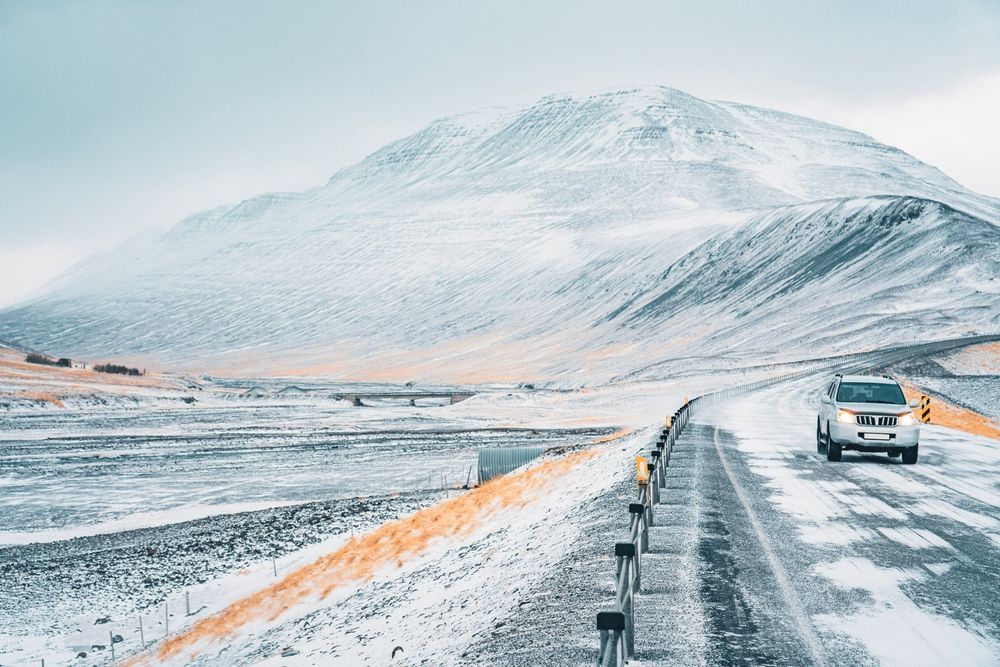
A car on a snowy mountain road in winter, where the licence matters less than the driver's experience.
In the United States, only AAA and the American Automobile Touring Alliance are authorised by the State Department to issue international driving permits. Be wary of websites offering instant online permits, which are not recognised.
What Is the Driving Age in Iceland?
The legal driving age in Iceland is 17, but that only matters to Icelanders. For visitors, the age that counts is the one set by the rental company.
Most firms rent small cars to drivers aged 20 and over, and many ask for 23 or more for 4x4s, larger SUVs and campervans. Some charge a young driver fee under 25. You will also usually need to have held your licence for at least a year, along with a credit card in the main driver's name.
Road Rules That Catch American Drivers Out
Icelanders drive on the right, so the basics will feel familiar. A handful of rules are different enough to cause problems, and they are worth reading before your first roundabout.
No Right Turn on Red
Turning right on a red light is illegal in Iceland. You wait for green, even when the road is clear, and the Transport Authority's ruling on red-light turns leaves no room for interpretation.
Two-Lane Roundabouts
Roundabouts are everywhere in the capital area, and Iceland's two-lane rule surprises almost everyone. In a two-lane roundabout, the car in the inner lane has priority when it exits, which means it can cut across the outer lane. If you are in the outer lane, you must give way to cars leaving from the inside.
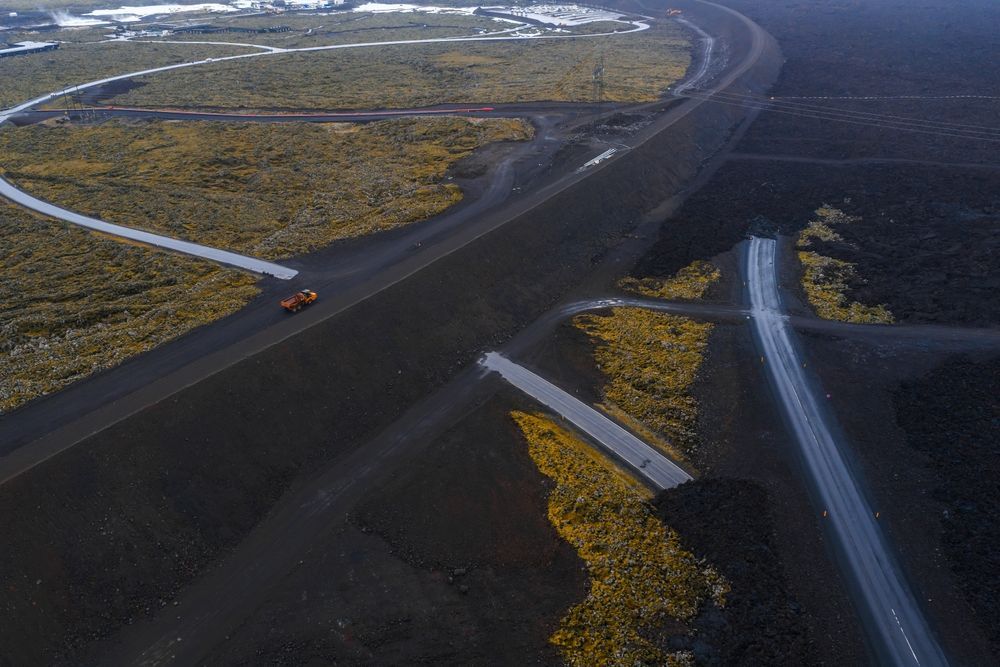
Roads and junctions crossing a lava field, the kind of approach to town where two-lane roundabouts start appearing.
The safest habit for visitors is simple. Use the outer lane if you are taking the first or second exit, use the inner lane for anything further round and watch the inside lane as you approach your exit.
Headlights On at All Times
Dipped headlights are required day and night, all year. Most hire cars have automatic daytime lights, but check that the rear lights are also on in dark or foggy conditions.
Speed Limits in Kilometres
Speeds are in kilometres per hour. The limit is 90 km/h on paved roads outside towns, 80 km/h on gravel and 50 km/h or lower in built-up areas. That makes 90 km/h about 56 mph, which feels slow on an empty road and is still too fast for many corners.
Speed cameras are common, and fines are high by American standards. A ticket from a rental car usually reaches you through the rental company, with an admin fee added on top.
Single-Lane Bridges and Blind Hills
Rural roads have single-lane bridges marked "Einbreið brú". Whoever reaches the bridge first crosses first, so slow down on the approach and look for oncoming traffic. Signs reading "Blindhæð" warn of a blind summit, where the road may narrow or bend on the far side.
Gravel Roads
Many side roads are gravel, and the change from tarmac often comes without warning. Slow down before the surface changes, keep well to the right when a car approaches and leave plenty of space behind other vehicles to avoid stone chips.
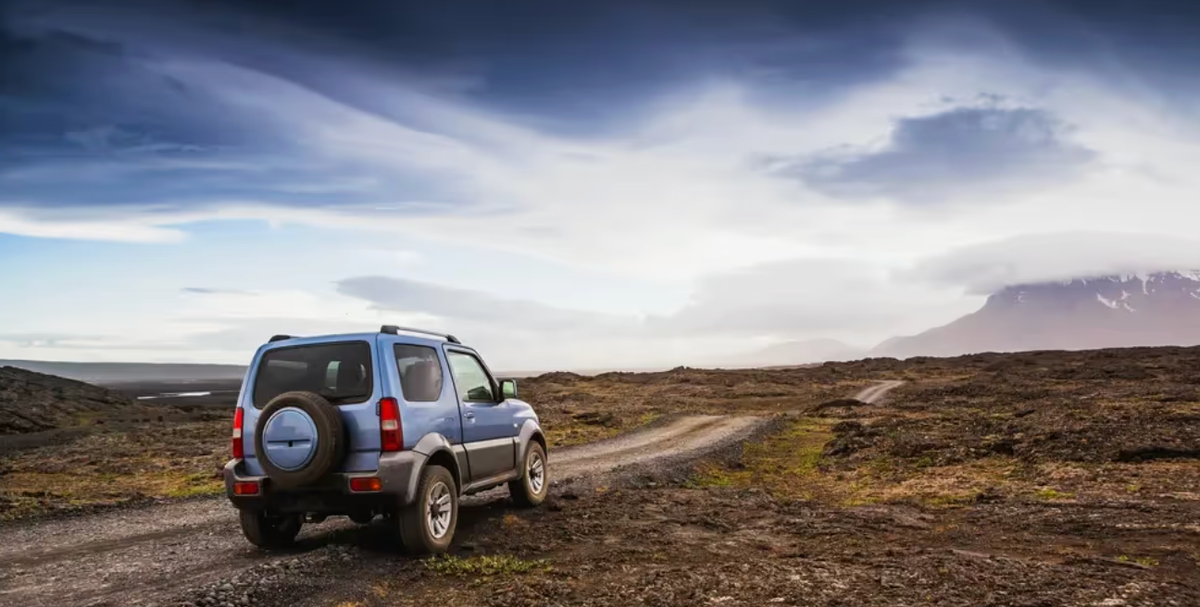
A 4x4 on a gravel road across a lava plain, the kind of surface where speed needs to drop well below the limit.
Manual Gearboxes
Manual cars are still common in Iceland and usually cheaper to hire. If you have never driven a manual, book an automatic and confirm it at the desk. Steep, icy hills are not the place to learn.
The Alcohol Limit Is Much Lower Than at Home
Iceland's legal blood alcohol limit is 0.02 per cent, a quarter of the 0.08 per cent limit in most US states. In practice, a single beer can put you over it. The only safe rule is not to drink at all if you are driving.
Off-Road Driving Is Illegal
Driving off marked roads and tracks is against the law in Iceland, and the fines run into hundreds of thousands of krónur. Tyre tracks on moss and volcanic soil can last for decades. This applies to beaches, lava fields and highland sand as well, wherever the surface looks firm.
Highland F-roads are a separate matter. They are legal roads, but they open only in summer and need a 4x4, and rental contracts usually ban two-wheel-drive cars from them.
Paying for Fuel With a US Card
Most fuel stations in Iceland are self-service, and the pumps ask for a card PIN. Many US credit cards either have no PIN or are declined at unattended pumps.
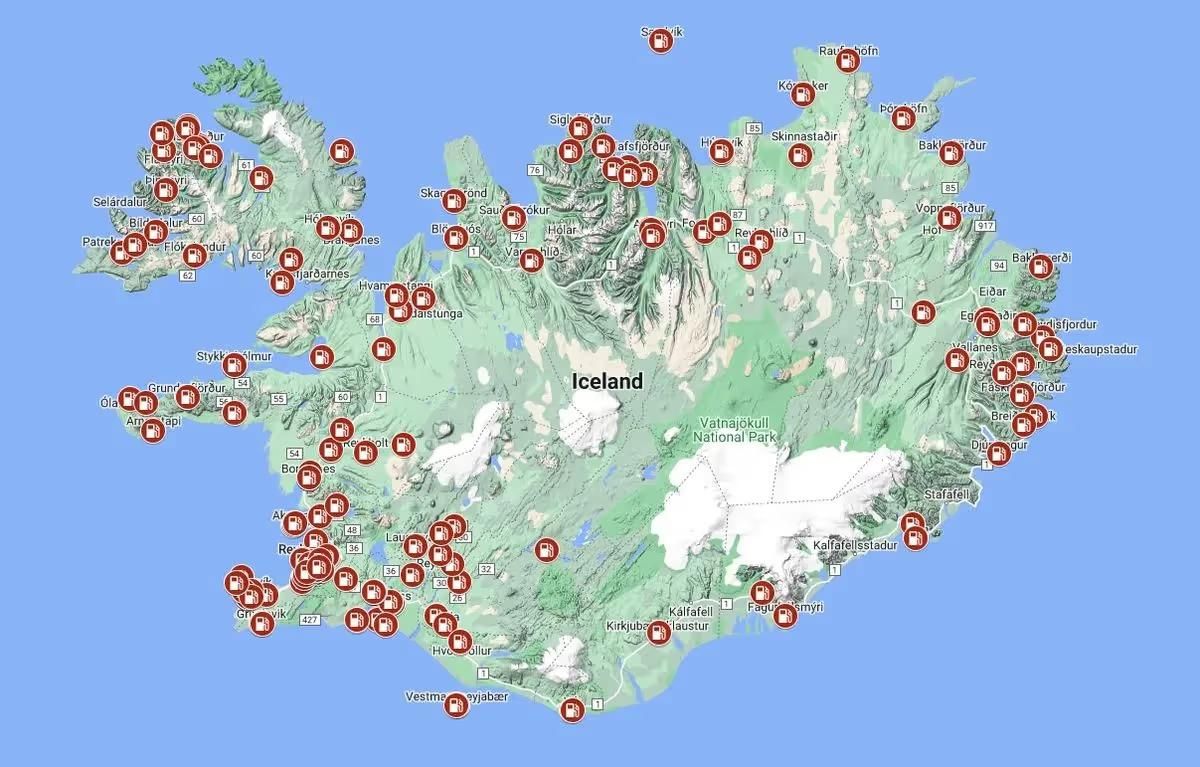
Fuel stations are spread thinly outside the south-west, so it pays to fill up whenever you can.
The fix is easy. Set up a PIN with your card issuer before you travel, or buy a prepaid fuel card inside a staffed station during opening hours and use it at the pump. In the east and north, stations can be far apart, so top up whenever the tank drops below half.
Parking in Reykjavík
Central Reykjavík has paid parking zones, marked P1 to P4, with P1 the most expensive and closest to the centre. You pay at a machine or through a parking app, and the charging hours for each zone are shown on the machines.
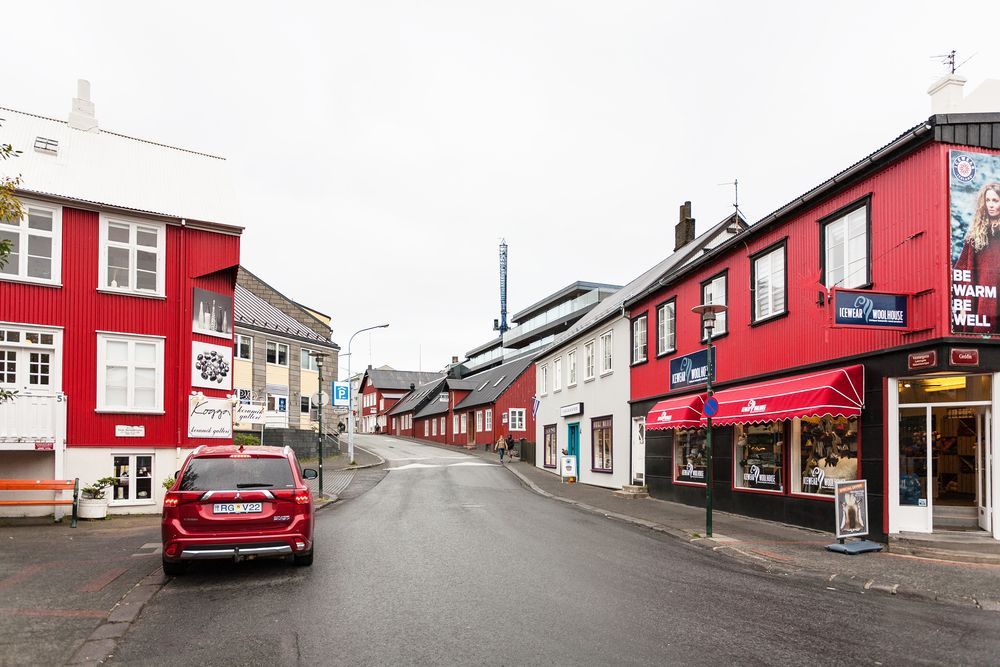
A car parked on a street in central Reykjavík, where paid parking zones cover most of the old town.
Many hotels have limited parking, so ask when you book. Outside the city, popular sights such as Þingvellir charge parking fees. You usually pay by app or card machine, and some car parks read your number plate automatically.
Winter Driving With a US Licence
Your licence is just as valid in January as in July, but the conditions are not. Ice, strong winds and short days make winter driving in Iceland harder than in most of the US, even for drivers used to snow.
Check the Road Administration's live road map every morning and plan your drives around the four or five hours of daylight in December.
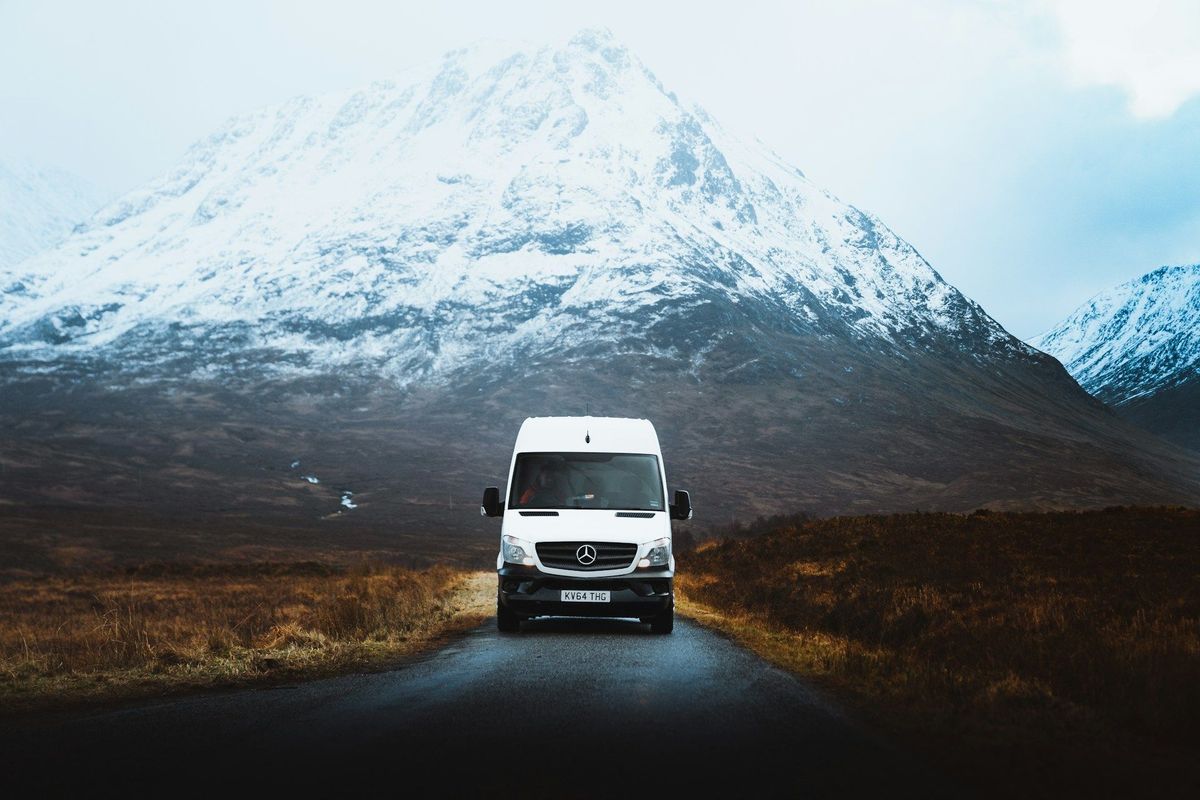
A campervan on a mountain road in early winter, when snow arrives on the peaks first.
If winter roads sound like more than you want to take on, there is no shame in letting someone else drive. A guided Golden Circle tour covers the main sights with drivers who handle icy roads every day.
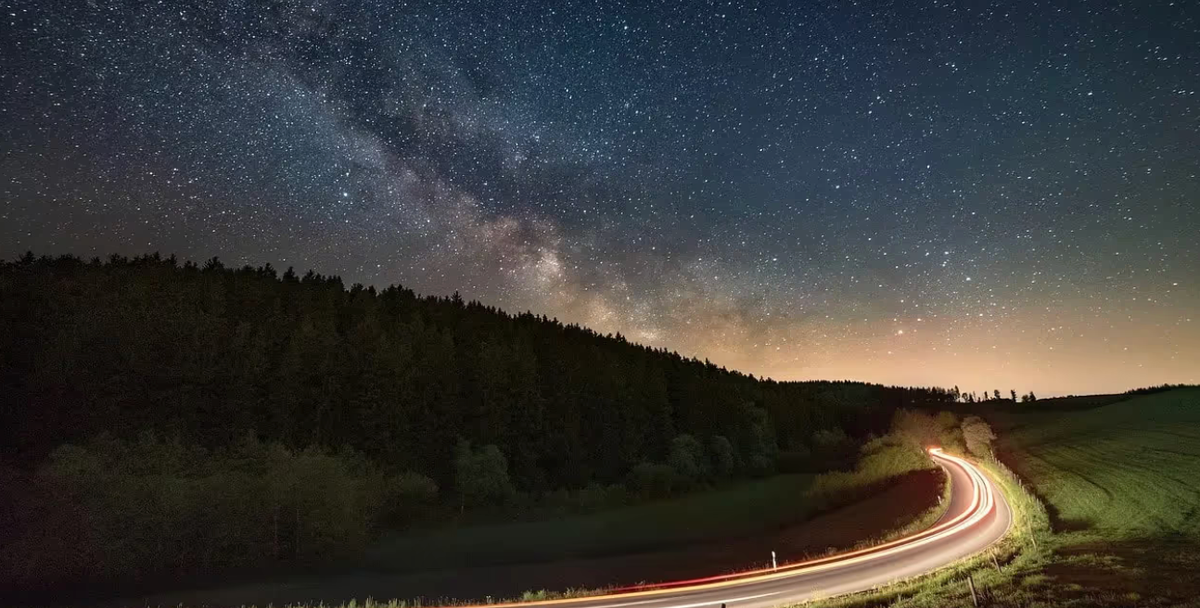
Light trails on a country road under the stars. Rural Icelandic roads have no street lighting.
Our tips on driving in Iceland after dark cover the hours when you cannot avoid it.
Documents to Carry in the Car
Keep your US licence on you whenever you drive, along with the rental agreement and your passport or a copy of it. Police in Iceland can ask to see your licence at any roadside check, and the rental company will need it if anything goes wrong.
In an emergency, call 112 for police, ambulance and rescue. For a breakdown or minor damage, call the rental company's helpline first, and photograph the scene and any damage before you move the car if it is safe to do so.
Insurance and Renting a Car
Basic collision cover is included in Icelandic rentals, but it comes with a high excess. Gravel protection is worth adding on any trip beyond the capital, and sand and ash cover makes sense on the South Coast in windy weather.
Our car rental guide for Iceland explains the insurance options, deposits and when a 4x4 is worth the extra cost. Read the contract on pick-up, photograph the car before you drive away and check which roads the policy excludes.
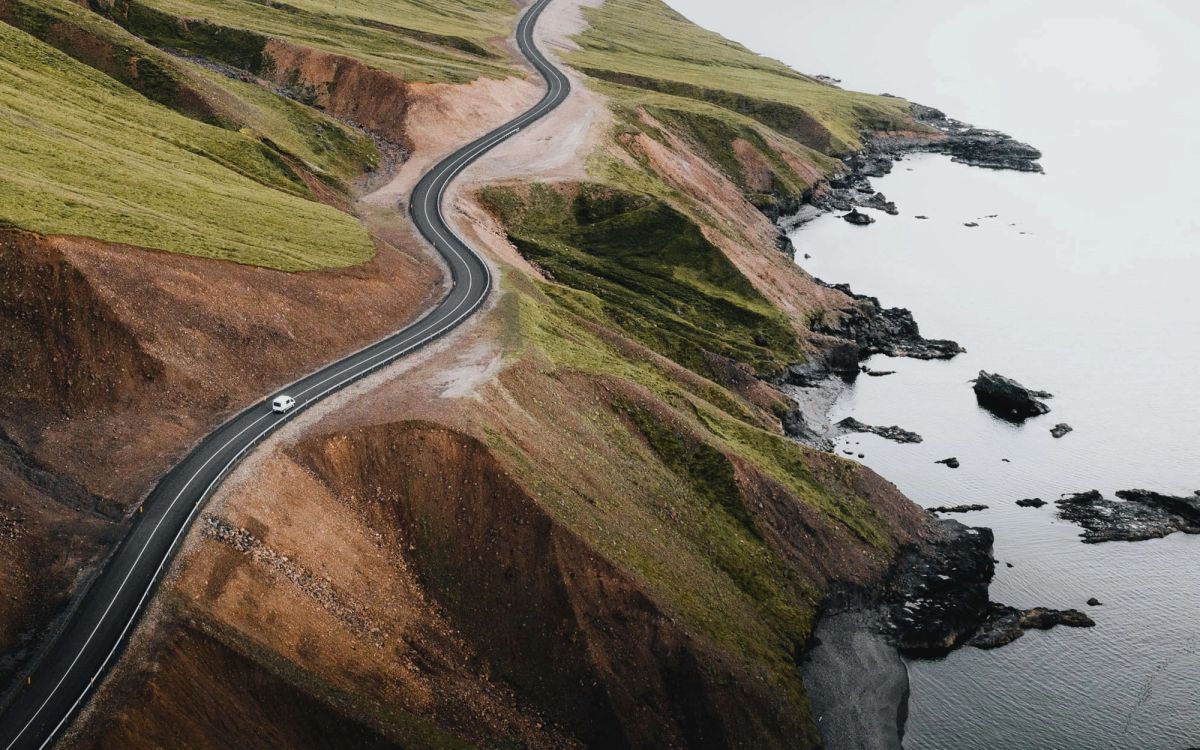
A narrow road winding along the coast, the kind of route where the 90 km/h limit is more than most corners allow.
For the wider picture, from wind gusts to sheep on the road, our guide to staying safe on Iceland's roads covers what to expect once you leave the city.
Where to Drive First
The Golden Circle is the classic first drive for visitors. It is a loop of about 300 kilometres from Reykjavík, fully paved, and it gets you used to Icelandic roads before you head further afield. Our self-drive Golden Circle route maps the stops in order.
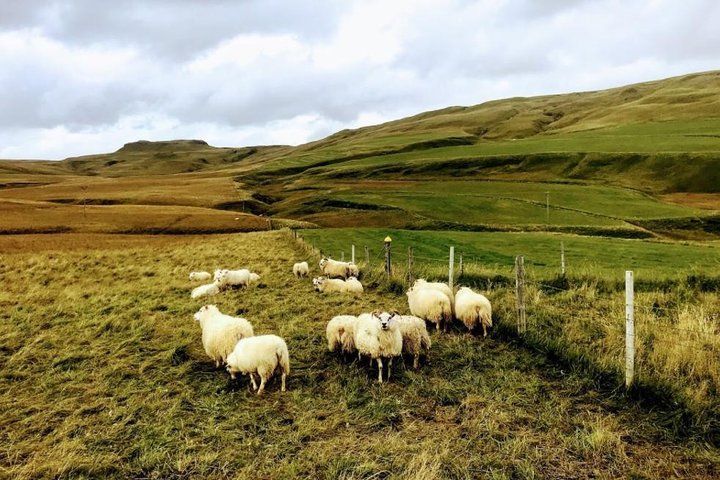
Sheep in a roadside pasture. In summer they roam freely and often wander onto rural roads.
Planning a Longer Self-Drive Trip
Once the licence question is settled, the bigger challenge is planning the route, the stops and where you will sleep each night. Our 9-day Ring Road self-drive includes a 4x4 campervan, a route guide and GPS coordinates for each stop, so your US licence and a sense of adventure are all you need to bring.
Compare Golden Circle Tours
Check each selected product for its current operator, guide, itinerary, meeting point, and terms.
View Our Tours

