
What an Iceland Cruise Is Actually Like
An Iceland cruise is a series of daytime port calls separated by scenic sailing, usually between May and September. Ships arrive early, you go ashore for a single main excursion, and you are back aboard by an all-aboard time that falls 30 to 60 minutes before departure.
Most itineraries include Reykjavík plus two or three of Ísafjörður, Akureyri, Djúpivogur, Seyðisfjörður and Grundarfjörður. Some sailings circle Iceland; others fold it into a wider North Atlantic route, taking in the Faroes, Greenland or Norway.
The thing first-timers underestimate is how much the port call structure shapes the trip. You are not visiting Iceland; you are visiting five or six specific places for eight hours each, and planning around that constraint is most of the job.
The Main Ports
Each port opens up a different part of the country, and they are far apart.
Reykjavík
The main call and the one with the widest choice. Most ships dock at Skarfabakki, 3 to 4 kilometres northeast of the centre, with smaller vessels sometimes berthing in the old harbour downtown.
A typical call is 8 to 12 hours, which is comfortably enough for the Golden Circle, a South Coast run, or the city plus a lagoon. There is more detail in our guide to how long ships stay in Reykjavík.
Akureyri
Iceland's northern capital, at the head of Eyjafjörður, and the second most useful call. Excursions reach Goðafoss, Lake Mývatn and the whale watching at Húsavík.
The town itself is walkable from the pier, which is unusual in Iceland and welcome after a long sailing.
Ísafjörður
The Westfjords port, small and dramatic, with the ship dwarfing the town. Excursions go to Dynjandi waterfall and the surrounding fjords, and the town is a five-minute walk away.
Djúpivogur and the East
A tiny village port in the east, calm and quiet, with access to the eastern fjords and, on longer calls, the glacier lagoon at Jökulsárlón four hours away.
Grundarfjörður and Seyðisfjörður
Both small, both spectacular. Grundarfjörður sits below Kirkjufell on Snæfellsnes, and Seyðisfjörður is the east coast's ferry town with its rainbow street and blue church.
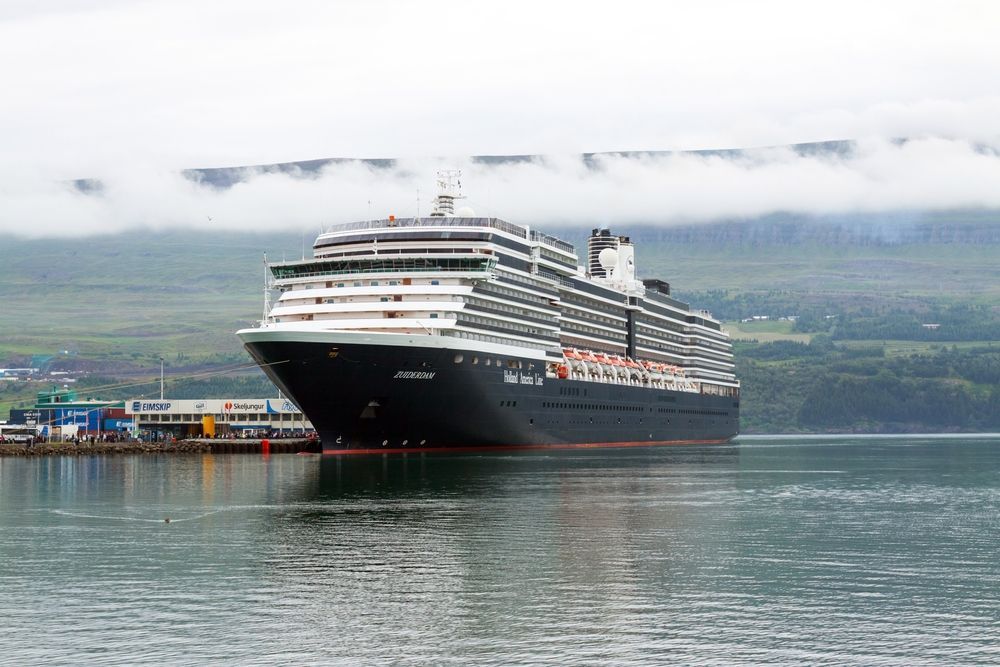
Smaller ports like Ísafjörður and Seyðisfjörður put you a short walk from the town centre.
When to Sail
The Icelandic cruise season runs from roughly May to September, with the peak in July and August.
May and early June give you long light, thin crowds and the last of the spring snow on the mountains. Puffins arrive, and the highland roads are still closed.
July and August are the warmest and busiest. At the nearest long-running station to the Golden Circle, Met Office climate data puts July's average daily high at 16.5°C with the lowest mean wind of the year at 3.4 metres per second.
September brings autumn colour, fewer ships and the first darkness, which means an overnight call can include an aurora hunt. It also brings the wettest month on the route at 147 mm.
A small number of ships run winter itineraries. Those are a different proposition: short daylight, real storm risk and the northern lights as the headline.
How Shore Excursions Work
This is the part that most affects your day, and there are three ways to do it.
Ship excursions
Booked through the cruise line, sold onboard or in advance. They cost more and travel in larger groups, and the ship waits if they run late.
That guarantee is the product. If the schedule matters more than the price, this is the safe choice.
Independent tours
Booked directly with a local operator. Usually cheaper, almost always in smaller vehicles, and considerably more flexible on what you see.
The ship has no obligation to wait, so the operator's return policy is what you are actually buying. A good one tracks your vessel, builds in buffer and states the guarantee in writing, as ours does on our guaranteed return page.
On your own
Taxi, rental car or public transport. Cheapest and riskiest, with nobody accountable for the traffic or the weather.
It works well for a walkable port like Ísafjörður and poorly for anything involving a 200-kilometre round trip.
For most first-timers on a Reykjavík call, a well-run independent small-group tour gives the best balance. Our shore excursion pages set out how pickups and timings work at Skarfabakki.
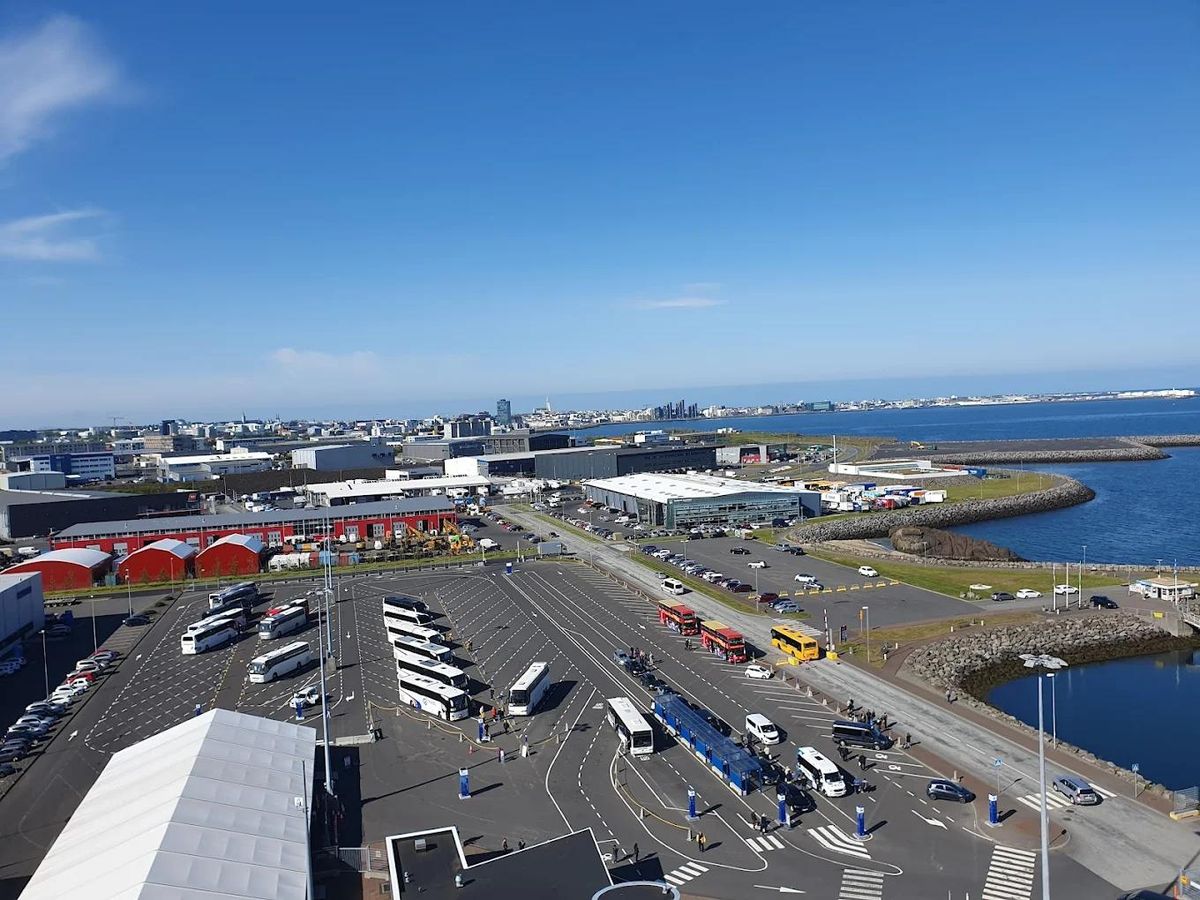
Independent operators meet at the same terminal area as the ship's own excursion coaches.
What to Do in Reykjavík
The Golden Circle is the most booked excursion in the country and the reason most passengers come ashore.
It covers Þingvellir, where the North American and Eurasian plates pull apart and where the Alþingi assembly met from around 930 until 1798, according to Þingvellir National Park; the Geysir geothermal area, where Strokkur erupts every five to ten minutes; and Gullfoss, a two-tier waterfall on the Hvítá.
The loop needs 6 to 8 hours and fits comfortably inside a standard call, with roughly 45 minutes at each of the three sites and three and a half hours of driving.
Our Golden Circle tour from the cruise port collects at Skarfabakki and returns to the pier.
The South Coast is the alternative, at 400 kilometres round trip and 10 hours, which needs a long call. It gives you Seljalandsfoss, Skógafoss and the black sand at Reynisfjara.
If you would rather stay local, Reykjavík itself takes half a day: Hallgrímskirkja, the old harbour, the Sun Voyager and a plate of fish. Sky Lagoon is 15 minutes from the centre and takes two to three hours.
What to Pack
Iceland in July is not warm, and this catches people out every season.
Bring waterproofs. A proper shell jacket and waterproof trousers matter more than a thick coat, because wind and rain do the damage rather than temperature.
Bring layers. A thermal or fleece base, a mid-layer and the shell, so you can adjust between a warm coach and a windy viewpoint.
Bring boots with grip. The paths at Gullfoss are wet year-round, and the ones at Geysir are gravel.
Bring swimwear. Every lagoon and pool requires it, and buying it at the Blue Lagoon shop is an expensive way to solve a packing failure.
Bring a card rather than cash. Iceland is close to cashless, and even the toilets at the main sites take cards.
Add a hat and gloves outside July and August, and a small daypack you can carry, since coaches are sometimes locked at stops.
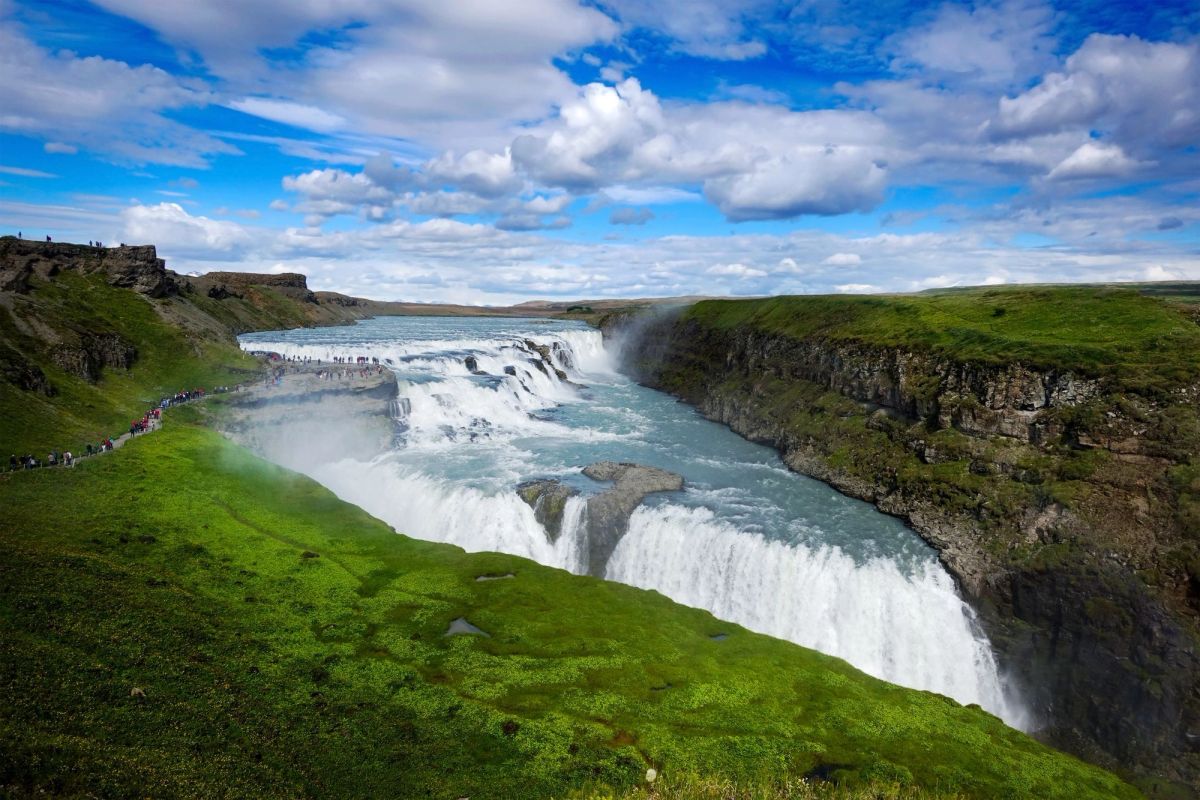
Gullfoss throws spray onto the upper platform on any windy day, which is most days.
Reading Your Port Day
Four numbers from the daily programme decide everything.
Arrival time is when the ship is scheduled alongside, not when you can walk off. Add 30 to 45 minutes for clearance.
All-aboard is your real deadline, usually 30 to 60 minutes before departure. Plan every excursion against this figure.
Departure time is only useful for working out all-aboard if it is not stated.
Ship time versus local time matters, since vessels sometimes hold the previous port's clock. Iceland stays on GMT year-round with no daylight saving.
Photograph the day sheet before you leave the cabin. Every operator asks for the all-aboard time, and most passengers cannot remember it.
Building a Buffer
Work backwards from all-aboard and subtract generously.
Allow 45 to 60 minutes to return from anywhere on the Golden Circle and 30 from the city.
Add another 30 minutes of contingency for weather, roadworks or a queue at a viewpoint.
A 6pm all-aboard therefore means leaving Gullfoss by about 3:45pm. Any operator promising later is cutting it fine.
If you are travelling entirely independently, double the contingency. Nobody is advocating for you if the day goes wrong.
Costs to Expect
Iceland is expensive, and the port day is where it shows.
- Golden Circle excursion from port: from around 13,000 ISK per person for a coach, more for small groups
- Lunch on the route: 2,500 to 4,000 ISK per person
- Taxi from Skarfabakki to the city centre: short distance and a high fare by international standards
- Lagoon admission: booked separately unless bundled into an excursion
- Souvenirs and coffee: budget more than you expect
Ship excursions typically run 30 to 50 per cent above the local price for the same route, which is the premium for the guarantee that the ship waits.
What Goes Wrong
Five mistakes that recur, in rough order of frequency.
Confusing departure time with all-aboard. This is the single most common error and the one most likely to cost you the ship.
Booking an independent tour with no stated return guarantee. Ask for it in writing before paying.
Underdressing for July. Sixteen degrees with wind and spray at Gullfoss is a different proposition from sixteen degrees at home.
Assuming the pier is walkable. Skarfabakki is 3 to 4 kilometres from anything, and the walk into town takes 40 to 50 minutes.
Booking a South Coast excursion on a short call. The 400-kilometre round trip needs a long day, and there is no way to shorten it.
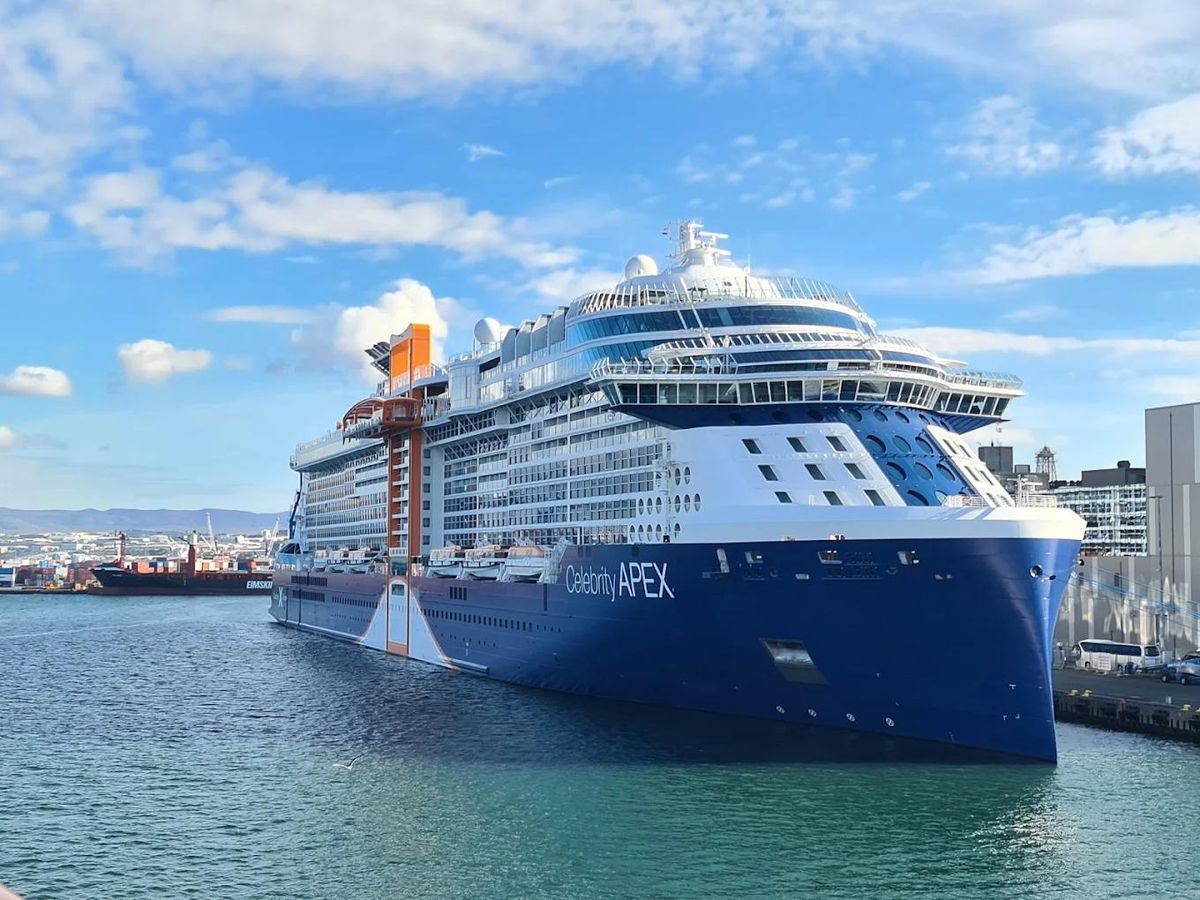
Smaller vessels berth in the old harbour, which puts you in the centre of Reykjavík on foot.
Weather and Cancellations
Two kinds of weather disruption affect an Iceland cruise, and they are different.
Ships occasionally cannot dock. High wind in an exposed harbour leads to a skipped call, and that decision belongs to the captain and the pilot. It happens a handful of times each season, and there is no recourse.
Excursions almost always run. The Icelandic sites are outdoor, free and open around the clock, so only a genuine storm warning stops a Golden Circle departure, and operators watch the alerts on SafeTravel.
Most will reshuffle the order of stops rather than cancel outright, which is why a guided day is more robust than a self-planned one in bad weather.
Book refundable where you can, and check the operator's own cancellation terms for a missed call. Ours are set out on the cancellation policy page.
Making the Most of a Short Season
A few decisions that improve an Iceland cruise disproportionately.
Choose an itinerary with a long Reykjavík call or an overnight. The difference between an 8-hour and a 12-hour stop is the difference between three sites and five.
Book excursions before you sail. The good small-group departures fill, particularly in July and August, when several ships call on the same day.
Vary what you book. Doing a waterfall tour at every port produces a blur, whereas a geothermal day, a whale watch and a town walk give you a trip with shape.
Sail in September if you can. Fewer ships, autumn colour, and enough darkness on an overnight call for the northern lights.
Book the Port Day Before You Sail
The Golden Circle is the excursion most first-time Iceland cruisers want and the one where getting back on time matters most.
Our Golden Circle from port excursion collects at Skarfabakki, tracks your ship and works backwards from your all-aboard time rather than from a fixed schedule. Send us your vessel name and call date, and we will confirm the timing before you book anything.
Compare Golden Circle Tours
Check each selected product for its current operator, guide, itinerary, meeting point, and terms.
View Our Tours
