
The Þjórsárdalur valley is mostly grey. Black sand and pumice stretch for kilometres, left by centuries of eruptions from Hekla.
So the first sight of Gjáin comes as a shock. You walk across a bare plateau, look over an edge and see a small hidden valley below. It is green with moss and birch, laced with little waterfalls and studded with strange towers of lava.
Gjáin is one of the most magical small places in South Iceland, and still one of the quieter ones. Together with Hjálparfoss and the Viking-age farm at Stöng, it makes a rewarding detour from the Golden Circle.
What Is Gjáin?
Gjáin, meaning "the gorge", is a small valley in Þjórsárdalur in South Iceland. The Rauðá river runs through it, spilling over a series of waterfalls between moss-covered lava formations, caves and pools. The largest waterfall is Gjárfoss.
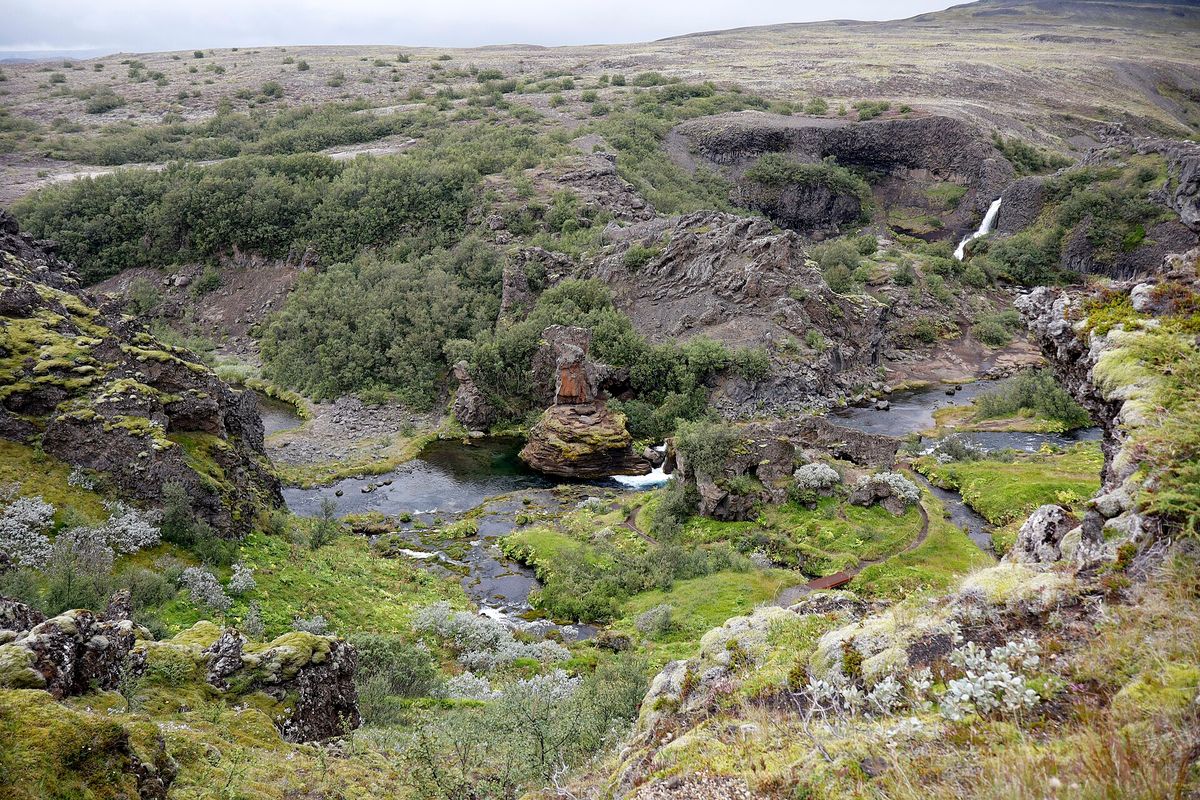
Looking down into Gjáin, with the Rauðá river and its small waterfalls running through the green gorge. Photo: Syrio, CC BY-SA 4.0, via Wikimedia Commons.
The gorge is small. You can walk around it in under an hour, but most people linger longer, because every corner reveals another fall or rock arch.
Gjáin was used as a filming location for the TV series Game of Thrones, which has brought it more visitors in recent years. It is still far quieter than the main Golden Circle stops.
Exploring Gjáin
A path leads down into the gorge from the plateau above and loops past the main sights. Highlights include Gjárfoss itself, a series of smaller cascades on the Rauðá and arches and caves eroded into the lava walls.
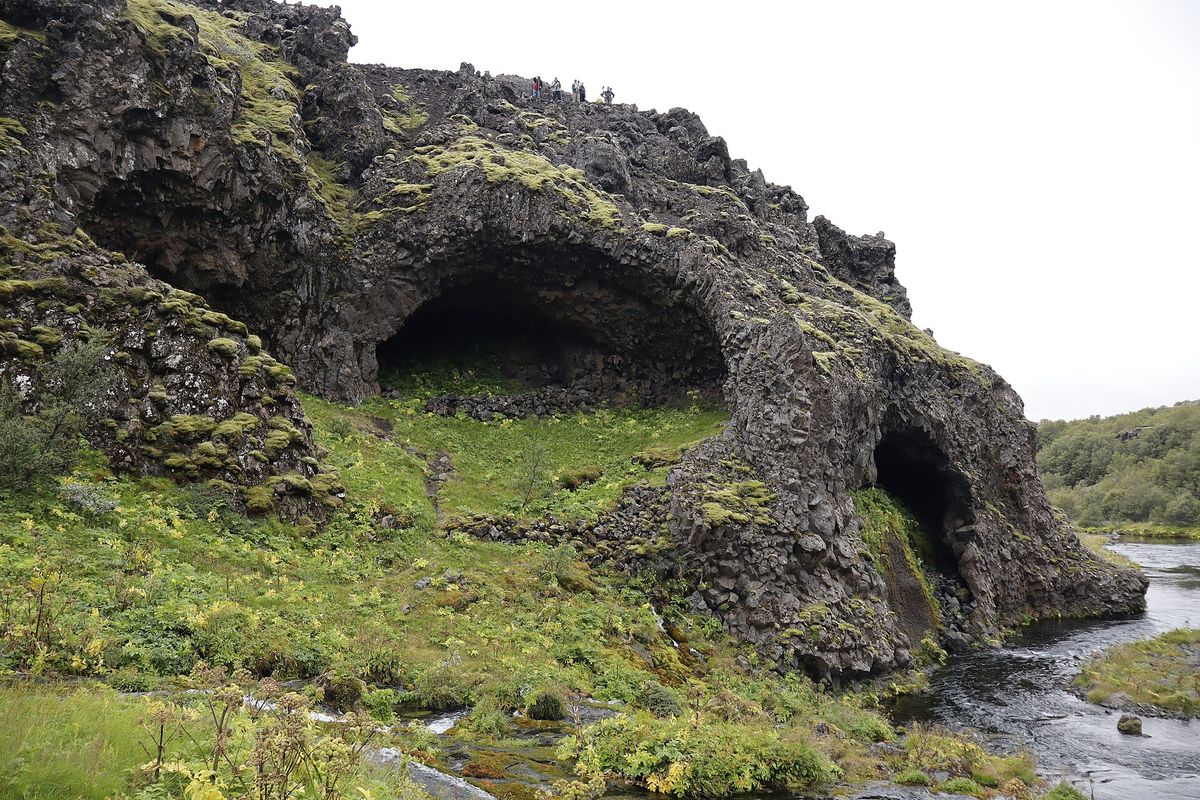
Caves and arches worn into the moss-covered lava walls of Gjáin. Photo: Syrio, CC BY-SA 4.0, via Wikimedia Commons.
The vegetation here is fragile, and the moss takes decades to recover once damaged. Stay on the paths, and do not climb on the lava formations.
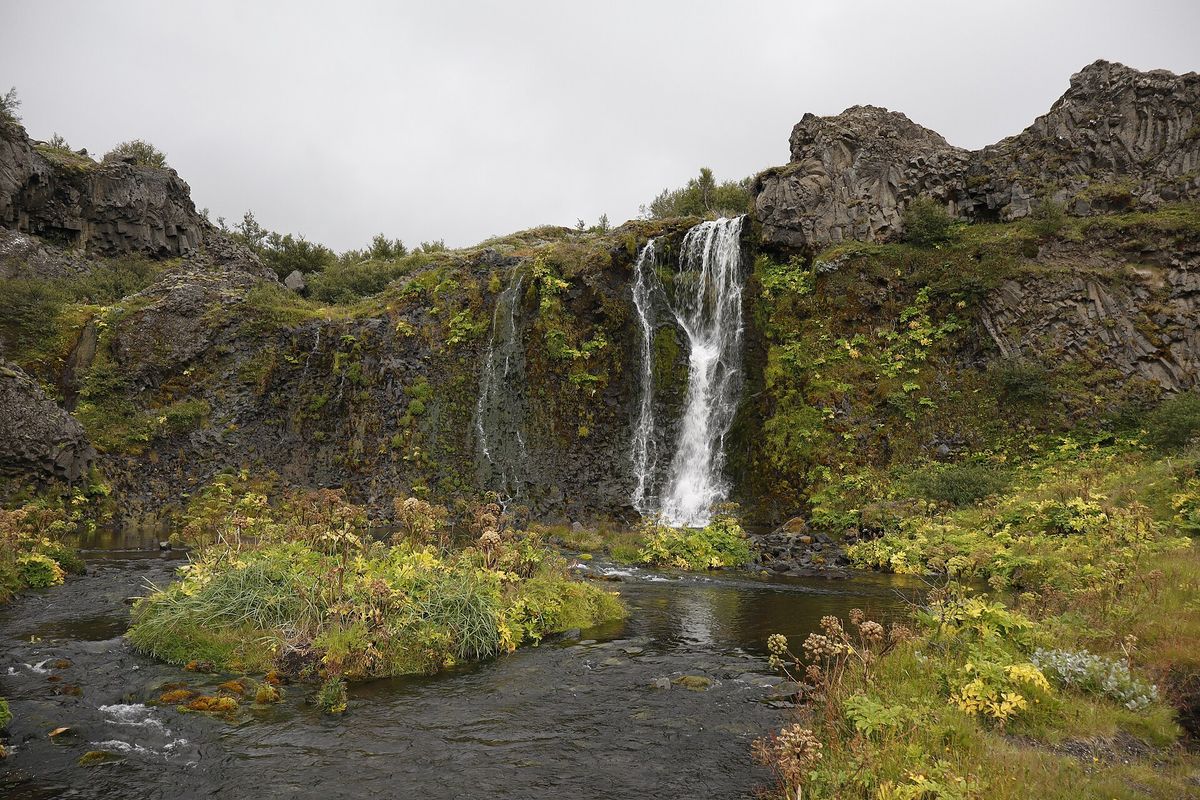
One of the smaller waterfalls in Gjáin, spilling over a mossy ledge into a pool. Photo: Syrio, CC BY-SA 4.0, via Wikimedia Commons.
The Viking Farm at Stöng
A short walk from Gjáin lie the ruins of Stöng, a Viking-age farm. It was buried by ash in Hekla's great eruption of 1104, which devastated the whole valley. The ruins were excavated in 1939, and they are now protected under a shelter.
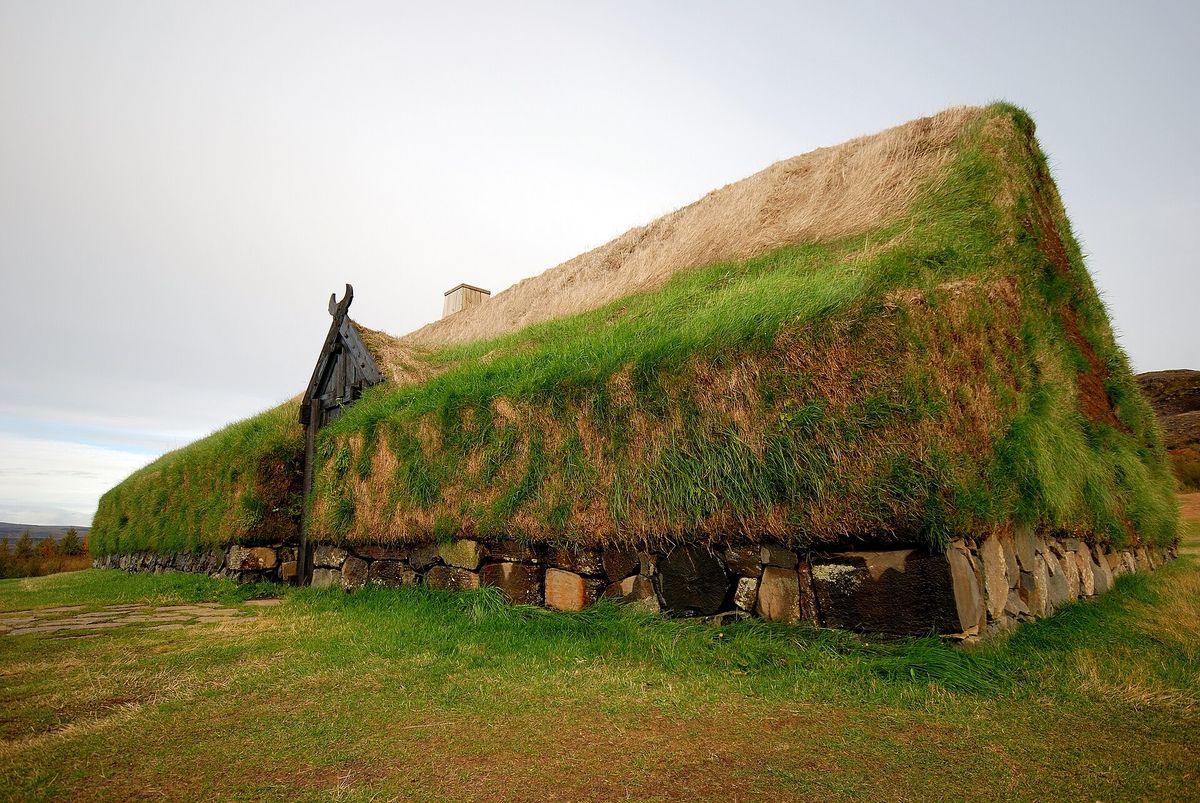
Þjóðveldisbærinn, the full-size reconstruction of a Viking-age farm based on the ruins at Stöng. Photo: Thomas Ormston, CC BY-SA 3.0, via Wikimedia Commons.
To see what the farm may have looked like, visit Þjóðveldisbærinn, the Commonwealth-era farm, further down the valley. It is a full-size reconstruction built in 1974 for the 1,100th anniversary of the settlement of Iceland, based on the Stöng excavation.
Walking between the ruins and Gjáin takes about 15 to 30 minutes each way across open ground. Wikipedia's page on Gjáin puts it at about half an hour on foot.
Hjálparfoss
Hjálparfoss is a twin waterfall where the Fossá river splits in two and drops over a ledge into a round pool. The falls are framed by basalt columns and dark lava. It sits near the lower end of the valley, close to where the Fossá meets the Þjórsá.
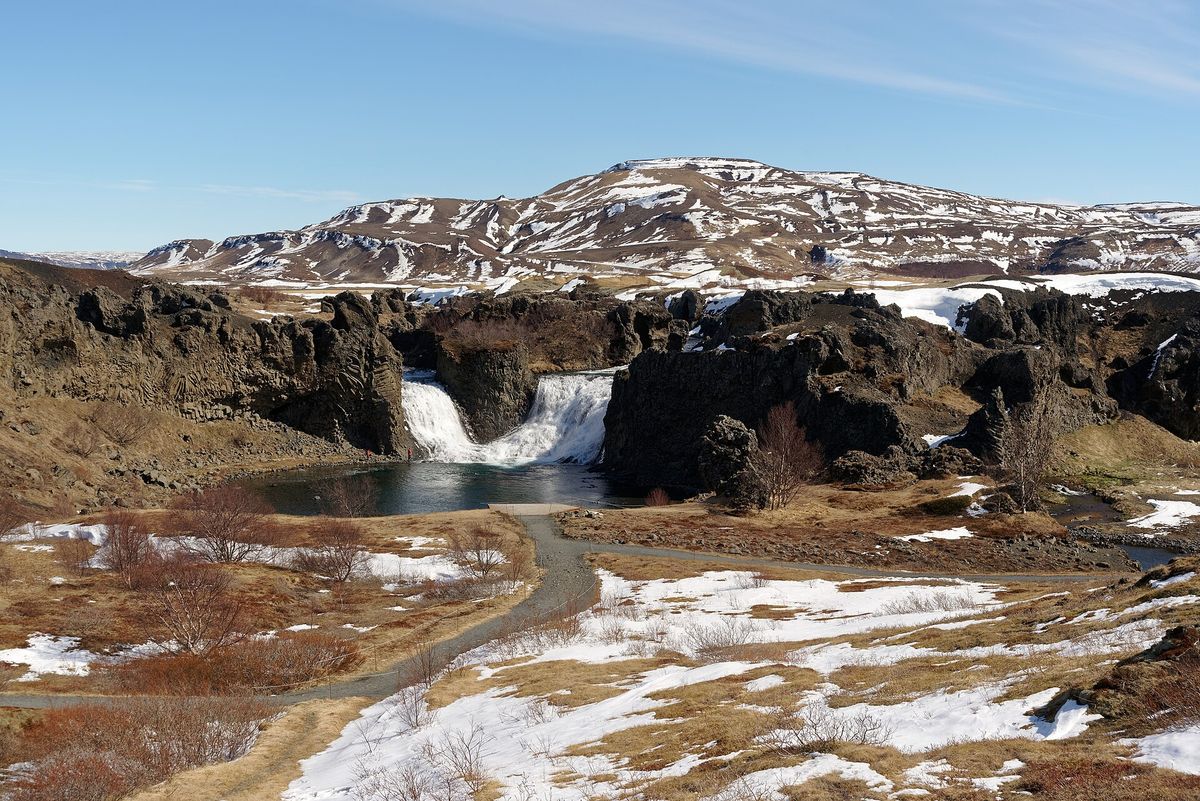
Hjálparfoss in spring, its two streams falling into a pool ringed by lava. Photo: Jakub Hałun, CC BY-SA 4.0, via Wikimedia Commons.
The name means "help waterfall". It is thought to come from the grazing here, which "helped" travellers' horses after the long crossing of the barren land to the north.
A short gravel road leads to a car park right beside the falls, so it is the easiest stop in the valley. It takes only a few minutes from the car.
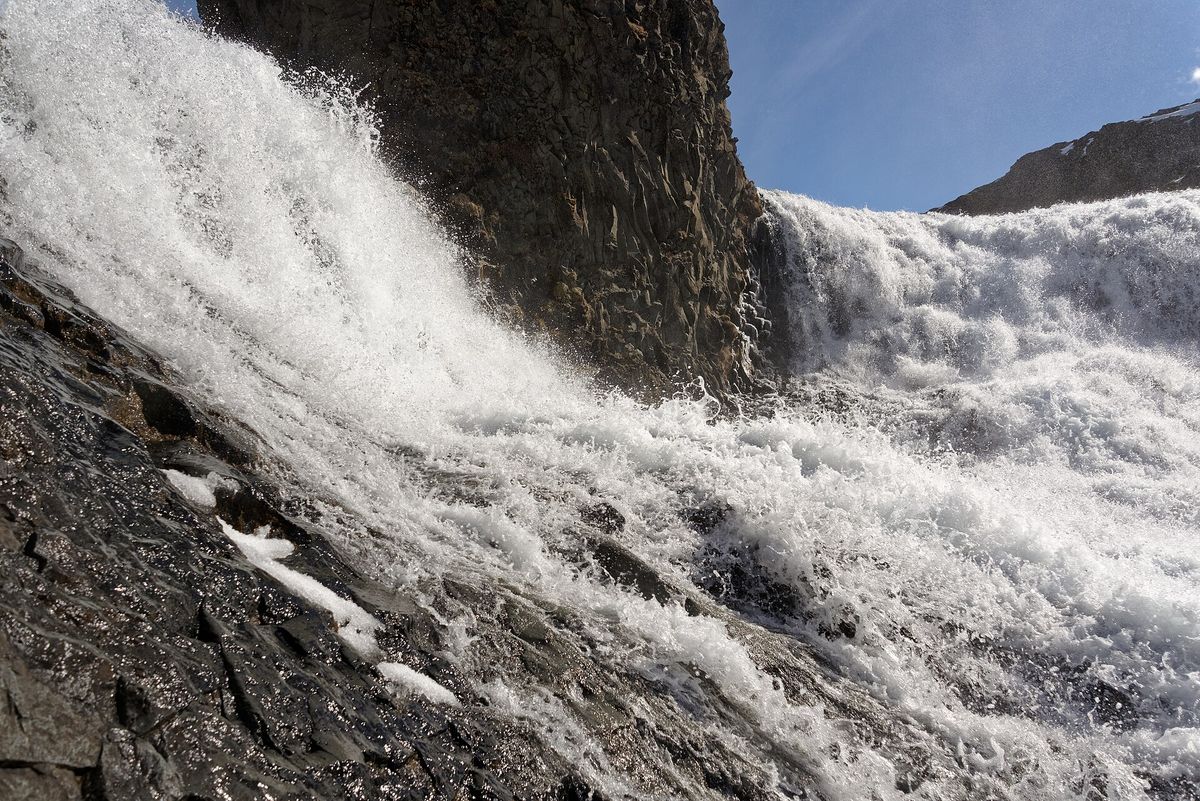
White water pouring over the dark basalt at Hjálparfoss. Photo: Jakub Hałun, CC BY-SA 4.0, via Wikimedia Commons.
How to Get to Gjáin
Þjórsárdalur is reached on Road 32, which runs up the Þjórsá river past the village of Árnes into the valley. From Flúðir, the drive takes about 40 minutes to an hour.
The most common way into Gjáin is from Stöng. A gravel road leads from Road 32 to a car park near the ruins, and from there a path leads to the gorge. Gjáin can also be approached on rough gravel tracks from the Háifoss side.
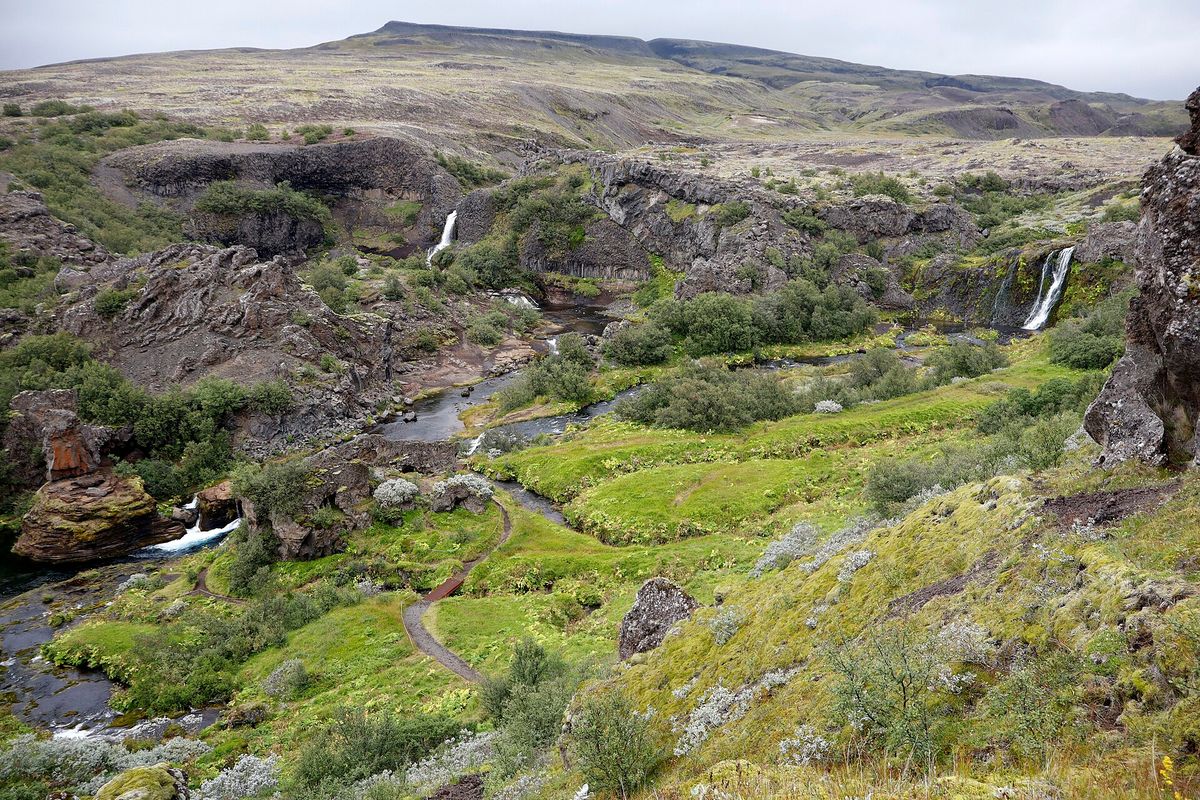
The view across Gjáin towards the plateau, with waterfalls dropping in from the edge of the gorge. Photo: Syrio, CC BY-SA 4.0, via Wikimedia Commons.
Do You Need a 4x4?
Road 32 is paved, but the side roads to Stöng and Gjáin are gravel and can be rough. A 4x4 or high-clearance car is recommended, and the tracks may be closed in winter and early spring. Check the road status on umferdin.is before setting out.
Combining Gjáin With Háifoss and the Golden Circle
Gjáin sits close to Háifoss, one of Iceland's tallest waterfalls, so most visitors see them on the same trip. Together with Hjálparfoss, they make an excellent half-day in Þjórsárdalur.
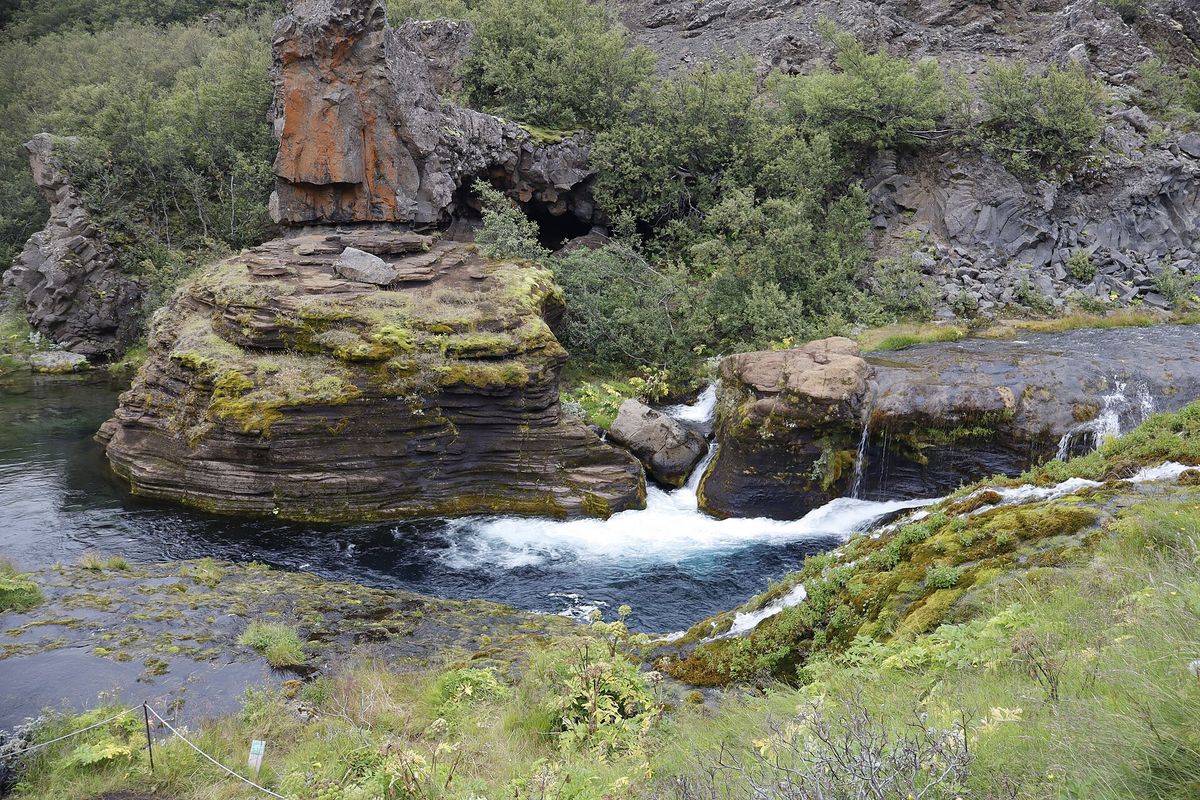
The Rauðá river tumbling over rocks in Gjáin, with lava formations rising above. Photo: Syrio, CC BY-SA 4.0, via Wikimedia Commons.
From the Golden Circle, the natural route is via Flúðir, the nearest village, which has fuel, a supermarket and cafés.
A full day could take in Þingvellir, Geysir and Gullfoss in the morning, then head south into Þjórsárdalur for the afternoon.
End the day with a soak in the Secret Lagoon's warm pool on the drive back.
Waterfalls Compared
Gjáin and Hjálparfoss feel very different from Gullfoss on the Hvítá, where a huge river drops into a canyon beside a busy visitor centre. Here the falls are small and intimate, tucked into green and sheltered nooks.
You may have a whole waterfall to yourself, even in midsummer.
For the bigger falls closer to Reykjavík, our guide to the Golden Circle's waterfalls covers Gullfoss and Brúarfoss as well as Faxi and Öxarárfoss.
Best Time to Visit Gjáin
Gjáin is at its best from June to September, when the moss is bright green and the gravel roads are open. July and August bring the long daylight that makes a combined Gjáin and Háifoss day easy.
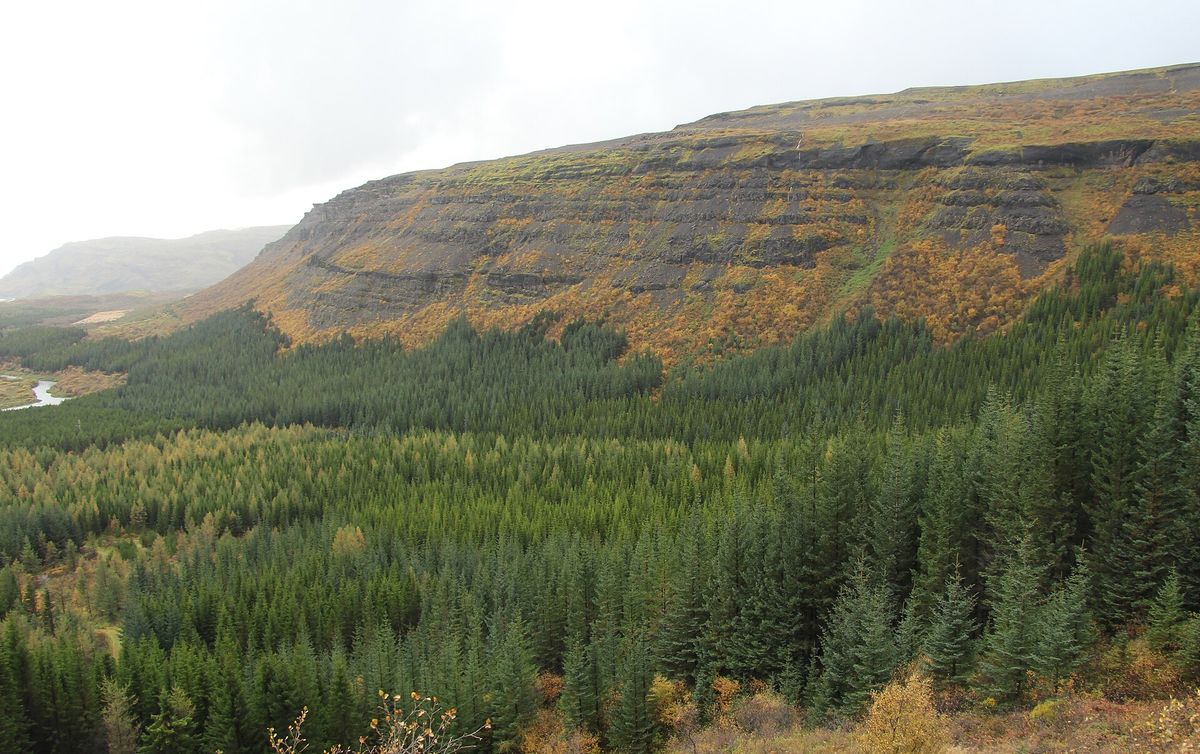
Planted conifer forest on the valley floor in Þjórsárdalur, below terraced hillsides. Photo: Skogarpesi, CC BY-SA 4.0, via Wikimedia Commons.
Outside the summer, the gravel roads can be blocked by snow or deep mud. Hjálparfoss is usually easier to reach than Gjáin out of season. For walks in the valley, leave your plans with SafeTravel's trip planner if you head off the main paths.
Practical Tips for Visiting Gjáin
A little preparation helps in this remote valley:
- *Fuel and food:* fill up in Flúðir or Árnes, as there are few services in Þjórsárdalur.
- *Footwear:* wear boots with grip, as the paths in the gorge can be wet and slippery.
- *Facilities:* toilets are limited, so plan stops in Flúðir or at the bigger visitor sites.
- *Time:* allow an hour for Gjáin, 30 minutes for Stöng and 15 minutes for Hjálparfoss.
For more waterfalls across the country, our round-up of more of Iceland's waterfalls is a good next read.
Seeing Þjórsárdalur With a Guide
If you would rather not take a rental car on gravel roads, a guided day removes the worry. A private guided day covers the Golden Circle with your own driver and vehicle. Ask about adding Gjáin and Hjálparfoss when you book, ideally between June and September.
Compare Golden Circle Tours
Check each selected product for its current operator, guide, itinerary, meeting point, and terms.
View Our Tours
