
Most waterfalls in Iceland you hear before you see. Háifoss works the other way round.
You drive up a rough gravel track across an empty moorland, park beside a sign and walk a few metres to the edge, and the ground simply falls away. Far below, a single white ribbon of water drops into a canyon so deep that the spray barely reaches back up.
Háifoss is one of the tallest waterfalls in Iceland and one of the least crowded of the big names. It sits at the edge of the highlands, about an hour beyond Flúðir, which makes it a natural extension to a Golden Circle day for anyone with a suitable car and a free afternoon.
How Tall Is Háifoss?
Háifoss drops about 122 metres from the Fossá river into a steep-sided canyon, which places it among the tallest waterfalls in Iceland. Its name means "high waterfall", and it lives up to it.
Less than 250 metres away stands Granni, whose name means "neighbour". Granni drops about 101 metres from a side channel of the same river, and the two falls side by side make one of the best views in South Iceland.
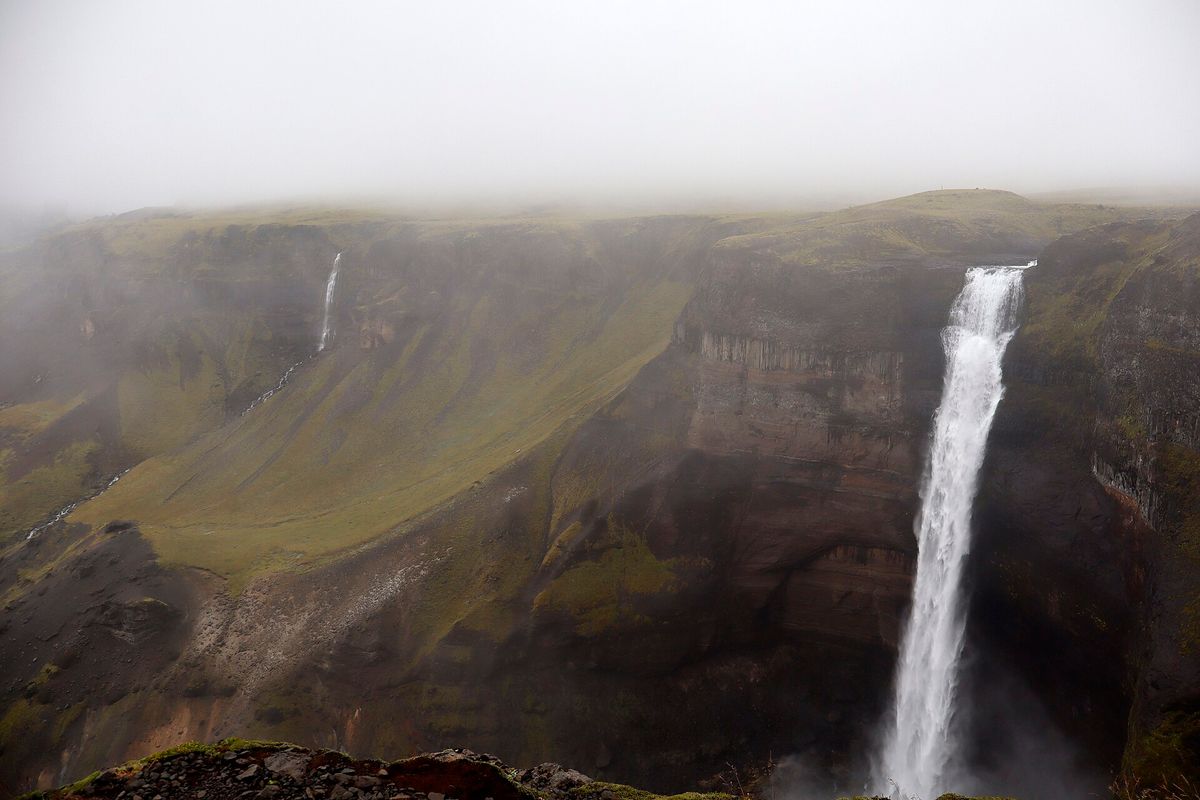
Háifoss from the canyon rim on an overcast day, with Granni faintly visible to the left.
Where Is Háifoss?
Háifoss sits at the head of the Fossá valley, on the edge of the Þjórsárdalur area in South Iceland. It lies roughly 140 kilometres from Reykjavík, about two to two and a half hours by car, and about an hour's drive from Flúðir.
From the Golden Circle, the most natural approach is via Flúðir and Road 32, which runs east along the Þjórsá river into the valley. That puts Háifoss within reach of a long Golden Circle day, especially in summer.
How to Get to Háifoss
The route to Háifoss follows paved Road 32 into Þjórsárdalur. From there, gravel Road 332 climbs for about 7 to 8 kilometres to a car park above the canyon. The turn-off from Road 32 is signposted for Háifoss.
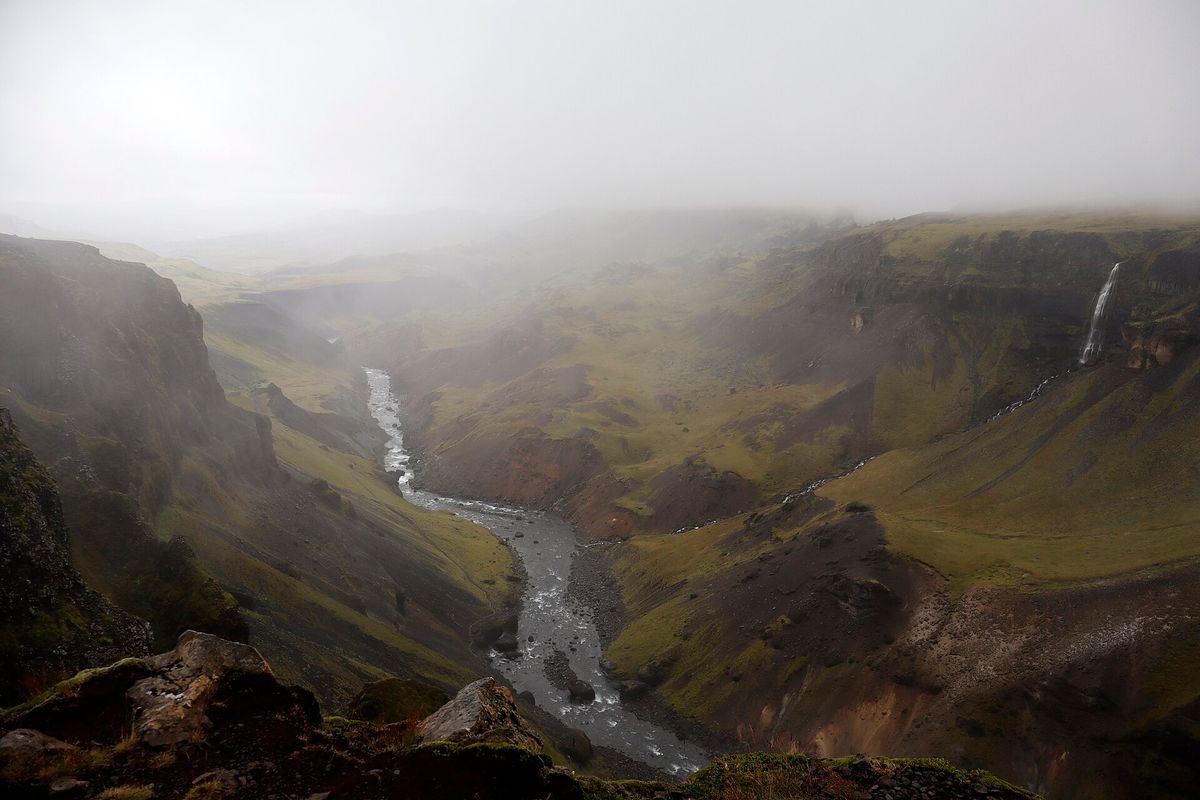
The Fossá river valley below Háifoss, where the river flows on towards Hjálparfoss and the Þjórsá.
Do You Need a 4x4 for Háifoss?
Road 332 is not an F-road, but it is a rough gravel track with potholes, loose stones and occasional ruts after rain. A 4x4 or other high-clearance car is strongly recommended, and many rental companies prefer that you do not take small cars on it.
In good summer conditions, careful drivers do reach the car park in ordinary cars, but it is slow going. If your rental contract excludes gravel damage or the road has been washed out by rain, park lower down and walk, or skip it.
When Is the Road to Háifoss Open?
Road 332 is usually passable from late May or June to the end of September, depending on snow. Outside that window it can be blocked by snow or deep mud, and there is no winter maintenance.
Check the Road Administration's live map before driving up, as conditions on the track can change quickly after storms.
The Háifoss Viewpoints
The main viewpoint is a few minutes' walk from the car park, right on the canyon rim. From here you look straight across at both Háifoss and Granni, with the canyon walls showing layer upon layer of old lava flows.
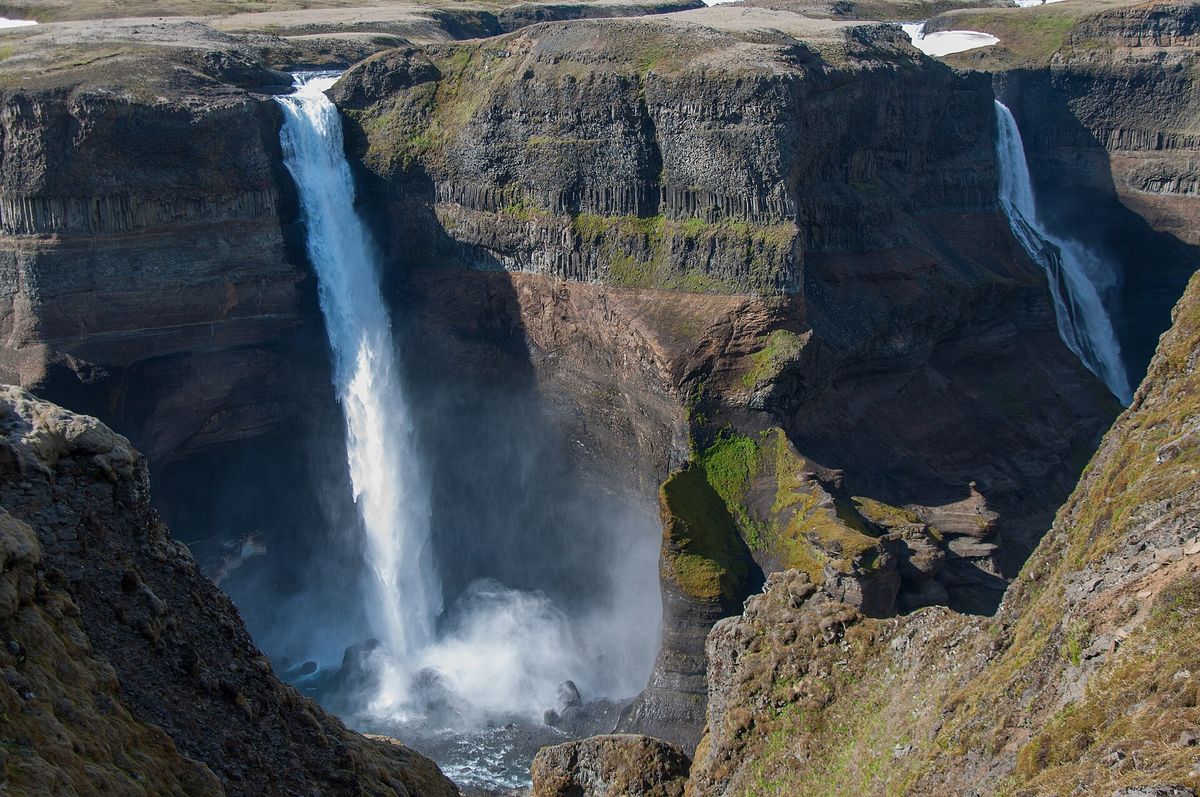
The view from the rim, with both waterfalls and the layered lava walls of the canyon in sight.
There are no barriers on most of the rim, and the edge is undercut in places. Stay well back, especially in wind, and keep a close hand on children.
Basalt Columns at Háifoss
Walk a little way along the rim and you will see layers of basalt columns in the canyon walls, formed when thick lava flows cooled slowly and cracked into regular shapes. They are a reminder that the whole valley was built by repeated eruptions from the volcanoes nearby, including Hekla.
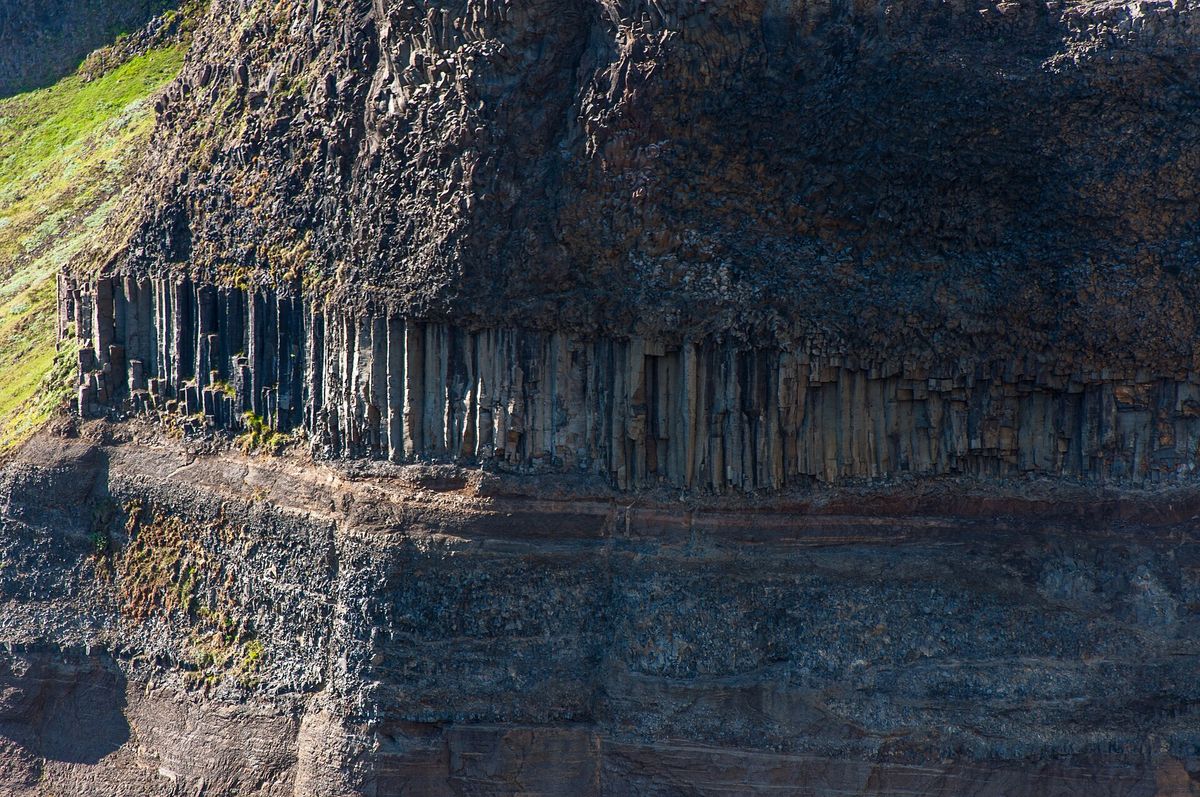
Basalt columns exposed in the canyon wall near Háifoss, part of a thick old lava flow.
Can You Hike to the Bottom of Háifoss?
Yes. A path leads along the rim and then down into the canyon, finishing near the base of Háifoss. Most guides give around one and a half hours for the return trip, though the steep descent and climb back up can take longer.
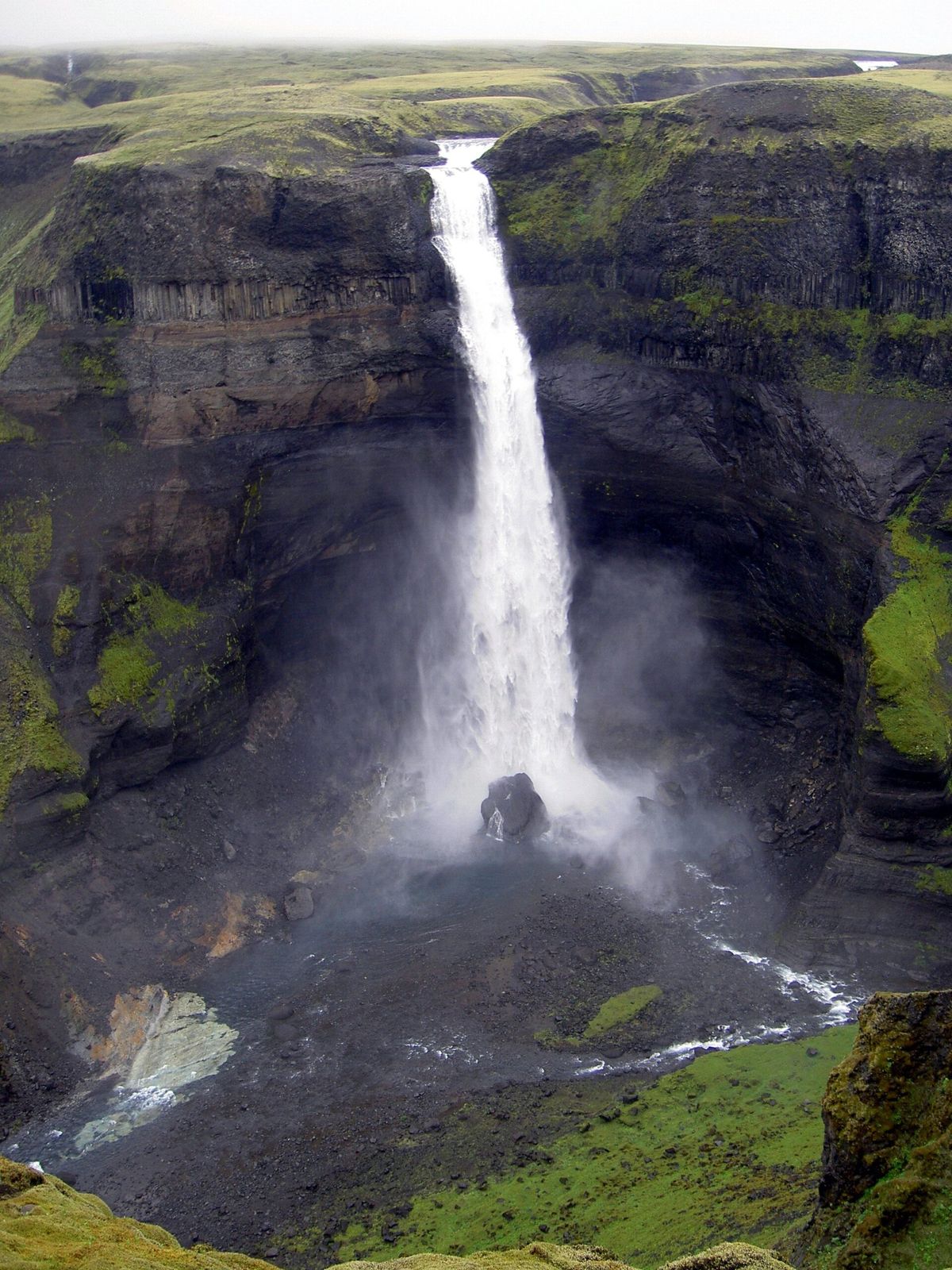
Háifoss from lower down the canyon, where the spray drifts across the rocks at its base.
The route is unmarked in places and crosses loose scree, so it suits experienced hikers in good weather only. Wear boots with grip, carry water and turn back if the path is wet or icy.
For a longer and better-marked walk, a trail also follows the Fossá river down the valley from Háifoss towards Hjálparfoss. Leave your plans with SafeTravel's trip registration if you head off for a full day.
The Best Time to Visit Háifoss
July and August are the easiest months, with the road reliably open, long daylight and the canyon at its greenest. June is quieter and still bright, though snow can linger near the rim early in the month.
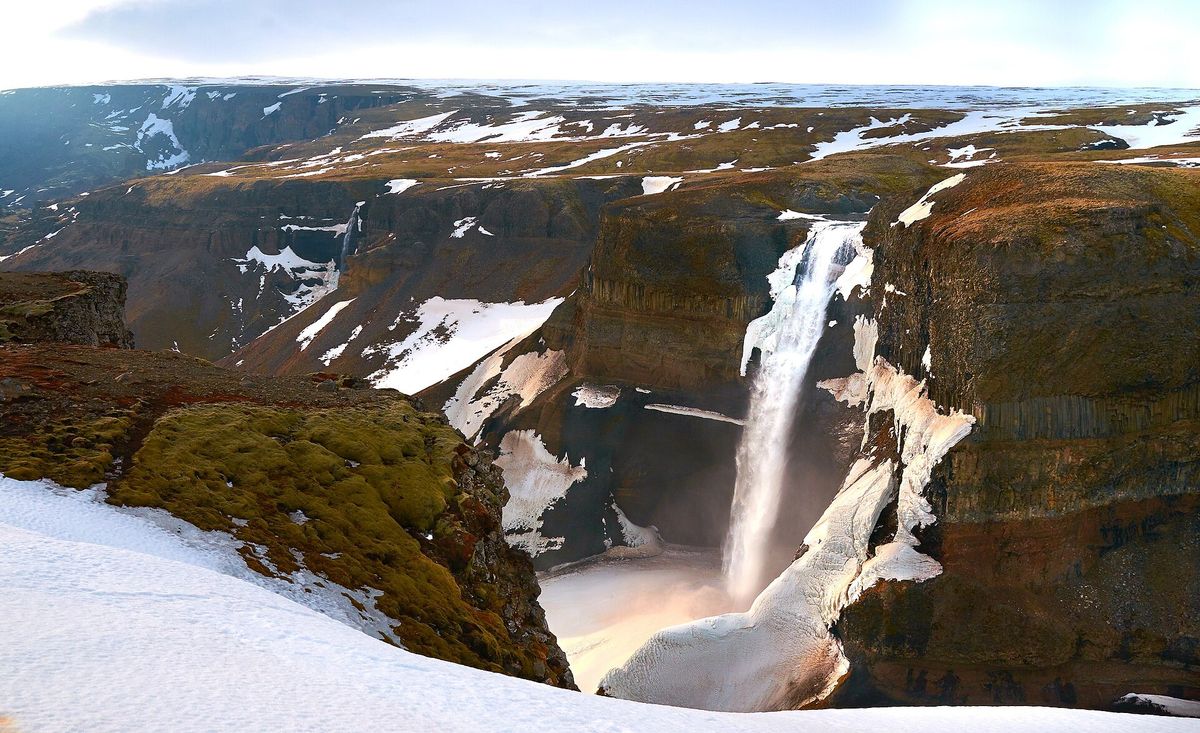
Háifoss with snow and ice in the canyon, seen from the rim outside the main summer season.
In winter the falls look spectacular under snow, but the road is usually impassable without a specialist vehicle and the rim is icy. Unless you are on a guided super jeep trip, save Háifoss for the summer.
Check the Icelandic Met Office forecast before you go. Low cloud often sits over the highland edge, and on a foggy day you may see only the top of the falls.
Combining Háifoss With the Golden Circle
A day that combines the Golden Circle with Háifoss is long but rewarding. Start early at Þingvellir, continue to Geysir and Gullfoss, then head south to Flúðir and on into Þjórsárdalur for the afternoon.
On the way back, the village of Flúðir has a supermarket and fuel for the drive home.
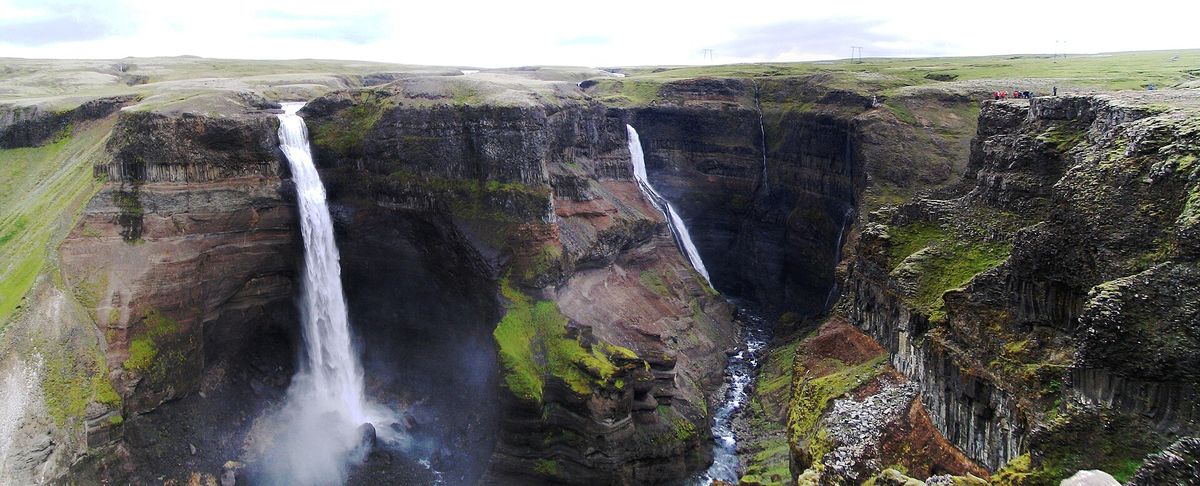
A wider view of the canyon, with both falls and the highland moorland above them.
If you still have energy, end the day with a soak at the Secret Lagoon before heading back to Reykjavík.
Other Stops in Þjórsárdalur
Háifoss is the star of the valley, but not its only sight. Hjálparfoss is a wide two-channel waterfall framed by basalt columns, and Gjáin is a small green gorge full of waterfalls and springs. Both are a short drive away.
The excavated Viking-age farm at Stöng, and its full-size reconstruction at Þjóðveldisbærinn, are nearby too.
On a clear day you will also see Hekla, one of Iceland's most active volcanoes, rising across the valley to the east.
Háifoss Compared With the Golden Circle Waterfalls
Háifoss is a very different experience from the falls on the main loop. At the drop at Gullfoss, a wide river crashes over two steps right beside a large car park and café. At Háifoss, a narrow column of water falls more than three times as far into an empty canyon, and you may share the view with only a handful of people.
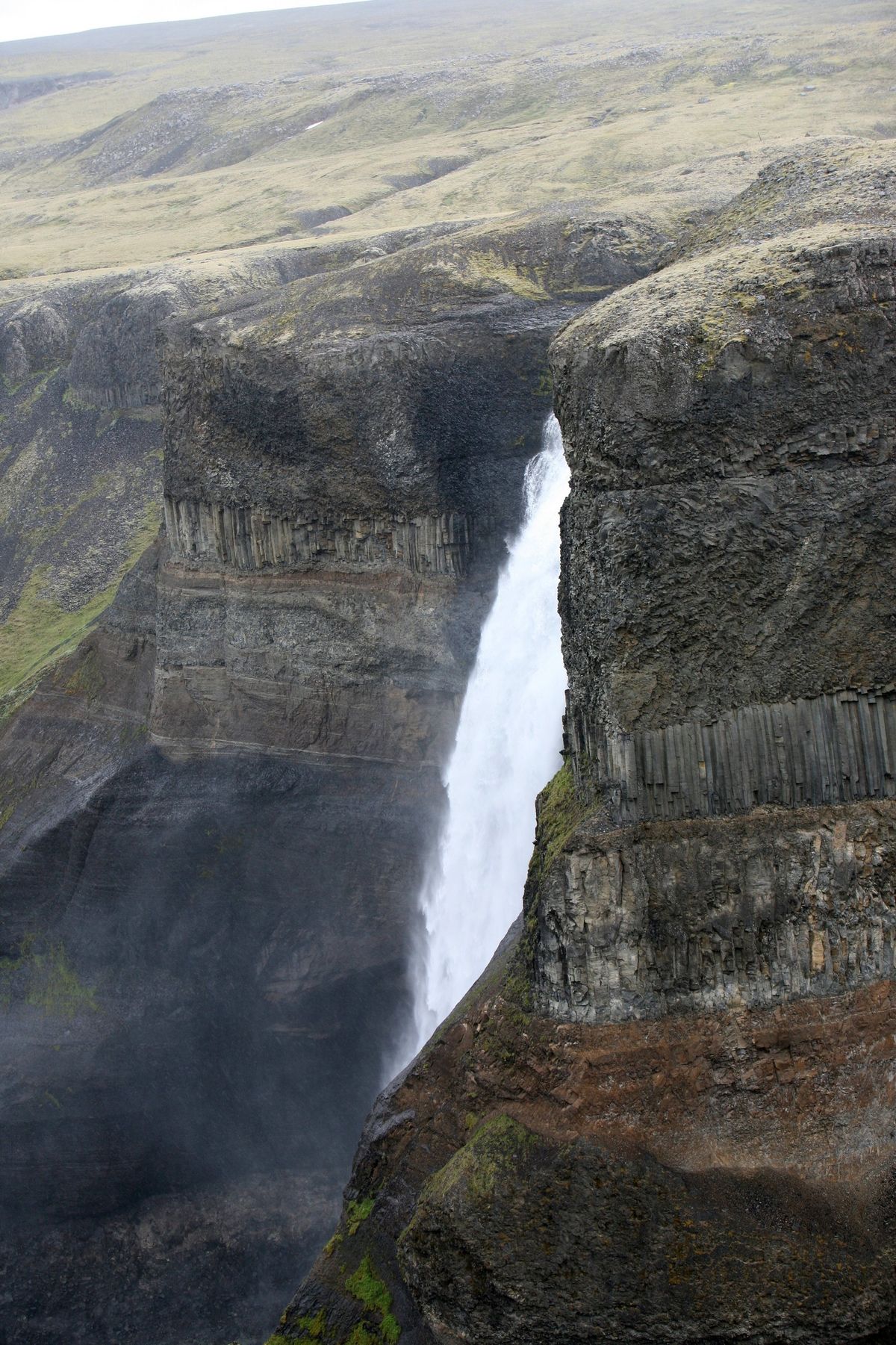
Háifoss from the side, showing how narrow the falls are compared with the depth of the canyon.
For an overview of the falls closer to Reykjavík, our guide to the waterfalls on the Golden Circle covers Gullfoss, Brúarfoss, Faxi and Öxarárfoss.
Practical Tips for Visiting Háifoss
A few details make the trip smoother:
- *Fuel and food:* fill up and buy supplies in Flúðir or Selfoss, as there are no services on Road 332.
- *Facilities:* the car park has no café, and toilet facilities are limited or absent.
- *Drones:* fly only where permitted and keep well clear of other visitors at the rim.
- *Weather:* bring a windproof layer, because the rim is exposed and colder than the valley.
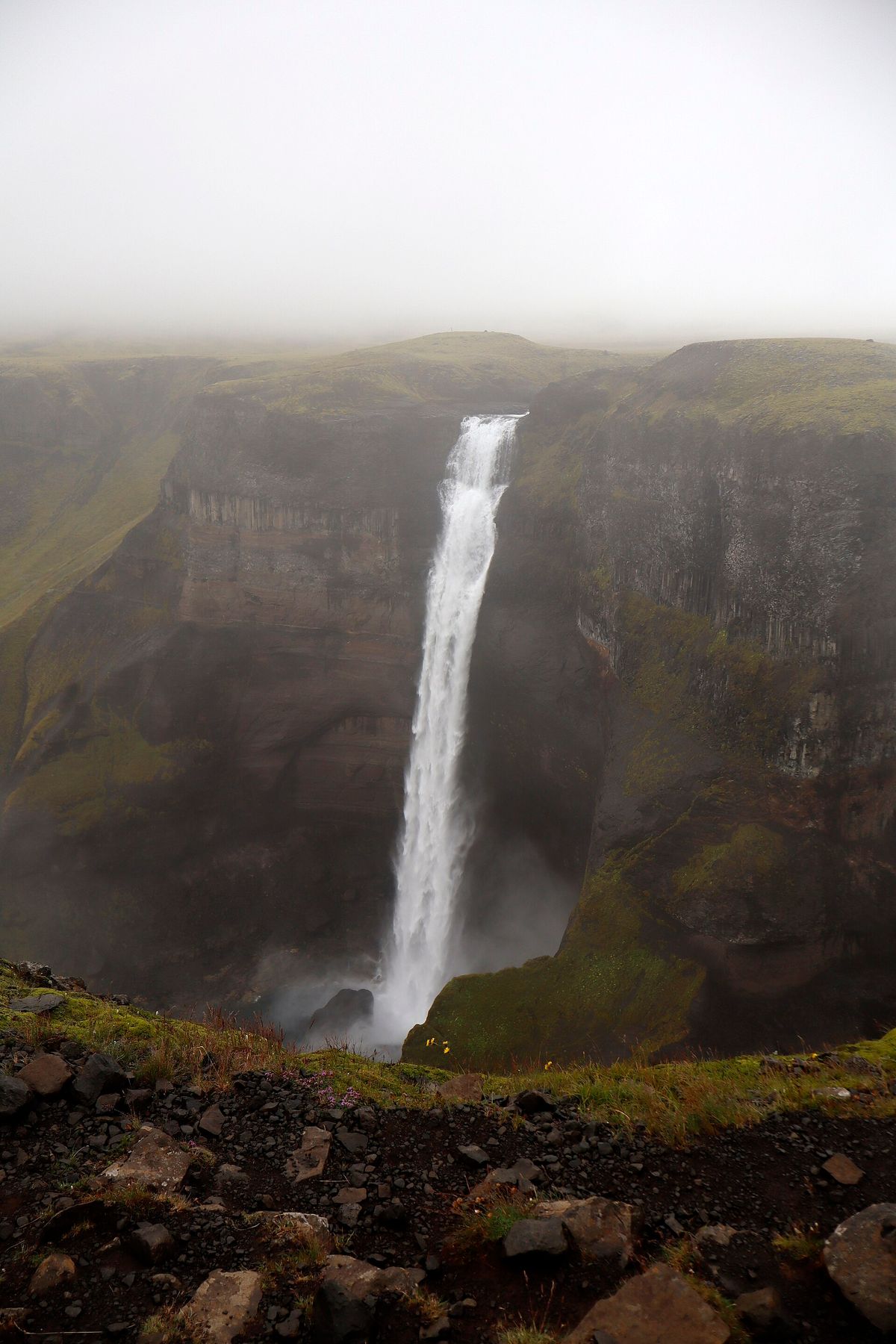
Háifoss in mist, framed by the canyon walls in a portrait view from the rim.
Seeing Háifoss With a Private Guide
If you would rather not take a rental car up Road 332, a private tour lets you add Háifoss without the worry. Our private tour with extra stops covers Þingvellir, Geysir and Gullfoss with your own guide and vehicle, and additional stops are available on request. Ask about adding Háifoss and the Þjórsárdalur valley when you book, ideally between June and September.
Compare Golden Circle Tours
Check each selected product for its current operator, guide, itinerary, meeting point, and terms.
View Our Tours

