
North of Gullfoss, the Golden Circle ends and the road keeps going. Within half an hour the farms disappear, the tarmac turns to gravel and the land opens into a vast grey plateau between two glaciers.
After a couple of hours of almost nothing, a cloud of steam appears on the horizon. Below it sit a cluster of turquoise springs, a few wooden huts and a hot pool full of people.
That is Hveravellir, one of the most remarkable stops in Iceland's interior. It is a long way from Reykjavík and only reachable in summer, but for anyone driving the Kjölur route across the highlands, it is the reason to make the trip.
What Is Hveravellir?
Hveravellir is a geothermal area and nature reserve in the central highlands of Iceland, about 90 kilometres north of Gullfoss on the Kjölur road. It sits at around 650 metres above sea level between the Langjökull and Hofsjökull glaciers, and it is known for its colourful hot springs, steaming fumaroles and a natural bathing pool.
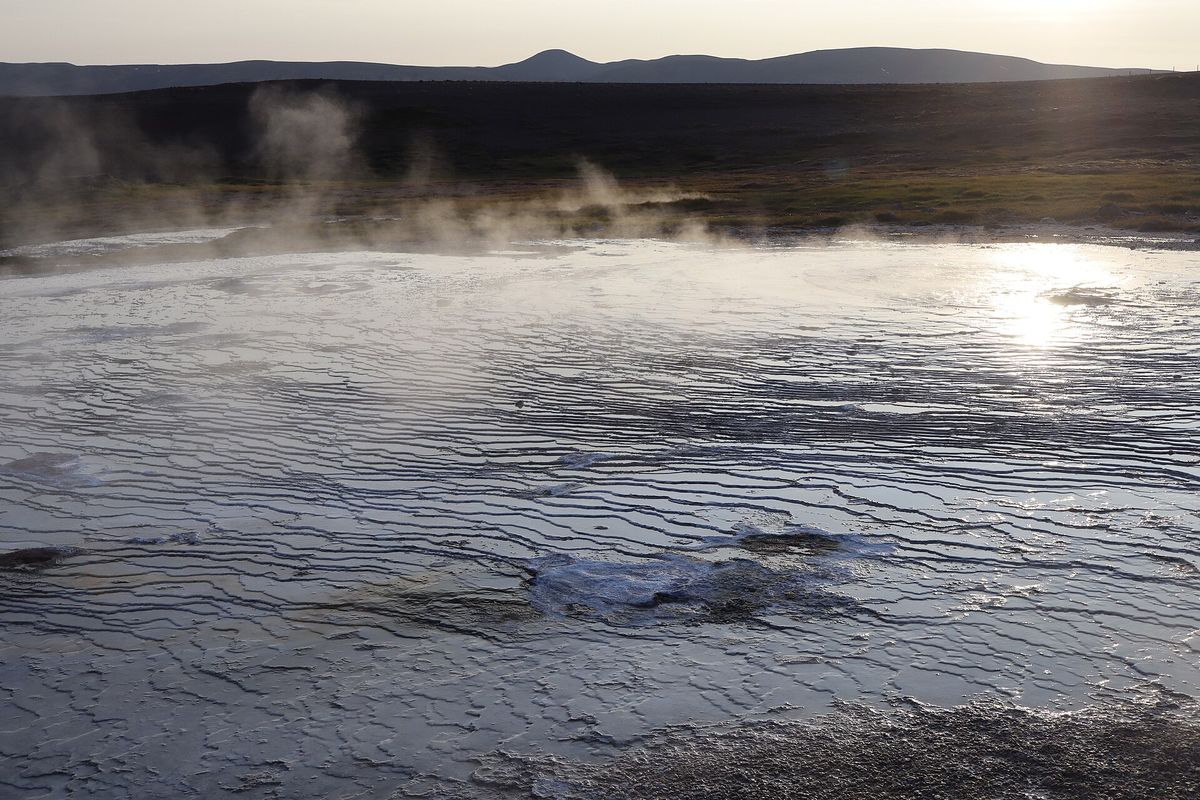
Heimilishver, one of the hot springs at Hveravellir, steaming in the low evening light.
The name means "hot spring plains", and it is apt. Boardwalks lead between dozens of pools and vents. Some are clear and blue, while others are stained red, white and green by minerals and heat-loving algae.
Where Is Hveravellir?
Hveravellir sits roughly in the middle of Iceland on the Kjölur route, the highland road that links the south with the north. It is about 90 kilometres north of Gullfoss and roughly 200 kilometres from Reykjavík, which takes most drivers three and a half to four hours each way.
From the north, the road climbs up from the Blöndudalur valley near Blönduós. That makes Hveravellir a natural halfway stop for anyone crossing the country through the highlands instead of along the Ring Road.
How to Get to Hveravellir via the Kjölur Road
The Kjölur road (Route 35, often signed F35) starts at Gullfoss, at the start of Kjölur, and runs north across the plateau. The first stretch north of Gullfoss is paved. Most of the route is gravel, though, and it is rough, dusty and potholed.
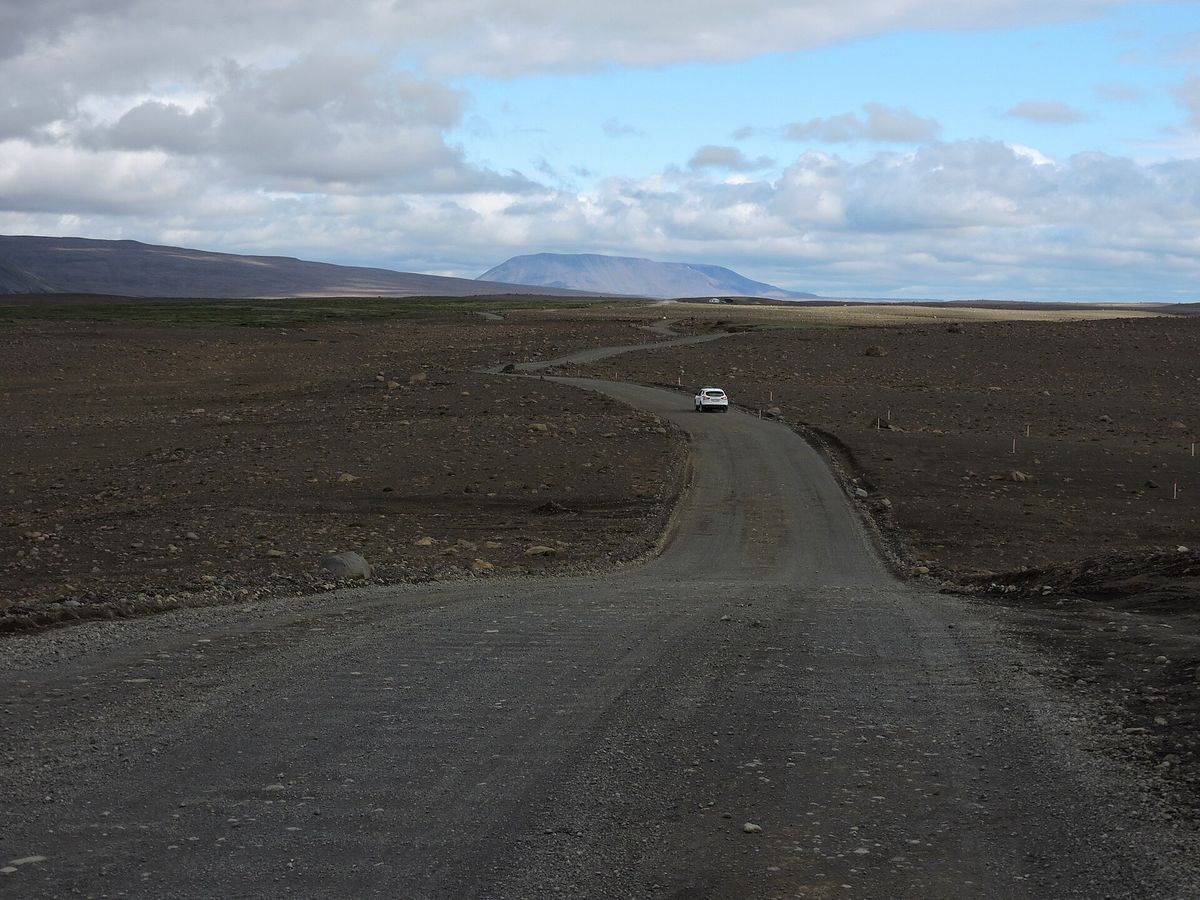
The Kjalvegur gravel road crossing the Kjölur plateau, the route from Gullfoss to Hveravellir.
Most rental companies require a 4x4 for Kjölur, and many highland roads are off limits to ordinary cars in rental contracts. Even with a 4x4, the drive is slow, so plan on an average speed of 40 to 50 km/h.
When Is the Kjölur Road Open?
The Kjölur road usually opens in mid to late June and closes in September, depending on snow and the state of the surface. Opening dates change every year, so check the Road Administration's highland road status before you plan your trip.
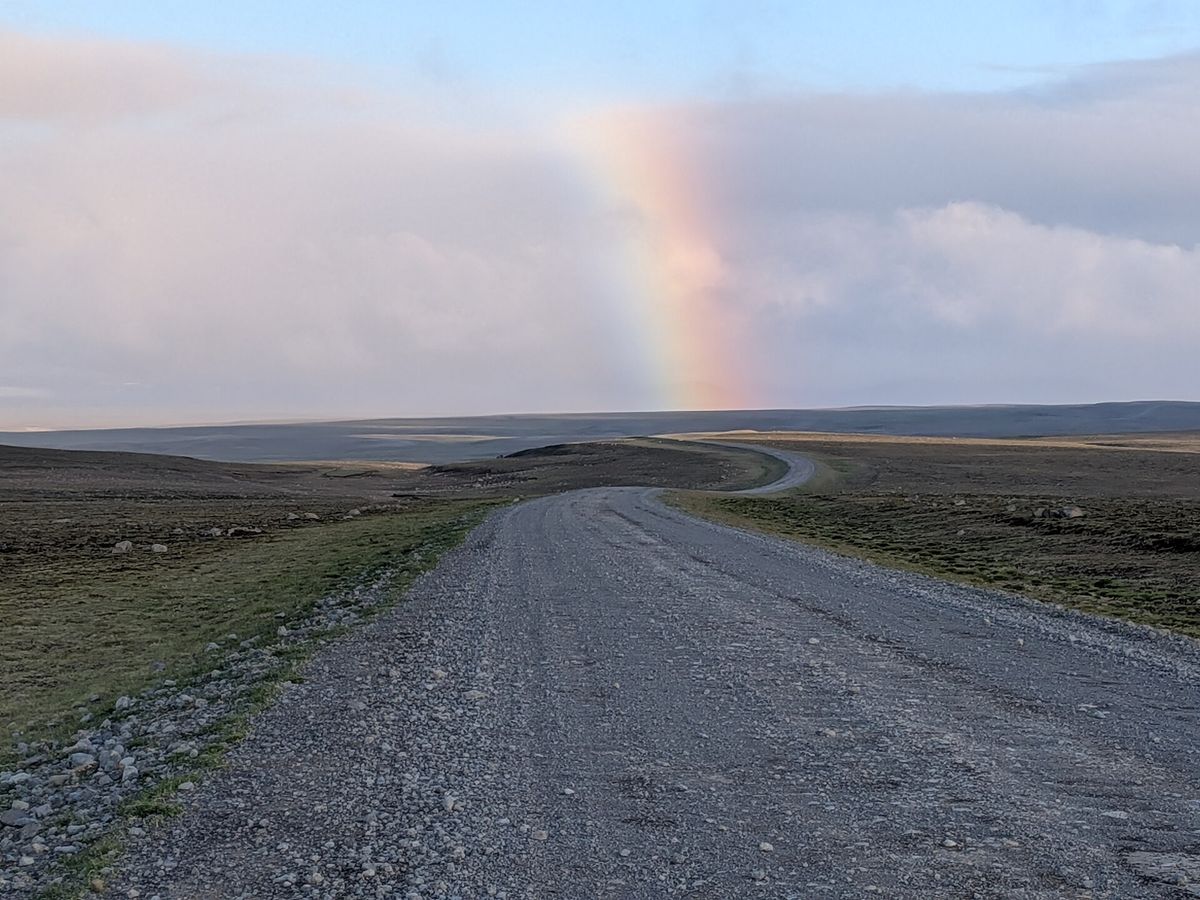
A gravel road across the Kjölur plateau under a rainbow, a typical view on the drive north.
There is no fuel along the way and little or no mobile coverage in places. Fill up at Geysir or Flúðir before you leave the Golden Circle, and carry water, snacks and warm layers. Check the Met Office highland forecast too, because snow can fall on Kjölur even in midsummer.
The Hot Springs of Hveravellir
The geothermal area covers a broad, gently sloping field crossed by wooden boardwalks. Walking the main loop takes 30 to 45 minutes, and you see hot springs in every colour along the way.
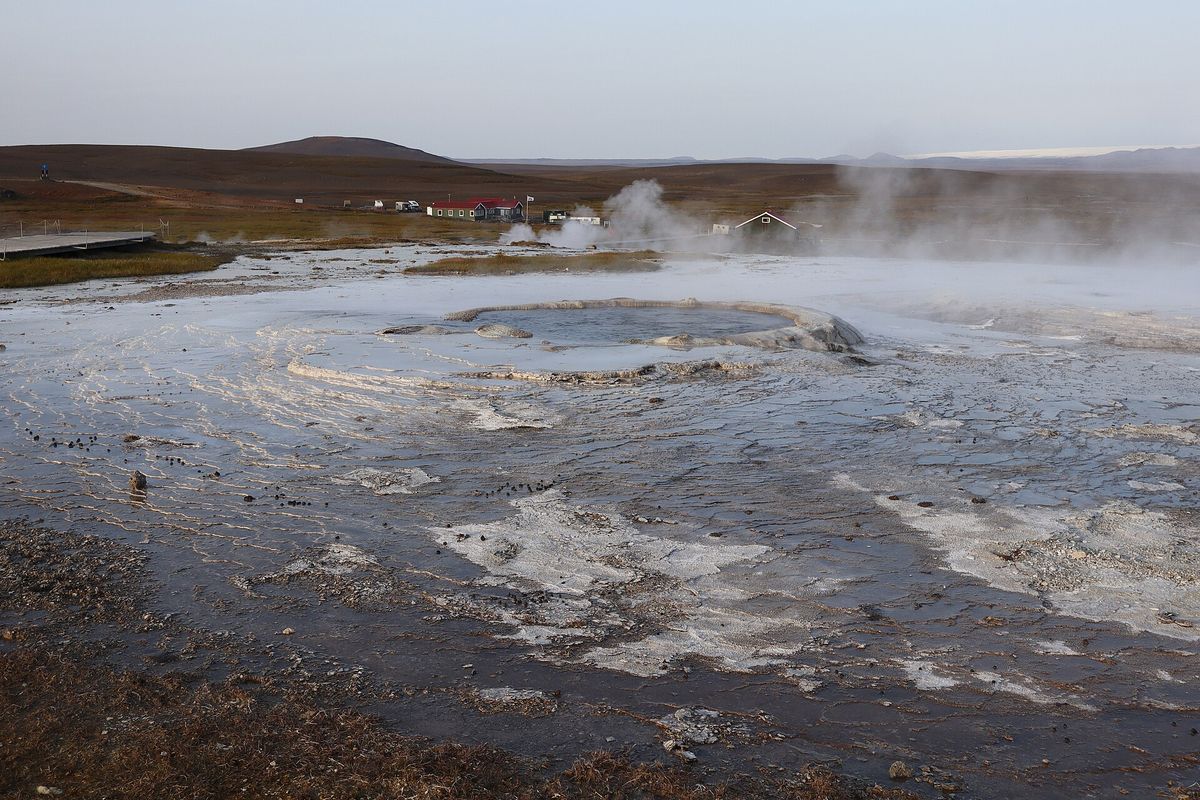
Grænihver, one of the larger hot springs at Hveravellir, with white sinter deposits around its rim.
Some of the springs are boiling, and the ground around them is thin and fragile. Stay on the boardwalks at all times, both for your own safety and to protect the delicate mineral crusts, which can take decades to form.
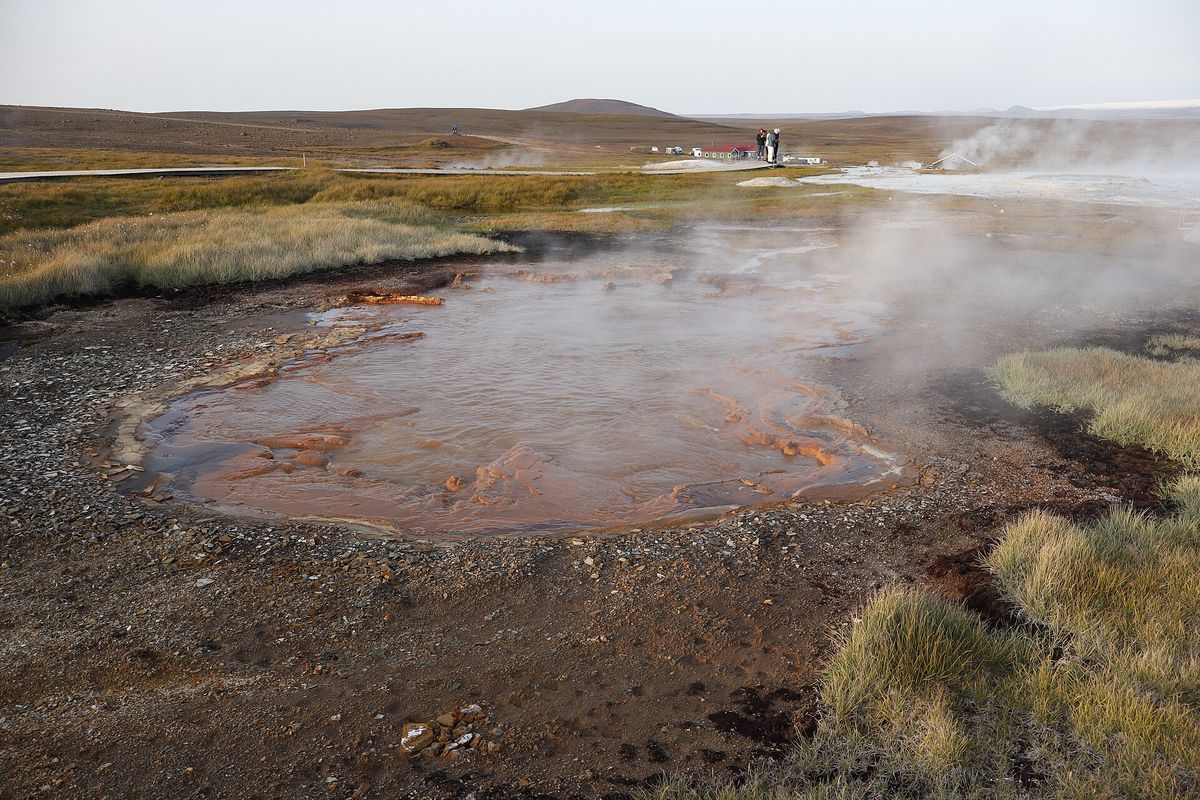
Rauðiver, a hot spring stained red and orange by iron-rich minerals.
One of the most striking features is a steaming mound of sinter, mineral deposits left by hot water, which hisses and steams constantly. On a cold day, the whole area disappears into clouds of vapour.
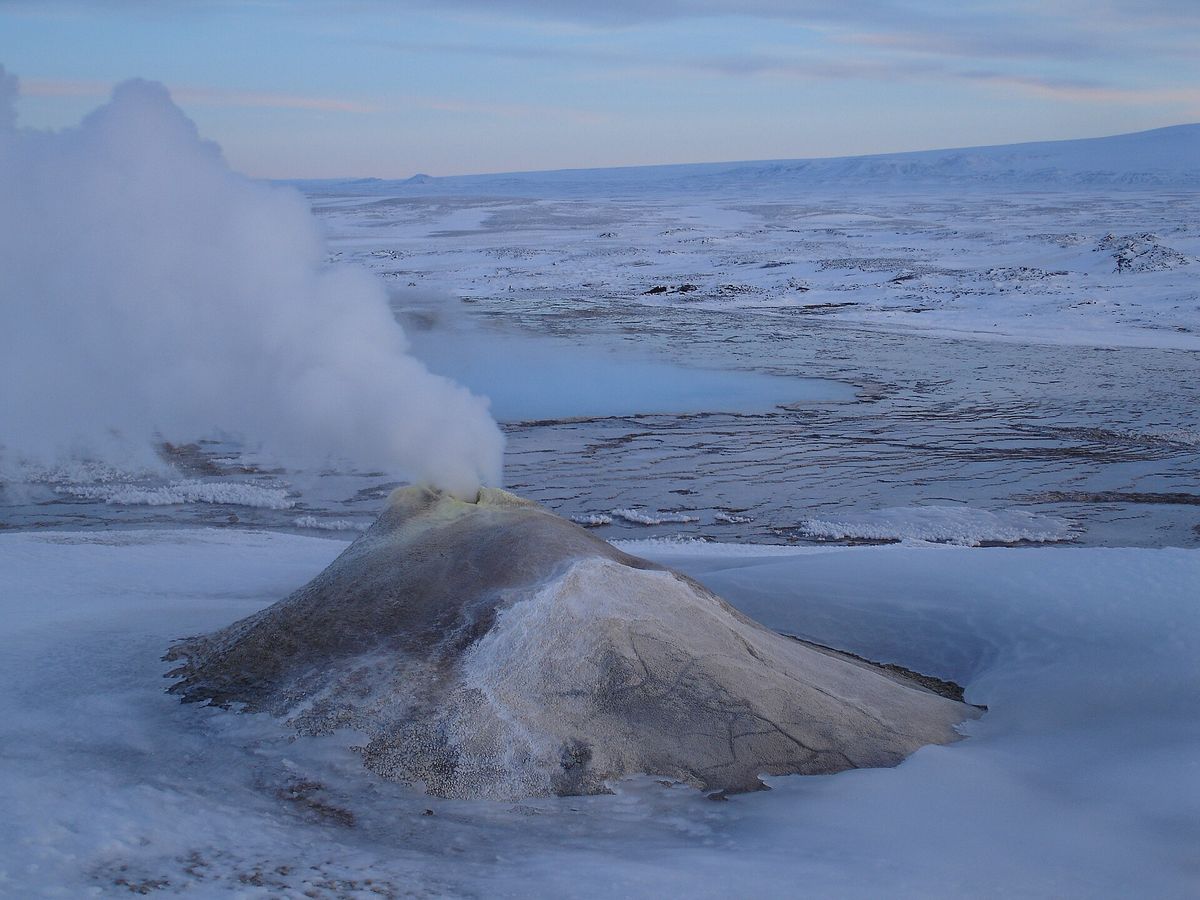
A steaming sinter mound at Hveravellir, built up by minerals from the hot water over many years.
Bathing in the Hveravellir Hot Pool
Next to the huts is a small outdoor pool fed by water from the hot springs and cooled by a cold stream. It is usually around 38 to 40°C, comfortable for a long soak, and it holds about 20 people.
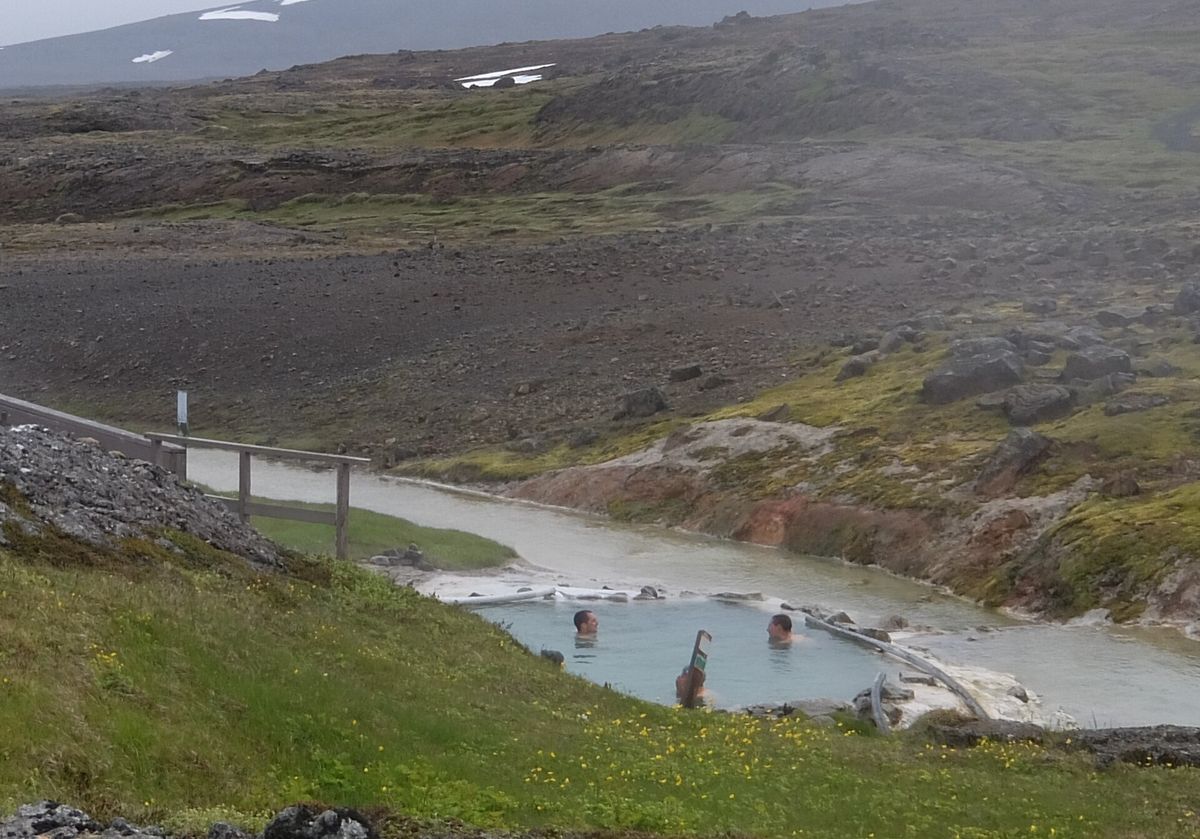
Bathers in the natural hot pool at Hveravellir, fed by water from the nearby springs.
Expect to pay a small fee for the pool and changing facilities, collected at the huts during the summer season. Bathing after hours of driving on gravel is one of the great pleasures of a Kjölur crossing.
The Outlaw of Hveravellir
Hveravellir is linked with Fjalla-Eyvindur, Iceland's most famous outlaw, who lived in the highlands with his wife Halla in the 18th century. They are said to have hidden here for a time, cooking their food in the hot springs and living in a shelter built of stones.
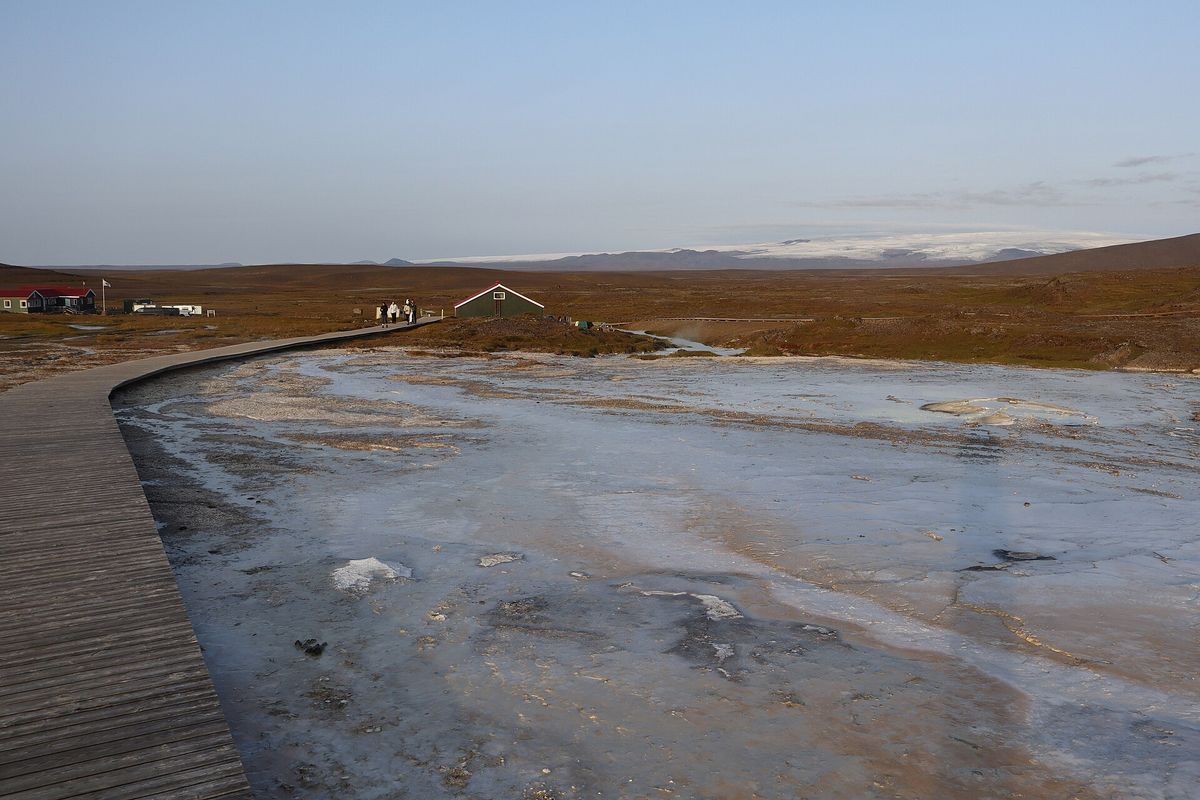
The boardwalk across the hot spring field, with the huts and buildings of Hveravellir beyond. The remains of a stone shelter attributed to them can still be seen near the hot springs, and one of the springs is named after Eyvindur. The story has inspired plays and films, and it is one of the reasons Hveravellir feels like more than just a geothermal field.
Staying Overnight at Hveravellir
The Hveravellir Highland Centre runs mountain huts, a guesthouse and a campsite, with a small café during the summer season. Beds sell out in July and August, so book ahead if you plan to stay.
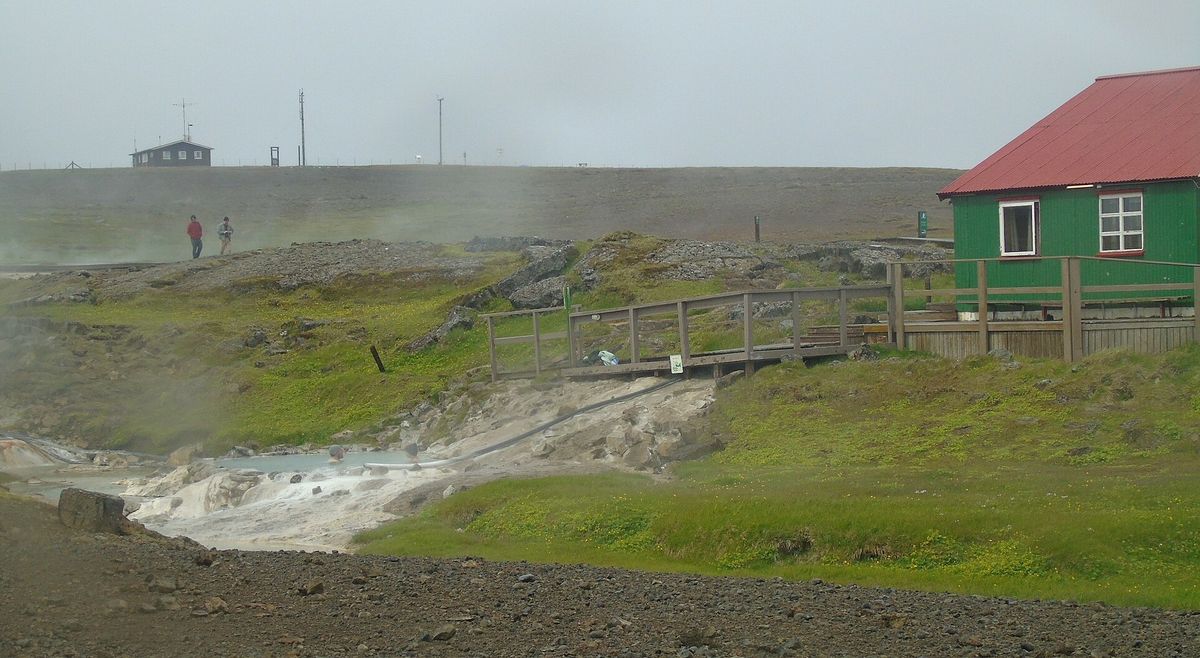
A hut beside the hot pool and boardwalk at Hveravellir on a misty highland day. Staying the night lets you soak in the pool under the long summer twilight, when the day-trippers have gone. It also breaks the long drive across Kjölur into two easier days. If you would rather sleep on the Golden Circle side, our list of hotels near Gullfoss gives you an early start up the road.
Kerlingarfjöll and Other Stops on Kjölur
The Kjölur route has more than Hveravellir. On the way between Gullfoss and Hveravellir, a side road leads east to Kerlingarfjöll, a range of colourful rhyolite mountains with steaming geothermal valleys and some of the best day hikes in the highlands.
To the west, the edge of Langjökull is visible for much of the drive. Our Langjökull glacier page explains how to reach the ice from the Golden Circle side.
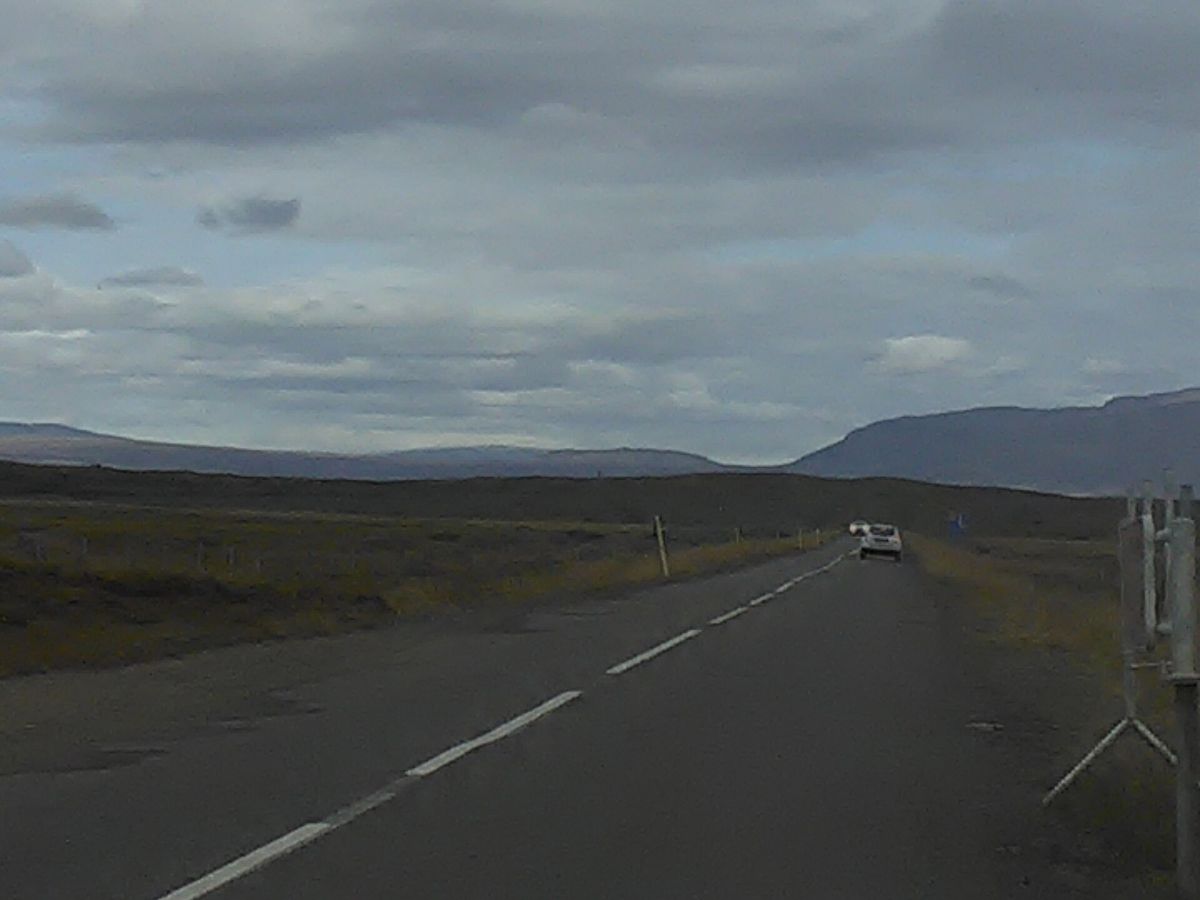
The road across the Kjölur plateau, with the edge of Langjökull glacier on the horizon.
Is Hveravellir Worth the Drive?
If you are crossing the highlands on Kjölur, stop at Hveravellir without question, because the hot pool alone justifies it. As a day trip from Reykjavík, though, it is a long one: seven to eight hours of driving on rough roads for a couple of hours on site.
For most Golden Circle visitors, the best way to sample the highland edge is a glacier trip from Gullfoss. Our guide to snowmobiling on Langjökull explains how glacier trips from Gullfoss head up towards the ice.
Safety Tips for Visiting Hveravellir
The highlands are remote, and help can be hours away. A few precautions go a long way:
- *Register your plan* with SafeTravel's travel plan page before heading into the highlands.
- *Check the weather* the day before, because snow and storms can arrive even in August.
- *Stay on the boardwalks* around the hot springs, which can reach boiling point.
- *Drive slowly* on gravel and do not drive off marked roads, which is illegal in Iceland.
Seeing the Highland Edge From the Golden Circle
If driving Kjölur yourself is not practical, you can still get a taste of the highlands on a Golden Circle day. Our Langjökull snowmobile tours start near Gullfoss and head up onto the glacier, with views across the same highland plateau that leads to Hveravellir. They are the easiest way to stand at the edge of the interior without a 4x4 of your own.
Compare Golden Circle Tours
Check each selected product for its current operator, guide, itinerary, meeting point, and terms.
View Our Tours

