
In late December, Reykjavík's sunrise arrives at about 11:20 in the morning, roughly when Londoners are thinking about lunch. Four hours later the sun is gone again. Six months on, the same city watches it set just after midnight and rise again before three.
Few things shape an Iceland trip as much as the light, yet it rarely makes the planning list. It decides how many sights fit into a winter day, when the northern lights can appear and whether you will need an eye mask to sleep in July. Here is how much daylight to expect in each month and how to use it.
How Many Hours of Daylight Does Iceland Get?
Iceland's daylight ranges from about 4 hours a day in late December to about 21 hours in late June, measured in Reykjavík. Around the spring and autumn equinoxes in late March and late September, days and nights are close to 12 hours each, as they are everywhere on Earth.
The north of the country swings even further. In Akureyri, the shortest day has about three hours of sun and the longest has over 23. On Grímsey, the small island on the Arctic Circle, the sun does not set at all around midsummer.
Iceland Daylight Hours by Month in Reykjavík
These are sunrise and sunset times for Reykjavík on the 15th of each month, or on the solstice and equinox in March, June, September and December. Iceland stays on GMT all year, so these times hold for your whole trip and never shift for daylight saving.
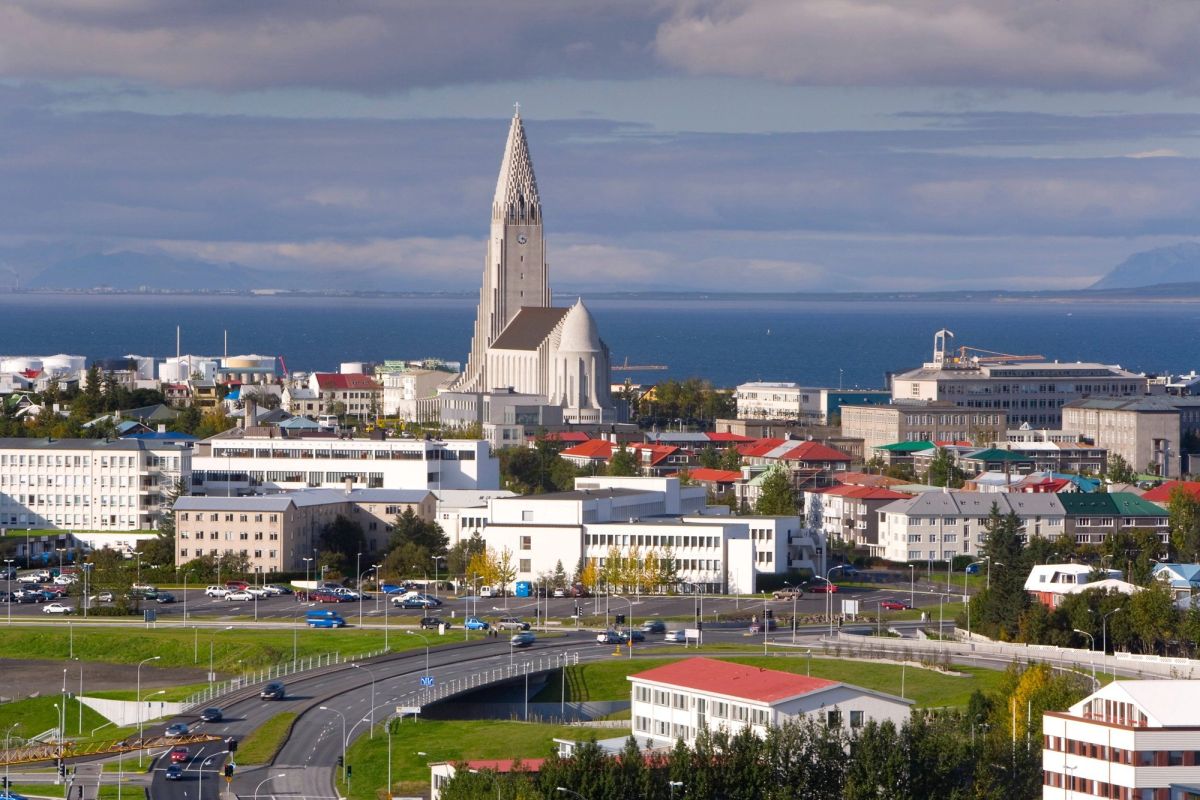
Hallgrímskirkja above central Reykjavík, the reference point for the sunrise and sunset times in this guide.
- *January (15th):* sunrise 10:55, sunset 16:19, about 5 hours 25 minutes of daylight.
- *February (15th):* sunrise 09:23, sunset 18:01, about 8 hours 40 minutes.
- *March (21st):* sunrise 07:25, sunset 19:46, about 12 hours 20 minutes.
- *April (15th):* sunrise 05:56, sunset 21:01, about 15 hours.
- *May (15th):* sunrise 04:13, sunset 22:37, about 18 hours 25 minutes.
- *June (21st):* sunrise 02:56, sunset 00:02, about 21 hours.
- *July (15th):* sunrise 03:41, sunset 23:23, about 19 hours 40 minutes.
- *August (15th):* sunrise 05:19, sunset 21:43, about 16 hours 25 minutes.
- *September (21st):* sunrise 07:08, sunset 19:31, about 12 hours 25 minutes.
- *October (15th):* sunrise 08:18, sunset 18:07, about 9 hours 50 minutes.
- *November (15th):* sunrise 09:57, sunset 16:26, about 6 hours 30 minutes.
- *December (21st):* sunrise 11:23, sunset 15:28, about 4 hours 5 minutes.
The times are calculated for 2026 and change by only a minute or two from year to year. They describe the sun crossing the horizon, so on a cloudy day the usable light starts a little later and fades a little earlier.
Why the Sun Rises So Late in Iceland
Iceland's clocks run about an hour and a half ahead of the sun. The country uses Greenwich Mean Time all year, although Reykjavík sits nearly 22 degrees west of Greenwich, so solar noon there falls at around 13:25 to 13:30 instead of 12:00.
That is why winter mornings feel so dark. In December the sun is not up until after 11:00, but it hangs around until about 15:30, so afternoons are more useful than mornings. The government reviewed the clock in 2020 and chose to keep it as it is.
Twilight: The Light Before Sunrise and After Sunset
Sunrise and sunset times undersell how much you can see. Civil twilight is the period when the sun is less than six degrees below the horizon. It is bright enough to walk, drive and take photos without a torch, and at Iceland's latitude it lasts a long time.
On the winter solstice in Reykjavík, civil twilight begins at about 10:00 and ends at about 16:50. That turns four hours of sun into nearly seven hours of usable light, which is enough for a full day of sightseeing if you start early.
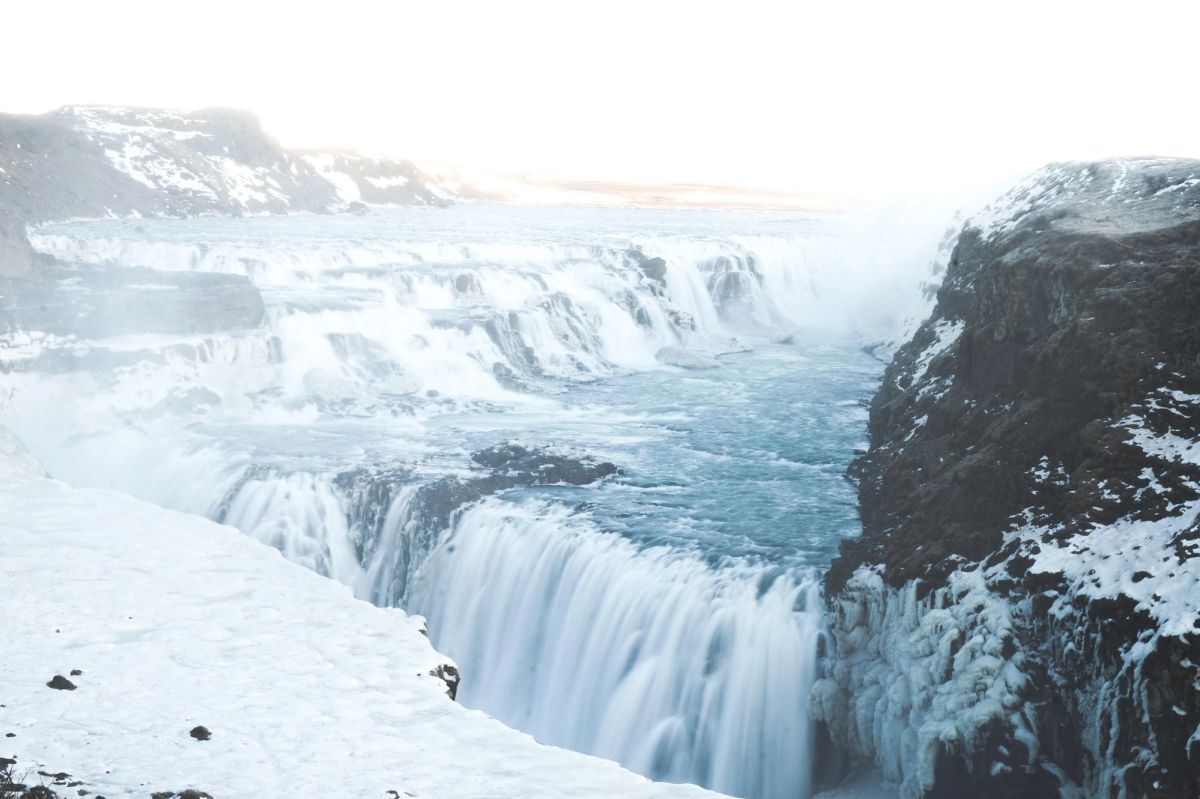
Gullfoss in winter, when low, soft light lasts for much of the short day.
In summer, twilight fills the gap between sunset and sunrise entirely. From about 20 May to 24 July, the sun never drops far enough below the horizon in Reykjavík for the sky to get properly dark.
How Daylight Changes Around Iceland
The further north you go, the more extreme the seasons become. Iceland stretches from about 63 to 66.5 degrees north, and those few degrees make a clear difference at the solstices.
- *Vík, on the South Coast:* about 4 hours 30 minutes of daylight on the shortest day and 20 hours 35 minutes on the longest.
- *Reykjavík:* about 4 hours 5 minutes in December and 21 hours in June.
- *Akureyri, in the north:* about 3 hours in December, and in June the sun dips below the horizon for less than an hour around 01:00.
- *Grímsey, on the Arctic Circle:* just over 2 hours of sun in December and true midnight sun in June.
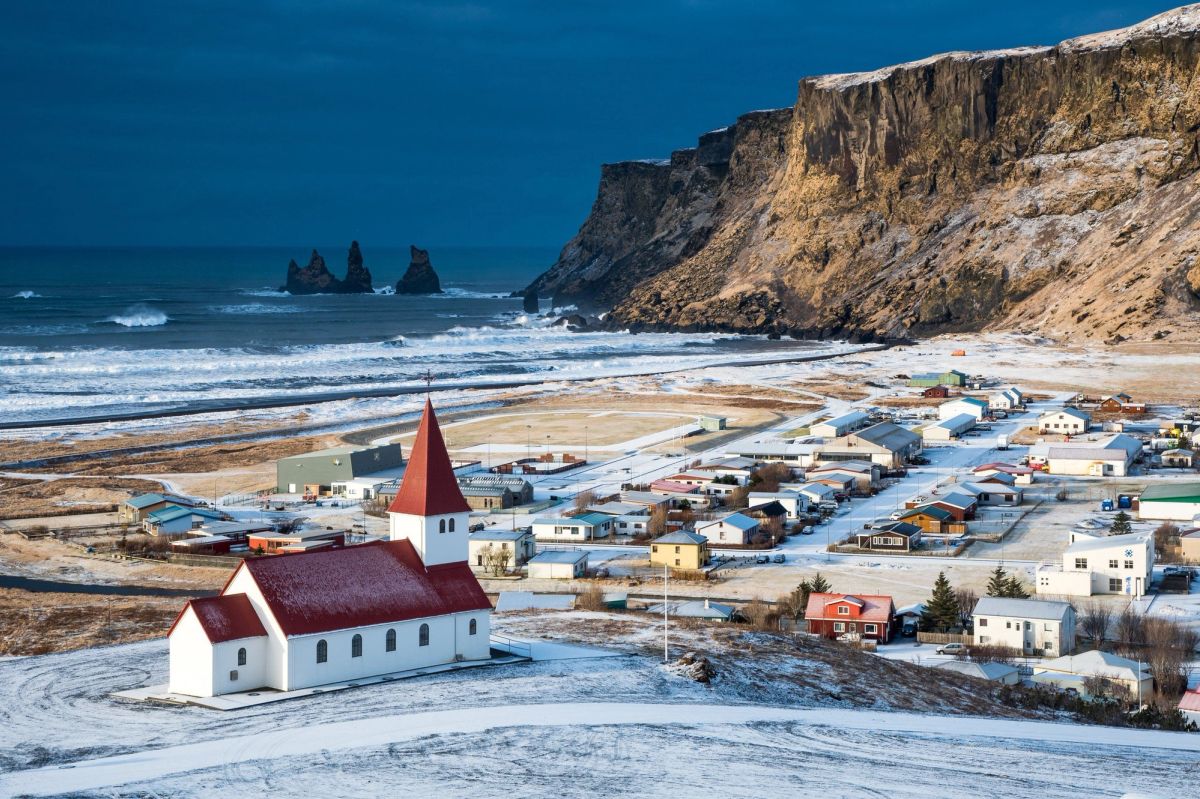
Vík in winter. The South Coast gets slightly more daylight in December than the north of the country.
If you are travelling in winter, the south gives you a little more light to work with. If you want the full midnight sun experience in summer, head north towards Akureyri and the coast beyond it.
Iceland Daylight Hours in Winter
From November to February, daylight is the main constraint on what you can see in a day. The days shorten by roughly six minutes a day through November. After the winter solstice they lengthen slowly at first, then gain pace through January and February.
What You Can Fit Into a Winter Day
A winter day trip from Reykjavík works best if you leave around 9:00 in the twilight and plan the main stops between 10:30 and 16:00. The Golden Circle fits comfortably into that window. Longer trips, such as the South Coast to Vík, spend more of their time in the dark.
Our guide to what changes on the Golden Circle in winter covers road conditions, opening hours and how a guided day is timed around the light.
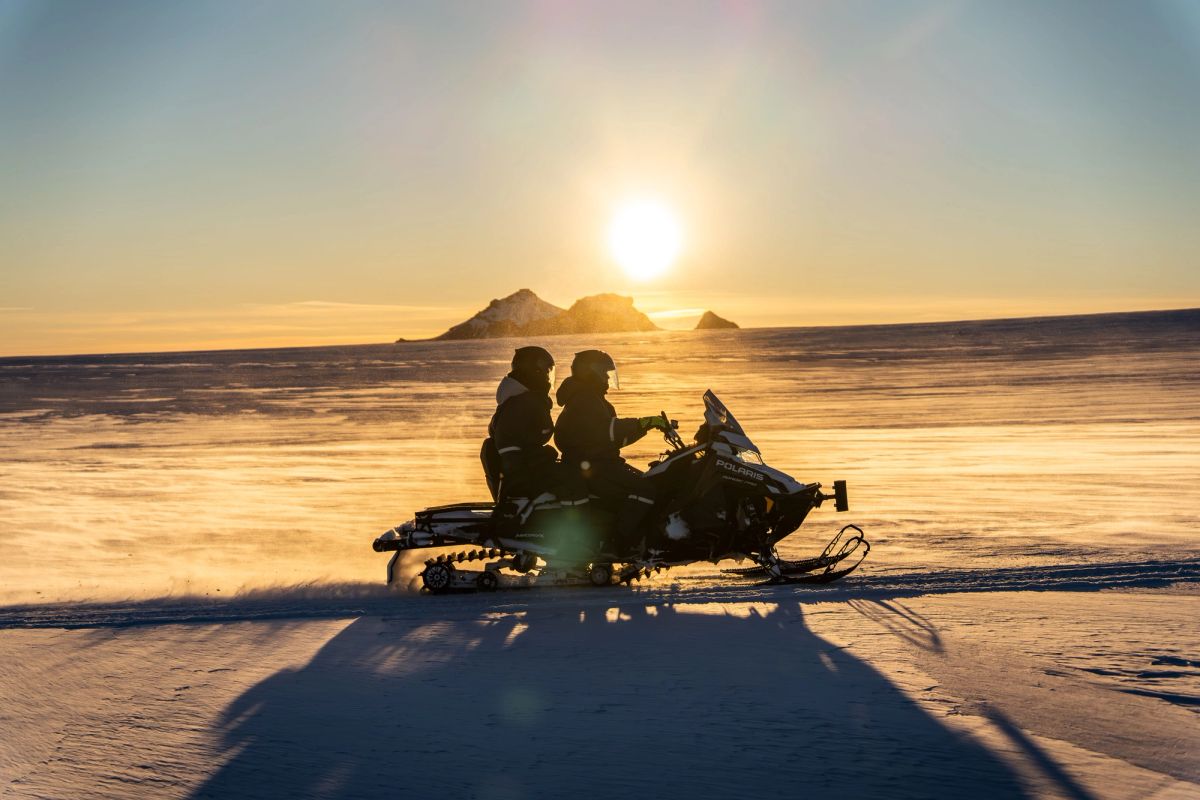
Snowmobilers on a glacier as the low winter sun sits close to the horizon.
If you are driving yourself, avoid long journeys after dark unless you are used to icy roads, and check the Road Administration's road map before you set off each morning.
Daylight and the Northern Lights
The long nights have one big advantage. The northern lights need darkness, and from September to April Reykjavík has enough night to see them, which is when a Northern Lights tour from Reykjavík runs.
Darkness alone is not enough, though. You also need clear skies and some solar activity, and on a cloudy night the longest darkness in the world will not help.
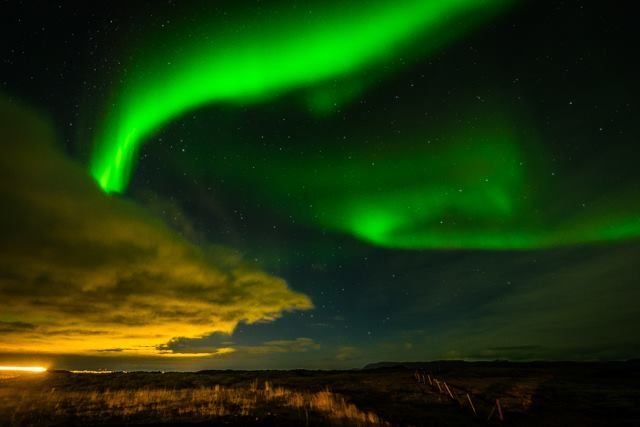
The northern lights above a dark landscape, with the glow of town lights on the horizon.
Our guide to the best months for the northern lights explains how darkness, weather and solar activity combine through the season.
Iceland Daylight Hours in Summer
From May to August, daylight stops being a limit and becomes a resource. You can start a hike at 16:00 and still finish in daylight, or visit popular sights late in the evening when the tour coaches have left.
Late starts make it easy to underestimate a long walk, so leave your route with SafeTravel's travel plan service before heading into the hills.
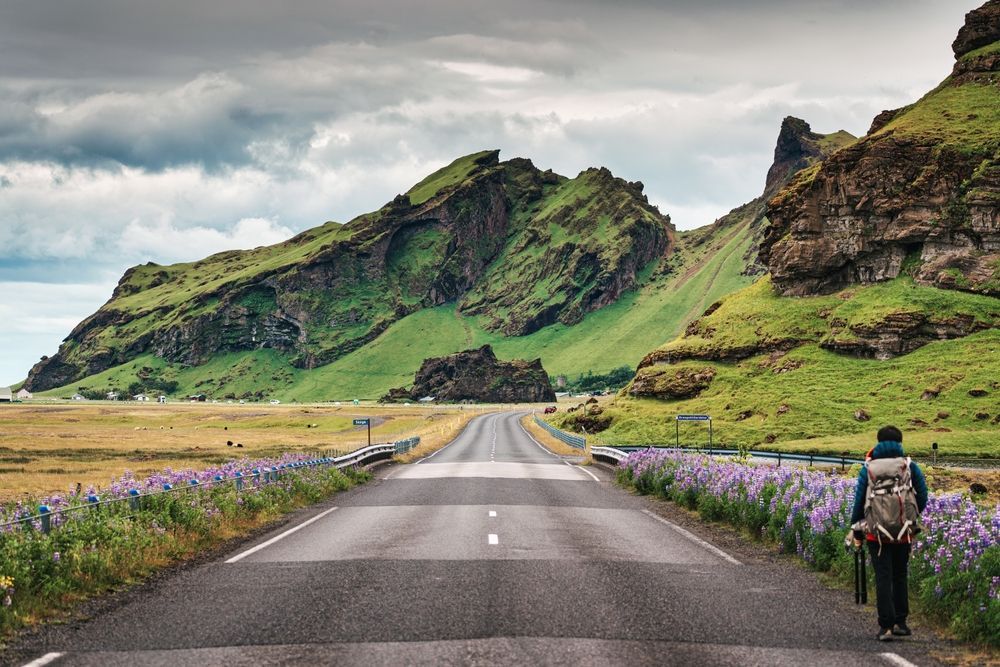
A hiker on a road lined with lupins in early summer, when daylight stretches long into the evening.
The Midnight Sun in Iceland
Strictly speaking, the midnight sun, when the sun stays above the horizon for a full 24 hours, only happens on Grímsey and the far north coast around the June solstice. In Reykjavík the sun does set, but only for about three hours, and the sky never goes dark between late May and late July.
For most visitors, the effect is the same. You can stand at a waterfall at 23:00 in soft golden light, and late-evening drives are some of the best of the trip. On the Golden Circle, this means Þingvellir, Geysir and Gullfoss are much quieter after 19:00 in June and July.
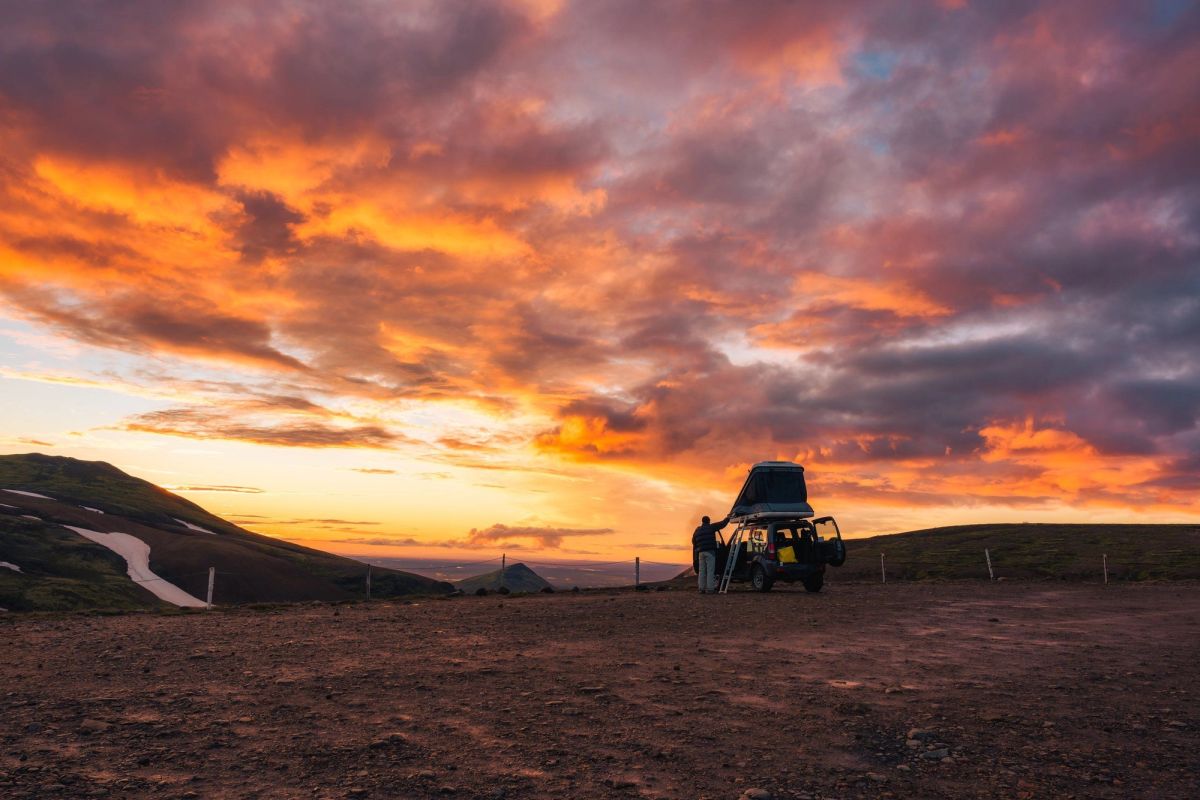
A camper with a rooftop tent under a late-evening sky, when summer sunsets run past 23:00.
Sleeping Under the Midnight Sun
The constant light catches a lot of people out. Most hotels have blackout curtains, but guesthouses, hostels and campervans often do not. Pack an eye mask, and keep a regular bedtime even when it feels like early evening outside.
Spring and Autumn: The Fastest-Changing Months
Around the equinoxes, daylight changes faster than at any other time of year. In March, Reykjavík gains about six and a half minutes of daylight every day, adding more than three hours across the month. September and October lose light at the same pace.
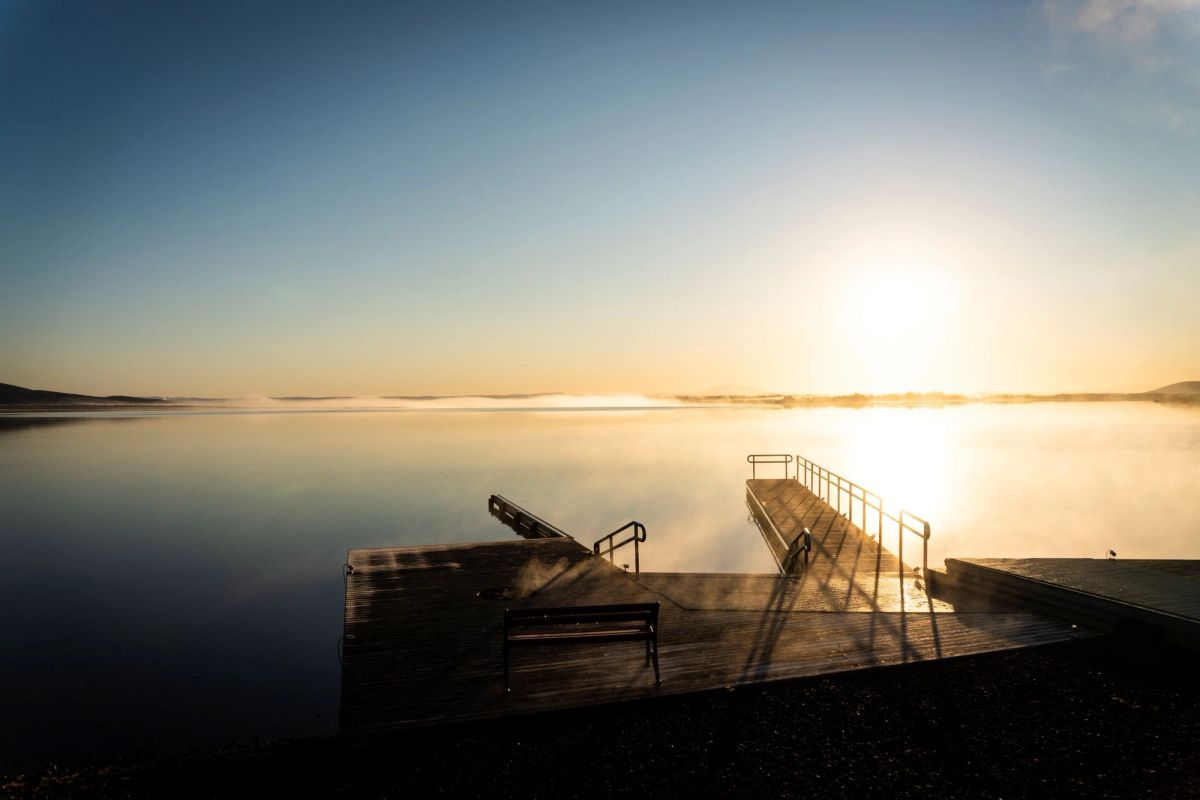
Sunrise over Laugarvatn from the jetty at Fontana, the kind of soft light that spring mornings bring.
These are good months for a balanced trip. You get enough daylight to sightsee comfortably and enough darkness to have a chance of seeing the aurora, often in the same day. Late September and March are the classic choices for travellers who want both.
How to Plan Your Days Around the Light
A few habits make the most of whatever daylight you have:
- *Winter:* put the main sights between 10:30 and 15:30 and save museums, pools and dinner for the dark hours.
- *Spring and autumn:* start early, sightsee all day and keep evenings free for aurora hunting, checking the Met Office aurora and cloud forecast first.
- *Summer:* visit busy sights before 9:00 or after 19:00, and use the long evenings for hikes.
- *Driving:* add travel time in winter, because twilight driving on icy roads is slower than it looks on a map.
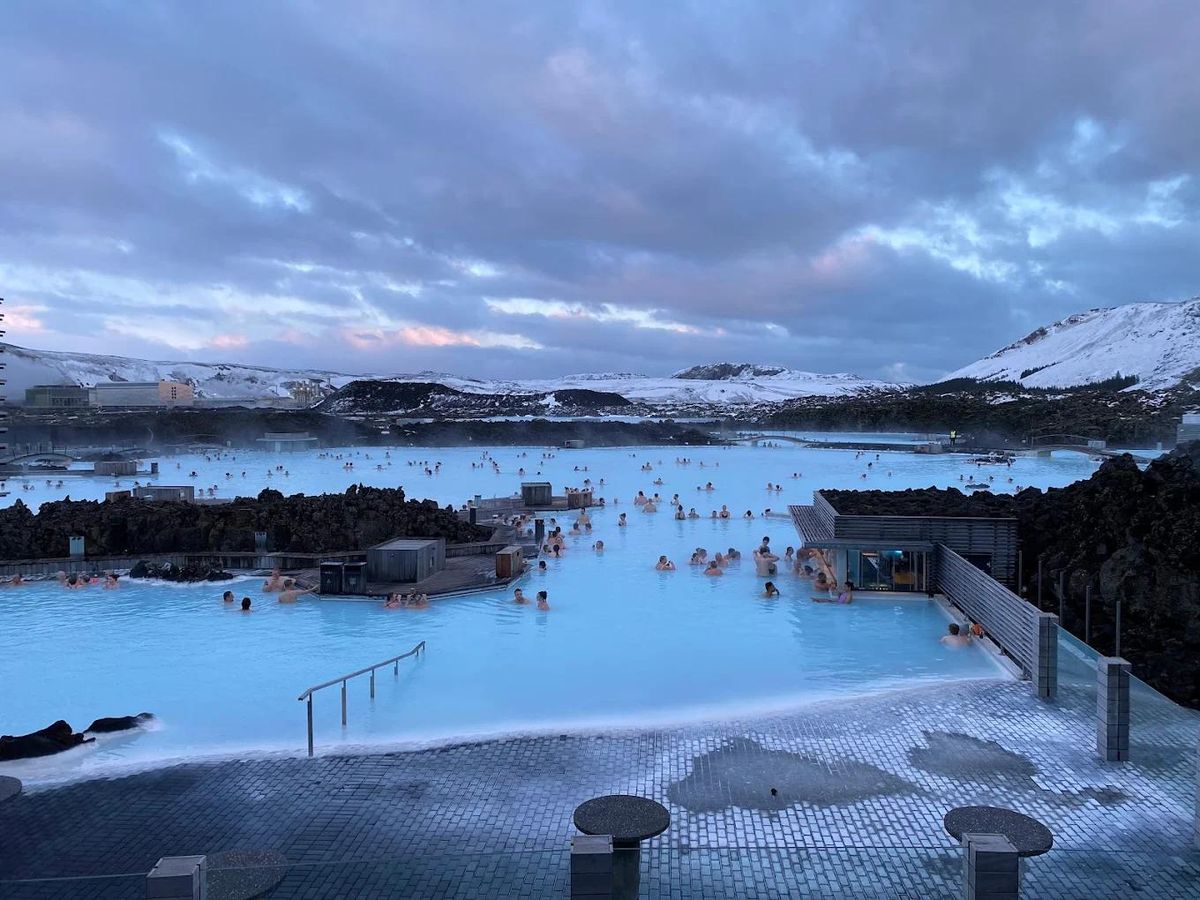
The Blue Lagoon at dusk in winter, a good use of the dark afternoon hours.
If you are driving yourself in winter, our tips on driving after dark in winter cover headlights, ice and wildlife on unlit roads.
Making the Most of a Short Winter Day
In December and January, the simplest way to see the highlights in daylight is to let a guide handle the timing. Our full-day Golden Circle tour leaves Reykjavík at 9:00 and returns at around 17:00, built around the hours when Þingvellir, Geysir and Gullfoss are lit. Add an aurora tour on a clear evening and you use both halves of the winter day.
Compare Golden Circle Tours
Check each selected product for its current operator, guide, itinerary, meeting point, and terms.
View Our Tours

