
How Should You Get Data in Iceland?
Four options, and which one suits you depends mostly on where you live.
If you are travelling from an EU or EEA country, do nothing. Iceland is in the EEA, so roam-like-at-home applies and your existing plan works at domestic rates.
If you are travelling from anywhere else, an eSIM bought before you fly is the simplest answer. You land connected without visiting a counter.
A physical prepaid SIM is the alternative, sold at the airport and at supermarkets, and it suits older phones without eSIM support.
Roaming on a non-EU plan is the expensive option, and worth checking before you rely on it.
eSIM: The Easy Answer
For most non-EU visitors this is now the obvious choice.
You buy and install it before you travel, then it activates when your phone finds an Icelandic network on landing.
No queue at Keflavík, no SIM tray, and your home number stays active on the physical SIM for messages and two-factor codes.
Most eSIM plans are data-only, which is fine given that calls are rare on a holiday and WhatsApp handles the rest.
Check that your phone supports eSIM and is not carrier-locked. Most handsets from the last few years do, and a locked phone does not.
Buy a plan sized to the trip rather than the day. Ten gigabytes covers a week of maps, photographs and messaging for most people.
Physical SIM Cards
Still useful, and still sold everywhere.
Three networks operate in Iceland: Síminn, Nova and Sýn, which trades as Vodafone Iceland.
Prepaid starter packs generally run 2,000 to 6,000 ISK depending on the data allowance. Síminn's range starts around 800 ISK for a basic data plan and runs to about 3,900 ISK for a package with calls, texts and 25 GB.
You can buy at Keflavík Airport on arrival, at petrol stations, at 10-11 and Krónan supermarkets, and at network shops in Reykjavík.
No registration or passport is required for a prepaid SIM, unlike in some countries.
Síminn has the widest rural coverage historically, Nova is strongest in the capital area and was first to launch 5G, and Vodafone Iceland sits between them.
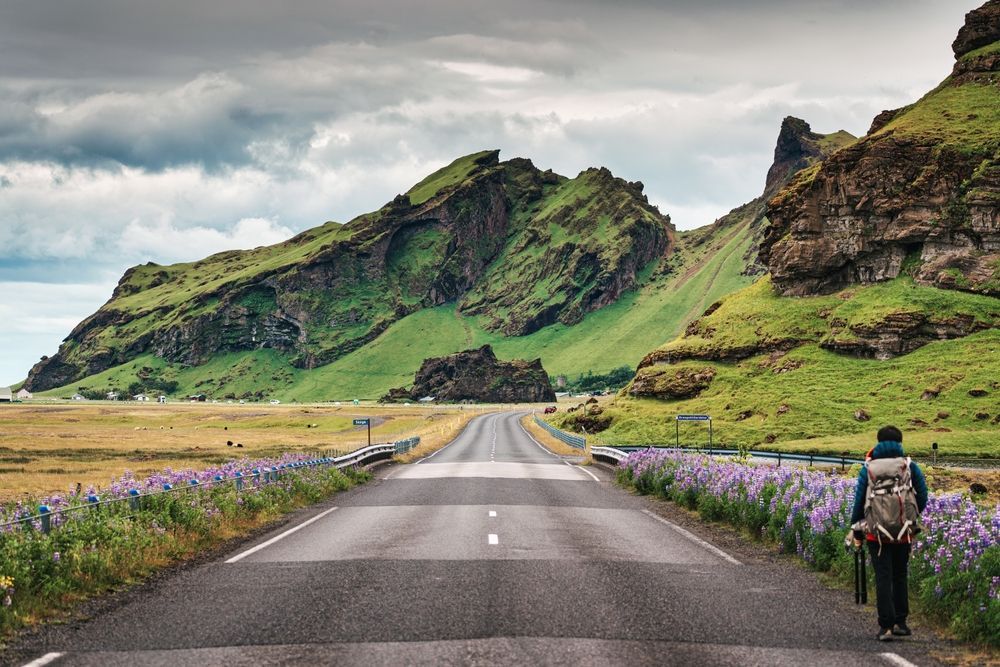
Signal follows the population. The Golden Circle is fine and the highlands are not.
Coverage: Where It Works and Where It Does Not
The honest map, since this is what actually matters.
Coverage is excellent across Reykjavík, the capital area, the Reykjanes peninsula and the whole Golden Circle route.
The south coast as far as Vík is well covered, as are all the towns on Route 1.
Coverage thins in the Westfjords, along the north-eastern fjords and anywhere off the ring road.
The highlands and the F-roads have very little. Landmannalaugar, the interior routes and most mountain areas are effectively without signal.
Fjarskiptastofa, the Icelandic regulator, has overseen the shutdown of the 2G and 3G networks, so an old handset that relies on either will not connect at all. Current details are published by Fjarskiptastofa.
That matters for anyone bringing an older phone or a car tracker. 4G and 5G are what remain.
EU and EEA Roaming
Worth a section of its own, because it saves a lot of people money.
Iceland is a member of the European Economic Area, which means EU roaming regulations apply.
If your plan is from an EU or EEA country, you use your domestic allowance in Iceland at no extra cost, subject to your provider's fair use policy.
That covers the great majority of European visitors, who need to buy nothing at all.
UK plans vary since Brexit. Some networks kept free EU roaming and others reintroduced charges, so check your specific plan before travelling.
Plans from the US, Canada, Australia and Asia generally charge international roaming rates, which is where an eSIM pays for itself in a day.
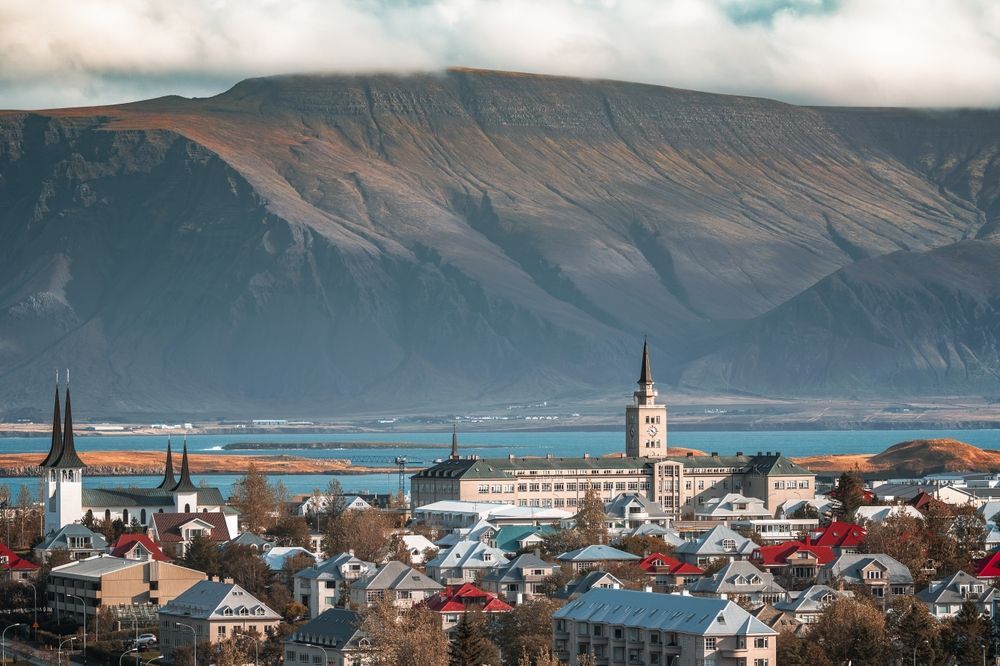
The capital area has full 4G and 5G. Signal thins as soon as the road leaves the coast.
Wi-Fi
Widely available, and not a substitute for mobile data.
Hotels, guesthouses, cafés, restaurants and petrol stations almost all offer free Wi-Fi, and it is generally fast.
Keflavík Airport has free Wi-Fi throughout, and it is the easiest place to activate an eSIM if you did not do it before flying.
Many hire cars and long-distance coaches include Wi-Fi, though the quality depends entirely on the cell signal outside.
Reykjavík has patchy public Wi-Fi in some civic buildings and libraries.
What Wi-Fi cannot do is navigate you along a road with no signal, which is the reason to have data rather than rely on hotspots.
Practical Tips
Six things that matter more than which provider you pick.
Download offline maps before you leave the city. Google Maps and Maps.me both do this, and it covers the gaps in the highlands and the fjords.
Download the SafeTravel app, which lets you leave a travel plan and send an emergency alert. SafeTravel also carries road and weather alerts.
Save 112 as the emergency number. It works across Iceland and the 112 app can send your location to emergency services.
Carry a power bank. Cold drains phone batteries fast, and the phone is your camera, map and torch on a winter day. Our guide to what to pack for Iceland covers the rest of the kit list.
Screenshot your booking confirmations rather than relying on being able to load them.
Check the road conditions before you drive, at umferdin.is, while you still have signal.
What About the Golden Circle?
Specific answer, since this is the day most visitors do.
Coverage along the whole loop is good. Þingvellir, Geysir, Gullfoss and Kerið all have usable signal.
Visitor centres at each site also carry free Wi-Fi, which covers the gaps if your plan is thin.
The gorge at Þingvellir and the canyon at Gullfoss have thinner reception at the bottom than at the rim, which is a matter of geography rather than network.
Beyond the loop, Route 35 towards the highlands loses signal quickly, and that is where the F-roads begin.
If you are self-driving, download the route offline before leaving Reykjavík. Our guide to what the Golden Circle covers sets out the distances.
On a guided day none of this is your problem, since the driver has the route and the conditions handled.
The Short Version
EU and EEA visitors: bring nothing, your plan already works.
Everyone else: buy an eSIM before you fly, sized at around 10 GB for a week.
Older phone without eSIM: buy a prepaid SIM at the airport for 2,000 to 6,000 ISK.
Everyone: download offline maps and the 112 app before you leave the city.
Let Someone Else Handle the Navigation
Signal drops exactly where the roads get interesting, which is the part of a self-drive day that catches people out. Our small-group Golden Circle tour with Kerið and Friðheimar keeps groups under twenty and handles the route, the road conditions and the timings. Tell us your dates and we will find you a departure.
Compare Golden Circle Tours
Check each selected product for its current operator, guide, itinerary, meeting point, and terms.
View Our Tours

