
What Should You Eat in Iceland?
Six things cover it: lamb soup, fresh fish, skyr, rye bread, the hot dog and a bowl of tomato soup in a greenhouse.
Icelandic food is shaped by what an island in the North Atlantic could produce before refrigeration. Sheep, fish, dairy and very little else, preserved by smoking, drying, salting and fermenting.
Modern Icelandic cooking takes those ingredients seriously. The lamb is genuinely excellent, the fish is landed hours before it reaches you, and the dairy is among the best in Europe.
The famous shocking dishes are real and are eaten once a year by Icelanders at a midwinter festival, not as everyday food.
The Essentials
Six dishes, and you can eat all of them in a week without trying.
Kjötsúpa: Lamb Soup
The national comfort food, and the thing to order on a cold day.
Lamb, root vegetables and barley in a clear broth, simmered slowly. It has been eaten here since the settlement period.
The version at the Gullfoss visitor centre has a genuine reputation, and refills are usually included, which matters more in January than in July.
Fresh Fish
Cod, haddock, arctic char and langoustine, and the quality is the argument.
Plokkfiskur is the traditional preparation: flaked fish mashed with potato, onion and béchamel, served with rye bread. It is better than the description.
Any harbour restaurant in Reykjavík will serve fish landed that morning.
Skyr
Not yogurt, whatever the packaging suggests. Skyr is a fresh cheese, strained, thick, high in protein and very low in fat.
It has been made in Iceland for over a thousand years and is eaten daily by more or less everyone.
Buy it in any supermarket for a fraction of a café price and eat it for breakfast.
Rúgbrauð: Rye Bread
Dense, dark and slightly sweet, and the way it is made is the interesting part.
The traditional method buries a sealed pot in geothermally heated ground for about 24 hours. No oven, no flame.
Laugarvatn Fontana digs a pot out of the black sand daily and serves it warm with butter and smoked trout, at 10:15, 11:45 and 14:30 in summer.
Served warm with butter it is the best thing you will eat on the Golden Circle, which is not a low bar on this route.
Our guide to the Fontana rye bread tour covers what the demonstration involves.
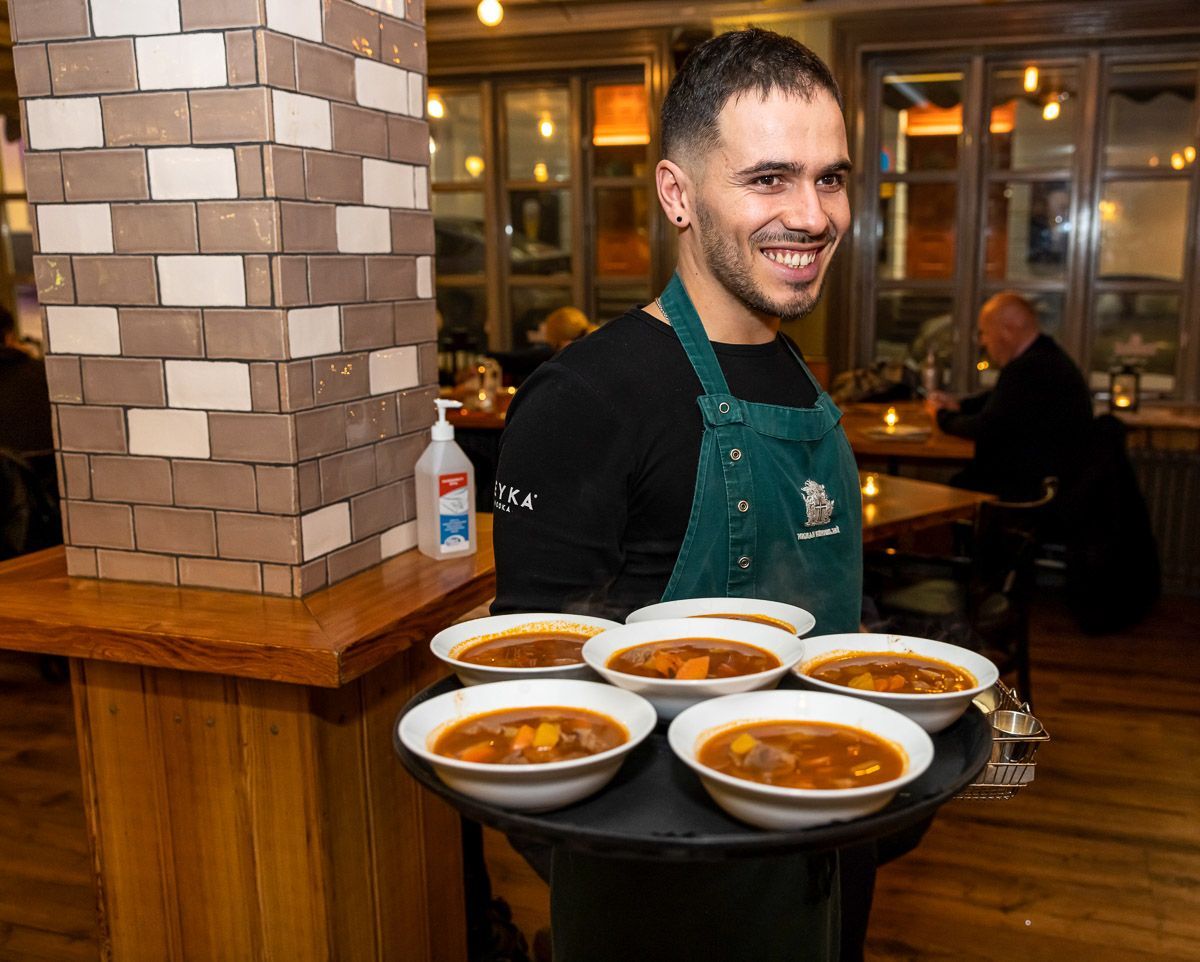
Kjötsúpa has been eaten here since the settlement, and it is the right order on a cold day.
Pylsa: The Hot Dog
Iceland's genuine national street food, and it costs a fraction of everything else.
The sausage is a lamb, beef and pork blend, which gives it a different flavour from anything you have had elsewhere.
Order it "ein með öllu", one with everything: crispy fried onions, raw onions, ketchup, sweet brown mustard and remoulade.
Bæjarins Beztu in Reykjavík is the famous stand, and every petrol station in the country does a perfectly good one.
Tomato Soup at Fridheimar
Not traditional, and it is the meal most visitors remember.
Friðheimar is a geothermally heated tomato greenhouse on the Golden Circle where lunch is served among the vines. Tomato soup with fresh bread is the signature.
Book ahead. Tables go days in advance in summer, and our page on Friðheimar covers the details.
The Adventurous Ones
Four dishes with reputations, and an honest note on each.
Hákarl is fermented Greenland shark, buried for months then hung to dry. It smells powerfully of ammonia and tastes roughly as you would expect. Icelanders eat it at Þorrablót, the midwinter feast, and mostly not otherwise.
Svið is a singed sheep's head, served whole. It is genuinely eaten, mostly by older generations, and the cheek meat is good.
Hrútspungar are ram's testicles cured in whey and pressed. Same festival, same audience.
Harðfiskur is dried fish, eaten with butter as a snack. This one is genuinely popular, sold in every supermarket, and worth trying.
The point of all four is preservation. An island with no salt mines, no grain and long winters developed fermentation and drying because the alternative was starving.
Brennivín, the caraway schnapps, is what accompanies the shark. It is called black death and it is not that bad.
Where to Eat on a Golden Circle Day
The route has better food than a road this busy has any right to.
Friðheimar for lunch among the tomato vines, 20 minutes from Geysir and needing a booking.
Efstidalur, a working dairy farm with a restaurant overlooking the cow shed and ice cream made from that morning's milk. Our guide to Efstidalur covers the hours.
The Gullfoss visitor centre for lamb soup, which is the standing recommendation on the route.
The Geysir centre across from the geothermal field, with a canteen, a bakery and the largest shop on the loop.
Faxi waterfall has picnic tables beside the falls, which is the best free lunch spot on the route.
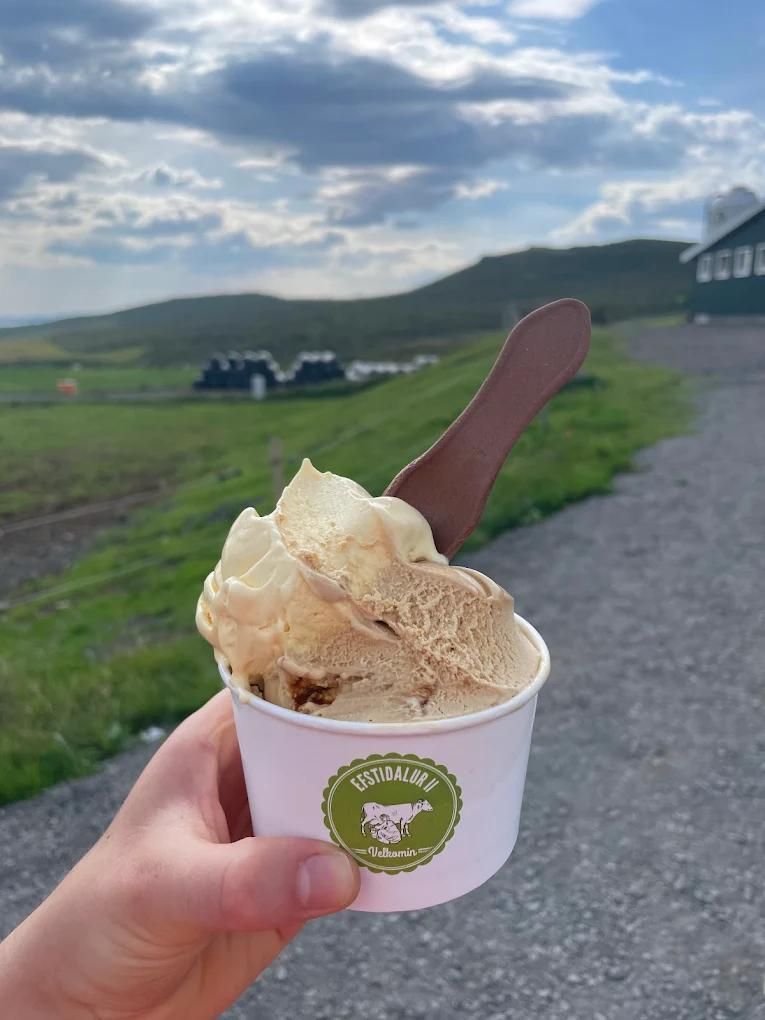
Efstidalur makes ice cream from the herd you can see through the café window.
Where to Eat in Reykjavik
Better than the size of the city suggests.
Grandi Mathöll in the old harbour is a food hall and the easiest place to eat well without a booking.
The harbour restaurants do fish landed the same day, and Sægreifinn is the famous lobster soup.
Bæjarins Beztu is the hot dog stand, open late and cheap by any Icelandic standard.
Bakeries are a genuine Icelandic institution. Ask for a snúður, a cinnamon roll with chocolate icing.
Visit Reykjavík maintains the official listing of what is open in the city.
Bónus and Krónan supermarkets are where a budget is saved, and skyr, rye bread and harðfiskur are all cheap in them.
Book Friday and Saturday dinners ahead. Reykjavík is small and the good places fill.
What to Know About Prices
Worth saying plainly, since Icelandic bills surprise people.
A restaurant main course costs what a full meal costs in most of Europe, and alcohol quietly doubles a bill.
There is no tipping. The menu price is the final price, which our guide to tipping in Iceland covers.
Tap water is excellent, free everywhere and served without asking. Buying bottled water here is a waste of money.
Self-catering some meals is the single biggest saving available on an Icelandic trip. VAT sits at 11 per cent on food against 24 per cent on most goods, which is already built into the shelf price.
Iceland's greenhouses run on geothermal heat, with the National Energy Authority recording 5,916 GWh of geothermal generation a year, which is why tomatoes grow here at all.
That is also why a greenhouse lunch in the middle of an Icelandic winter is possible rather than absurd.
Our guide to whether Iceland is expensive sets out the real numbers.
The Short Version
Eat lamb soup, fresh fish, skyr, rye bread and at least one hot dog.
Book Friðheimar if you are doing the Golden Circle, and stop at Efstidalur for the ice cream.
Try harðfiskur, skip the shark unless you want the story.
Buy skyr and bread from a supermarket rather than a café, and drink the tap water.
Eat Well on a Golden Circle Day
The best Golden Circle days have a proper lunch in them rather than a sandwich from a visitor centre, and the two farms on the route are worth planning around. Our Golden Circle tour with Friðheimar covers the three main sites and lunch among the tomato vines. Tell us your dates and we will find you a departure.
Compare Golden Circle Tours
Check each selected product for its current operator, guide, itinerary, meeting point, and terms.
View Our Tours