
Where Can You Buy Alcohol in Iceland?
Two places only. Vínbúðin, the state alcohol shops, and licensed bars and restaurants. That is the entire list.
Anything above 2.25 per cent alcohol by volume is restricted to those outlets. Supermarkets and convenience stores stock only low-alcohol versions below that threshold.
The legal drinking age is 20, and ID is checked routinely regardless of how old you look.
The third option, and the one every arriving Icelander uses, is the duty free shop at Keflavík Airport.
What Is Vinbudin?
The state alcohol monopoly, and it works better than the description suggests.
Vínbúðin is run by ÁTVR, the State Alcohol and Tobacco Company of Iceland, which operates on public health principles rather than profit maximisation.
The shops are well stocked, calmly staffed and stock a genuinely good range of Icelandic beer and spirits alongside imports.
There are branches in every town of any size and several across the capital area, and you can find the full list at Vínbúðin.
Prices are the same at every branch. There is no shopping around within the country.
Opening Hours
The thing that catches visitors out, particularly on a Saturday afternoon.
Reykjavík area branches typically run 11:00 to 18:00 Monday to Thursday, 11:00 to 19:00 on Friday and 11:00 to 18:00 on Saturday. Larger branches open earlier and later.
Sunday closing is the rule. Almost every branch is shut, and public holidays close them too.
Rural branches keep considerably shorter hours, sometimes opening for a few hours on a few days a week.
Check before you drive somewhere. A closed Vínbúðin in a small town on a Sunday is a common and entirely avoidable disappointment.
Bars and restaurants serve throughout, which is the expensive fallback.
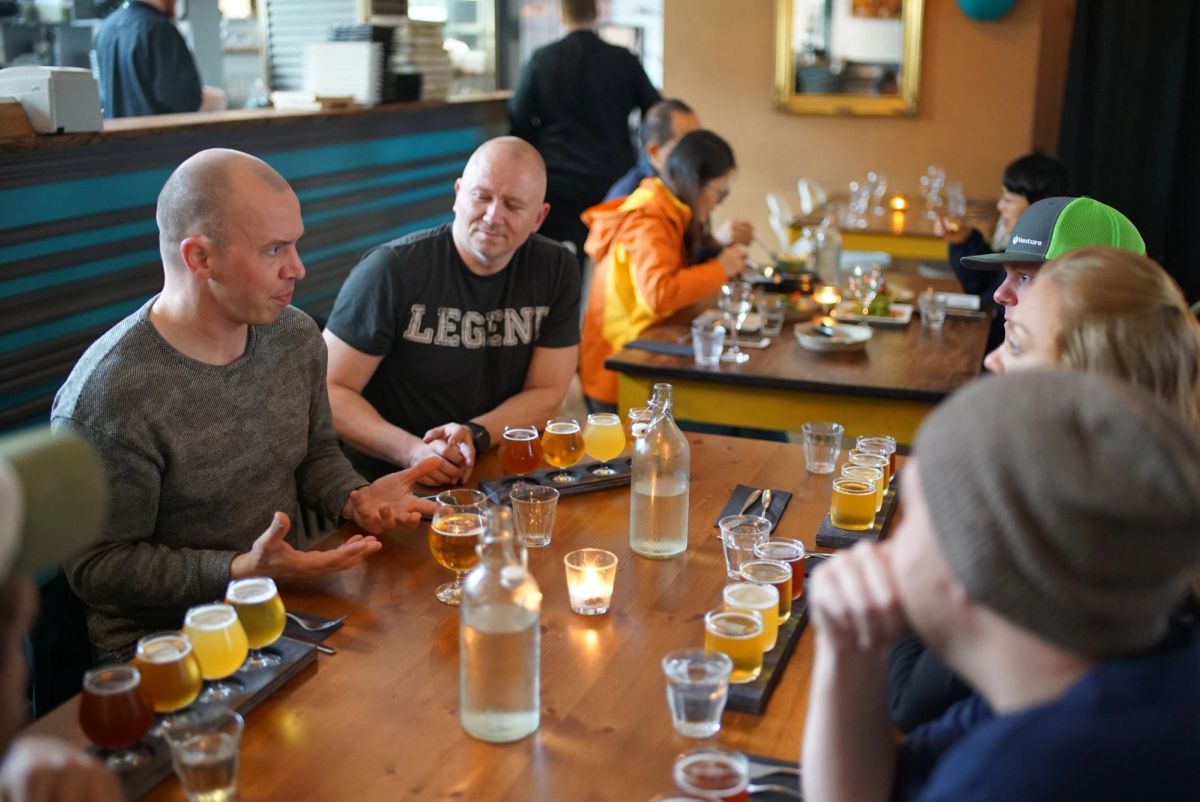
Bars serve when the shops are shut, at roughly three times the shop price.
The Supermarket Rule
Worth understanding, because the shelves look like they contain beer.
Supermarkets stock pilsner at 2.25 per cent or below. It looks identical to the full-strength version, in the same branding, on the same shelf.
That threshold dates from 1989, when Iceland ended a beer prohibition that had run since 1915. The number has not changed since.
Buying what you think is a six-pack of lager and discovering it is 2.25 per cent is a rite of passage for visitors.
Read the label. The percentage is printed clearly and it is the only difference.
Wine and spirits are not sold in supermarkets at all, in any strength.
Prices, Honestly
High, and for a specific reason.
Alcohol carries heavy excise duty in Iceland as a deliberate public health measure, on top of 24 per cent VAT. Prices are quoted in krónur, and the Central Bank of Iceland publishes the official exchange rate if you are converting.
A bar in Reykjavík will charge for a pint what a bottle of spirits costs in some countries. Restaurant wine quietly doubles a bill.
Vínbúðin is considerably cheaper than any bar, and the duty free at the airport is cheaper again at roughly 30 per cent below Vínbúðin prices.
Happy hours are a genuine institution in Reykjavík, typically running from four to seven, and the Appy Hour app is what locals use to find them.
Our guide to whether Iceland is expensive sets out the broader picture on costs.
Duty Free at the Airport
The single biggest saving available, and almost every Icelander uses it.
The duty free shop in the arrivals hall at Keflavík is open to arriving passengers, not just departing ones. Watch the queue of locals at four in the morning and you will understand.
Prices run around 30 per cent below Vínbúðin because the purchases are exempt from Icelandic alcohol duty.
Allowances are set per traveller and combine units of beer, wine and spirits, so check the current limits before you shop.
You must be 20 to buy alcohol in Iceland, and the duty free applies its own age rules for imports.
Keflavík Airport publishes the current allowances and shop hours.
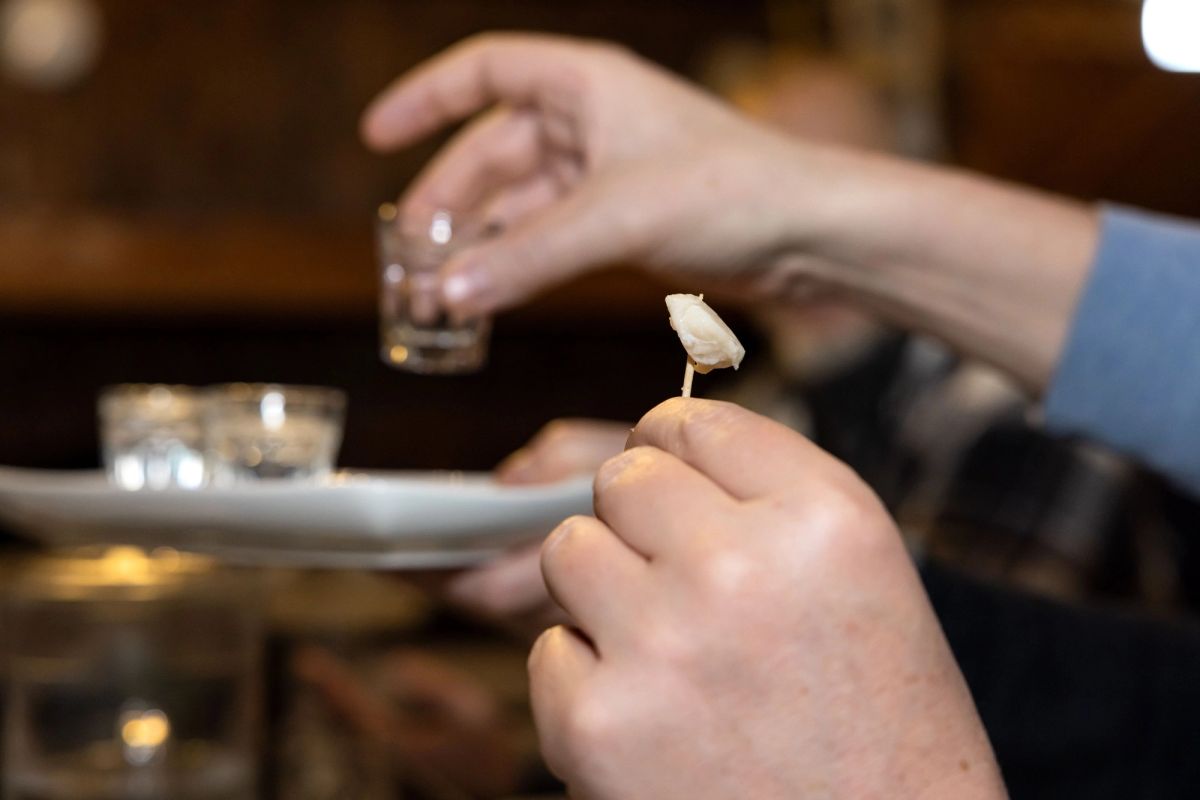
Brennivín exists mainly to make fermented shark bearable, and it does the job.
Icelandic Drinks Worth Trying
Five, and one of them has a reputation.
Brennivín is the caraway-flavoured schnapps traditionally drunk with fermented shark, which our guide to Icelandic food covers. It is called black death and it is more approachable than that suggests.
Icelandic craft beer has grown enormously since the ban ended, and Einstök, Borg and Ölvisholt are all worth trying.
Reyka vodka is distilled in Borgarnes using geothermal energy and filtered through lava rock.
Birkir and Björk are birch-based liqueurs, sweeter and more distinctive than either sounds.
Ölgerðin's Egils Malt is the non-alcoholic Christmas drink mixed with orange soda, which is a genuinely Icelandic thing rather than a tourist one.
Drinking Culture and the Law
Six points worth knowing.
The legal drinking age is 20, and ID is checked at bars and at Vínbúðin as a matter of routine.
The drink-drive limit is 0.02 per cent, which is effectively zero. Do not have one drink and drive.
Public drinking is technically prohibited, though enforcement outside town centres is relaxed.
Icelandic nightlife starts late. Bars fill after midnight on a Friday and Saturday, and arriving at nine puts you in an empty room.
Rúntur, the traditional bar crawl through downtown Reykjavík, runs through the small hours at weekends, and our guide to things to do in Reykjavík covers where to start.
Bars close late at weekends and earlier midweek, and last orders come without much warning.
Tipping is not expected at bars, as our guide to tipping in Iceland explains.
Practical Advice
Five things that save money and disappointment.
Buy at the airport duty free on arrival. This is the single best piece of advice in this article.
If you missed that, buy at Vínbúðin rather than in bars, and check the opening hours before you plan around it.
Do not plan on buying alcohol on a Sunday. The shops are closed.
Read supermarket beer labels. 2.25 per cent is not a typo.
Use happy hours in Reykjavík, which cut prices meaningfully between around four and seven.
Finish the Day Somewhere Warm Instead
A Golden Circle day tends to end with a soak rather than a drink, which is both cheaper and more Icelandic. Our small-group Golden Circle tour with Kerið and Friðheimar covers the main sites, and we can advise on adding a lagoon stop at the end. Tell us your dates and we will find you a departure.
Compare Golden Circle Tours
Check each selected product for its current operator, guide, itinerary, meeting point, and terms.
View Our Tours

