
Is Iceland Safe to Visit?
Yes, and it is worth separating two questions that get answered as one.
For crime, Iceland is among the safest countries in the world. It has topped the Global Peace Index every year since 2008, violent crime is close to nonexistent, and solo travellers of any gender are safe walking Reykjavík at night.
For nature, Iceland is genuinely hazardous, and almost every travel emergency here comes from weather, roads, waves, or geothermal ground rather than from people.
The practical summary is that you can stop worrying about your wallet and start paying attention to the wind.
Crime and Personal Safety
Short, because there is not much to say.
Violent crime is rare enough to make national news when it happens. Iceland has around 400,000 people and a police force that mostly does not carry firearms.
Petty theft exists in crowded tourist areas and in Reykjavík bars late at night. Normal precautions cover it.
Solo travel is straightforward. Iceland consistently ranks at or near the top of global gender equality and safety indices, and walking alone at night in Reykjavík is unremarkable.
Scams are rare. The main financial risk is agreeing to pay in your home currency at a card terminal, which costs you a conversion margin.
Leaving valuables visible in a hire car at a busy car park is the one habit worth breaking.
The Actual Risks
Five, in rough order of how often they cause problems.
Wind is first, and it is underestimated by every visitor. Gusts strong enough to tear a car door off its hinges are a normal Icelandic occurrence, and rental insurance often excludes door damage for exactly that reason.
Weather changes fast. A clear morning becomes a storm by afternoon, and there is no shelter on most of the routes people walk.
Roads catch out self-drivers, particularly in winter and on gravel.
Water is the one that kills people: sneaker waves at Reynisfjara, river crossings, and cliff edges.
Geothermal ground is hot enough to cause serious burns, and the crust between vents is thinner than it looks.
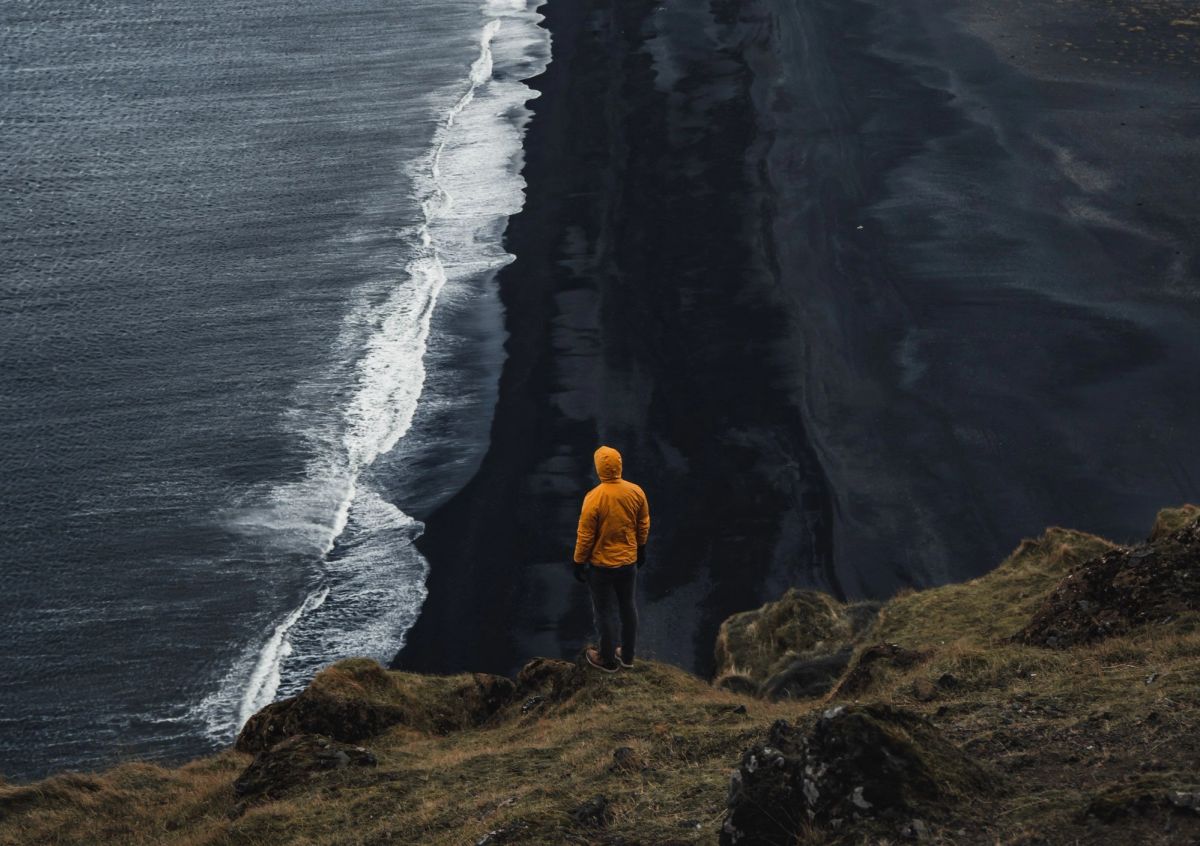
Reynisfjara's sneaker waves have killed visitors. The warning lights in the car park are not decorative.
Sneaker Waves and Reynisfjara
The single most dangerous tourist site in Iceland, and it looks entirely benign.
Reynisfjara, the black sand beach near Vík, produces sneaker waves: waves that run far further up the beach than the ones before them, with no warning and enough force to knock an adult over.
The Atlantic here has no land between the beach and Antarctica, and the seabed shelves steeply, which is what produces the effect.
There have been multiple fatalities. People are pulled into water that is a few degrees above freezing with a strong outward current.
A color-coded warning light system now operates at the car park. Yellow or red means stay well back from the water, and it means it.
Never turn your back on the sea to take a photograph. That is how almost every incident here has started.
Weather and Wind
The risk that shapes everything else.
Icelandic winds regularly exceed 20 metres per second, and storms bring considerably more. That is enough to blow over a person, open a car door beyond its hinge, or strip paint with airborne grit.
Check the forecast every morning. The Icelandic Met Office publishes wind, precipitation, and warnings by region.
Yellow and orange weather warnings mean genuinely stay off the roads, and Icelanders treat them seriously.
Dress for wind rather than temperature. Our guide to what to pack for Iceland covers the layering that works.
Hold car doors with both hands when opening them in wind. This sounds absurd, and it is the most common expensive mistake visitors make.
Driving Safety
The main way visitors get into trouble.
Check road conditions before every drive at Ummadin. is, which is updated continuously by the road administration.
Gravel roads require slowing down considerably. The transition from tarmac to gravel is where hired cars lose control.
Single-lane bridges are common on Route 1. The vehicle closer to the bridge goes first, and it is not a negotiation.
F-roads are highland routes requiring a 4x4 and are illegal in a two-wheel-drive car. They open from June at the earliest and many not until July.
Winter driving needs studded tires, daylight, and honest self-assessment. If you are not confident on ice, take a guided day instead.
Never stop on the road to photograph something. Icelandic roads have no hard shoulder, and this causes collisions every year.
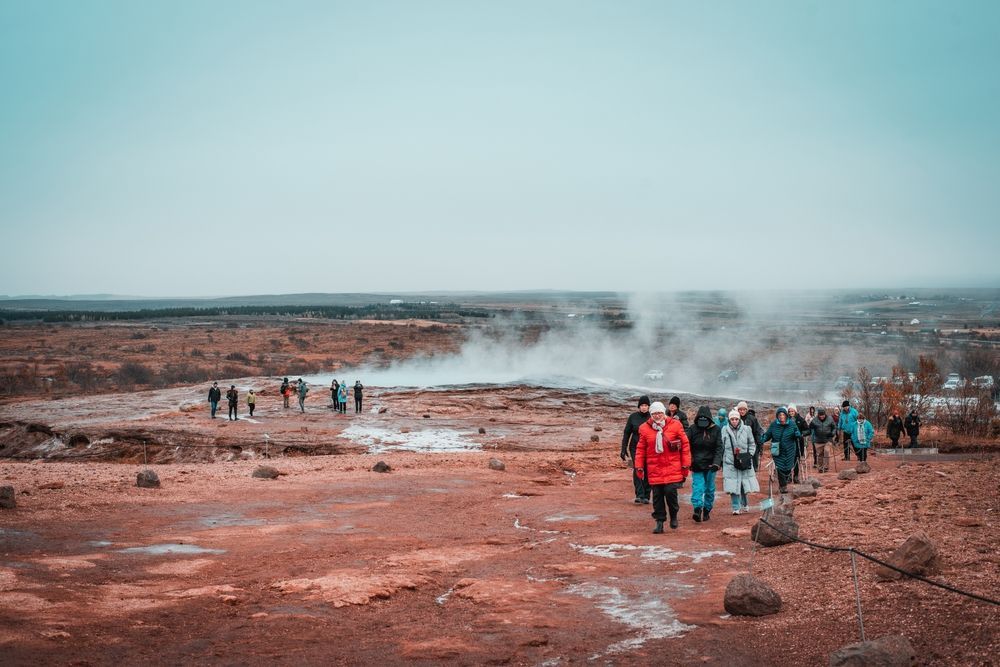
Water in these pools sits at or near boiling, and the crust between them is thin.
Geothermal Areas
Specific and easily avoided.
Water in hot springs and geysers sits at or near boiling. At the Geysir geothermal area, the pools around Strokkur reach temperatures that cause immediate serious burns.
Stay on the marked paths and behind the ropes. The crust between vents is thin and gives way.
Keep children close and dogs on a lead. The ground looks solid and is not.
Do not test the water with a hand. This is how most geothermal injuries to visitors happen.
The same applies at Reykjadalur, Hveragerði, and anywhere the ground is steaming.
Hiking and the Outdoors
Four points, and the first two are the ones rescue teams repeat.
Leave a travel plan. SafeTravel, run by the Icelandic Association for Search and Rescue, lets you file a route and check in.
It costs nothing, and it is what the rescue teams ask for when someone goes missing.
Save 112 as the emergency number and download the 112 app, which sends your location to emergency services. Details are at 112 Iceland.
Stay on marked paths, both for your safety and because Icelandic moss takes decades to recover from a footprint.
Turn back when conditions change. Icelandic weather does not improve because you have driven a long way to be there.
Do not attempt glacier walks or ice caves without a guide. Crevasses are not visible from the surface.
Is Iceland Safe for Solo Travellers?
Yes, and it is one of the better countries in the world for it.
Crime risk to solo travellers is very low, including for women travelling alone.
Reykjavík is walkable, well lit, and busy at night without being threatening.
The risks that remain are the nature ones, and they are larger for a solo traveller because there is nobody to call for help.
File a travel plan with SafeTravel if you are hiking alone, and tell someone your route.
Guided day tours are a good option for solo travelers who want to see the country without driving unfamiliar roads alone. Our guide to how many days you need in Iceland covers how to structure a short trip around them.
Volcanoes and Earthquakes
Worth addressing, because the coverage is more dramatic than the reality.
Iceland is volcanically active, and the Reykjanes Peninsula has been erupting periodically since 2021.
Eruptions in Iceland are monitored closely, and evacuations happen well ahead of any danger to visitors.
Reykjavík, the Golden Circle, the south coast, and the north are entirely unaffected by the current Reykjanes activity.
Earthquakes are frequent and almost always too small to notice. Buildings are constructed for them.
Check the Met Office volcano pages for alerts if you are heading to the Reykjanes peninsula specifically.
The Short Version
Do not worry about crime. Iceland is as safe as anywhere on earth for that.
Do check the weather and the roads every single morning.
Do stay behind the ropes at geothermal sites and well back from the water at Reynisfjara.
Do save 112, download the app, and file a plan if you are going anywhere remote.
Do take a guided day rather than driving unfamiliar winter roads if you are not confident.
Let Someone Else Read the Weather
The Icelandic hazards that catch visitors off guard are the ones you only recognize if you have seen them before, which is most of what a guide is for. Our small-group Golden Circle tour with Kerið and Friðheimar runs year-round with drivers who make the call about conditions before you have to. Tell us your dates and we will find you a departure.
Compare Golden Circle Tours
Check each selected product for its current operator, guide, itinerary, meeting point, and terms.
View Our Tours