
What Is Into the Glacier?
A tunnel cut into Langjökull, Iceland's second largest glacier, running around 500 metres into the ice with roughly 30 metres of glacier above your head at the deepest point.
It opened in 2015 and is the largest man-made ice tunnel in the world. Inside there are lit corridors, side chambers, an ice chapel and exhibition areas showing the layered structure of the glacier.
The critical difference from a natural ice cave is that this one runs year-round. Natural caves form in autumn, are safe only in winter, and melt away by spring.
Man-Made or Natural: Why It Matters
Worth understanding before you choose between the two, because they are genuinely different products.
Natural ice caves form where meltwater carves channels under a glacier. They appear in late autumn, are assessed for safety through the winter, and collapse or flood by April.
That means a natural cave visit is seasonal, weather-dependent and never the same cave twice. It also means the ice is raw and irregular, which is what people love about them.
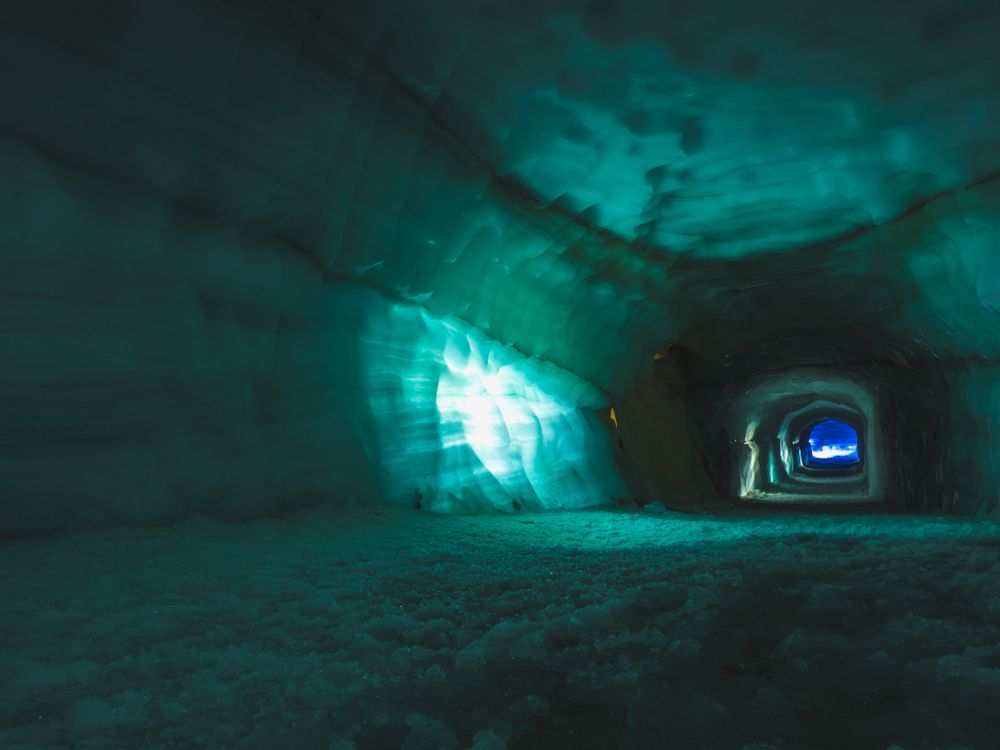
The Langjökull tunnel was drilled deliberately, engineered and lit. The ice is real and ancient, and the shape of the passage is not.
Purists prefer natural caves. The practical case for the tunnel is that it exists in July, it does not cancel for a warm week, and it is accessible on flat ground.
If you are visiting between May and October, the tunnel is the only ice cave option in Iceland worth the name.
Where It Is and How You Get There
The logistics are the part people underestimate, and they are half the day.
Langjökull sits north of the Golden Circle, and the tunnel entrance is high on the glacier at around 1,260 metres.
Tours depart from three places. Húsafell in Borgarfjörður is the main base, Klaki base camp sits at the edge of the glacier itself, and full-day tours run from Reykjavík.
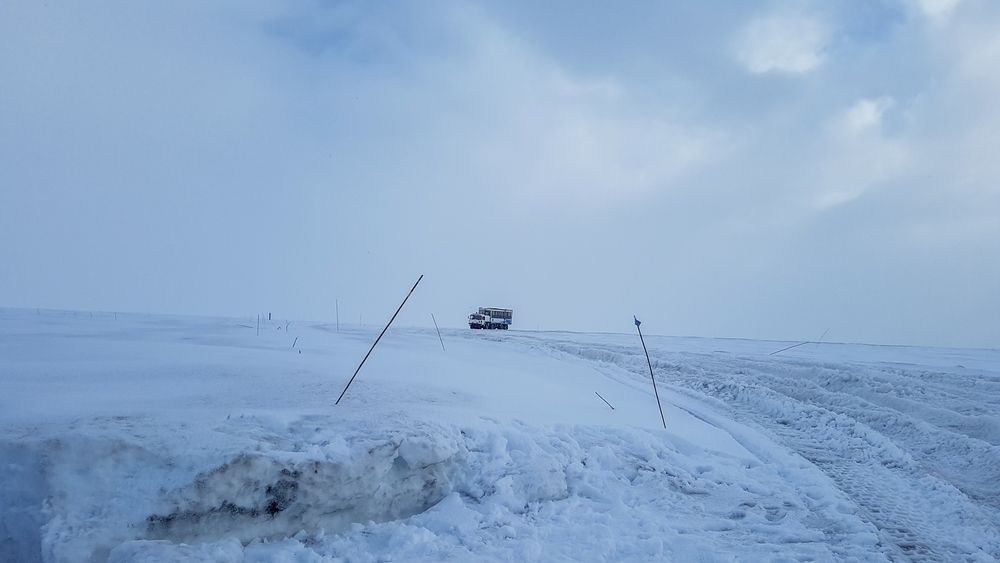
From Húsafell you transfer by specially built glacier vehicle, typically a converted eight-wheel troop carrier, which takes about 30 minutes up the ice.
From Klaki the ride is shorter. From Reykjavík the whole day runs 10 to 11 hours including the drive each way.
Classic tours from Húsafell run 3 to 4 hours in total, and combination days with snowmobiling or a lagoon run considerably longer.
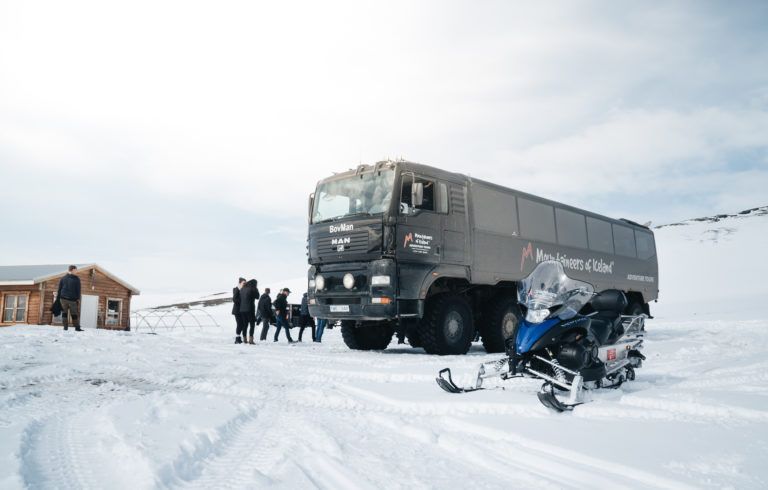
The transfer up the ice is by purpose-built glacier vehicle, and it is part of the experience.
Inside the Tunnel
An hour underground, and it is quieter than you expect.
The main passage is wide, level and lit throughout, with a handrail along one side. Walking is easy and no scrambling is involved.
Side chambers open off the main route. One holds an exhibition on how the glacier is formed and how it is measured, and another is fitted out as a chapel that has hosted weddings.
The walls show the glacier's layering directly. Bands of compressed snow, ash from historic eruptions and clear blue ice mark out year on year of accumulation.
Blue is the dominant colour where the ice is dense and old, which is most of the deep section. It photographs badly and looks extraordinary in person.
Guides explain what you are looking at and stop for questions. This is a walk with commentary rather than a climb.
What to Wear and Bring
Six things, and the first is the one people get wrong.
Warm layers. It is around 0°C inside regardless of season, and you are moving slowly for an hour.
Waterproof outer layers. The tunnel drips in places and the transfer up is often through weather.
Sturdy waterproof boots with ankle support. Trainers are not accepted by most operators.
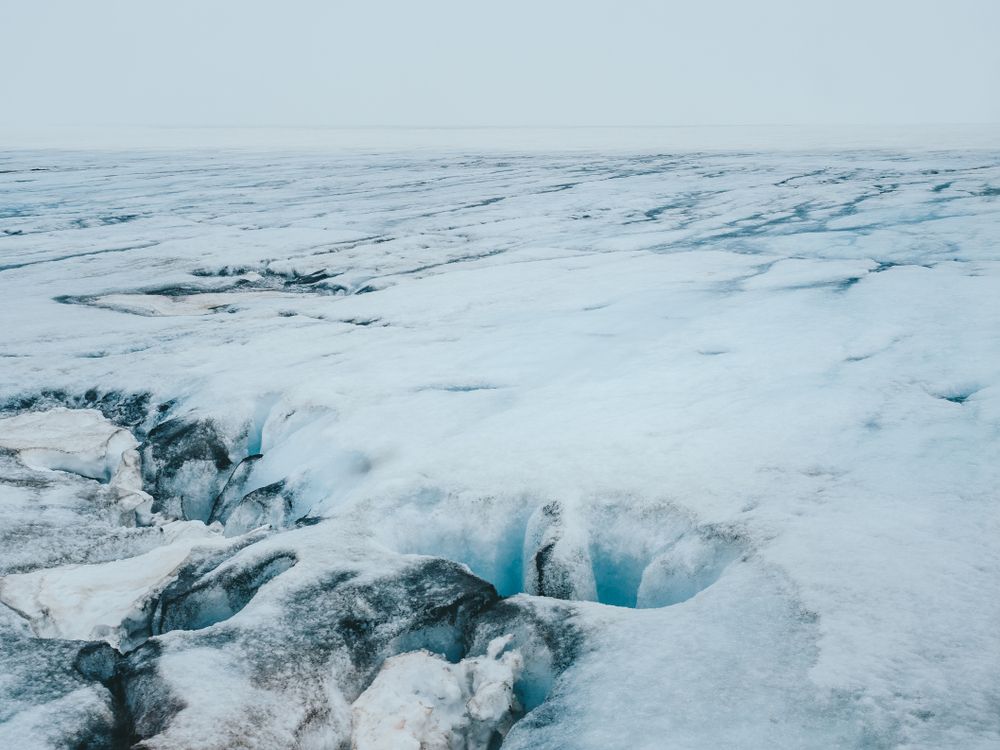
Gloves and a hat. Your hands get cold quickly at a standstill.
Crampons and a helmet are provided and fitted at the entrance. You do not need your own.
A camera that copes with low light. Phone cameras struggle with lit blue ice more than most subjects.
When You Can Visit
Year-round, which is the tunnel's main selling point.
The cave itself is open every month. What closes it is the weather on the glacier rather than the season.
High wind and heavy snow occasionally stop the transfer vehicles, and the tour is cancelled and refunded when that happens.
Summer is the busiest period and the easiest for access. Winter is quieter and adds a genuine glacier-in-winter drive to the day.
Book ahead in July and August. Capacity is limited by the transfer vehicles rather than by the tunnel.
Live road status for the approach is published at umferdin.is, and it is worth checking in winter.
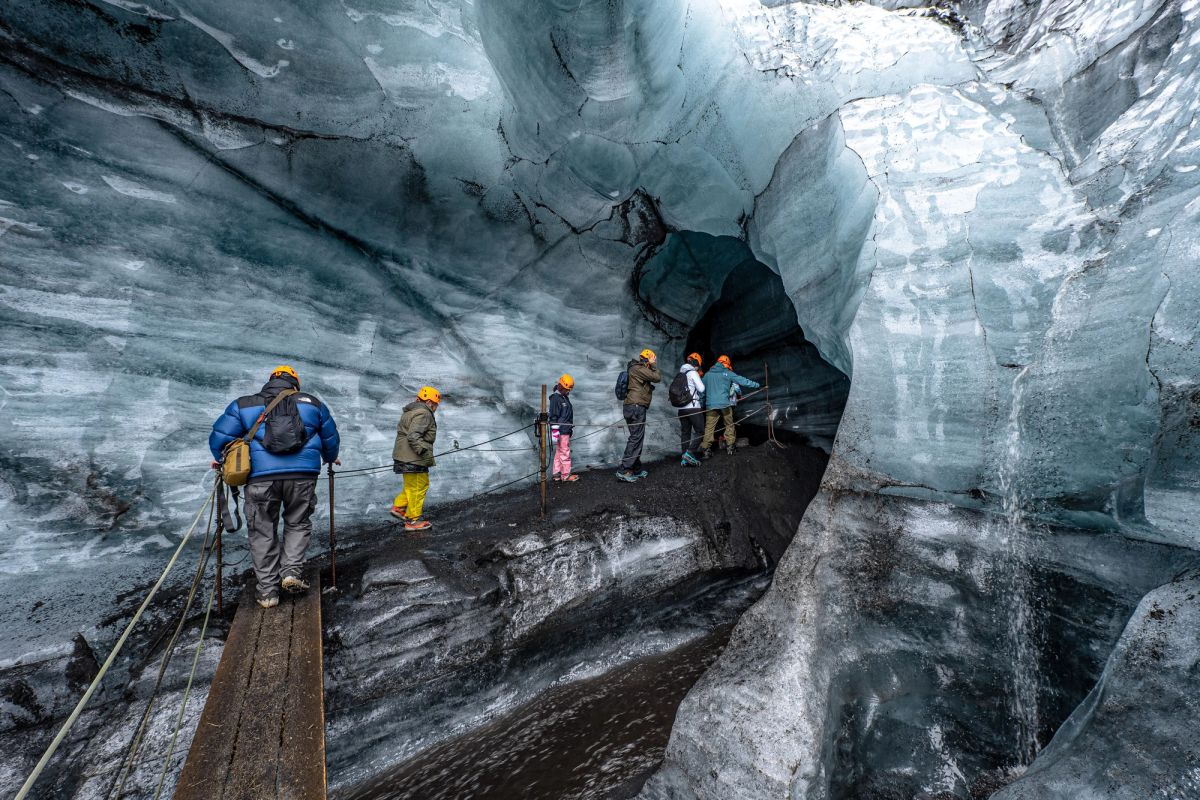
The main passage is wide, level and lit, so the walk needs no scrambling.
What Else Is on Langjökull
The tunnel is one of three things you can do up there, and they combine.
Snowmobiling across the ice cap is the other headline activity, typically an hour on the glacier with a guide leading.
Super jeep tours cross the ice without stopping at the tunnel, which suits people who want the drive rather than the walk.
Combination days pair the tunnel with snowmobiling, and they are the most common booking from Reykjavík. Our Golden Circle and snowmobile tour is the version that also covers the three main sites.
Ice climbing and glacier hiking run elsewhere in Iceland rather than here, since Langjökull's surface is a broad ice cap rather than a broken tongue.
Our page on Langjökull covers the glacier itself.
How It Fits With the Golden Circle
Geographically close and logistically demanding, which is the tension to plan around.
Langjökull sits north of Gullfoss, and the F35 highland road runs up past the falls towards the glacier.
That road is unsurfaced, rough and closed for much of the year. Nobody drives a hire car up it.
From the Golden Circle side, the practical approach is a combination tour that handles the transfer. From the west, Húsafell is the base.
A Golden Circle day plus the tunnel is a 12 hour undertaking. It works, and it is not a relaxed day.
The alternative is two days: the loop on one, Langjökull on the other. Our guide to what the Golden Circle covers sets out how long the loop needs alone.
Doing the loop first and the glacier second also puts the long transfer at the end of the day, when nobody minds sitting down.
Gullfoss is the last stop before the highland road, and the river feeding it comes off this same glacier.
Is It Worth It?
Yes, with a clear sense of what you are buying.
The tunnel is expensive, and the cost is in the transfer rather than the walk. Getting a vehicle to 1,260 metres on a glacier is the hard part.
What you get is an hour inside a glacier, on flat ground, with no weather and no season. Nothing else in Iceland offers that.
If you are visiting in winter and want raw ice, book a natural cave in the south instead. This is the year-round option rather than the wild one.
Road and travel alerts for the highland approaches are published by SafeTravel, which is worth checking outside summer.
If you are visiting in summer, this is the only way to be inside a glacier at all, and that is a strong argument on its own.
Iceland's glaciers are also shrinking measurably, which the Icelandic Met Office tracks alongside its climate monitoring, and the tunnel's exhibition covers that directly.
Add the Glacier to a Golden Circle Day
Langjökull sits directly north of Gullfoss, close enough to combine and far enough that the transfer needs proper vehicles rather than a hire car. Our small-group Golden Circle tour with Kerið and Friðheimar covers the loop itself, and we can advise on adding a glacier day either side of it. Tell us your dates and we will work out what fits the daylight.
Compare Golden Circle Tours
Check each selected product for its current operator, guide, itinerary, meeting point, and terms.
View Our Tours

