
Not on a standard daytime Golden Circle tour. The loop runs in daylight and returns to Reykjavík around 5pm or 6pm, while the aurora only becomes visible once the sky is properly dark, which in midwinter is roughly two hours after the tour ends.
What does work is pairing them. Either book a daytime loop and a separate evening aurora hunt, or take a combined departure that covers the three sites and then stays out after dark to look for the lights.
That distinction matters because plenty of visitors book a January Golden Circle tour expecting both and come home disappointed by a day that was never designed to deliver it.
Why a Daytime Loop Cannot Show You the Aurora
The aurora is always there when solar activity allows. What changes is whether the sky is dark enough for your eyes to pick it out against daylight.
Darkness is the requirement
The lights need genuine astronomical darkness, not dusk. A bright twilight sky washes out anything but a very strong display, which is why aurora hunts start at 8pm or 9pm rather than at sunset.
Cloud is the other half of it. The Icelandic Met Office's aurora forecast rates activity on a scale of 0 to 9 and looks 6 days ahead, and it publishes a cloud map alongside it, because a Kp 6 night under solid cloud shows you nothing.
When it gets dark on the route, by month
In late September darkness arrives around 9pm, which is well after a day tour has finished. In December it comes around 6pm, and in March it slips back past 8pm again.
A Golden Circle tour that leaves at 8am and returns at 5pm therefore misses the window in every month of the aurora season. The overlap only exists in December and January, and even then you would be looking at the sky through a coach window on a motorway.
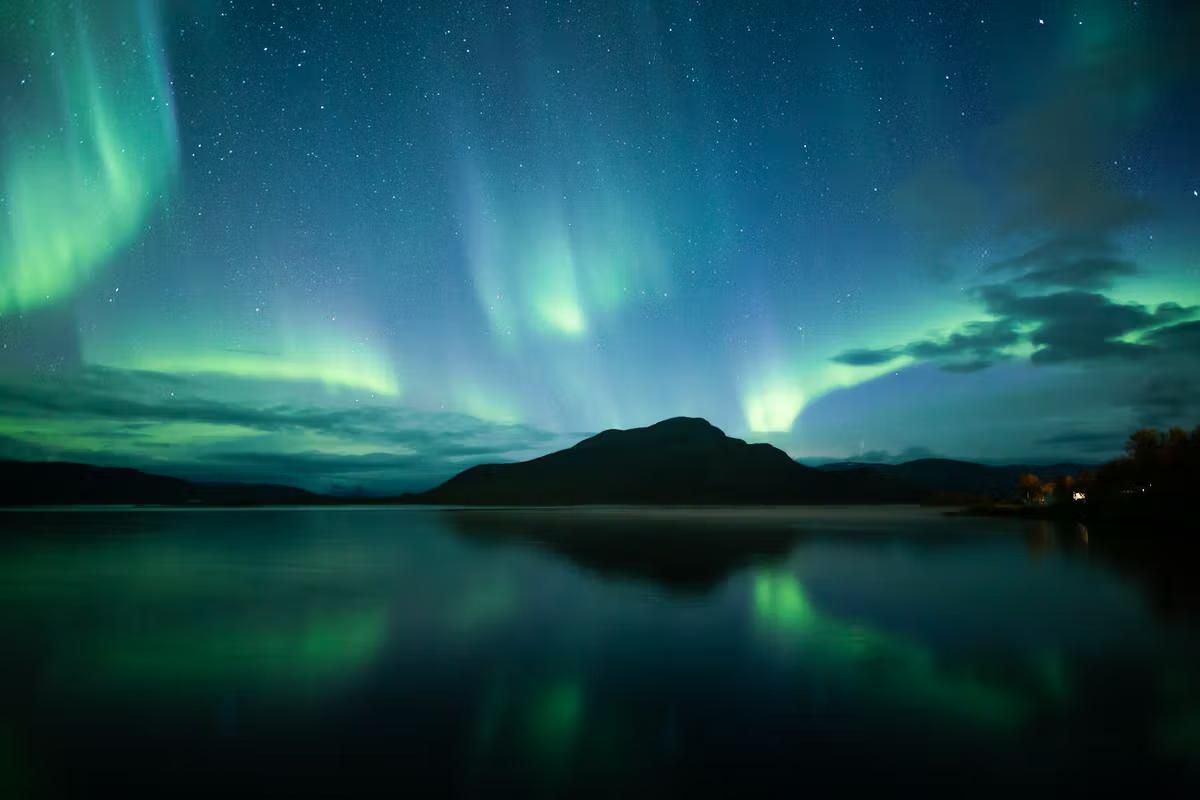
Real aurora needs full darkness. Twilight hides everything except the strongest displays.
The Combinations That Do Work
There are three practical ways to get both the loop and the lights, and they suit different kinds of traveller.
Golden Circle by day, aurora hunt by night
The most common approach is two separate bookings on the same date. You do the loop from 8am to 5pm, eat, then join an evening Northern Lights tour that leaves around 8pm and runs three to four hours.
It is a long day, and it works. A classic Northern Lights bus tour drives to wherever the cloud map is clearest, which is something no fixed daytime itinerary can do.
A combined departure
Some operators run a single long day that covers the three sites and then holds you out in the countryside after dark, so you are already outside the city glow when the sky goes dark.
The advantage is one pickup, one driver, and no gap to fill in Reykjavík. The trade-off is that you commit to a single evening rather than picking the clearest night of your trip.
Self-drive with a late stop
Driving yourself gives you the most control and asks the most of you. Finish the loop, eat at Laugarvatn or Selfoss, then park somewhere dark and wait.
The catch is winter roads in the dark, which is a different job from daytime driving on the same route. If you are not comfortable with ice and side wind after sunset, hand the keys to someone else.
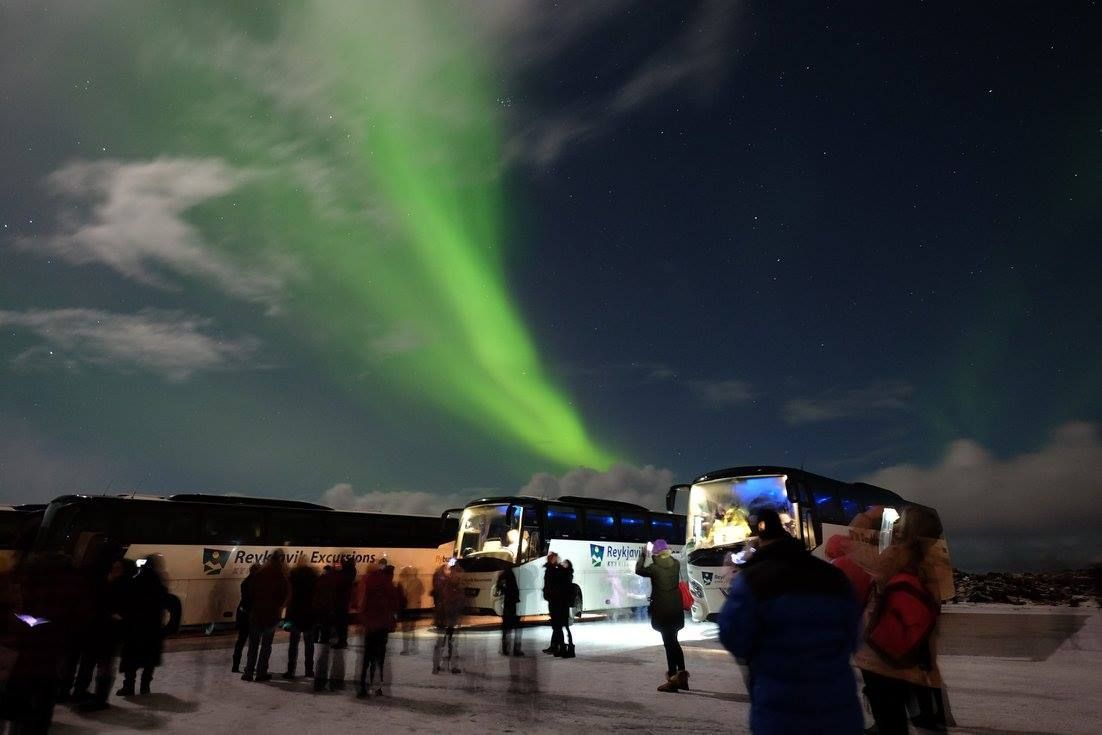
Evening aurora tours drive to the clearest sky rather than to a fixed viewpoint.
When the Aurora Season Runs
Iceland's aurora season runs from roughly late August to mid-April, and it is set by darkness rather than by cold. Between mid-May and early August the sky never gets dark enough, so the lights are effectively invisible even during a strong storm.
September and March are the underrated months. Nights are long enough, the weather is more settled than midwinter, and the roads on the Golden Circle are usually clear, which our guide to the best time to see the Northern Lights goes into month by month.
December and January give you the longest nights, with darkness from about 6pm to 10am. They also bring the most cloud and the most cancelled tours, which is the trade you are making.
Why Iceland Sits in the Right Place
The aurora forms in a ring around the magnetic pole called the auroral oval, roughly 20 to 25 degrees out from it. Iceland sits under that ring, which is why a modest solar disturbance produces a display directly overhead here while northern Scotland sees nothing.
That geography is the reason Icelandic aurora advice differs from what you read elsewhere. Guides in Britain or the northern United States tell you to wait for a big geomagnetic storm, and in Iceland you simply need a clear sky and patience.
It also means direction matters less than people expect. In a strong display the lights fill the whole sky rather than sitting on the northern horizon, so you want an open view in every direction rather than a north-facing one.
What Actually Decides Your Chances
Four things, and only one of them is about the sun.
Solar activity
Aurora is caused by charged particles from the sun hitting the upper atmosphere. Activity rises and falls on an 11-year cycle, and NOAA's Space Weather Prediction Center tracks where the current cycle sits, with Solar Cycle 25 peaking in the mid-2020s.
Day to day, what matters is the Kp index, a 0 to 9 measure of geomagnetic disturbance. In Iceland you do not need a high number: Kp 2 or 3 is enough for a visible display overhead, because the country sits directly under the auroral oval.
Cloud cover
Cloud beats everything else. A Kp 7 night under an overcast sky gives you nothing, while Kp 2 under clear skies gives you a good hour of green.
This is the single reason to take a guided hunt rather than stand in one place. The driver watches the cloud map and drives 80 kilometres if that is what it takes.
Moonlight
A full moon lifts the sky brightness and washes out faint aurora, though it does not hide a strong display. It also lights the landscape, which many photographers prefer.
If you are planning a trip specifically for the lights, aim for the week around a new moon. If you are fitting the aurora around a Golden Circle day, do not let the moon change your plan.
Light pollution
Reykjavík's glow reaches perhaps 20 kilometers. Every stop on the Golden Circle is far enough out to escape it, which is one reason the loop's countryside works so well after dark.
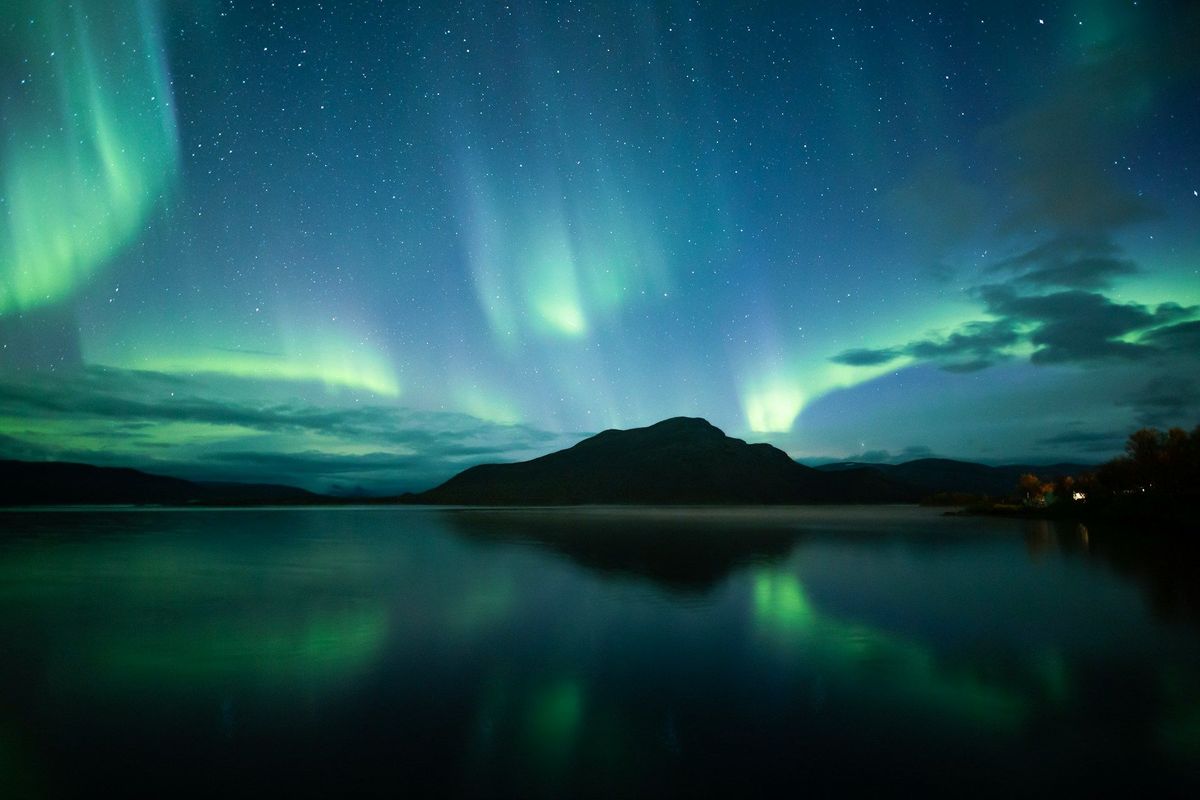
Þingvallavatn and the smaller lakes near Laugarvatn go flat on a still night, which doubles the display.
How to Read the Aurora Forecast
Three numbers matter, and you can check all of them in about two minutes.
Start with the Met Office activity number on its 0 to 9 scale. Anything at 3 or above is promising for Iceland, and 2 is still worth going out for on a clear night.
Then look at the cloud map on the same page, which shows white for clear and green for cloudy. Find a white patch within an hour's drive and that is where the tours will head.
Finally check the moon and the time of full darkness. NOAA's aurora background explains why displays often peak around magnetic midnight, which in Iceland falls somewhere between 10pm and 1am.
Where on the Golden Circle to Watch From
Any of the three main sites works after dark, though only Þingvellir National Park is genuinely set up for it.
Þingvellir is the best of them. The car parks stay open, the rift walls and the lake give you foreground, and the valley is 40 kilometres from the nearest town glow.
Parking still costs 1,000 ISK for a car under the park's published rates, and the machines take cards at any hour.
There is no lighting once you leave the car park, so bring a torch with a red mode that will not ruin your night vision. Stay on the surfaced paths, because the boardwalks ice over and the drop into the fissures is real.
Laugarvatn is the practical choice on a self-drive night. There is a lake, a lit car park to retreat to, and Laugarvatn Fontana, where sitting in a geothermal bath while the sky performs is the best version of the whole experience.
Gullfoss and Geysir are open around the clock and both are dark, though the ground is icy and unlit in winter. Take a head torch and stay on the surfaced areas.
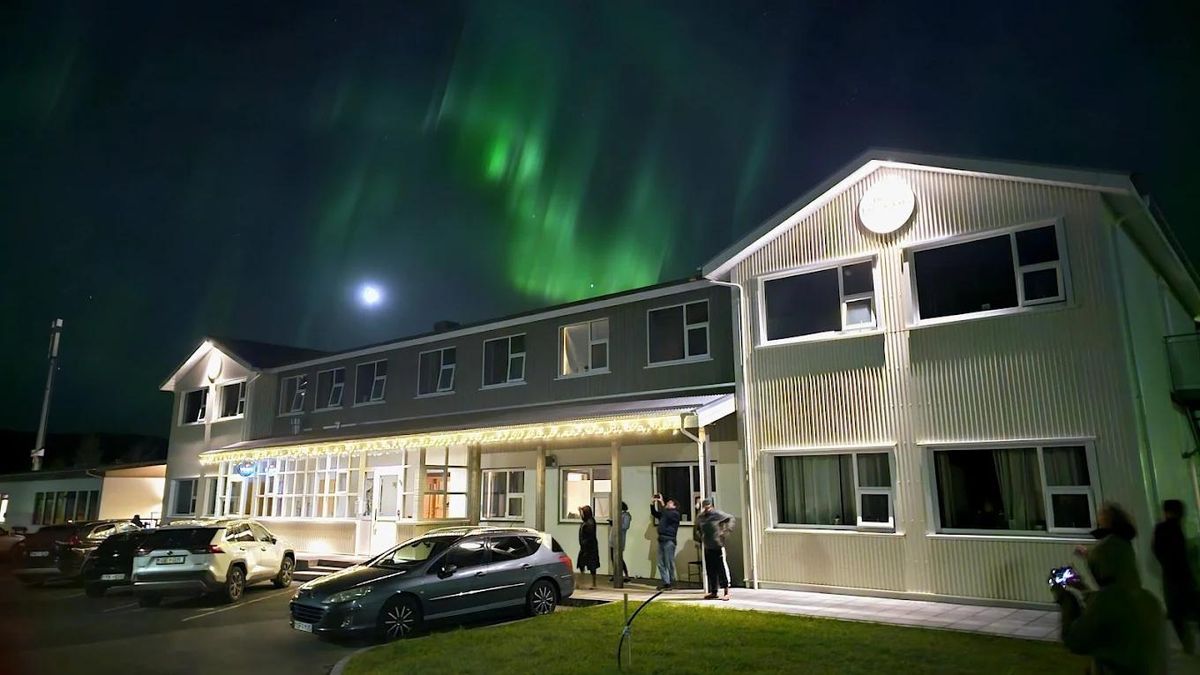
Laugarvatn sits an hour from Reykjavík, with a lake for reflections and somewhere warm to wait.
What to Wear to Stand Still in the Dark
Aurora watching is standing outside doing nothing for an hour, which is colder than any amount of walking on the day tour.
At the Hjarðarland station near Geysir, the Icelandic Met Office's monthly data puts January's average daily low at 4.3°C below zero and February's at 4.2 below, with mean wind above 5 metres per second. That combination takes the felt temperature well under 10 below.
Layer properly: thermal base, fleece or down mid-layer, and a windproof shell. Add a wool hat, thick gloves and a buff for your face, and put hand warmers in your pockets.
Boots matter more than anything else. Standing on frozen gravel for an hour in trainers is how people end an aurora night early, and our guide to dressing for an aurora night lists what actually goes in the bag.
Managing Expectations
No operator can guarantee the aurora, and any that claims to is selling you something else. Cloud, solar activity and your own luck all have a vote.
Most Icelandic operators run a rebooking policy: if the tour goes out and the lights do not appear, you can join another departure free within a set period. Ask what that window is before you book, because it varies from a few days to a couple of years.
Give yourself three nights if the aurora is a priority. One clear night in three is a normal Icelandic winter, and a single attempt is a coin flip.
Manage the other expectation too. To the naked eye a moderate display looks like a pale grey-green arc that moves slowly, and the vivid colour in photographs comes from a long exposure. That first sight surprises people, and then the sky starts moving and nobody minds.
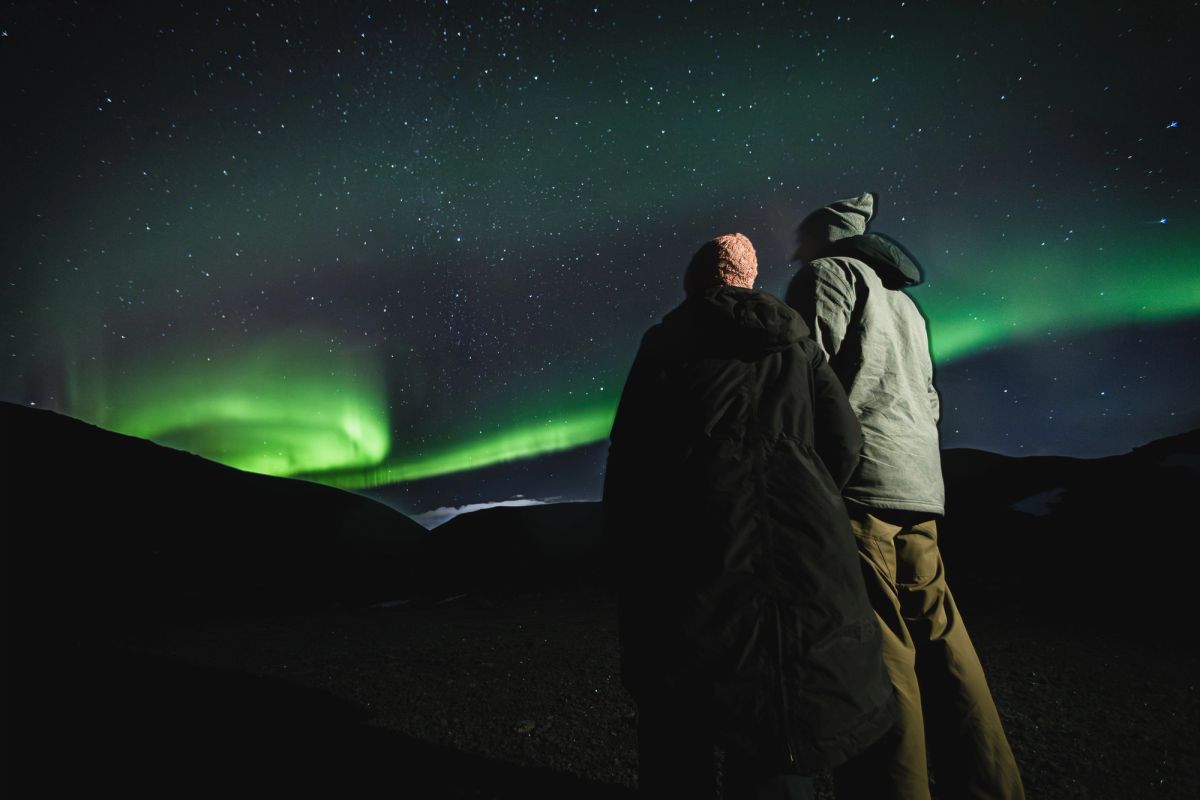
A moderate display reads as a pale green arc to the eye, brighter and more colourful through a camera.
Photographing the Aurora on the Loop
A phone from the last few years will capture the aurora in night mode, and it will look better on screen than it did to your eye. Brace it against a car roof or a fence post, because three seconds of hand shake ruins the frame.
With a camera, start at f/2.8, ISO 1600 and 5 seconds, then adjust. Faster than 2 seconds and you underexpose, longer than 10 and the bands blur into a flat green wash.
Focus is the part that catches people out in the dark. Set focus to infinity in daylight before you leave, tape the ring, and check on the first frame rather than trusting the screen.
Bring a spare battery and keep it warm. A cold body at 5°C below zero will lose a bar an hour, and the display always gets better after your camera dies.
Four Myths Worth Dropping
The aurora is not more likely when it is colder. Cold nights are often clear nights, which is the whole of the connection.
It is not visible only in the far north of Iceland either. The whole country sits under the oval, and the Golden Circle's countryside is as good as anywhere reachable on a day trip.
A high Kp number is not required. In Iceland Kp 2 with clear sky beats Kp 6 under cloud every time.
And you do not need to stay up until 3am. Displays can start as early as 8pm in December, though the window from 10pm to 1am is the most reliable.
A Realistic Winter Day Plan
Here is how to fit both into one date in, say, February.
- 08:30 pickup in Reykjavík for the Golden Circle loop
- 09:45 Þingvellir, with snow on the rift and low light on the gorge
- 11:30 Geysir, where the steam is thicker in cold air
- 12:45 Gullfoss, upper platform only if the lower path is iced
- 15:00 Kerið or Friðheimar, then back to the city
- 17:30 back in Reykjavík, eat and warm up
- 20:30 pickup for the evening aurora hunt
- 00:00 back at your hotel
Book the loop for the first day of your stay and keep the aurora night flexible. That way you can pick the clearest sky rather than the day you happened to book.
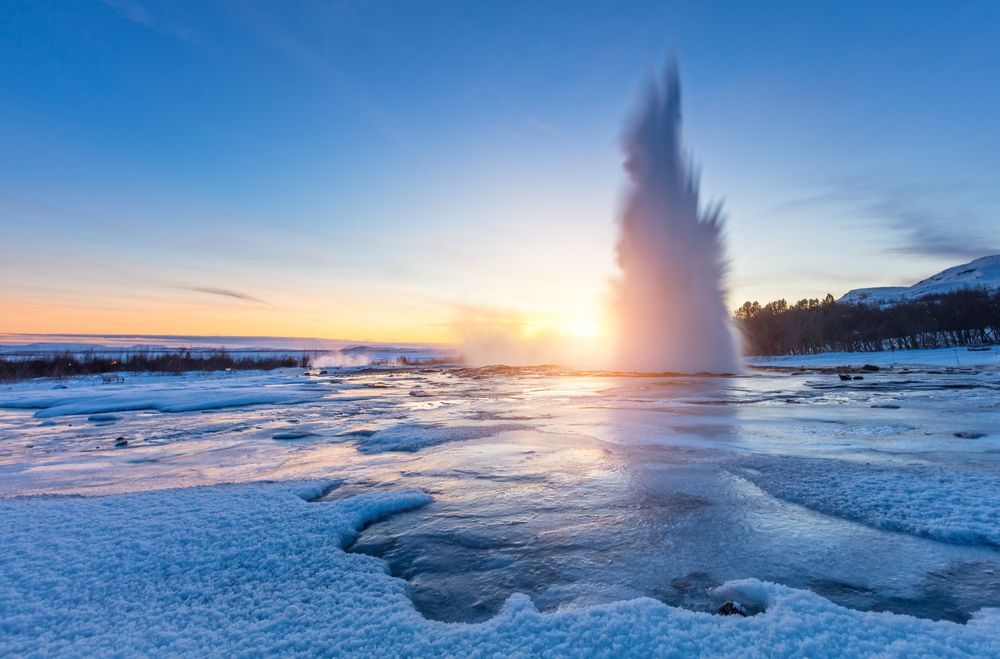
Winter light at Geysir runs out by mid-afternoon, which is what makes the two-tour day possible.
Book the Loop and the Lights Together
If your trip falls between September and April and you want both halves of an Icelandic winter, the simplest version is one booking that covers the daylight sights and stays out for the dark.
Our Golden Circle and Northern Lights combined day does exactly that, with a guide watching the cloud map from the moment you leave the city. Check the departure dates against your forecast, and keep a spare evening free in case the sky has other ideas.
Compare Golden Circle Tours
Check each selected product for its current operator, guide, itinerary, meeting point, and terms.
View Our Tours
