
Every spring, millions of small black-and-white seabirds with orange feet and striped bills fly in from the open Atlantic and land on Iceland's cliffs. They have spent the winter far out at sea. For a few months they behave like the most photogenic commuters in the world, flying out to fish and back to their burrows with beaks full of sand eels.
Seeing them is easy if you time it right and almost impossible if you do not, which is why puffins top so many lists of the best things to do in Iceland in summer. Arrive in October and you will find empty cliffs. Arrive in July and you can sit on a grassy slope with puffins landing a few metres away.
When Is the Best Time to See Puffins in Iceland?
The best time to see puffins in Iceland is from mid-June to early August. Puffins arrive at their colonies in late April and early May and leave by late August or early September, but June and July are when the most birds are on land and busy feeding their chicks.
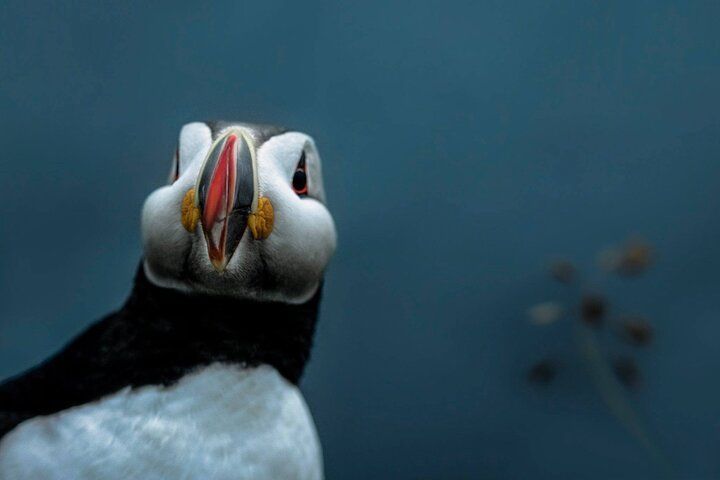
A puffin up close, showing the bright bill plates it grows each breeding season.
Within that window, the evening is often the best time of day. Many birds spend the morning at sea and return to the colonies in large numbers later in the day, when the light is also softer for photographs.
Puffin Season in Iceland, Month by Month
The puffin calendar follows the breeding cycle, so it is fairly predictable from year to year:
- *Late April to mid-May:* the first puffins return from the sea and clean out their burrows. Numbers build week by week.
- *Late May to June:* pairs settle into burrows and lay a single egg. Birds spend a lot of time standing outside their burrows.
- *Late June to early August:* chicks hatch and parents fly back and forth with beaks full of fish. This is the busiest and most rewarding time to watch.
- *Mid to late August:* adults start leaving for the open sea, and the young birds follow them out.
- *September to April:* puffins live entirely at sea and are not seen on land.
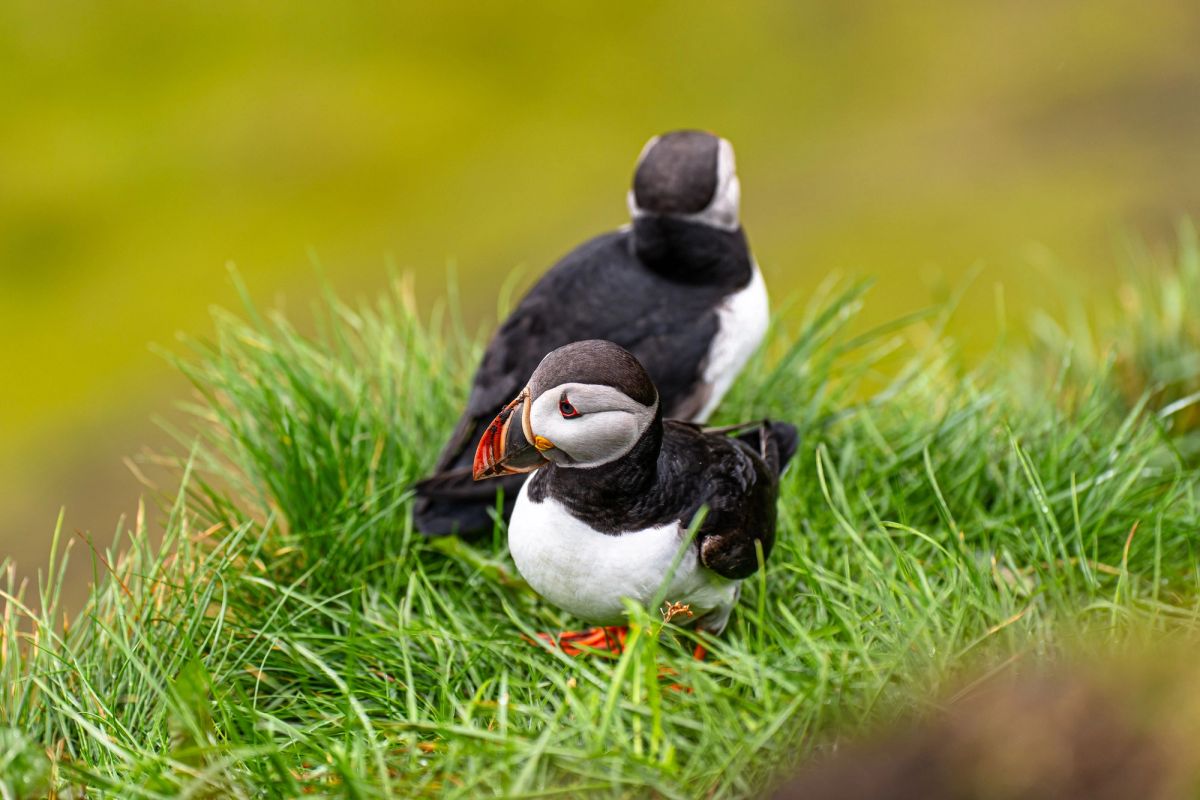
A pair of puffins in the grass outside their burrow, where they raise a single chick each summer.
Exact dates shift a little with the weather and food supply. If your trip is in late August, head to the colonies early in the month rather than gambling on the final week.
What Do Puffins Look Like?
Atlantic puffins are smaller than most people expect, about 30 centimetres long and roughly the weight of a can of soup. The bright orange and grey bill plates grow for the breeding season and are shed in winter, when the birds look much duller.
They are strong swimmers that use their wings to fly underwater after small fish. In the air they look less elegant, beating their short wings very fast to stay up, and landings on the cliff top are often more of a controlled crash. Young puffins, called pufflings, are dark grey and lack the colourful bill.
How Many Puffins Live in Iceland?
Iceland is home to more Atlantic puffins than any other country. The population is often estimated at several million birds, around half or more of the world's total. The Icelandic name for the bird is lundi.
That said, numbers have fallen in some colonies since the early 2000s, linked to changes in the supply of the small fish they feed their chicks. The Westman Islands colony, the largest in the world, has seen particularly steep declines in some years.
Where to See Puffins Near Reykjavík
You do not need to leave the capital to see puffins. Two small islands in Faxaflói Bay, Akurey and Lundey, host colonies within a short boat ride of the Old Harbour.

Boats moored in Reykjavík's harbour, where summer puffin and whale watching trips depart.
Puffin-watching boats circle the islands from about mid-May to mid-August, and many whale watching trips stop by the colonies in summer. Our whale and puffin boat trips leave from Reykjavík with warm overalls and a heated cabin, and the summer departures pass the puffin islands.
Boats keep a respectful distance and do not land on the islands, so bring binoculars or a camera with a decent zoom. Trips are cancelled in rough seas, so check the Met Office wind forecast the day before.
For close-up views of puffins on land, you need to travel further.
Best Places to See Puffins in Iceland
Puffins nest all around Iceland's coast. These are the colonies most visitors can reach, with an honest idea of how close you can get.
The Westman Islands
The Westman Islands, or Vestmannaeyjar, off the South Coast hold the largest puffin colony in the world. On Heimaey, the main island, viewing platforms at Stórhöfði let you watch thousands of birds on the cliffs below.
The Herjólfur ferry crosses from Landeyjahöfn on the South Coast in about 35 minutes, so you can visit as a long day trip from Reykjavík. Book your crossing ahead in summer.
In August and September, the islands are known for a local tradition. Young pufflings leaving their burrows at night get confused by the town lights and land in the streets, and local children collect them in cardboard boxes and release them over the sea the next morning.
Dyrhólaey on the South Coast
The Dyrhólaey nature reserve, just west of Vík, is a 120-metre promontory protected since 1978 for its birdlife. Puffins nest in the grassy slopes near the lighthouse, and you can often see them from the paths at the top.
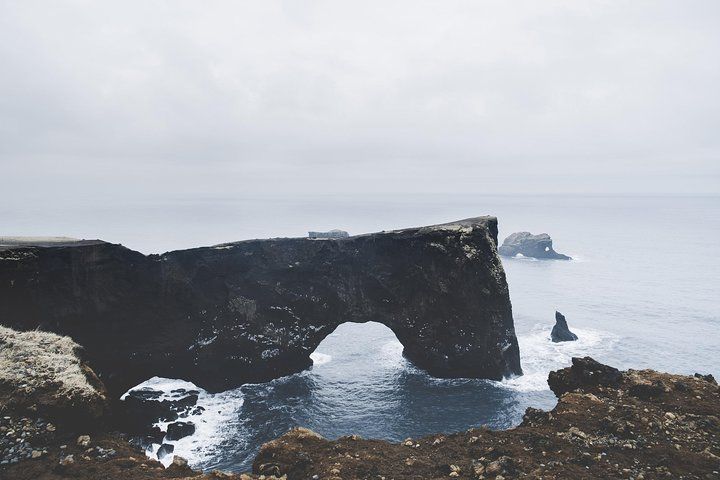
The Dyrhólaey arch, part of a nature reserve where puffins nest on the slopes above the sea.
Parts of the promontory close or have limited opening hours in May and June to protect nesting birds. Check before you go, and stay behind the ropes at the cliff edge.
Borgarfjörður Eystri in the East Fjords
Hafnarhólmi, a small islet by the harbour of Borgarfjörður eystri, is one of the best places in Iceland to see puffins up close. A path and viewing platforms lead right through the colony, and the birds are used to people.
It is a full day's drive from Reykjavík, but it is an easy detour from Egilsstaðir on a Ring Road trip. Our first-timer's road trip guide helps you fit detours like this into a route.
Látrabjarg in the Westfjords
Látrabjarg, at Iceland's western tip, is one of the largest bird cliffs in Europe. Puffins nest along the grassy cliff top, and on calm days you can lie down well back from the edge and watch them at close range.
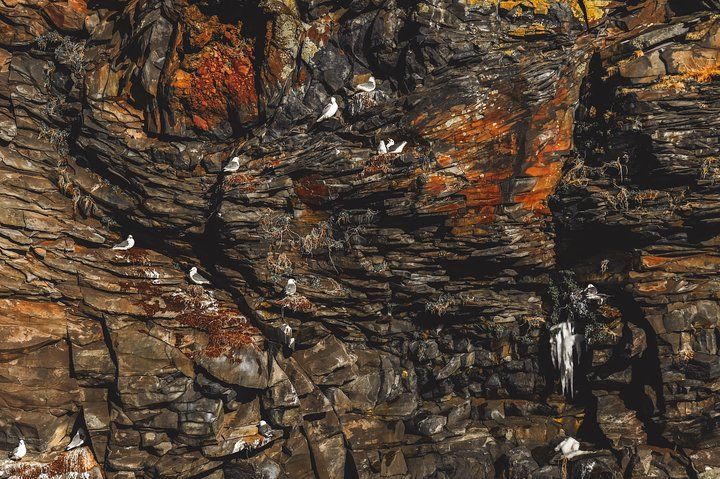
Seabirds nesting on the ledges of a basalt sea cliff, a typical scene on Iceland's bird cliffs in summer.
The cliff edges are undercut by burrows and can collapse, so keep well back. A Westfjords self-drive trip is the most practical way to reach Látrabjarg, as public transport does not go there.
Other Colonies
Puffins also nest at Ingólfshöfði on the south-east coast, reached by tractor-drawn wagon across the sands, on Grímsey off the north coast and on the Snæfellsnes Peninsula. You may spot them almost anywhere there are grassy sea cliffs between May and August.
How to Watch Puffins Without Disturbing Them
Puffins are relaxed around people who behave calmly, and they will often land surprisingly close. They are a highlight of any summer trip to Iceland with children, and a few simple rules keep both you and the birds safe.
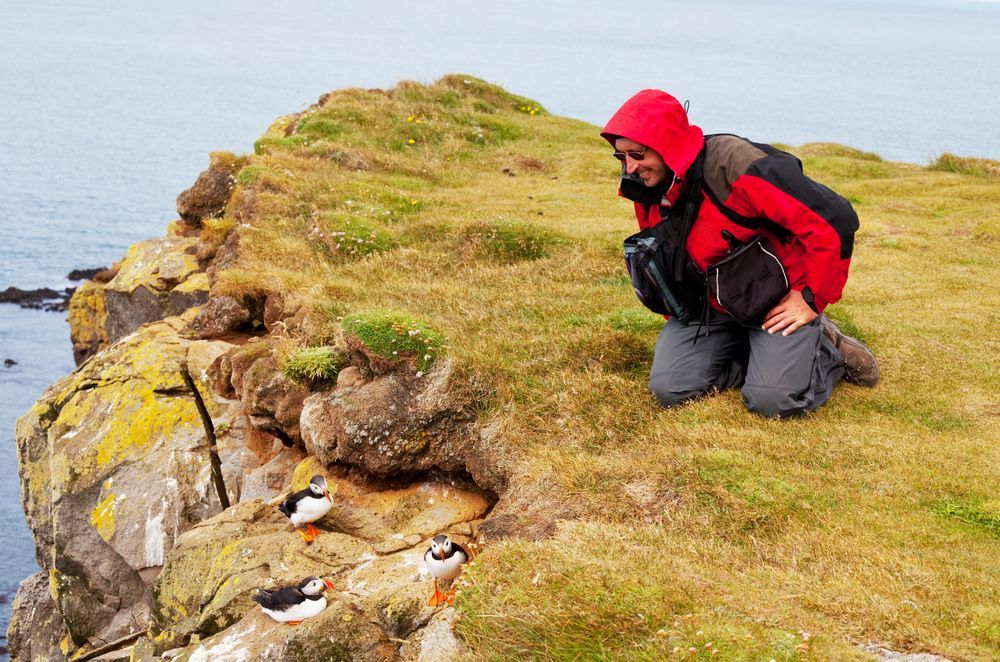
A photographer crouching quietly on a cliff top, with puffins standing on the rocks just below.
- *Stay on paths and behind ropes.* Burrows riddle the cliff tops, and stepping on them can collapse a nest or the ground under you.
- *Keep low and still.* Sitting or crouching makes you less threatening than standing over the colony.
- *Never feed or touch the birds,* and keep dogs away from nesting areas.
- *Do not fly drones* near bird cliffs, where they cause panic in the colony.
Tips for Photographing Puffins
A telephoto lens of 200 mm or more makes a huge difference, especially from boats. On land, a mid-range zoom is often enough at places such as Hafnarhólmi or Látrabjarg.
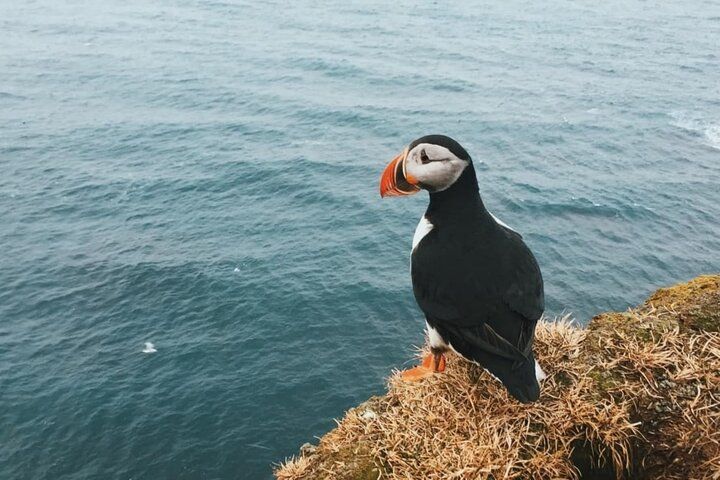
A puffin perched on the cliff edge, a classic pose when the birds pause before flying out to sea.
Use a fast shutter speed to freeze puffins in flight, and be patient near a burrow entrance, where parents land with fish several times an hour in July. Overcast days give soft, even light that suits their black-and-white feathers.
Combining Puffins With Whale Watching
In summer, a boat trip from Reykjavík can cover both. The same waters that hold the puffin islands are home to minke whales, humpback whales and white-beaked dolphins, which makes a three-hour trip good value from June to August.
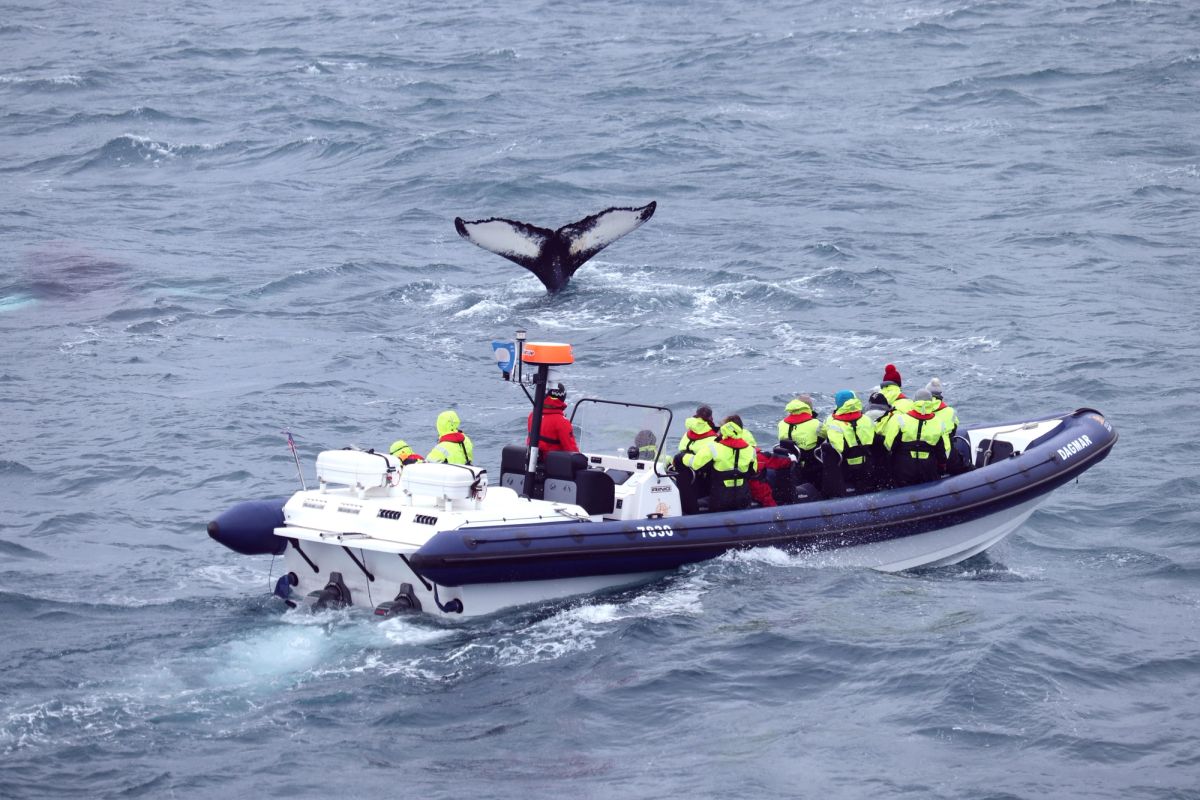
Passengers on a RIB watching a whale's tail rise nearby, on a summer trip from the harbour.
If you are travelling with children, our guide to whale watching with children covers which boats suit families and how to keep everyone warm on deck.
Can You Eat Puffin in Iceland?
Yes. Puffin has been eaten in Iceland for centuries, especially in the Westman Islands, and some restaurants serve smoked or pan-fried puffin. Hunting is permitted only in a short season and has been restricted in years when colonies are struggling.
Many visitors choose not to order it given the pressure on some colonies. If you want to try traditional food, lamb and fish dishes are a more sustainable choice.
Planning a Puffin Trip
Puffins fit easily into a summer itinerary if you plan around the season. A boat trip from Reykjavík works on almost any June or July day, while the Westman Islands or Dyrhólaey make a good add-on to a South Coast trip. The East Fjords and Westfjords colonies suit longer road trips.
For the simplest option, book a summer departure of our Reykjavík whale and puffin tour, which passes the puffin islands of Faxaflói Bay on its way out to look for whales.
Compare Golden Circle Tours
Check each selected product for its current operator, guide, itinerary, meeting point, and terms.
View Our Tours

