
What Djúpivogur Offers on a Port Day
Djúpivogur is a village of around 450 people on Berufjörður in East Iceland, and it is the quietest cruise call in the country. Trading has happened here since 1589, which makes it one of Iceland's oldest continuously used harbours.
The village begins where the pier ends. You can walk the whole settlement in 40 minutes, and doing exactly that is a legitimate way to spend a short call.
Beyond it lie the eastern fjords, the Vatnajökull massif inland and, on a long call, the glacier lagoon at Jökulsárlón. The Golden Circle is not reachable, and neither is Reykjavík.
Where Ships Dock
Djúpivogur has a small harbour immediately beside the village, and vessels that fit alongside put you a two-minute walk from the centre.
The harbour is compact, so larger ships anchor in Berufjörður and tender passengers ashore. That adds 20 to 30 minutes at each end of the day, and it is worth checking your day sheet for which it applies.
Facilities at the pier are minimal, in keeping with a village this size. There is no terminal building, no shuttle and no taxi rank waiting.
Excursion coaches park beside the harbour, and independent operators meet in the same area.
The Eggs of Merry Bay
The village's signature sight and the reason many passengers recognise the name.
Eggin í Gleðivík, the Eggs of Merry Bay, is an installation of 34 oversized granite eggs by the Icelandic artist Sigurður Guðmundsson, set along the shoreline at intervals on concrete plinths.
Each egg replicates the egg of a bird that nests in the area, and each carries the species name. The largest represents the red-throated diver, the local emblem.
The walk from the harbour takes about 15 minutes each way along the water. It is flat, it is free, and it is the single most photographed thing in the village.
Allow an hour for the round trip with photographs. On a short call it is the one thing to do.
Walking the Village
Djúpivogur repays a slow hour, which is fortunate, because slow is what it offers.
Langabúð is the oldest building, a timber warehouse from 1790 now holding a museum, a café and a collection by the sculptor Ríkarður Jónsson.
The harbour itself is a working one, with fishing boats rather than tourist vessels, and it is genuinely photogenic in a way tidier ports are not.
Búlandstindur, the pyramid-shaped mountain across the fjord, rises to 1,069 metres and dominates every view from the village. Local tradition holds that wishes made at midsummer beneath it come true.
The village was designated a Cittaslow town, part of an international movement built around unhurried living, which is either charming or a warning depending on how much you wanted to do today.
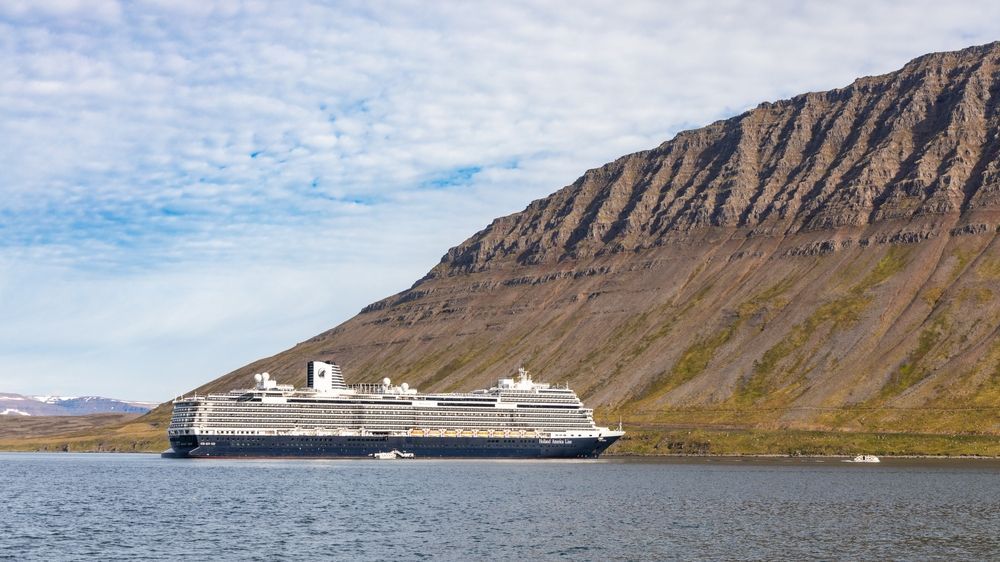
The sail into Berufjörður is a large part of what a Djúpivogur call gives you.
Excursions From Djúpivogur
Options are fewer here than at any other Icelandic port, and the good ones are genuinely good.
The eastern fjord drive follows the coast road through Berufjörður and Fáskrúðsfjörður, past mountains dropping straight into the sea. Two to four hours depending on how far the operator goes.
Vatnajökull National Park's eastern edge is reachable on a longer excursion, with the Environment Agency of Iceland managing the wider protected area.
Jökulsárlón glacier lagoon is the big one, at roughly two and a half hours each way. That means a 7- to 8-hour commitment, and it only works on a long call.
Papey Island bird tours ran historically from the harbour, and availability varies by season, so check rather than assume.
Reindeer are genuinely possible on any drive inland. East Iceland holds the country's only wild herd, introduced in the 18th century, and they come down towards the coast in autumn.
Timing Your Call
Djúpivogur calls tend to run 6 to 10 hours, and the options divide clearly.
Under 4 hours ashore: the eggs, Langabúð and a coffee. Complete and unhurried.
4 to 6 hours: the village plus a fjord drive along the coast road.
7 hours or more: Jökulsárlón, which uses the entire day and is the standout excursion from this port.
All-aboard is your deadline rather than departure, and it falls 30 to 60 minutes earlier. On a tender port this matters more, because the last tender leaves before all-aboard.
The Tender Question
If your ship anchors rather than berths, plan around it.
Tenders run continuously, and the queue is longest immediately after arrival and immediately before the last one. Going ashore 30 minutes after the first tender usually means no wait at all.
Excursions booked through the ship get priority tender tickets. Independent bookings do not, which is worth factoring into a Jökulsárlón day.
Rough water in Berufjörður occasionally stops tendering, and that is how calls get cancelled here. It is more common in the shoulder months than in July.
What You Cannot Do From Djúpivogur
The distances are the whole story with this port.
Reykjavík is around 7 hours by road. There is no version of a day trip.
The Golden Circle is beyond that again, so Þingvellir, Geysir and Gullfoss belong entirely to your Reykjavík call.
Akureyri and the north are about 5 hours away, and the Westfjords are further still.
Even Egilsstaðir, the largest town in the east, is an hour inland, which puts it at the edge of a short call.
If the classic Icelandic sights are on your list, book them for the capital. Our Golden Circle from the port excursion collects at Skarfabakki and fits a standard Reykjavík call comfortably.
Weather in the East
East Iceland has the country's most continental climate, which cuts both ways.
Summers are often warmer and drier than the southwest, because the region sits in the lee of the highlands. A sunny July day in Djúpivogur can beat anything Reykjavík manages.
Wind funnels down the fjords, so the harbour can be still while the coast road is not.
Check SafeTravel before any inland excursion, since it carries the official road and wind warnings for the region.
Dress in layers with a waterproof shell whatever the forecast says, since a still harbour tells you nothing about the coast road.
Our guide to what to wear on a shore excursion covers the specifics, including what to leave in the cabin.
Practical Points
A village this size has real limits, and knowing them helps.
There are two or three places to eat, and they fill when a ship is in. Book if you can, or eat aboard.
Shops are small and close early. The craft shops sell genuinely local work rather than mass-produced souvenirs, which is unusual.
Cards work everywhere, and cash is unnecessary.
Toilets are at Langabúð and the harbour building, and there is nothing on the coast road for long stretches.
Mobile coverage is fine in the village and patchy in the fjords.
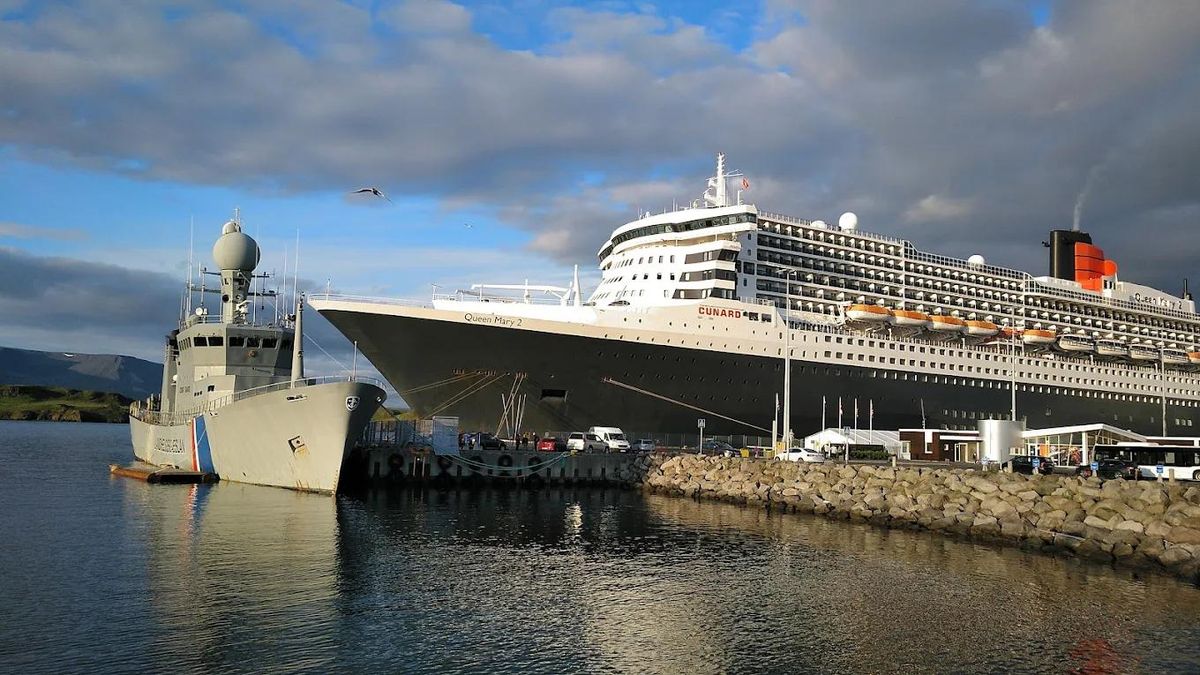
Búlandstindur rises to 1,069 metres across the fjord and dominates every photograph from the village.
Is It Worth an Excursion?
It depends entirely on your call length, and the answer is unusually clear-cut.
On a short call, book nothing. Walk to the Eggs, look at the mountain, have a coffee in a 1790 warehouse and enjoy the quietest port on your itinerary.
On a long call, book Jökulsárlón. Icebergs on a black sand beach are among the strongest sights in Iceland, and this is the only call that reaches it.
In between, take a fjord drive. The east coast road is spectacular and almost empty, which is not something you can say about the southwest.
The mistake is treating Djúpivogur as a lesser Reykjavík. It is a different kind of day, and the smallness is the point.
Book the Classic Sights for the Capital
Djúpivogur is an East Iceland day, and the Golden Circle sits on the other side of the country. When your ship reaches Reykjavík, our small-group Golden Circle tour from the cruise port collects at Skarfabakki, covers Þingvellir, Geysir and Gullfoss, and works backwards from your all-aboard time. Send us your call date and we will confirm the timing first.
Compare Golden Circle Tours
Check each selected product for its current operator, guide, itinerary, meeting point, and terms.
View Our Tours

