
What Ísafjörður Offers on a Port Day
Ísafjörður is the capital of the Westfjords, a town of around 2,600 people wedged on a spit of land under mountains that rise steeply on three sides. It is the most dramatic setting of any Icelandic cruise port and the smallest town to receive large ships.
The centre is a five-minute walk from the berth, which makes it one of the few Icelandic calls where doing nothing more than wandering is a genuinely good option.
Beyond the town, excursions reach Dynjandi waterfall, the fjord road network and the wildlife of the surrounding coast. What you cannot do is reach Reykjavík or the Golden Circle, which sit a full day's drive away.
Where Ships Dock
Ísafjörður has a central berth used by most calling vessels, with the town centre immediately adjacent.
Larger ships sometimes anchor in the fjord and tender passengers ashore, which adds 20 to 30 minutes at each end of the day. Check your day sheet for which applies.
Either way, you arrive within a short walk of the old town, the museum and the cafés, which is unusual in Iceland and welcome after a long sailing.
Facilities at the pier are limited, in keeping with the size of the town. There is no large terminal building and no shuttle needed.
Walking the Town
An hour and a half covers Ísafjörður properly, and it is a pleasant hour and a half.
The old town in the Neðstikaupstaður area holds four of the oldest buildings in Iceland, timber structures dating from the 18th century, one of which houses the Westfjords Heritage Museum.
The museum covers fishing, maritime history and the accordion collection of a local musician, which sounds niche and is genuinely charming.
Silfurgata and the surrounding streets have cafés, a bakery and a handful of shops. Húsið and Tjöruhúsið are the two restaurants people talk about, the latter serving fish straight from the boats in a converted 18th-century warehouse.
The mountains behind the town rise to over 700 metres, and the avalanche defences above the houses are visible from the street, which tells you something about winter here.
Dynjandi Waterfall
The headline excursion from Ísafjörður, and the one most passengers book.
Dynjandi is a fan-shaped cascade dropping about 100 metres over a series of steps, widening as it falls, and it is the largest waterfall in the Westfjords. It sits in a nature reserve managed by the Environment Agency of Iceland.
The drive is the point as much as the destination. Roughly 90 minutes each way over mountain passes and along fjords, with almost no traffic, on roads that include gravel sections.
Allow 4.5 to 5 hours for the round trip, including time at the falls. That fills most of a standard call.
There is a walk of about 15 minutes uphill from the car park to the base of the main fall, past several smaller cascades. It is uneven and worth doing.
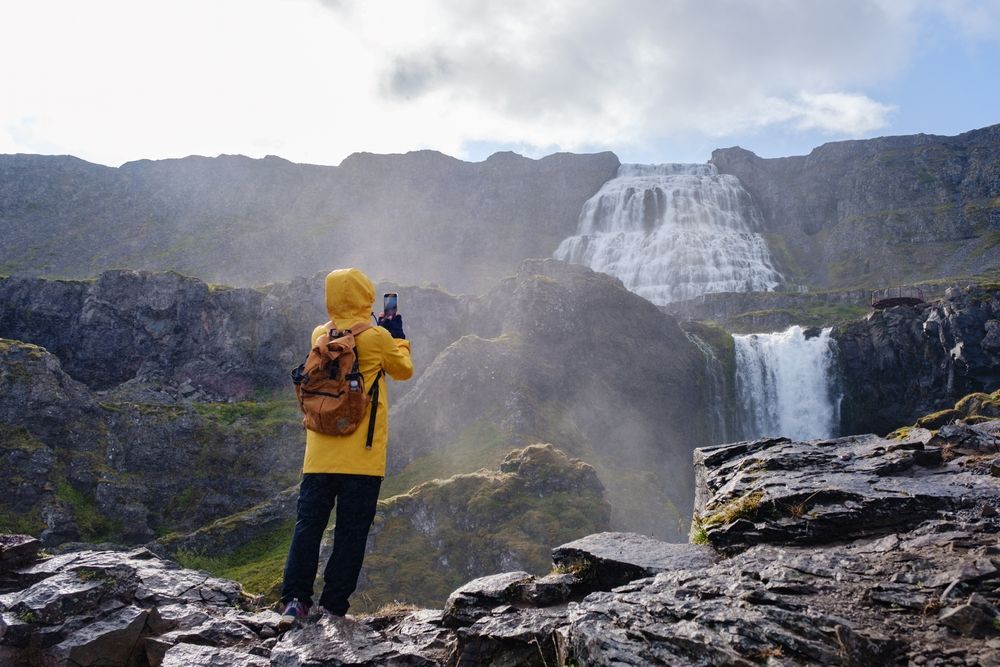
Dynjandi drops about 100 metres in a widening fan, and the drive there is half the excursion.
Other Excursions Worth Considering
Four alternatives, depending on your call length and interests.
Boat trips into Ísafjarðardjúp, the large fjord the town sits on, with seabirds, seals and occasionally whales. Two to three hours.
Vigur Island, a small farm island in the fjord with eider ducks and puffins in season and Iceland's oldest windmill. Around three hours, including the boat.
Kayaking from the town, which puts you on the water with the mountains rising directly from it. Two hours and one of the better ways to see the setting.
Hiking, from short walks above the town to longer routes in Hornstrandir, the uninhabited nature reserve to the north, which needs a boat transfer and most of the day.
Timing Your Call
Ísafjörður calls tend to run 8 to 10 hours, and the options divide cleanly by length.
Under 5 hours ashore: the town, the museum and lunch. Comfortable and complete.
5 to 7 hours: a boat trip to Vigur Island, plus a walk around town.
7 hours or more: Dynjandi, which is the excursion that needs the whole day.
Whatever you book, all-aboard is your deadline rather than departure time, and it usually falls 30 to 60 minutes earlier. On a small port with limited transport, a missed excursion return is a serious problem.
The Weather Factor
The Westfjords are the wettest and windiest part of Iceland, and the port reflects it.
Roads over the passes to Dynjandi close in bad weather, and excursions cancel accordingly. That is more common in shoulder season than in July.
Ships occasionally cannot dock at all in high wind, and Ísafjörður's fjord approach makes that decision more likely here than at Reykjavík.
Check SafeTravel for alerts before you go ashore, since it carries the official warnings for road closures and wind.
Dress for the conditions rather than the forecast temperature. A waterproof shell, layers underneath and boots with grip cover every version of a Westfjords day.
Our guide to what to wear on an Icelandic shore excursion sets out the full list, including what to leave in the cabin.
What You Cannot Do From Ísafjörður
Worth being explicit, because it catches people out.
You cannot reach Reykjavík. The drive is around 6 hours each way, and there is no realistic day-trip option.
You cannot reach the Golden Circle. Þingvellir, Geysir and Gullfoss are a separate part of the country, and they belong to your Reykjavík call rather than this one.
You cannot reach the South Coast, Jökulsárlón or Snæfellsnes either. The Westfjords are their own region, and the roads are slow.
If the Golden Circle is on your list, book it for your Reykjavík day. Our Golden Circle from the port excursion collects at Skarfabakki and fits a standard call there.
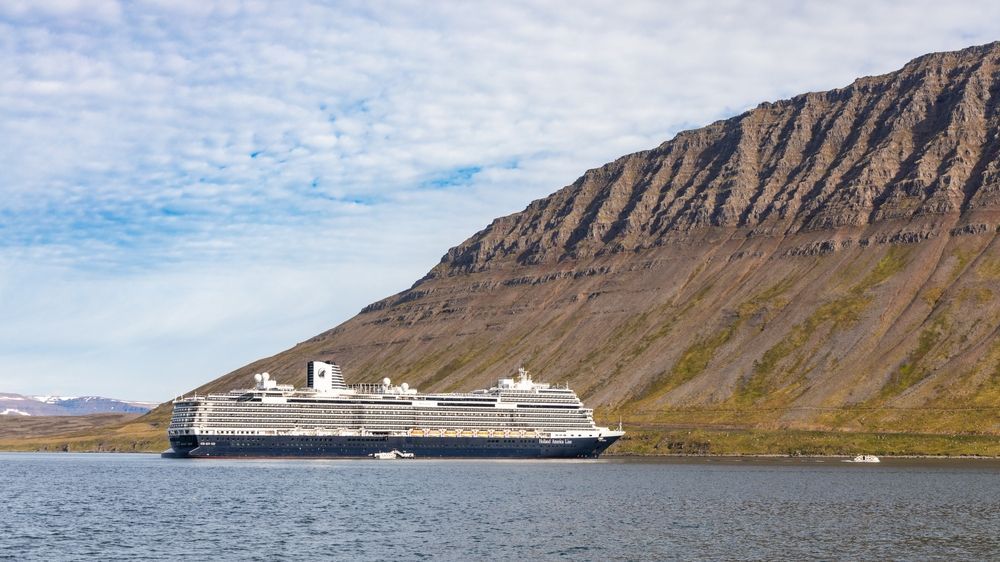
The sail in and out of Ísafjarðardjúp is one of the better scenic approaches on an Iceland itinerary.
When to Sail Here
Ísafjörður receives ships from roughly May to September, with the peak in July and August.
June and July give you the most daylight, the best chance of settled weather over the passes, and puffins on Vigur.
August and September bring more rain and wind, and the Westfjords get both in quantity.
May is quiet and beautiful, with snow still on the mountains and fewer ships, though some excursion roads may not yet be reliably open.
Practical Points
Small port, small town, and a few things follow from that.
Cash is unnecessary. Iceland is close to cashless, and Ísafjörður is no exception.
Excursion capacity is limited. There are fewer vehicles and guides here than in Reykjavík, so book ahead rather than on the day.
Mobile coverage is good in town and patchy over the passes.
Facilities on excursion routes are sparse. Use the toilets before you leave and take water with you.
The town is genuinely small, so if several ships call at once, it feels busy in a way Reykjavík never does.
Is Ísafjörður Worth an Excursion?
For most passengers, yes, and the choice depends on what you want from the day.
If you want the landscape, book Dynjandi and accept that it takes the whole call. The drive through the fjords is as memorable as the waterfall.
If you want the place rather than the scenery, stay in town. Ísafjörður is one of the few Icelandic ports where the settlement itself repays a couple of hours.
If you want wildlife, the boat trips and Vigur are better here than at most Icelandic ports, because the fjord is productive and the colonies are close.
The one thing not to do is book nothing and then find the weather has turned. Have a plan and a fallback.
Save the Golden Circle for Reykjavík.
Ísafjörður is a Westfjords day, and the classic Icelandic sights belong to a different port on your itinerary. When your ship reaches Reykjavík, our small-group Golden Circle tour from the cruise port collects at Skarfabakki, covers Þingvellir, Geysir and Gullfoss, and works backwards from your all-aboard time. Send us your call date and we will confirm the timing before you book.
Compare Golden Circle Tours
Check each selected product for its current operator, guide, itinerary, meeting point, and terms.
View Our Tours

