
Drive east from Reykjavík over the Hellisheiði plateau and the road suddenly tips down a steep slope. Below you lies a small town with steam rising between the houses.
That is Hveragerði. The name means "hot spring garden", and it fits. Hot water bubbles up in back gardens and greenhouses glow all year, while a steaming river runs past the swimming pool.
Most visitors pass straight through on their way to the Golden Circle or the South Coast. Stop for an hour or two, though, and you find one of the most unusual towns in Iceland. It is easy to add to a Golden Circle loop.
Where Is Hveragerði?
Hveragerði sits on Route 1 in South Iceland, about 45 kilometres east of Reykjavík. The drive takes around 40 to 45 minutes over the Hellisheiði plateau and down the Kambar hill. Selfoss is only about 15 minutes further east.
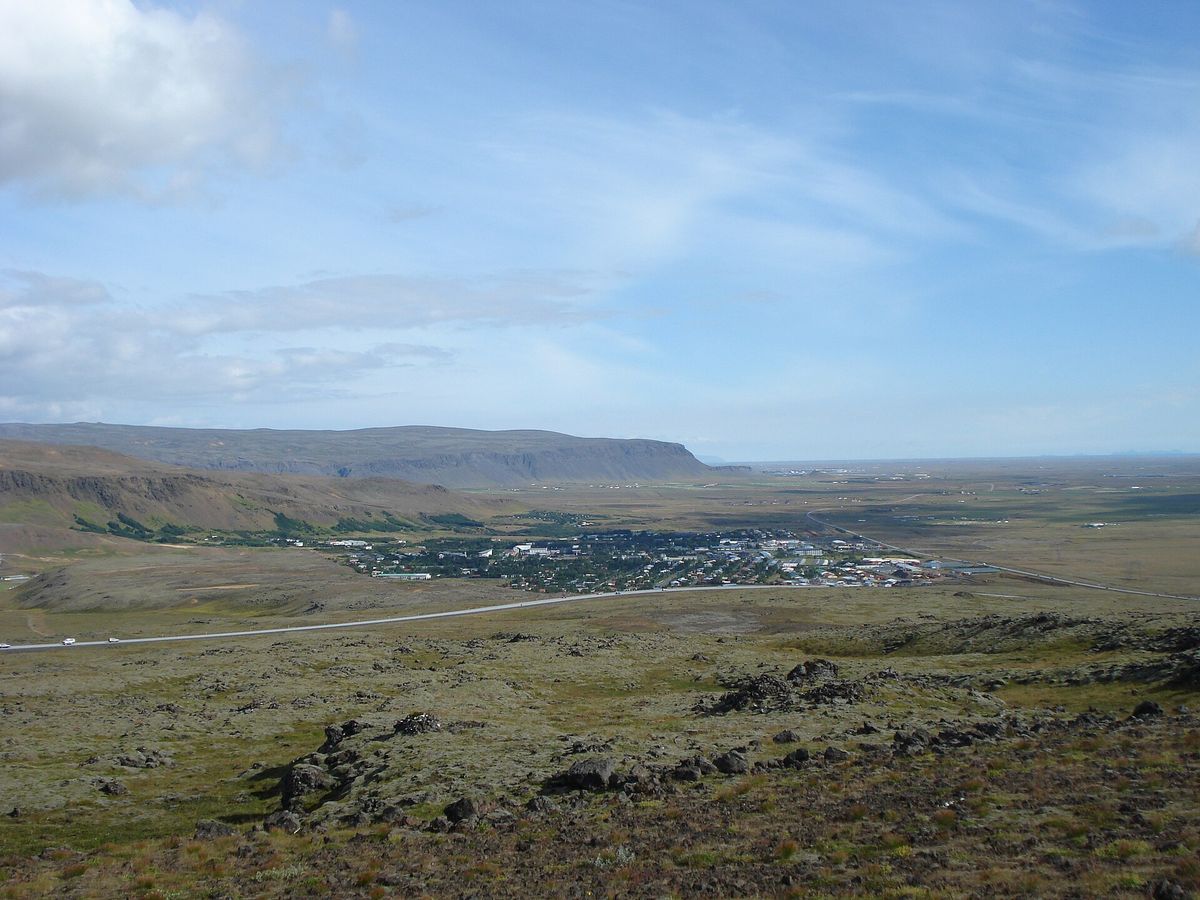
Hveragerði from the hills above town, with the plains of South Iceland stretching towards the coast.
The town is home to around 3,000 people. It sits at the foot of the Hengill volcanic area, which is why the ground beneath it is so hot.
Why Is Hveragerði So Geothermal?
Hveragerði is built on an active geothermal field linked to the Hengill volcanic system. Hot water and steam rise through cracks in the ground right across town, and new hot springs sometimes appear after earthquakes.
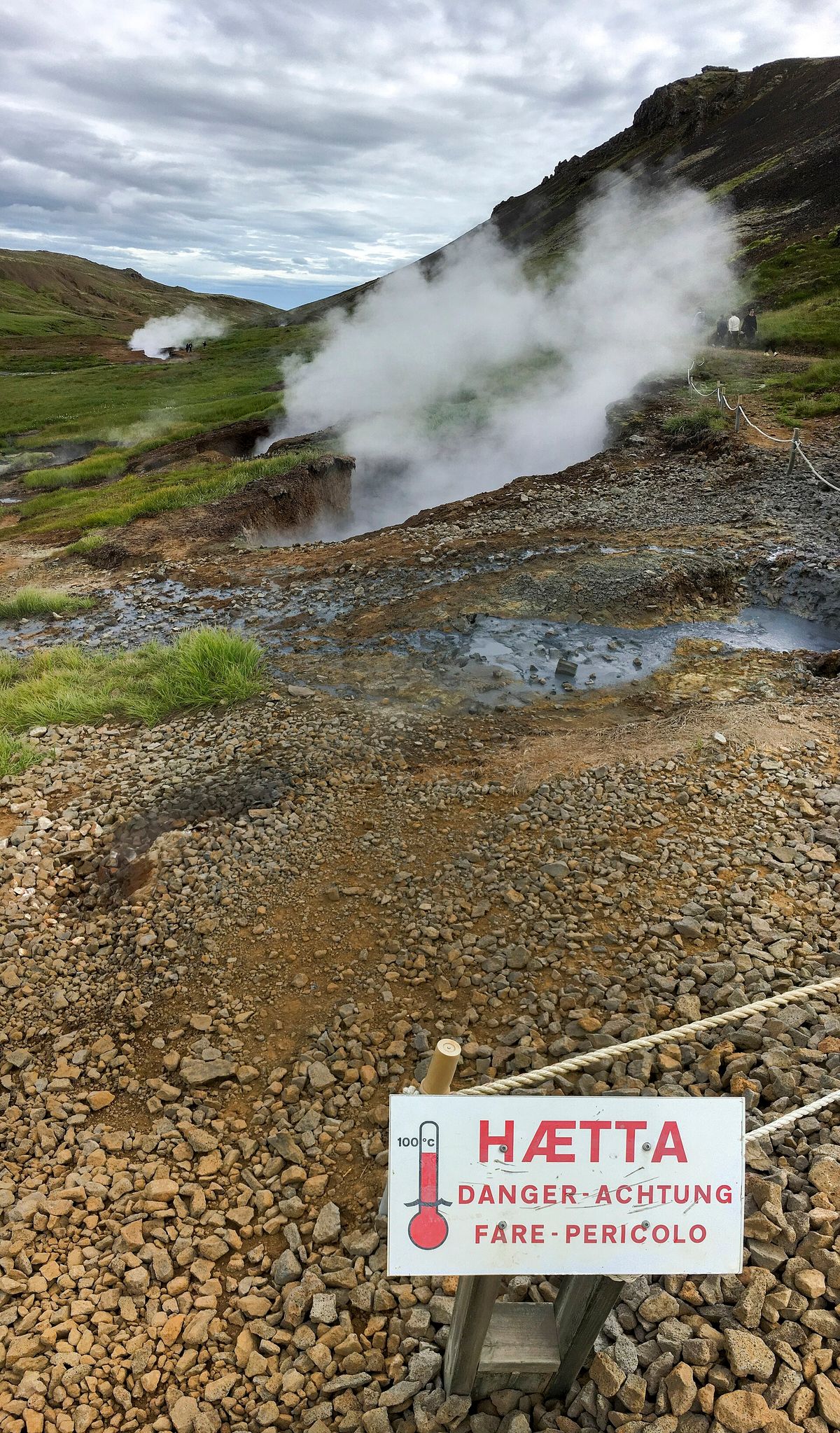
A steaming vent in the hills above Hveragerði, with a warning sign beside the path.
That activity is not always gentle. A magnitude 6.3 earthquake struck the area on 29 May 2008, according to the Wikipedia entry for Hveragerði. It damaged many buildings in town and injured several people.
Things to Do in Hveragerði
Hveragerði is small, but it has more to do than its size suggests. Here are the highlights.
Visit the Geothermal Park
The Geothermal Park in the centre of town is the easiest way to see the hot ground up close. Paths lead between bubbling mud pots and steaming vents. A small visitor centre explains how the geothermal system works.
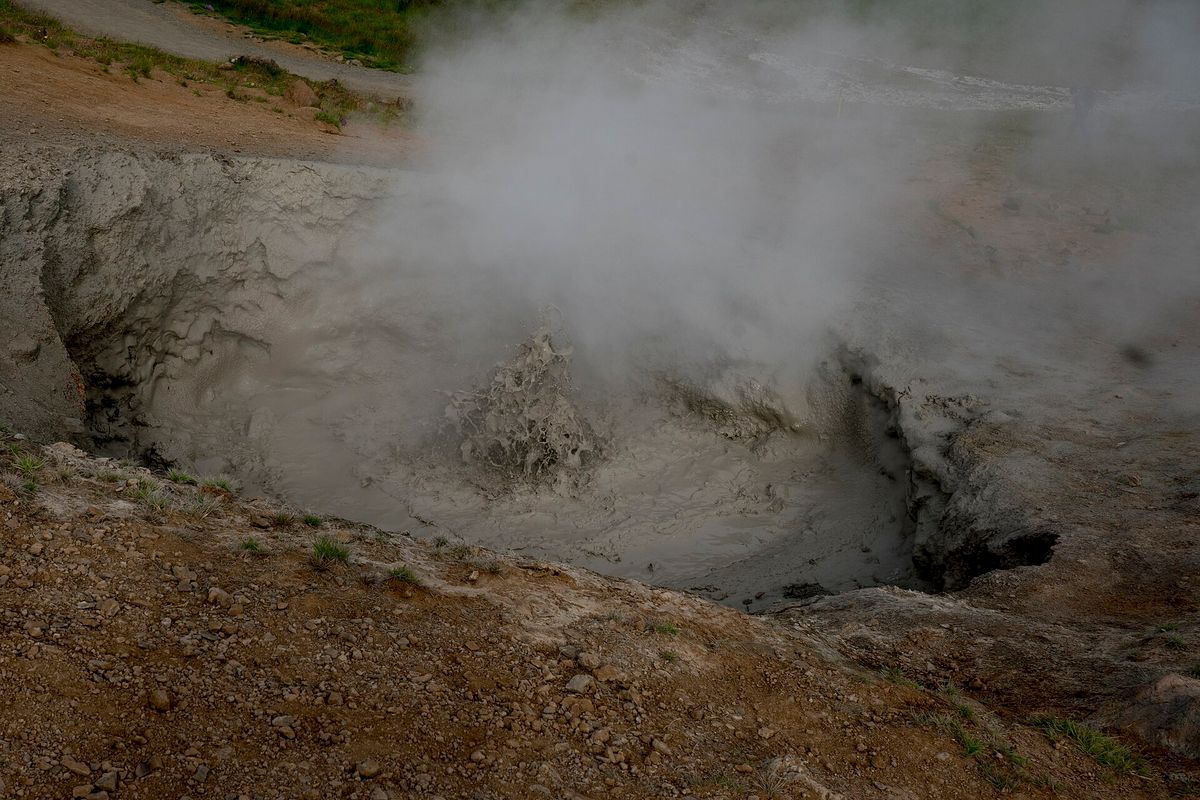
A steaming mud pot near Hveragerði, where hot gas bubbles up through wet clay.
Visitors can usually boil an egg in a hot spring or soak their feet in a warm footbath for a small extra charge. There is a modest entrance fee, and opening hours change through the year, so check before you go.
See Earth Cooking in Action
Hot ground is not just for show in Hveragerði. Locals have long used it for cooking, with pots and boxes buried in the earth to steam food slowly.
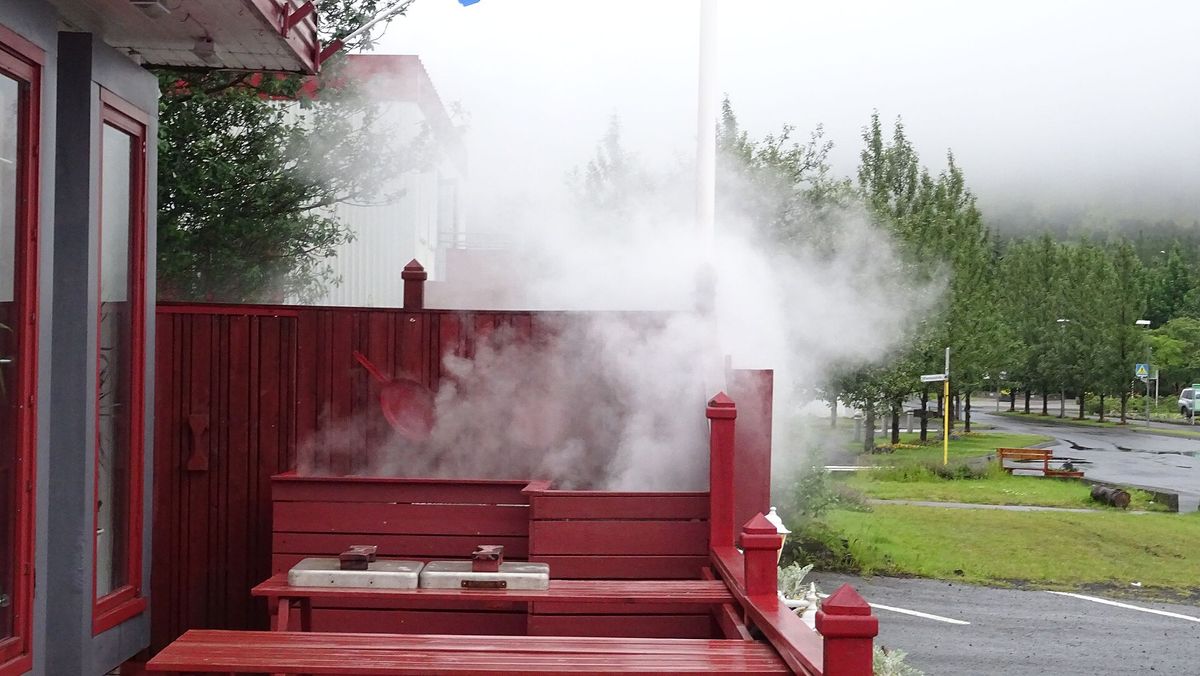
Steam pouring from a geothermal cooking box in Hveragerði.
Some cafés and restaurants in town use the same idea, so look out for dishes cooked in the hot ground on menus.
Hike to the Reykjadalur Hot River
The most popular activity near Hveragerði is the walk up to Reykjadalur, a steaming valley where a warm river is deep enough to bathe in. The trail starts at a car park just north of town.
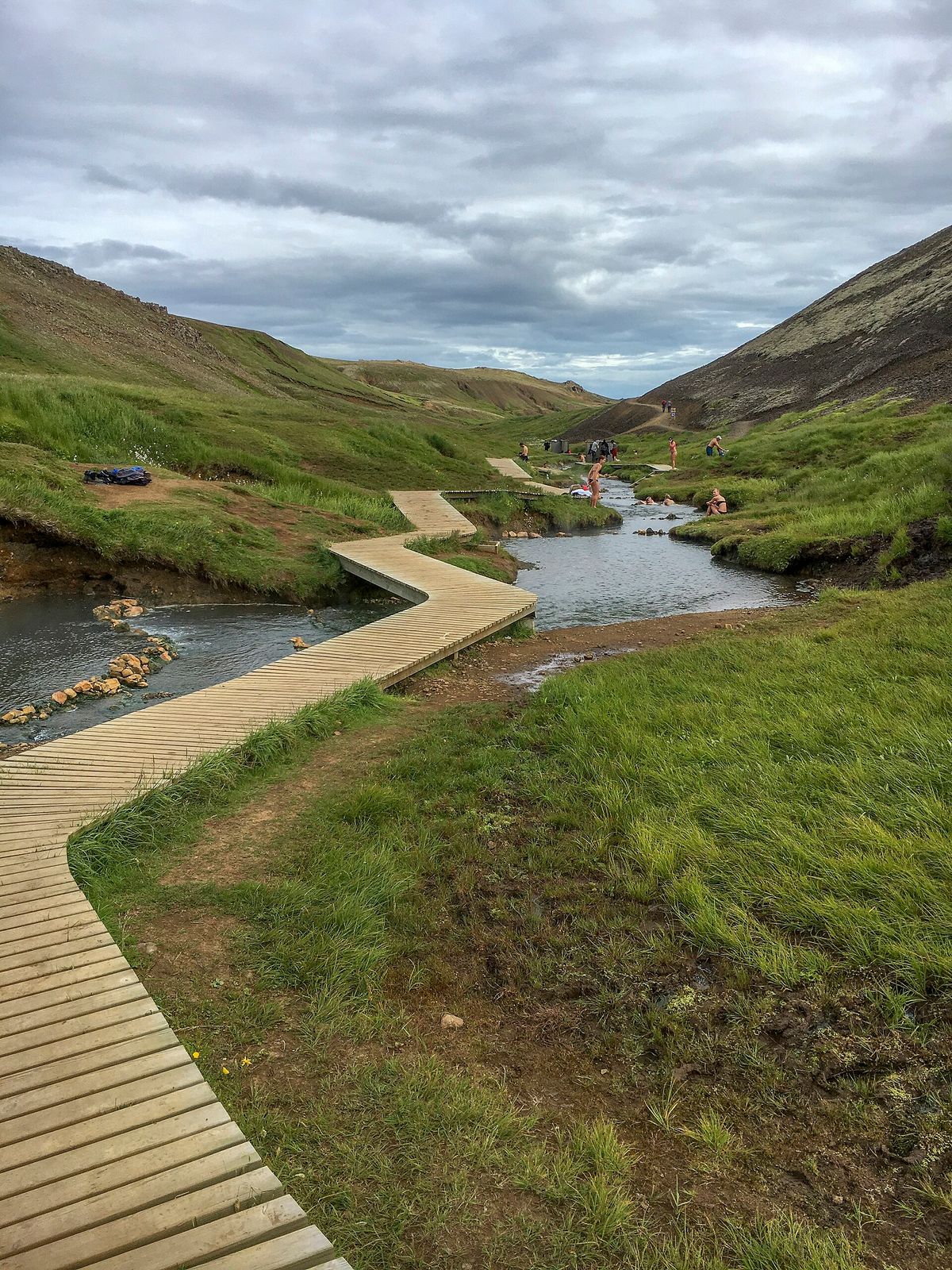
The boardwalk beside the warm stream in Reykjadalur, where bathers sit in the river.
The hike takes around an hour each way, climbing through hills dotted with steaming vents. Our page on the Reykjadalur valley trail covers the route, the bathing area and what to bring.
Swim at Laugaskarð Pool
Laugaskarð is the town's outdoor swimming pool, close to the Varmá river and heated by geothermal water. It is a good alternative to a hike on a cold day, and it is popular with locals.
As in all Icelandic pools, you must shower without a swimsuit before you get in.
Walk Along the Varmá River
The Varmá, whose name means "warm river", runs right through Hveragerði. A path follows its banks past steaming springs and old buildings. It makes a pleasant short walk after lunch.
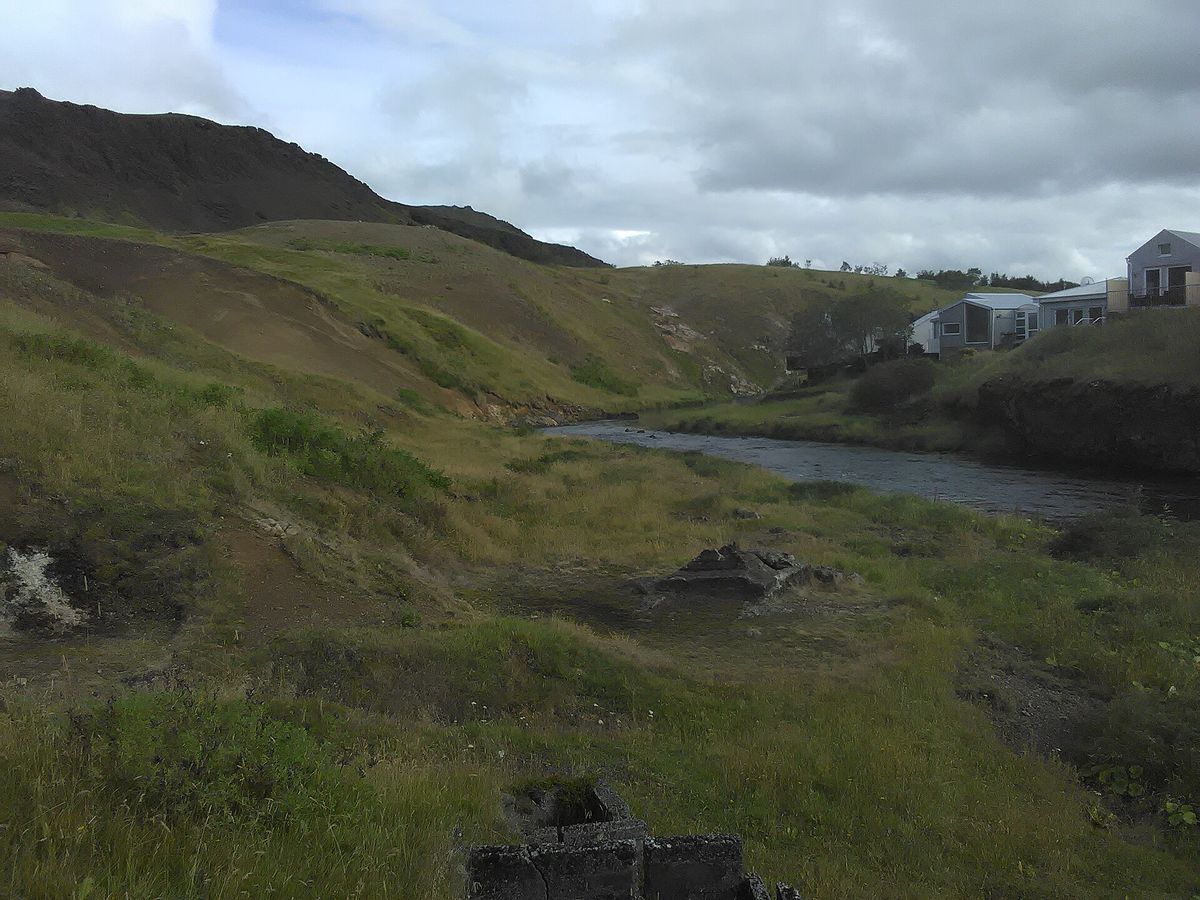
The Varmá river flowing past the edge of Hveragerði, with steam on the slopes above.
Explore the Greenhouses
Hveragerði has grown flowers and vegetables in geothermally heated greenhouses since the 1920s. On the drive into town you pass long rows of glasshouses, many still in use.
For a full greenhouse experience on the Golden Circle, Friðheimar's tomato greenhouse near Reykholt serves lunch among the vines.
The Geothermal Hills Above Town
The hills north of Hveragerði are one large geothermal field, dotted with steam vents, boreholes and pipelines. The power plants on Hellisheiði use the same heat to produce electricity and hot water for the capital.
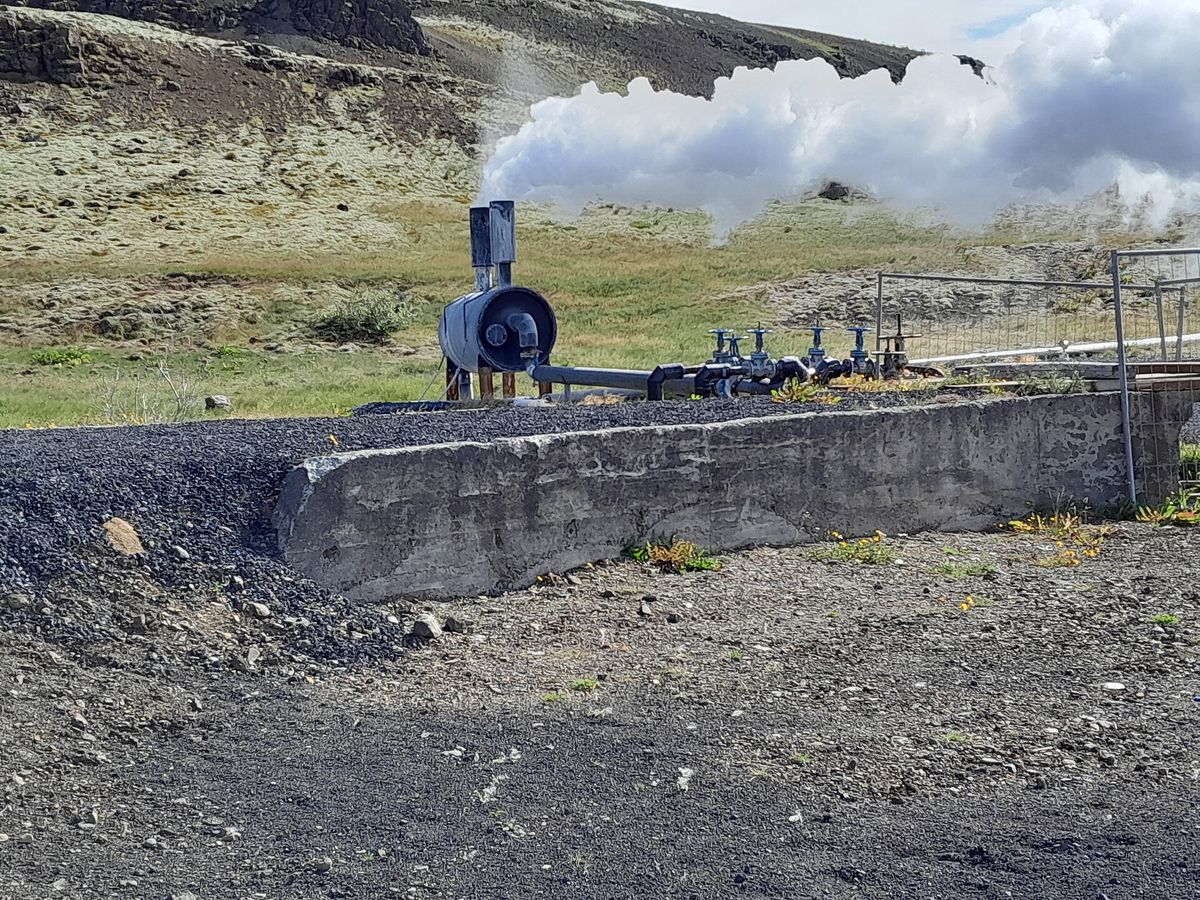
A steaming borehole at Leirgerður, one of the geothermal areas on the edge of Hveragerði.
Keep to marked paths in these areas. The ground can be thin and the water boiling, and warning signs are there for good reason. Check the SafeTravel hiking advice before heading into the hills.
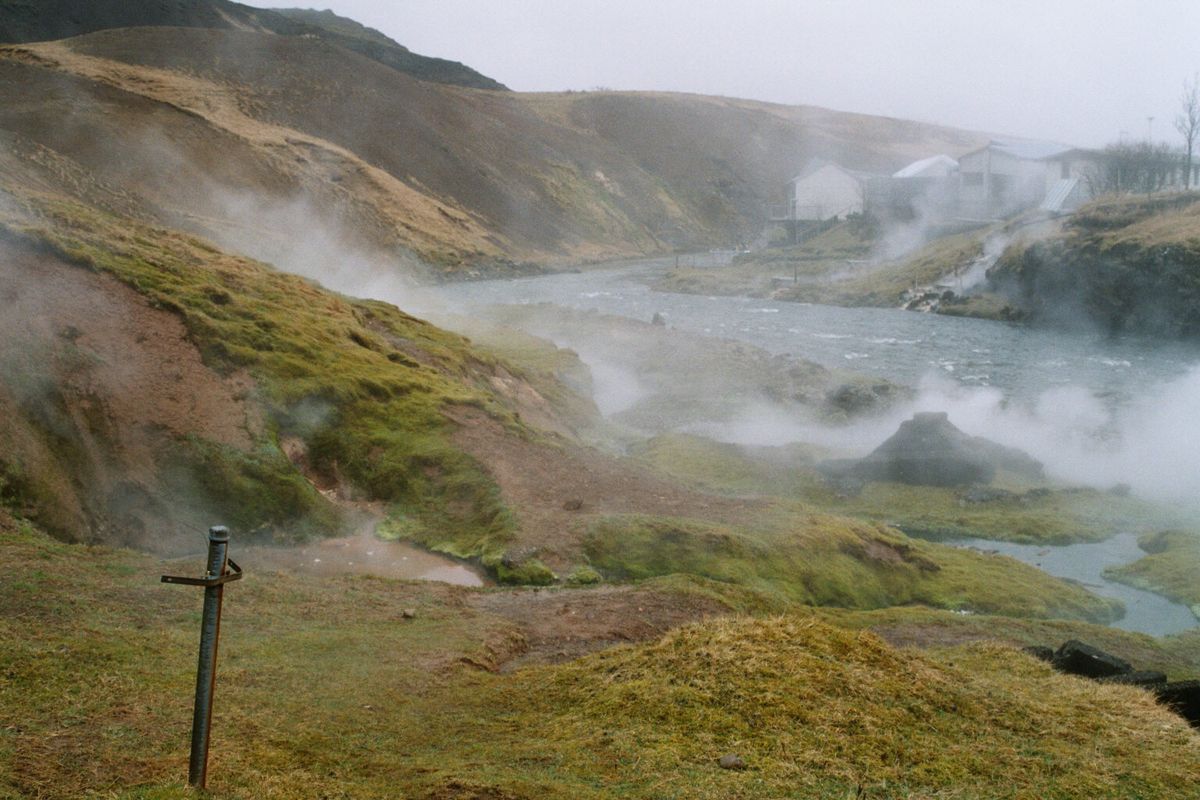
Steam rising across the valley above Hveragerði, where hot springs line the riverbanks.
Hveragerði and the Golden Circle
Hveragerði is not one of the three classic Golden Circle stops, but it sits on one of the main routes to them. Many drivers come over Hellisheiði, stop in Hveragerði and continue through Selfoss. From there they head north to Kerið, a red volcanic crater, and on to Geysir and Gullfoss.
That makes Hveragerði a natural first or last stop. In the morning, it is a place for coffee and a look at the steaming hills. In the evening, a soak at Laugaskarð or in Reykjadalur ends a long day of driving.
For more walks in the area, our guide to hikes along the Golden Circle covers more trails in the region, from short strolls to full-day walks.
Getting There in Winter
The road over Hellisheiði can close in storms, and the Kambar hill is steep. Check the umferdin.is road map before setting off, especially between November and March.
Where to Eat in Hveragerði
Hveragerði has a few cafés, a bakery and restaurants along the main street and near the river. Many have local produce from the greenhouses on the menu, and some may offer bread or dishes baked in the hot ground. There is also a supermarket and a fuel station on Route 1, useful before heading further east.
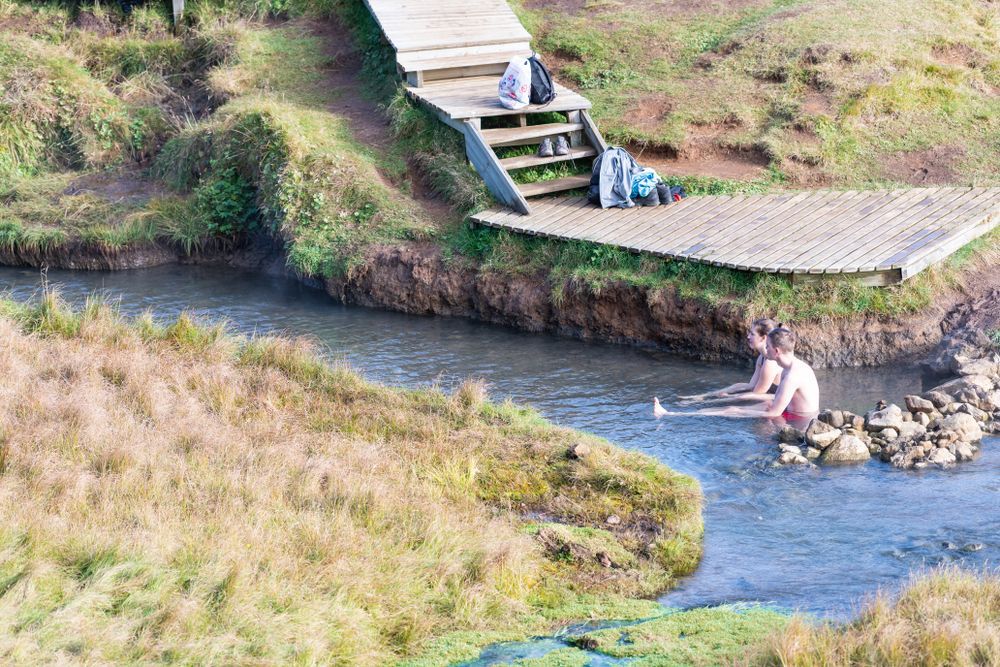
Bathers in the warm river at Reykjadalur, a short hike from Hveragerði.
Is Hveragerði Worth Visiting?
If you are driving the Golden Circle via Selfoss or heading to the South Coast, yes. The geothermal park takes under an hour, and the town makes an easy break on the road. With half a day, add the Reykjadalur hike and a soak.
If you are short of time, you can still see the steam and greenhouses from Route 1. But the town rewards a stop more than most visitors realise.
Seeing the Region on a Guided Day
If you would rather not drive, our geothermal bathing day tours combine the Golden Circle with a soak at a natural pool.
They take care of the driving over Hellisheiði, which can be tricky in winter.
For a day built around your own interests, a private tour with your own guide can include a stop in Hveragerði on request.
Compare Golden Circle Tours
Check each selected product for its current operator, guide, itinerary, meeting point, and terms.
View Our Tours

