
About 5,200 years ago, a river of lava flowed across the land east of Reykjavík. Its surface cooled and hardened into a crust, but underneath, the molten rock kept moving.
When the eruption ended, the lava drained away and left an empty tube behind. It is big enough to drive a bus through.
Today you can walk inside it. Raufarhólshellir, better known as The Lava Tunnel, is one of the longest lava tubes in Iceland. It lies just half an hour from the capital, close to the road to the Golden Circle's southern loop and the South Coast.
What Is Raufarhólshellir?
Raufarhólshellir is a lava tube in South Iceland formed during the Leitahraun eruption, east of the Bláfjöll mountains. According to The Lava Tunnel's website, it is about 1,360 metres long in total, with a main tunnel of about 900 metres. It reaches up to 30 metres wide and 10 metres high.
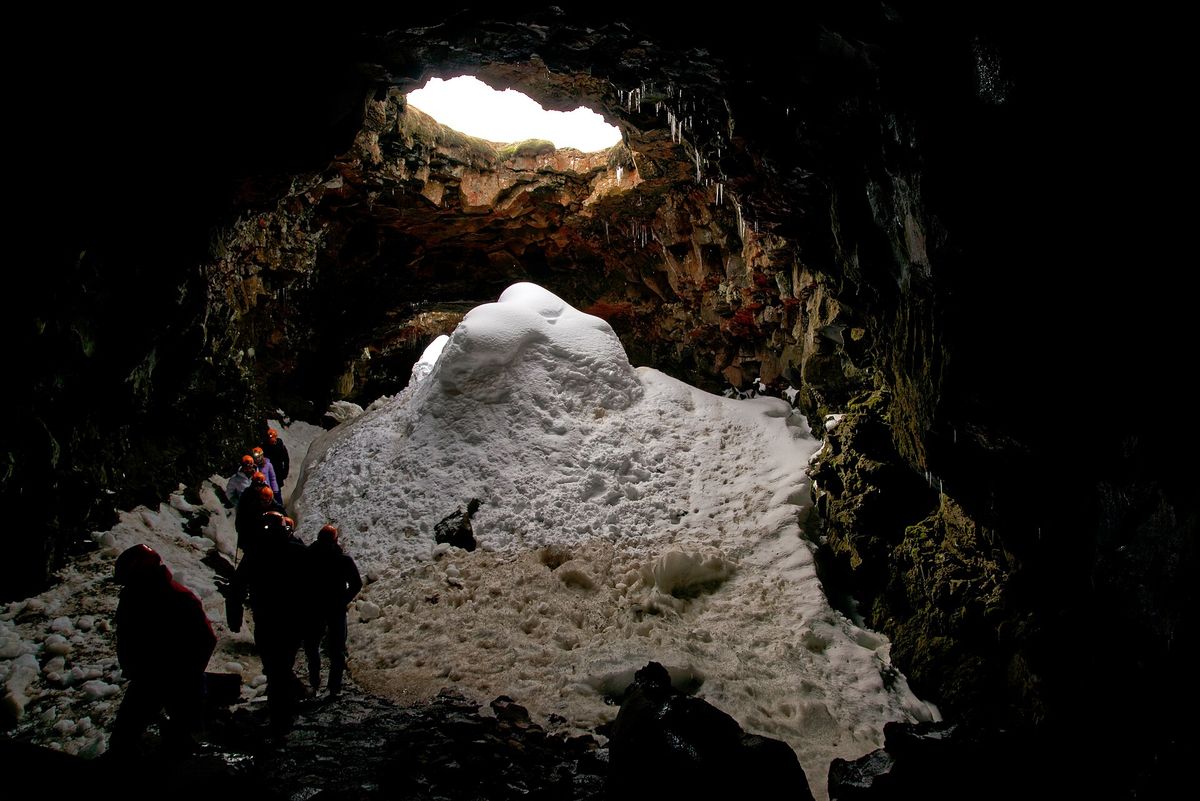
Visitors near the entrance of the lava tunnel, where snow and ice gather under a skylight in spring.
Near the entrance, parts of the roof have collapsed and opened three skylights. Columns of daylight fall into the cave through them. At the far end, the tunnel splits into three smaller branches with frozen "lava falls" where the molten rock once poured over ledges.
How a Lava Tube Forms
Lava tubes form in runny, low-viscosity lava, the kind that flows rather than piles up. As a lava river moves downhill, its surface is exposed to cold air and hardens into a solid crust.
That crust acts as a roof and insulates the lava below, which keeps flowing like water in a pipe. When the eruption stops and the supply runs out, the lava drains out of the far end. What remains is a hollow tunnel.
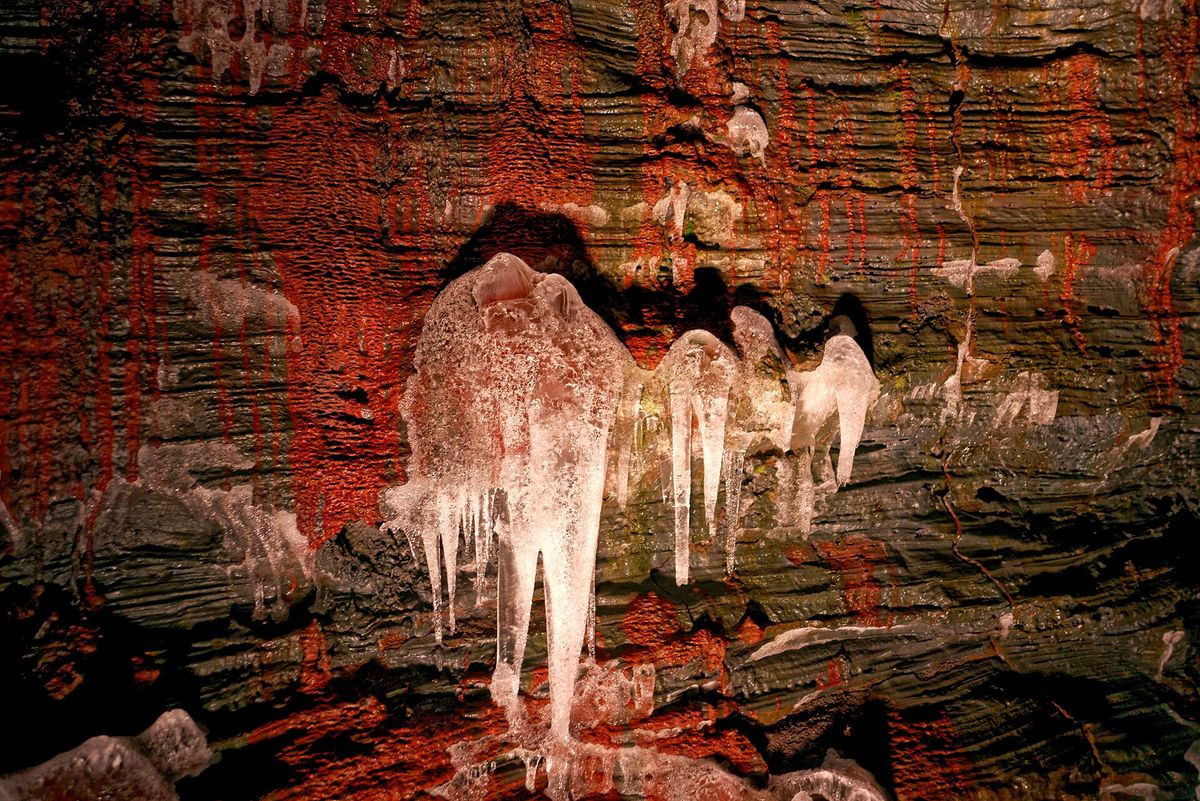
Ice formations against the red and brown layers of cooled lava on the tunnel walls.
You can read the story in the walls. Horizontal lines mark the different levels of the flowing lava, and the colours come from minerals and oxidation. Red and orange show where iron in the rock has rusted.
What Happened to the Stalactites?
Raufarhólshellir was once full of small lava stalactites. They are fragile, and as more and more people visited the cave from the 1950s onwards, they were broken off and taken. Almost none are left today.
This is one reason the cave is now visited only on guided tours, with a walkway that protects the floor.
Ice Sculptures in Winter
In winter and early spring, cold air settles in the entrance area and water drips through the cracks in the roof. The result is a field of ice formations, with columns and spikes of clear ice rising from the floor and hanging from the walls.
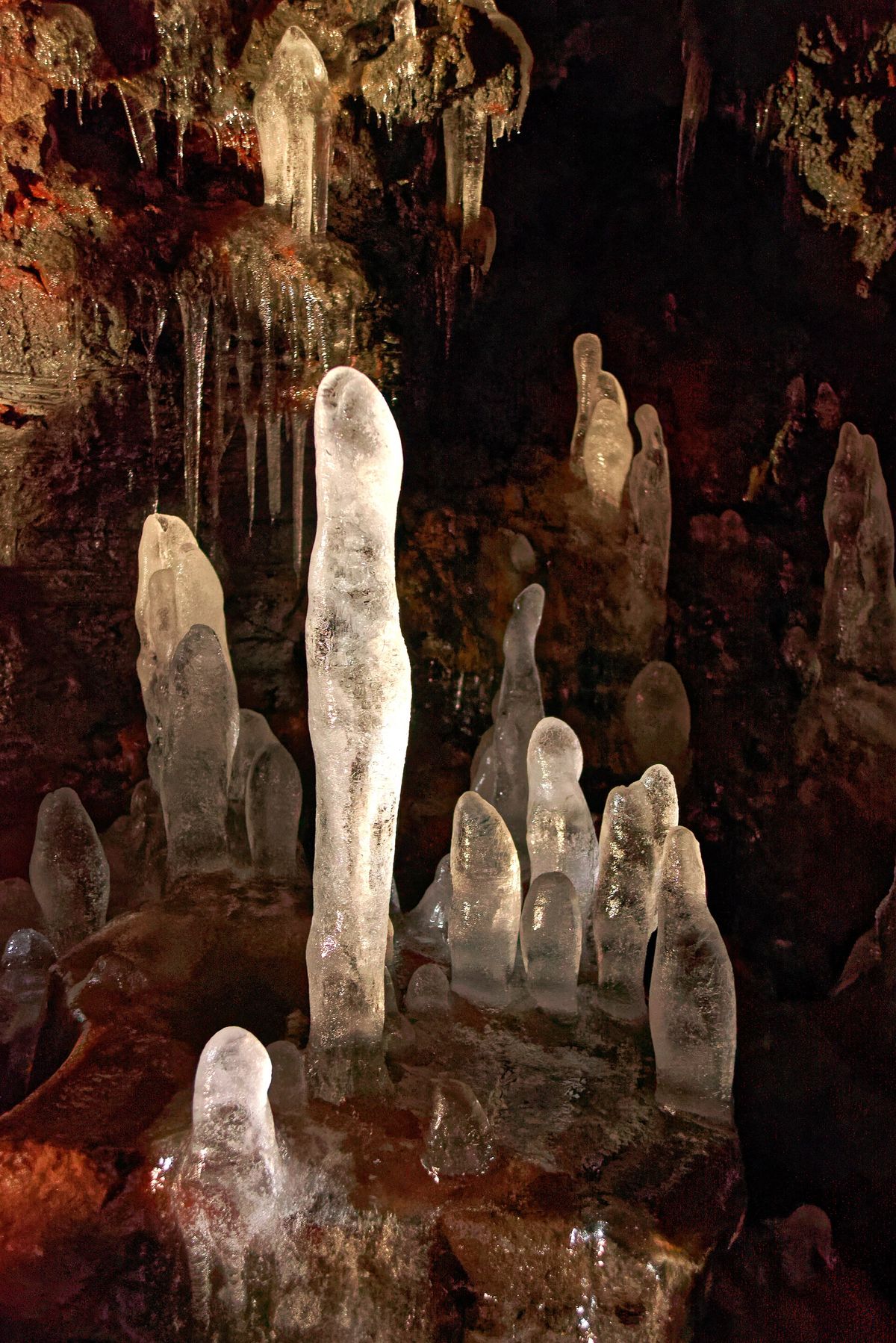
Ice stalagmites growing from the cave floor in spring, lit up by the tour lighting.
These ice sculptures change every year and usually melt by summer. If you want to see them, visit between around December and April.
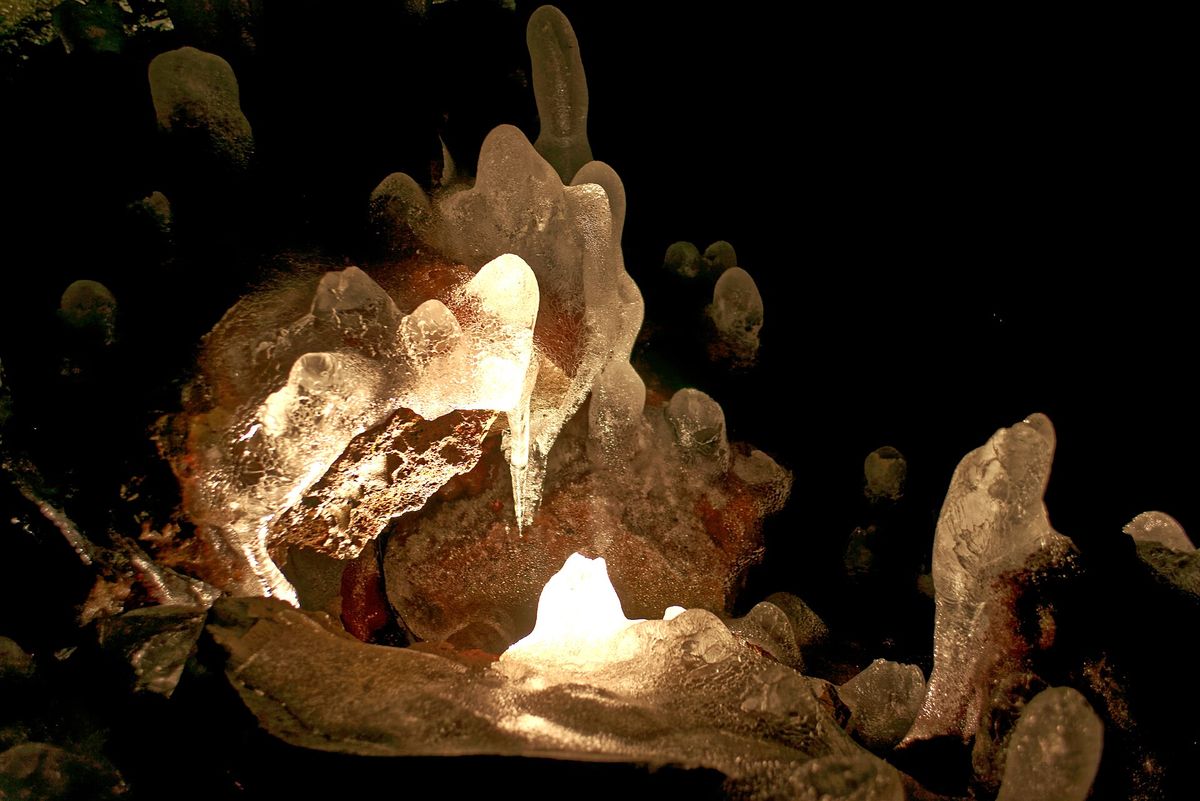
Ice formations glowing under the lights deeper in the tunnel.
Lava Tunnel Tours
You can visit Raufarhólshellir only on a guided tour, run by the company that manages the cave. At the time of writing, these are the main options:
- *Standard tour:* about an hour inside the cave, along a footbridge and walkway with lighting. It is easy enough for most ages.
- *Standard tour with transport:* the same tour with a bus from Reykjavík, about three hours in total.
- *Lava Falls Adventure tour:* three to four hours deep into the tunnel with head torches. It needs good fitness and balance and goes all the way to the lava falls.
Prices and times change, so check the official website before you book. The cave is open year round, and tours run every day.
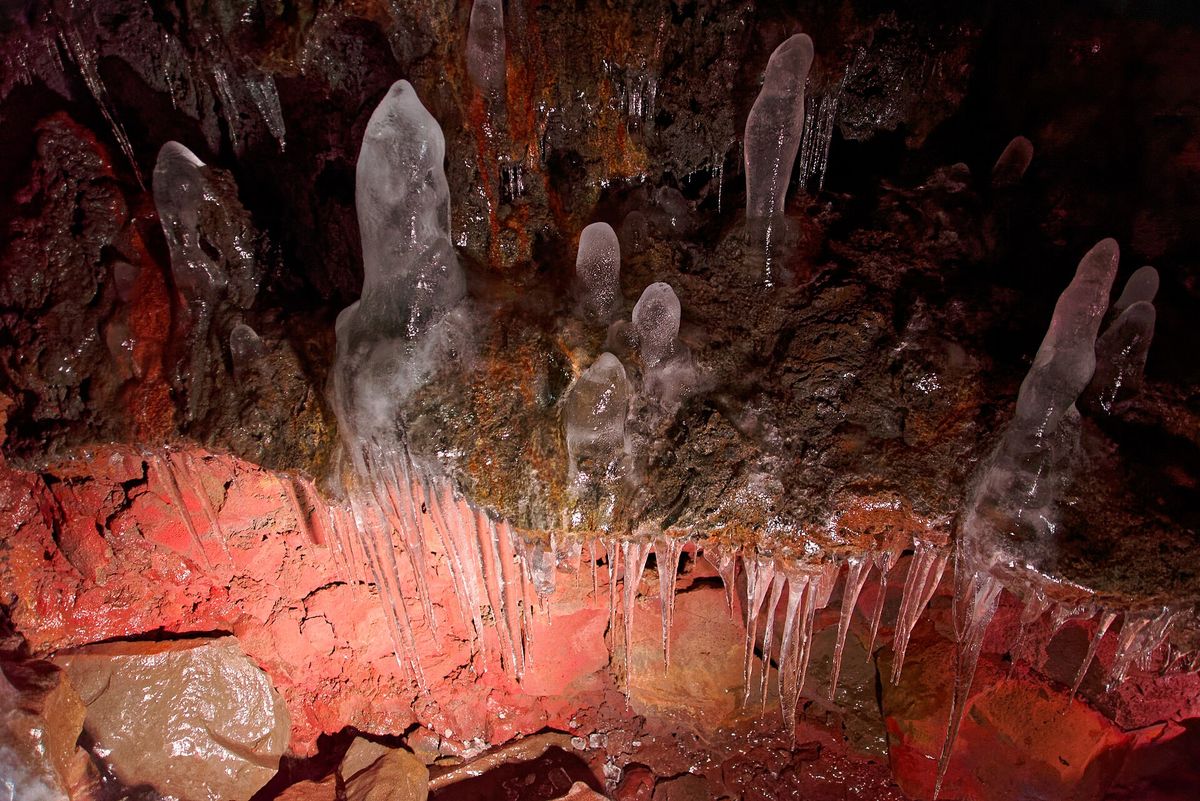
A ledge lined with icicles and ice columns, part of the tunnel's winter decoration.
What to Wear in the Lava Tunnel
The cave stays cold all year, usually just above freezing, and the floor can be wet and icy. Bring warm layers, a hat and gloves, and wear sturdy shoes with good grip. Helmets are usually provided on tours.
How to Get to Raufarhólshellir
Raufarhólshellir sits beside Route 39, the Þrengsli road, which links Route 1 near Reykjavík with the coast at Þorlákshöfn. It is about 30 minutes' drive from the city and easy to reach year round in a normal car.
In winter, the Þrengsli road and Hellisheiði can close in storms. Check the umferdin.is road conditions before you set off.
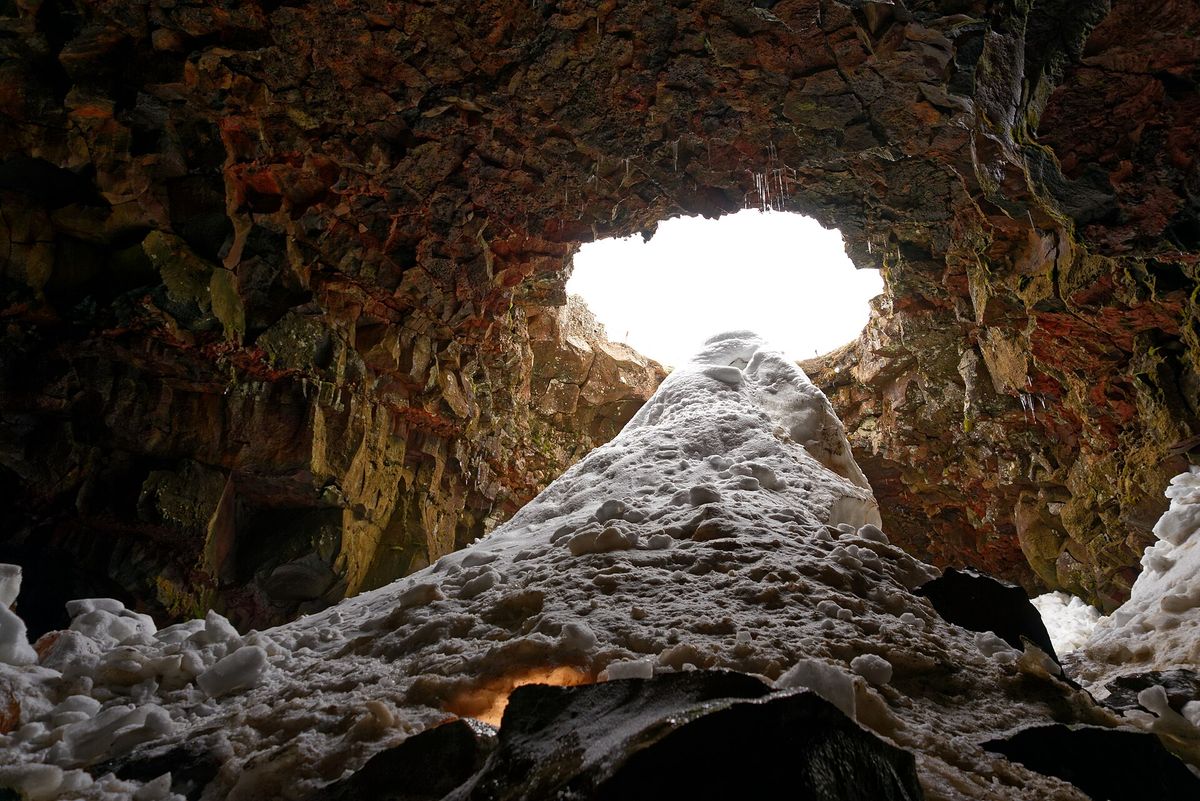
Snow piled beneath a skylight, where winter weather falls straight into the tunnel.
Combining the Lava Tunnel with the Golden Circle
Raufarhólshellir is not on the Golden Circle, but it is close to the route. From the cave, it is a short drive to Hveragerði and Selfoss, where the Golden Circle's southern loop begins.
A good day starts with the Lava Tunnel in the morning. From there, carry on to Kerið's collapsed volcanic crater and then on to Geysir and Gullfoss. You see Iceland's volcanic past both underground and above it.
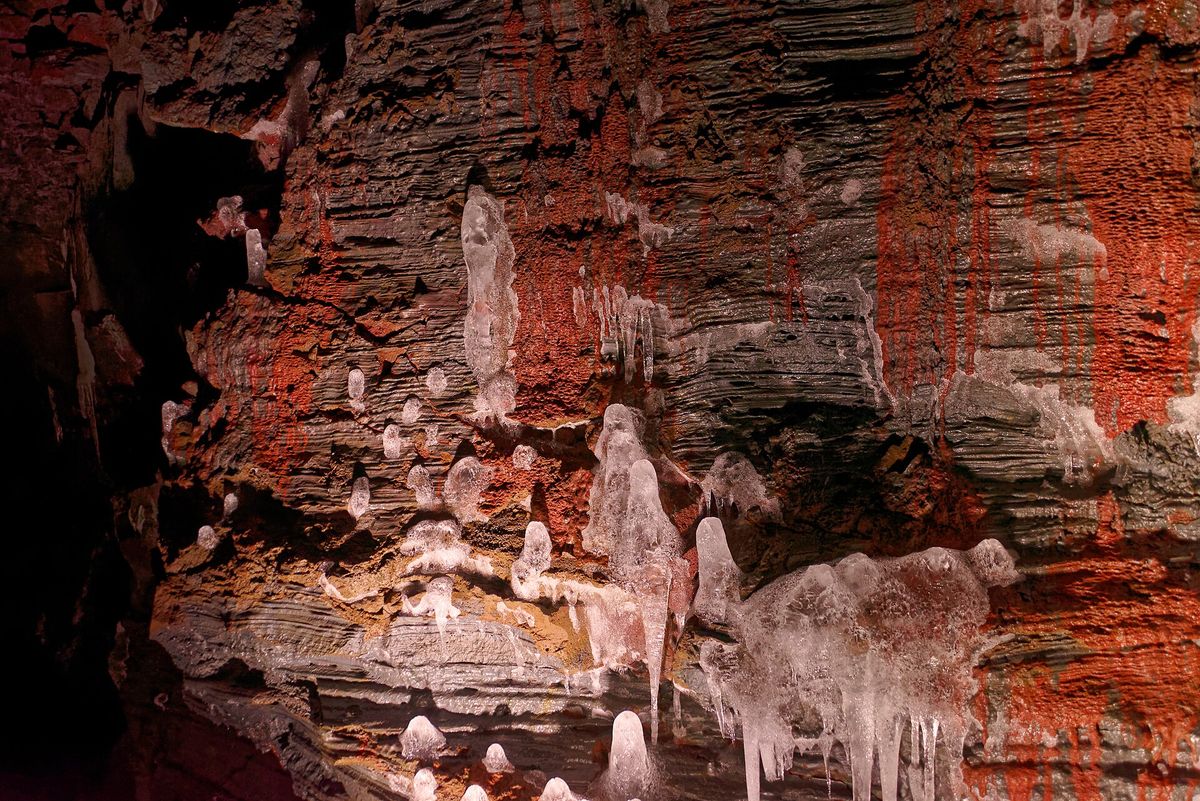
The colourful walls of the lava tube, streaked with iron oxides and decorated with ice.
If you prefer a walk in the open, Hveragerði is the start of the hike to Reykjadalur's warm river. It takes about an hour each way, with a soak at the top.
Other Volcanic Sights Near Reykjavík
The Lava Tunnel is one of several volcanic sights within an hour of Reykjavík. Kerið is the easiest crater to visit. The Reykjanes Peninsula has had a series of eruptions since 2021, and the Met Office's eruption updates show the latest activity.
On a clear day you can also see Hekla from the roads further east. It is one of Iceland's most active volcanoes.
For a guided look at these landscapes, browse our volcano day tours, which include lava caves and craters.
Is the Lava Tunnel Worth It?
If you have never been inside a lava tube, yes. The scale of Raufarhólshellir is hard to picture until you are standing inside it, and the walkway makes it accessible to almost everyone.
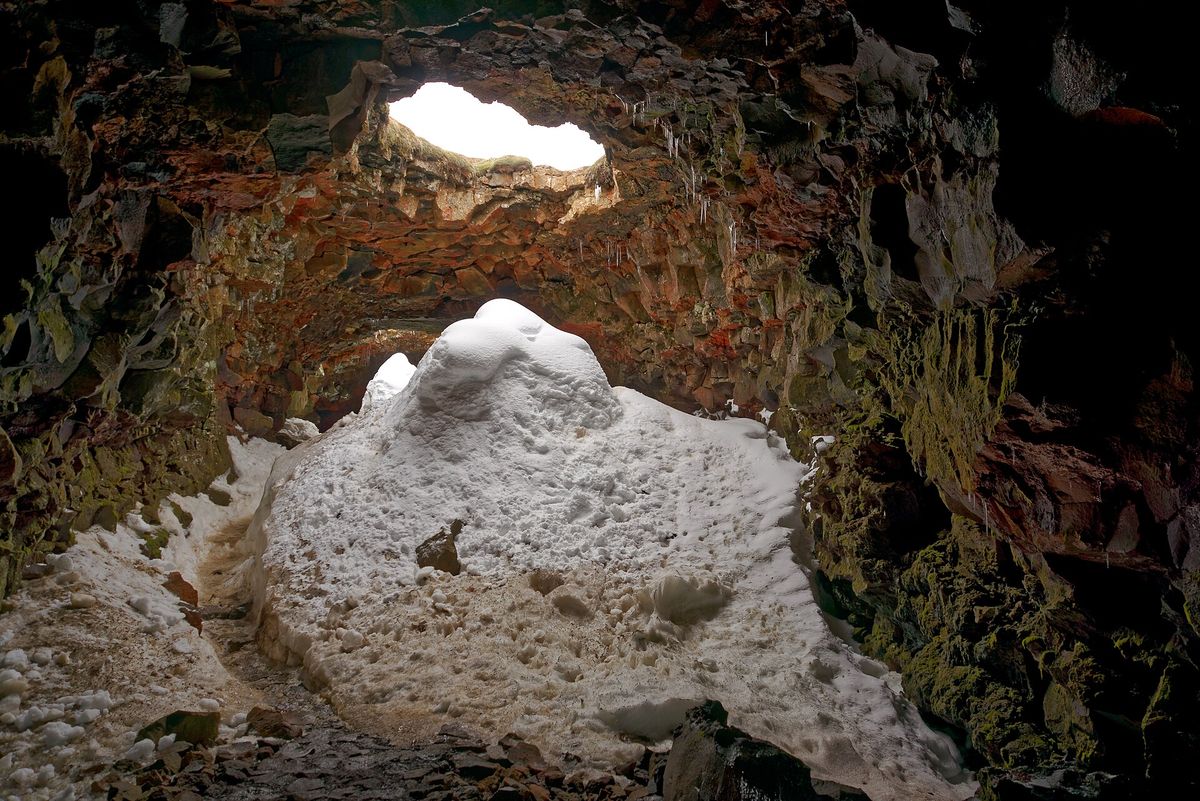
A wide chamber under one of the skylights, showing the size of the tunnel.
It is also a useful bad-weather option. When wind and rain make the Golden Circle miserable, the cave is sheltered and still impressive. It is also only half an hour from your hotel.
On a dry day, pair it with a walk in the open. Our guide to three hikes close to Reykjavík covers easy trails near the city.
Lava Caves on a Golden Circle Day
If you would rather combine caves and craters with the Golden Circle in a single guided day, our small-group Golden Circle with Kerið tour visits Þingvellir, Geysir and Gullfoss with a stop at the crater and Friðheimar farm. It is a simple way to see the volcanic side of the region without driving yourself.
Compare Golden Circle Tours
Check each selected product for its current operator, guide, itinerary, meeting point, and terms.
View Our Tours

