
The Icelandic cruise season runs from roughly May to September, about five months, with the great majority of sailings clustered in July and August.
Ships largely avoid the winter because of short daylight, North Atlantic swell and the risk of skipped calls in high wind. A handful of expedition and Northern Lights itineraries run outside the main window.
Within the season the months differ more than the brochures suggest. May and June give you long light and thin crowds, July and August the warmest weather and the most ships, and September the first darkness and the best value.
The Weather You Will Actually Meet
Iceland in July is cooler than most people picture, and the wind matters more than the temperature.
Averaging the Icelandic Met Office's monthly station data for Hjarðarland, the nearest long-running station to the Golden Circle, across 1991 to 2020 gives the shape of the season:
- May: average daily high 10.9°C, low 2.2°C, 82 mm precipitation, wind 4.4 m/s
- June: high 14.7°C, low 5.8°C, 78 mm, wind 3.8 m/s
- July: high 16.5°C, low 7.8°C, 89 mm, wind 3.4 m/s
- August: high 15.3°C, low 7.0°C, 104 mm, wind 3.5 m/s
- September: high 11.6°C, low 4.5°C, 147 mm, wind 4.0 m/s
Two things stand out. July has the lowest mean wind of the year, which matters more than the extra degree of warmth. And September is the wettest month on the route by a clear margin.
Coastal ports are windier than these inland figures. Expect a stiffer breeze at Ísafjörður or Djúpivogur than at Gullfoss on the same day.
Month by Month
May
The season opens. Long daylight is already back, with 16 to 19 hours by the end of the month, and the mountains still carry snow.
Puffins arrive from mid-May and stay until early August. Highland roads remain closed, which limits some excursions.
Fewest ships of the season, lowest prices, and the coolest weather of the five months at highs of 10.9°C.
June
The strongest all-round month for scenery. Daylight peaks around the solstice at roughly 21 hours in Reykjavík, and the sun barely sets.
Wildlife is at its best. Puffins are nesting, whale watching is in full season, and the lupine fields along Route 35 flower from mid-month.
Weather improves markedly, with 78 mm the driest month on the Golden Circle and wind dropping towards its annual low.
July
Peak season on every measure. Warmest at 16.5°C, calmest at 3.4 metres per second of wind, and busiest by a wide margin.
Several ships call at Reykjavík on the same day in July, which means excursion capacity tightens and the Golden Circle sites are at their fullest between 10am and 3pm.
Book excursions well ahead, and take an early departure if you can choose.
August
July with slightly more rain and slightly less light. Highs of 15.3°C, 104 mm of precipitation, and daylight back to 15 to 17 hours.
Puffins leave in the first half of the month. Whale watching stays strong through August.
By the last week there is genuine darkness after 11pm, which opens the door to an aurora sighting on a late call.
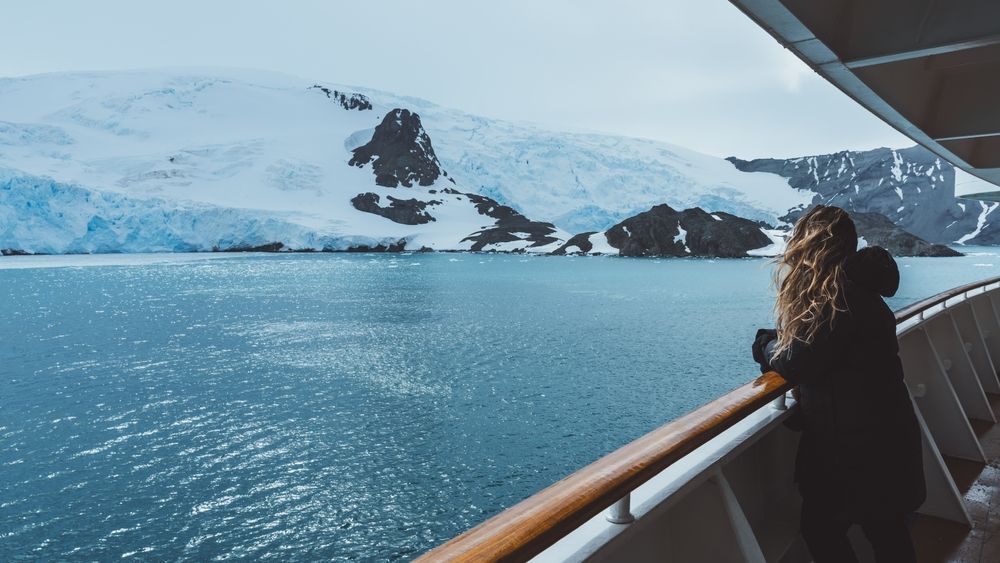
Scenic sailing days are part of the product, and the fjord approaches are at their best in June and July.
September
The value month, and the one many repeat cruisers prefer.
Fewer ships, lower fares, autumn colour at Þingvellir National Park from mid-month, and enough darkness for the northern lights on an overnight or late call.
The trade-off is weather. September is the wettest month on the route at 147 mm and the cloudiest of the aurora season, so a rainy port day is more likely than in July.
Whales are often still around and the roads are all open, which makes it a strong month for excursions if you can accept the rain.
What the Season Means for Excursions
The port day changes noticeably across the five months.
In June and July you can run a Golden Circle excursion at almost any hour and still have light. An evening departure on a late call is genuinely good, with low sun on Gullfoss and empty car parks.
In May and September the light is normal rather than endless, so an 8am start matters more.
Weather cancellations are rare in any of these months. The sites are outdoor, free and open around the clock, so only a genuine storm warning published through SafeTravel stops a departure.
What does change is comfort. A September port day in horizontal rain at Gullfoss is a different experience from a still July evening, and packing decides which one you have.
Northern Lights on a Cruise
The honest answer is that most Iceland cruises cannot show you the aurora, and the reason is the season rather than the sky.
From mid-May to early August there is no astronomical darkness anywhere in Iceland, so the lights are invisible even during strong activity. That covers the bulk of the cruise season.
The crossover is late August and September. Darkness returns from about 11pm in late August and around 9pm by mid-September, which makes an overnight or late-departing call viable.
If the aurora matters, look for a September sailing with an overnight in Reykjavík or Akureyri. The Icelandic Met Office aurora forecast gives activity on a 0 to 9 scale alongside a cloud map, and in Iceland a 2 or 3 is already enough.
A small number of winter cruises exist specifically for the lights. They come with short daylight, real storm risk and a genuine chance of a skipped call.
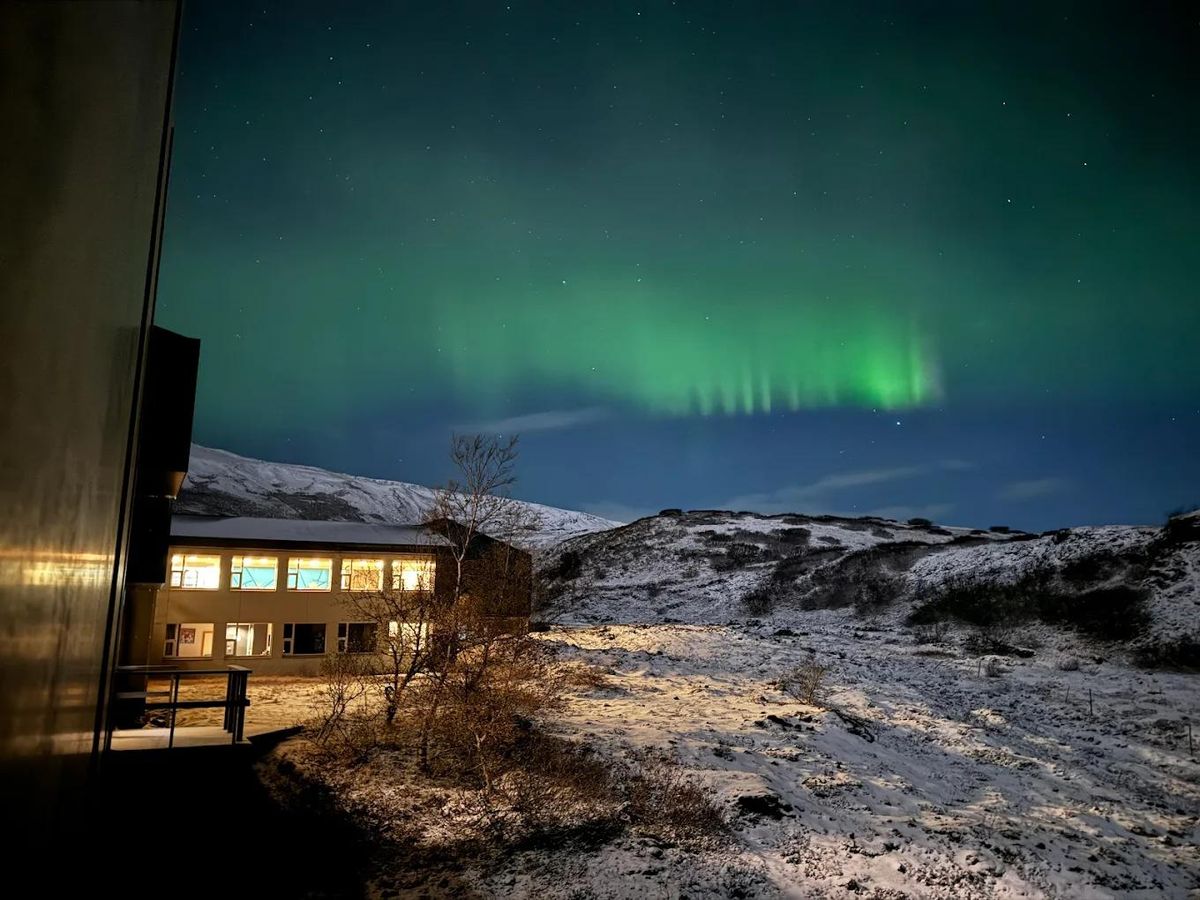
Aurora on a cruise needs a September or later sailing, and ideally an overnight call.
Wildlife by Month
Timing decides which animals you see, and the windows are narrow.
Puffins nest from mid-May to early August, with the best viewing in June and July. After that they return to sea.
Whale watching runs April to October and peaks June to August, with humpbacks, minke and white-beaked dolphins the common sightings from Reykjavík and Húsavík.
Arctic terns arrive in May and are gone by late August, and they are the birds that will dive at your head if you walk near a colony.
Icelandic horses are visible year-round along Route 35, and the foals are out in early summer. The Friðheimar farm runs a show explaining the breed's five gaits if your excursion stops there.
Timing the wildlife against your call is worth doing before you book anything, since a July sailing and a September one see genuinely different animals.
Our Golden Circle and whale watching combination pairs the loop with a sailing from the old harbour, which suits a long port call in the peak wildlife months.
How Busy Each Month Is
Ship traffic in Reykjavík is heavily concentrated, and it affects your day.
July and August see multiple calls on many days, which means the Golden Circle sites take several coachloads at once between 10am and 3pm.
May, June and September are considerably quieter, both at the pier and at the viewpoints.
If your dates are fixed in high season, the fix is timing rather than destination. An early departure puts you at Þingvellir before the wave, and a late one catches the sites after it.
Choosing Your Month
A short version, by priority.
For the best weather and longest days: July, accepting the crowds and the prices.
For wildlife: June, when puffins, whales and long light overlap.
For value and quiet: May or September, with September the better of the two for excursions and the worse for rain.
For the northern lights: September at the earliest, and ideally with an overnight call.
For scenery on sailing days: June, when the fjord approaches are lit for 21 hours.
Packing for the Season You Sail
The list barely changes across the five months, which tells you something about Icelandic summer.
A proper waterproof shell and waterproof trousers every month. Wind and rain do the damage rather than cold.
Layers you can adjust: a thermal or fleece base, a mid-layer, then the shell.
Boots with grip. The paths at Gullfoss are wet year-round and Geysir is gravel.
Swimwear for the lagoons, a hat and gloves for May and September, and a card rather than cash.
Add an eye mask for June and July sailings. Sleeping under a sky that never goes dark is harder than it sounds.
Book the Port Day for Your Month
Whichever month you sail, the Golden Circle is the excursion that fits a Reykjavík call best, and the light and the crowds both shift with the season.
Our Golden Circle from port excursion collects at Skarfabakki and works backwards from your all-aboard time, with departure options that avoid the midday coach wave in July and August. Send us your call date and we will suggest the timing that suits it.
Compare Golden Circle Tours
Check each selected product for its current operator, guide, itinerary, meeting point, and terms.
View Our Tours

