
November in Iceland starts with the last of the autumn colours on the moss and ends with snow on the Golden Circle. In between, the days lose about three hours of light, the tourist crowds thin out and the northern lights come into their own. It is the month when Iceland stops pretending it is anything other than a winter destination.
It is also a good month to visit, as long as you plan around the dark. Flights and hotels are cheaper than in summer or at Christmas, most of the classic sights are open and the nights are long enough for real aurora hunting. You just need to accept that some roads, boat tours and highland trips have closed for the season.
Is November a Good Time to Visit Iceland?
Yes, if you want the northern lights, quieter sights and lower prices. You also need to be comfortable with short days and changeable weather. November is a poor choice only if your plans depend on the highlands, puffins or long summer hikes, all of which are out of season.
The month sits at the start of Iceland's low season. Early November still has eight hours of daylight and often mild weather, while the last week can bring proper winter conditions, so the first half is the easier choice for nervous drivers.
Iceland Weather in November
November in Iceland is cold, wet and windy by most visitors' standards, though milder than many expect. The 1991–2020 average temperature in Reykjavík for November is 2.3°C, and in Akureyri in the north it is 0.6°C, according to the Icelandic Met Office's November summary (in Icelandic).
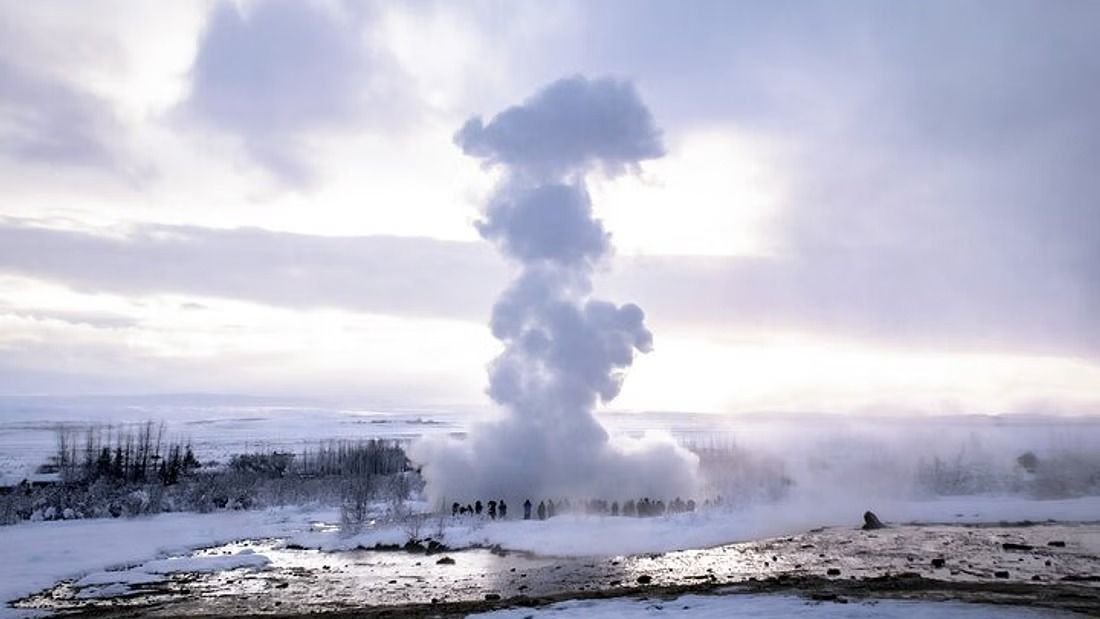
Strokkur erupting over a snow-covered Geysir field, a scene that becomes common from November.
Snow comes and goes in the south-west. Reykjavík averages about five mornings a month with snow covering the ground in November, while Akureyri averages about twelve.
In practice, a week can swing between rain, sleet and clear frosty days. The wind often matters more than the temperature.
Reykjavík receives around 90 millimetres of precipitation in an average November and only about 40 hours of sunshine across the whole month. Pack for rain as much as for snow.
Daylight in November
Daylight shrinks fast. On 1 November, Reykjavík has about eight hours between sunrise and sunset; by 30 November it has about five. In mid-month the sun rises at around 10:00 and sets at about 16:25.
Twilight adds roughly an hour of usable light at each end of the day, so you can start sightseeing at around 9:00. Plan the main stops for late morning and early afternoon, and keep the evenings for lagoons, food and the aurora.
Early November or Late November?
The two halves of the month feel quite different. In the first week you get around eight hours of daylight, roads that are usually still clear and the end of the autumn colours on the moss. It is the gentler choice for a first winter trip or for anyone planning to drive.
By the last week, daylight is down to about five hours and snow is more likely, especially in the north. The trade-off is more darkness for the aurora, the start of the Christmas season in Reykjavík and some of the lowest hotel prices of the year before December's rise.
Prices and Crowds in November
November is one of the quietest months for tourism in Iceland. Flights and car hire are noticeably cheaper than from June to August, and hotels outside Reykjavík often have last-minute availability.
The sights themselves are calmer too. You will still share Gullfoss and Geysir with tour groups in the middle of the day, but early mornings and late afternoons can be almost empty. The one exception is the Iceland Airwaves weekend, when central Reykjavík hotels fill up.
Things to Do in Iceland in November
November gives you most of Iceland's winter highlights with fewer people around. These are the best things to do in Iceland in November, roughly in order of how much they suit the month.
See the Northern Lights
November has long, dark nights, which is the first ingredient for seeing the aurora. From Reykjavík, it is dark enough from about 18:00 until early morning, so even a short trip gives you several chances.
The other ingredients are clear skies and solar activity, and those you cannot plan. Book an evening northern lights tour for a night early in your trip, so you have time to rebook if the sky stays cloudy. Ours runs in small groups of up to 15 with hotel pick-up and a rebooking guarantee.
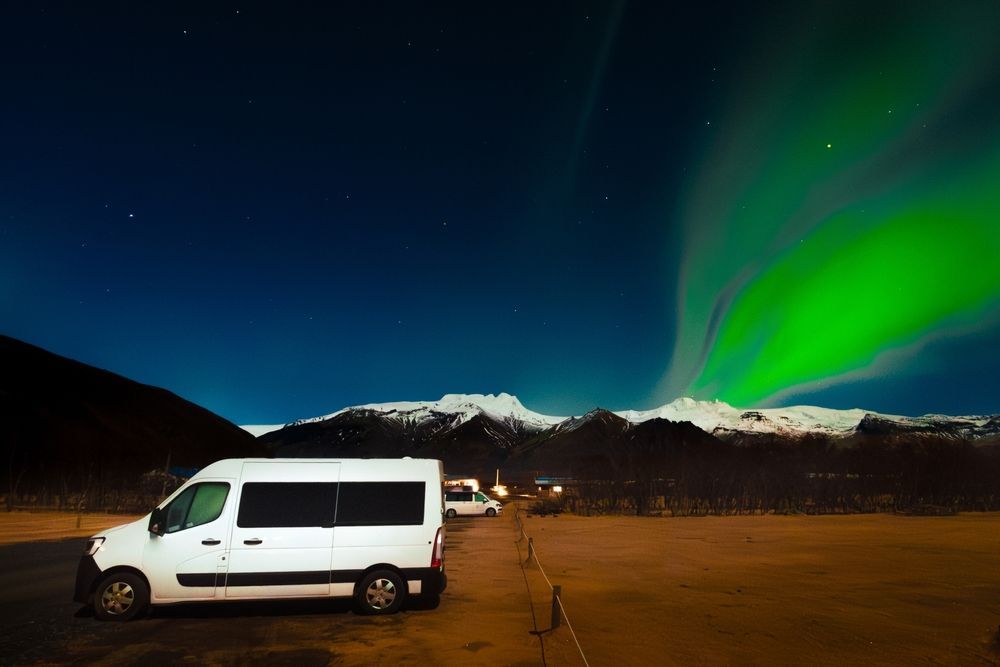
The northern lights above a campervan parked away from town lights on a clear November night.
For the bigger picture on aurora timing through the season, our guide to how the aurora season unfolds covers the months, the moon and the forecasts worth watching.
Drive or Tour the Golden Circle
The Golden Circle stays open all winter, and November is one of its best months. Þingvellir, Geysir and Gullfoss are quieter than in summer, the low sun lights the landscape for most of the day and there is often the first snow on the ground.
Roads are usually clear and gritted, though ice can catch you out in the shade and in the hills around Þingvellir. Our Golden Circle winter guide covers driving, timing and what changes at each stop.
Walk Into an Ice Cave
Natural ice caves form inside glaciers when the meltwater stops flowing in autumn, and the season for visiting them usually starts in November. The famous blue caves under Vatnajökull are a long way from Reykjavík, but there are closer options.
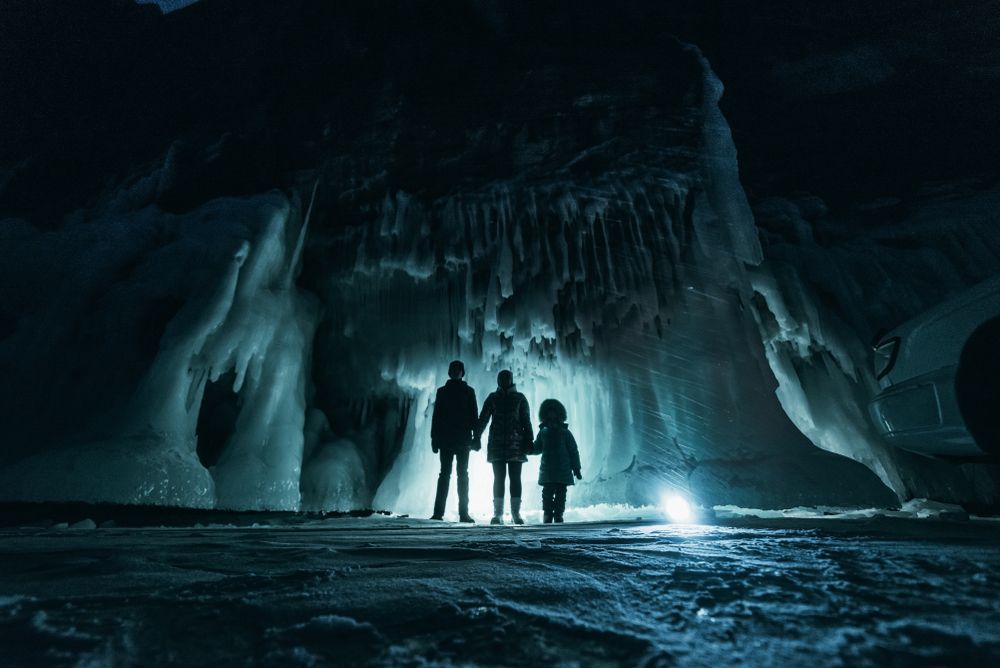
A family inside an ice cave, lit from behind by daylight filtering through the glacier.
The Katla ice cave trip leaves Reykjavík by super jeep, crosses to the edge of Mýrdalsjökull and adds South Coast stops on the way. Groups are capped at eight, and helmets and safety gear are provided.
Soak in a Geothermal Lagoon
Warm water and cold air are a perfect pairing, and November is when lagoons feel their best. The Blue Lagoon, Sky Lagoon and the Secret Lagoon are all open, and an evening soak under a clear sky can come with a chance of aurora overhead.
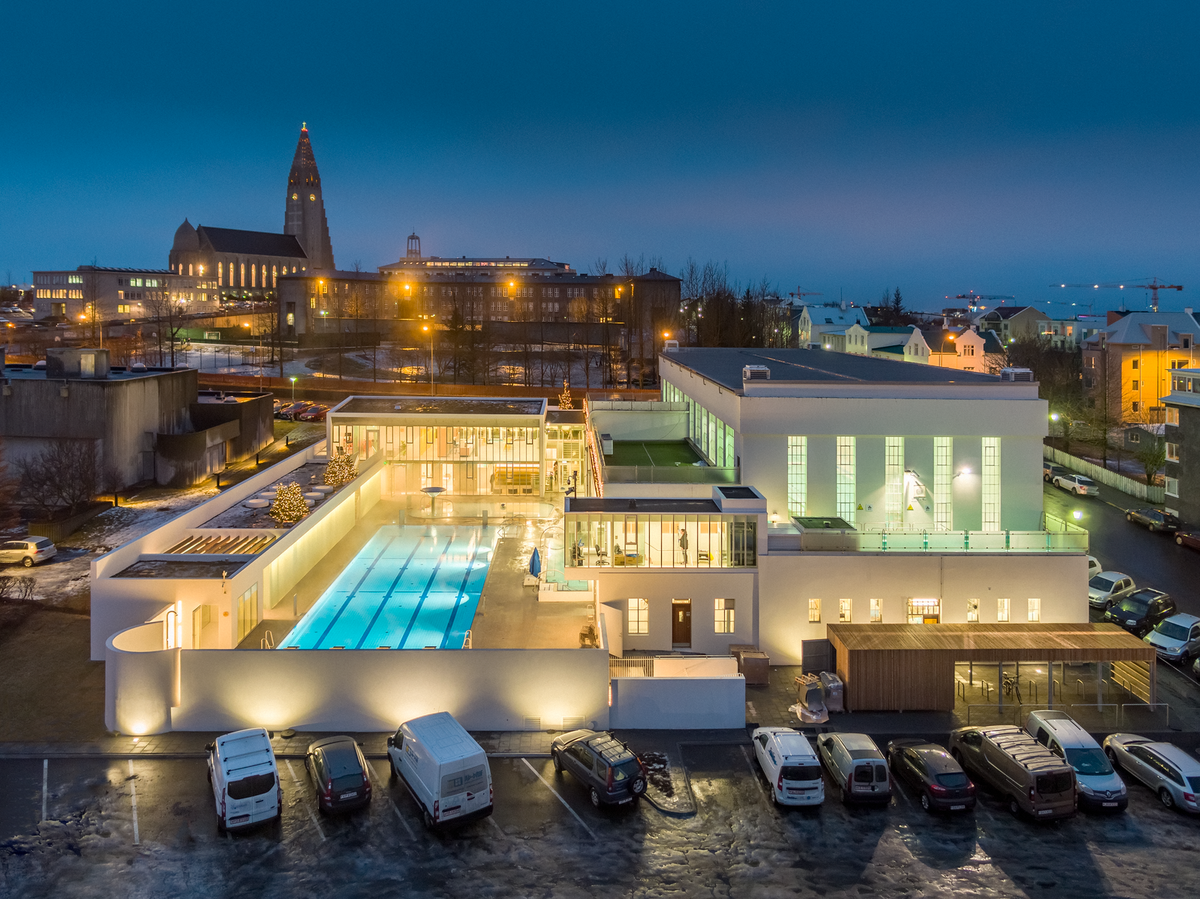
A Reykjavík public pool lit up at night, with Hallgrímskirkja on the skyline behind.
Do not overlook Reykjavík's public pools. They are geothermally heated, cost a fraction of the lagoons and are where locals actually go to unwind after work.
Go Whale Watching
Whale watching runs from Reykjavík's Old Harbour all year, and winter trips are quieter and often cheaper. Seas are rougher, so take seasickness tablets if you are prone to it and dress for the cold on deck.
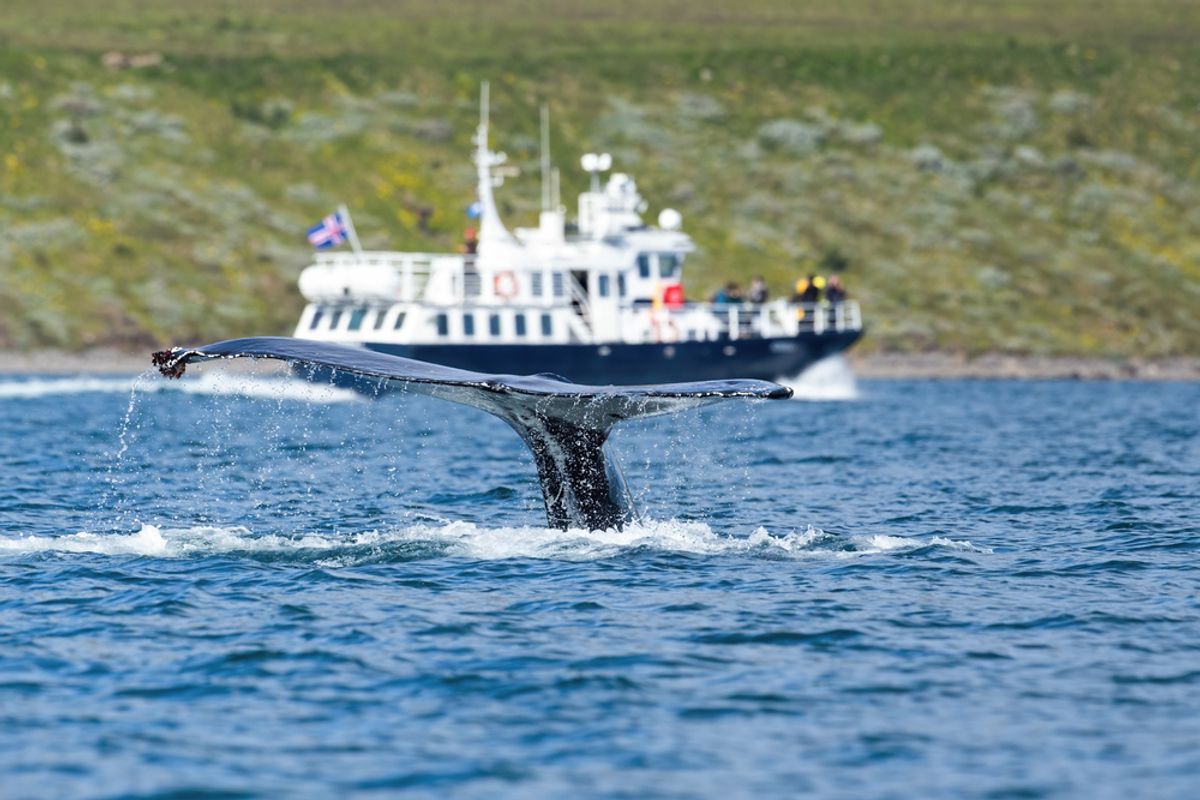
A humpback whale raising its tail near a tour boat, a sight possible year-round in Icelandic waters.
Tours for whale watching from Reykjavík last about three hours and provide warm overalls, which you will be glad of in November.
Catch Iceland Airwaves
Iceland Airwaves, the country's best-known music festival, takes over Reykjavík's venues in early November. In 2026 it runs from 5 to 7 November, with Icelandic and international acts across the city, according to the Iceland Airwaves website.
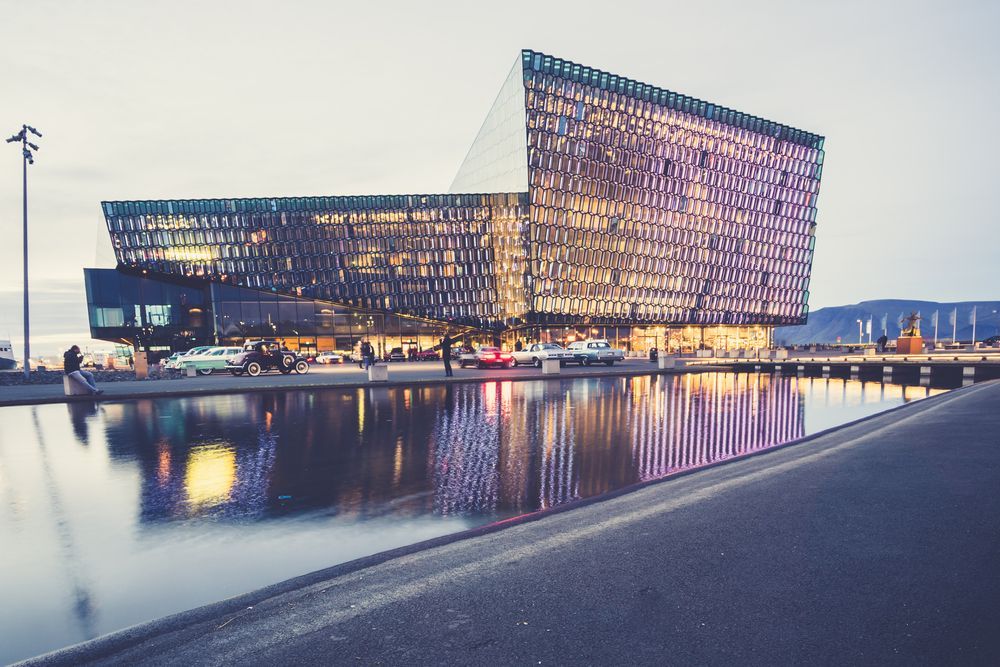
Harpa concert hall at dusk on Reykjavík's harbour, one of the city's main music venues.
If you are not going to the festival, check your dates. Hotels in central Reykjavík book up and prices rise over that weekend.
Explore Reykjavík's Museums and Food
Short days are a good excuse to slow down in the capital. The National Museum, Perlan and the art museums fill a dark afternoon, and November is when restaurants start serving seasonal dishes ahead of Christmas.
Later in the month, Reykjavík starts to look festive. Christmas lights go up, and the Christmas village in Hafnarfjörður usually opens in late November.
Campervan in Iceland in November
A campervan trip in November is possible, but it is a winter trip, and you need to treat it as one. Most campsites close for the season by October, so check which ones stay open and plan your nights around them.
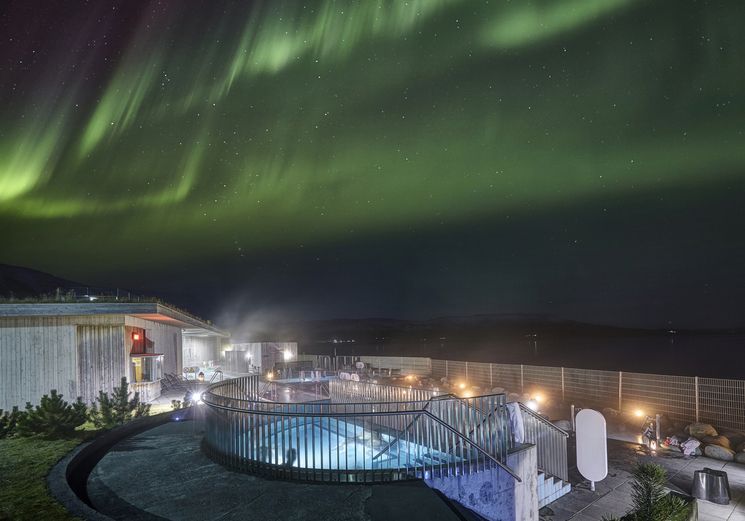
The northern lights above the Fontana baths at Laugarvatn, a good warm stop on a cold campervan trip.
Choose a 4x4 van with a reliable heater, and avoid parking in exposed spots on windy nights. Wild camping in a vehicle outside campsites is not allowed in Iceland, whatever the season.
Driving in Iceland in November
Driving in November is fine on the main roads around Reykjavík and on the Golden Circle, with care. Studded tyres are permitted from 1 November, and rental companies fit winter tyres as standard in the colder months.
Strong winds can close sections of Route 1, especially under Eyjafjallajökull on the South Coast and on mountain passes in the north and east. Check the Road Administration's live road map each morning and avoid driving long distances after dark.
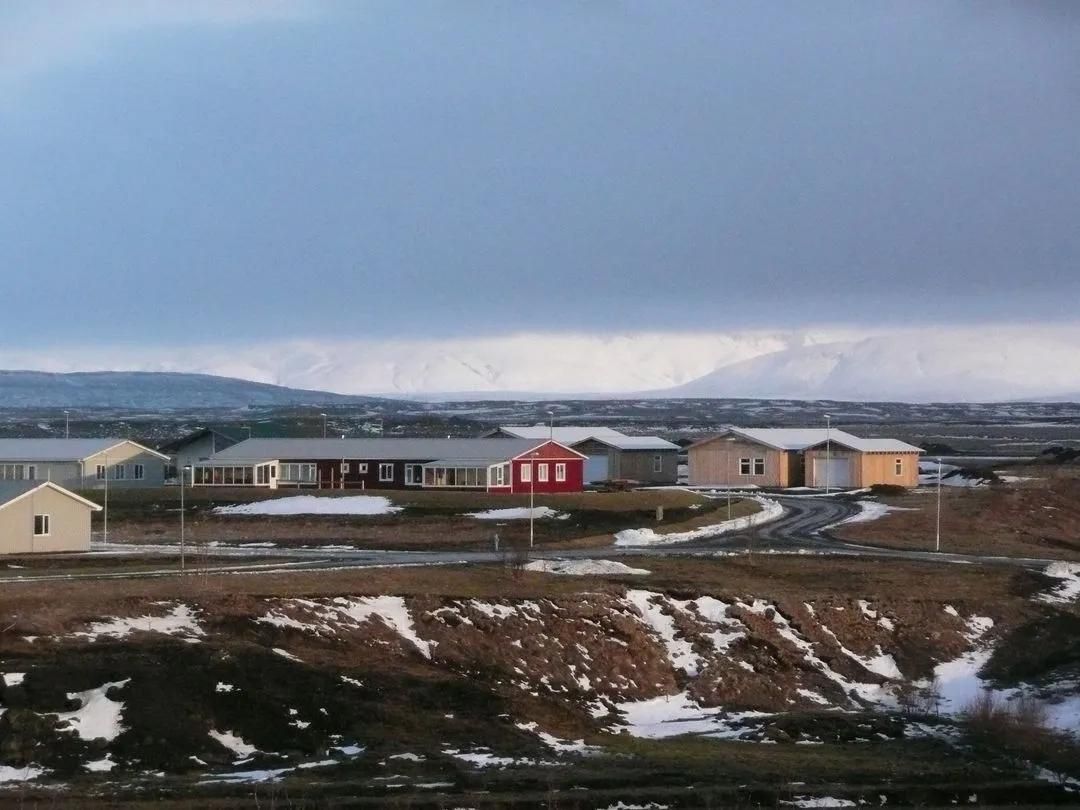
Flúðir in early winter, with snow on the hills and the plain still mostly clear.
If you have not driven in snow before, consider a tour for the longer trips. Guides know which roads are open and when to turn back.
What Is Closed in Iceland in November
A few experiences are firmly out of season in November:
- *The highlands and F-roads*, including Landmannalaugar and Þórsmörk by ordinary car, are closed.
- *Puffins* have left the cliffs and will not return until spring.
- *Boat tours on Jökulsárlón* usually stop for the winter.
- *Some rural hotels and restaurants* close or shorten their hours, especially in the east and north.
Check opening times for anything outside the main towns before you build your plan around it.
What to Pack for Iceland in November
Layers beat a single heavy coat. Bring a waterproof and windproof shell, a warm mid-layer such as fleece or down, thermal base layers and waterproof boots with good grip.
Add a hat, gloves and a scarf or neck warmer, and a swimsuit for the lagoons and pools. Our advice on what to wear in winter goes into the details, layer by layer.
A Sample November Week
If you have a week, this balances daylight sightseeing with evenings for the aurora:
- *Day 1:* arrive, Blue Lagoon or Sky Lagoon, Reykjavík.
- *Day 2:* the Golden Circle, with a northern lights trip in the evening if skies are clear.
- *Day 3:* Reykjavík museums, pools and food.
- *Day 4:* South Coast to Vík and an ice cave.
- *Day 5:* whale watching and a free evening for a second aurora attempt.
- *Day 6:* Snæfellsnes or the Reykjanes Peninsula.
- *Day 7:* departure.
Keep at least one evening flexible. In November the weather decides the aurora, not your itinerary.
Combining the Golden Circle and the Northern Lights
The simplest way to make the most of a November day is to fill both halves of it. Our Golden Circle and Northern Lights tour covers Þingvellir, Geysir and Gullfoss in daylight and then heads out after dark to hunt for the aurora. Lunch and an expert guide are included.
Compare Golden Circle Tours
Check each selected product for its current operator, guide, itinerary, meeting point, and terms.
View Our Tours

