
When Is the Northern Lights Season in Iceland?
Iceland's aurora season runs from roughly late August to mid-April. It is set by darkness, not by cold: between late April and mid-August the sky never gets dark enough, so the lights are invisible even when the sun is throwing everything it has at us.
Within that window, your odds on any given night depend on three things: how dark it is, how cloudy it is, and how active the sun is. Only the first two vary predictably by month, which is what this guide is built on.
The short version is that October, November and February give you the best combination of long nights and workable weather. December is darkest, March is the most active, and September is the cloudiest.
The Two Numbers That Decide Each Month
Most month-by-month guides rank the season on feel. Here are the measurements instead.
Darkness is straightforward. Full darkness lasts about 6 hours in September, 12 hours in November, 15 hours in December and back to about 7 hours by late March.
Cloud is the number nobody publishes. Averaging the Icelandic Met Office's monthly station data for Hjarðarland, on the Golden Circle, across 1991 to 2020 gives mean cloud cover on the 0 to 8 okta scale:
- September: 6.4, the cloudiest month of the aurora season
- October: 5.9
- November: 5.8, the clearest month of the season
- December: 5.9
- January: 6.2
- February: 6.2
- March: 6.2
- April: 5.9
The spread is narrow, and it still matters. November and October average roughly half an okta clearer than midwinter, which over a three-night stay is a meaningful edge.
Put the two together and the ranking changes from the usual advice. Long nights alone do not win; long nights with thinner clouds do.
September
September is when the season opens, and it is more popular than its numbers deserve.
Darkness arrives around 9pm early in the month and 8pm by the end, giving 6 to 9 usable hours. Temperatures are the mildest of the season, with average daily lows around 4.5°C on the Golden Circle, and the roads are clear.
The catch is cloud. At 6.4 octas, September is the cloudiest month in the whole aurora window, and the autumn storm track is already active.
The equinox effect is real but modest. Geomagnetic activity does rise around the September equinox, for reasons related to how Earth's magnetic field lines up with the solar wind, though it will not rescue an overcast week.
Verdict: good for a first-timer combining aurora with a normal sightseeing trip. Poor if the lights are your only reason for coming.
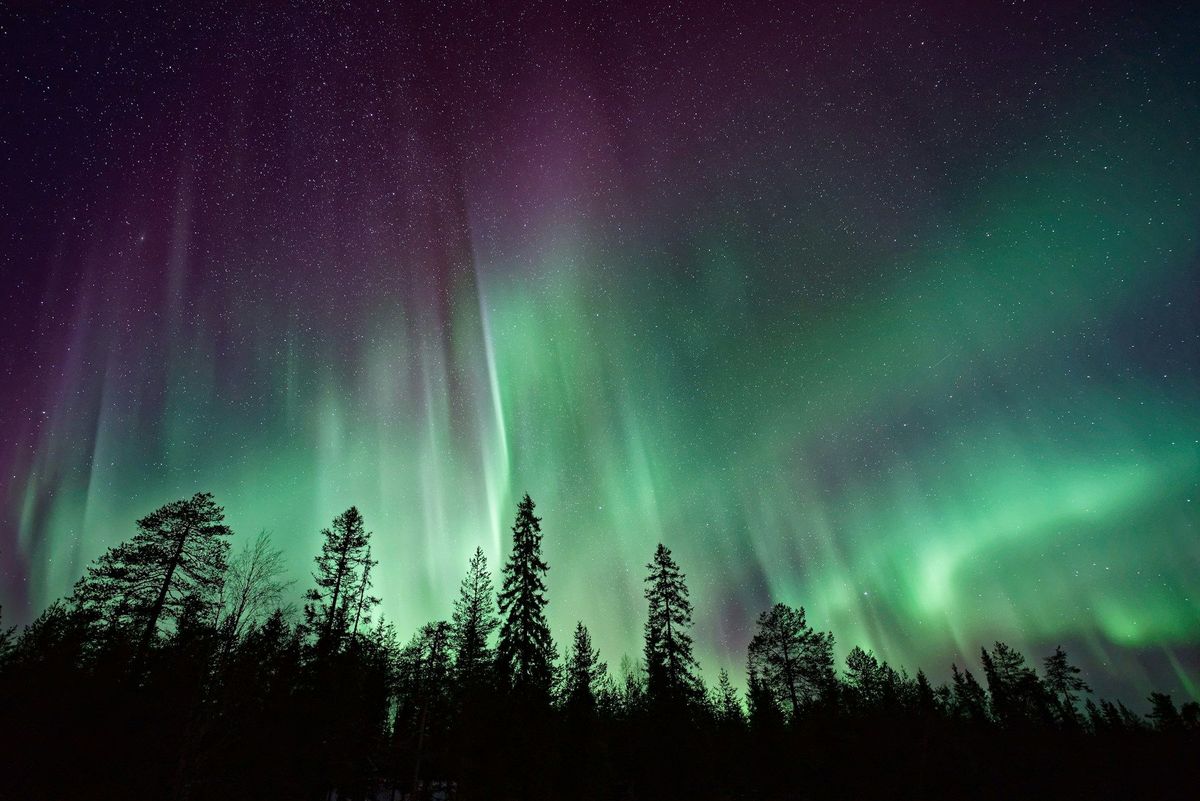
September nights are mild and short on darkness, which makes them the gentlest introduction to aurora hunting.
October
October is the month I would book if someone gave me one week and no other constraints.
Darkness runs 10 to 13 hours by month's end. Cloud drops to 5.9 octas. Temperatures still sit above freezing most days, so the roads on the Golden Circle and the South Coast are usually bare.
The equinox activity bump continues through the first half of the month. Prices for accommodation and car hire have dropped from the summer peak, and the crowds have gone.
The one weakness is that storms start arriving in the second half of the month, and the first snow on the higher roads usually lands somewhere between mid-October and mid-November.
Verdict: the best balance in the season and the month I recommend most often.
November
November has the clearest skies of the whole aurora season at 5.8 octas, and almost nobody plans around that.
Darkness runs 13 to 15 hours, which gives you an enormous window. Average daily highs on the Golden Circle are 3.2°C with lows at 2.6°C below zero, so it is cold rather than severe.
It is also the quietest month for visitors between the autumn and Christmas peaks, which means cheaper flights, cheaper rooms and empty viewpoints.
The trade-off is short daylight for sightseeing, roughly 6 to 7 hours mid-month, which compresses any daytime plans.
Verdict: the value pick. Best clear-sky odds, long nights, low prices, and the fewest people.
December
December has the longest nights of the year and the reputation to match.
Full darkness lasts about 15 hours around the solstice, with usable daylight only from about 11am to 3:30pm. If you want the maximum number of dark hours, this is the month.
Cloud sits at 5.9 oktas, better than midwinter's January and February. What December adds instead is storms, wind and the highest cancellation rate for tours in the season.
Christmas and New Year push prices to their annual peak, and accommodation on the Golden Circle books out months ahead.
Verdict: strong on darkness, weak on reliability and cost. Good if you are coming for the season rather than the sky.
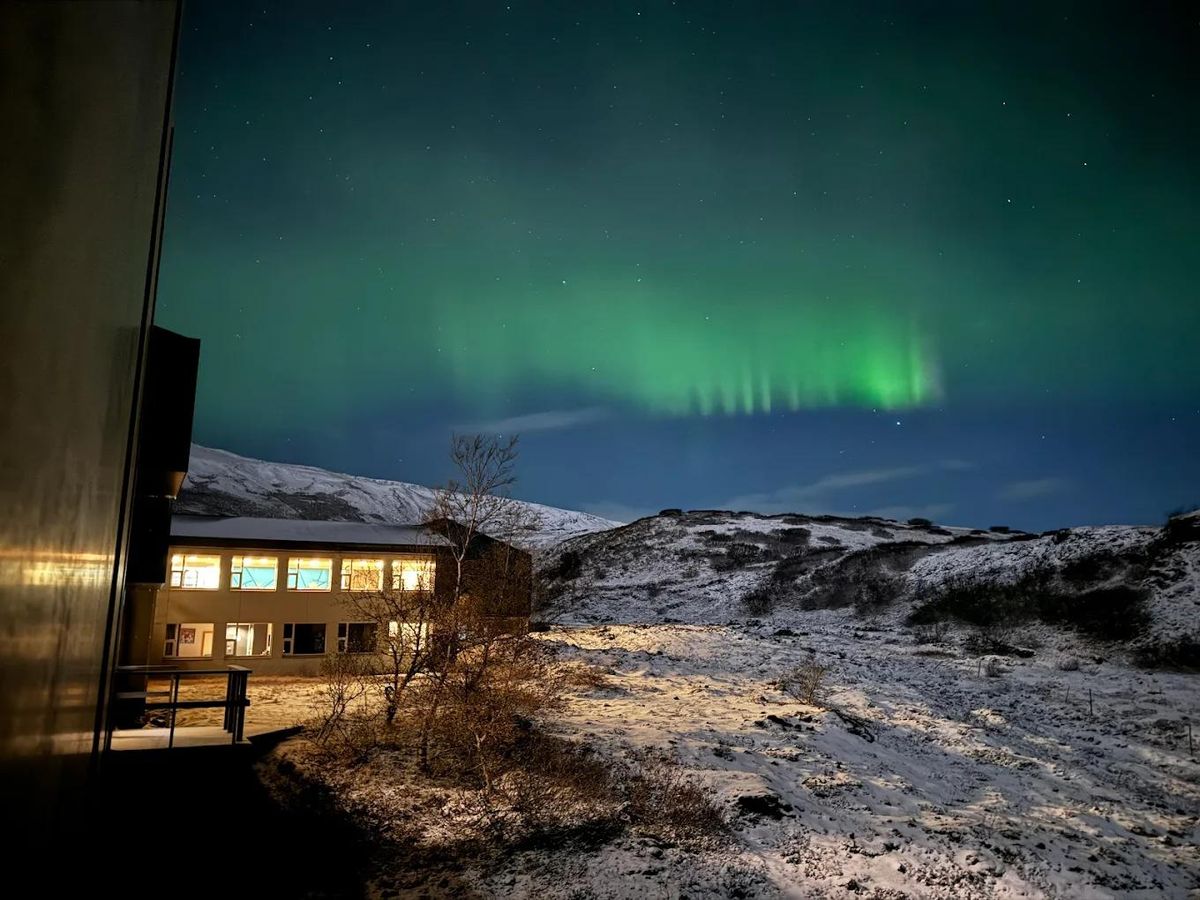
December gives about 15 hours of darkness and the highest chance that a storm will cancel the night entirely.
January
January is the hardest month and the one that rewards patience.
Darkness still runs 13 to 15 hours. Cloud climbs to 6.2 oktas, and the North Atlantic storm season is at full strength, so multi-day overcast spells are common.
The compensation is landscape. Snow on the Þingvellir rift, frozen spray at Gullfoss and a display over white ground are the strongest visual combinations of the year.
Cold matters more here than in any other month. Average daily lows on the Golden Circle sit at 4.3°C below zero, with mean wind above 5 metres per second.
Verdict: high reward, low reliability. Give it four nights or more.
February
February is January with better odds and slightly more daylight.
Darkness runs 11 to 13 hours, and daylight stretches to 8 or 9 hours by month's end, which makes it easier to combine aurora nights with proper sightseeing days.
Cloud stays at 6.2 octas. Storms are still frequent, though the gaps between them tend to be longer and clearer than in January.
Ice caves reach their best condition in February, and the daytime half of the trip is strong, with the Golden Circle in winter at its most photogenic.
Verdict: the best of the deep-winter months, and the one to pick if you want snow scenery with your aurora.
March
March is the month experienced aurora chasers keep coming back to.
Geomagnetic activity peaks around the spring equinox, on roughly 20 March, through the same alignment effect that lifts September. Historically, March and September produce more disturbed nights than the months either side.
Darkness runs 7 to 11 hours across the month, which is plenty. Cloud sits at 6.2 oktas, and the weather begins to settle in the second half.
Roads improve steadily, and daylight returns to 11 or 12 hours, so a March trip gives you a full sightseeing day and a real aurora night from the same base.
Verdict: the enthusiast's pick, and the best combination of activity and usable daylight.
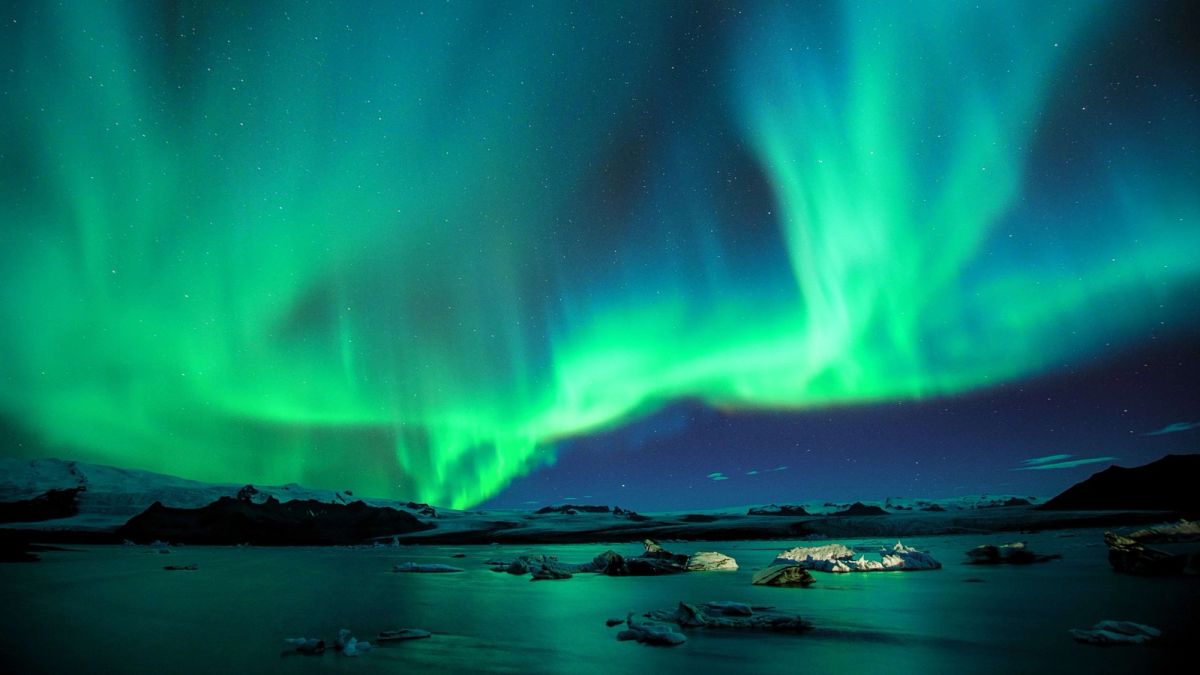
March pairs equinox activity with returning daylight, which makes it the strongest month for a full itinerary.
April
April is the closing of the window, and it closes fast.
Early April still gives 5 to 7 hours of darkness and reasonable odds. By the third week, twilight has eaten most of the night, and after about 20 April the season is effectively over.
Cloud drops to 5.9 octas, and the weather is the calmest it has been since October. Roads are clear and prices are still low.
Verdict: a decent bet in the first ten days and a poor one after that. Book early April rather than late.
Why the Equinoxes Matter
The bump around late September and late March is not folklore, and it has a name.
It is called the Russell-McPherron effect. Around the equinoxes, Earth's magnetic field lines up more favourably with the solar wind's field, which makes it easier for energy to couple into the magnetosphere and trigger aurora.
The result is that geomagnetically disturbed nights cluster around the equinoxes, historically at roughly twice the rate of the solstice months. That is a real effect measured over decades of records.
It does not override weather. An active March night under a solid overcast shows you nothing, which is why cloud cover stays the first number to check whatever the calendar says.
Ranking the Months Honestly
If you are choosing dates purely on aurora odds, here is the order.
- October: best overall balance of darkness, cloud and conditions
- November: clearest skies, longest nights, lowest prices
- March: highest activity, best daylight for the rest of the trip
- February: good darkness, snow scenery, improving weather
- December: maximum darkness, worst reliability, highest prices
- January: dramatic when it works, most overcast spells
- September: mildest weather, cloudiest skies, shortest nights
- Early April: workable, and only just
Nobody should overthink this. The difference between the best and worst month in the season is smaller than the difference between staying one night and staying four.
How Many Nights You Need
This is the question that actually changes your odds, and the answer is three at minimum.
One clear active night in three is a normal Icelandic winter. On a two-night trip you are gambling; on a four-night trip you are very likely to see something.
Book the tour early in your stay rather than late. Most operators rebook you free if the night fails, and that only helps if you have spare nights left.
Stay outside Reykjavík if you can. A night at Laugarvatn or anywhere on the Golden Circle puts you under a dark sky without driving anywhere at 11pm.
What Actually Decides Any Given Night
Months get you in the right window. Three other things decide the night itself.
Cloud is first, and it is not close. The Icelandic Met Office aurora forecast publishes a cloud map beside the activity number, and finding the white patch is the whole job.
Activity is second, on a 0 to 9 scale. Iceland sits under the auroral oval, so 2 or 3 is enough for a visible display overhead.
That is why waiting for a big number is the classic mistake. NOAA's storm scale counts only about 1,700 minor storms of Kp 5 per 11-year solar cycle, and Iceland does not need them.
Darkness is third. Full darkness starts around 9pm in September and 6pm in December, and the reliable window is 10pm to 1am in any month.
Luck is the fourth, and there is no forecast for it.
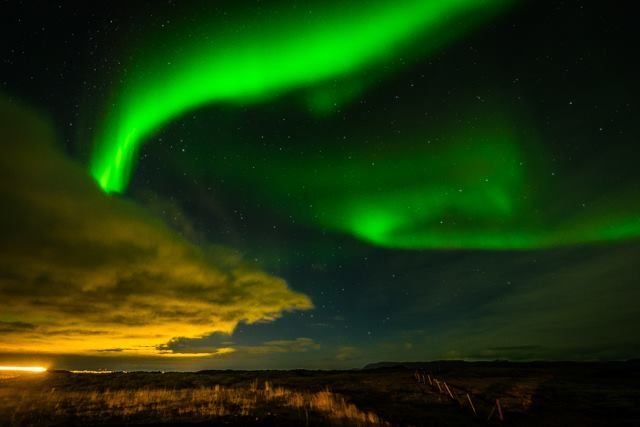
Reykjavík's light dome reaches about 20 kilometres, so any Golden Circle stop is dark enough.
Booking Around the Season
A few practical points that follow from all of this.
Book flights for October, November or March if the aurora is your priority, and for February if you want snow in the photographs.
Book accommodation early for December, which is the only month where the whole country fills up.
Keep two evenings free of other commitments, and treat the aurora as the thing you fit the rest of the trip around rather than the reverse.
Bring proper clothing whatever the month. Standing still outside for two hours is colder than any daytime activity, and September catches people out precisely because the daytime felt mild.
Give Yourself the Best Odds
Whichever month you choose, the two things that raise your chances most are getting away from the city and letting someone else watch the cloud map.
Our small-group Northern Lights adventure drives to whichever part of the south and west is clearest on the night, in a vehicle small enough to change plans quickly. Book it for your first free evening so there is time to try again if the sky closes in.
Compare Golden Circle Tours
Check each selected product for its current operator, guide, itinerary, meeting point, and terms.
View Our Tours

