
What December Offers for the Northern Lights
December has the longest nights of the year and the most weather to go with them. Around the solstice you get roughly 15 hours of full darkness, with usable daylight only from about 11am to 3:30pm.
That much darkness is a genuine advantage. You can be watching by 6:30pm, home by 10pm, and still have covered the reliable part of the window.
The counterweight is reliability. December brings the most storms, the highest tour cancellation rate of the season, and the highest prices of the year.
The Darkness Numbers
Nothing else in the Icelandic year comes close.
Around 21 December, the sun rises near 11:20am and sets near 3:30pm in Reykjavík. Add twilight either side and you have a workable daylight window of roughly 10:30am to 4:30pm.
Full darkness therefore runs from about 6pm to 9am, which is 15 hours. The reliable aurora window of 10pm to 1am sits comfortably inside it, and so does a much earlier one.
The Icelandic Met Office aurora forecast publishes exact darkness, moonrise and moonset times for Reykjavík next to its 0 to 9 activity number, which is worth checking rather than working from the solstice.
Early December and late December differ less than you might expect. The change either side of the solstice is only a few minutes a day.
The Weather Reality
December is not the coldest month in Iceland and it is one of the stormiest.
Averaging the Met Office's monthly station data for Hjarðarland on the Golden Circle across 1991 to 2020 gives December an average daily high of 1.9°C, a low of 4.4°C below zero, and 129 mm of precipitation.
Mean cloud cover sits at 5.9 on the 0 to 8 okta scale, which is better than January and February at 6.2 and roughly level with October.
That cloud figure surprises people, and it comes with a caveat. December's cloud arrives in longer, more organised systems rather than in passing showers, so a bad week is more likely to be a bad week rather than a bad night.
Mean wind is 5.0 metres per second, close to the annual peak, and it is wind rather than cold that cancels tours.
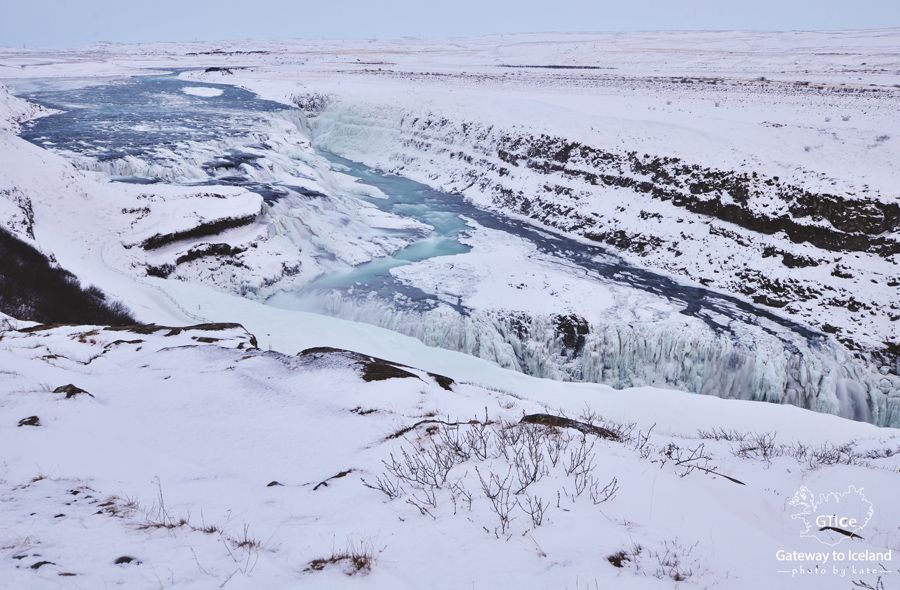
December scenery is the best of the year, and the daylight to enjoy it in runs to about four hours.
The Honest Trade-Off
December makes a specific bargain with you, and it is worth understanding before booking.
You gain darkness. Fifteen hours of it, which means you can go out at 7pm rather than 10pm and still be inside the window.
You gain scenery. Snow on the Þingvellir rift, ice on the Gullfoss canyon walls and thick steam at Geysir make the daytime half of the trip better than at any other time of year.
You lose daylight for sightseeing. Four hours of proper light means a Golden Circle day covers three stops and nothing else.
You lose reliability. Storms cancel tours, close roads and produce multi-day overcast spells more often than in any other month of the season.
And you lose money. Flights, hotels and car hire all peak over Christmas and New Year, and rural accommodation on the Golden Circle books out months ahead.
How to Plan Around the Short Days
The compression is the thing to design around, and it is manageable.
Do your sightseeing between 11am and 3:30pm and treat that as the whole day. Three Golden Circle stops fit; five do not.
Eat early. Most rural restaurants on the loop close by mid-evening in winter, and you want to be outside from 7pm rather than eating then.
Use the dark evening rather than the small hours. The advantage of December is that a 7pm to 10pm session is already inside the aurora window, so nobody has to stay up until 2am.
Build in a spare day. If a storm takes one, you have not lost the trip.
Where to Watch in December
Cold and ice change the calculation slightly, and dark sky still decides it.
Þingvellir National Park remains the best accessible spot from Reykjavík, 45 minutes out with no town glow. The car parks stay open and the machines take cards at any hour.
Watch your footing there. The boardwalks ice over and the fissures either side of the paths are deep, so take a torch with a red mode and stay on the surfaced sections.
Laugarvatn is the most comfortable option, with a lit car park to retreat to and a geothermal bath where you can sit in warm water while you watch.
Staying on the Golden Circle rather than in the city is worth more in December than in any other month. It removes an icy hour of night driving at both ends.
Winter Driving in December
If you are self-driving, this is the part that needs respect rather than fear.
Rental cars run winter tyres from 1 November to 14 April by law, and studded tyres are permitted in that window. Ask for them.
Check road.is before every drive. It shows ice, snow and closures in near real time on the exact route numbers, and an impassable marking is final rather than advisory.
The specific hazards are black ice, side wind on the open stretch over Lyngdalsheiði, and unlit single-lane bridges. None is exotic and all are worse when you are tired.
If any of that is beyond your comfort, book a tour. December is not the month to learn.
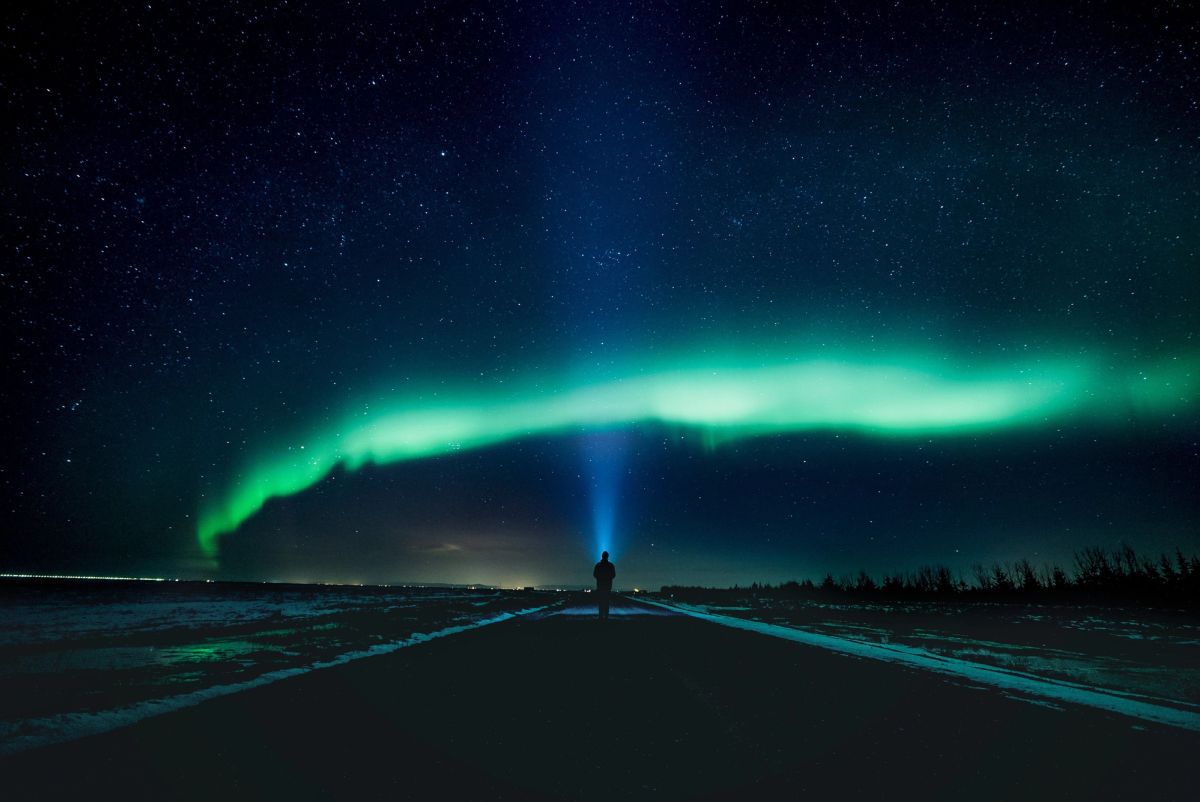
Park in proper laybys and car parks. Icelandic verges are soft, unlit and genuinely dangerous in December.
December Compared With the Rest of the Season
Where it honestly sits.
Against October and November: those months have clearer measured skies, better roads and far lower prices, at the cost of less darkness.
Against January: similar darkness and worse cloud in January at 6.2 oktas, so December is the better half of midwinter.
Against February and March: those bring returning daylight and improving weather, with March adding the equinox activity bump.
December's genuine wins are maximum darkness, the best snow scenery and the Christmas atmosphere in Reykjavík. If pure aurora odds are the only consideration, October or March beat it.
Is It Worth Coming in December?
Yes, if you want the full Icelandic winter rather than the best aurora statistics.
The country in December is a genuinely different place: Christmas markets in Reykjavík, the thirteen Yule Lads in the folklore, snow on the rift valley, and a sun that never climbs far above the horizon all day.
That low sun is an underrated benefit. From 11am to 3:30pm you get continuous golden light rather than the harsh overhead light of a summer noon, which makes the daytime photography better than in any other month.
Book four nights or more and treat the aurora as a bonus rather than the purpose. That framing turns December from a gamble into a good trip.
Compare Golden Circle Tours
Check each selected product for its current operator, guide, itinerary, meeting point, and terms.
View Our Tours

