
Can You See the Northern Lights in Iceland in October?
Yes, and October is arguably the best month of the whole season. It is the point where darkness has returned properly, the weather has not yet turned severe, and the measured cloud cover is close to its annual minimum.
Full darkness runs from about 8pm early in the month to 6:45pm by the end, giving 10 to 13 usable hours. That is more than double what early September offers.
If someone gave me one week to spend in Iceland with the aurora as the only priority, I would book October and not think about it much further.
The Numbers Behind That Claim
Two measurements decide a month, and October scores well on both.
Averaging the Icelandic Met Office's monthly station data for Hjarðarland, the nearest long-running station to the Golden Circle, across 1991 to 2020 puts October's mean cloud cover at 5.9 on the 0 to 8 okta scale.
Only November is clearer, at 5.8. September sits at 6.4 and the deep winter months at 6.2, so October has roughly half an okta less cloud than midwinter across a full month.
Darkness runs 10 to 13 hours through the month, against six to ten in September and 13 to 15 in November.
That combination, near-minimum cloud with generous darkness, is what makes October the strongest all-round month rather than simply a good one.
The Weather You Will Actually Meet
October is autumn rather than winter, and that shapes the whole trip.
Average daily highs on the Golden Circle are 6.8°C with lows of 0.6°C, so nights hover around freezing rather than well below it. Mean wind is 4.4 metres per second, up from September's 4.0 and below January's 5.1.
Precipitation drops to 120 mm from September's 147 mm, which is a meaningful improvement on the wettest month of the year.
Roads stay clear for most of the month. The first snow on the higher stretches, including Lyngdalsheiði between Þingvellir and Laugarvatn, usually lands between mid-October and mid-November, so an early-October self-drive is straightforward.
Storms do start arriving in the second half. October is the month where Atlantic weather systems begin to dominate, which is why flexibility across several nights still matters.
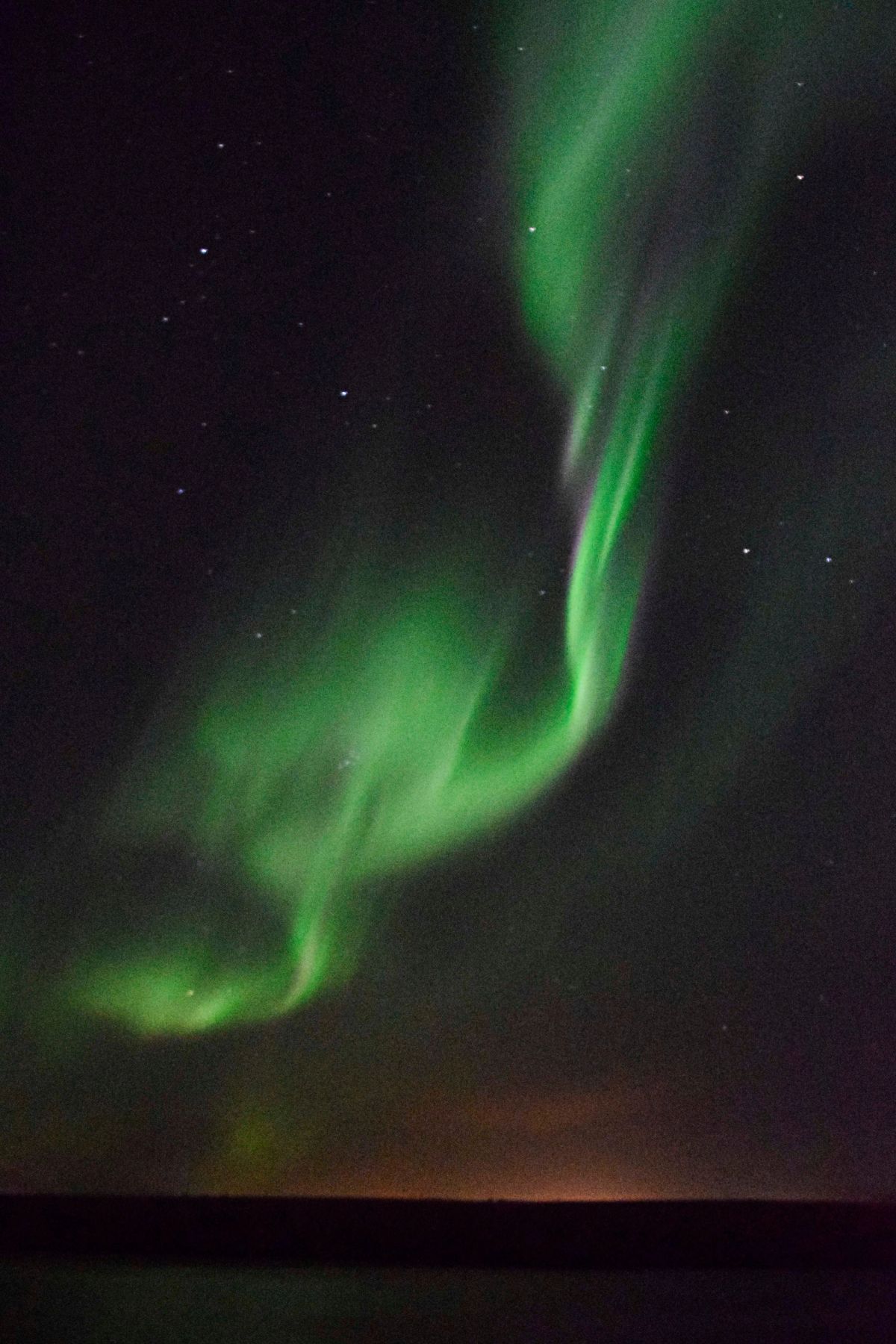
October nights hover near freezing rather than well below, which makes two hours outside comfortable.
Early October or Late October?
The month changes noticeably from one end to the other.
Early October keeps most of September's advantages. Daylight still runs 11 to 12 hours, the roads are bare, and the tail of the equinox activity bump is still in play.
Late October gives you more darkness, more chance of snow on the ground for photographs, and the first genuinely cold nights. It also brings shorter days, down to about 9 hours by the 31st.
For a mixed trip with daytime sightseeing, book the first half. For maximum aurora hours, book the second.
Either way, the clocks do not change your planning. Iceland stays on GMT all year, so there is no shift to work around.
The Equinox Tail
September and March get credit for the equinox effect, and October inherits part of it.
The Russell-McPherron effect, which makes Earth's magnetic field couple more efficiently with the solar wind around the equinoxes, tapers through October rather than switching off on 1 October.
The result is a first half of the month that is still statistically favoured, on top of the darkness and cloud advantages.
None of it beats weather. NOAA's storm scale records only about 200 strong G3 storms per 11-year cycle, and Iceland does not need them, because sitting under the auroral oval means activity of 2 or 3 already produces a display overhead.
What Else October Offers
The aurora is the headline and the month has more going for it.
Prices are at their lowest point of the year outside November. Flights, car hire and accommodation all sit well below both the summer and Christmas peaks.
Crowds have gone. The Golden Circle in mid-October at 10am feels like the same route in July at 8am, which is to say quiet.
Autumn colour holds through the first half. The birch at Þingvellir and the heath along Route 35 stay red and gold until the first hard frost.
The lower path at Gullfoss is usually still open, and it closes for the winter once it ices over, so October is your last reliable chance at that viewpoint.
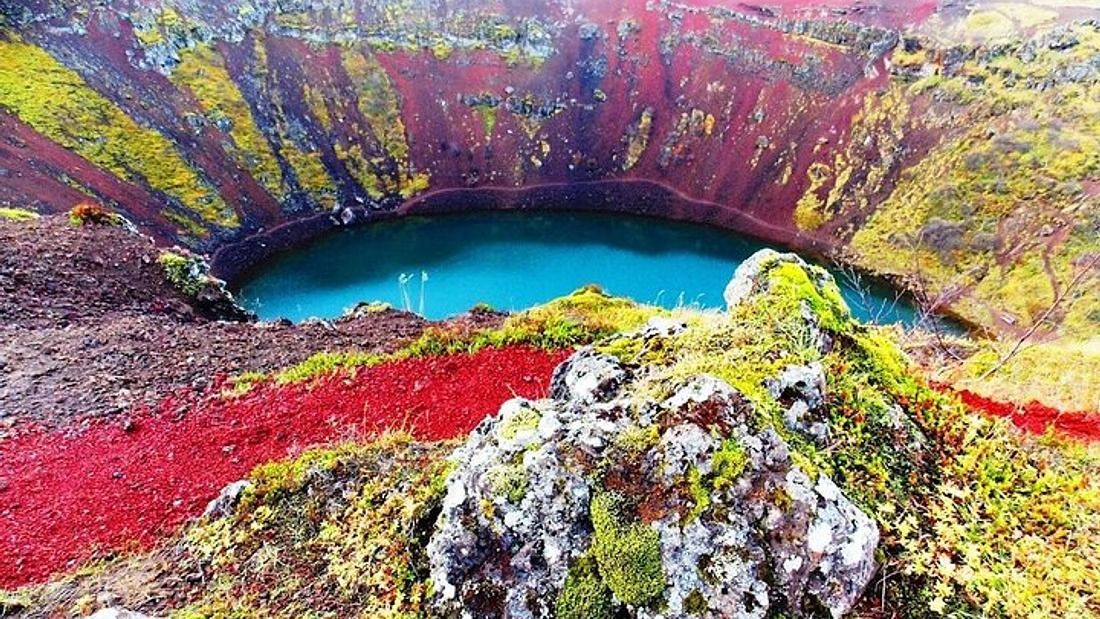
Kerið and the other extra stops are still comfortably reachable in October daylight, which winter does not allow.
Where to Watch
Reykjavík's light dome reaches roughly 20 kilometres, so almost anywhere beyond the suburbs works.
Þingvellir National Park is the standard choice at 45 minutes from the city, with the rift walls for foreground and Þingvallavatn for reflections. The car parks stay open around the clock.
Bring a red-light torch if you go. There is no lighting once you leave the car park, and the fissures either side of the path are genuinely deep.
Laugarvatn is the friendliest self-drive option, with a lake, a lit car park and a geothermal bath on the shore where you can sit in warm water and watch.
The Grímsnes farmland along Route 35, Hvalfjörður and the Reykjanes lava fields all work too, and they lie in different directions, which matters when you are chasing a gap in the cloud.
Planning an October Trip
Six decisions that raise your odds.
Stay four nights if you can. One clear active night in three is normal, and four gives you a comfortable margin.
Book a guesthouse outside Reykjavík for at least one of them. Stepping outside after dinner beats driving home at 1am.
Keep your evenings unbooked and your days fixed. The aurora will not wait for a schedule and Gullfoss will.
Check the Icelandic Met Office aurora forecast in the afternoon rather than the morning. Icelandic cloud predictions are useful about 12 hours ahead and rough beyond 36.
Take proper layers. Near-freezing plus 4.4 metres per second of wind, standing still for two hours, is colder than the temperature suggests.
Book the tour early in your stay. Most operators rebook you free if the night fails, and that only helps if you have nights left.
A Day and a Night in October
The month is one of the few where a full sightseeing day and a proper aurora night fit comfortably into 24 hours.
A Golden Circle loop covering Þingvellir, Geysir and Gullfoss runs 6 to 8 hours and returns around 5pm. Our Golden Circle Classic Tour follows that shape.
That leaves three hours to eat and warm up before darkness at 7pm to 8pm, then the reliable window from 10pm to 1am.
In December the same plan collapses, because darkness arrives at 6pm while you are still at the last stop. October is the last month where the two halves genuinely coexist.
How October Compares
Against September: October wins on darkness and cloud, and loses slightly on temperature and daylight for sightseeing.
Against November: November edges it on cloud at 5.8 oktas and darkness, and loses on daylight, road conditions and how comfortable the nights are.
Against December and January: October wins clearly on reliability, weather and price, and loses on maximum darkness and snow-covered scenery.
Against March: they are close. March has more equinox activity and returning daylight, October has better cloud and lower prices.
If you want one recommendation for a first aurora trip, October is it.
Book the Month That Works
October gives you long nights, thin cloud, clear roads and low prices in the same four weeks, which no other month in the season manages. Our small-group Northern Lights adventure caps the vehicle at 19 and drives to whichever part of the southwest is clearest that evening. Book it for an early night in your stay, and keep a spare evening in case the Atlantic has other ideas.
Compare Golden Circle Tours
Check each selected product for its current operator, guide, itinerary, meeting point, and terms.
View Our Tours

