
Why the Blue Lagoon Dries Out Hair
The water is geothermal seawater loaded with silica, sulphur and magnesium. Those minerals suit skin and they do not suit hair.
Silica sits on the surface of the hair shaft rather than penetrating it. When the hair dries, the coating hardens, which is why it feels stiff, matted and straw-like afterwards.
This is a coating problem rather than structural damage. Blue Lagoon's own position is that hair returns to normal after two or three washes, and that matches most people's experience.
Blonde and light hair shows it worst, and long hair takes the longest to detangle. If you have neither, you may not notice much at all.
The Two-Minute Routine Before You Get In
Everything that matters happens in the shower before you reach the water.
Wet your hair and work in a generous amount of the conditioner provided free in every shower. Do not rinse it out.
Use more than feels reasonable. The conditioner is acting as a barrier rather than a treatment, and a thin layer does very little.
Tie long hair up in a bun or clip it above the waterline. A high bun works better than a ponytail, which will trail in the water when you lean back.
If you are particularly worried, buy a swim cap at the lagoon shop. It is the only method that works completely.
Leave the conditioner in for the whole visit and rinse it out at the end.
Keeping Your Head Above Water
The other half of the job, and it is easier said than done in a warm pool.
Do not dunk. The single biggest cause of stiff hair afterwards is one enthusiastic dive at the start of the soak.
Avoid leaning back against the edge with your hair in the water, which is the most common accidental contact.
Duration matters. A few seconds of contact rinses out easily, and twenty minutes of submerged hair does not.
Steam is fine. The sauna and steam room do nothing to your hair beyond making it damp.
The water sits at 37 to 39°C year-round, so a long soak is comfortable enough that people forget how long they have been in.
Be careful at the swim-up bar, where people tend to relax and stop thinking about it.
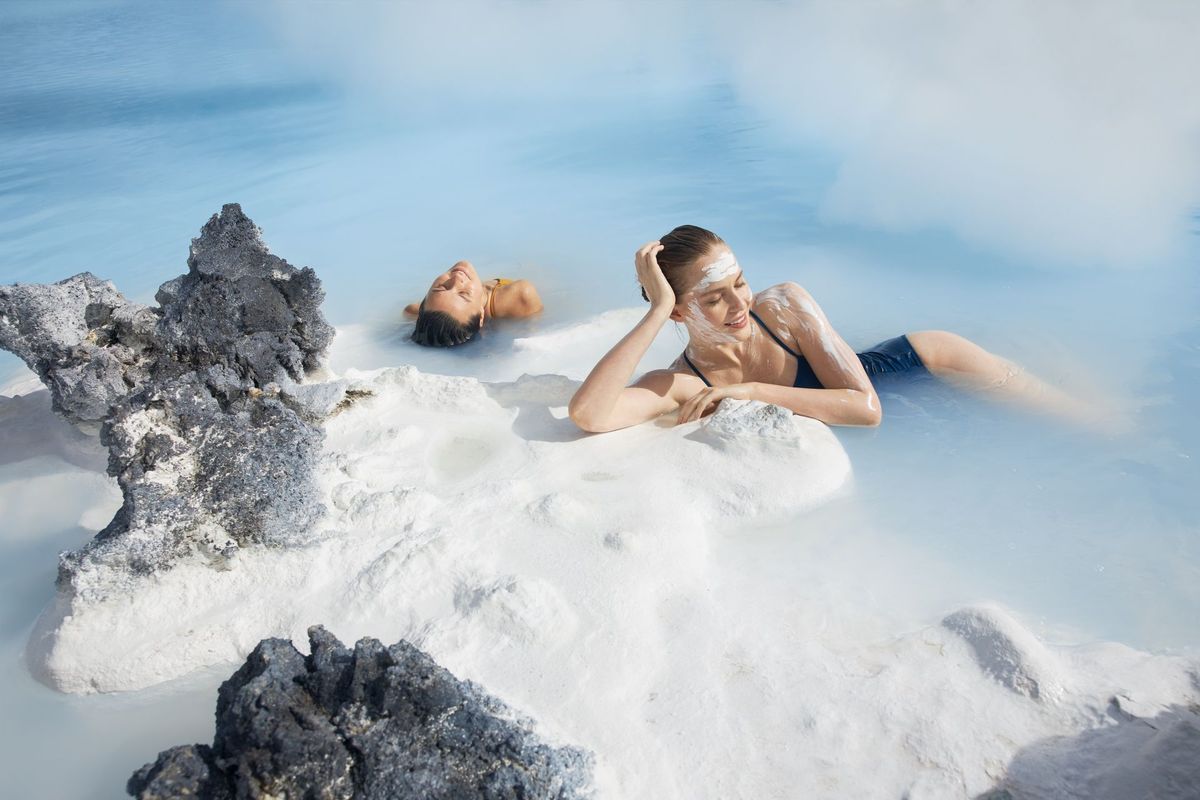
Conditioner in, hair up, and the whole problem largely disappears.
After Your Soak
Four steps, in order, and the first one is the important one.
Rinse thoroughly with fresh water in the shower before your hair dries. Silica that has not hardened comes off easily.
Condition again, generously, and leave it in for a couple of minutes before rinsing.
Detangle with a wide-tooth comb rather than a brush, working from the ends upwards. Hair with silica on it is more fragile when it is being pulled.
Deep condition or use a mask that evening if you have one. It shortens the recovery considerably.
If your hair is already stiff by the time you get back, a clarifying shampoo followed by a deep conditioner is the fastest fix. Two or three washes and it will be back to normal.
Does This Apply at the Sky Lagoon?
Less so, and the difference is real rather than marketing.
Sky Lagoon's water is geothermally heated seawater without the heavy silica load that gives the Blue Lagoon its milky colour. Clear water is the giveaway.
Salt water still dries hair, so the same routine helps, but the stiff coated feeling is much less pronounced.
Tie your hair up and use conditioner anyway. It costs nothing and it is the same shower you were going to use.
The seven-step Skjól ritual includes a cold plunge and a body scrub, and none of it involves your hair. Our guide to the Sky Lagoon ritual covers the sequence.
Salt rinses out of hair far more readily than silica does, which is the practical difference between the two.
Our page on Sky Lagoon sets out what admission includes.
What About the Other Icelandic Pools?
Worth knowing, since the Blue Lagoon is the outlier rather than the rule.
The Secret Lagoon at Flúðir is fed by hot springs and is not silica-heavy. Hair is fine.
Laugarvatn Fontana is the same, with the added complication of a cold lake plunge, which nobody's hair minds.
Its steam rooms are built over a live hot spring, and steam does nothing to hair beyond dampening it.
Municipal pools in Reykjavík are chlorinated freshwater and behave like any pool at home, and Reykjavík City lists the ones across the capital area with their opening hours.
They are also cheap, open long hours and where Icelanders actually swim, which makes them the best value soak in the country.
Natural hot springs and hot rivers vary, and none of them approaches the Blue Lagoon's mineral load. Reykjadalur, the bathable warm river above Hveragerði, sits in a protected geothermal area managed by the Environment Agency of Iceland.
If your itinerary includes several soaks, the Blue Lagoon is the one to prepare for and the rest need no thought.
Other Things the Water Affects
Two more, and both are easy to forget in the changing room.
Silver jewellery tarnishes quickly in geothermal water, sometimes within a single visit. Leave it in the locker.
Sulphur is what does that, and it is the same compound the Icelandic Met Office tracks as sulphur dioxide during Reykjanes eruptions.
Contact lenses are best kept above the waterline, since silica in a lens is genuinely uncomfortable.
Swimsuits are fine, though light colours can pick up a faint tint over repeated visits.
Everyone showers without a swimsuit before entering, which is standard at every Icelandic pool and is checked by attendants.
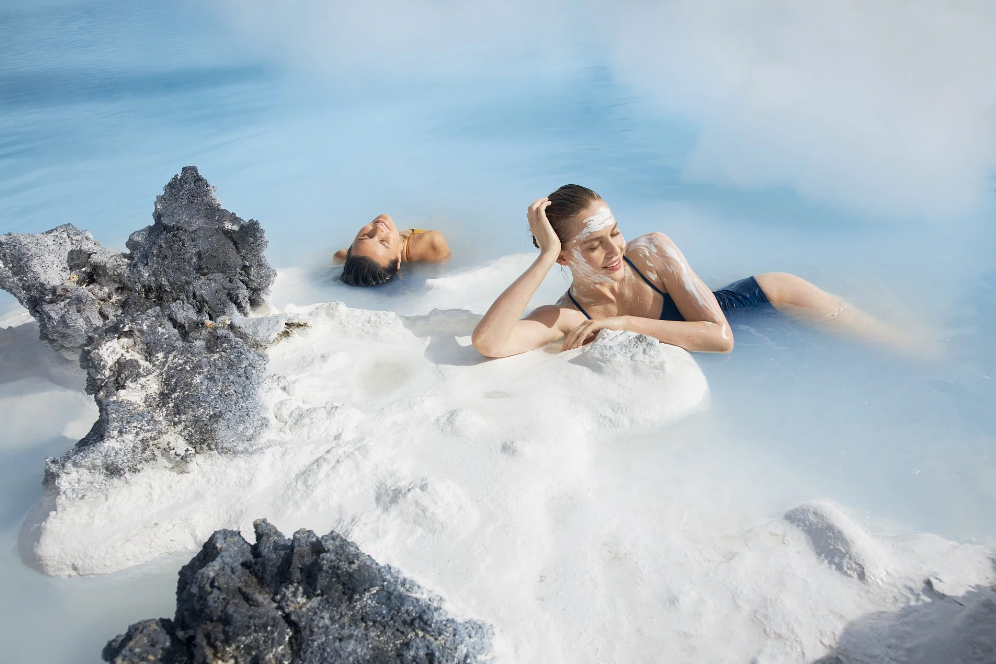
Rinse before your hair dries, and the coating comes off far more easily.
The Short Version
Conditioner in before you get in, hair up out of the water, rinse and condition again afterwards.
If you forget all of that and dunk your head, your hair will feel awful for a day and be fine after two or three washes.
Nothing about the Blue Lagoon permanently damages hair, and the internet is more alarmed about this than it needs to be. Our page on the Blue Lagoon covers what else to expect on the day.
Pair the Lagoon With a Day Out
The lagoon is a two to three hour stop, and the landscape an hour inland is what most visitors came for. Our Golden Circle and Blue Lagoon combination covers Þingvellir, Geysir and Gullfoss and includes lagoon admission across about ten hours, finishing with the soak. Tell us your dates and we will find a departure that suits.
Compare Golden Circle Tours
Check each selected product for its current operator, guide, itinerary, meeting point, and terms.
View Our Tours

