
What Is the Blue Lagoon Like in Winter?
Warmer than you expect in the water and colder than you expect out of it. The lagoon holds 37 to 39°C every day of the year, so a January soak feels identical to a July one once you are in.
What changes is everything around it. Snow on the lava field, steam thick enough to hide the far end of the pool, and darkness for most of the working day.
Winter also brings the fewest visitors of the year and the lowest prices, which is the practical argument for coming between November and February.
How Cold Is It Outside the Water?
Cold enough to matter for about thirty seconds, and not much longer than that.
Reykjanes sits at sea level on an exposed peninsula, and winter air temperatures hover around freezing rather than dropping dramatically. Iceland is milder than its latitude suggests.
Wind is the variable that actually matters. A still 0°C day is manageable in a towel, and the same temperature with a 15 metre per second gust off the Atlantic is not.
The walk from the changing rooms to the water is the worst part of the day. It is short, it is outdoors, and everyone does it at speed.
Once you are in, the contrast works in your favour. Warm water and cold air on your face is the whole reason to come in winter.
The Practical Bit Nobody Warns You About
Three small things that make the difference between a good winter visit and a cold one.
Leave your towel on the rail nearest where you plan to get out, not back in the changing room. The walk out is worse than the walk in.
Wear a warm hat in the water. Every regular does, and your head is the only part exposed for the whole soak.
Keep moving through the shallow sections. The water is warmest where it comes in and cooler at the far edges, and standing still in a cold corner is how people get chilly in a hot pool.
Wet hair freezes if you sit still on a hard frost day. It is a good photograph and a bad idea, so tie it up.
Steam can be so thick that you cannot see more than a few metres. That is atmospheric in person and disappointing in photographs.
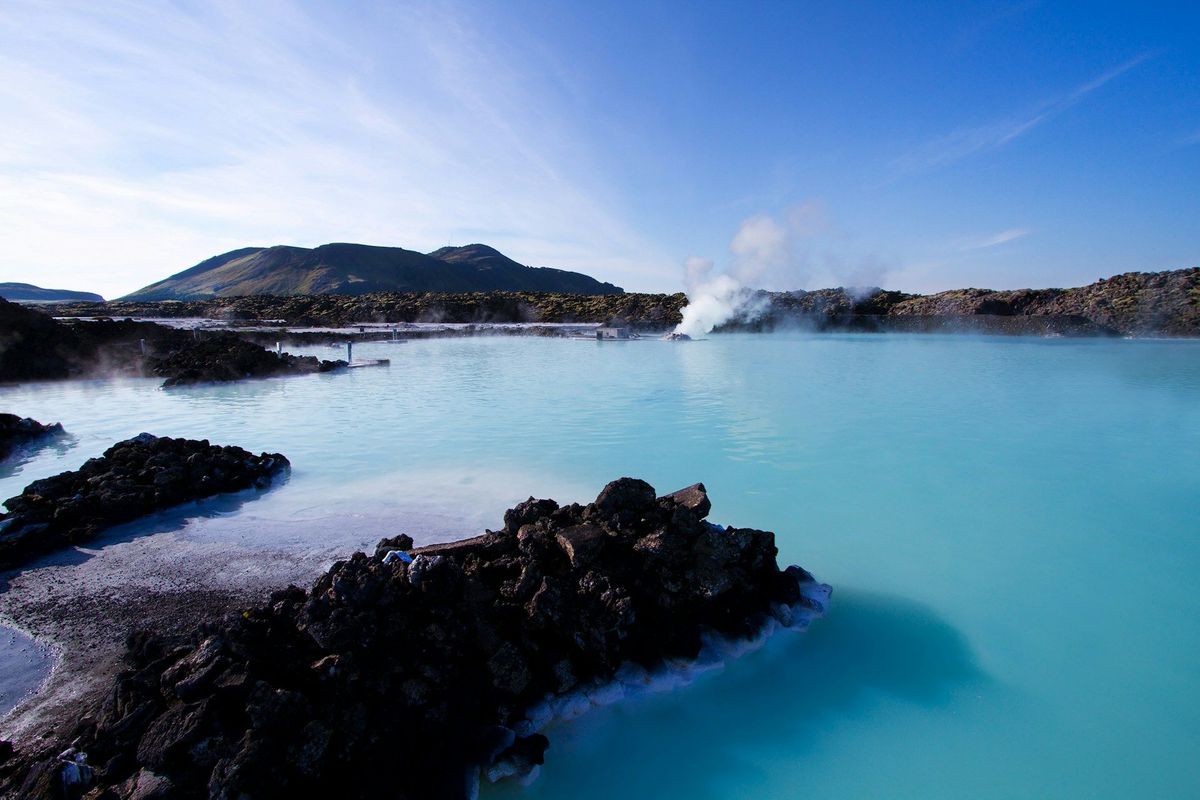
The water holds 37 to 39°C year-round, so the season changes the air rather than the soak.
Darkness and Opening Hours
Winter light shapes the whole visit, and it works in your favour here.
From 21 August to 31 January the lagoon stays open until 22:00, so almost any afternoon slot after about three o'clock is a night visit in December.
From 1 February to 31 May it closes at 20:00, which tightens the evening window just as the light returns.
Sunrise in late December is around 11:00 and sunset before 16:00, so a midday slot is the only one with real daylight.
That makes winter the season where the choice between a light visit and a dark one is genuinely available. Our guide to visiting the Blue Lagoon at night covers the after-dark version.
Entry is timed and pre-booking is required year-round.
Northern Lights From the Lagoon
Possible between late September and early April, and less likely than the photographs suggest.
The lagoon is lit, and that lighting sits in your field of view, which washes out anything faint. Aurora visible from a dark field may not be visible from the water.
Cloud is the larger obstacle. Icelandic winter skies are overcast more often than not, and no amount of solar activity gets through.
The Icelandic Met Office publishes an aurora forecast alongside cloud cover, and it is the only one worth checking on the day.
A Kp index of 3 or above is the usual threshold for anything visible this far south, and even then a clear patch of sky matters more.
Solar activity is in the strong part of the eleven-year cycle. NOAA's Space Weather Prediction Center tracks Solar Cycle 25, whose predicted maximum was a smoothed sunspot number of 115 in July 2025.
Book a late slot, look up occasionally, and treat any sighting as luck rather than a plan.
Getting There in Winter
The drive is the part of a winter lagoon day that needs thought.
The lagoon is 23 kilometres from Keflavík Airport, a 20 minute drive, and about 50 kilometres from Reykjavík at 45 to 50 minutes.
The Reykjanesbraut is a good road, exposed to wind and unlit for long stretches. Winter storms close it occasionally, and high wind is more common than snow on this peninsula.
Live road status is published at umferdin.is, and it is worth checking before you set out rather than after.
Scheduled coaches run from both the airport and Reykjavík, and taking one removes the driving question entirely.
Allow extra time in both directions. A slot missed because of a slow drive is not refunded.
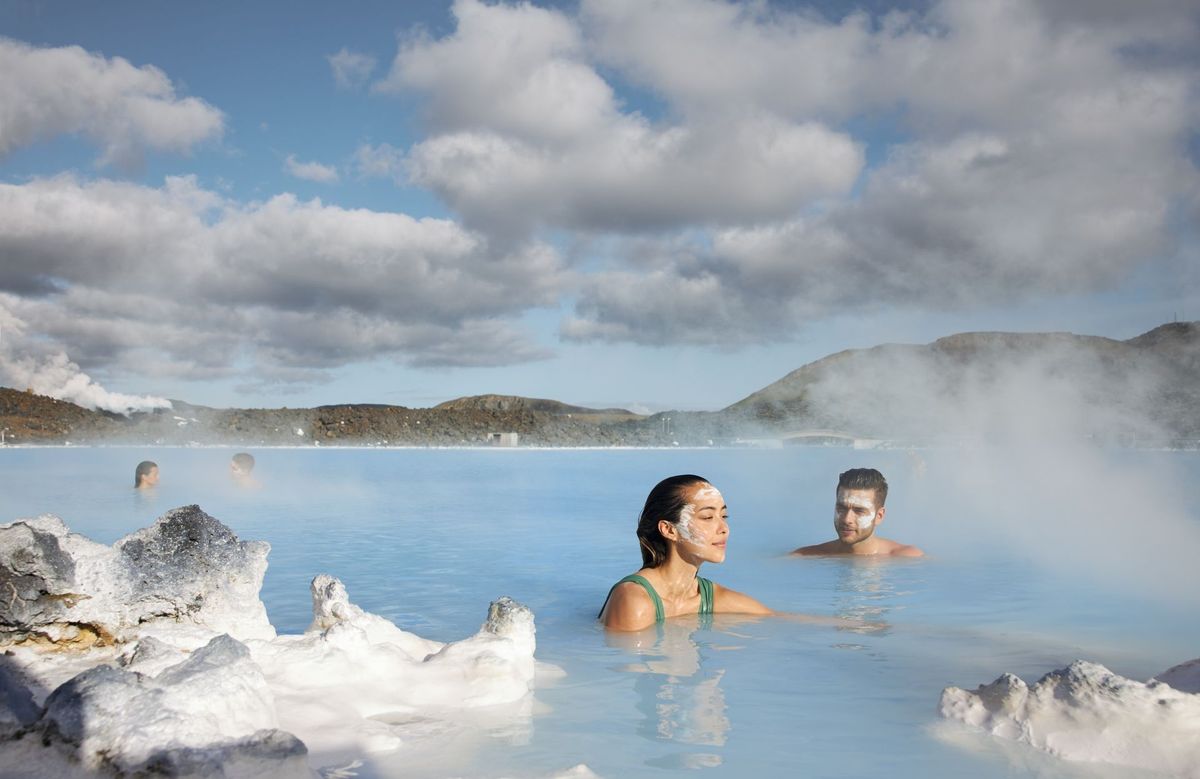
Snow on the surrounding hills is what winter adds to the view, when the steam lets you see them.
What to Wear and Bring
Six things, and the first two are the ones people forget.
A warm hat you do not mind getting wet, to wear in the water.
Flip-flops for the walk between the changing rooms and the pool, since the ground ices.
Proper layers for before and after, including a windproof shell. You will be damp and outdoors, briefly.
Conditioner for your hair before you get in, provided free in the showers. Our guide to protecting your hair covers the routine.
A waterproof phone case if you want photographs, though the steam defeats most of them.
Traction spikes for the car park, which ices like everywhere else in Iceland.
Booking and Timing in Winter
Four points that shape the day.
Slots sell out less than in summer, though weekends, Christmas and New Year behave like peak season.
January and February are the quietest months of the year and the cheapest, with April, May and November close behind.
Opening and closing slots are the quietest on any given day, and midday between 12:00 and 15:00 is the busiest.
Allow two to three hours on site including changing, and our guide to the best time to visit breaks the slots down in detail.
The Eruption Question
One factor specific to this site and this period.
The Reykjanes peninsula has been in an active volcanic period since 2021, and the lagoon has closed temporarily on several occasions.
Closures have been precautionary and short-lived, and affected bookings have been rebooked or refunded rather than lost.
Check before you travel out. SafeTravel carries the official closure notices and road alerts for the area.
Book early in your trip rather than on your last day, so there is room to move the slot.
Have a backup. The Sky Lagoon in Kópavogur is 20 minutes from central Reykjavík and well clear of the volcanic zone.
Is Winter the Best Time to Go?
For most visitors, yes.
The contrast between hot water and cold air is the whole appeal, and it only exists in winter. In July the lagoon is a warm pool on a mild day.
Crowds are a fraction of summer numbers, prices are lower, and the darkness makes an evening slot genuinely atmospheric.
The costs are real. A cold walk to the water, thick steam that ruins photographs, short daylight and a drive that needs attention.
If you can only visit once and the image in your head is steam rising off blue water against snow, come between November and February.
Make It the End of a Winter Day Out
A winter Golden Circle day finishes in darkness by four o'clock, which makes a lagoon slot the natural way to end it rather than driving straight back into town. Our Golden Circle and Blue Lagoon combination covers Þingvellir, Geysir and Gullfoss and includes lagoon admission across about ten hours. Tell us your dates and we will tell you what the daylight allows.
Compare Golden Circle Tours
Check each selected product for its current operator, guide, itinerary, meeting point, and terms.
View Our Tours

