
Can You Cruise to Iceland From the UK?
Yes, and it is the most popular no-fly route to Iceland. Ships sail from Southampton most often, with occasional departures from Dover, Liverpool, Newcastle and Greenwich, and return to the same port.
Sailings run from early May to late September, matching Iceland's cruise season. Round trips typically last 10 to 14 nights, with two or three sea days in each direction and three or four Icelandic calls in between.
The appeal is straightforward: no flights, no baggage limits, no airport transfers, and your accommodation moves with you. The cost is time, since roughly half the itinerary is spent crossing.
Where UK Sailings Depart From
Southampton dominates, and for good reason.
It has the deepest berths, the most cruise terminals and the widest choice of lines. The majority of UK-Iceland itineraries leave from here.
Dover, Liverpool, Newcastle and Greenwich see occasional departures, usually from lines with a regional focus or from smaller vessels. These are worth watching if you live nearer to one of them, since the saving on getting to the port can be substantial.
Edinburgh's port at Leith and Belfast appear on some itineraries as calls rather than departure points, which is different but useful if you want to join partway.
How Long the Crossing Takes
The North Atlantic is the reason these itineraries run long.
Southampton to Reykjavík direct is roughly 1,200 nautical miles, which at a typical cruising speed means two and a half to three days at sea.
Most itineraries break the crossing rather than running it straight. Common calls on the way include Belfast, the Orkneys at Kirkwall, the Faroe Islands at Tórshavn, and occasionally the Scottish islands.
That turns the transit into part of the holiday rather than dead time, and it is why 12- to 14-night itineraries are more common than 10.
Expect the outbound crossing to be the rougher of the two, since prevailing weather runs west to east.
Typical Itineraries
Three shapes recur, and they suit different travellers.
The classic 12- to 14-night round trip: Southampton, a Scottish or Faroese call, then Reykjavík, Akureyri and Ísafjörður, returning via the Faroes.
The shorter 10-night version: Southampton, one call en route, Reykjavík and one other Icelandic port, then home. Fewer Icelandic days and less time at sea.
The combined Iceland and Norway itinerary, at 14 nights or more, pairs Icelandic ports with the Norwegian fjords. Excellent value in ground covered and a lot of sailing.
Expedition sailings from the UK exist and go further, with smaller ships reaching Greenland or the remoter Icelandic coast. They cost considerably more and carry far fewer passengers.
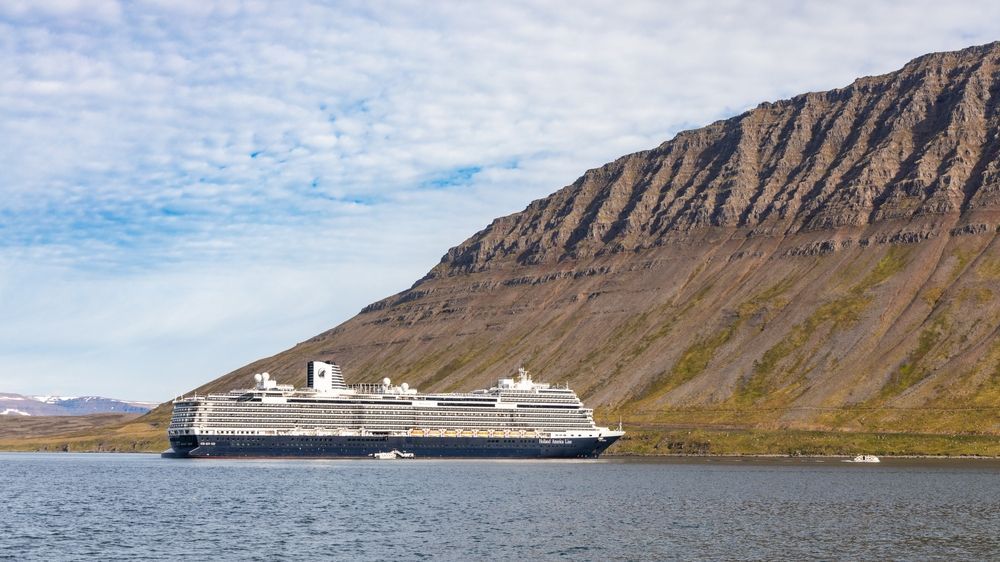
Icelandic port calls are the point, and the fjord approaches are among the better scenic sailings.
What Each Icelandic Call Gives You
Four ports appear on most UK itineraries, and they are genuinely different from one another.
Reykjavík is the main call and the one with the widest choice. Ships dock at Skarfabakki, 3 to 4 kilometres from the centre, for a typical 8 to 12 hours. That is enough for the Golden Circle, a South Coast run or the city plus a lagoon.
Akureyri in the north opens up Goðafoss, Lake Mývatn and whale watching at Húsavík, with the town walkable from the pier.
Ísafjörður in the Westfjords is the smallest and most dramatic, with Dynjandi waterfall as the headline excursion and a five-minute walk into town.
Grundarfjörður and Djúpivogur appear on some itineraries, the former below Kirkjufell on Snæfellsnes and the latter a quiet village in the east.
The Golden Circle From Reykjavík
The most booked excursion in Iceland, and it fits a standard UK-itinerary call comfortably.
The loop covers Þingvellir, where the North American and Eurasian plates pull apart and where the Alþingi assembly met from around 930 until 1798 according to Þingvellir National Park; the Geysir geothermal area, where Strokkur erupts every five to ten minutes; and Gullfoss on the Hvítá.
It needs 6 to 8 hours of touring inside an 8 to 12 hour call, which leaves a generous margin.
Our small-group Golden Circle tour from the cruise port collects at Skarfabakki and returns to the pier, working backwards from your all-aboard time.
Stop lengths run about 45 minutes at each of the three sites, with roughly three and a half hours of driving across the day.
The key question for any independent booking is whether the operator tracks your ship. Ours do, and the terms are on our guaranteed return page.
When to Sail
The UK season runs from May to September, and the months differ more than the brochures suggest.
May and June give long daylight, thin crowds and the best wildlife, with puffins nesting from mid-May.
July and August are the warmest and busiest. At the nearest long-running station to the Golden Circle, Met Office climate data puts July's average daily high at 16.5°C with the lowest mean wind of the year at 3.4 metres per second.
September brings autumn colour, lower fares and the first darkness, which makes an aurora sighting possible on a late or overnight call. It is also the wettest month on the route at 147 mm.
If the northern lights matter, September is the only realistic month within a standard sailing.
Advantages of Sailing From the UK
Five reasons people choose this over flying.
No flights, which suits nervous flyers and anyone tired of airport queues.
No baggage limits worth worrying about, so proper waterproofs and boots travel easily.
No transfers at either end beyond getting to Southampton.
Your hotel moves with you, and unpacking once for two weeks is a genuine pleasure.
Sea days are part of the holiday rather than a cost, particularly on a ship you like.
Disadvantages Worth Knowing
Four honest counterweights.
Time in Iceland is limited. A 14-night itinerary might give you four port days in the country, which is roughly 40 hours ashore.
The crossing can be rough. The North Atlantic in May or September is not the Mediterranean, and a stabilised ship still moves.
You see ports rather than the country. The interior, the highlands and most of the South Coast stay out of reach.
Weather cancels calls. High wind occasionally means a skipped port, and there is no compensation beyond a sea day.
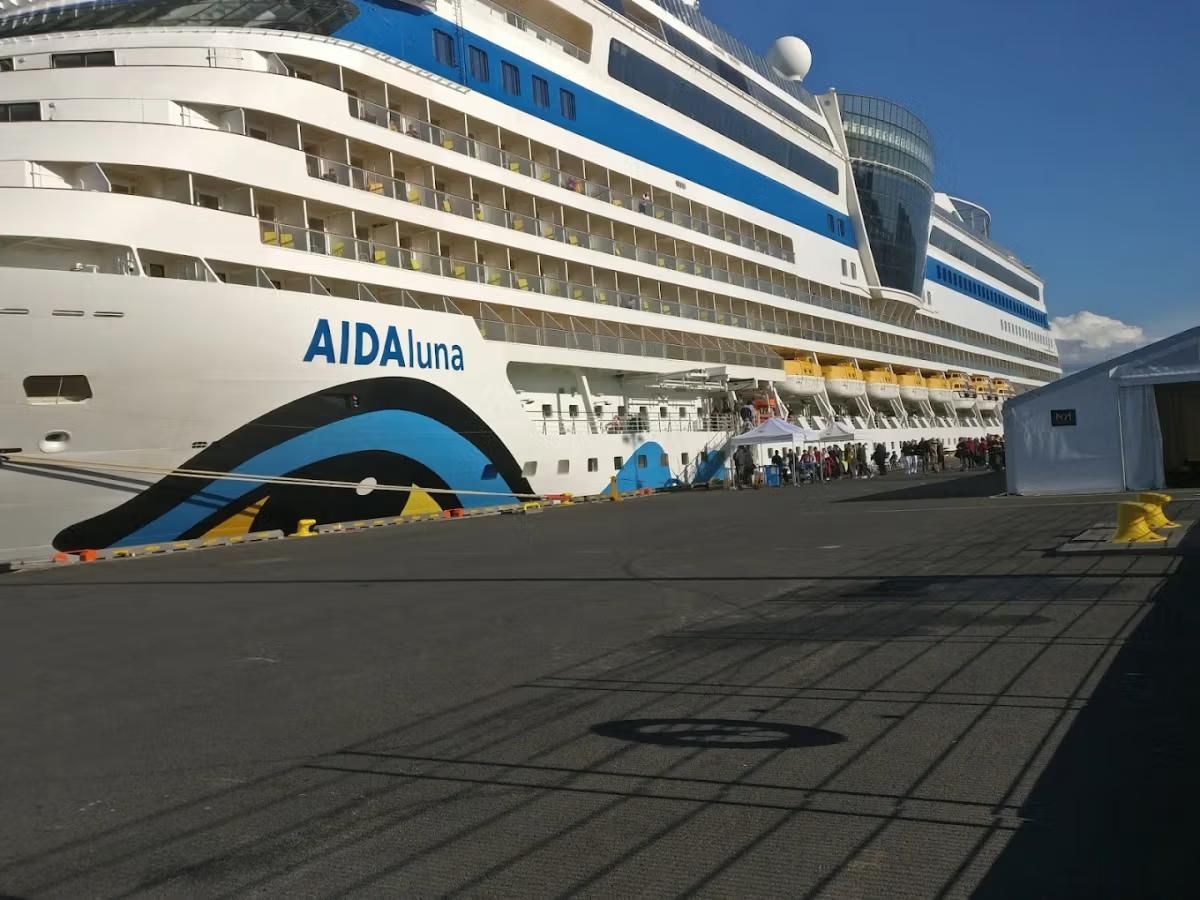
Reykjavík is the call that opens up the most, and Skarfabakki is where the excursions collect.
Cruise or Fly?
The honest comparison for a UK traveller.
A cruise suits you if you want no flights, a slow pace, several Icelandic regions in one trip and a ship you enjoy being on.
Flying suits you if you want depth rather than breadth. Four nights in Reykjavík with a rental car covers more of Iceland than four port calls, and it costs less.
The hybrid is a fly-cruise: fly to Reykjavík, sail a shorter Iceland-only itinerary and fly home. It removes the crossing and keeps the ports.
For a first visit to Iceland specifically, flying gives you more of the country. For a first cruise, or for a trip where the sailing is half the point, the UK round trip is hard to beat.
Practical Points for UK Passengers
Six things that make the trip smoother.
Book excursions before you sail. The good small-group departures fill, particularly in July and August, when several ships call on the same day.
Pack for Icelandic weather rather than a British summer. Our guide to what to wear on a shore excursion sets out the layers that work.
Take a card rather than cash. Iceland is close to cashless, and sterling is not accepted.
Check the all-aboard time on every day sheet. It falls 30 to 60 minutes before departure, and it is the deadline every plan works backwards from.
Bring seasickness remedies for the crossing even if you never normally need them.
Allow for the drive or train to Southampton. It is often the least considered part of the whole itinerary.
Book the Reykjavík Day Before You Sail
The Icelandic port days are the reason for the crossing, and Reykjavík is where the choice is widest. Our Golden Circle from the port excursion collects at Skarfabakki, tracks your ship and builds in the buffer that keeps the day relaxed. Send us your vessel and call date, and we will confirm the timing before you commit to anything.
Compare Golden Circle Tours
Check each selected product for its current operator, guide, itinerary, meeting point, and terms.
View Our Tours

