
Can You Cruise to Iceland From the US?
Yes. Ships sail from New York and other East Coast ports on transatlantic and repositioning itineraries that call at Iceland, usually running 12 to 16 nights. The alternative is a fly-cruise, where you fly to Reykjavík or a European port and sail a shorter Iceland-focused route.
Both options run in the same window, roughly May to September, because that is when Icelandic ports are reliably workable and daylight is long.
The choice comes down to how you feel about sea days. A New York departure gives you a genuine ocean crossing with three to five days at sea. A fly-cruise trades that for more hours actually ashore in Iceland.
Common US Routes to Iceland
Three route shapes cover almost everything on sale.
The New York transatlantic runs east across the Atlantic with calls in Atlantic Canada, sometimes Greenland, then Iceland, often finishing in the UK or continuing to mainland Europe. Twelve to sixteen nights.
The New York round trip is less common and longer, since it has to cross twice. Expect 16 nights or more, with a high proportion of sea days.
Repositioning cruises move ships between American and European seasons, so they run eastbound in spring and westbound in autumn. These are usually one-way, often priced well, and they call at Iceland because it sits on the great circle route rather than because it is the theme of the trip.
Boston, Baltimore and Fort Lauderdale appear occasionally as departure ports, usually on repositioning sailings rather than scheduled seasonal itineraries.
How Long the Crossing Takes
Distance is the reason these itineraries run long.
New York to Reykjavík direct is roughly 2,600 nautical miles, which is four to five days of continuous steaming at typical cruise speeds.
Most itineraries break that up rather than running it straight. Halifax, St John's in Newfoundland, and the Greenland settlements of Nuuk and Qaqortoq are the usual stepping stones.
Those calls turn the crossing into part of the holiday. They also explain why a New York to Iceland itinerary rarely comes in under 12 nights.
Expect a mix of two to three consecutive sea days at a time rather than one long unbroken stretch.
Fly-Cruise Alternatives
For many American travellers this is the better trade.
You fly to Reykjavík, roughly five and a half hours from New York or Boston, and join a ship there for a 7- to 10-night circumnavigation of Iceland or a Reykjavík-to-Reykjavík round trip.
The result is more Icelandic port days and fewer sea days in a shorter total trip. A week-long fly-cruise can deliver five Icelandic calls, which is more than most two-week transatlantic itineraries manage.
The cost is the airfare and the loss of the crossing itself, which for some people is the whole appeal.
A useful middle path is a one-way transatlantic in one direction and a flight in the other. You get the ocean once, and you come home in six hours.
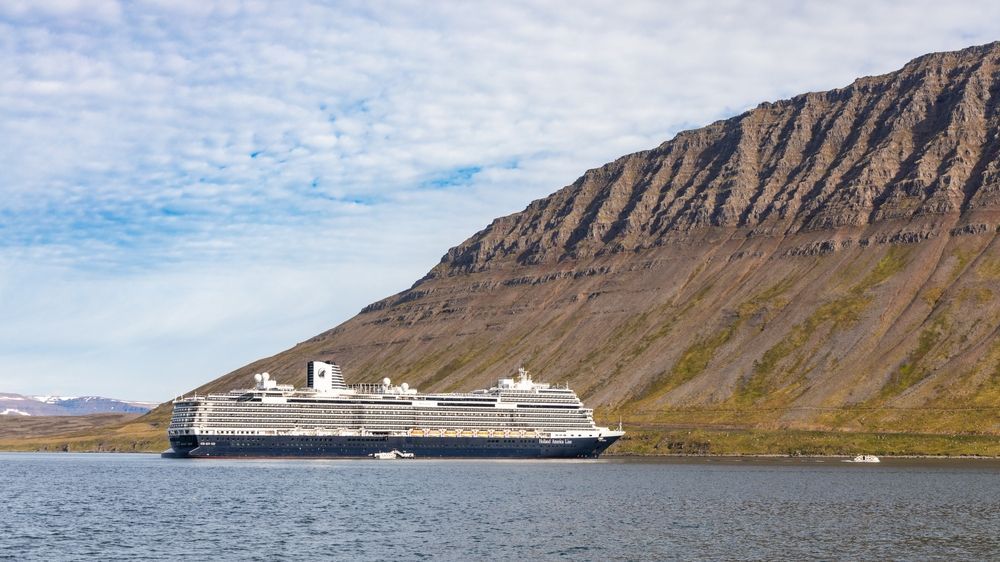
Fly-cruise itineraries buy you more time in the fjords and less time crossing open water.
Cruise Lines Serving the Route
Around a dozen lines call at Iceland in a typical season, and they split into three broad groups.
Mainstream ocean lines run the largest ships and the widest cabin choice, with Reykjavík and Akureyri as the standard calls. These have the most competitive fares and the busiest port days, since 3,000 passengers come ashore at once.
Premium and luxury lines use smaller vessels, often 700 to 1,200 passengers, and reach ports the big ships cannot. Some include shore excursions in the fare.
Expedition operators run ships under 300 passengers with Zodiacs, and they combine Iceland with Greenland or the remoter Icelandic coastline. They cost considerably more, and they go places nothing else does.
Itineraries change every season, so compare current sailings by ship size and by which Icelandic ports are included rather than by brand loyalty.
Iceland Ports You Might Visit
Four ports appear on most American itineraries, and they are genuinely different from each other.
Reykjavík is the main call. Ships dock at Skarfabakki, 3 to 4 kilometres from the city centre, for a typical 8 to 12 hours, which is enough for the Golden Circle, a South Coast run or the city plus a lagoon.
Akureyri in the north puts Goðafoss, Lake Mývatn and the whale watching at Húsavík within reach, with the town itself walkable from the pier.
Ísafjörður in the Westfjords is the smallest and most dramatic call, with Dynjandi waterfall as the headline excursion.
Grundarfjörður, Djúpivogur and Seyðisfjörður turn up on longer itineraries, each of them a village rather than a town.
Greenland calls at Nuuk, Qaqortoq or Prince Christian Sound often sit alongside the Icelandic ports on a US departure, and they are frequently the trip's surprise highlight.
Top Iceland Shore Excursions
The Reykjavík call is where the choice is widest, and one excursion dominates.
The Golden Circle covers Þingvellir, where the Alþingi assembly met from around 930 until 1798, according to Þingvellir National Park; the Geysir geothermal area, where Strokkur erupts every five to ten minutes; and Gullfoss on the Hvítá river.
It needs 6 to 8 hours inside an 8 to 12 hour call, which leaves a comfortable margin on most American itineraries.
Our small-group Golden Circle tour from the cruise port collects at Skarfabakki and returns to the pier, built backwards from your all-aboard time.
Beyond the loop, Sky Lagoon is 20 minutes from the terminal and costs about three hours of your day, while the Blue Lagoon needs closer to five.
At the northern ports, whale watching and waterfalls take over. Goðafoss from Akureyri is 2.5 to 3 hours round trip, and the full Mývatn day runs 7 to 8.
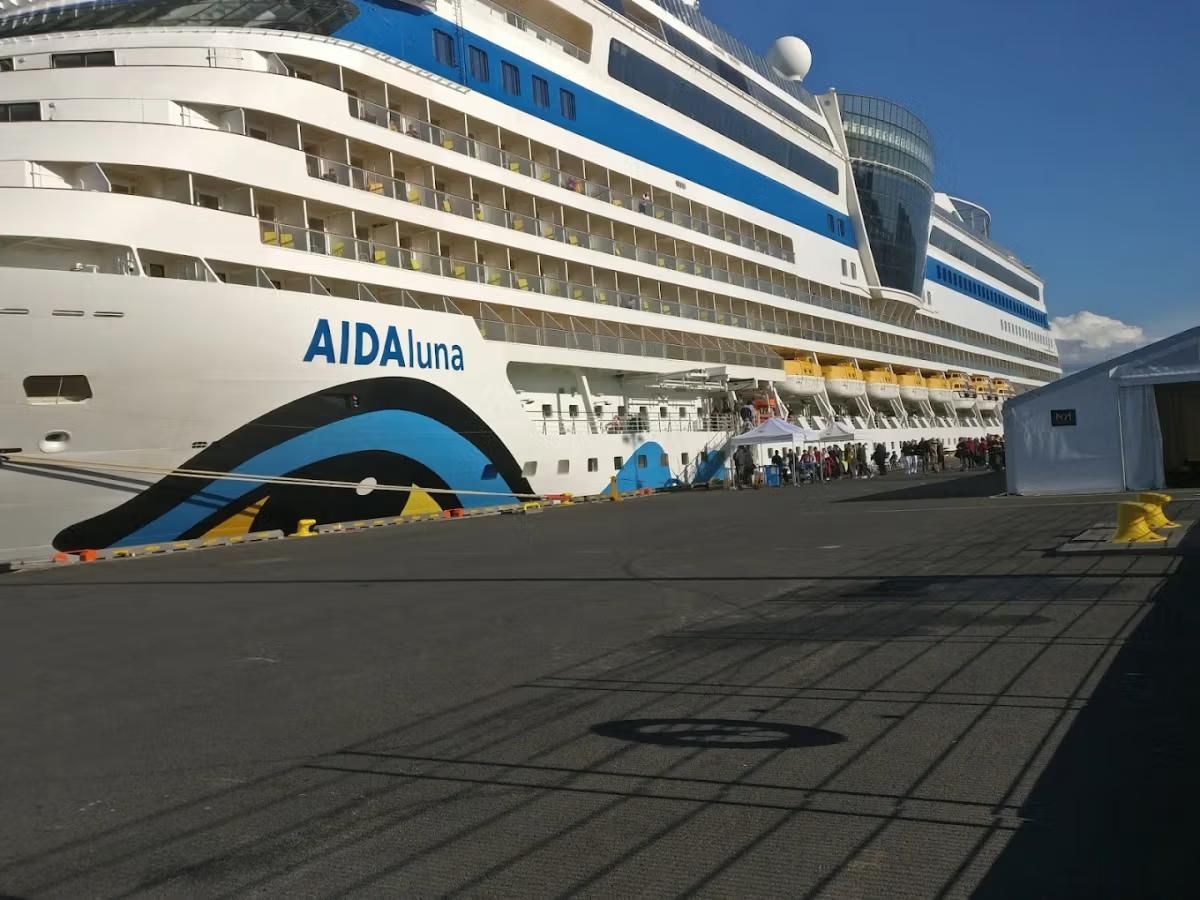
Skarfabakki is where excursions collect, and it sits 3 to 4 kilometres from central Reykjavík.
When to Sail
The season runs from May to September, and the months are not interchangeable.
May and June give the longest daylight and the thinnest crowds, with puffins on the cliffs from mid-May.
July and August are the warmest and busiest. At the nearest long-running station to the Golden Circle, Met Office climate data puts July's average daily high at 16.5°C with the year's lowest mean wind at 3.4 metres per second.
September brings autumn colour, lower fares and the first real darkness, which is what makes an aurora sighting possible on a late call. It is also the wettest month on the route at 147 mm.
Westbound repositioning sailings in late September and early October sit right at the edge of the season, which is why they are cheap.
Planning a US-to-Iceland Cruise
Six things worth settling before you sail.
Book excursions early. Good small-group departures fill quickly in July and August, when several ships call at Skarfabakki on the same day.
Compare independent tours against ship excursions. Independent operators are usually cheaper and run smaller vehicles, and the trade is that the responsibility for timing sits with you.
Check that any independent operator tracks your vessel and commits to your all-aboard time. Ours do, and the terms are set out on our guaranteed return page.
Take a card rather than cash, since Iceland is close to cashless and US dollars are not accepted.
Pack for Icelandic weather rather than the calendar month, using our guide to what to wear on a shore excursion as the checklist.
Bring seasickness remedies for the crossing. The North Atlantic in May or September is not the Caribbean, and a stabilised ship still moves.
Cruise or Fly?
An honest comparison, because the cruise is not always the right answer.
Sailing suits you if you want the ocean itself, several Icelandic regions in one trip, and Greenland or Atlantic Canada thrown in. Nothing else delivers that combination.
Flying suits you if Iceland is the point. Five nights in Reykjavík with a rental car covers more of the country than four port calls, and it usually costs less.
The compromise is the fly-cruise, which removes the crossing and keeps the ports. For a first visit to Iceland specifically, that is the option that gives you the most of the country per day.
Book the Reykjavík Day First
The Icelandic calls are the reason for the crossing, and Reykjavík is where the choice is widest. Our Golden Circle from the port excursion collects at Skarfabakki, tracks your ship and builds in the buffer that keeps the day relaxed. Send us your vessel and call date, and we will confirm the timing before you commit to anything.
Compare Golden Circle Tours
Check each selected product for its current operator, guide, itinerary, meeting point, and terms.
View Our Tours
