
What Did Icelanders Believe About the Northern Lights?
Icelandic folklore attached practical meanings to the aurora rather than grand mythologies. The best documented belief connects the lights to childbirth: their appearance was said to ease a mother's labour, while a woman in labour who looked directly at them risked a cross-eyed child.
Other traditions read the lights as weather signs, as the hidden people dancing, or as an omen worth noting before a journey. Some households taught children not to whistle, sing or wave at them.
What Icelandic folklore did not have is a single tidy origin story. The aurora was part of ordinary winter life here, and everyday things attract practical rules rather than epics.
The Childbirth Belief
This is the most distinctively Icelandic piece of aurora lore, and it is the one folklorists record most consistently.
The lights were thought to relieve the pain of labour, which made a bright winter display a welcome sight in a farmhouse where a birth was expected.
The warning attached to it was equally specific: the mother should not look directly at them, or the child would be born cross-eyed. Some versions extend the risk to any pregnant woman rather than only to a woman in labour.
Beliefs of that shape are common in pre-modern societies, where a striking natural event gets tied to the most consequential and least controllable moment in family life. The specificity is what makes it Icelandic.
The Hidden People
Iceland's huldufólk, the hidden people, live in rocks and hillsides and appear throughout the country's folklore.
One tradition explains the aurora as the hidden people dancing or holding a gathering on dark winter nights, with the moving curtains of light being the visible edge of a party humans are not invited to.
That reading fits the way Icelandic folklore generally works. The huldufólk are neighbours rather than gods; they hold their own celebrations, and unexplained things in the landscape are frequently attributed to them.
Whether many people genuinely believed it or whether it was mostly told to children is a fair question, and the honest answer is that folk belief rarely divides that cleanly.
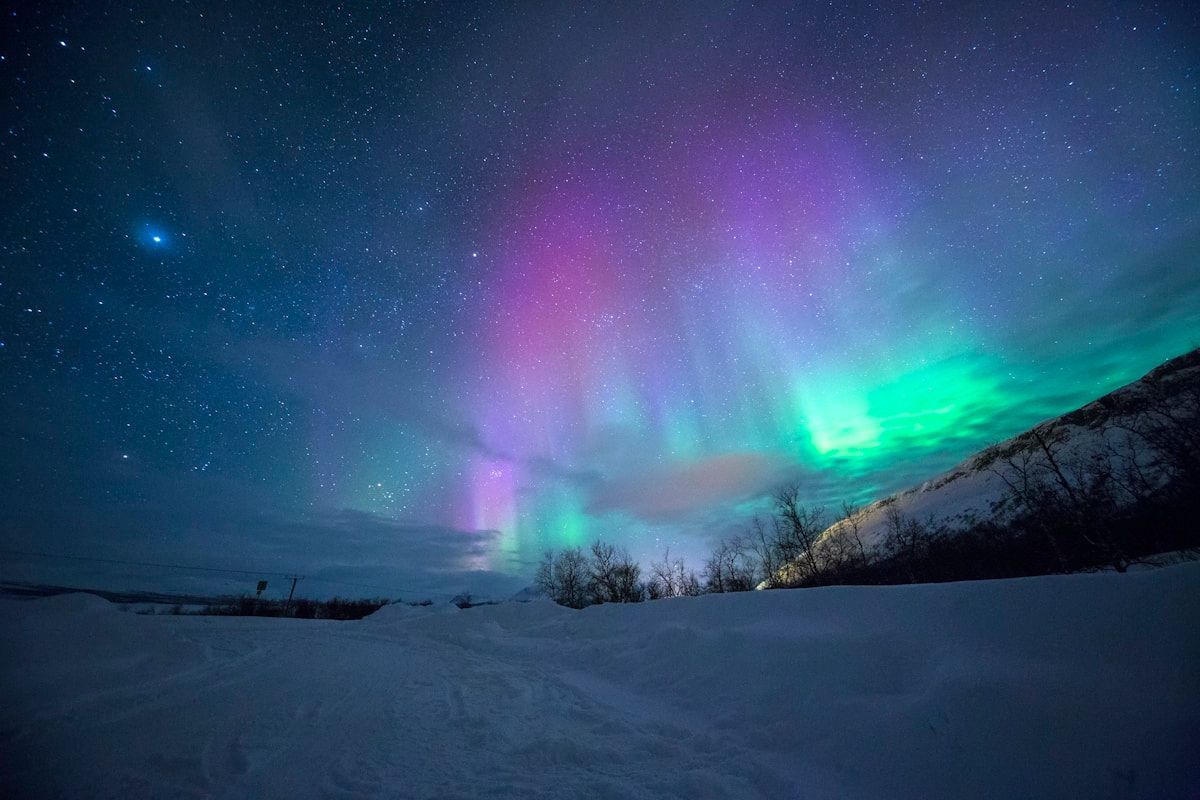
Moving curtains of light are easy to read as something dancing, which is where much of the lore begins.
The Rules Around Watching
Several traditions attach etiquette to the aurora rather than explanation, and these are recorded across the Nordic region.
Do not whistle at them. In some versions the lights come closer, and in others they take you.
Do not wave, and do not sing at them. The same logic applies: attention invites attention.
Do not talk about them carelessly, particularly if they were understood as the souls of the dead. Where that belief was held, quiet respect was the safe response.
These rules travelled. Similar warnings appear in Sámi, Greenlandic and Finnish tradition, which suggests they spread with contact rather than arising separately in each place.
Weather Signs and Omens
Practical readings sat alongside supernatural ones, and in a farming society they mattered more.
A bright display was widely taken to mean a change in the weather and, in some accounts, specifically an approaching cold snap or a storm.
There is a kernel of sense in that. Clear skies are needed to see the aurora at all, and in an Icelandic winter a clear night frequently precedes a cold morning, so the association is not arbitrary.
Seeing the lights before a journey or a significant event was generally counted as good fortune. Given how much of Icelandic life depended on weather windows, that reading may be less mystical than it looks.
What the Vikings Actually Thought
This is where popular accounts overreach, and it is worth being straight about it.
You will read that Norse people believed the aurora was light reflecting off Valkyries' armour or the Bifröst bridge to Asgard. Neither claim is well supported by surviving Norse texts, and both appear to be later attributions rather than documented belief.
The Eddas and sagas say remarkably little about the aurora. For a phenomenon visible most clear winter nights across the Norse world, the silence is striking.
The most likely explanation is the same one that explains the folklore's practical tone. When something happens every winter, it is not a portent; it is just the sky.
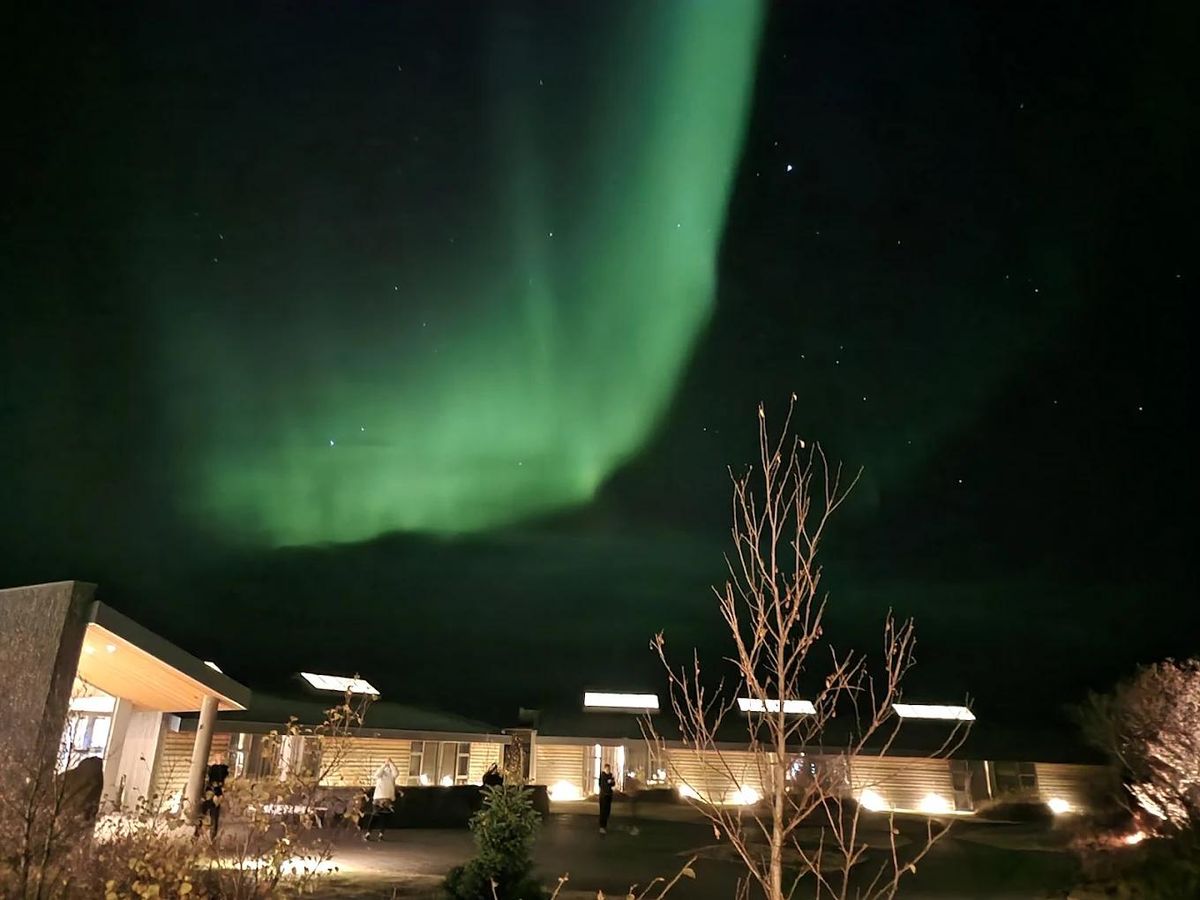
The aurora appears far less in mediaeval Norse writing than modern retellings suggest.
The First Written Explanation
The earliest sustained attempt to explain the northern lights in the Norse world comes from the Konungs skuggsjá, or King's Mirror, a Norwegian educational text written around 1250 for the instruction of a young prince.
Its author discusses the lights as one of the wonders of Greenland and offers several possible causes. One suggestion is that they are the reflection of fires surrounding the outer ocean. Another is that light absorbed by ice during the day is released back into the sky at night.
Both are wrong, and both are attempts at natural explanation rather than supernatural ones. That is the interesting part: 800 years ago someone was reasoning about the aurora rather than mythologising it.
You can read the passage in the Project Gutenberg edition of the King's Mirror, translated by Laurence Marcellus Larson. It is the only certain reference to the aurora in Old Norse writing from that period.
The Arctic Fox Story
One legend gets attached to Iceland regularly and probably belongs to Finland.
The Finnish word for the aurora, revontulet, translates as fox fires, and the story behind it describes an arctic fox running across the fells, its tail throwing sparks or brushing snow into the sky.
It is a lovely image, and it is Finnish rather than Icelandic. It has been repeated in Icelandic tourism material often enough to have acquired local citizenship, which is how folklore works, though it is worth knowing the origin.
Iceland does have arctic foxes, and they are the only land mammal that was here before human settlement. That coincidence has probably helped the story stick.
What the Science Says Now
The explanation that finally worked came in the early 20th century, largely through the Norwegian physicist Kristian Birkeland.
Charged particles from the sun are funnelled by Earth's magnetic field towards the poles, where they collide with atmospheric gases and release energy as light. NOAA's aurora pages set out the process in detail.
Birkeland proposed the mechanism in the 1900s and was largely doubted until satellites confirmed it decades later. The idea that the sun was throwing particles at us sounded, at the time, no more plausible than fires around the ocean.
Colour depends on gas and altitude. The Canadian Space Agency notes that oxygen at 100 to 300 kilometres produces green, oxygen higher up produces red, and nitrogen near 100 kilometres produces the pink and purple fringes.
None of that makes the folklore less interesting. It makes it more so, because the old explanations were attempts to account for something genuinely strange with the tools available.
Where the Lore Survives Today
Folklore is not much invoked by modern Icelanders when the sky lights up, though it has not vanished either.
The huldufólk retain a genuine cultural presence, occasionally surfacing in planning disputes over roads and construction. The childbirth belief is remembered as a curiosity rather than a rule.
What has survived intact is the etiquette of quiet. Stand with a group of Icelanders under a strong display and the conversation tends to stop, which is either ancient caution or simple awe.
The stories are also good company on a cold night. Knowing them turns two hours of waiting into something more than standing in a field.
If you want the fuller picture of how the aurora behaves rather than what it was thought to mean, our guide to reading the Icelandic aurora forecast covers the practical side.
Where to Watch and Think About It
Þingvellir is the obvious place to combine the two, since it carries a thousand years of Icelandic history alongside a genuinely dark sky.
The Alþingi assembly met on that ground from around 930 until 1798, so the people who told these stories stood in the same valley under the same lights. Þingvellir National Park is 45 minutes from Reykjavík, and its car parks stay open around the clock.
Laugarvatn is the other good option, with a lake for reflections and somewhere warm to retreat to between bursts.
Check the Icelandic Met Office aurora forecast before you drive, since it gives activity on a 0 to 9 scale alongside the cloud map that decides your night.
Dress for standing still and give it two hours. The lore is more entertaining when you are warm.
See the Lights the Old Way
The best setting for these stories is a dark valley with no lights and no hurry, which is exactly what an evening tour is built to provide.
Our small-group Northern Lights adventure goes where the sky is clearest, and the guides carry a good deal more folklore than fits in one article. Book it early in your stay and ask them for the local version.
Compare Golden Circle Tours
Check each selected product for its current operator, guide, itinerary, meeting point, and terms.
View Our Tours

