
Where Is the Best Place to See the Northern Lights in Iceland?
Anywhere dark with an open view of the sky, and the country is full of such places. Iceland sits directly under the auroral oval, so the lights appear overhead rather than on the northern horizon, which means you do not need to travel to a specific corner of the country.
For most visitors the practical answer is Þingvellir and the Golden Circle, 45 minutes from Reykjavík, with a lake for reflections and no town glow in any direction. The Grótta lighthouse works if you cannot leave the city, and the South Coast and Snæfellsnes give you the strongest backdrops if you have longer.
What decides your night is cloud, not location. A clear sky 20 minutes away beats a famous viewpoint under overcast every time, which is why the best plan is a shortlist rather than a single destination.
What Makes a Good Aurora Spot
Five things, in order of importance.
Darkness first. Reykjavík's light dome reaches roughly 20 kilometres, so getting beyond that is the single biggest improvement you can make.
An open horizon second. Trees and buildings block the low part of a display, and although strong aurora fills the whole sky, most nights show you an arc across the north.
Somewhere to shelter the third. Standing still for two hours in Icelandic wind is the part people underestimate, and a car to retreat to changes the experience completely.
Safe parking, fourth. Pulling onto a verge on an unlit road is genuinely dangerous, and Iceland has plenty of proper laybys and car parks.
Foreground last, and only if you are photographing. Water, mountains, a church or a lone farmhouse turn a green sky into a picture.
Inside Reykjavík
You can see the aurora from the city on an active night, and city spots have one real advantage: you can go out on a whim.
Grótta lighthouse
The best spot in the capital, on the tip of Seltjarnarnes, about 15 minutes from the centre. It faces north over open water, the surrounding streetlights are switched off during aurora season, and there is a car park.
Two cautions. The causeway to the lighthouse floods at high tide, so check before you walk out, and the small hot-foot pool nearby gets crowded.
Perlan and Öskjuhlíð
The wooded hill above the city gives you elevation and some shelter from the streetlights below. The viewing deck at Perlan is the easiest version, and the paths around the hill are darker.
You are still inside the light dome, so this works for a strong display and fails for a faint one.
Klambratún and the larger parks
Open ground in the middle of the city, useful if you are on foot and the sky suddenly lights up. Laugardalur and Klambratún are the two with enough open sky to be worth it.
Treat these as opportunistic rather than planned. Nobody should build an evening around them.
The old harbour and Grandi
North-facing, open to the water, and walkable from downtown. The harbour lights are a problem, and the view over Faxaflói Bay is not.
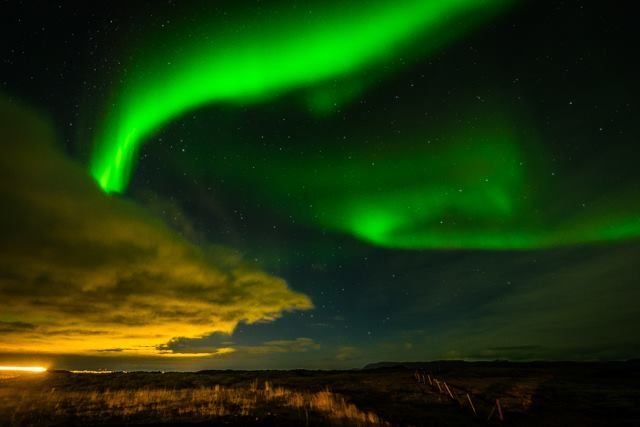
From inside Reykjavík you can see strong displays, though the city glow erases the fainter ones.
Within an Hour of Reykjavík
This is where most successful aurora nights happen and where nearly every tour goes.
Þingvellir National Park
The standout is Þingvellir National Park, 45 minutes from the city and 40 kilometres from the nearest town glow, with the rift walls for the foreground and Þingvallavatn for reflections.
The car parks stay open around the clock, and the payment machines work at any hour, so arriving at 11pm is no obstacle.
Parking costs 1,000 ISK for a car under the park's published rates, and the fee covers all three car parks for the day.
Bring a torch with a red mode. There is no lighting once you leave the car park, the boardwalks ice over, and the fissures either side of the path are real.
Laugarvatn
The easiest self-drive option on the Golden Circle. A lake for reflections, a village with lit parking to retreat to, and a geothermal bath on the shore where you can sit in warm water while you watch.
Laugarvatn is an hour and ten minutes from Reykjavík, and the drive is on paved roads the whole way.
Grímsnes and the farmland around Kerið
Open agricultural land along Route 35, with wide horizons and almost no light. Pull into a proper layby rather than a farm track, and you have a dark sky with a five-minute walk from the car.
Kerið's own car park closes when the ticket booth does, so plan to be beside it rather than in it.
The Reykjanes Peninsula
Twenty-five minutes from the city and the natural choice if you are staying near the airport. Lava fields, no trees, and the Bridge Between Continents area give you an open horizon in every direction.
Check conditions before you go. The peninsula has been in an active eruption period since 2021, and access can change at short notice.
Hvalfjörður
The fjord is north of the city, 40 minutes away via the old road rather than the tunnel. Mountains on both sides, water in the middle, and very little traffic after dark.
This is the quiet alternative when everyone else has driven east to Þingvellir.
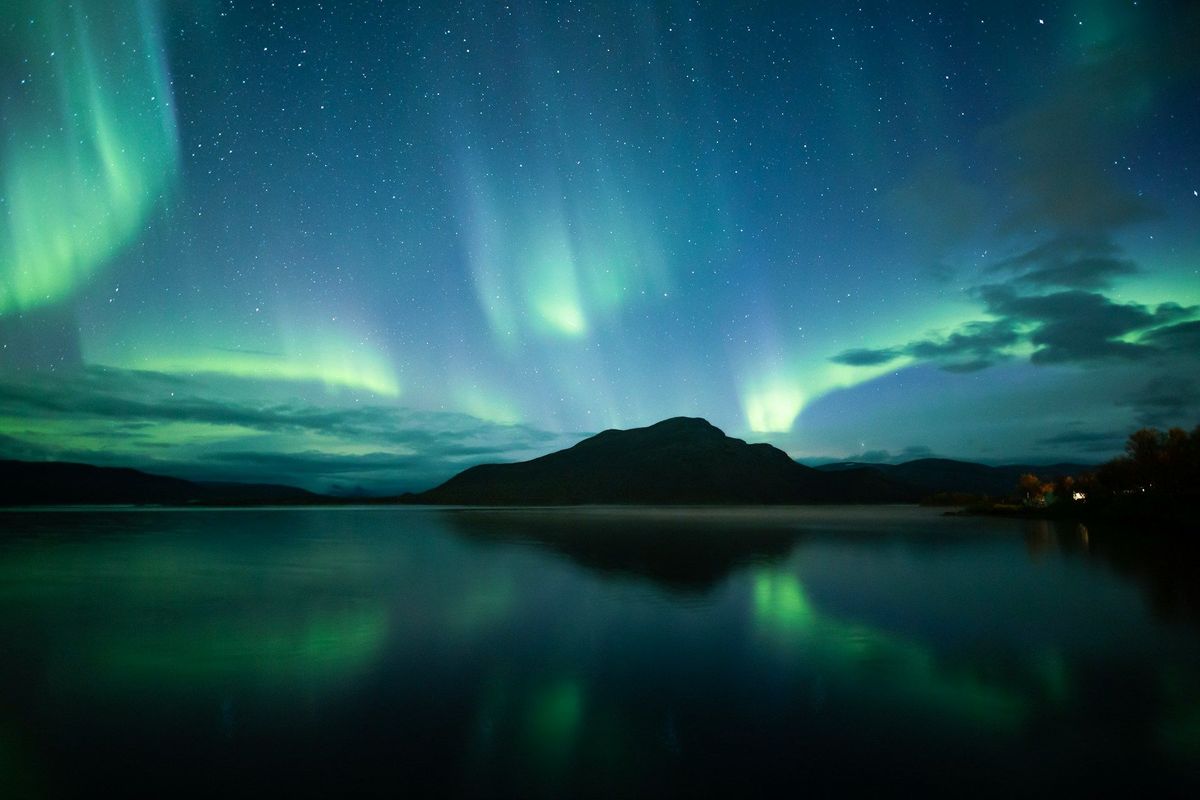
Þingvallavatn and the smaller lakes near Laugarvatn go flat on a still night, which doubles any display.
On the Golden Circle After Dark
All three main sites are outdoor, free and open around the clock, which makes an evening loop genuinely possible.
Gullfoss is dark and dramatic, with the added element of sound. The car park is unlit, and the paths ice over from October, so stay on the surfaced areas and keep well back from the canyon edge.
Geysir works too, and the steam catches any light in the sky. Strokkur erupts every five to ten minutes regardless of the hour, so you get two shows.
Efstidalur and the farm hotels along the route all sit under a dark sky. Staying on the loop rather than in the city removes the drive home entirely, which on a January night is worth more than it sounds.
Combining a daytime loop with an evening hunt is a long day and a good one, because the sites you photographed at noon look entirely different at midnight.
Our guide to seeing the aurora from Reykjavík covers how the two halves fit together and which order works best in each month.
Further Afield
If you have more than a couple of nights, these are the locations that produce the photographs you have seen.
The South Coast and Jökulsárlón
Jökulsárlón glacier lagoon is the most photographed aurora location in Iceland, with icebergs in the water and the black sand of Diamond Beach beside it. It is five hours from Reykjavík, so it needs an overnight rather than a day trip.
Vík, Reynisfjara and the Sólheimasandur area all give you dark sky and sea stacks two and a half hours out.
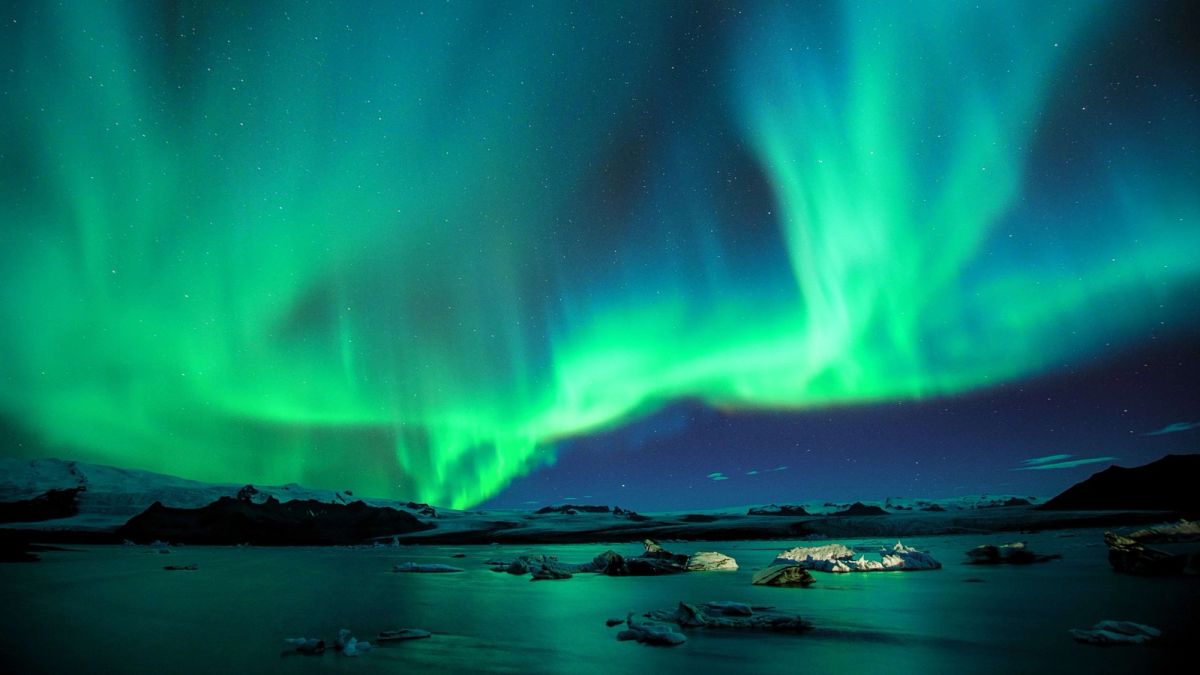
Jökulsárlón puts ice in the foreground, which is why it is the most photographed aurora spot in the country.
Snæfellsnes and Kirkjufell
Kirkjufell, with the small waterfall in front of it, is the second most photographed aurora composition in Iceland, and Grundarfjörður is two and a half hours from the city.
The whole peninsula is dark. Búðakirkja, the black church on the lava field, and the cliffs at Arnarstapi both work well and see far fewer people.
North Iceland and Mývatn
Mývatn and the Akureyri area sit further north, which puts them closer to the centre of the oval on quieter nights. They also sit in the rain shadow of the highlands, so cloud cover is often thinner than in the south.
Getting there means a flight to Akureyri or a long drive, so this suits a longer trip.
The Westfjords and the East
Both are exceptionally dark, and both are hard to reach in winter. Roads close frequently and services are sparse, which makes them a poor choice for a first Iceland trip and an excellent one for a repeat visit.
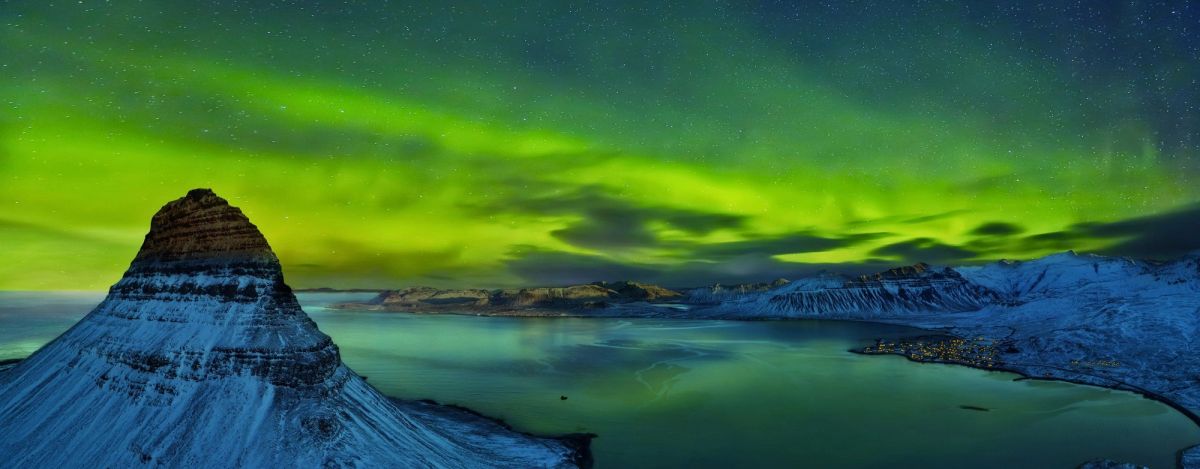
Kirkjufell on Snæfellsnes is two and a half hours from Reykjavík and worth an overnight rather than a day trip.
Timing: When to Be Outside
Location gets you half the way. The clock does the rest.
Full darkness starts around 9pm in September, 8pm in October, 6pm in December and back past 8:30pm by late March. Nothing is visible before then, whatever the activity number says.
The strongest window is 10pm to 1am, around magnetic midnight, when the auroral oval sits furthest south over Iceland. Displays outside that happen, and they are less reliable.
Aurora arrives in substorms rather than steadily. A quiet sky at 10pm can be full of movement by 10:40, which is why two hours in one place beats 20 minutes at three.
The moon is a minor factor. A full moon washes out faint displays and does nothing to a strong one, so plan a dedicated aurora trip near a new moon and ignore it otherwise.
Watching From the Water
Boat tours leave from Reykjavík's old harbour and take you onto Faxaflói Bay, away from every streetlight in the city.
The advantages are a genuinely dark horizon in all directions and a heated cabin to warm up in. Boats also move, so the skipper can steer towards a clearer patch of sky.
The disadvantages are motion, which makes long-exposure photography difficult, and cancellations in rough weather. If you are prone to seasickness, take the land option.
Sailings run from September to April, usually leaving around 9pm and lasting two to three hours.
Watching From Your Accommodation
The most comfortable version of aurora hunting is not going anywhere at all.
Farm hotels and guesthouses along the Golden Circle and the South Coast sit under a dark sky, and many offer a wake-up call when the lights appear. Some have outdoor hot tubs, which is the best possible way to watch.
Ask two questions when booking: how far is the nearest town glow, and is there an open view to the north? A rural location hemmed in by a hillside is darker than the city and less useful than it sounds.
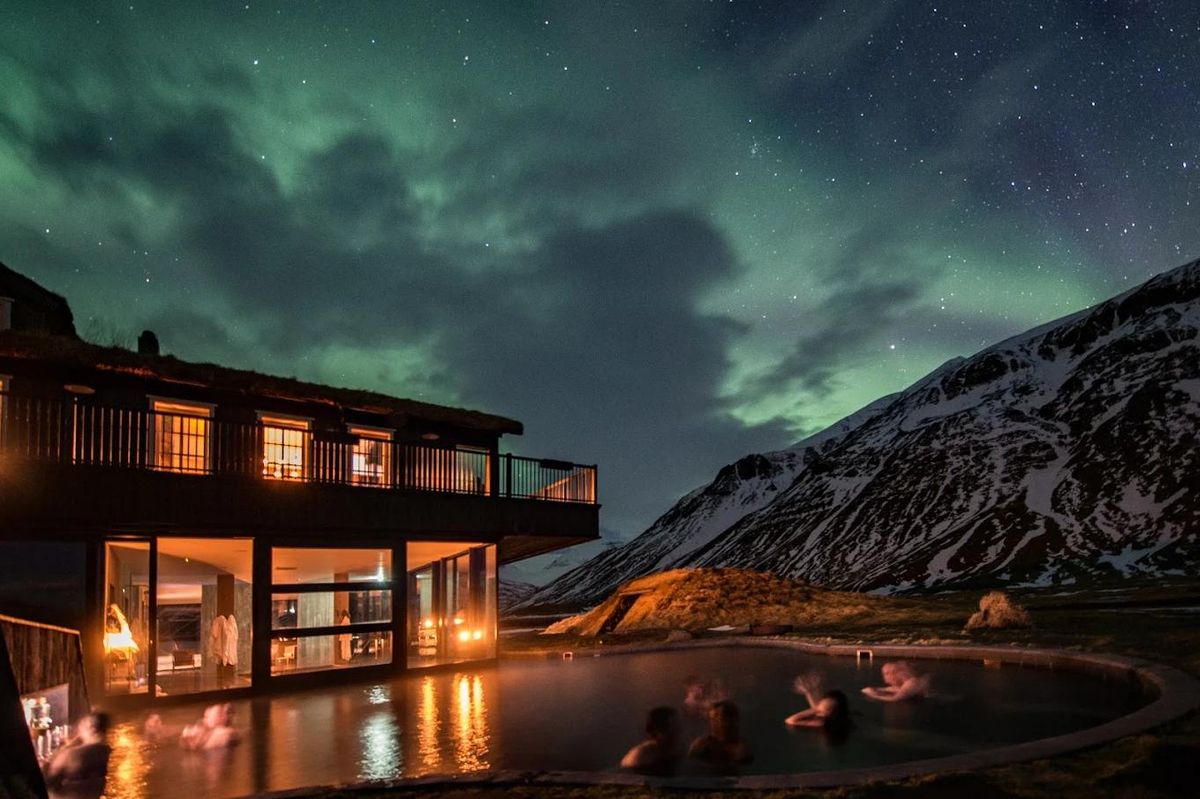
Staying outside the city removes the late-night drive, which matters more in January than most people expect.
How to Pick a Spot on the Night
The decision takes two minutes, and it beats any list of favourite locations.
Check the Icelandic Met Office aurora forecast, which gives activity on a 0 to 9 scale alongside a cloud map. White on the map means clear sky.
Find the nearest white patch within an hour's drive. That, rather than the most famous name, is where you should go.
Check the road conditions for the route you have chosen. In the winter road. It shows ice, snow and closures in near real time, and a beautiful spot behind a closed pass is worthless.
Leave in time to be in position 30 minutes before full darkness, which arrives around 9pm in September and 6pm in December.
Give it two hours once you are there. Displays come in waves, and the gap between them can be 40 minutes.
Safety on a Winter Aurora Night
The aurora is the safest part of the evening. Everything around it deserves attention.
Never park on the road. Icelandic verges are soft, unlit and often narrower than they look, and a parked car on a dark road is a serious hazard.
Dress for standing still. At the Golden Circle's nearest station, Met Office climate data puts January's average daily low at 4.3°C below zero with mean wind above 5 metres per second, and standing still is far colder than walking.
Keep fuel above half a tank. Rural stations are unmanned, and some older foreign cards struggle with them.
Tell someone where you are going if you drive alone, and check SafeTravel for alerts before you set out in winter.
Take a red-light torch, a power bank and something hot to drink. All three make the difference between staying out for the good part and giving up at 10:30pm.
What About the Highlands?
Every winter someone asks about heading into the interior for a darker sky, and the answer is no.
Highland roads close from around October to June; they are unpaved and unlit, and rescue is hours away. The marginal gain in darkness over Þingvellir is close to zero.
The one exception is a guided super jeep tour with an operator who knows the terrain, which is a different proposition from driving yourself.
Let a Guide Find the Clear Sky
The hardest part of aurora hunting is not knowing where the good spots are; it is knowing which one has a clear sky tonight and getting there on winter roads.
Our small-group Northern Lights adventure leaves that decision to a guide who has been watching the cloud map all afternoon in a vehicle small enough to change plans on the way. Book it for an early night on your trip so you have spare evenings if the weather closes in.
Compare Golden Circle Tours
Check each selected product for its current operator, guide, itinerary, meeting point, and terms.
View Our Tours

