
Why March Is a Strong Aurora Month
March pairs two things no other month manages at once: elevated geomagnetic activity around the spring equinox and enough daylight to do a full day of sightseeing on the same date.
Full darkness runs from about 8:30pm early in the month to 10pm by the end, giving 7 to 11 usable hours. Daylight climbs from roughly 11 hours to 13 across the same period.
Experienced aurora chasers book March more often than any month except October, and the equinox is why.
The Equinox Effect
The activity bump around the equinoxes is measured rather than folkloric.
It is called the Russell-McPherron effect. Around 20 March and 22 September, Earth's magnetic field lines up more favorably with the solar wind's field, making it easier for energy to couple into the magnetosphere and trigger an aurora.
Records show geomagnetically disturbed nights clustering around the equinoxes at roughly twice the rate of the solstice months. That is a real statistical advantage across a two-week window.
It does not beat weather. NOAA's storm scale counts only around 200 strong G3 storms per 11-year solar cycle, and Iceland does not need them, because sitting under the auroral oval means activity of 2 or 3 already produces a display overhead.
The practical instruction is to weigh the middle two weeks of March if your dates are flexible.
The Weather in March
March is late winter rather than spring, and it improves through the month.
Averaging the Icelandic Met Office's monthly station data for Hjarðarland on the Golden Circle from 1991 to 2020 gives March an average daily high of 2.9°C, a low of 3.5°C below zero, and 128 mm of precipitation.
Mean cloud cover sits at 6.2 on the 0 to 8 octa scale, level with January and February and half an octa worse than October and November.
Mean wind is 5.0 metres per second, which is close to the winter peak, so March nights are cold to stand still in.
What improves noticeably is the pattern of the weather. Storms are still frequent, and the gaps between them tend to be longer and clearer than in January, which matters more than the monthly average suggests.
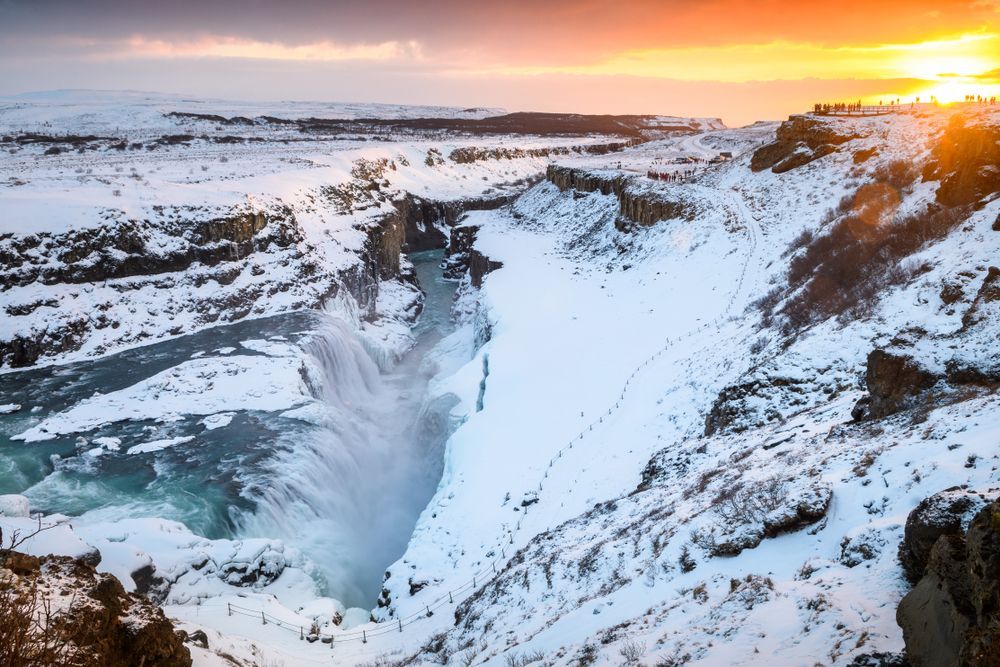
March still has winter scenery with a full day of light to see it in, which December cannot offer.
Early March or Late March?
The two halves are genuinely different trips.
Early March keeps deep-winter conditions: more snow, longer nights at 10 to 11 hours of darkness, and icy roads. It is the better half for scenery and for maximum dark hours.
Late March brings the equinox itself, daylight up to 13 hours, and roads that are usually clear on the Golden Circle. The season is also visibly closing, with darkness not arriving until 10pm by the 31st.
The sweet spot is the middle two weeks. You get the equinox effect, 8 to 9 hours of darkness, and enough daylight for a proper Golden Circle day.
Note that Iceland does not change its clocks. The country stays on GMT year-round, so there is no spring shift to account for.
When the Season Actually Ends
The window closes faster than people expect, and it closes because of light rather than the sun going quiet.
Through early April there are still 5 to 7 hours of darkness and reasonable odds. By around 20 April, twilight has eaten most of the night.
After that the aurora is still happening, and it is simply invisible, and by mid-May Iceland has no astronomical darkness at all until August.
So March is the last full month of the season, and the first ten days of April are the tail. If you are choosing between late March and mid-April, take March.
What Else March Gives You
The aurora is one reason to come, and there are others.
Ice caves are still open in the first half of the month, and they close as meltwater rises in spring.
Daylight is enough for a full Golden Circle day plus an extra stop, which December cannot support. Our Golden Circle Classic Tour runs 9 hours and gets you back before darkness.
Prices sit in the shoulder season between the Christmas peak and the summer surge, so flights and accommodation are reasonable.
The lower path at Gullfoss usually stays closed with ice through March, so plan on the upper platform, which is the better viewpoint anyway.
Where to Watch in March
The choices are the same as midwinter, with slightly kinder conditions.
Þingvellir National Park is 45 minutes from Reykjavík, dark in every direction, with car parks that stay open around the clock and machines that take cards at any hour.
Ice on the boardwalks is still a real hazard in March. Take a red-light torch, wear boots with grip, and stay on the surfaced paths.
Laugarvatn is the most comfortable self-drive option, with a lit car park and a geothermal bath on the lake shore.
Roads improve steadily through the month, and the higher stretches are the last to clear.
Check the road. is before any evening drive, since March still produces ice and snow over Lyngdalsheiði well after the lowland routes are bare.
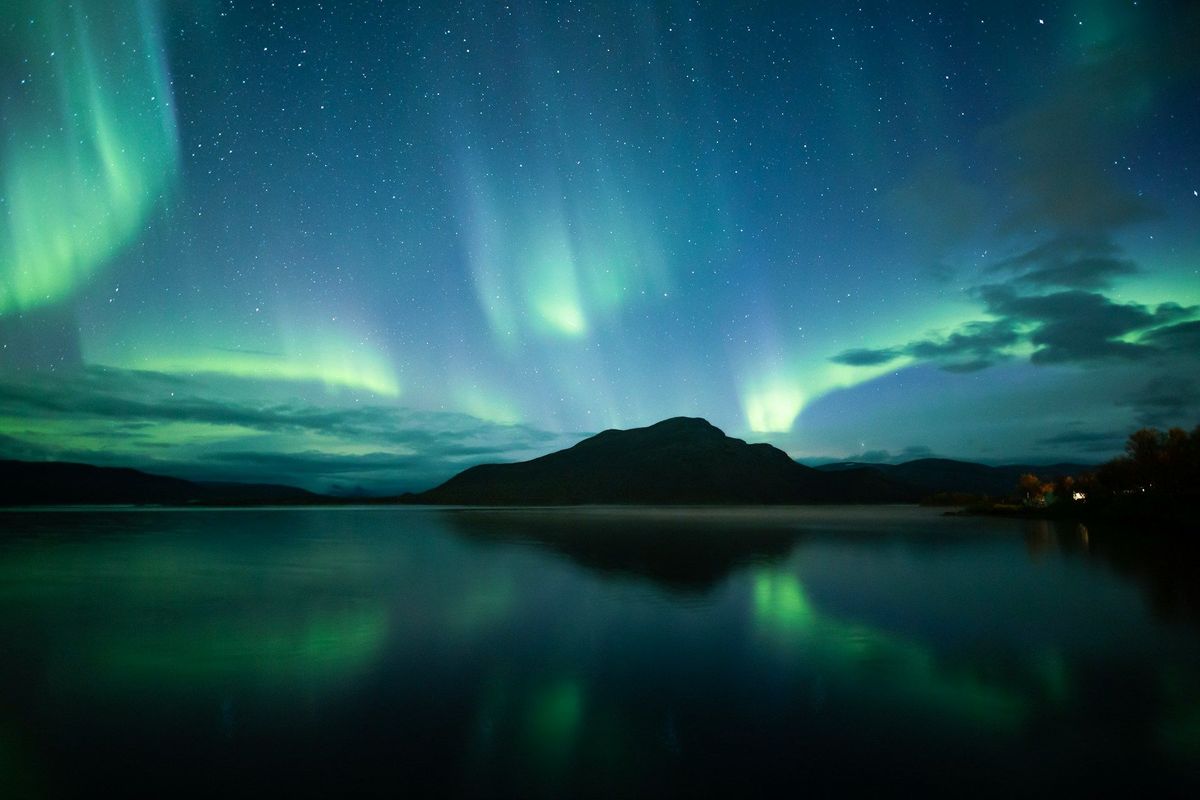
Late-season nights are milder, and still water gives you the display twice when the wind drops.
How March Compares
Against October: close. October has clearer measured skies at 5.9 octas and lower prices; March has the equinox activity and more usable daylight.
Against November: November has the clearest skies of the season and much shorter days for sightseeing.
Against December and January: March wins on weather patterns, daylight, and road conditions and loses on total darkness.
Against February: March is February with more daylight and an activity bump, which makes it the better of the two for most visitors.
If you want a trip where the days work as well as the nights, March is the strongest month in the season.
Planning a March Trip
Five decisions that matter.
Book the middle two weeks if you can, for the equinox effect and the balance of darkness and daylight.
Stay three nights minimum and four if possible. One clear active night in three remains the Icelandic norm, whatever the month.
Keep evenings unbooked. The aurora will not fit a schedule, and the Golden Circle will.
Dress for standing still. Near-freezing plus 5 meters per second of wind for two motionless hours is colder than the number suggests.
Book the tour early in your stay, since most operators rebook you free if the night fails, and that only helps with nights left over.
Catch the Season Before It Closes
March is the last full month of Icelandic aurora season and one of its strongest, with the equinox on your side and enough daylight to make a proper trip of it. Our small-group Northern Lights adventure runs to mid-April and drives to whichever part of the southwest is clearest that night. Book early in your stay so a second attempt is still possible before the light returns. 8:30 pm
Compare Golden Circle Tours
Check each selected product for its current operator, guide, itinerary, meeting point, and terms.
View Our Tours

