
What Solar Maximum Means for the Aurora
Solar maximum is the busiest phase of the sun's roughly 11-year activity cycle, when sunspot numbers peak and the sun throws out more of the charged particles that drive the northern lights.
More particles means more geomagnetic disturbance, which means more frequent and more intense aurora. Around a maximum, Iceland gets more strong nights per season, and displays reach further south than usual.
The current cycle, Solar Cycle 25, has been running well above its original forecast, which is why the mid-2020s have delivered some of the best aurora seasons since the early 2000s.
Where Solar Cycle 25 Actually Stands
It helps to work from the official numbers rather than the headlines.
NOAA's solar cycle progression page records that the prediction panel expected Cycle 25 to reach a maximum smoothed sunspot number of 115, occurring in July 2025, with the peak falling somewhere between November 2024 and March 2026.
Observed activity has run consistently ahead of the 2019 forecast since 2022, which is why NOAA issued a recalibrated prediction in February 2025 based on newer data.
The same page notes that Solar Cycle 26 is expected to begin somewhere between January 2029 and December 2032. That gives you the shape of what is left of this one.
In plain terms: the peak window has passed or is closing, and the cycle has several active years still in it.
Why the Years After the Peak Still Work
This is the part most articles get wrong, and it is good news if you have not booked yet.
Sunspot numbers peak at solar maximum. Geomagnetic storms, which are what actually produce aurora at our latitudes, tend to peak one to three years afterwards.
The reason is a shift in what drives the storms. Around maximum, the main driver is coronal mass ejections, huge eruptions of solar material. In the declining phase, coronal holes become more common, and these produce fast solar wind streams that recur every 27 days as the sun rotates.
Those recurring streams are less dramatic individually and far more reliable. They give the declining years a steady supply of moderate storms rather than an occasional enormous one.
For an Icelandic aurora trip, steady beats spectacularly. The country sits under the auroral oval, so a moderate disturbance already produces a display overhead.
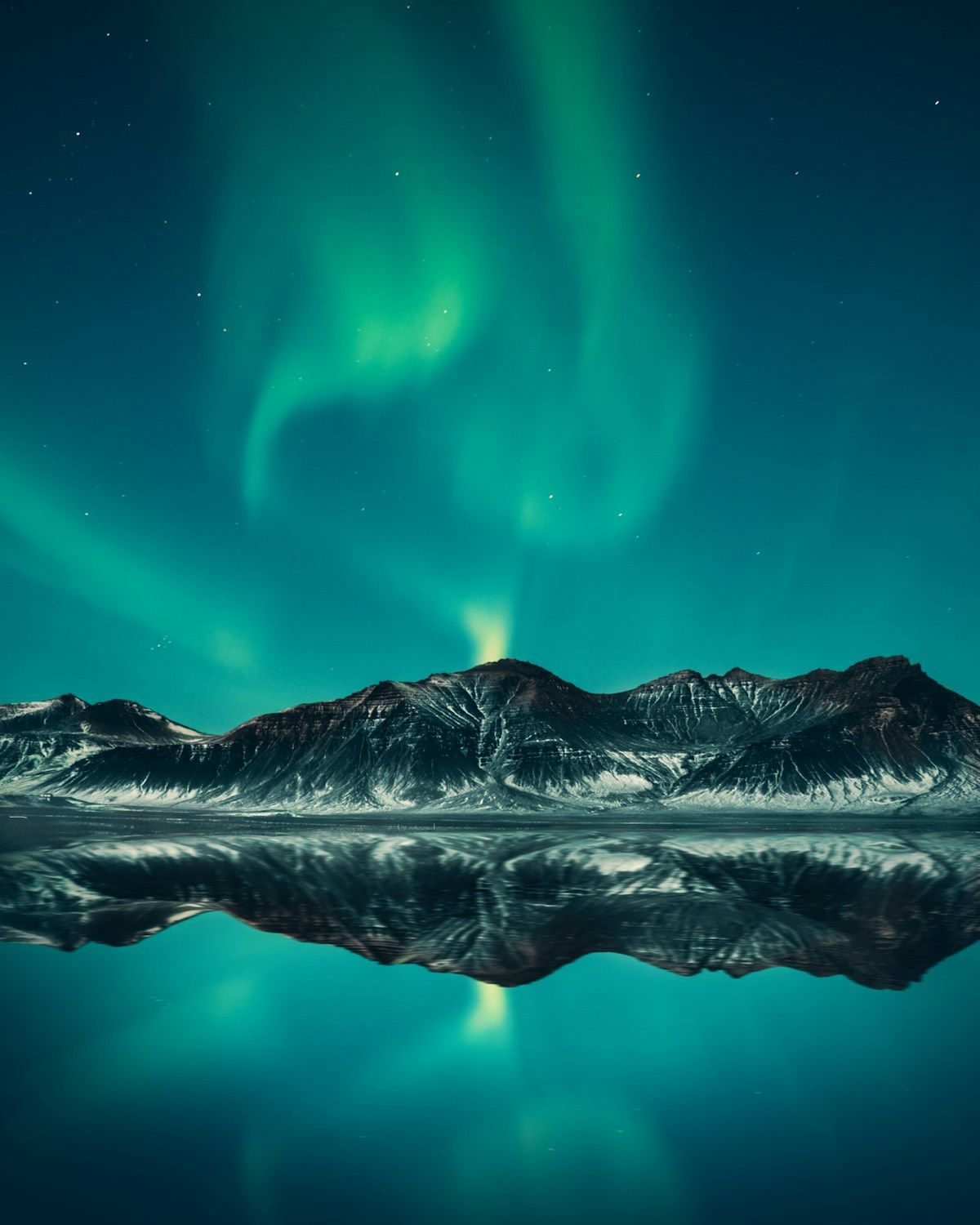
Iceland does not need a large storm. Moderate activity produces a display directly overhead here.
What This Means Practically
Four consequences worth acting on.
The next several seasons are good ones. Activity declines gradually rather than falling off a cliff, so 2026 through the late 2020s should stay well above the quiet years of 2018 to 2020.
The following maximum is a long way off. With Cycle 26 not expected to begin until 2029 at the earliest, its own peak would arrive in the mid-2030s.
Iceland's advantage holds regardless. Sitting under the oval means the country sees aurora on ordinary nights, so the cycle changes your odds rather than deciding whether it is possible.
Cloud still beats everything. No amount of solar activity gets you a display through an overcast sky, which is why the forecast you check on the night matters more than the one for the decade.
How Much Difference Does the Cycle Make?
Enough to notice across a season, and less than the difference between one week's weather and another's.
At solar minimum, Iceland still gets aurora on many clear nights, because the oval passes overhead even when the sun is quiet. What drops away is the frequency of strong, colourful, fast-moving displays.
At and after maximum, those strong nights become common rather than rare. Pink and purple fringes appear more often, red aurora becomes possible, and displays that fill the whole sky happen several times a season rather than once.
For scale, NOAA's storm scale records around 1,700 minor G1 storms per 11-year cycle, 600 moderate G2, 200 strong G3, 100 severe G4 and just four extreme G5. Those totals are for a whole cycle, and they cluster around and after the peak.
What You Still Need on the Night
Solar activity is one of four variables, and it is not the one that most often ruins a trip.
Darkness is first. Iceland's season runs from late August to mid-April, and between mid-May and early August no amount of solar activity is visible.
Cloud is second, and it decides most nights. The Icelandic Met Office aurora forecast publishes a cloud map beside its 0 to 9 activity number, and finding the clear patch is the whole job.
Activity is third. In Iceland, 2 or 3 is enough, which is precisely why the solar cycle matters less here than in Britain or the northern United States.
Light pollution is fourth, and it is the easiest to fix. Reykjavík's glow reaches roughly 20 kilometres, so any stop on the Golden Circle clears it.
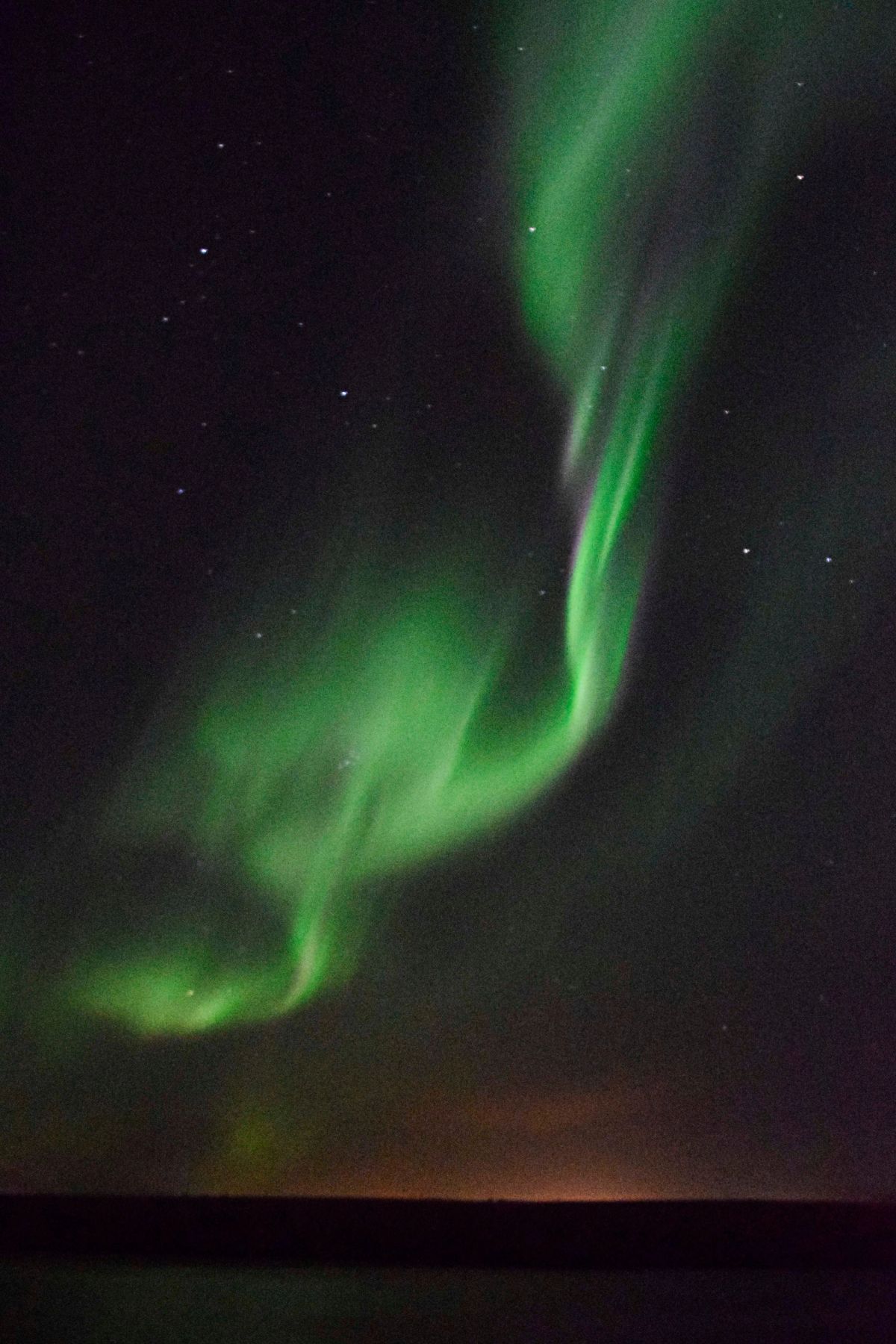
Even in an active cycle, the night is decided by whether the sky above you happens to be clear.
Does Solar Maximum Change When to Visit?
Not really, and it is worth saying plainly.
The months that were best before the peak are still the best now. October and November combine long nights with the clearest measured skies on the Golden Circle, February adds snow scenery, and March brings the equinox activity bump.
What an active cycle does is raise the ceiling in every month. A quiet December night that would once have shown a faint arc is more likely to produce something worth photographing.
If you were waiting for a perfect year, the honest advice is to stop waiting. Book the trip for a month with good darkness and reasonable weather, stay three or more nights, and let the cycle do its work in the background.
The 27-Day Rhythm Worth Knowing
One practical trick comes out of the declining phase specifically.
The sun rotates roughly every 27 days as seen from Earth. A coronal hole that produced a good display will often rotate back into position and produce another one about four weeks later.
That means a strong aurora night in early October frequently has a successor in early November. Space weather forecasters use this recurrence to make medium-range predictions.
You cannot easily plan a holiday around it, and it is a useful reason to check the forecast rather than assuming a quiet stretch will continue.
What an Active Cycle Looks Like From the Ground
The difference between a quiet cycle and an active one is easiest to describe in terms of what you actually see.
In a quiet year, a typical clear night in Iceland gives you a green arc across the north that brightens for 15 minutes and fades. Pleasant, and not the photograph you had in mind.
In an active year, that same night is more likely to produce bands overhead, faster movement, and a second or third substorm before 1am. Colour beyond green becomes ordinary rather than exceptional.
The best nights of an active cycle add a corona, where the bands converge overhead and appear to pulse outward from a point. Those happen a handful of times each winter around a maximum and rarely at all in the quiet years.
Photographs tell the story too. In an active season, phone cameras pick up pink and purple edges regularly, and a proper camera on a tripod records red above the green.
Booking Around It
A few practical notes if the cycle is what has finally prompted the trip.
Accommodation on the Golden Circle and the South Coast books earlier in active years, because aurora demand rises with the headlines. Reserve rural rooms further ahead than you would otherwise.
Tour availability tightens on the nights after a widely reported storm, when everyone books at once. Booking two or three nights in advance avoids that scramble.
Do not pay a premium for a specific date because a forecast looked good a week out. Geomagnetic predictions beyond about three days are broad, and cloud beyond 36 hours is guesswork, as our guide to the best time to see the Northern Lights explains.
Common Misconceptions About Solar Maximum
Four claims that circulate every cycle and deserve correcting.
That it is now or never. Cycles are gradual, and the years either side of a maximum are all good. Aurora does not switch off in 2027.
That a big solar flare means an aurora tonight. Material from a coronal mass ejection typically takes one to three days to reach Earth, and its magnetic orientation on arrival decides whether anything happens.
That solar maximum makes the aurora visible in summer. Darkness is a separate constraint, and Iceland has none in June.
That a high sunspot count guarantees a display. Sunspots are a proxy for potential rather than a measure of what is arriving at Earth right now.
Making the Most of an Active Cycle
If you are booking a trip during these years, a few choices raise your odds more than the calendar does.
Stay three or more nights. One clear active night in three is normal in an Icelandic winter, and the cycle does not change the weather.
Get out of the city. Þingvellir National Park is 45 minutes from Reykjavík, dark in every direction, and its car parks stay open around the clock.
Be out between 10pm and 1am, which brackets magnetic midnight in Iceland and is when substorm activity peaks.
Bring a camera or a recent phone. In an active cycle the displays that show colour to the naked eye are more frequent, and a camera records the pink and red edges you would otherwise miss.
Catch the Cycle While It Lasts
The current stretch of solar activity is the strongest since the early 2000s, and the next comparable window arrives in the mid-2030s.
Our small-group Northern Lights adventure runs through the whole season and goes wherever the cloud map is clearest, which is the one variable an active sun cannot fix for you. Book an early night in your stay and keep a spare evening in reserve.
Compare Golden Circle Tours
Check each selected product for its current operator, guide, itinerary, meeting point, and terms.
View Our Tours

