
Can You Drink the Tap Water in Iceland?
Yes, everywhere, without boiling or filtering. Icelandic cold tap water is among the cleanest in the world and it is free in every café, restaurant and public building.
Buying bottled water in Iceland is a genuine waste of money. The bottled product is frequently the same water that comes out of the tap.
The one thing to know is that hot and cold water come from completely different sources here, which is why the hot tap smells of sulphur and the cold one does not.
Where the Water Comes From
The reason it needs almost no treatment.
Cold water comes from springs, underground aquifers and glacial meltwater, filtered through porous volcanic rock for decades before it is drawn.
That filtration does the work a treatment plant does elsewhere. Icelandic cold water is generally not chlorinated, which is why it tastes of nothing at all.
Iceland has an unusually large volume of fresh water relative to its population, and the same aquifers feed Silfra, where the visibility runs beyond 100 metres for exactly this reason.
The taste is the giveaway. Water with no chlorine, no mineral load worth mentioning and no aftertaste is genuinely different from most tap water.
Why the Hot Water Smells
The single most asked question by visitors, and the answer is reassuring.
Iceland heats buildings with geothermal water pumped directly from the ground rather than heating cold water in a boiler.
That geothermal water contains naturally occurring hydrogen sulphide, which produces the rotten egg smell. It also protects the pipes from corrosion, which is why it is not removed.
It is harmless. Showering in it is fine, it does not linger on skin or hair, and it does not affect laundry.
It comes only from the hot tap. The cold tap is a completely separate supply and has no smell whatsoever.
Run the cold tap for a few seconds before filling a bottle and you will get the cleanest possible taste.
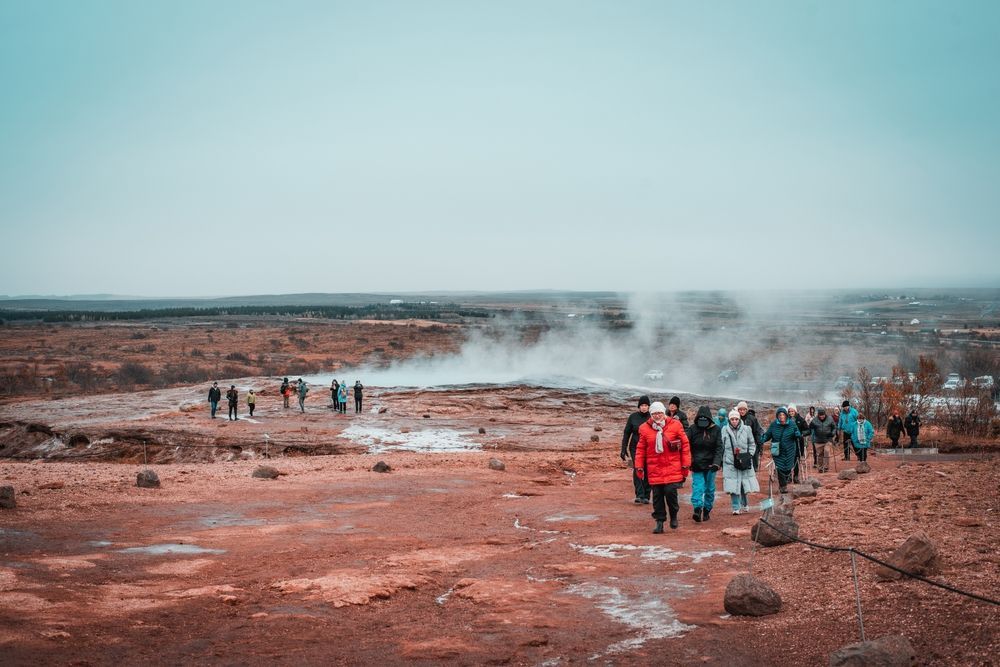
The hot tap is geothermal water straight from the ground, which is where the sulphur comes from.
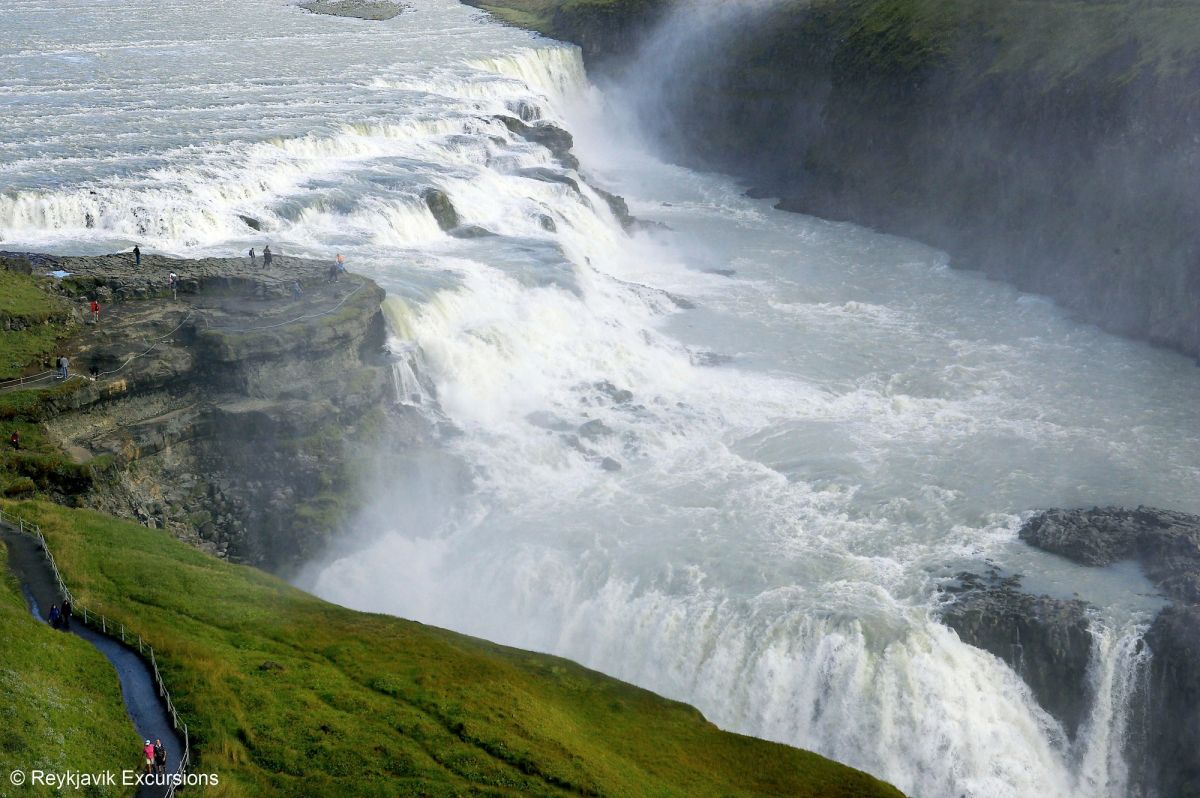
There is a tap at every stop on any normal Icelandic route, which makes a reusable bottle the whole solution.
What This Means for Your Trip
Five practical consequences.
Bring a reusable bottle and refill it. Every café, restaurant and petrol station will fill it without charging.
Never buy bottled water. It is expensive by Icelandic standards and no better than what is free.
Ask for tap water in restaurants. It is served without asking in most places and always available.
Fill up before long drives. The Golden Circle has facilities at each main stop, and our guide to what the loop covers sets out the gaps between them.
If your accommodation's shower smells strongly of sulphur, that is normal and not a plumbing fault.
Drinking From Streams and Rivers
More nuanced, and worth stating properly.
Water from clear mountain streams and springs is generally safe and Icelanders drink it routinely. Road and travel alerts, including any local water advisories, are published at SafeTravel.
Glacial rivers are not. The sediment load makes them unpleasant rather than dangerous, and they carry silt that upsets stomachs.
Water downstream of farms can carry agricultural runoff, and water below any settlement should be avoided.
Geothermal surface water should never be drunk. Our guide to Icelandic hot springs covers why you should also keep your head above it.
If in doubt, fill up at a tap. There is one at every stop on any normal route.
Iceland's Water in Numbers
Context that explains why this is unusual.
The overwhelming majority of Iceland's cold water comes from springs, aquifers and glacial sources rather than from treated surface water.
Geothermal water heats almost every building in the country, with the National Energy Authority recording 5,916 GWh of geothermal generation a year alongside 14,195 from hydropower.
Reykjavík's swimming pools, the lagoons and the hot taps all draw on the same geothermal system.
The Environment Agency of Iceland monitors drinking water quality nationally, and Icelandic tap water consistently ranks among the best assessed anywhere.
None of that requires the chlorination and filtration most European supplies depend on, which is the difference you can taste.
Silfra, the fissure at Þingvellir, is the most visible demonstration. That water has filtered underground for decades and you can drink it while snorkelling in it.
The Money Argument
Small on any single day and meaningful across a trip.
Iceland is expensive, with a mid-range trip running 25,000 to 45,000 ISK per person per day excluding flights. Our guide to whether Iceland is expensive sets out the numbers.
Bottled water at a petrol station costs several hundred krónur. Across a week for two people that adds up to a meal out.
A reusable bottle costs nothing to fill and there is a tap at every stop.
This is the easiest saving available on an Icelandic trip and the one most visitors miss.
What to Bring
Three things, and the first is the only one that matters.
A reusable water bottle, ideally insulated so it stays cold.
Nothing else. No filter, no purification tablets, no bottled water in your luggage.
If you are hiking in the highlands, a bottle you can fill from a clear stream covers you.
Our guide to what to pack for Iceland covers the rest of the list.
The Short Version
Drink the cold tap water everywhere. It is excellent and free.
The hot tap smells of sulphur because it is geothermal. This is harmless and it does not affect the cold supply.
Do not buy bottled water. It is a waste of money in a country with this much clean water.
Bring a reusable bottle and refill it at every stop.
Fill Up and Head Out
Every stop on a Golden Circle day has a tap, which means a reusable bottle covers the whole itinerary without a single purchase. Our small-group Golden Circle tour with Kerið and Friðheimar keeps groups under twenty and stops long enough at each site for that to be easy. Tell us your dates and we will find you a departure.
Compare Golden Circle Tours
Check each selected product for its current operator, guide, itinerary, meeting point, and terms.
View Our Tours

